How to Change Password on iPhone: Passcode, Apple Account, Screen Time & More


If you searched “how to change password on iPhone,” you probably mean one of several different passwords. Your iPhone passcode, Apple Account password, Screen Time passcode, saved website passwords, Notes password, and voicemail password all live in different places.

Use the table below first. It gets you to the right fix without sending you through 9 Settings screens for the wrong password.
Before we begin
Windows users can download AltTunes to make a local iPhone backup before changing a passcode or Apple ID password. AltTunes handles the separate backup step; use Apple settings and account-recovery controls below to change the password itself.
Which iPhone password do you want to change?
What you mean by “password” | Where to change it | Data risk |
|---|---|---|
iPhone passcode | Settings > Face ID & Passcode > Change Passcode | No data loss if you know the current passcode |
Forgotten iPhone passcode | Recovery mode with Finder, Apple Devices, or iTunes | Erases the iPhone before you can set it up again |
Apple Account password | Settings > your name > Sign-In & Security > Change Password | No iPhone erase if you can verify your identity |
Screen Time passcode | Settings > Screen Time > Change Screen Time Passcode | No data loss if you use the Apple Account tied to Screen Time |
Saved website or app password | Passwords app, then the website or app itself | Depends on the service |
Notes password | Settings > Apps > Notes > Password | Old locked notes may still need the old password |
Voicemail password | Settings > Apps > Phone > Change Voicemail Password | Carrier-dependent |
If you forgot the iPhone device passcode, do not use random “unlocker” tools. Apple’s recovery path is the safe path, and it usually means erasing the phone.
How to change password on iPhone: device passcode


To change the passcode that unlocks your iPhone, use Face ID & Passcode or Touch ID & Passcode in Settings. You need the current passcode first. If you do not know it, skip to the forgotten-passcode section below.
- Open Settings.
- Tap Face ID & Passcode. On older models, tap Touch ID & Passcode.
- Enter your current passcode.
- Tap Change Passcode.
- Enter your current passcode again.
- Tap Passcode Options if you want a custom numeric code or a custom alphanumeric code.
- Enter the new passcode, then enter it again to confirm.
Apple’s own guide for setting or changing an iPhone passcode lives here: Apple Support: Set a passcode on iPhone.
Use a custom alphanumeric passcode if you want the strongest option. A 6-digit passcode is better than 4 digits, but a longer code is harder to guess.
How to choose a stronger iPhone passcode
A stronger passcode is boring in the best way. It should be hard for someone else to guess and easy enough for you to remember without writing it on a sticky note.
Use 6 or more digits, or choose a custom alphanumeric code.
Avoid birthdays, anniversaries, addresses, and phone numbers.
Avoid obvious patterns like 123456, 111111, 000000, or 2580.
Do not reuse a PIN from your bank card, building door, or another device.
Use a phrase-based code if you can remember it cleanly.
You can also review Require Passcode and Erase Data under Face ID & Passcode. Erase Data wipes the iPhone after 10 failed passcode attempts. That can protect a stolen device, but it is not something to turn on casually if kids or other people handle your phone.

How to change password on iPhone if you forgot the passcode
If you forgot your iPhone passcode, you cannot recover the old passcode. You have to erase the iPhone, then set it up again and restore from a backup if you have one.
That part matters. A backup decides whether your data comes back. If the iPhone is already locked or disabled, you usually cannot make a fresh backup first.
Apple’s current recovery guide is here: Apple Support: If you forgot your iPhone passcode or your iPhone is disabled.
Recovery mode steps by iPhone model
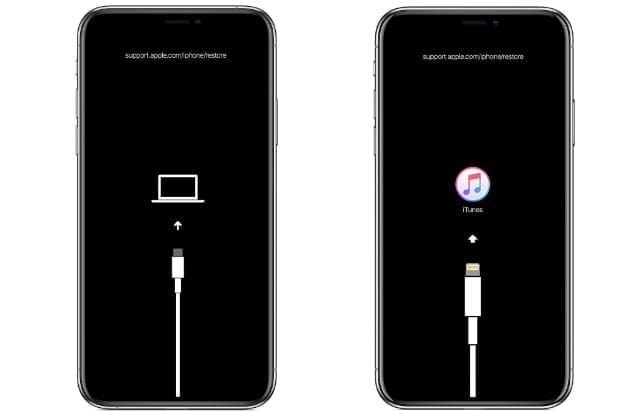
Recovery mode lets a Mac or PC erase the locked iPhone so you can set it up again. Use Finder on macOS Catalina or later. On Windows, use the Apple Devices app where available, or iTunes if that is what your setup still uses.

- Connect the iPhone to your Mac or PC with a cable.
- Turn off the iPhone.
- Put the iPhone into recovery mode:
- iPhone with Face ID, iPhone 8, iPhone 8 Plus, iPhone SE 2nd generation or later: press and quickly release Volume Up, press and quickly release Volume Down, then hold the Side button until the recovery-mode screen appears.
- iPhone 7 or iPhone 7 Plus: hold the Side button and Volume Down button until the recovery-mode screen appears.
- iPhone 6s, iPhone SE 1st generation, or earlier: hold the Home button and the Side or Top button until the recovery-mode screen appears.
- In Finder, Apple Devices, or iTunes, select the iPhone.
- Choose Restore when asked to Restore or Update.
- Wait for the restore to finish.
- Set up the iPhone again.
- Restore your data from iCloud or a computer backup if one exists.
Do not confuse recovery mode with DFU mode. Recovery mode is the normal Apple-supported path for a forgotten passcode. DFU is deeper and usually belongs in troubleshooting, not a basic password reset guide. If you need that difference, Softorino has a separate guide on how to put an iPhone or iPad into DFU mode.
How to change your Apple Account password on iPhone
Your Apple Account password, still often called an Apple ID password, is not the same as your iPhone passcode. The Apple Account password signs you into iCloud, the App Store, Apple Music, Find My, and other Apple services.
Here is how to change Apple Account password on iPhone:
- Open Settings.
- Tap your name at the top.
- Tap Sign-In & Security.
- Tap Change Password.
- Enter your iPhone passcode if asked.
- Enter the new Apple Account password.
- Confirm the new password.
Apple’s official steps are here: Apple Support: Change your Apple Account password.
If you cannot sign in, follow Apple’s on-screen account recovery steps. Do not share your verification codes with anyone. Apple will never need your code over a random phone call or message.
How to reset a Screen Time passcode
The Screen Time passcode controls Screen Time settings, app limits, content restrictions, and parental controls. It does not unlock the iPhone itself.
To change a Screen Time passcode you still know:
- Open Settings.
- Tap Screen Time.
- Tap Change Screen Time Passcode.
- Tap Change Screen Time Passcode again.
- Enter the current Screen Time passcode.
- Enter the new Screen Time passcode, then confirm it.
If you forgot the Screen Time passcode:
- Go to Settings > Screen Time.
- Tap Change Screen Time Passcode.
- Tap Forgot Passcode?.
- Enter the Apple Account and password used to set up the Screen Time passcode.
- Set a new Screen Time passcode.
Apple’s Screen Time recovery guide is here: Apple Support: If you forgot your Screen Time passcode.
How to change saved website and app passwords on iPhone
Saved website and app passwords are different again. Your iPhone can store them, fill them in, warn you about weak or reused passwords, and help you find the right login. But the actual account password usually belongs to the website or app.
On newer iOS versions, use the Passwords app. On older versions, go to Settings > Passwords.
- Open Passwords, or open Settings > Passwords.
- Unlock with Face ID, Touch ID, or your passcode.
- Search for the website or app.
- Open the saved login.
- Tap the website or app link, then change the password through that service.
- Save the new password when iPhone asks.
For Google, Gmail, Outlook, Yahoo, banking apps, work apps, and social accounts, follow that service’s password change flow. Your iPhone can store the new password after you change it. It usually cannot change the service password by itself.
How to change email, Notes, and voicemail passwords on iPhone
Some iPhone passwords sit in smaller corners of iOS. Here are the common ones.
- Email password: Change it with the email provider first, such as Gmail, Outlook, Yahoo, or your work email system. Then update the account on iPhone if Mail asks for the new password.
- Notes password: Go to Settings > Apps > Notes > Password, choose the account, then change or reset the Notes password. Be careful: notes locked with an old password may still need the old password.
- Voicemail password: Go to Settings > Apps > Phone > Change Voicemail Password if your carrier supports it. Some carriers handle voicemail passwords through their own app or support line.
If an app keeps rejecting the new password, remove and re-add the account only after you confirm the password works on the service’s website. That saves you from turning a password problem into an account setup problem.
If your iPhone is lost or stolen
If your iPhone is missing, focus on protecting the Apple Account first. Change your Apple Account password from another trusted Apple device or at Apple’s account page, then use Find My to mark the iPhone as lost if Find My was turned on.
Changing your Apple Account password does not change the iPhone device passcode. It does help protect iCloud, purchases, Find My, and Apple services tied to the account.
If you still have access to another trusted device, use Apple’s account password flow from the section above. If the iPhone is gone, do not wait for a stranger to “help” you unlock it. Treat it as a security incident.
Why iPhone passcode and Apple Account password are different
Your iPhone passcode unlocks the physical device. Your Apple Account password signs into Apple services.
That is why changing one does not automatically change the other. You can have a new iPhone passcode and the same Apple Account password, or the other way around.
Here is the simple split:
Password type | What it controls |
|---|---|
iPhone passcode | Unlocking the iPhone, approving some local Settings changes, Apple Pay prompts |
Apple Account password | iCloud, App Store, Apple Music, Find My, Apple account security |
Screen Time passcode | App limits, content restrictions, downtime, parental controls |
Saved website/app passwords | Third-party accounts like Google, Gmail, banking, social apps, and work tools |
Quick wrap-up
The safest way to change password on iPhone is to first name the password you mean. Device passcode, Apple Account password, Screen Time passcode, saved passwords, Notes, and voicemail all have different rules.
If you know the current password, the fix is usually quick. If you forgot the iPhone passcode, be blunt with yourself: the old passcode cannot be recovered, and restoring the iPhone may erase data that is not backed up.
FAQs
What is the difference between an iPhone passcode and Apple Account password?
An iPhone passcode unlocks the device in your hand. An Apple Account password signs you into Apple services like iCloud, the App Store, Apple Music, and Find My. Changing one does not automatically change the other.
Can I recover a forgotten iPhone passcode without erasing the phone?
No. Apple does not give you a way to recover the old iPhone passcode. If you forgot it, you have to erase the iPhone through Apple’s recovery process, then restore from a backup if one exists.
Where do I change saved passwords on iPhone?
Use the Passwords app on newer iOS versions, or Settings > Passwords on older versions. Your iPhone stores and fills saved logins, but most website and app passwords must be changed through the service itself.
How do I reset a Screen Time passcode?
Go to Settings > Screen Time > Change Screen Time Passcode, then tap Forgot Passcode? Sign in with the Apple Account used to set up Screen Time, then choose a new Screen Time passcode.
Should I use a 6-digit or alphanumeric iPhone passcode?
Use a custom alphanumeric passcode if you want stronger protection. A 6-digit passcode is fine for many people, but a longer passcode is harder to guess.
Can Softorino change or reset my iPhone password?
No. Softorino apps do not change, recover, bypass, or reset iPhone passcodes, Apple Account passwords, or Screen Time passcodes. Use Apple Settings and Apple Support for password and account recovery tasks.

AltTunes
Seamlessly Browse, Manage & Export iOS Data
