How to See Text Messages on iCloud in 2026


No, you cannot open iCloud.com and read SMS, MMS, RCS, or iMessage threads there. If you searched how to see, access, or view text messages on iCloud, start with that answer before you try another app.
Messages in iCloud syncs your message history across Apple devices. It does not create a Messages inbox on iCloud.com. To read iCloud messages, use the Messages app on an iPhone, iPad, Apple Vision Pro, or Mac. To view or export iPhone messages on Windows, use a connected iPhone or local backup workflow, not a cloud-only iCloud viewer.
TL;DR: iCloud Messages syncs texts across Apple devices. iCloud.com does not show your message threads. Use the Messages app on iPhone, iPad, Apple Vision Pro, or Mac. On Windows, use a local export workflow such as AltTunes when the messages are on your iPhone or in a local backup.
Before we begin
Windows users can download AltTunes to connect an iPhone and export text messages to a PC for local access. Unlock the iPhone, approve the Trust prompt, and choose the conversations you need to save.
How to See Text Messages on iCloud: The Short Answer
You can see text messages synced with iCloud only inside the Messages app on Apple devices. You cannot see those messages by signing in to iCloud.com in a browser.
That distinction matters because Apple uses iCloud for several different jobs. iCloud.com shows apps like Photos, Mail, Notes, Contacts, and Drive. Messages is not one of those web apps. Apple’s iCloud User Guide sends users back to the Messages app when it explains how to view messages stored in iCloud.
If you are on an iPhone, iPad, or Mac, turn on Messages in iCloud and read the conversations in Messages. If you are on Windows, decide whether you need current access, a readable export, or deleted-message recovery. Those are different workflows.
Quick Takeaways
- iCloud.com does not show SMS, MMS, RCS, or iMessage conversations.
- Messages in iCloud syncs messages between Apple devices signed in to the same Apple Account.
- iCloud Backup may contain message data, but you cannot browse it like a folder.
- Windows users cannot read iCloud messages through iCloud for Windows.
- AltTunes is the Softorino fit when you need to export iPhone messages to PC from a connected iPhone or local backup workflow.
What iCloud.com, Messages in iCloud, and iCloud Backup Can Show
Before you try tools or recovery steps, separate the 5 options people mix together. This table gives the practical answer.
Option | Can you read messages there? | Best for | Limit |
|---|---|---|---|
iCloud.com | No | Checking Photos, Mail, Notes, Contacts, Drive, and other web apps | No Messages web inbox |
Messages in iCloud | Yes, inside the Messages app | Syncing message history across iPhone, iPad, Mac, and Apple Vision Pro | Needs Apple devices signed in to the same Apple Account |
iCloud Backup | Not directly | Restoring an iPhone or iPad from a backup | Full restore can replace newer device data |
Text Message Forwarding | Yes, on trusted Apple devices | Sending and receiving SMS, MMS, or RCS on iPad, Mac, or Vision Pro | Not an iCloud.com viewer |
AltTunes local export | Yes, on Windows from device or backup data | Saving readable iPhone message copies on a PC | Requires available device or local backup source |
The safest order is Apple’s path first, then local export if you need a Windows copy. Treat any tool that asks for Apple Account credentials as a higher-risk path. If a website claims it can show every iCloud message from the cloud, slow down and check what source it uses.
How to Access iCloud Messages on iPhone or iPad
To access iCloud messages from an iPhone or iPad, turn on Messages in iCloud, then open the Messages app. You are not opening a browser. You are letting the device sync the history tied to your Apple Account.
- Open Settings on your iPhone or iPad.
- Tap your name at the top.
- Tap iCloud.
- Tap See All or Show All under apps using iCloud.
- Tap Messages in iCloud or Messages.
- Turn on Use on this iPhone or Sync this iPhone, depending on your iOS version.
- Open the Messages app and wait for messages to sync.
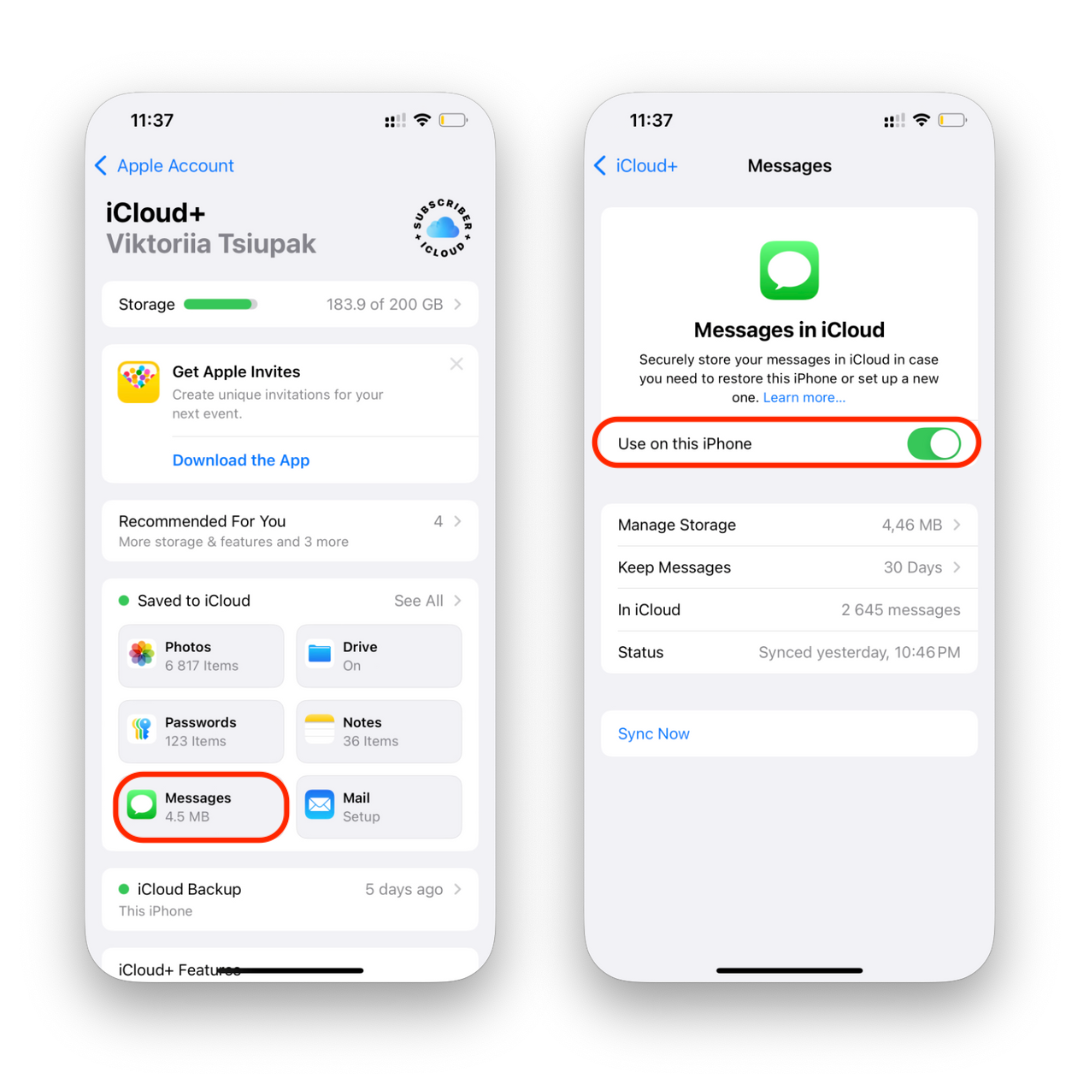
Apple changes labels across iOS versions. Newer versions may say Messages in iCloud. Older versions may say Messages or Sync this iPhone. The job is the same: the device must use the same Apple Account, and Messages must be enabled for iCloud.
If a conversation still does not appear, do not assume it vanished. Large histories and attachments can take time to sync. Keep the device online, check iCloud storage, and confirm the sender thread exists on the original device.
How to View iCloud Messages on Mac
On a Mac, you view iCloud messages in the Messages app. This is Apple’s cleanest desktop path because the Mac has a native Messages app.
- Open the Messages app on your Mac.
- From the menu bar, choose Messages > Settings.
- Click iMessage.
- Sign in with the same Apple Account used on your iPhone.
- Turn on Enable Messages in iCloud if the option appears.
- Wait for conversations to sync. Large message histories can take time.
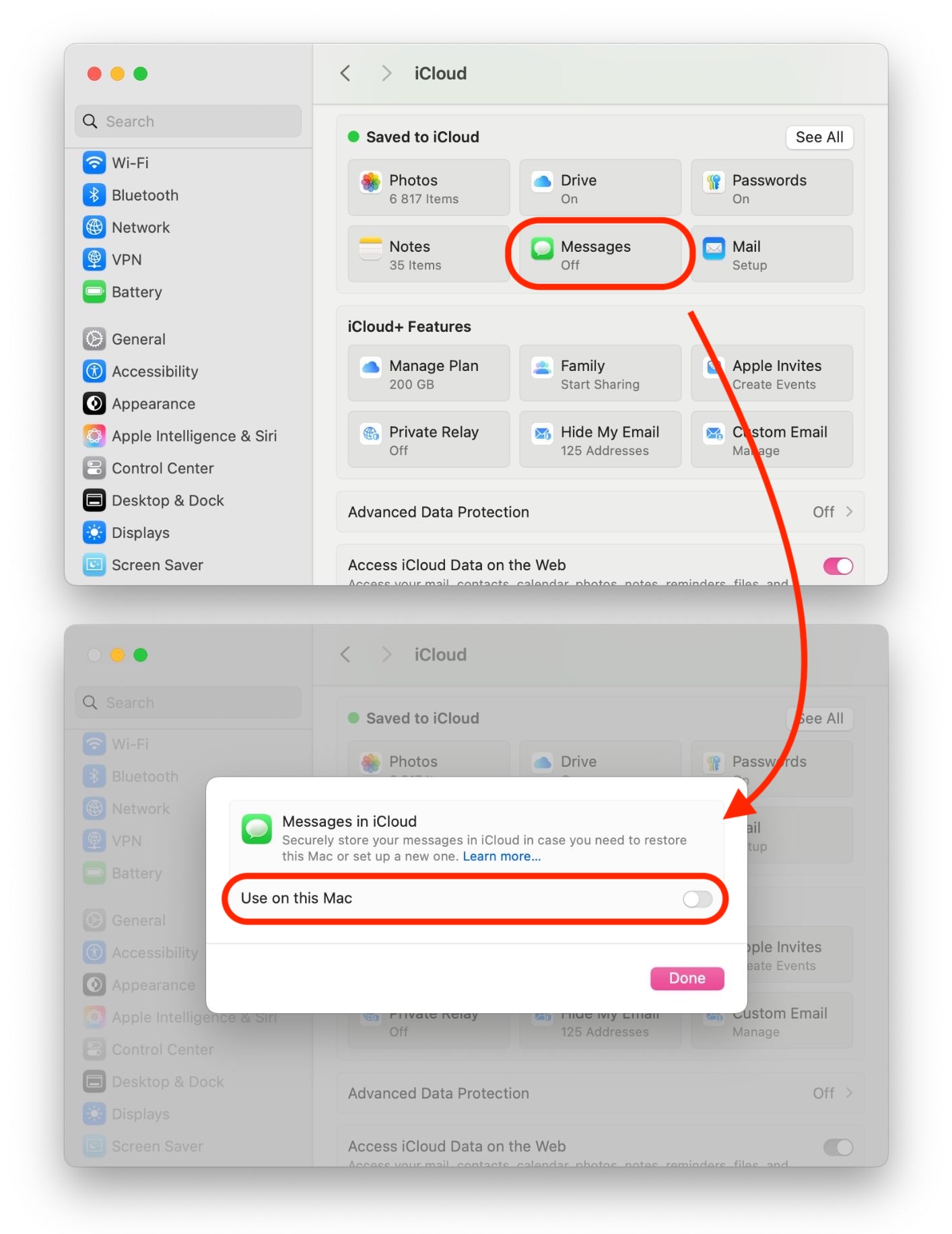
If your Mac shows only some conversations, check the boring stuff first. Use the same Apple Account on both devices. Keep Wi-Fi on, check iCloud storage, and make sure your macOS version supports the feature.
Mac can also receive SMS, MMS, and RCS from your iPhone through Text Message Forwarding. Apple says devices using Messages in iCloud do not need separate Text Message Forwarding setup for that same sync path. Forwarding still matters when you want non-iMessage texts to appear on a Mac or iPad.
How to View iCloud Messages on Windows and Export iPhone Messages to PC
Windows is where Apple stops helping. iCloud for Windows can sync photos, files, mail, contacts, calendars, and passwords. It does not give you a Messages app or an iCloud Messages web viewer.
For Windows users, the practical answer is a local iPhone export workflow. AltTunes is a Windows iPhone manager that can help you view and export iPhone messages from a connected iPhone or local backup workflow. Keep the promise narrow: AltTunes does not log into iCloud.com and unlock cloud-only message threads. It works with device or backup data available to the local workflow.
Step 1: Download and Install AltTunes
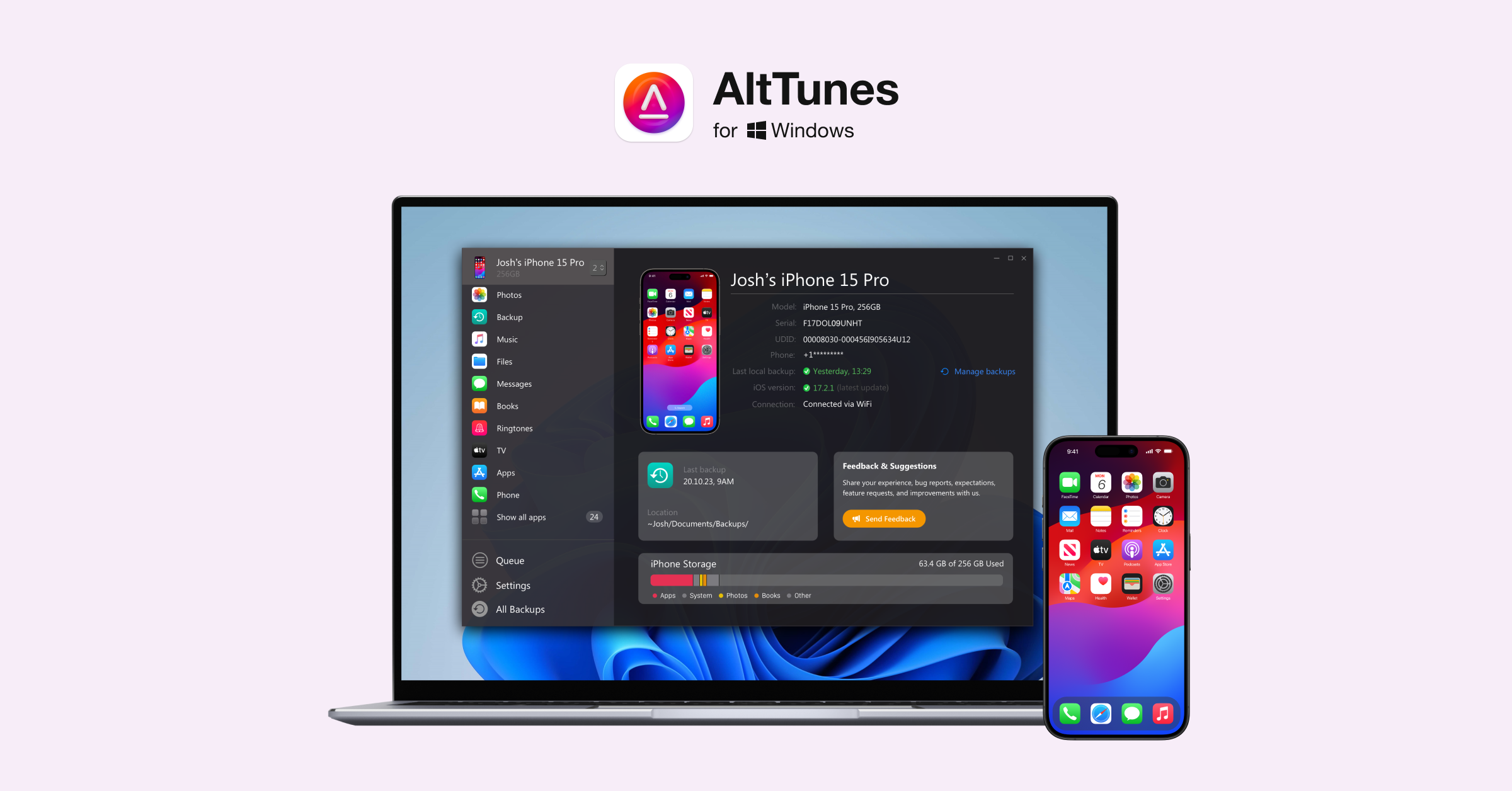
Install AltTunes on your Windows 10 or Windows 11 PC, then start the free trial from inside the app. Use this path when the messages already exist on the iPhone or in a local backup workflow AltTunes can read.
Browse iPhone messages on a Windows PC.
Search messages by sender or message text.
Export selected conversations as readable local files.
Save attachments when they are available from the device or backup source.
Step 2: Connect Your iPhone by USB
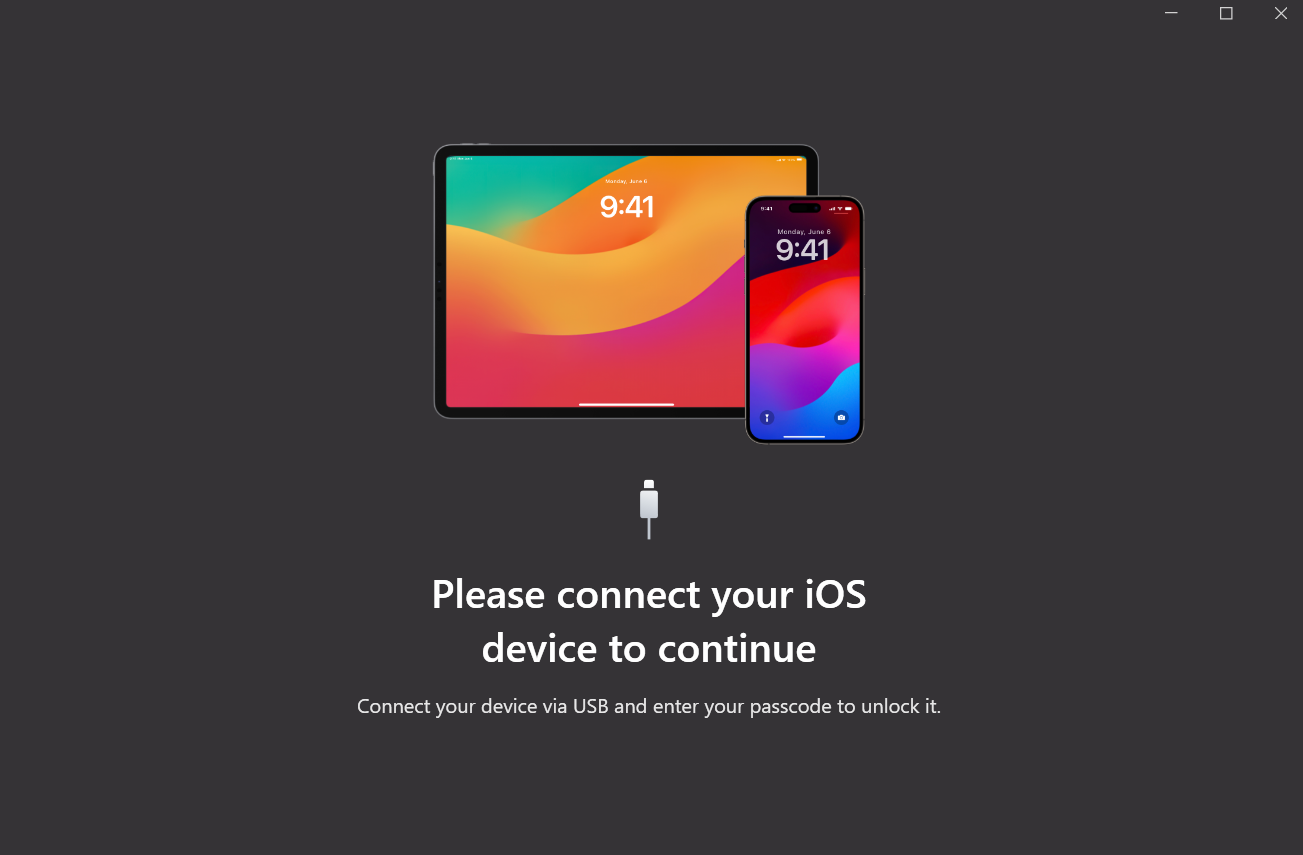
Connect your iPhone to the PC with a USB cable and unlock the iPhone. If iOS asks whether to trust the computer, tap Trust. AltTunes should detect the device and show it in the main window.
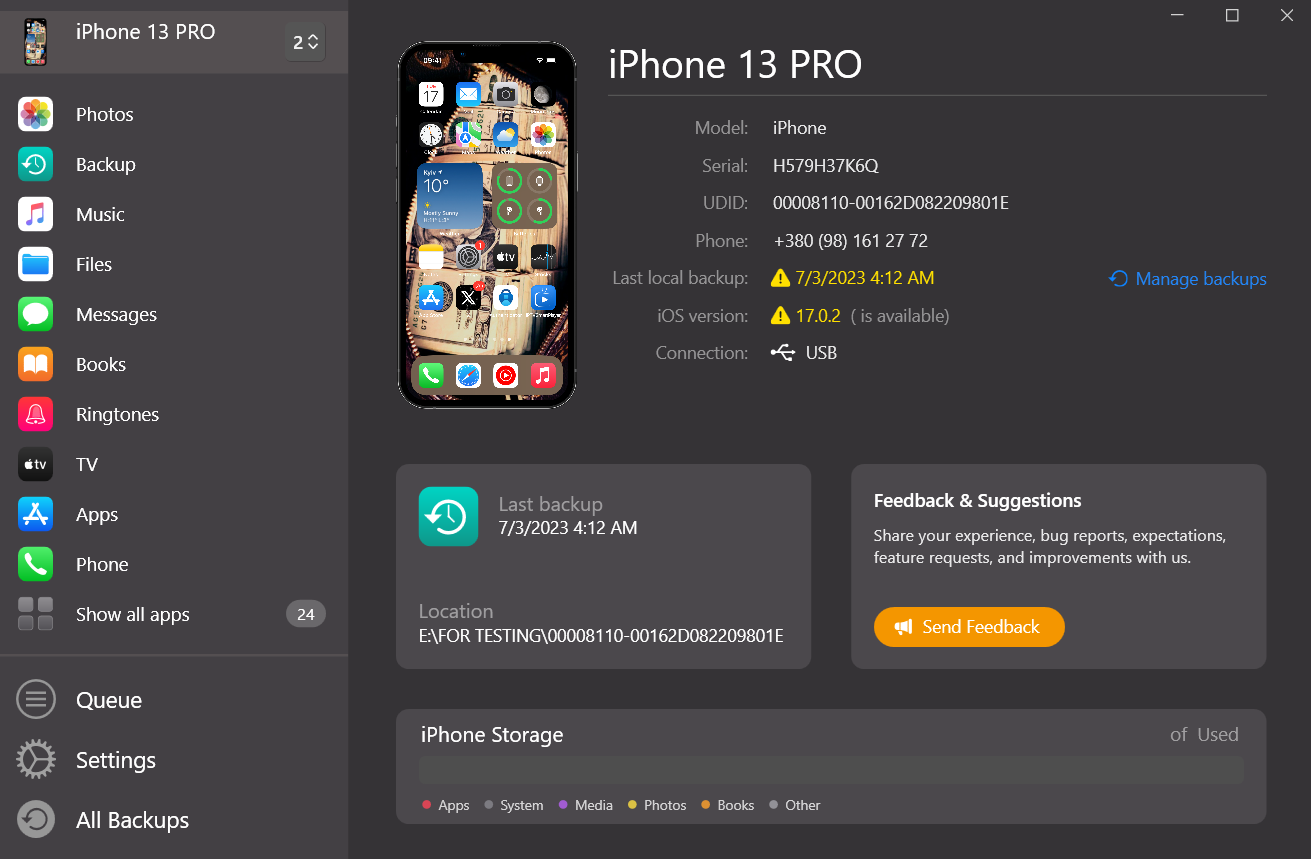
First, use USB. After the first setup, AltTunes may reconnect over Wi-Fi when the iPhone and PC are on the same network. USB removes one more Apple variable during setup.
Step 3: Open Messages in AltTunes
In AltTunes, open Messages. This is where you can view iPhone message threads on the PC and choose which conversations you want to export.
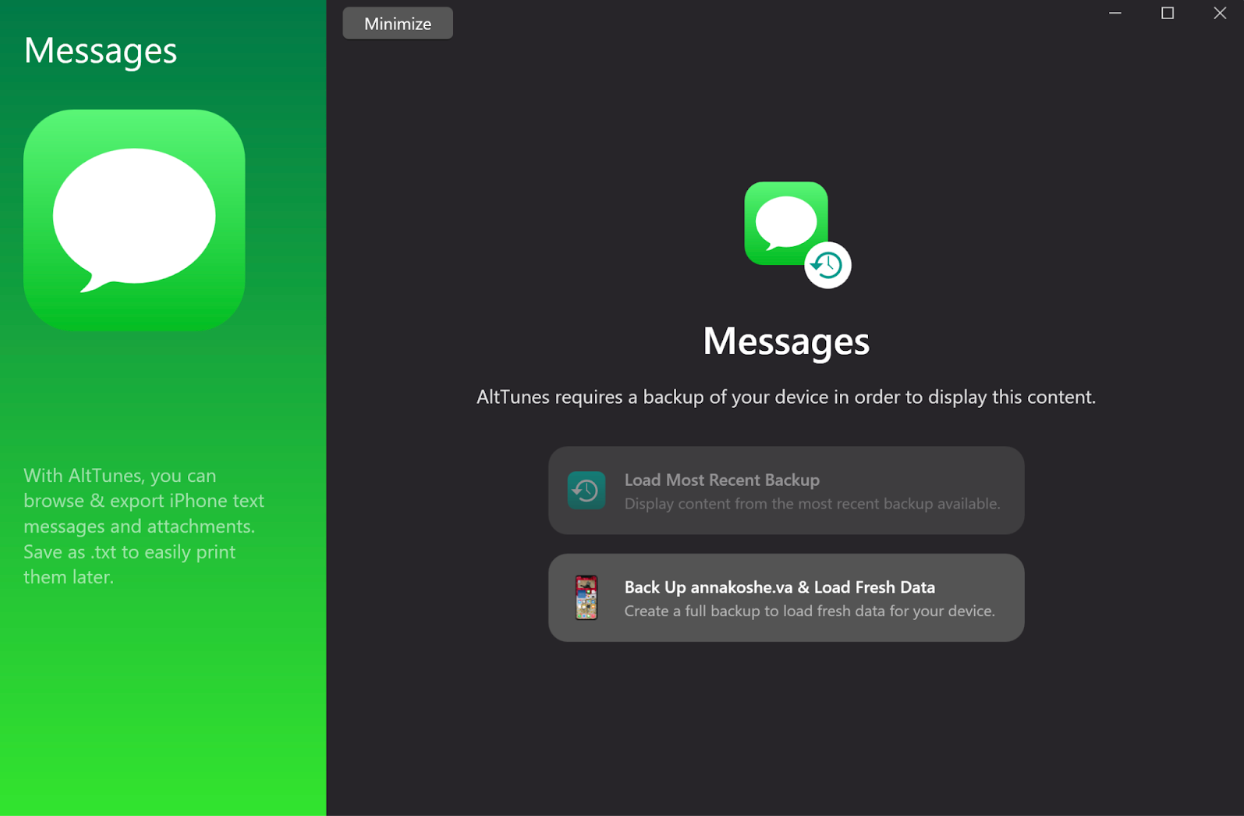
Use search when you need one sender, date range, receipt, legal note, travel thread, or family conversation. Select a range of conversations with Shift, or pick separate conversations with Ctrl on Windows.
Step 4: Export Messages and Attachments
Select the conversations you need, then export them to your PC. Review the export settings before saving. If photos, documents, or other attachments matter, export those files too so the text and attachments stay together.
This is the practical Windows answer to how to view iCloud messages on PC. You are not reading messages on iCloud.com. You are using the iPhone or local backup as the source, then saving a readable copy on Windows.
Should You Trust Third-Party iCloud Message Viewers?
Be careful with any tool that asks for your Apple Account login to view iCloud messages online. Apple does not offer a public iCloud.com Messages inbox. A third-party site needs some other access path.
That does not mean every desktop iPhone tool is bad. It means you should know the source. A local export from your connected iPhone is easier to reason about than handing Apple Account credentials to a random web service. If a tool claims it can recover every deleted message, read the fine print before you install anything or sign in.
Use this order:
- Check Messages in iCloud on your Apple devices.
- Check Text Message Forwarding for SMS, MMS, and RCS on Mac or iPad.
- Use Recently Deleted for recently removed conversations.
- Use a local iPhone or backup export tool when you need a Windows copy.
- Treat credential-based cloud recovery tools as a last resort, not the default.
What to Check If Messages Are Missing
If Messages in iCloud is on and conversations are still missing, check sync and account basics before trying recovery software. Most missing-message cases come from account mismatch, sync delay, storage problems, or backup confusion.
- Wrong Apple Account: the iPhone, iPad, and Mac must use the same Apple Account for Messages in iCloud.
- Messages in iCloud was off: older messages may not sync if the feature was never enabled on the device that had them.
- Sync is still running: large histories and attachments can take time.
- Low iCloud storage: full storage can interrupt syncing.
- Text Message Forwarding is off: SMS, MMS, or RCS may not appear on another Apple device without forwarding support.
- Deleted too long ago: Recently Deleted is time-limited.
- Only a backup has it: an iCloud Backup restore is not the same thing as browsing messages online.
Do not restore an iCloud Backup until you understand the tradeoff. A full restore can replace newer data on the device with older backup data.
Can You Recover Deleted Messages from iCloud or iPhone?
Deleted-message recovery is a different job from viewing synced iCloud messages. Start with Apple’s Recently Deleted folder in the Messages app.
- Open Messages on iPhone.
- Tap Edit or Filters, depending on your iOS version.
- Tap Show Recently Deleted.
- Select the conversation or messages you want back.
- Tap Recover.
Apple’s iPhone User Guide is the safest source for the current recovery path. If the messages are not in Recently Deleted, your next option may be a device backup restore. Be careful with that path because restoring an older iCloud Backup can replace newer data.
Why Use AltTunes for Message Exports?
AltTunes makes sense when the problem is Windows access, not Apple-device sync. You want a readable copy of iPhone messages on a PC. You want to search, select, and export conversations without fighting iTunes.
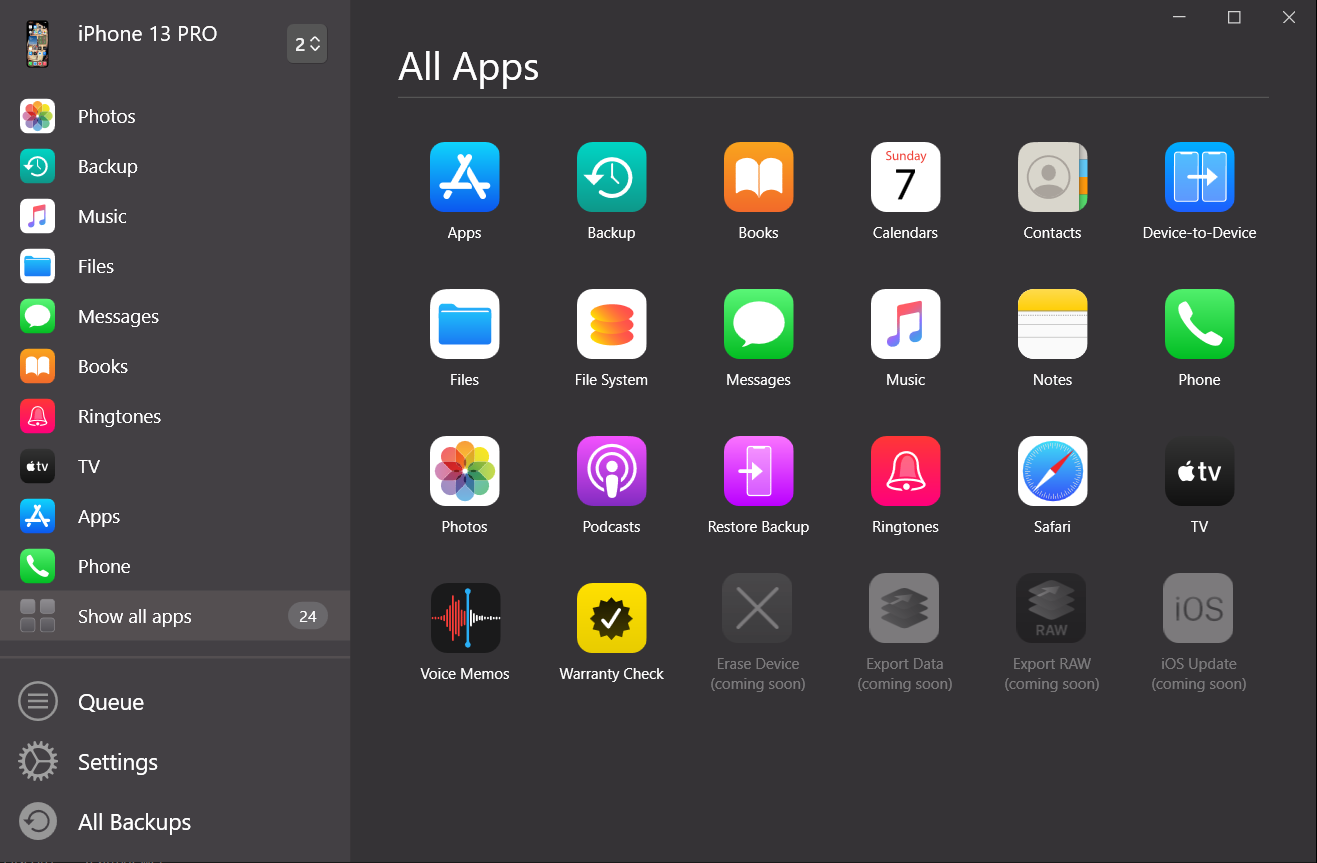
Configure Your Exports
Before exporting, choose what you want to save. Export one conversation, a range of conversations, or separate threads. Keep the export focused so you do not dump years of private messages into one giant file you will never open again.
Drag and Drop Selected Messages
For smaller exports, drag selected conversations into a folder on your PC. This works well when you need a few threads for a record, trip, project, receipt, or support case.
Export Multiple Chats and Attachments
For bigger exports, select several chats and save them together. If a conversation has photos, documents, or other attachments, export those too. Text without the attached file is usually only half the story.
AltTunes also handles broader iPhone data management on Windows, including photos, music, videos, contacts, files, and backups. If you only need message export, use message export. If you often fight iTunes on Windows, AltTunes covers more of the same mess.
Need a readable copy of your iPhone messages on Windows? Use AltTunes to export iPhone messages to PC, then keep the files on your own computer.
Sources and Citations
- Apple iCloud User Guide, Set up iCloud for Messages: https://support.apple.com/guide/icloud/set-up-messages-mm0de0d4528d/icloud
- Apple Support, Text Message Forwarding: https://support.apple.com/en-us/102545
- Apple iPhone User Guide, Recover deleted messages: https://support.apple.com/guide/iphone/recover-deleted-messages-iph16ecebf48/ios
- Apple Support, iCloud for Windows overview: https://support.apple.com/en-us/103232
- Softorino AltTunes product page: https://softorino.com/alttunes
Bottom Line
The honest answer is simple: iCloud.com does not let you read text messages. To see text messages synced with iCloud, turn on Messages in iCloud and read them in the Messages app on iPhone, iPad, Apple Vision Pro, or Mac.
If you are on Windows and need a readable copy, use AltTunes to export iPhone messages to PC from a connected iPhone or local backup workflow. It keeps the workflow local and clear: connect the iPhone, open Messages, search what you need, and export the conversations. No fake iCloud inbox. No recovery-tool theater.
FAQ
Can I read text messages on iCloud.com?
No. iCloud.com does not show SMS, MMS, RCS, or iMessage threads like it shows Photos, Mail, Contacts, Notes, and Drive. Messages in iCloud syncs messages across Apple devices, but the readable inbox lives in the Messages app.
How can I see my text messages on iCloud from iPhone?
Turn on Messages in iCloud on your iPhone, then open the Messages app. The iPhone must use the same Apple Account that stores the synced message history, and large conversations may take time to download.
Can I see iCloud messages on Windows?
Not through Apple’s iCloud for Windows app or iCloud.com. On Windows, use a connected iPhone or local backup workflow with an iPhone manager such as AltTunes, then view or export the messages on your PC.
Does iCloud Backup let me browse text messages?
No. iCloud Backup can store message data as part of a device backup, but Apple does not let you browse that backup like a folder. Restoring an old backup can also replace newer device data.
Can I export iPhone message attachments to PC?
Yes, if the attachments are available on the iPhone or in the local backup workflow you are exporting from. In AltTunes, select the conversation and export the messages and attachments you need so the record stays readable.

AltTunes
Seamlessly Browse, Manage & Export iOS Data
