Download MP3 to iPhone Without iTunes: 7 Safe Ways

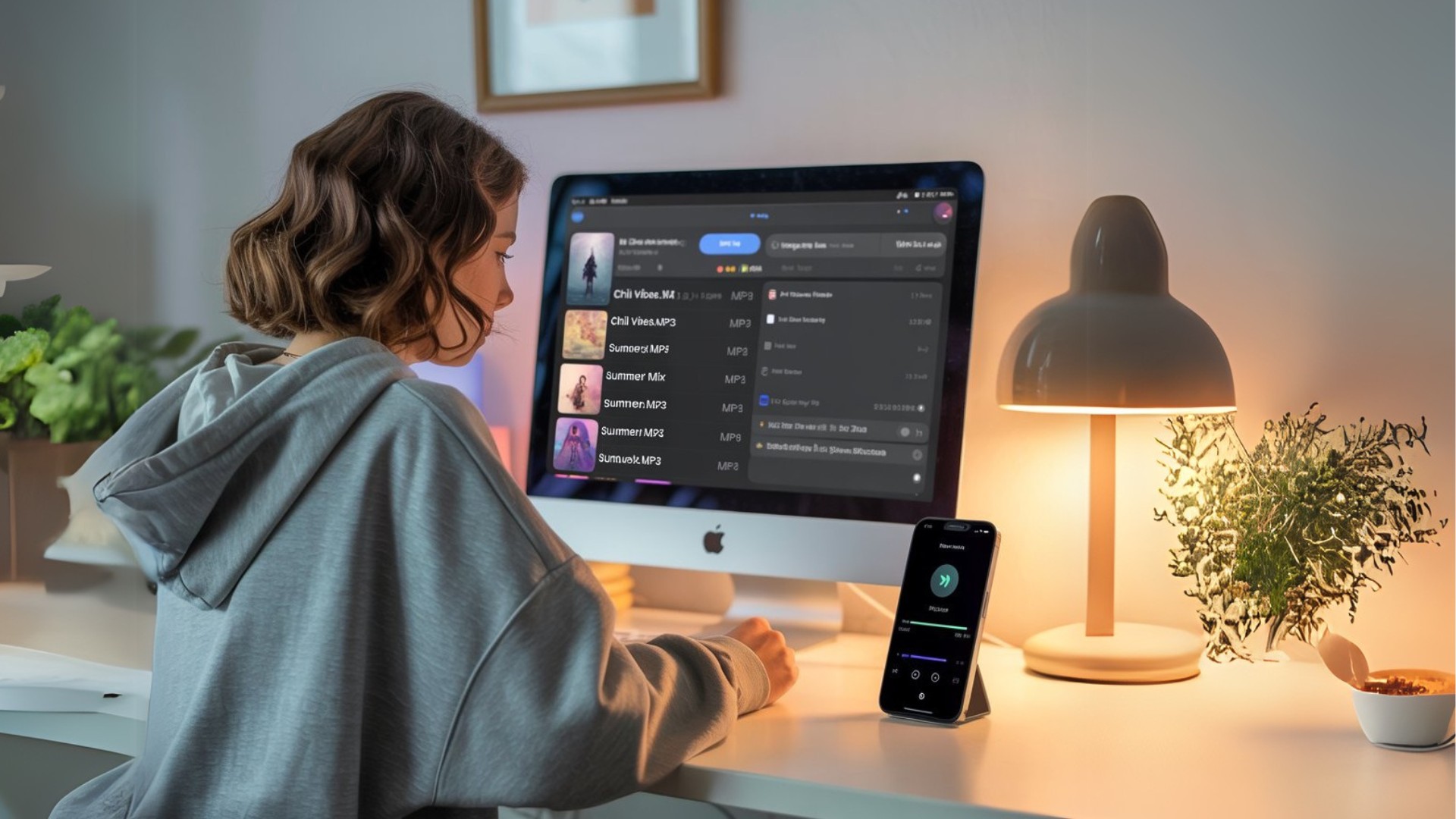
To download MP3 to iPhone, first decide where the file should live. Use WALTR PRO when a local MP3 on Mac or Windows needs to appear in the iPhone Music app. Use Files, iCloud Drive, VLC, or Documents when you only need offline playback.
MP3 already works on iPhone. The problem is placement. AirDrop and cloud apps usually save the file outside Music, while Finder, Music, iTunes, or WALTR PRO can put local MP3s into the Music app.
Quick answer: iPhone can play MP3 files. You usually do not need an MP3-to-iPhone converter. You need the method that puts the file in Music, Files, VLC, Documents, or cloud storage.
#quick-answer
Before we begin
Download WALTR PRO on Mac or Windows to transfer MP3 files you already own directly to the iPhone Music app without iTunes. Save the MP3 files on the computer first, connect the iPhone, and drag the tracks to the device.
Quick Takeaways Before You Download MP3 to iPhone
- iPhone can play MP3 files. You usually do not need to convert MP3 to an “iPhone format.”
- WALTR PRO is the cleanest route when the MP3 is on Mac or Windows and you want it in the iPhone Music app.
- Direct iPhone downloads through Safari, Documents, Files, VLC, or cloud storage usually stay outside the Music app.
- Finder, Music, and iTunes work when you accept Apple sync rules and check Sync Library settings first.
- Online downloads should come only from owned files, licensed files, public-domain sources, or platforms that allow downloads.
Best Way to Download MP3 to iPhone Depends on the Source
Do not start with an app. Start with the file and the destination. A local MP3 on your computer needs a transfer workflow. A legal web download needs Files, Documents, VLC, or cloud storage. A YouTube or SoundCloud-style source needs a supported downloader and copyright-safe use.
This choice matters because “download MP3 to iPhone directly” and “add MP3 to iPhone Music” are different jobs. Pick the wrong route and the file may play fine, but it will not show up where you expect.
- Local MP3 on Mac or PC: use WALTR PRO if you want the track in the iPhone Music app without iTunes.
- Supported online audio or video: use SYC PRO / Softorino YouTube Converter for sources you have the right to download.
- Direct/free iPhone-only download: use Safari, Documents, Files, VLC, or cloud storage when app-local playback is enough.
- Official Apple sync: use Finder on modern macOS, Music app library sync, or iTunes on Windows.
- One-off Mac transfer: use AirDrop, but expect the file to open in Files or another app, not Music.
- Cloud access: use iCloud Drive, Dropbox, or Google Drive when storage matters more than Music app placement.
- App-only playback: use VLC or Documents when you are fine keeping MP3s inside that app.
Quick Comparison: Where Will the MP3 Show Up?
Method | Best for | Where the MP3 appears | Main catch |
|---|---|---|---|
WALTR PRO | Local MP3 files on Mac or Windows | iPhone Music app | Paid app after trial |
Softorino YouTube Converter | Supported legal online sources | Computer or connected iPhone workflow | Source rights and platform support matter |
Finder / Music / iTunes | Official Apple library sync | Music app | Sync rules can replace or rearrange content |
AirDrop | One quick Mac-to-iPhone transfer | Files app or chosen app | Usually not Music |
iCloud Drive / Dropbox / Google Drive | Cloud access across devices | Files or cloud app | Not a Music library import |
VLC / Documents | App-only offline playback | VLC or Documents storage | Files stay inside that app |
If your goal is “I want this MP3 in my iPhone Music app,” avoid cloud-only and app-only methods. Use WALTR PRO or Apple sync.
#placement-matters
How to Download MP3 to iPhone Without iTunes Using WALTR PRO
WALTR PRO is the easiest route when your MP3 files are already on a Mac or Windows PC. You drag the files into the app, choose the iPhone, and WALTR PRO sends supported audio to the native Music app without iTunes sync.
This is the strongest Softorino fit for this article because it solves the real problem: not MP3 compatibility, but Apple’s awkward path into the Music library.
Watch the WALTR PRO flow above if you want the visual version. The short version is still simple: install, connect, drop files, play them on iPhone.
Step 1. Download WALTR PRO
Install WALTR PRO on your Mac or Windows PC from softorino.com/waltr-pro. It works best when you already have MP3, FLAC, AAC, or other local audio files on your computer and want them on your iPhone without library syncing.
Use the free trial if you want to test one transfer before committing. No iPhone app is needed for the basic MP3-to-Music workflow.
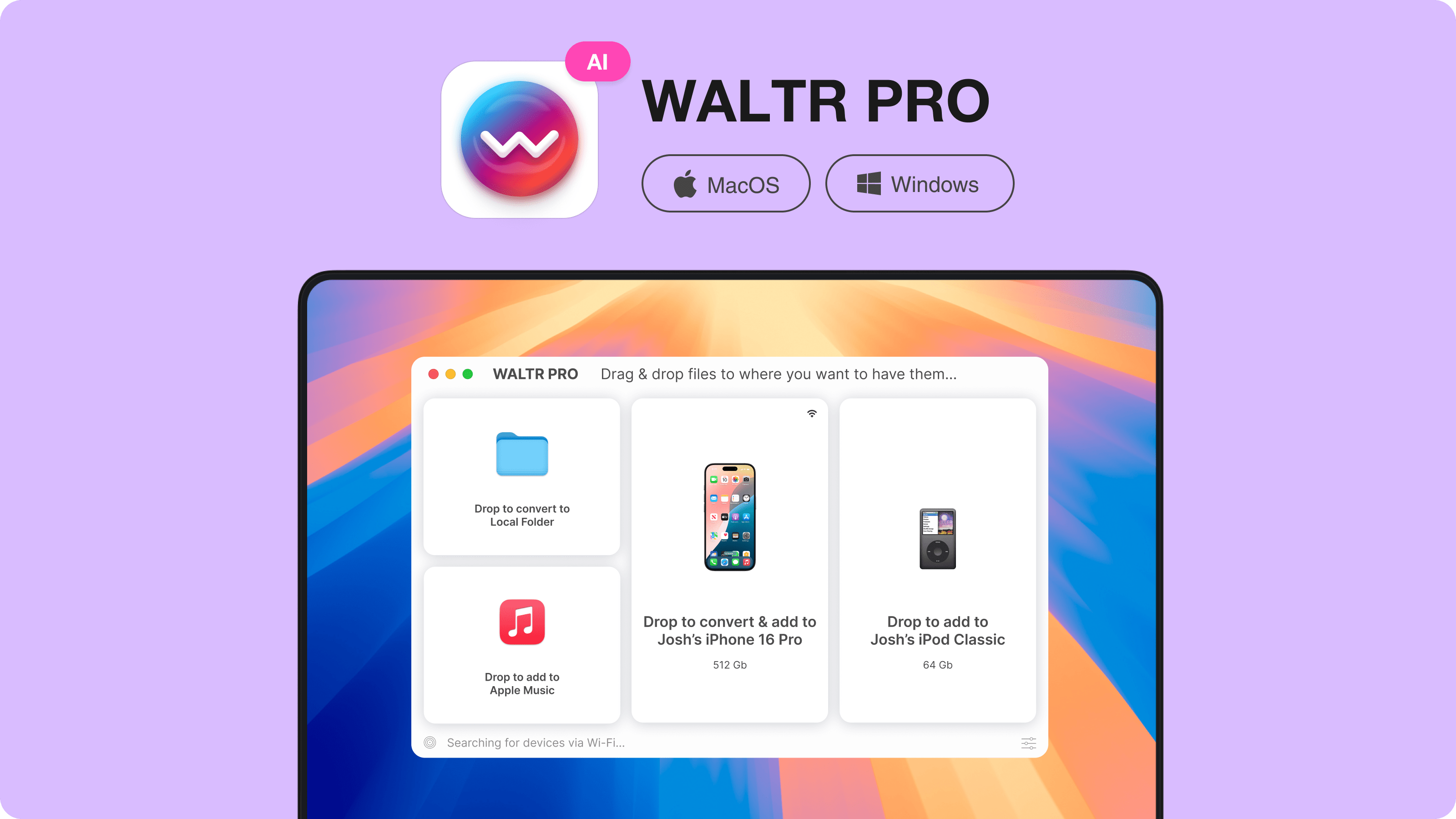
Step 2. Connect your iPhone
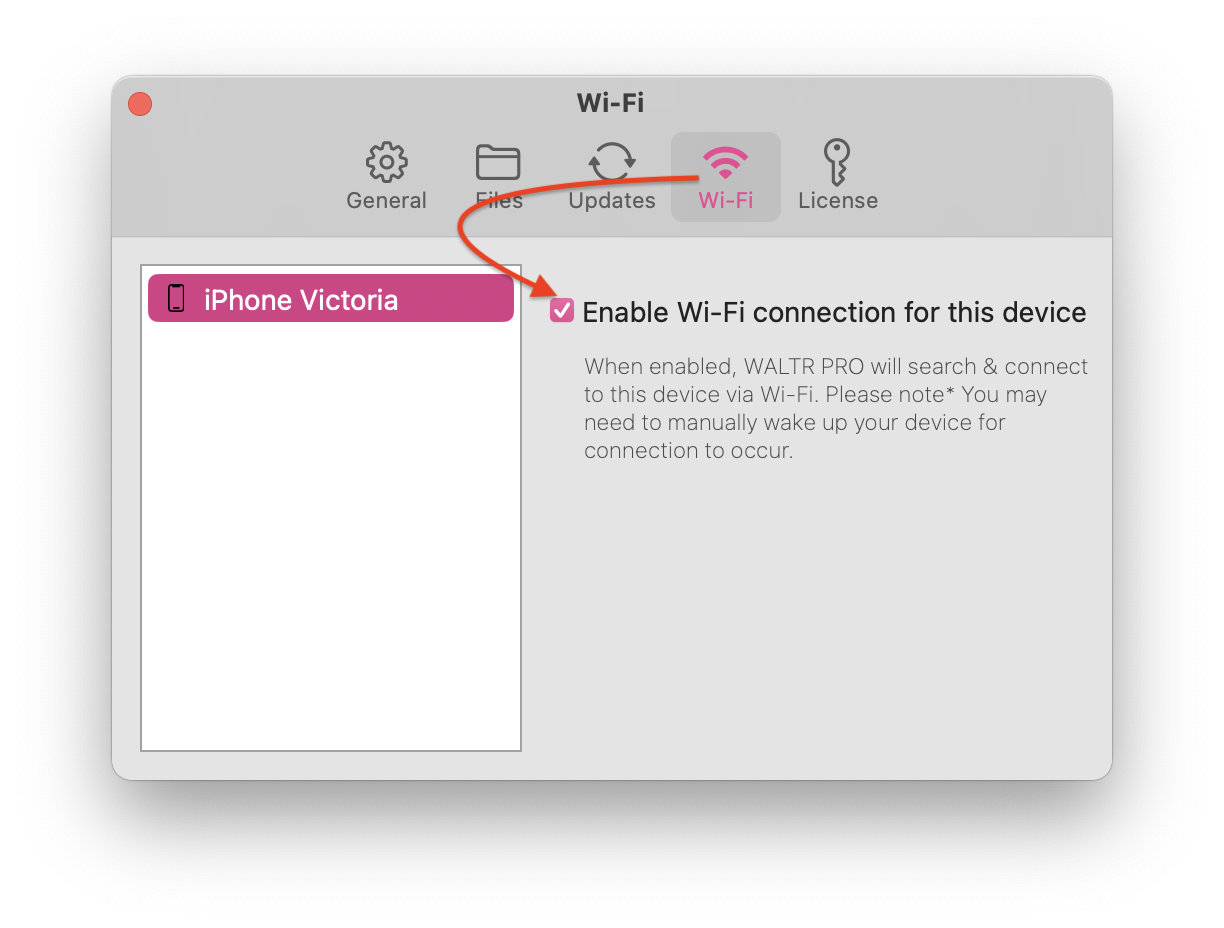
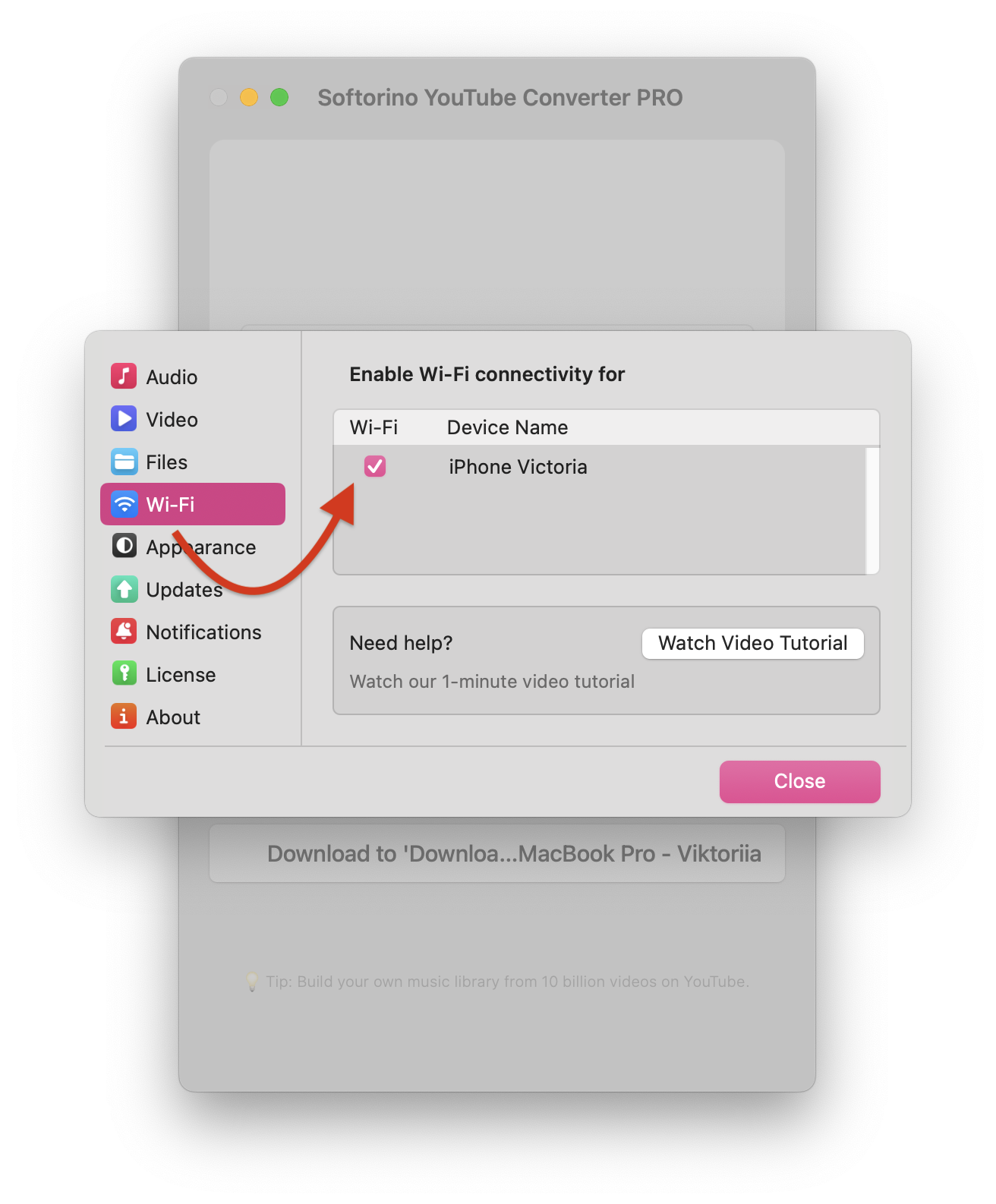
Open WALTR PRO and connect your iPhone with a cable first. After setup, you can enable Wi-Fi connectivity and transfer wirelessly when both devices are on the same network.
Cable is best for the first connection. Wi-Fi is convenient after WALTR PRO has already seen the device.
#setup-note
Click the settings wheel and enable Wi-Fi connectivity if you want cable-free transfers later.
Step 3. Drag your MP3 files into WALTR PRO
Drag your MP3 files into the drop zone, or click Select Files and choose them from Finder or File Explorer. WALTR PRO handles the transfer and places compatible audio where iPhone expects it.
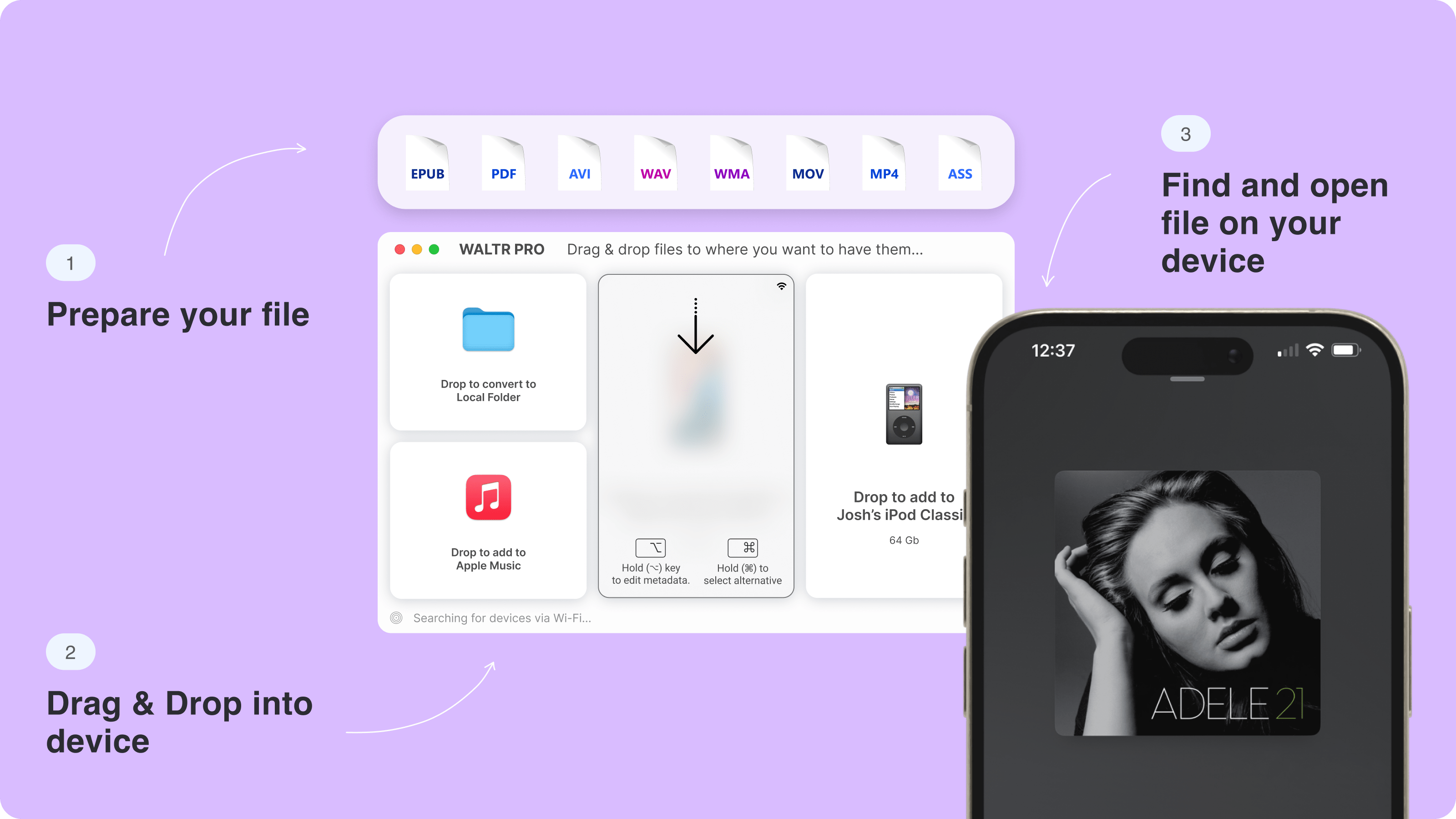
You can use this same flow for other media files too. WALTR PRO supports common audio and video formats, so you do not need to think about Apple’s format preferences every time.
Use WALTR PRO for local files. Use SYC PRO for supported online sources. That split keeps the workflow clean and avoids shady browser converters.
#best-fit
Step 4. Edit metadata or choose a destination
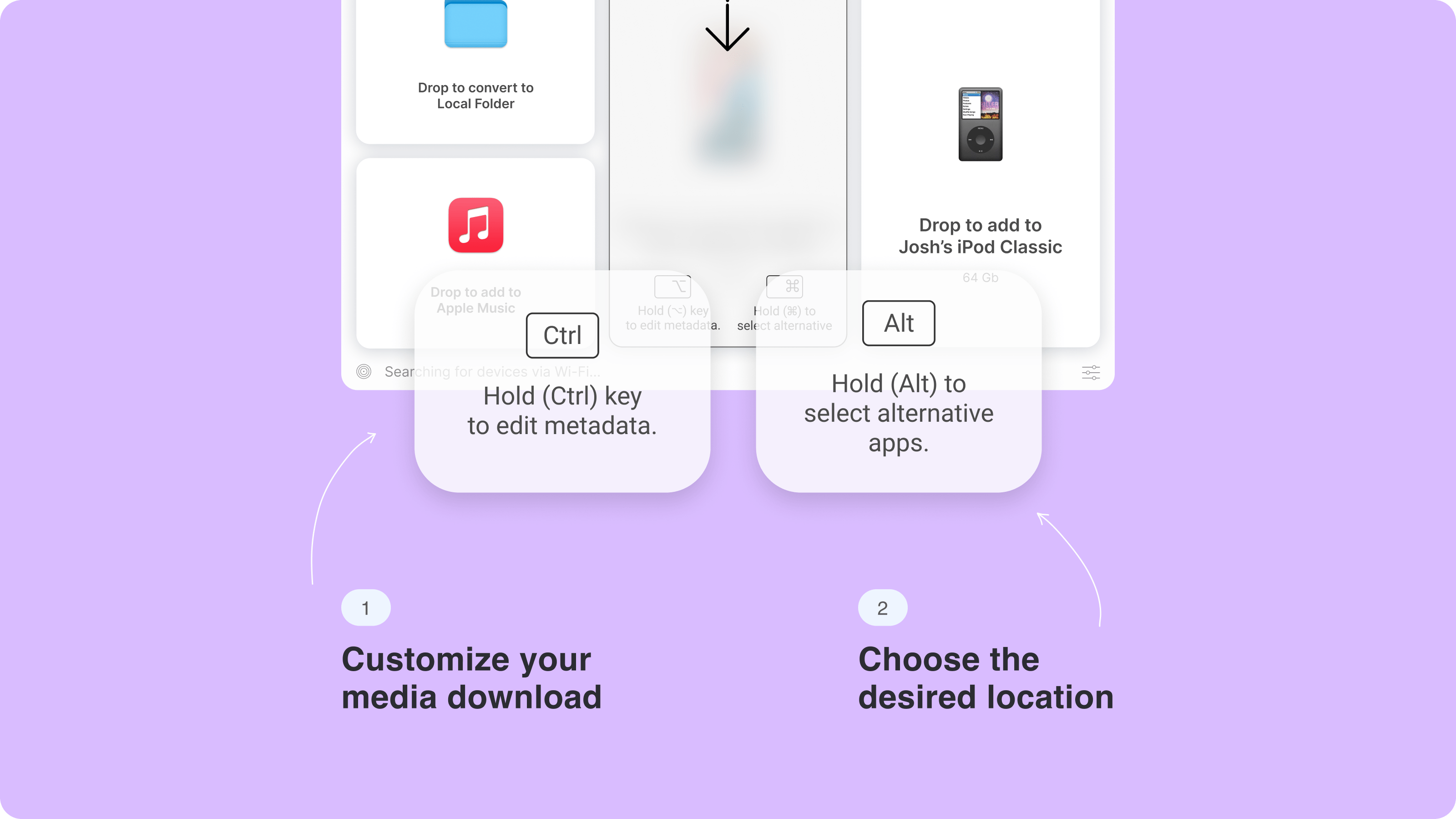
Before sending the file, you can adjust metadata such as title, artist, album, or cover art. This helps the track look right once it lands on your iPhone.
- Edit metadata: hold Ctrl on Windows or Option on Mac while adding the file, then update title, artist, album, or artwork.
- Choose another destination: use the alternate destination option when you want a file to land in a different supported app.
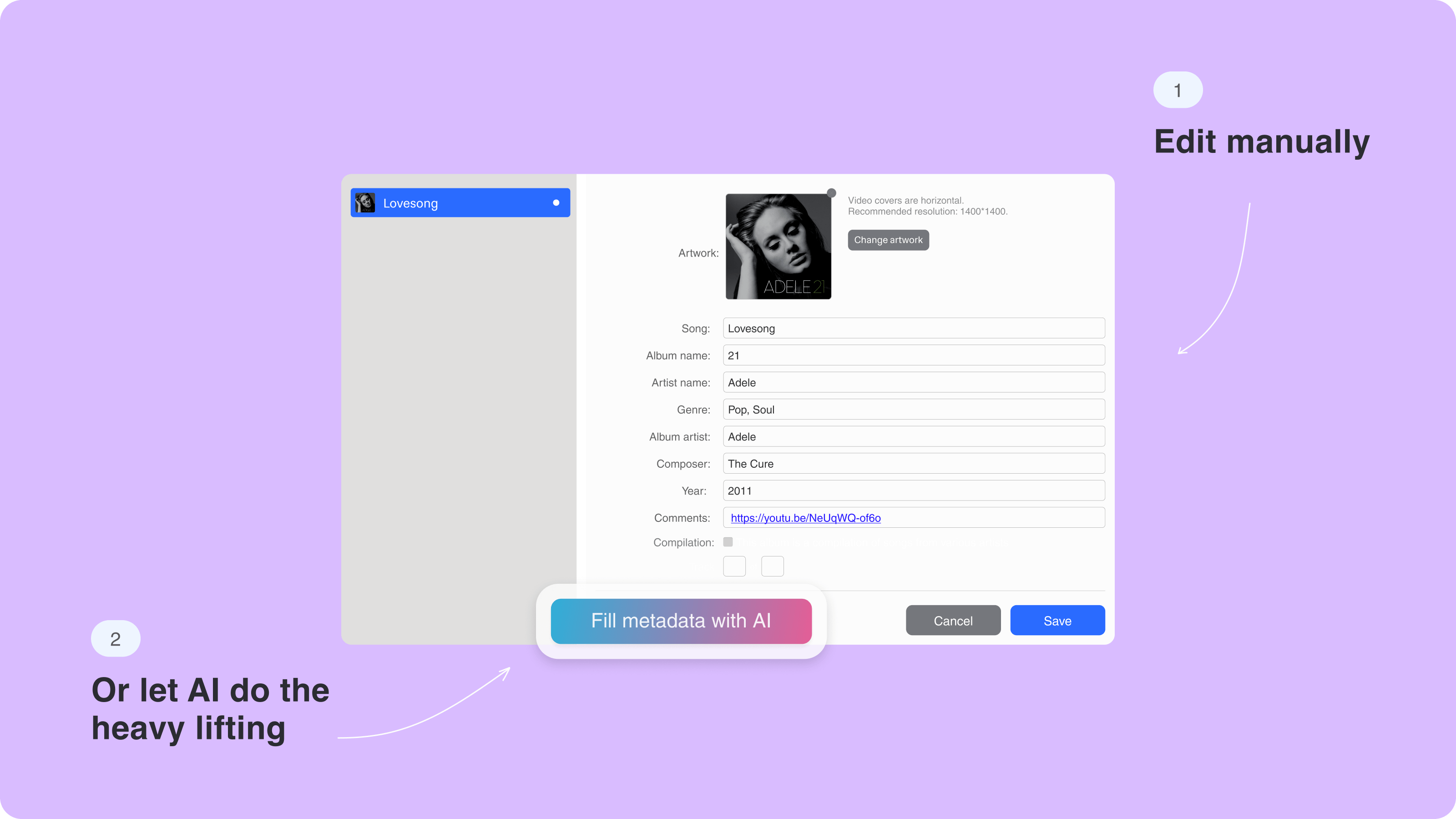
Optional: Fill missing metadata with AI
If your MP3 has messy names or missing artwork, WALTR PRO can help fill metadata. Use it for cleanup, then check the result before you transfer a large music folder.
Step 5. Open Music on your iPhone
After the transfer finishes, open the iPhone Music app and look for the track. This is the main reason to use WALTR PRO instead of AirDrop, iCloud Drive, or VLC for local MP3s.
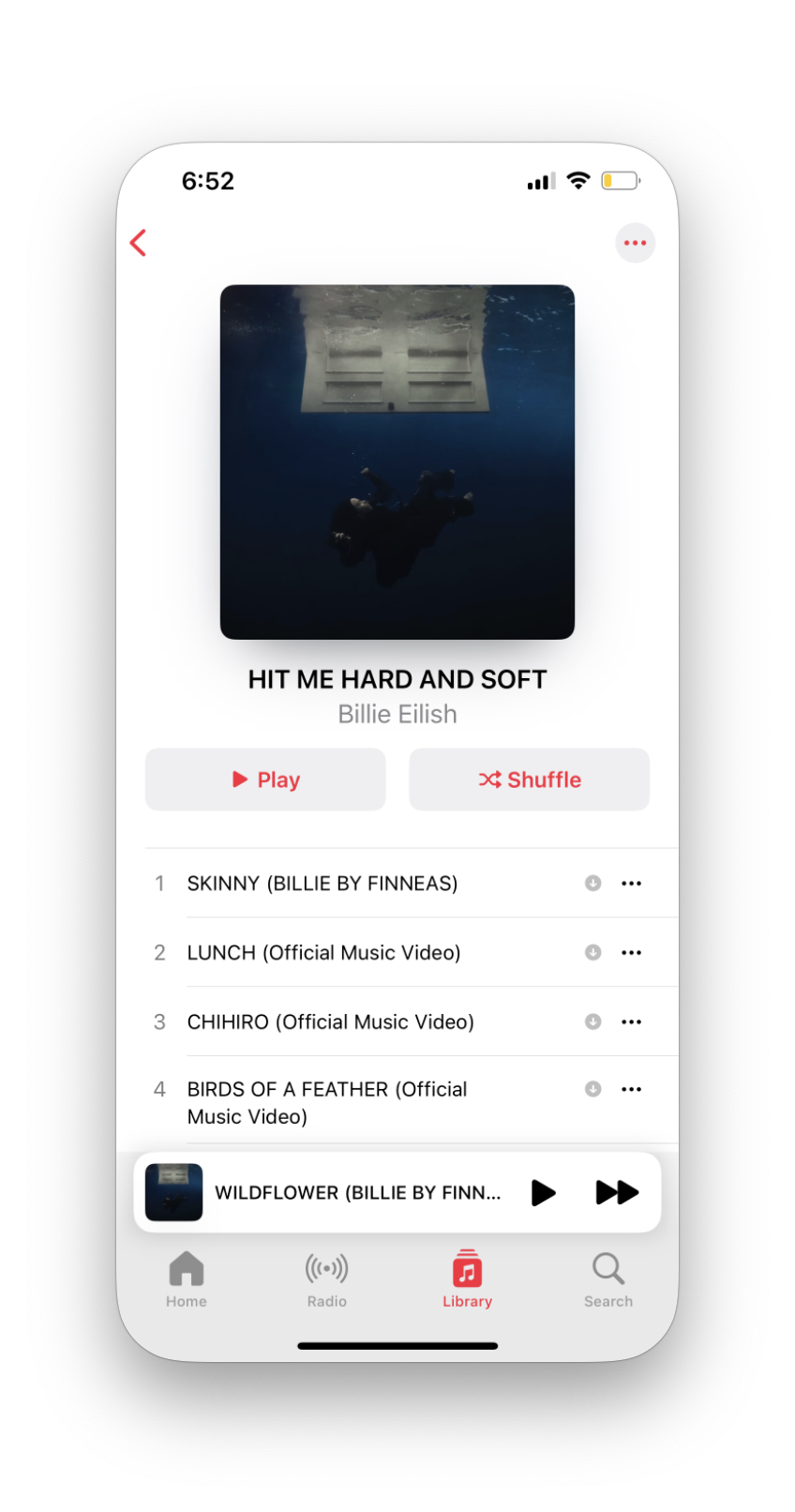
You keep the familiar Music app playback experience without syncing a whole Apple Music library or installing a player app on the iPhone.
If you also work with lossless files, read Softorino’s guide on whether iPhone can play WAV files.
What Else WALTR PRO Can Transfer
WALTR PRO is not only for MP3. Keep the feature list tight, though. The point is not “more features.” The point is fewer Apple workarounds.
Edit metadata and cover art: fix song names, album details, and artwork before transfer.
Send audio to iPhone: transfer MP3, FLAC, AAC, and other supported audio files without iTunes.
Transfer video files: move MP4, MKV, AVI, and similar files to the right native Apple app where supported.
Add books and documents: send PDFs, ebooks, and documents without digging through iTunes sync settings.
Use cable or Wi-Fi: start with cable, then switch to Wi-Fi after setup.
If you use multiple Softorino apps, the Universal License can make sense. If you only need local MP3 transfers, start with WALTR PRO.
How to Download Supported Online Audio to iPhone with SYC PRO
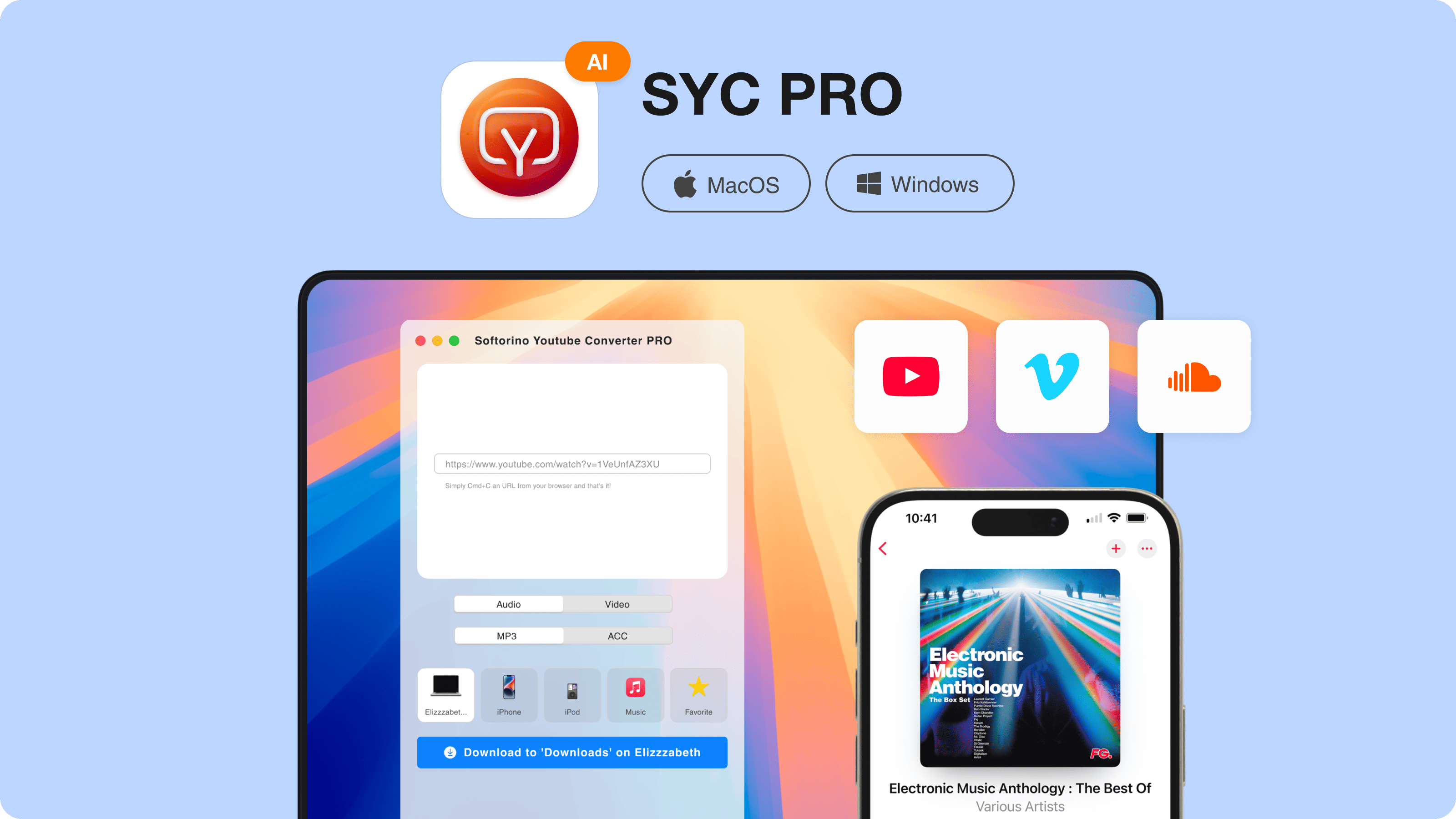
SYC PRO / Softorino YouTube Converter is the better fit when the source is supported online audio or video and you have the right to download it. Use this for legal offline workflows, not for bypassing copyright or platform rules.
This method is different from WALTR PRO. WALTR PRO moves files you already have. SYC PRO helps with supported online sources, then sends the output to your chosen destination when the download is allowed.
Step 1. Install SYC PRO
Download Softorino YouTube Converter from softorino.com/youtube-converter or softorino.com/softorino-youtube-converter. Do not use old SYC2 links or retired legacy product URLs.
Step 2. Connect your iPhone or choose a computer download
Open SYC PRO and choose whether you want the file saved on the computer or sent to a connected iPhone. Use cable first if the app asks for device setup.
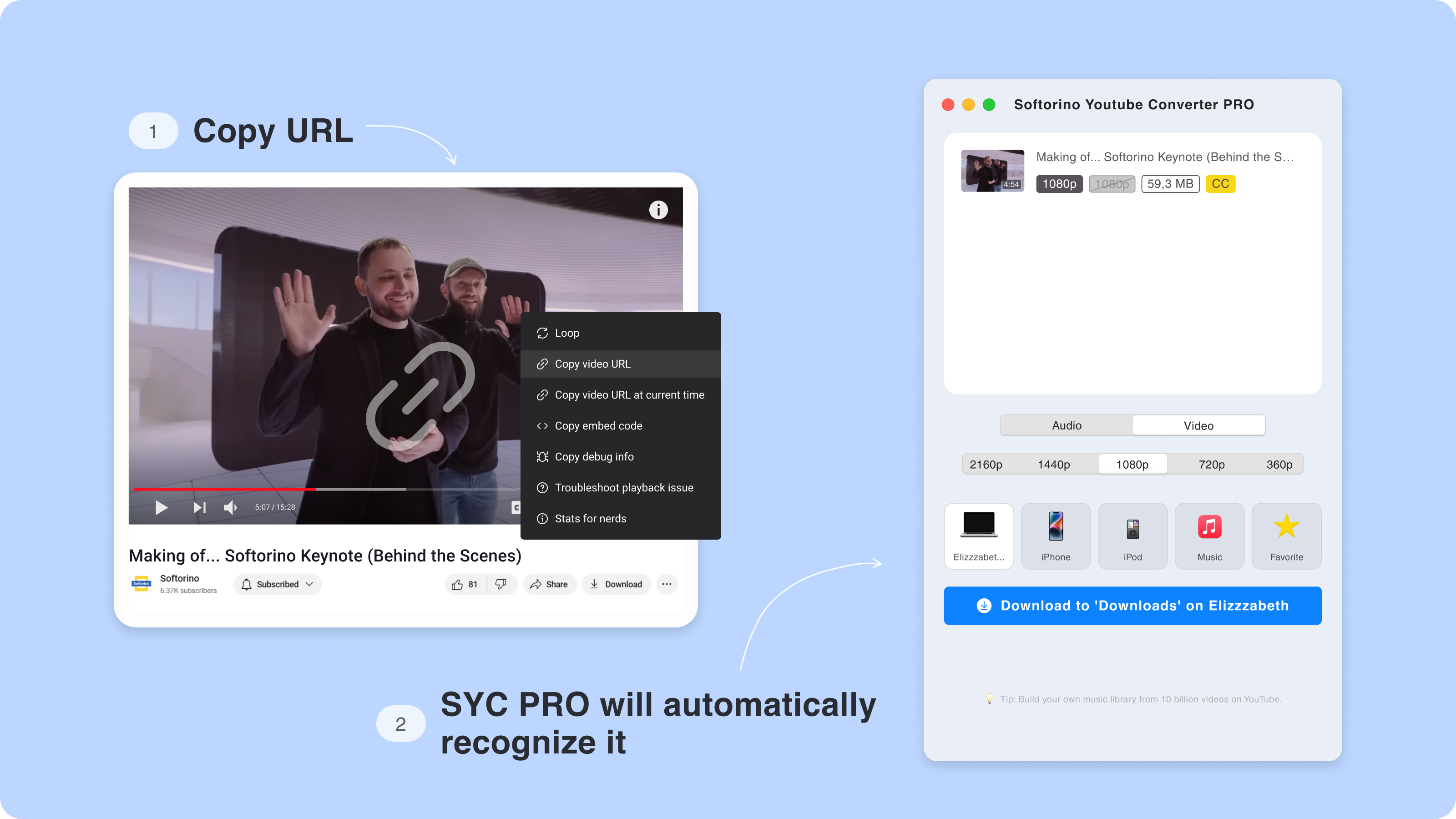
Step 3. Copy the source URL
Copy the URL from a supported source, then paste it into SYC PRO if the app does not detect it. Keep this legal: use your own content, public-domain material, licensed files, or sources where downloading is allowed.
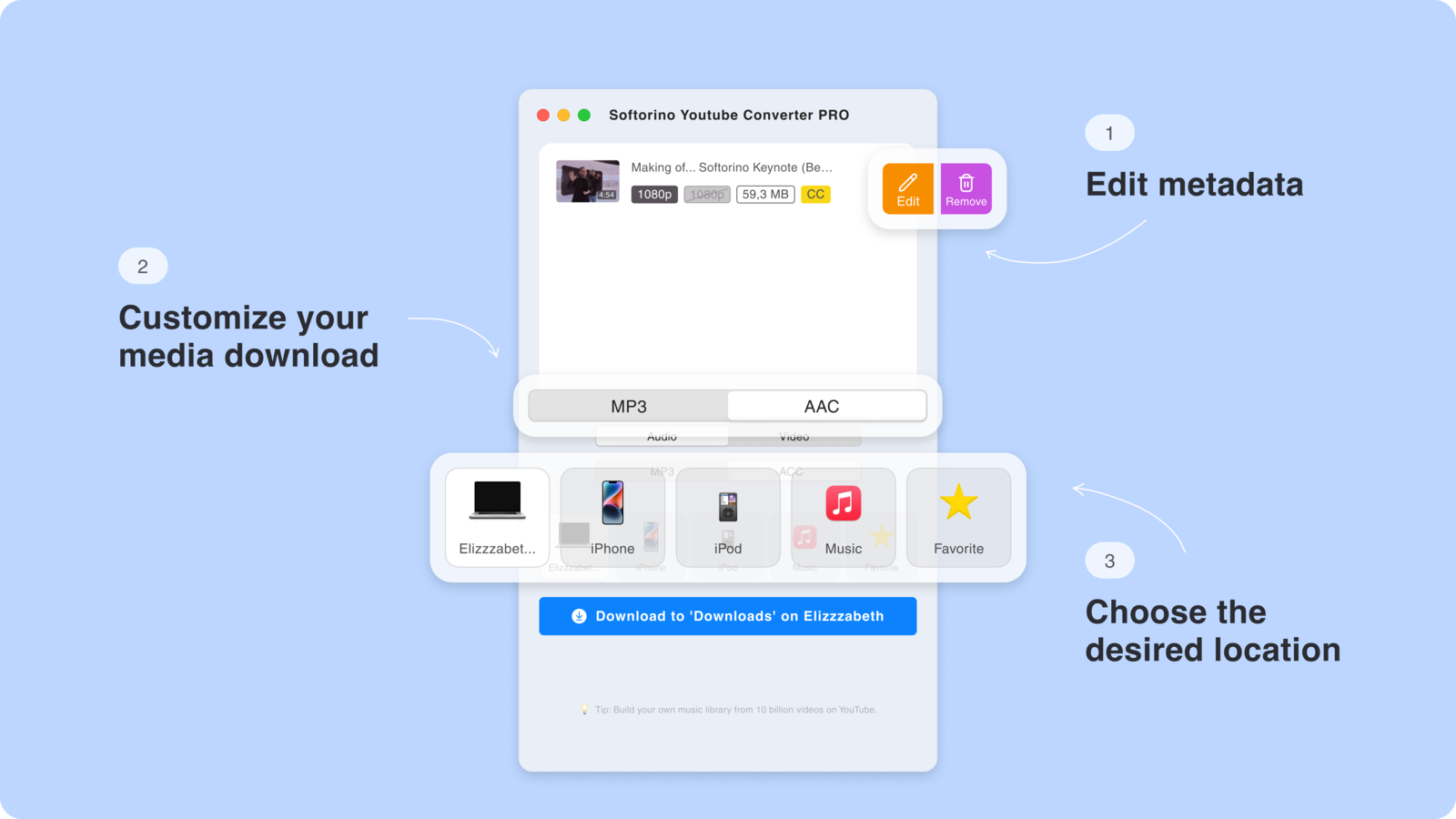
Step 4. Choose MP3 and download location
Choose MP3 or another available audio format, pick the destination, then start the download. If your goal is iPhone playback, confirm where SYC PRO will place the file before you start a batch.
Avoid any claim that a tool can download from every music platform. Platform rules, DRM, and source support change. Stick to supported, legal sources.
#safety-note
SYC PRO is a cleaner option than random web converter sites because you are not pasting URLs into ad-heavy pages. Still, the source rights matter.
How to Transfer MP3 Files to iPhone with AirDrop
AirDrop works for quick Mac-to-iPhone transfers. Apple’s AirDrop guide covers the sharing flow. The catch: AirDrop usually sends MP3 files to Files or another app, not straight into the Music app.
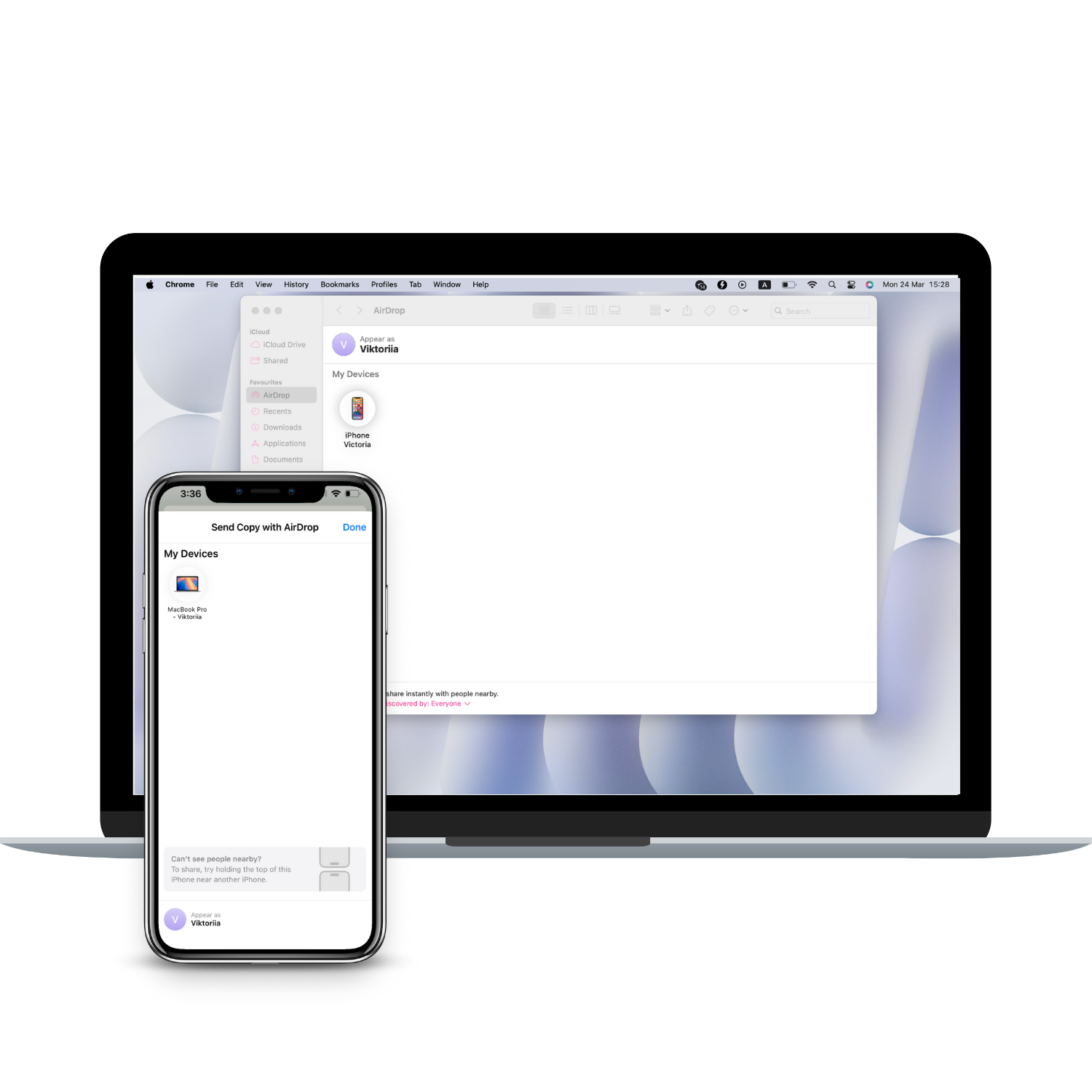
Use AirDrop when you need a one-off file on the iPhone. Do not use it when you want a clean Music library.
Requirements:
Wi-Fi and Bluetooth are on for both devices.
Your Mac and iPhone are awake, unlocked, and near each other.
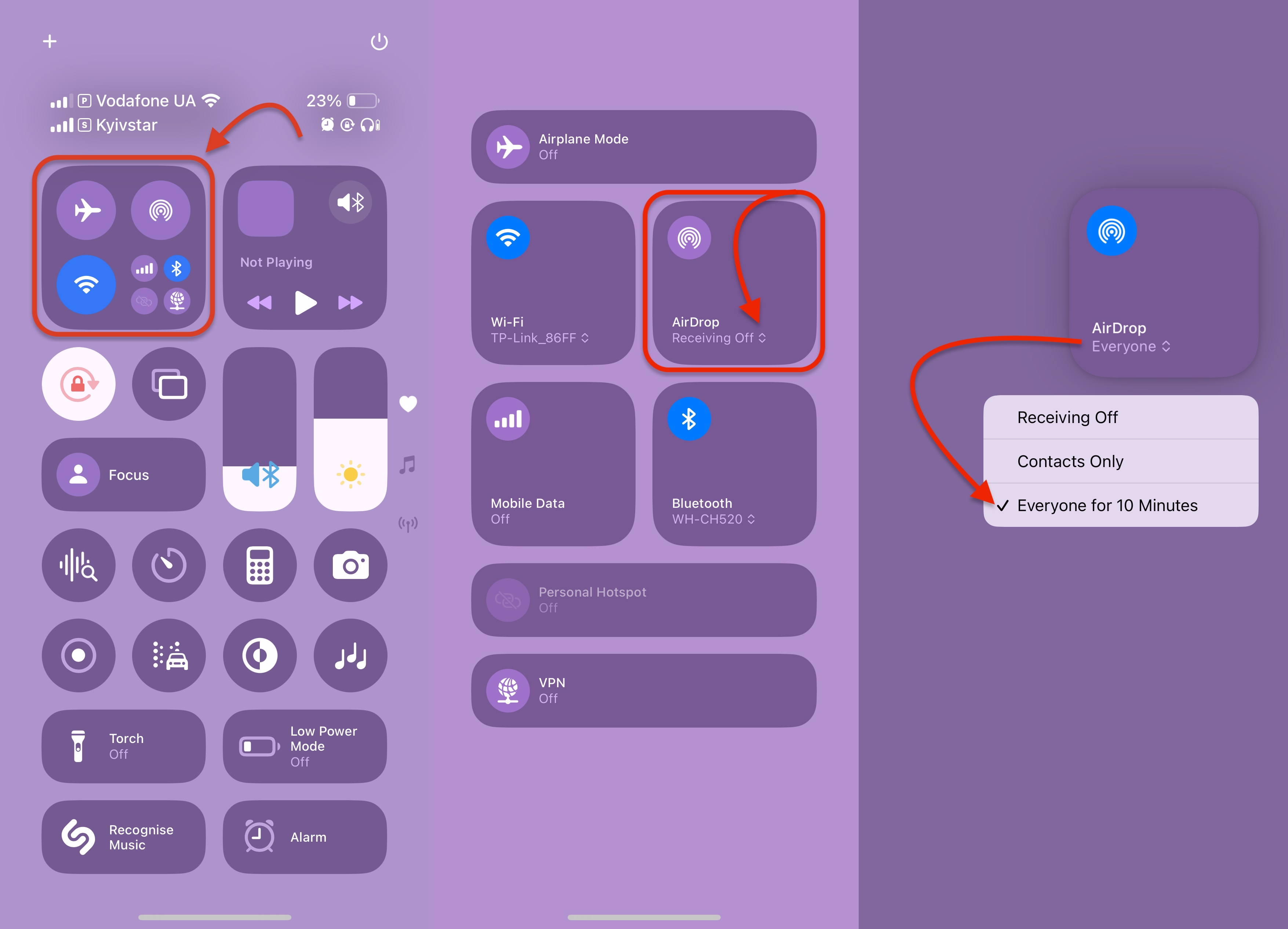
AirDrop receiving is set to Contacts Only or Everyone for 10 Minutes.
Apple documents AirDrop as a device-to-device sharing feature. It does not behave like Music library sync.
#airdrop-limit
Before you start:
Open Control Center on iPhone and enable AirDrop receiving.
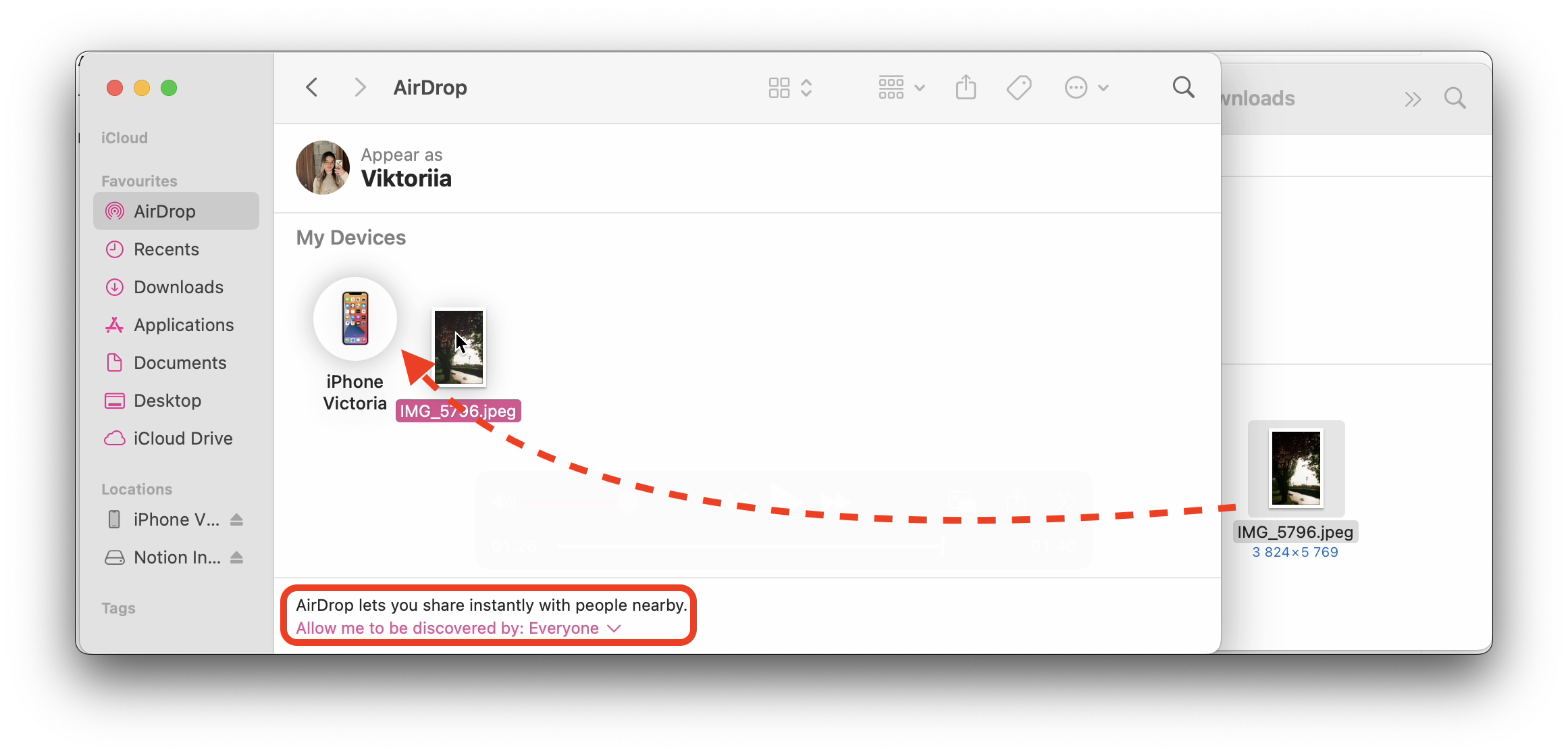
Open Finder on Mac and select AirDrop in the sidebar.
Keep both devices close until the transfer finishes.
Steps to Put an MP3 on iPhone Using AirDrop
- On iPhone, open Control Center and choose the AirDrop receiving option you trust.
- On Mac, open Finder and select AirDrop.
- Find the MP3 file on your Mac.
- Drag the MP3 onto your iPhone in the AirDrop window, or right-click the file and choose Share > AirDrop.
- Accept the file on iPhone.
- Choose Files, VLC, Documents, or another app if iOS asks where to open it.
- Play the MP3 from that app.
If AirDrop gives you a file picker instead of Music, that is normal. For Music app placement, use WALTR PRO or Apple sync.
#where-it-goes
AirDrop is still useful. It is not a full music-management system.
How to Download MP3 to iPhone with Apple Music, Finder, or iTunes
Apple’s official route works, but it comes with library rules. On modern macOS, you manage device sync through Finder and the Music app. On Windows, iTunes still handles classic music sync. If Apple Music Sync Library is enabled, manual sync can be restricted or behave differently.
Use this if you already keep your music library inside Apple’s apps. Skip it if you only want to add 3 loose MP3 files without touching sync settings or risking a library replacement prompt.
Use Finder or Music on Mac
- Add the MP3 files to the Music app on your Mac.
- Check whether Sync Library is on. If Sync Library is enabled, Apple may restrict manual sync behavior.
- Connect your iPhone with USB.
- Open Finder and select your iPhone in the sidebar.
- Choose the Music sync options you want.
- Apply the sync and wait for it to finish.
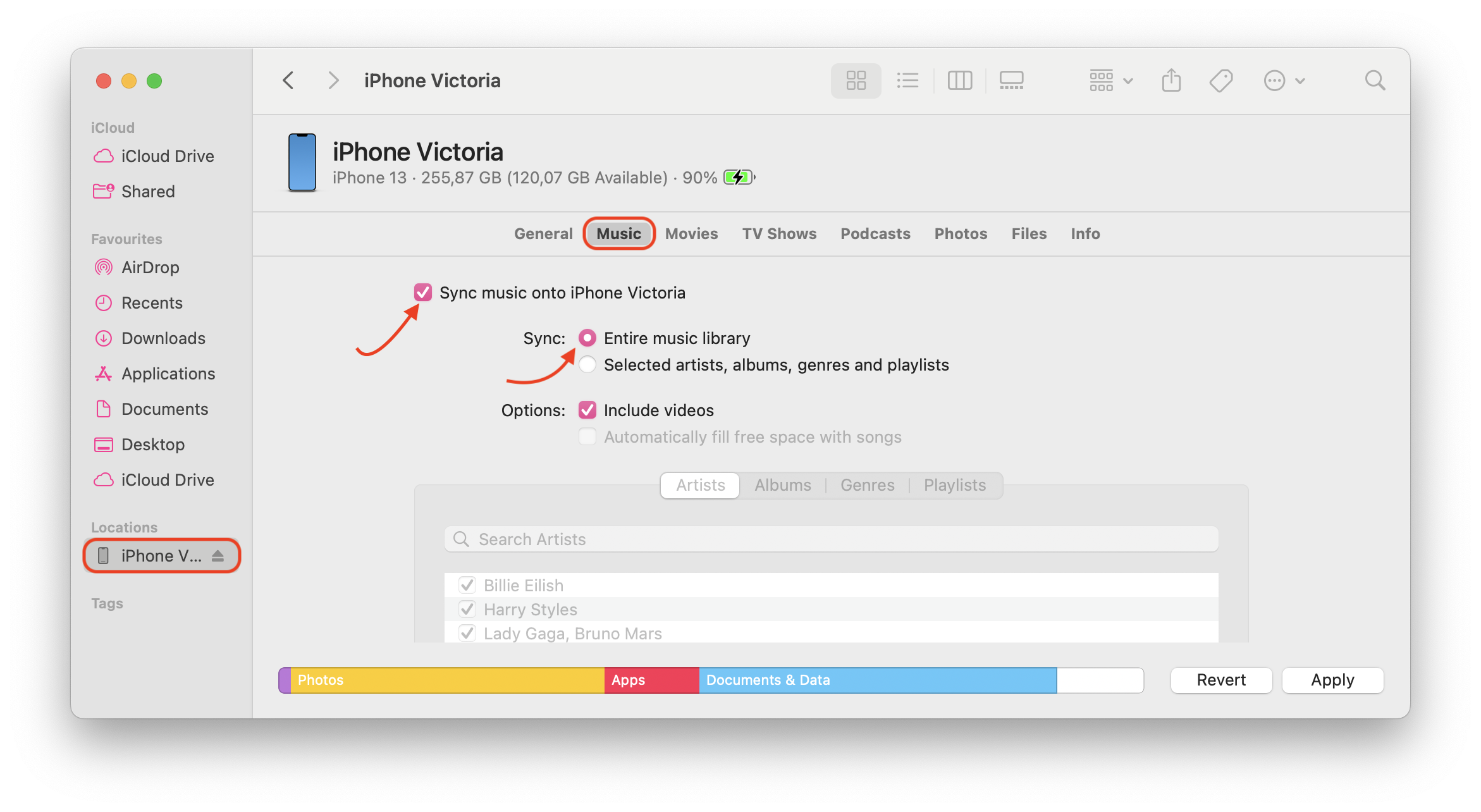
Apple sync can replace or rearrange what appears on the iPhone if you change library settings. Read the prompts before clicking Apply.
#sync-warning
Use iTunes on Windows
iTunes is still available for Windows users who want the official Apple sync path. It is not elegant, but it works if your files are already organized in an iTunes library and you understand the sync prompts.
- Open iTunes on Windows.
- Add your MP3 files to the library.
- Connect your iPhone with USB.
- Select the iPhone icon.
- Open the Music section, choose what to sync, and click Apply.
Apple’s iTunes sync guide is the safest reference if you choose this route. Read the warning screens before you click Apply because selected sync can replace music already on the iPhone.
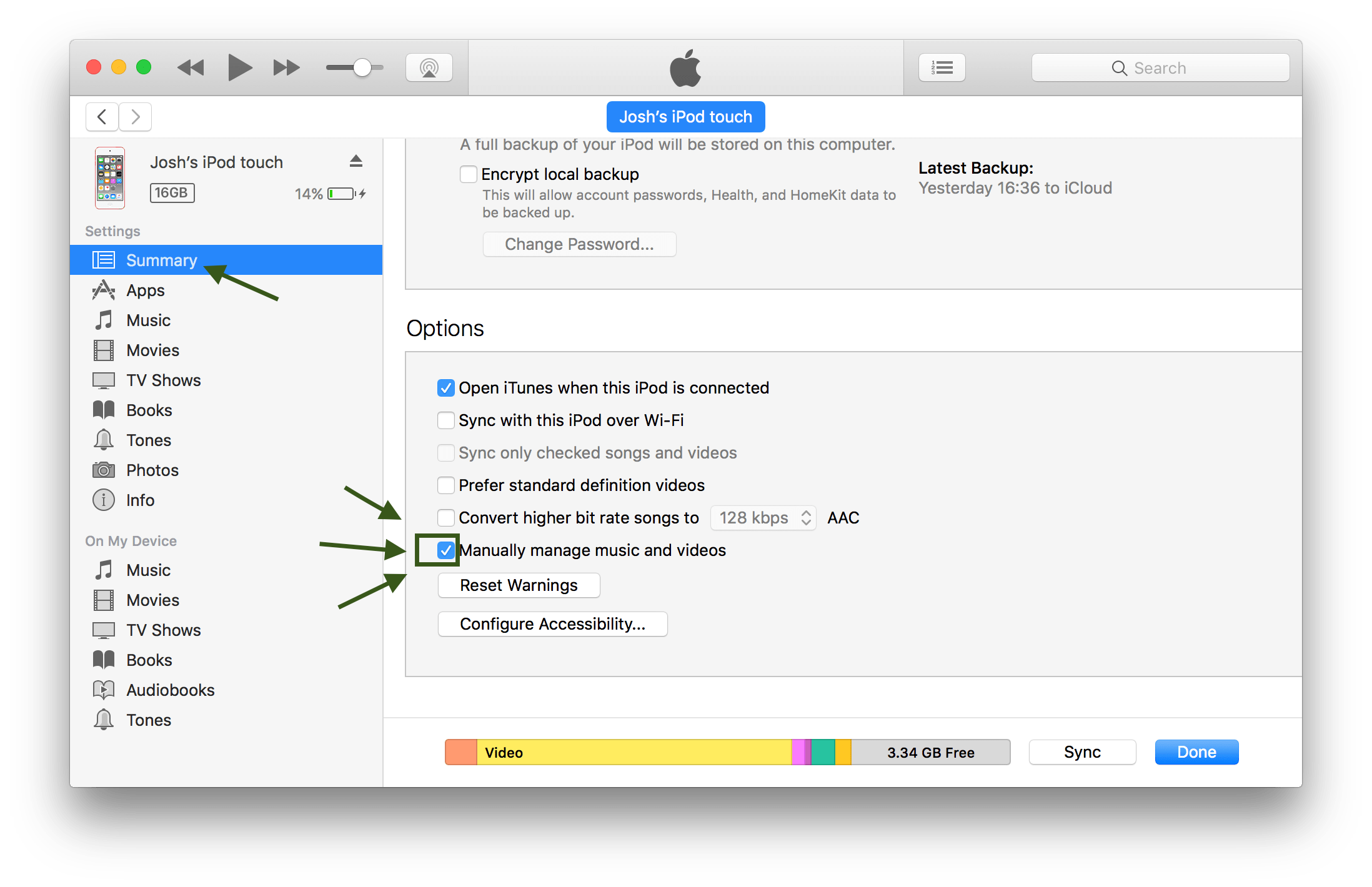
This method adds MP3s to the Music app, but the setup cost is higher than a drag-and-drop transfer tool.
How to Save MP3 on iPhone with iCloud Drive, Dropbox, or Google Drive
Cloud storage is good when you want to download MP3 to iPhone directly and play the file offline. It is not the same as adding songs to your iPhone Music app.
Use iCloud Drive if you already live in Apple’s Files app. Use Dropbox or Google Drive if your MP3 files are already there. Use this route for access, not for Music-library cleanup.
- Upload the MP3 file to iCloud Drive, Dropbox, or Google Drive from your computer.
- Open the same cloud app or Files app on iPhone.
- Download the MP3 for offline access.
- Tap the file to play it, or share it to VLC, Documents, or another player app.
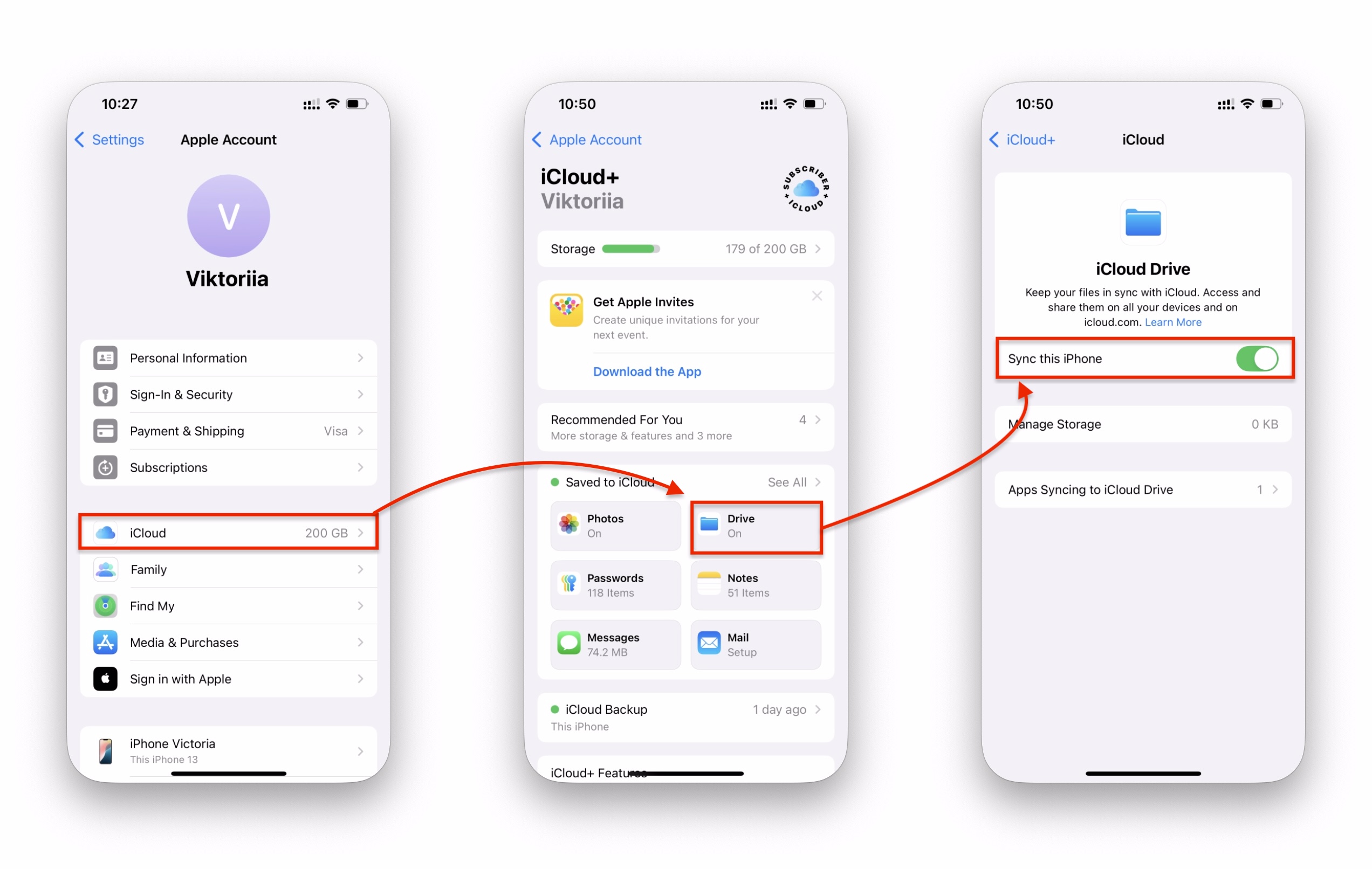
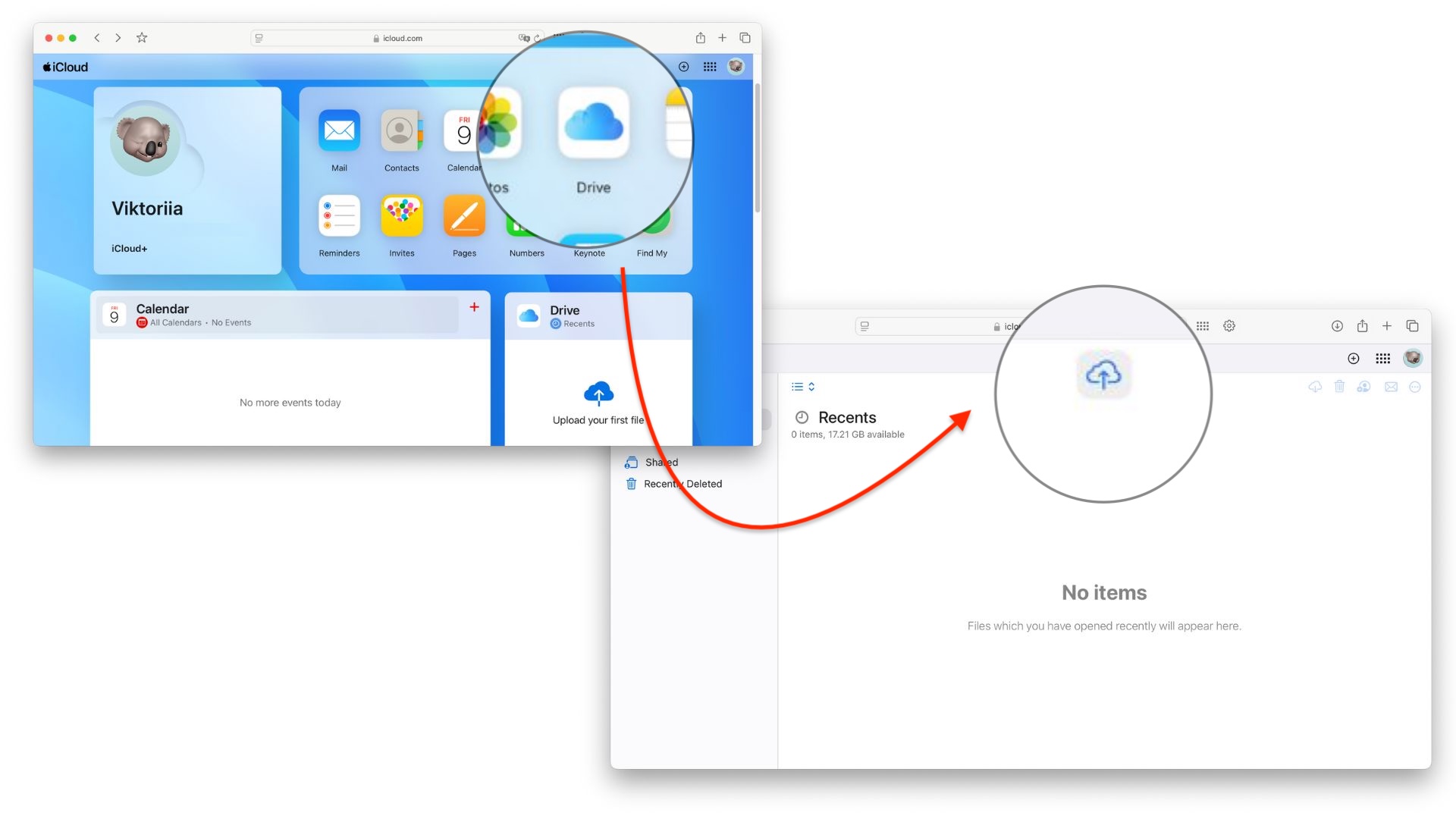
For iCloud Drive setup, Apple’s Files and iCloud docs are the right starting point. The important detail is still the same: cloud files live in Files or the cloud app unless another app imports them.
Good for storing purchased MP3 lessons, voice notes, or small music folders.
Good for moving files between Apple devices.
Not ideal if you want albums organized inside Music.
Cloud storage solves access. It does not solve Music library placement.
#cloud-limit
How to Play Downloaded MP3s in VLC or Documents
VLC and Documents are useful when you want direct MP3 download or app-only playback on iPhone. They can store MP3 files locally and play them offline without Apple Music sync.
The trade-off is simple: your music stays inside that app. If you delete the app or lose its storage, you may lose those local copies too.
- Install VLC or Documents on iPhone.
- Move the MP3 into the app through Files, Wi-Fi sharing, cloud import, or browser download when legal.
- If using Documents, use its browser or file tools only with sources that allow downloads.
- Open the app and play the MP3 from its local library.
- Use this for lessons, samples, audiobooks, or one-off files you do not need in Music.
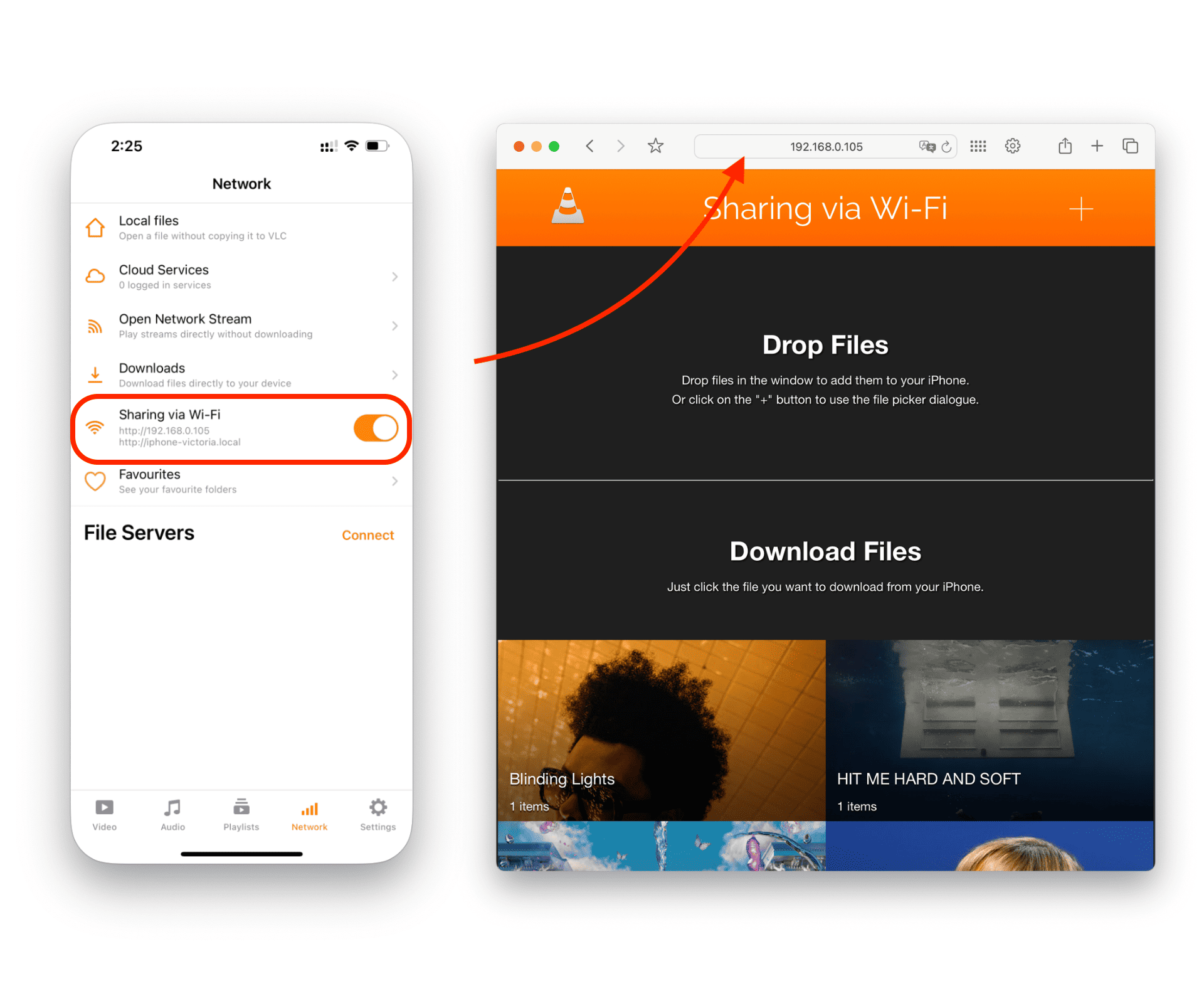
VLC is a player. Documents is a file manager with playback. Neither turns loose MP3 files into a clean Apple Music library.
#app-only-playback
If your media library includes video formats too, Softorino also has a guide on how to play MKV on iPhone.
Why Your MP3 Did Not Show Up in the Music App
If an MP3 transferred successfully but does not show in Music, the transfer probably worked -- it just landed in the wrong place. iPhone separates files from the Music library. Files, AirDrop, cloud apps, VLC, and Documents can all store playable MP3 files without importing them into Music.
Check these first:
Open Files and search for the MP3 filename.
Open VLC, Documents, Dropbox, Google Drive, or the app used for the transfer.
Check whether the file is inside a cloud folder and still needs offline download.
Check whether Apple Music Sync Library changed manual sync behavior.
If you need the track in Music, transfer it again with WALTR PRO or use Finder/Music/iTunes sync.
This is why the method matters. “Playable on iPhone” and “visible in the Music app” are not the same promise.
Safety Notes Before Using Online MP3 Downloaders
Be careful with browser-based MP3 converter sites. Many are loaded with ads, fake buttons, strange redirects, and privacy risks. Some also encourage downloads you may not have the right to make.
Use legal sources: your own recordings, purchased MP3s, public-domain audio, licensed files, or platforms that clearly allow downloads. If a site promises “free downloads from anywhere,” treat that as a warning sign.
Do not paste personal or private URLs into random converter sites.
Do not install browser extensions from unknown download pages.
Do not trust fake “download” buttons inside ad blocks.
Do check where the file will land on iPhone before you download a large batch.
Bottom Line
The best way to download MP3 to iPhone is the method that puts the file where you need it. For local MP3s on Mac or PC, WALTR PRO is the cleanest path to the Music app without iTunes. For supported online sources, SYC PRO can help when the download is legal and supported.
Use AirDrop, iCloud Drive, Dropbox, Google Drive, VLC, or Documents when app-local playback is fine. Use Finder, Music, or iTunes when you want Apple’s official sync route and you do not mind its library rules.
Want the least annoying route? Try WALTR PRO for local MP3 files. Drag, transfer, open Music. That is the job. If you need both local transfer and supported online downloads, the Softorino Universal License may fit better than buying apps one by one.
FAQ
Can I download MP3 files directly on iPhone?
Yes, you can download MP3 files directly on iPhone through Safari, Files, Documents, VLC, or a cloud app when the source allows downloads. The file usually lands in Files, Documents, VLC, or the cloud app. Direct download does not usually add the song to the Music app.
How do I put MP3 files on iPhone without iTunes?
Use WALTR PRO if the MP3 files are on your Mac or PC and you want them in the iPhone Music app. Use AirDrop, iCloud Drive, VLC, Documents, or Files if app-local playback is enough. Use Finder, Music, or iTunes only if you accept Apple sync rules.
Why won’t my MP3 show in the Apple Music app?
The file probably went to Files, VLC, Documents, AirDrop storage, or a cloud app. The Music app does not automatically import every downloaded MP3. Use WALTR PRO for add-only local transfer or Apple sync when Music app placement matters.
Can AirDrop put MP3 files into the Music app?
Usually no. AirDrop sends the MP3 as a file and iOS asks where to open or save it. AirDrop is fine for one-off playback in Files or another app. Use WALTR PRO, Finder, Music, or iTunes if you want the track in the Music app.
Is VLC or Documents better for playing MP3s on iPhone?
Use VLC if you mainly want a media player. Use Documents if you also want file management, a browser-style download flow, and cloud imports. Both can play MP3s offline, but both keep files inside their own app storage unless you move them elsewhere.
Can I download YouTube audio as MP3 to iPhone?
Only when you have the right to download that content and the source is supported. SYC PRO / Softorino YouTube Converter can help with supported online media workflows, but avoid copyright-infringing use and avoid tools that promise downloads from every platform.
Is MP3 compatible with iPhone?
Yes. iPhone can play MP3 files. The hard part is not playback support or conversion. The hard part is getting the MP3 into the app where you want to play it, especially if that app is Music.

WALTR PRO
Convert & Push Any File into Any Apple Device
