Can iPhone Play WAV Files? The Simple 2026 Answer

TL;DR: Can iPhone play WAV files? If you want the least annoying path, use WALTR PRO to transfer the WAV from your Mac or Windows computer to your iPhone.
Can iPhone play WAV files? Yes, an iPhone can play some WAV files, but the answer depends on where the file lives and how the WAV file was encoded. A quick preview in Files may work. A clean Music app workflow is less reliable.
If you want the least annoying path, use WALTR PRO to transfer the WAV from your Mac or Windows computer to your iPhone. If you prefer the manual route, convert WAV to Apple Lossless (ALAC), AAC, or MP3, then sync it through Apple Music, Finder, or iTunes.
Before we begin
Download WALTR PRO on Mac or Windows to transfer local WAV files to an iPhone without setting up an iTunes sync. Add one file first and confirm that it appears in the expected playback app before moving the full set.
Quick takeaways
If you want the least annoying path, use WALTR PRO to transfer the WAV from your Mac or Windows computer to your iPhone.
That is why the old blanket answer, “No, iPhone cannot play WAV files,” is too simple.
This matters if you want playlists, album art, metadata, and normal music-library behavior.
Covered in this guide: Can iPhone Play WAV Files?.
Quick answer: iPhone can handle some WAV files in Files or Quick Look, but WAV is not the safest native Music-library format. For reliable playback, use WALTR PRO, a WAV player app, or convert WAV to ALAC for lossless Apple playback.
Quick answer
Can iPhone Play WAV Files?
Can iPhone play WAV files? Sometimes, yes. The Files app and Quick Look can open many WAV files for one-off playback. But Apple’s current iPhone specs list AAC, APAC, MP3, Apple Lossless, FLAC, Dolby Digital, Dolby Digital Plus, and Dolby Atmos as supported audio playback formats. WAV is not listed there.
That is why the old blanket answer, “No, iPhone cannot play WAV files,” is too simple. The better answer is this: your iPhone may preview a WAV file, but the Music app may not treat it like normal synced music.
This matters if you want playlists, album art, metadata, and normal music-library behavior. For that, ALAC is a better lossless Apple format. AAC and MP3 are better when you care more about smaller files than exact source quality.
What Is a WAV File?
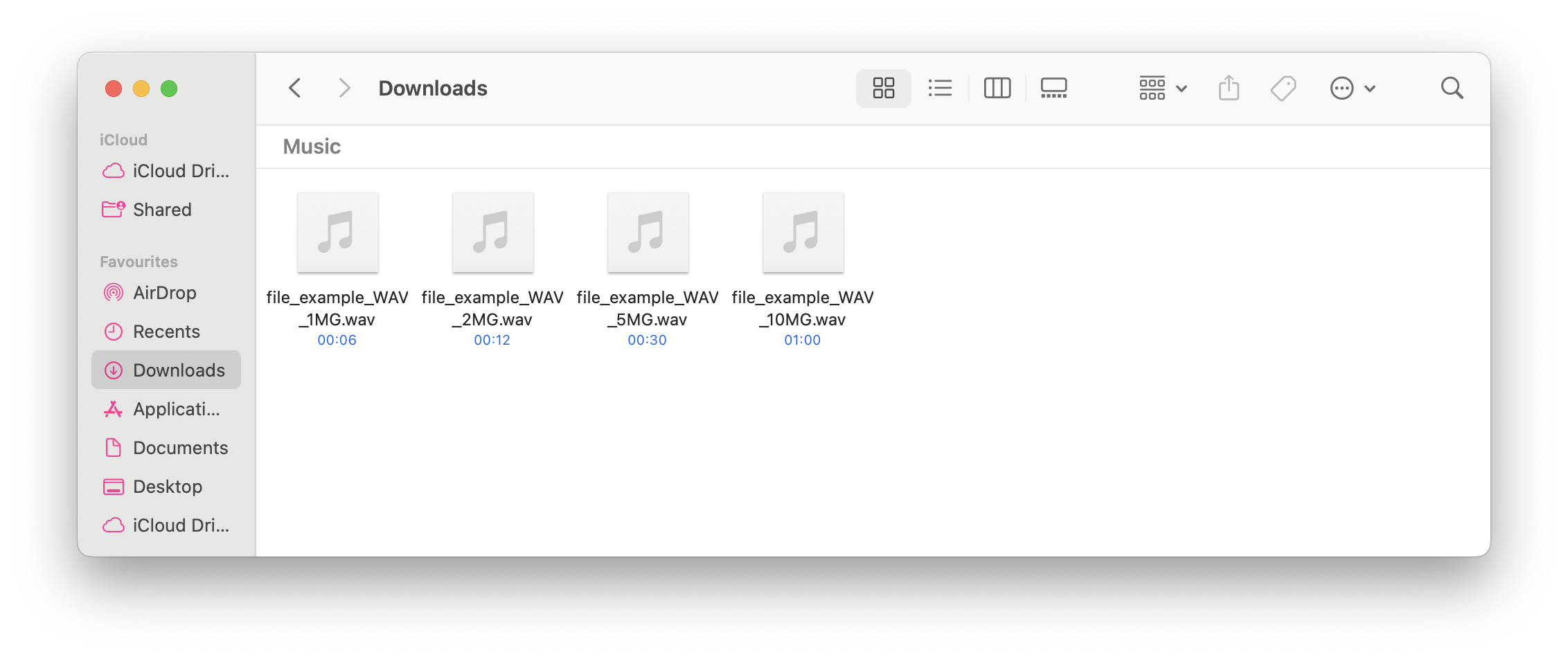
WAV stands for Waveform Audio File Format. Microsoft and IBM introduced it as a container for digital audio on Windows, and it became common for studio exports, samples, game sounds, voice recordings, and CD-quality audio.
Most WAV files are uncompressed PCM audio. That means they keep a lot of audio data and sound clean, but they also take up more storage than MP3, AAC, or even many FLAC files.
A WAV file can also contain different encodings inside the container. That detail explains why one WAV file may play on iPhone while another refuses to open. The extension alone does not tell the whole story.
Best Method Without iTunes: Transfer WAV to iPhone with WALTR PRO
The easiest way to play WAV files on iPhone without iTunes is to treat the problem as a transfer problem. WALTR PRO lets you drag the file in, pick your iPhone, and let the app handle the Apple-friendly delivery path.
WALTR PRO works on Mac and Windows. Softorino’s WALTR page lists WAV among supported music formats, along with MP3, FLAC, APE, AAC, AIFF, WMA, OGG, M4R, and M4B. The product page also describes the workflow as “Drag & Drop Any File Into iPhone or iPad” and “Convert & transfer your files to any Apple device.”
Use this method if you want the file to land where you can play it without babysitting conversion settings. You are not building a Music library first. You are not fighting Finder sync. You drop the file and move on.
How to Play WAV Files on iPhone with WALTR PRO
Start with the WAV file on your computer. If you have several WAV files, put them in one folder first. Clean names and metadata help your iPhone library look less like a junk drawer.
Step 1. Connect Your iPhone to Your Computer
Open WALTR PRO on your Mac or Windows PC. Connect your iPhone with a USB cable. If your iPhone asks whether to trust this computer, tap Trust.
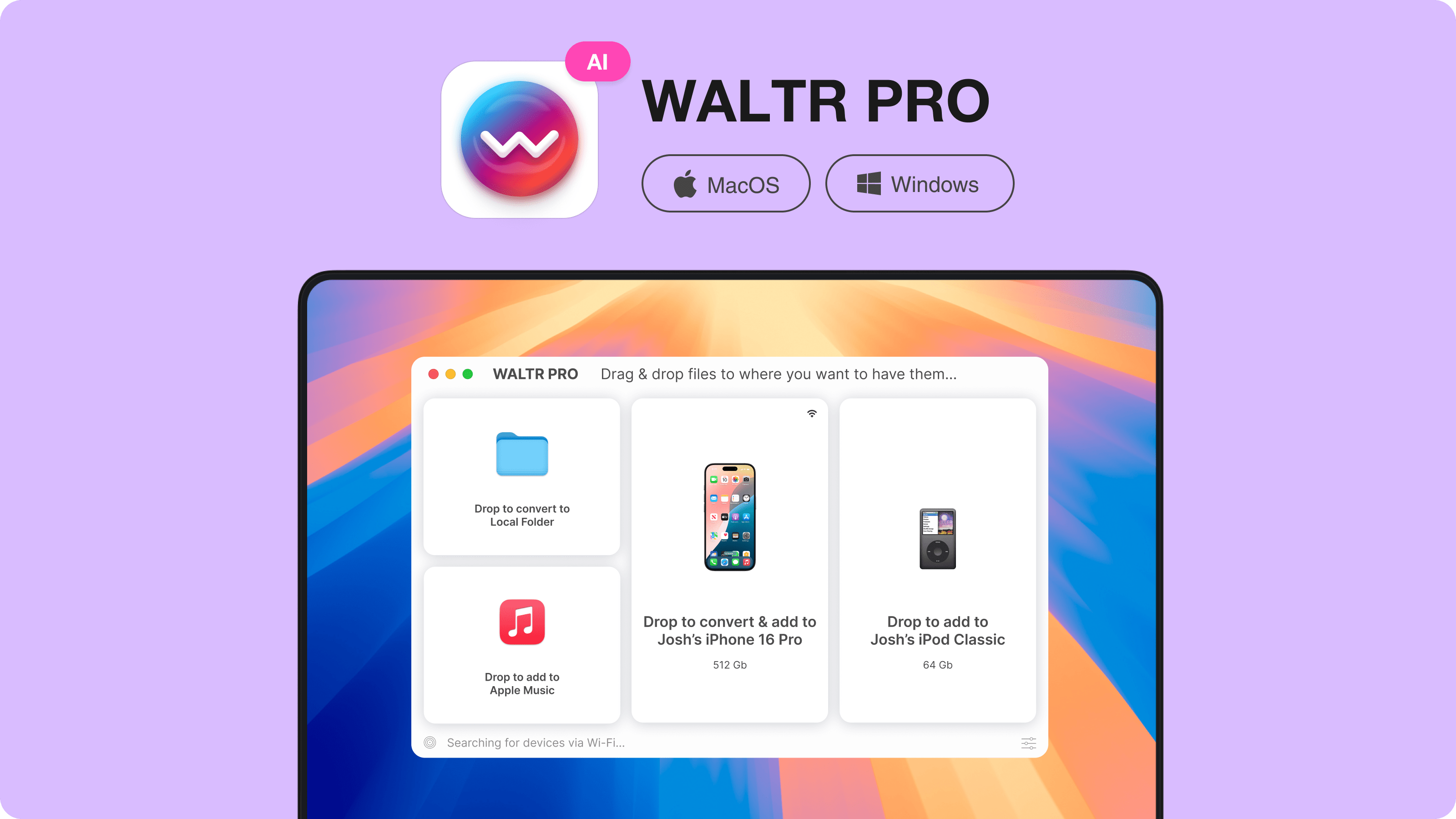
You can also use Wi-Fi transfer after setting it up in WALTR PRO. Keep the iPhone and computer on the same Wi-Fi network when you use that route.
Step 2. Drop the WAV File into WALTR PRO
Drag the WAV file or folder into the WALTR PRO window. Pick the target iPhone if the app asks for a destination. WALTR PRO then handles the transfer path instead of asking you to choose a codec, bitrate, folder, and sync mode.
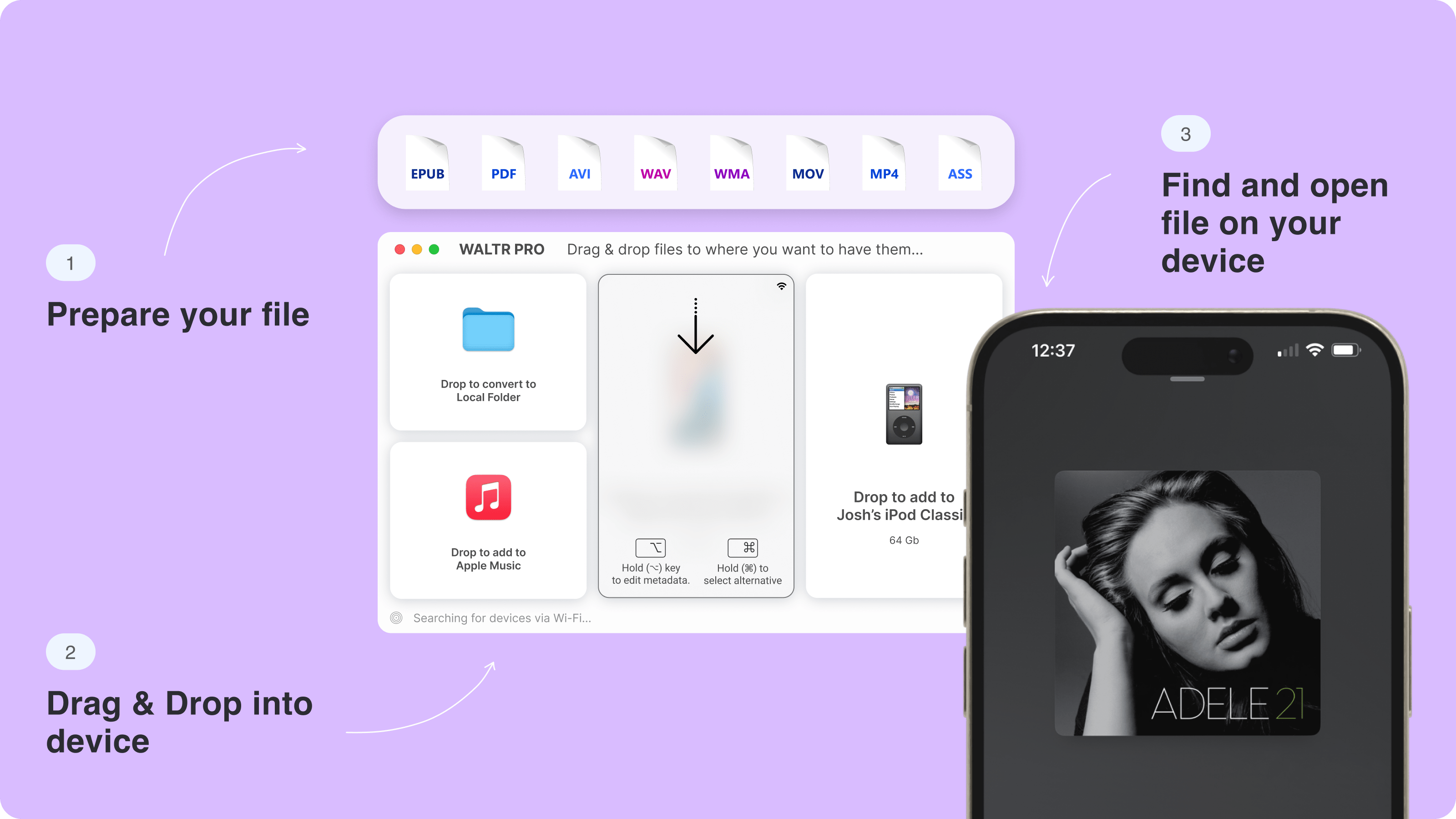
If you want custom cover art, keep the image file in the same folder as the audio file and use the same filename before the extension. Clean metadata saves you cleanup later.
Step 3. Check or Edit Metadata
WAV files often carry less useful metadata than modern music formats. Before transfer, check the track name, artist, album, and cover art. WALTR PRO can help fill metadata and artwork, which makes the final library easier to browse.
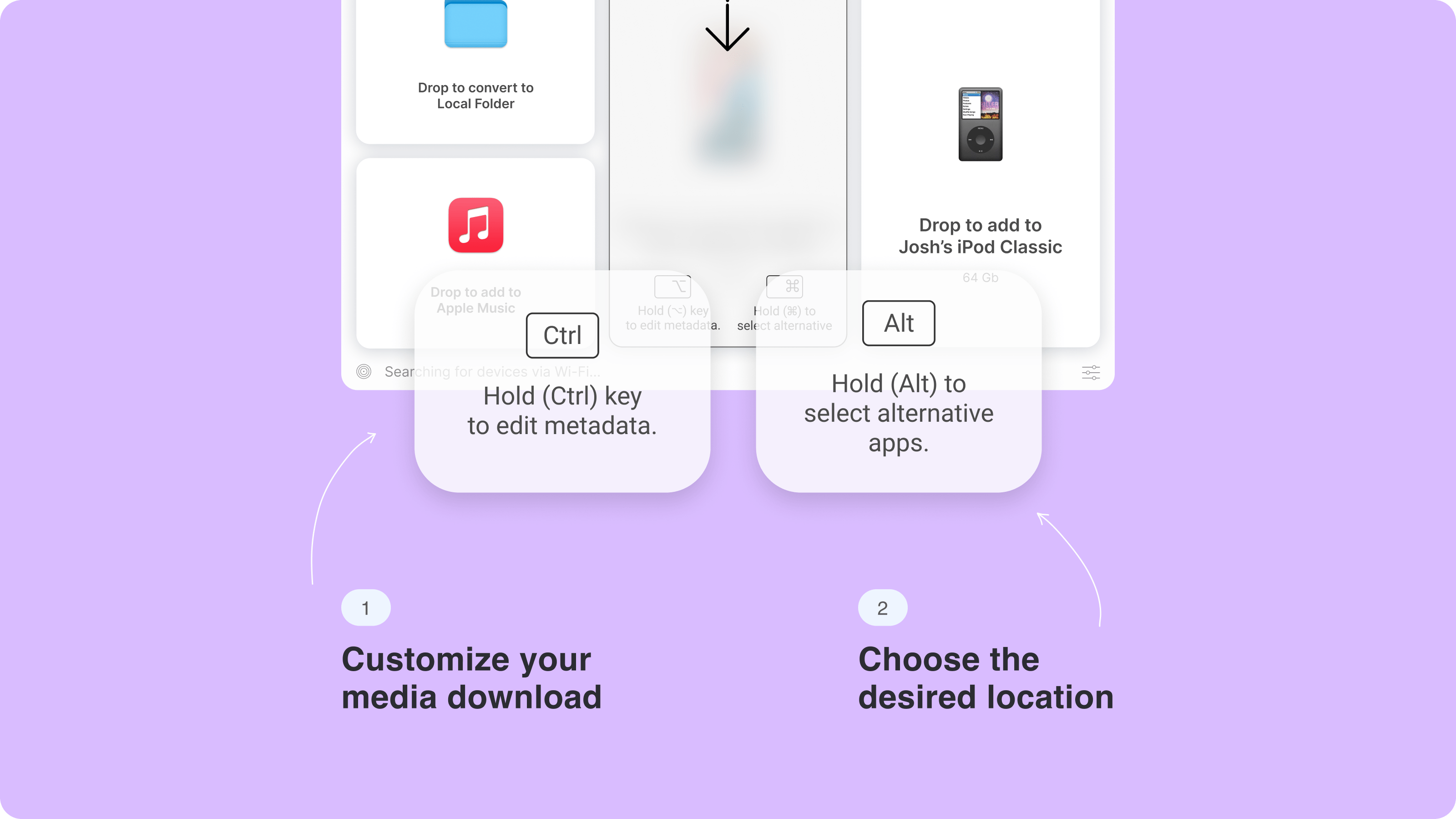
This step matters more for music than for one-off voice notes or samples. If you only need to listen once, do not overthink the tags.
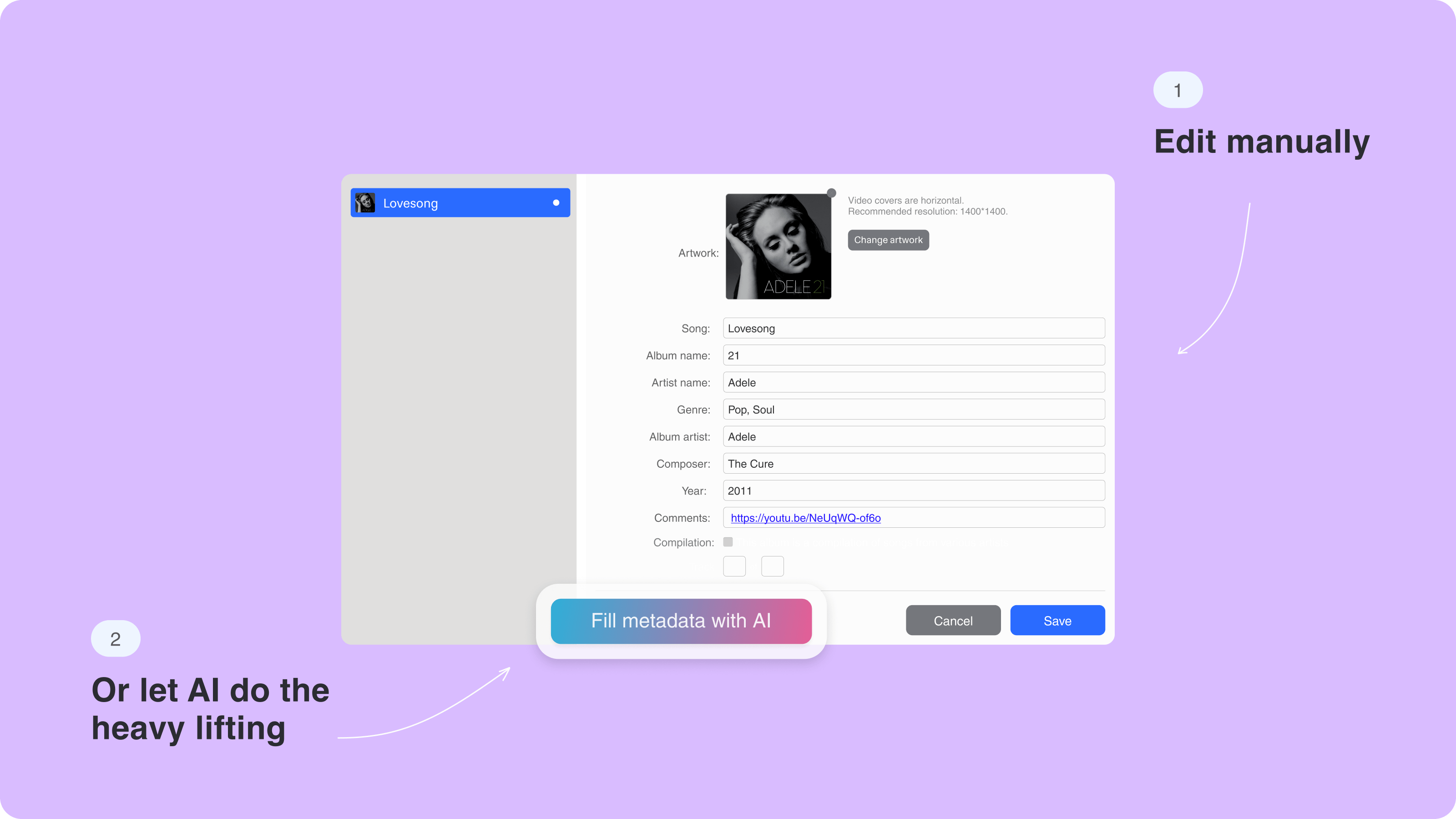
Step 4. Open the Audio on Your iPhone
After the transfer finishes, open the appropriate Apple app on your iPhone and check the track. If WALTR PRO needed to convert the file for compatibility, the goal is simple: the audio plays in an Apple-friendly place without you touching iTunes.
Do not describe this as “the iPhone plays every original WAV file natively in Music.” That would overpromise. The safer claim is better: WALTR PRO handles transfer and compatibility for the iPhone playback workflow.
Free Method: Open WAV Files in the Files App
If you only need to play one WAV file, try Files first. Save the WAV to iCloud Drive, On My iPhone, Dropbox, Google Drive, or another location that appears in Files. Then tap the file.
This works best for simple WAV recordings, downloads, voice notes, stems, and samples. It is fast and free. It is also not a real music-library workflow.
- Good for one-off playback.
- Good when the WAV file already opens from a cloud folder.
- Bad for playlists, albums, artwork, and library management.
- Bad when the WAV uses an encoding the Files preview cannot handle.
Player App Method: Use a WAV Player for iPhone
A dedicated player app is a good option if you have many WAV files and do not care whether they appear in the Apple Music app. VLC for Mobile and other iPhone audio players can handle mixed-format folders better than the default path.
This method fits musicians, DJs, podcasters, field recordists, and anyone working with backing tracks or samples. The trade-off is that the files live inside that player’s own library, not your normal Music app library.
Manual Method: Convert WAV to ALAC, AAC, or MP3
If you want a normal Apple music workflow and do not mind extra steps, convert WAV before syncing. Pick the output format based on what you care about.
Format | Quality | iPhone fit | Best use |
|---|---|---|---|
WAV | Usually uncompressed | May preview in Files; not the cleanest Music path | Source files, studio exports, samples |
ALAC / Apple Lossless | Lossless | Apple-friendly | Best choice when quality matters |
AAC | Lossy | Apple-friendly | Small music files with good quality |
MP3 | Lossy | Broad support | Maximum compatibility and smaller files |
FLAC | Lossless | Listed in current iPhone specs | Lossless libraries outside Apple Music workflows |
Choose ALAC if your reason for using WAV is sound quality. Choose AAC or MP3 if storage matters more. A 3-minute WAV file can be much larger than the same track as AAC or MP3.
After conversion, import the file into Apple Music or iTunes on your computer. Then sync selected music to your iPhone through Finder, Apple Music, or iTunes, depending on your setup.
Why Your WAV File Will Not Play on iPhone
If a WAV file will not play on iPhone, do not assume the file is cursed. Check the boring causes first.
- Unsupported encoding inside the WAV container. WAV is a wrapper, and not every wrapped audio stream behaves the same.
- Cloud-only file. Download it locally in Files before tapping it.
- Broken or incomplete download. Re-download the file and test it on your computer.
- Wrong app. Files may preview it, but Music may not accept it as normal synced music.
- Huge file size. Large WAV files can be slow to download, sync, preview, or move between apps.
- Messy metadata. The audio may play, but the song can appear under the wrong artist, album, or title.
The fastest test is simple: play the WAV on your computer first. If it fails there too, fix the file before blaming the iPhone.
WAV vs ALAC vs AAC vs MP3 for iPhone
WAV is great as a source format. It is not always great as a phone format. iPhones work better with formats that Apple expects in normal playback and library flows.
For lossless quality, ALAC is the practical Apple choice. For smaller files, AAC is the practical Apple choice. MP3 still works when you need broad compatibility. WAV makes sense when you need the original file, not when you want the easiest everyday playback.
If you care about quality, convert WAV to ALAC. If you care about storage, convert WAV to AAC or MP3. If you care about avoiding iTunes, use WALTR PRO.
Format choice
What About iPad?
The same advice applies to iPad. You can try Files for quick playback, use a player app for separate libraries, convert to ALAC/AAC/MP3 for Apple-friendly syncing, or use WALTR PRO to move files from a computer without iTunes.
WALTR PRO Can Handle More Than WAV
WAV is only one awkward format. WALTR PRO also helps with video, books, subtitles, ringtones, and other media files that Apple makes weird for no good reason.
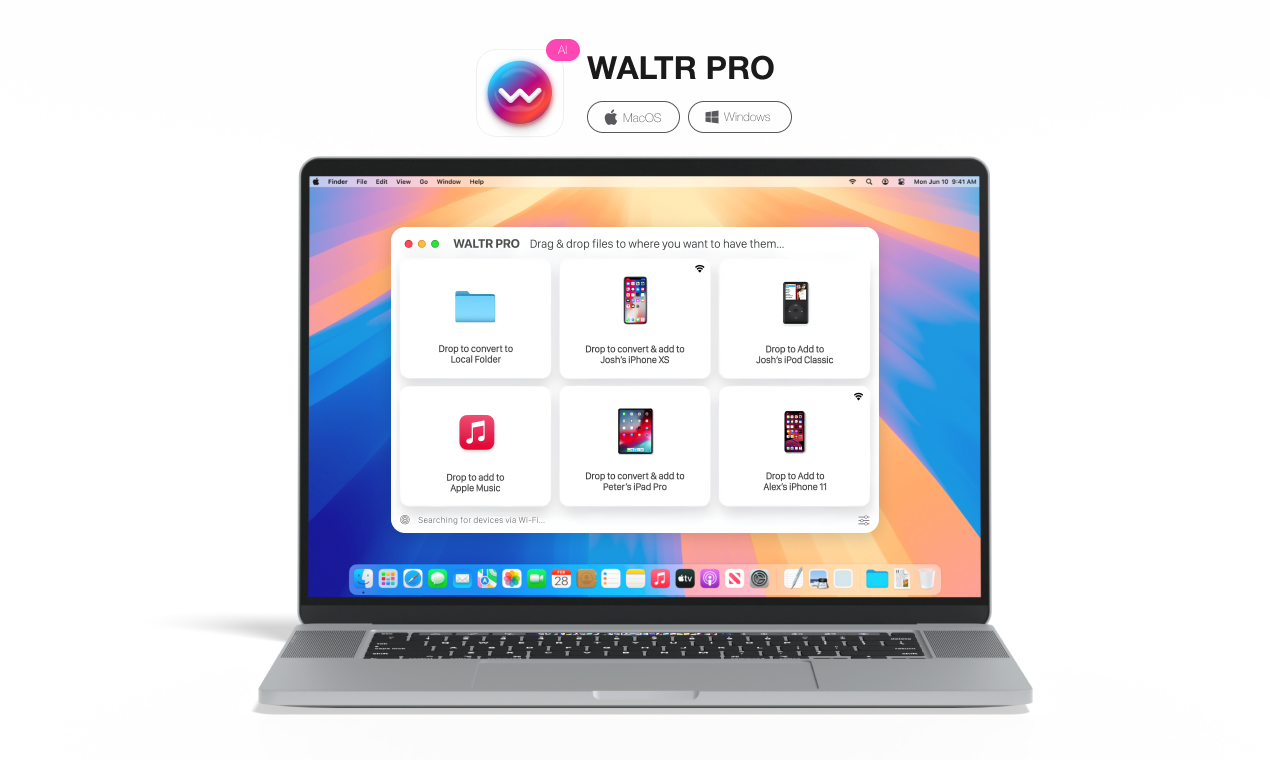
If you work with mixed files, that matters. One week it is WAV. Next week it is MKV, FLAC, EPUB, or a ringtone. The fix should not require a new rabbit hole every time.
For related Apple media fixes, read our guides on FLAC on iPod Classic and playing MKV on iPhone.
Can iPhone Play WAV Files? Bottom Line
Can iPhone play WAV files? Yes, in some cases. Files or Quick Look may play a WAV directly. But if you want reliable playback inside an Apple-friendly music workflow, WAV is not the format I would bet the day on.
Use WALTR PRO if you want the quick no-iTunes route from computer to iPhone. Use ALAC if you want lossless quality. Use AAC or MP3 if you want smaller files. Use a dedicated WAV player app if you want a separate library for samples, stems, or backing tracks.
That is the sane version. Apple gives you a few paths. WALTR PRO removes the most annoying one.
FAQ
Do WAV files work on iPhone?
Some WAV files work on iPhone, especially from the Files app or Quick Look. WAV is less reliable as a normal Music app workflow, so ALAC, AAC, MP3, a player app, or WALTR PRO may be better.
Why can’t I play WAV files on my iPhone?
The WAV may use an unsupported encoding, may be cloud-only, may be corrupted, or may not be accepted by the Music app. Download it locally, test it on a computer, or convert it to ALAC.
What app plays WAV files on iPhone?
Files may play some WAV files. Dedicated players such as VLC-style apps can help with larger mixed audio folders. WALTR PRO is better when your goal is transfer and Apple-friendly playback, not a separate player library.
Where do WAV files go on iPhone?
If you save the WAV through iCloud Drive, AirDrop, email, or cloud storage, it usually appears in Files. If you transfer through WALTR PRO or sync a converted file, it can land in the appropriate Apple media app.
Can I play WAV files on iPhone without iTunes?
Yes. Try the Files app for quick playback, use a WAV player app, or transfer the file with WALTR PRO from your Mac or Windows computer. WALTR PRO is the cleanest no-iTunes route when you want an Apple-friendly playback path.
Should I convert WAV to ALAC or MP3 for iPhone?
Use ALAC if you want lossless quality. Use MP3 or AAC if you want smaller files. If the source WAV matters because of quality, ALAC is the better Apple-friendly target.

WALTR PRO
Convert & Push Any File into Any Apple Device
