What Happens If I Delete iCloud Backup? The 2026 Safe Answer


If you delete an iCloud backup, Apple removes that saved restore copy from iCloud. It does not erase the current data on your iPhone. Your photos, messages, contacts, notes, files, and apps stay on the device unless you delete them separately.
The catch is recovery. If you lose, erase, damage, or replace that iPhone later, you cannot restore from the backup you deleted. Also, deleting a backup can turn off iCloud Backup for that device, so you may need to turn it back on.
Before we begin
Before deleting the cloud copy, Windows users should download AltTunes to create a local iPhone backup or export important data to the PC. Confirm that the local copy opens before removing the iCloud backup, because deleting it removes that restore point.
What happens if I delete iCloud backup?
Here is the plain version.
Deleting an iCloud backup removes the selected backup file from iCloud. That backup is a restore point. It is not the same as the data you are using on your iPhone right now.
Removed from iCloud | Not removed from your iPhone |
|---|---|
The selected iCloud Backup | Current photos on your iPhone |
That device's old restore point | Current messages on your iPhone |
App data and settings stored only inside that backup | Contacts, calendars, notes, and reminders |
The ability to restore from that exact backup later | iCloud Photos, iCloud Drive, and synced iCloud data |
Some iCloud storage usage | iPhone storage usage |
So yes, you can delete an old iCloud backup without losing current iPhone data. But do not treat it like emptying the trash. You are deleting your safety copy.
That matters if the backup belongs to a phone you still use. It matters even more if the backup belongs to a phone you no longer have, because that backup may be your only restore path.
What deleting an iCloud backup does not delete
Most of the panic comes from one confusing Apple word: backup.
An iCloud Backup is a snapshot Apple can use to restore a device. iCloud sync is different. iCloud Photos, Contacts, Notes, Calendar, Messages in iCloud, and iCloud Drive sync data across your devices.
If those sync services are on, deleting an iCloud Backup does not delete that synced data.
Examples:
But there is a catch. If something exists only inside the deleted backup and nowhere else, you lose that restore copy. That can include app data, device settings, Home Screen layout, local app files, or messages/photos if they were not synced separately.
Apple explains iCloud backup and storage behavior in its own guides for iCloud storage management, viewing and managing iCloud backups, and backing up iPhone.
- If iCloud Photos is on, your photos sync through iCloud Photos. Deleting an iCloud Backup does not delete those photos.
- If Messages in iCloud is on, your messages sync separately. Deleting the backup does not delete those messages.
- If Contacts sync with iCloud, deleting the backup does not wipe your contacts.
- If files live in iCloud Drive, deleting the backup does not delete those files.
What happens when I delete iCloud backup for an old iPhone?
If the backup belongs to an old iPhone you no longer use, deleting it usually makes sense. Old device backups can eat a large chunk of the free 5GB iCloud plan.
Still, check 3 things first:
If you already moved to a new iPhone and everything works, the old backup is often safe to remove. If you are mid-transfer, keep it. A backup looks useless until the new phone setup fails at the worst possible time.
- Make sure the backup belongs to the old phone, not your current phone.
- Confirm you no longer need to restore that old phone.
- Save any photos, messages, contacts, or files you still care about somewhere else.
Will deleting iCloud backup delete photos, messages, or contacts?
No, deleting an iCloud backup does not delete current photos, messages, or contacts from your iPhone.
But the exact answer depends on how your iCloud settings are configured.
Photos
If iCloud Photos is on, photos sync outside the device backup. Deleting the iCloud Backup does not delete them.
If iCloud Photos is off, some photos may only exist on your iPhone and inside the backup. Deleting the backup still does not remove the photos from the iPhone, but it removes one recovery copy.
Messages
If Messages in iCloud is on, messages sync separately. Deleting the backup does not delete them.
If Messages in iCloud is off, messages may be part of the device backup. Deleting the backup removes that restore copy, not the messages currently on your iPhone.
Contacts
If Contacts sync with iCloud, deleting the backup does not delete contacts. They live in iCloud sync, not only inside the iPhone backup.
If contacts are stored only locally or through another account, deleting the backup still does not erase them from the iPhone. It only removes the backup copy.
Why would you delete an iCloud backup?
Most people delete iCloud backups for one reason: iCloud storage is full.
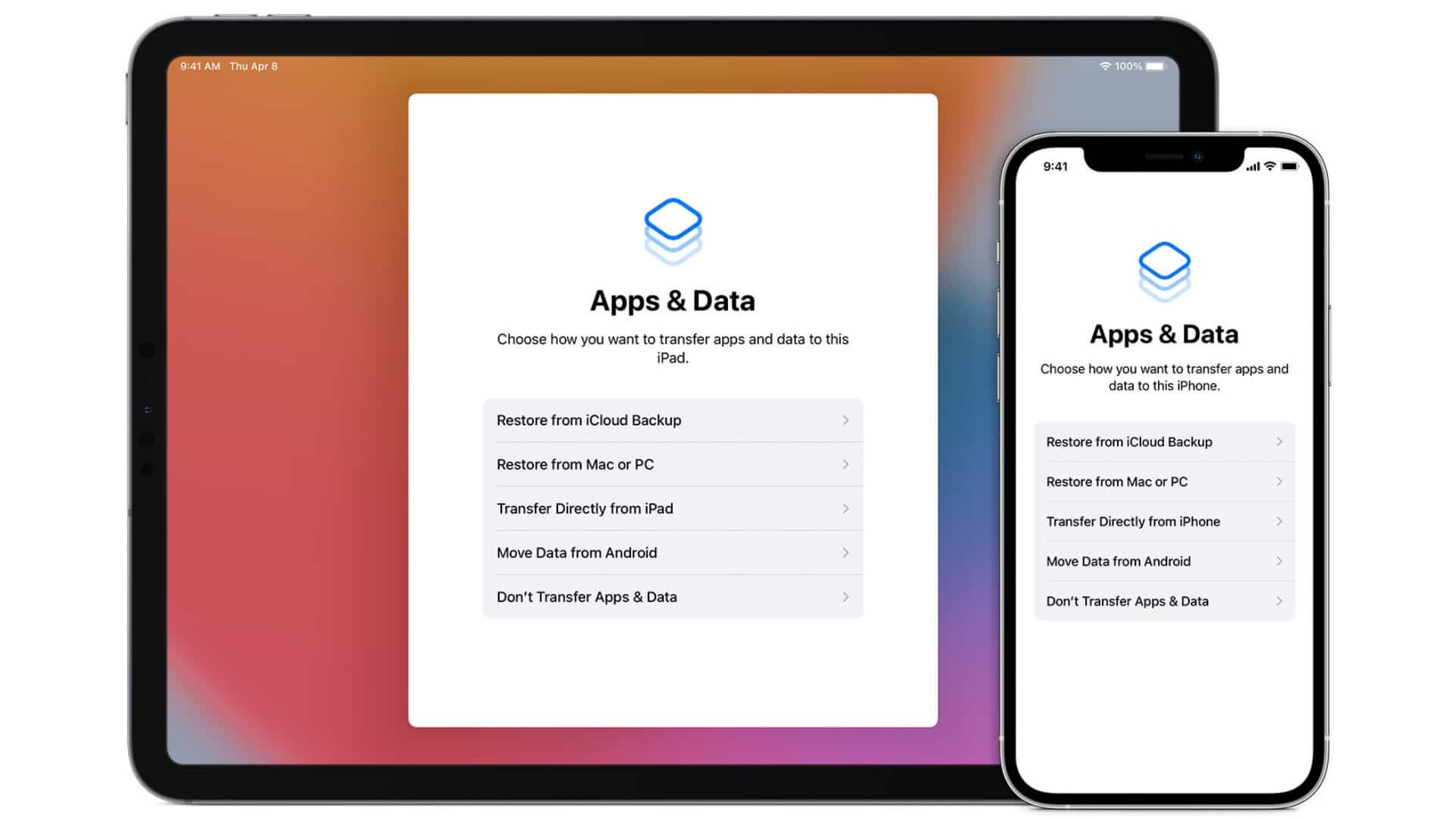
Apple gives you 5GB of free iCloud storage. That sounds fine until one iPhone backup, iCloud Photos, iCloud Drive, and Messages all start fighting for the same tiny closet.
Deleting an old backup can help if:
What deleting an iCloud backup will not do: free storage on your iPhone. It frees iCloud storage. If your iPhone itself is full, you need to delete apps, videos, downloads, photos, or local files on the device.
- You have backups for devices you no longer own.
- You finished moving to a new iPhone and no longer need the old restore point.
- Your current iCloud storage is full and backups stopped running.
- You already made a local computer backup.
- You want to reduce iCloud use and keep more data on your PC.
What happens if I delete iCloud backup too soon?
You lose the restore copy before you know whether you still need it. Use this quick safety check before deleting anything.
If you are deleting a backup because iCloud storage is full, you have other options too. You can reduce backup size, turn off backup for large apps, delete old device backups, move photos elsewhere, or upgrade iCloud+.
- Check the device name. Make sure you are deleting the old iPhone or iPad backup, not your current one.
- Check the backup date. A recent backup may be your only clean restore point.
- Check your photos. If iCloud Photos is off, save important photos somewhere else first.
- Check messages. If Messages in iCloud is off, consider making a local backup before deleting the cloud one.
- Check app data. Some apps store data locally and depend on device backups for restore.
- Make a local backup. Use Finder on Mac, iTunes on Windows, or a Windows iPhone manager like AltTunes.
- Keep the backup during device migration. Delete only after the new phone is set up and checked.
How to delete an iCloud backup from iPhone
If you already checked the backup and want to remove it, delete it from Settings.
- Open Settings on your iPhone or iPad.
- Tap your name at the top.
- Tap iCloud.
- Tap iCloud Storage or Manage Account Storage.
- Tap Backups.
- Choose the device backup you want to delete.
- Tap Turn Off and Delete from iCloud.
- Confirm the deletion.
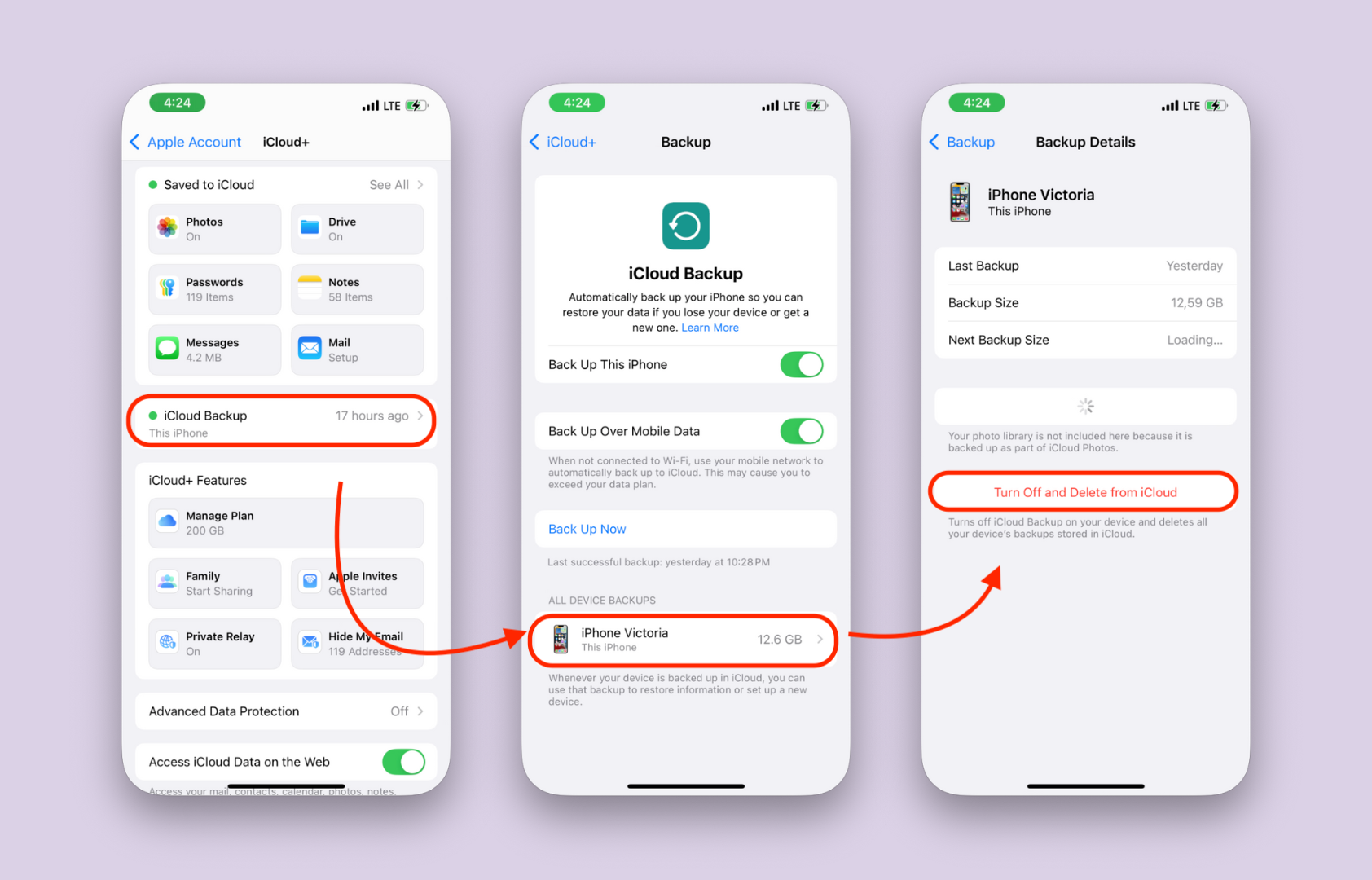
Read the button carefully. Apple is not only deleting the backup. It may also turn off iCloud Backup for that device.
If you want future iCloud backups, go back to Settings > your name > iCloud > iCloud Backup and turn it on again. Then make a fresh backup once you have enough iCloud storage.
How to delete iCloud backup from Mac
On current macOS versions, Apple moved this into System Settings.
- Open the Apple menu.
- Click System Settings.
- Click your name.
- Click iCloud.
- Click Manage or Manage Account Storage.
- Click Backups.
- Select the device backup.
- Click Delete and confirm.
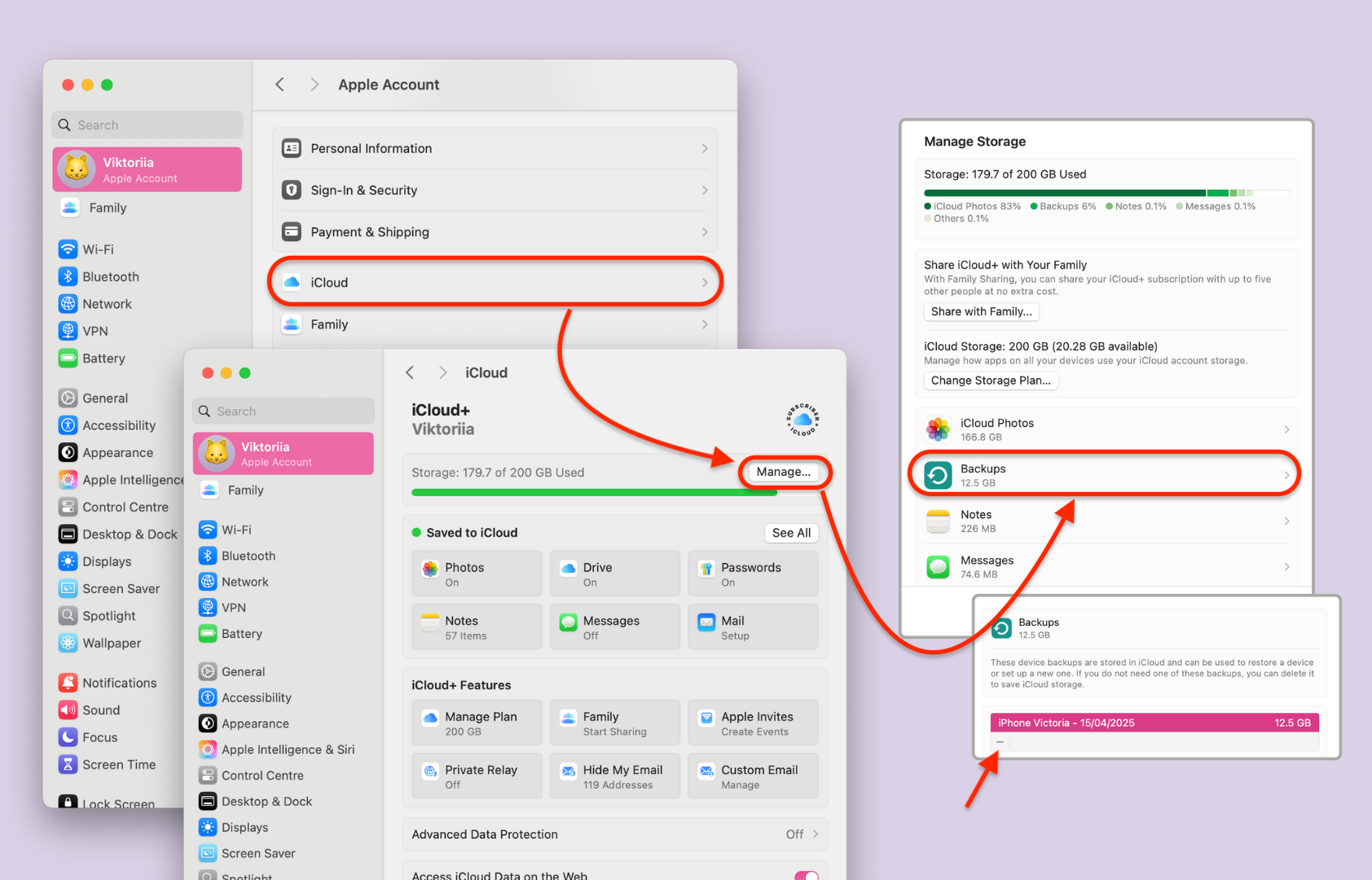
If you still use an older macOS version, you may see System Preferences instead of System Settings. The idea is the same: Apple ID, iCloud, storage management, backups.
How to delete iCloud backup from Windows PC
You can delete iCloud backups from Windows if you use iCloud for Windows.
- Open iCloud for Windows.
- Click Storage.
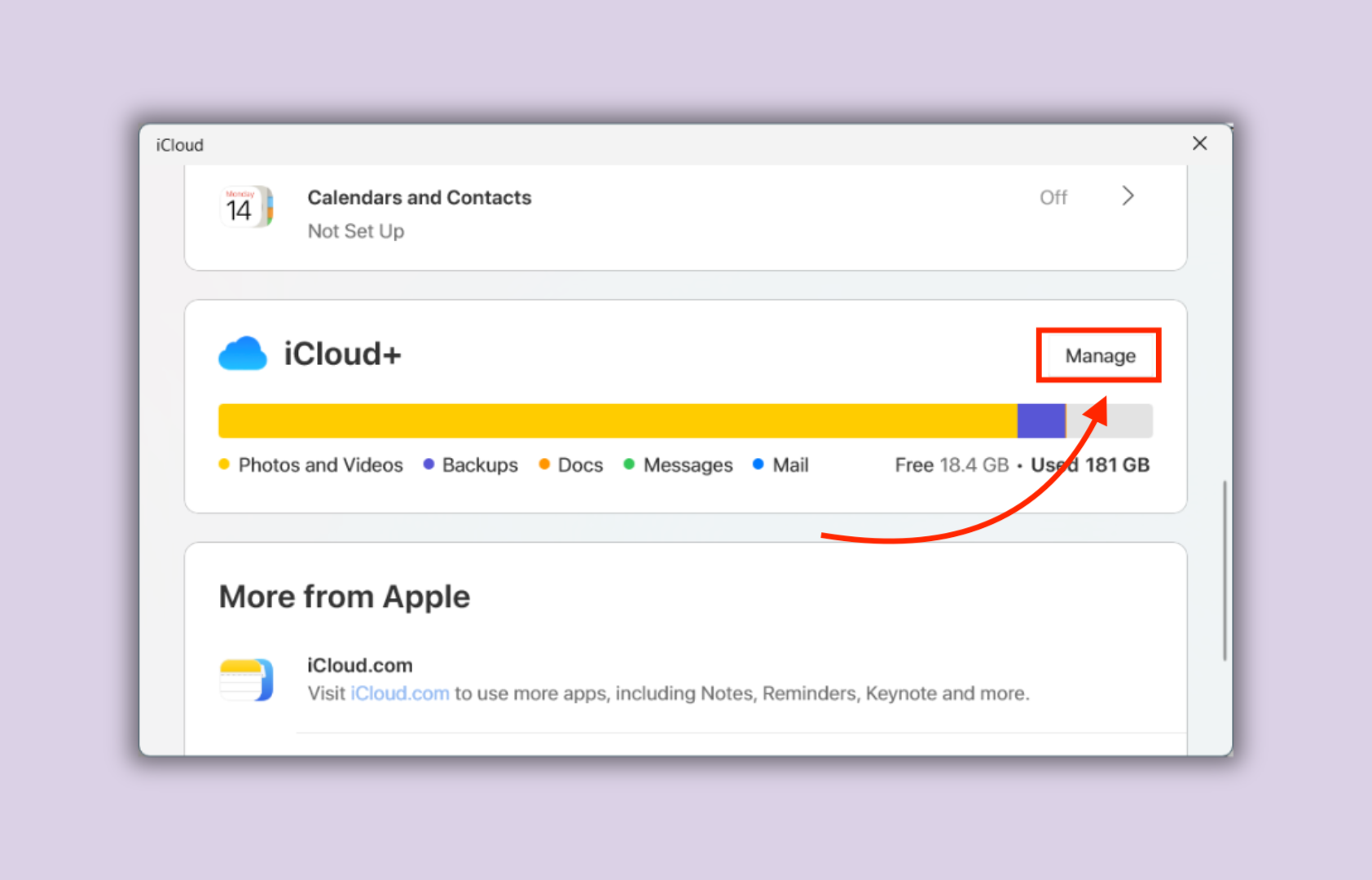
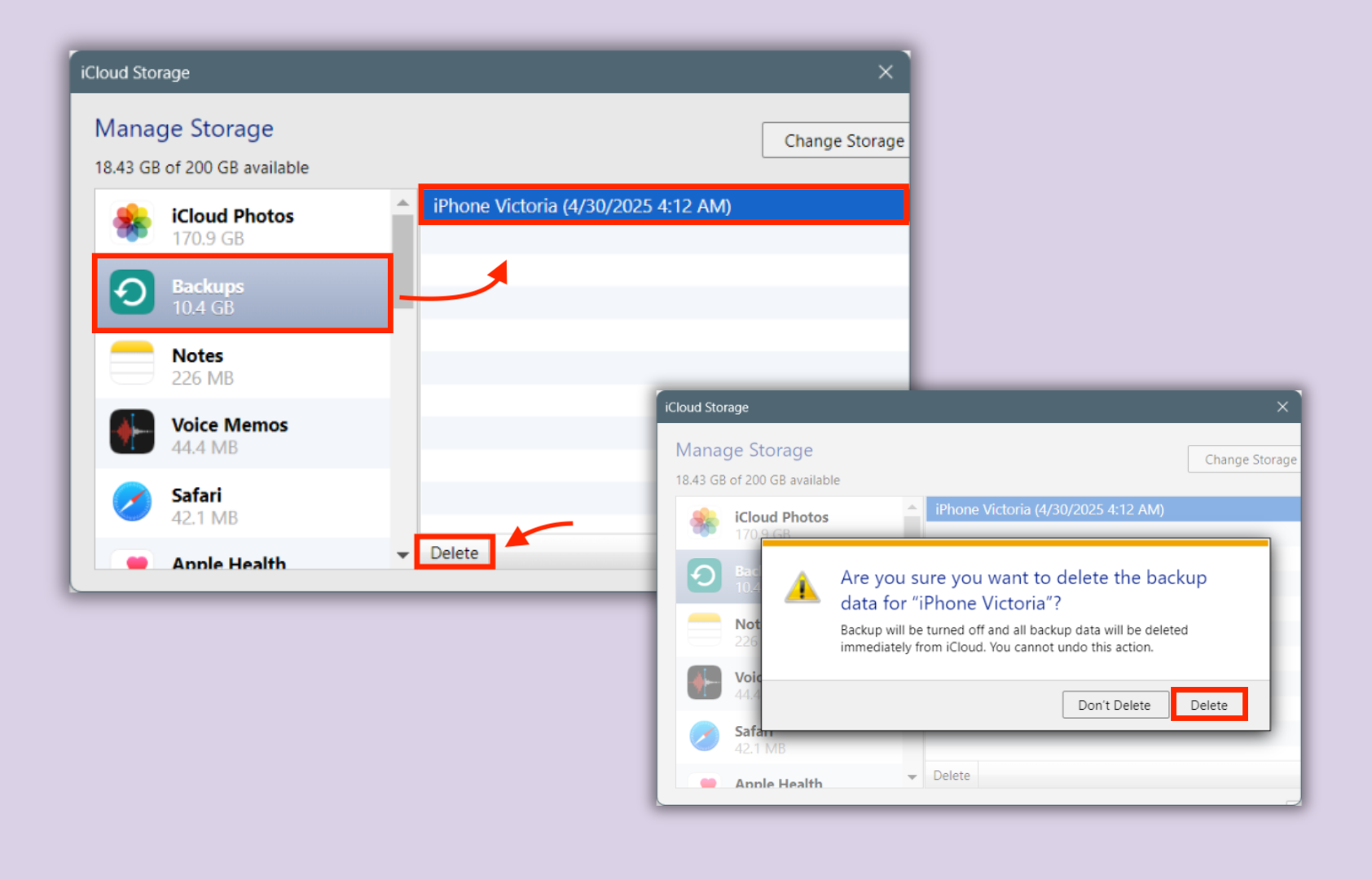
- Select Backups from the list.
- Choose the device backup you want to remove.
- Click Delete.
- Confirm.
Windows users should be extra careful here because iTunes on Windows is often the only Apple-built local backup path. If you do not have a local backup and you delete the iCloud one, you have fewer recovery options.
How to create a local backup without relying on iCloud
You should have at least one backup outside iCloud before deleting an important iCloud Backup. That can be a local computer backup, an export of important data, or both. If you want a deeper walkthrough, read Softorino's guide to [backing up iPhone without iCloud](/blog/how-to-backup-iphone-without-icloud).
Finder on Mac and iTunes on Windows can create full local iPhone backups. Encrypted local backups are better because they can include sensitive data such as saved passwords, Wi-Fi settings, Health data, and website history.
But iTunes on Windows still feels like a punishment for owning an iPhone. If you want a cleaner Windows option, use [AltTunes](/alttunes).
AltTunes is a Windows iPhone manager from Softorino. It helps you back up your iPhone over USB and export photos, music, messages, contacts, videos, files, and backups to your PC. That gives you a local safety net before you remove old iCloud restore points.
Create a local iPhone backup with AltTunes
Use AltTunes when you want local control before cleaning up iCloud storage.
- Download AltTunes from the official Softorino website.
- Install it on your Windows PC.
- Connect your iPhone with a USB cable.
- Open AltTunes and let it detect your device.
- Create a local backup or export the data you care about most.
- Check the exported files on your PC before deleting the iCloud backup.
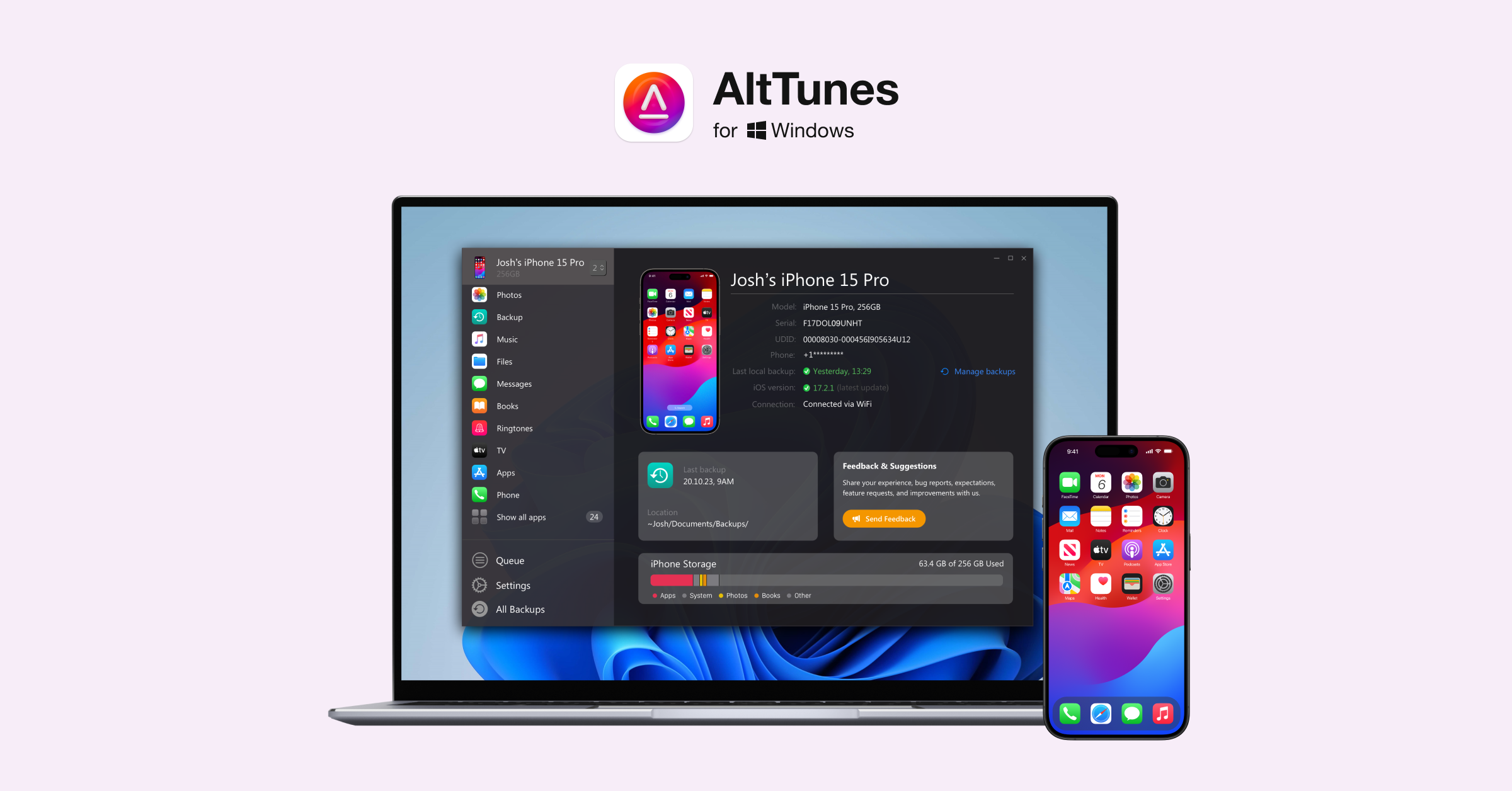
AltTunes is not an iCloud backup deletion tool. It is the safety net before you delete the cloud copy.
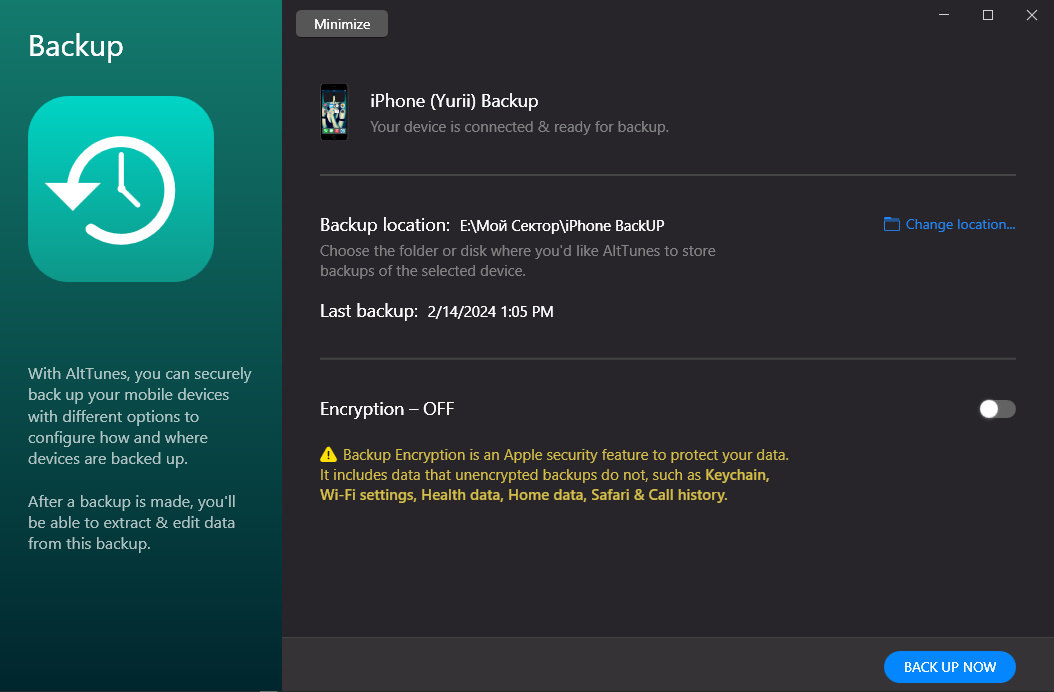
With AltTunes, you can:
If your goal is to stop paying for more iCloud storage, start with the data that matters most: photos, messages, contacts, and files. Export those first. If you use several Softorino apps, the [Universal License](/universal-license) can cover AltTunes and the rest of the core toolkit under one plan.
Create and manage local iPhone backups
Export music from iPhone to computer
Move documents and files
Export contacts to PC
Transfer Safari bookmarks, reading lists, and history
Export custom ringtones from iPhone
Export and manage eBooks and PDFs
Access and export calendars
Export call history and voicemail
Transfer notes and voice memos
Backup on your computer with Finder or iTunes
If you prefer Apple's tools, use Finder on Mac or iTunes on Windows.
- Connect your iPhone to your Mac or PC.
- Open Finder on macOS Catalina or later. Open iTunes on Windows or older macOS.
- Select your iPhone.
- Choose Back up all of the data on your iPhone to this Mac or the matching computer backup option.
- Select Encrypt local backup if you want passwords, Health data, and other sensitive data included.
- Click Back Up Now.
- Wait for the backup to finish before deleting the iCloud backup.
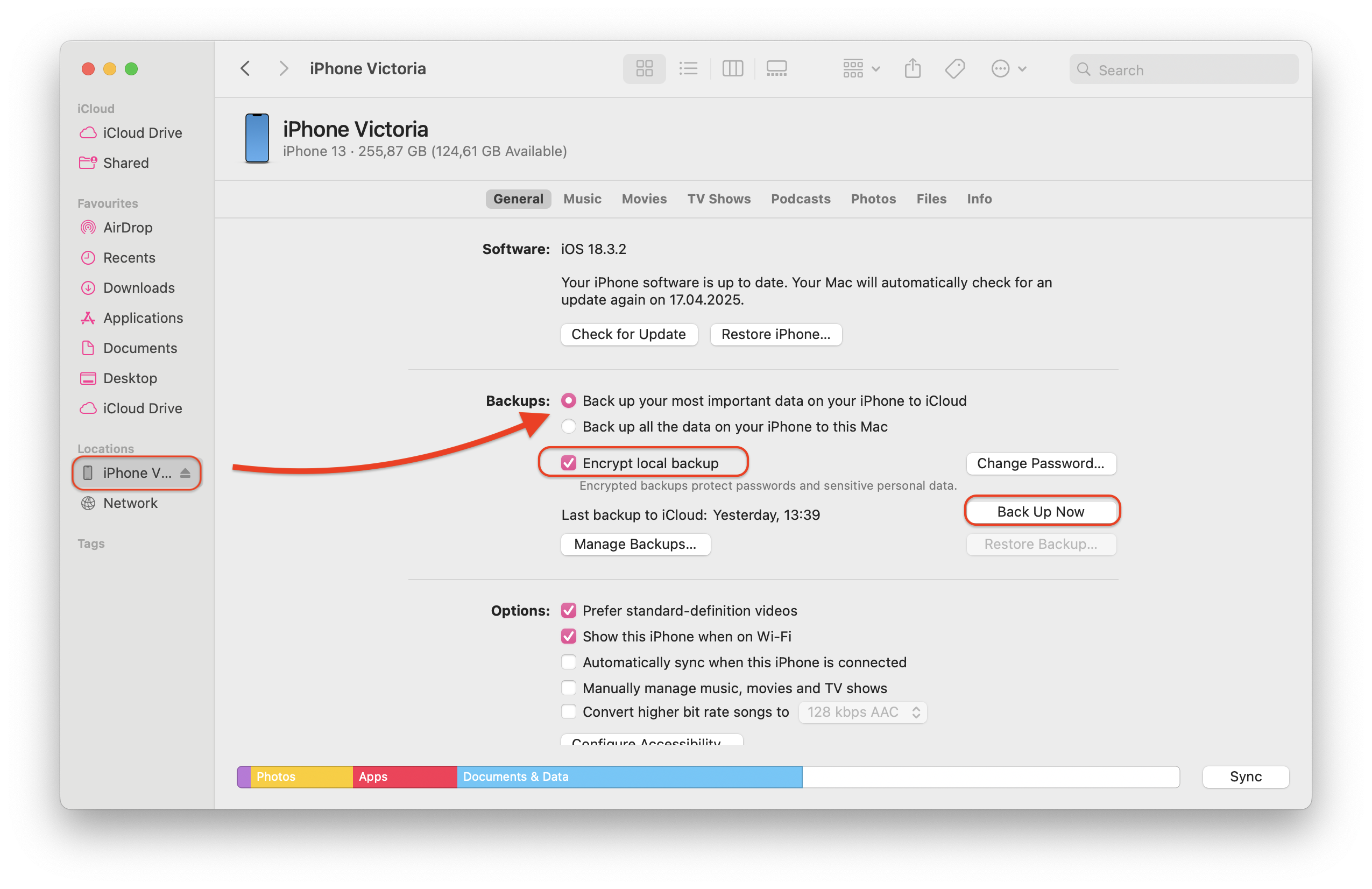
Do not delete a local backup by accident while trying to remove an iCloud backup. They are separate. iCloud backups live in Apple's cloud. Finder and iTunes backups live on your computer.
Should you delete old iCloud backups?
Delete an old iCloud backup if you no longer need it and you have another copy of the data you care about.
Keep the backup if:
The safest rule is boring, which means it works: make another backup first, then delete the old iCloud one.
- You are moving to a new iPhone.
- Your current iPhone has not backed up anywhere else.
- You may need old app data or settings.
- The backup belongs to a device you lost or broke.
- You are not sure what is inside it.
FAQ
Can I delete iCloud backup without losing data?
Yes. Deleting an iCloud backup does not remove current data from your iPhone. It removes the saved restore copy from iCloud. If you later need to restore that device, the deleted backup will not be available.
Will deleting iCloud backup delete photos?
No, deleting an iCloud backup does not delete photos from your current iPhone. If iCloud Photos is on, photos sync separately. If iCloud Photos is off, the photos stay on the iPhone, but you lose the backup copy stored in that deleted backup.
Will deleting iCloud backup delete messages?
No, deleting an iCloud backup does not delete current messages from your iPhone. If Messages in iCloud is on, messages sync separately. If it is off, deleting the backup removes one restore copy of those messages.
Does deleting iCloud backup delete contacts?
No. Contacts usually sync through iCloud or another account. Deleting the iCloud backup does not wipe contacts from your iPhone.
Does deleting iCloud backup free iPhone storage?
No. It frees iCloud storage. If your iPhone storage is full, delete local apps, downloads, photos, videos, or files from the device.
What happens if iCloud Backup turns off after deletion?
Your iPhone will stop making new iCloud backups until you turn iCloud Backup back on. Go to Settings > your name > iCloud > iCloud Backup and turn it on again if you want new cloud backups.
Can I recover a deleted iCloud backup?
Assume no. Once you manually delete a selected iCloud backup, you should treat that restore point as gone. If you still need the data, make a local backup or export important files before deleting it.
Can I delete old iPhone backups from iCloud?
Yes, if they belong to devices you no longer use and you do not need them for restore. Check the device name and backup date before deleting.
Should I back up iPhone without iCloud first?
Yes, if the backup belongs to a phone you still use or if you care about the data inside it. Use Finder on Mac, iTunes on Windows, or AltTunes on Windows to create a local safety copy.
Final answer
What happens if I delete iCloud backup? You delete the restore copy stored in iCloud. You do not delete the current data on your iPhone.
That is safe when the backup is old, unnecessary, or already replaced by a newer backup. It is risky when the backup is your only way back.
Before you delete it, make a local backup or export the data you care about. If you use Windows and want to avoid wrestling with iTunes, [try AltTunes](/alttunes) and keep your iPhone data on your own PC.

AltTunes
Seamlessly Browse, Manage & Export iOS Data
