How to Export Contacts from iPhone to Computer


If you need to know how to export contacts from iPhone, start with the output you want. Use the iPhone Contacts app or iCloud.com for a vCard/VCF file. Use Google Contacts when you need CSV for Excel or Outlook. Use AltTunes when you are on Windows and want a local PC copy without turning iCloud into the whole plan.
Apple gives you several routes, but none of them explain the tradeoffs well. VCF works best for moving contacts between phones and address books. CSV works best for spreadsheets. A local PC backup works best when you want your contacts on your computer, not scattered between iCloud, email, and a browser download.
Quick answer: how to export contacts from iPhone
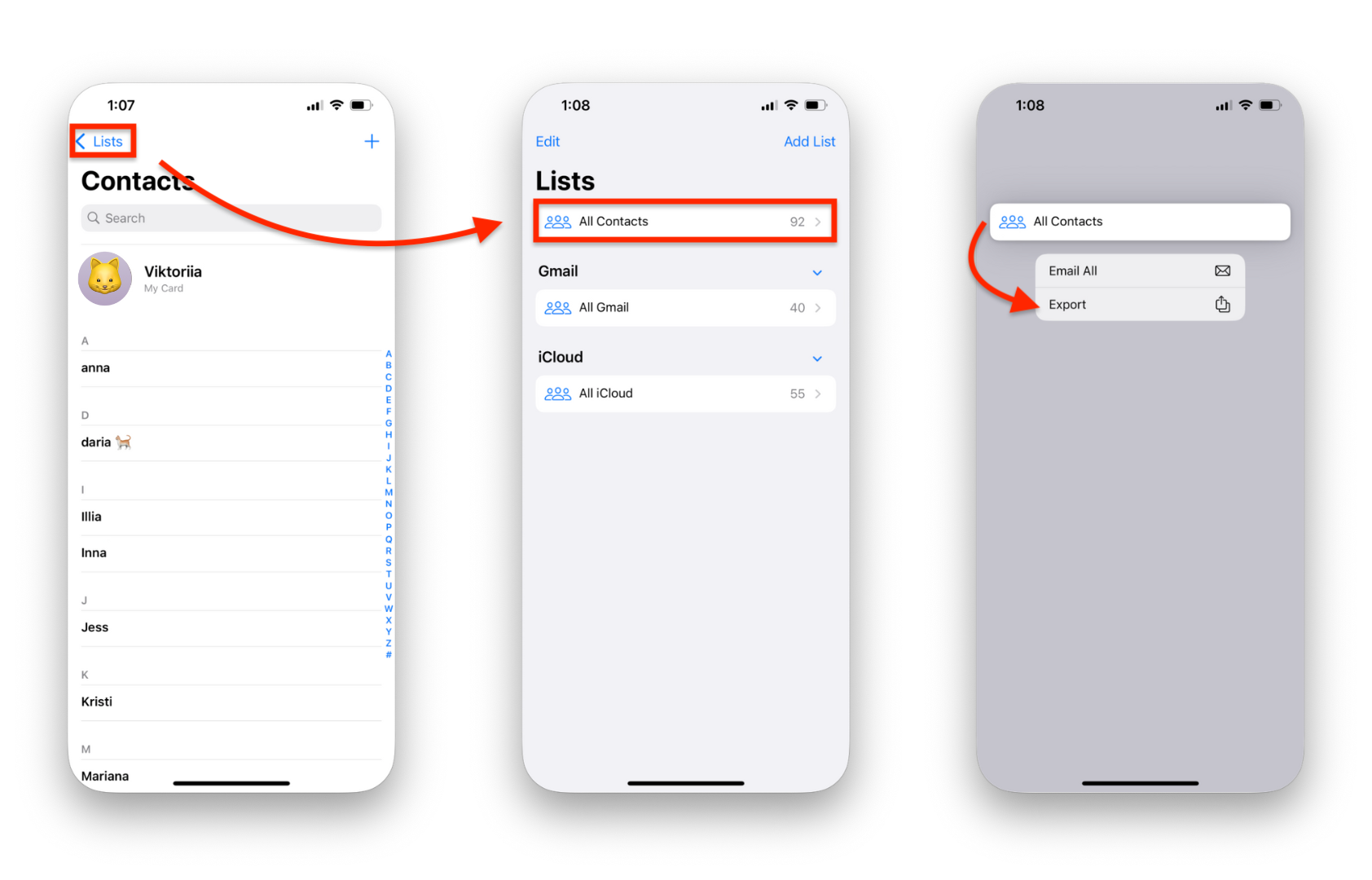
The fastest way to export contacts from iPhone is to open the Contacts app, go to Lists, press and hold All Contacts, choose Export, select the fields you want, and save or send the vCard file. Apple documents this direct iPhone export flow in its official Contacts guide.
If you want to export from a computer browser, use iCloud Contacts and download a vCard. If you need CSV, sync the contacts to Google Contacts and export from there. If you want a Windows tool that also manages photos, music, messages, files, and backups, use AltTunes as an iPhone file manager for Windows.
Method | Best for | Output | Watch out for |
|---|---|---|---|
iPhone Contacts app | Fast export from the phone | VCF/vCard | You still need Mail, Files, Drive, or AirDrop to move it to a computer |
iCloud.com | Browser export from Mac or PC | VCF/vCard | Requires iCloud Contacts sync |
AltTunes | Windows users who want local iPhone contact export | Local PC export | Windows only |
Google Contacts | Excel, Outlook, and spreadsheet work | CSV or vCard | Requires Google contact sync first |
Email or AirDrop | Small lists or one-off sharing | VCF/contact card | Weak for large contact lists |
Before we begin
For the easiest Windows export, download AltTunes to move iPhone contacts to your PC. Choose CSV when you need the contacts in Excel or another spreadsheet, or VCF when you need to import them into another phone or address book. Unlock the iPhone and approve the Trust prompt before starting.
Best method by situation
Choose the method by what you need after export. That one decision prevents most contact-transfer nonsense.
- Use iPhone Contacts when you want a quick VCF file from your phone.
- Use iCloud.com when your contacts already sync with iCloud and you are near a computer.
- Use AltTunes when you are on Windows and want to export iPhone contacts to a PC without depending on a cloud workflow.
- Use Google Contacts when you need CSV for Excel, Outlook, or a spreadsheet cleanup.
- Use Email or AirDrop when you only need to move a few contacts or one list.
VCF is the safe default for phones. CSV is the spreadsheet format. Do not mix them up unless you enjoy repairing contact columns by hand.
How to export contacts from iPhone to a Windows PC with AltTunes
AltTunes is the better fit when you want iPhone contacts saved locally on a Windows computer. It is not trying to replace Apple's built-in export for everyone. It is for the Windows + iPhone crowd that wants a PC-side iPhone manager instead of another round of iTunes, iCloud tabs, and manual downloads.
Softorino's product docs confirm AltTunes can export iPhone contacts and manage photos, music, messages, videos, files, notes, and backups. Keep the format expectation honest: use AltTunes for local contact export and PC backup. Use Google Contacts if your main goal is a CSV spreadsheet.
Here is the product in action before the steps.
Step 1. Install AltTunes on Windows
Download AltTunes on a Windows 10 or Windows 11 PC. Connect your iPhone with a USB cable, unlock the phone, and approve the Trust prompt if iOS asks.
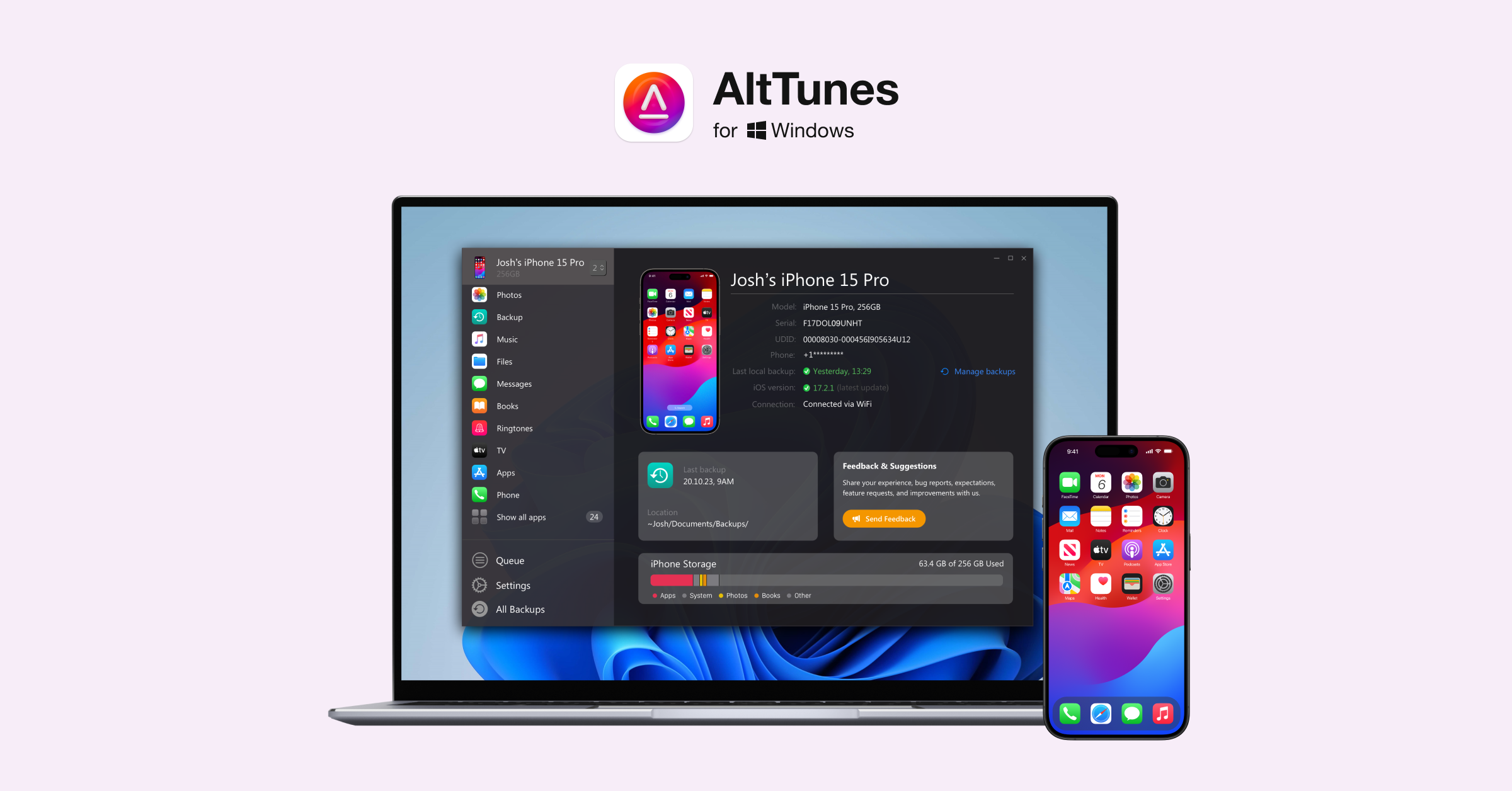
That Trust prompt matters. Without it, no iPhone manager can read your device properly. If AltTunes does not see the iPhone, try another USB port and make sure the cable supports data transfer, not only charging.
Step 2. Open the contacts area in AltTunes
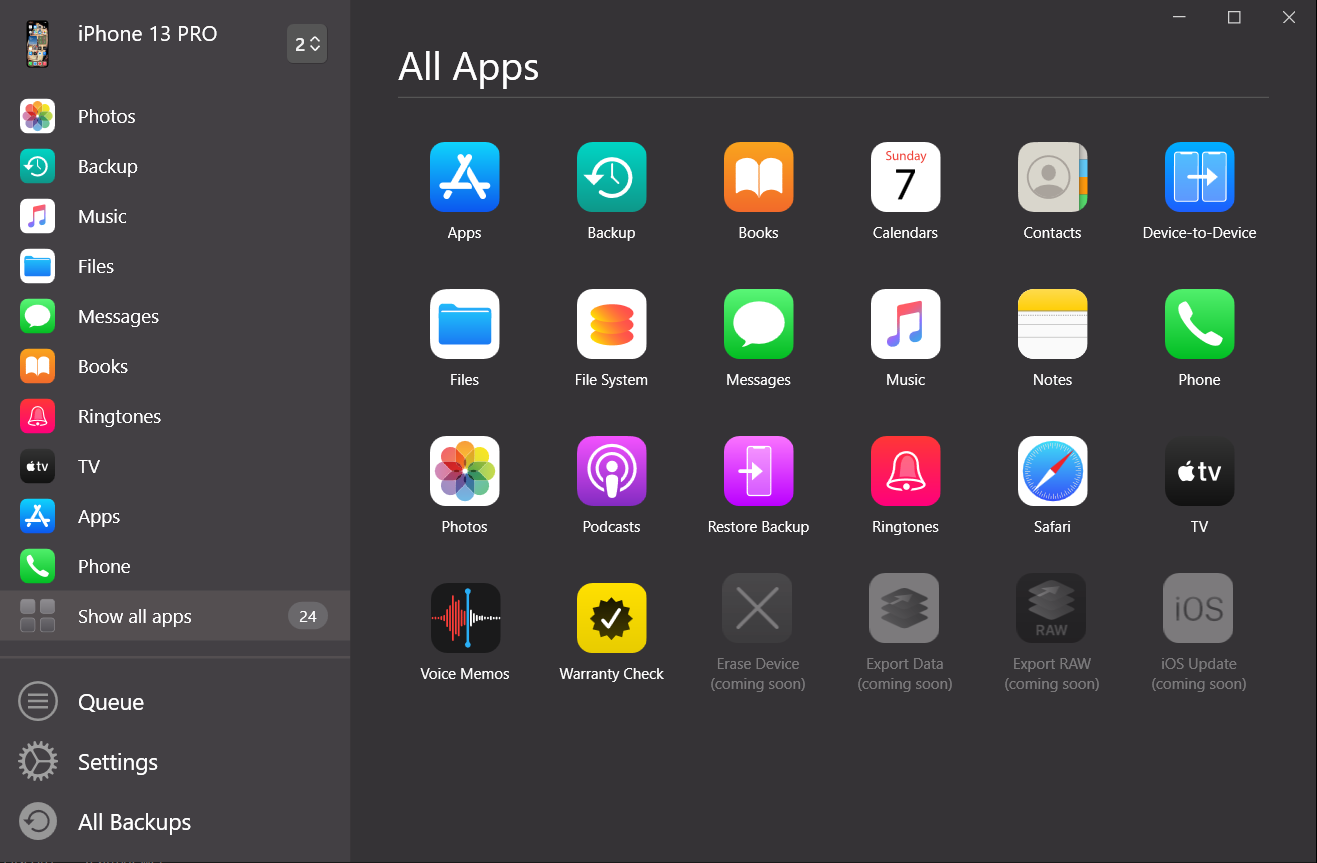
Open AltTunes and choose your iPhone. Go to the contacts section, then review the contact list before exporting anything.
This is where AltTunes helps Windows users most. You can keep contacts on the PC and handle other iPhone data from the same app instead of splitting work across iCloud, old iTunes screens, and email attachments.
Step 3. Export iPhone contacts to your PC
Choose the contacts you want to save, then export them to a local folder on your computer. Pick a folder you will remember, such as Documents > iPhone Contacts Backup, not the Downloads folder graveyard.
After export, open the destination folder and confirm the contact files are there. Do this before deleting, resetting, or changing anything on the iPhone.
Keep one extra backup copy if the contact list matters for work, family, or clients. One local folder is useful. Two copies are safer.
AltTunes is also a natural fit if you need to transfer files from iPhone to PC, export photos, back up messages, or move other iPhone data on Windows. For contact-only CSV work, Google Contacts is still the cleaner route.
How to export contacts from iPhone with iCloud.com
iCloud.com is the best computer-browser method when iCloud Contacts already syncs on your iPhone. It exports contacts as a vCard file, which works with Apple Contacts, Google Contacts, Outlook, and most address book apps.
Step 1. Turn on iCloud Contacts on your iPhone
Open Settings on your iPhone, tap your name, open iCloud, and turn on Contacts. If iOS asks whether to merge contacts, choose merge if you want your phone contacts available in iCloud.
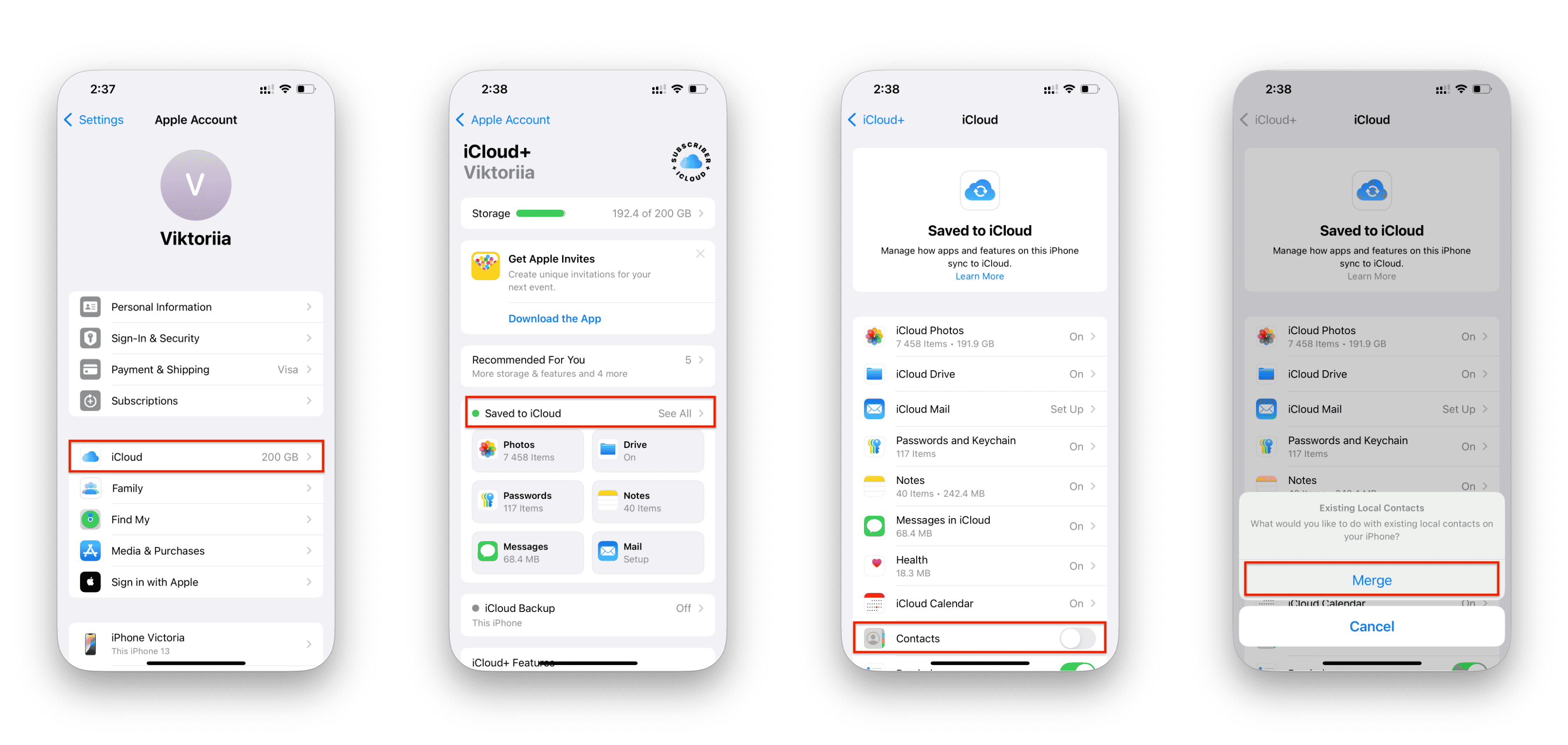
Wait for sync to finish before opening iCloud.com on your computer. If contacts are missing from iCloud, the sync probably has not finished or the contacts live under a different account, such as Gmail or Outlook.
Step 2. Export contacts from iCloud.com
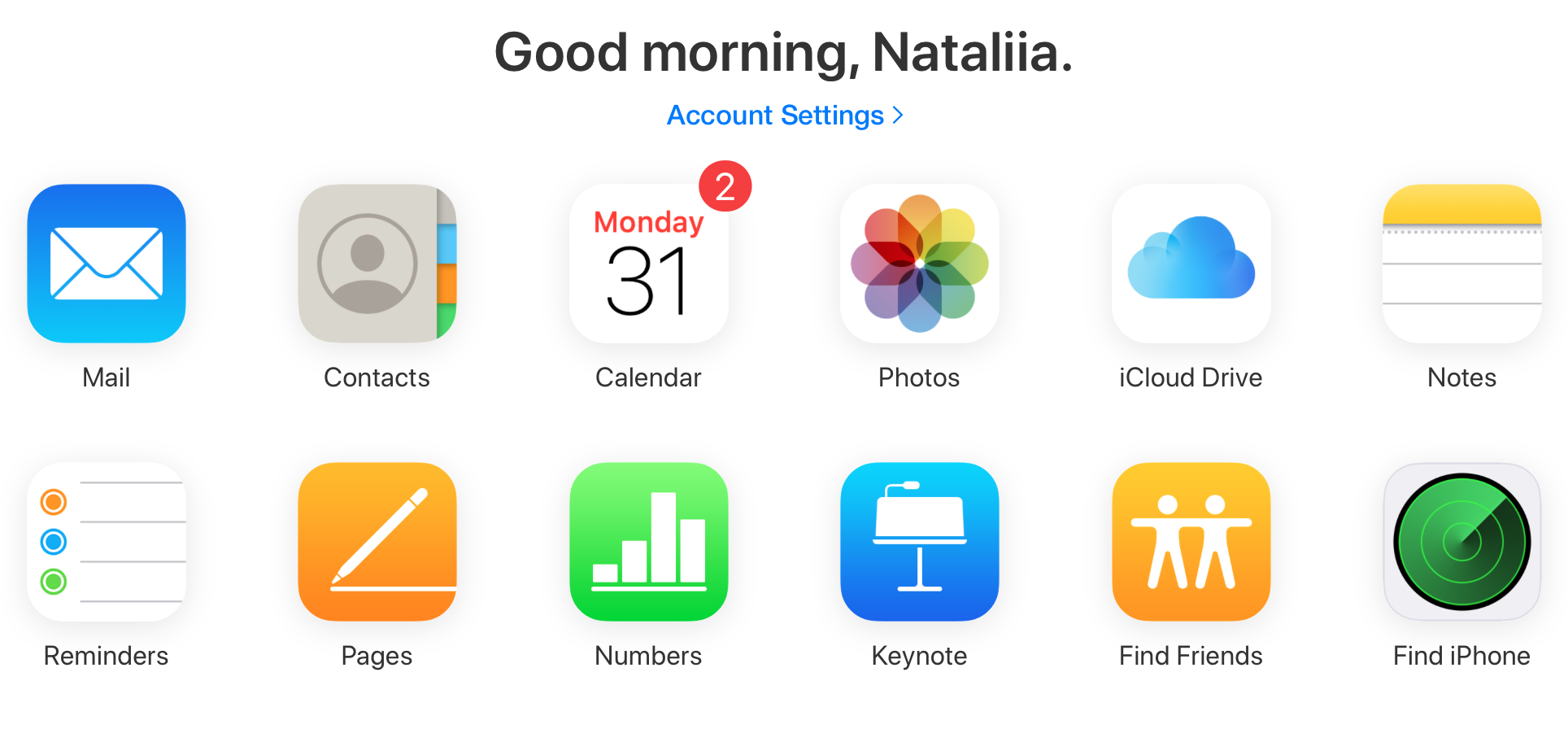
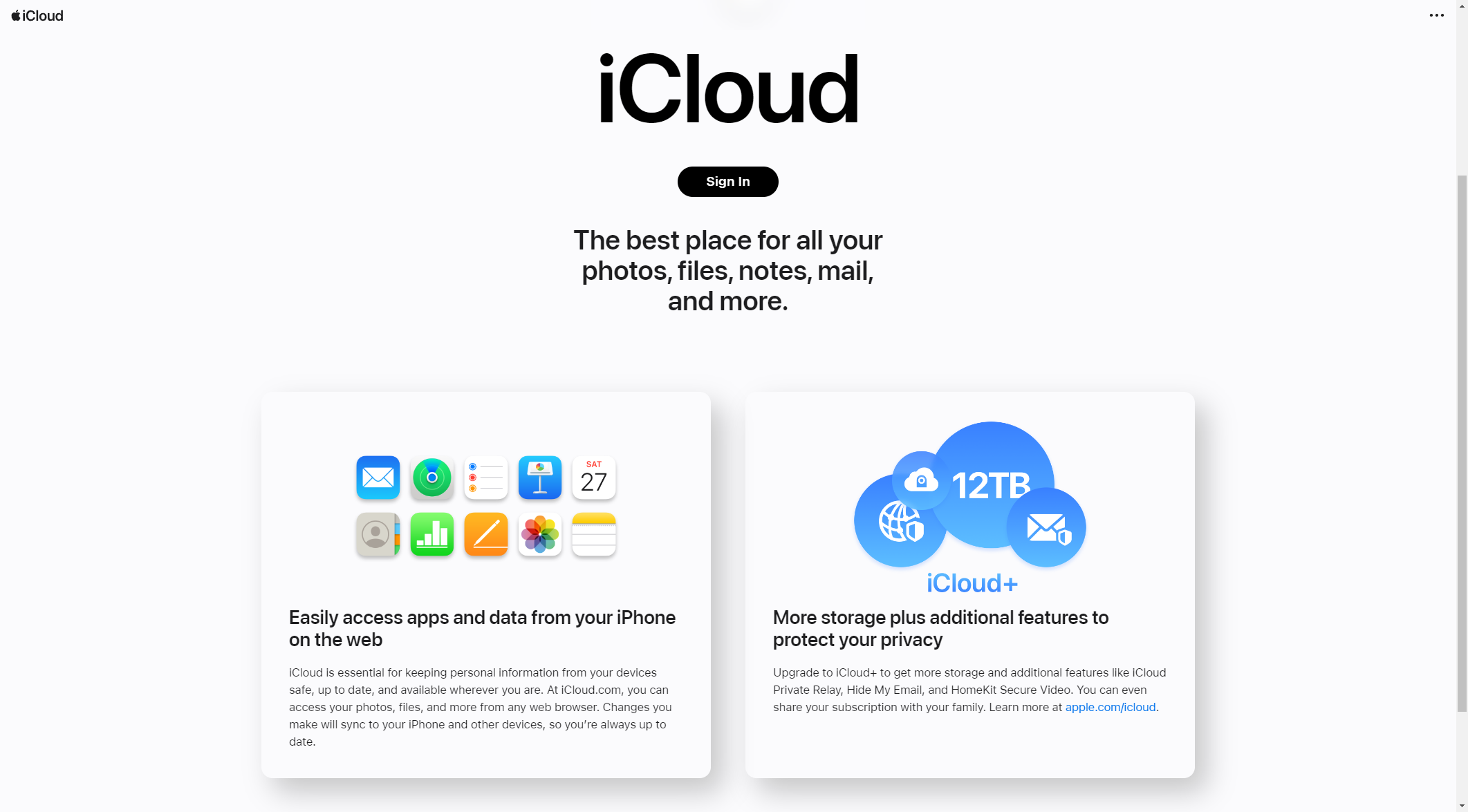
Open iCloud.com on your computer and sign in with your Apple Account. Open Contacts, select the contacts you want, then choose the export option to download a vCard file.
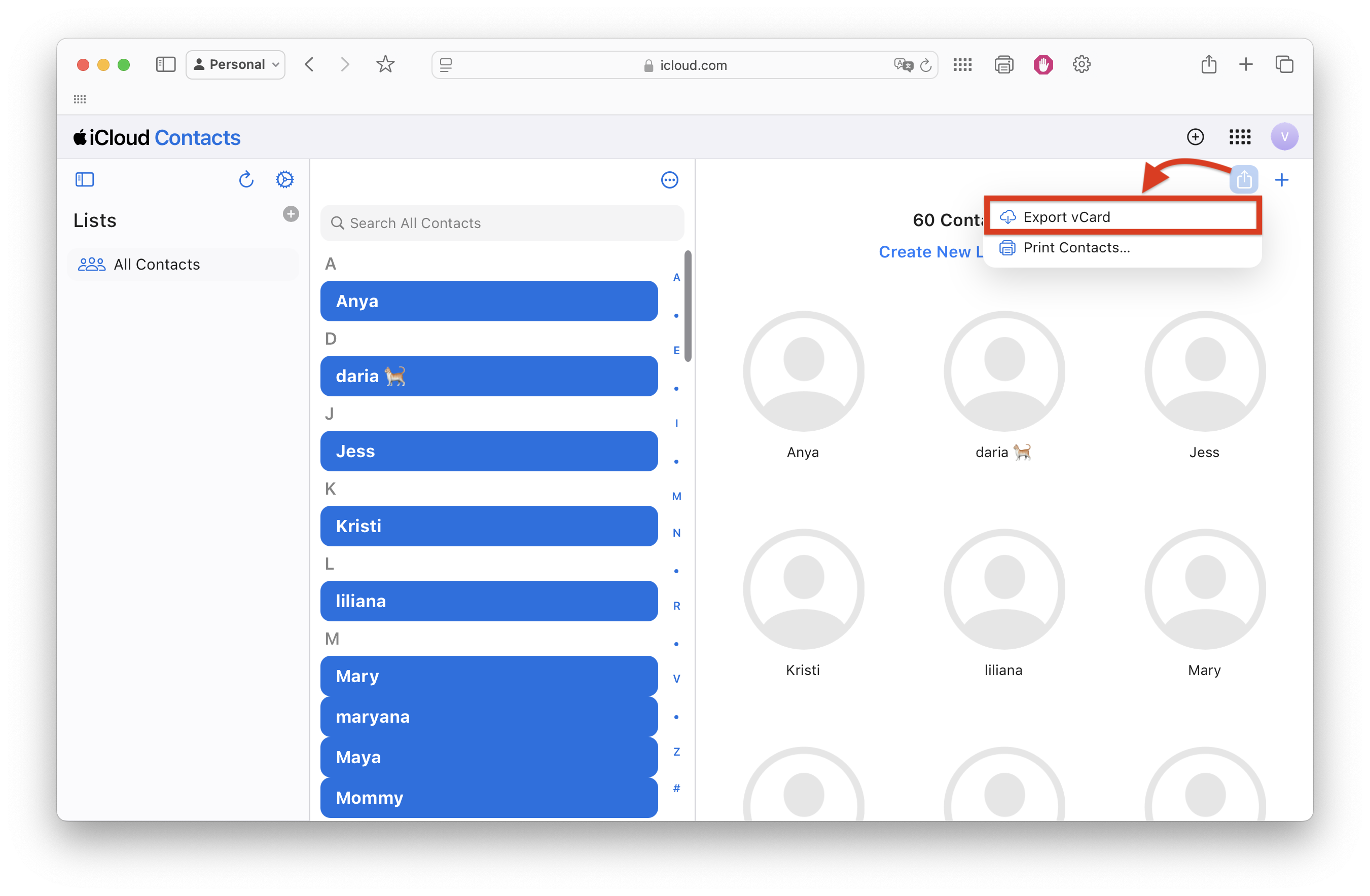
Save the VCF file somewhere obvious. You can import that file into Apple Contacts, Google Contacts, Outlook, or another contact manager.
iCloud export is simple when iCloud Contacts is already on. It is less useful when you want a no-cloud PC backup or when your contacts are stored under Gmail, Exchange, or another account.
How to export contacts with iTunes or Windows Contacts
iTunes is no longer the best answer for most people, but some older Windows setups still use it for contact sync. If you already have that setup working, you can sync contacts to Windows Contacts and export from there.
- Connect your iPhone to the PC.
- Open iTunes.
- Select the iPhone device icon.
- Open the Info tab.
- Choose Sync Contacts with Windows Contacts.
- Apply the sync.
- Open Windows Contacts and export the synced contacts.
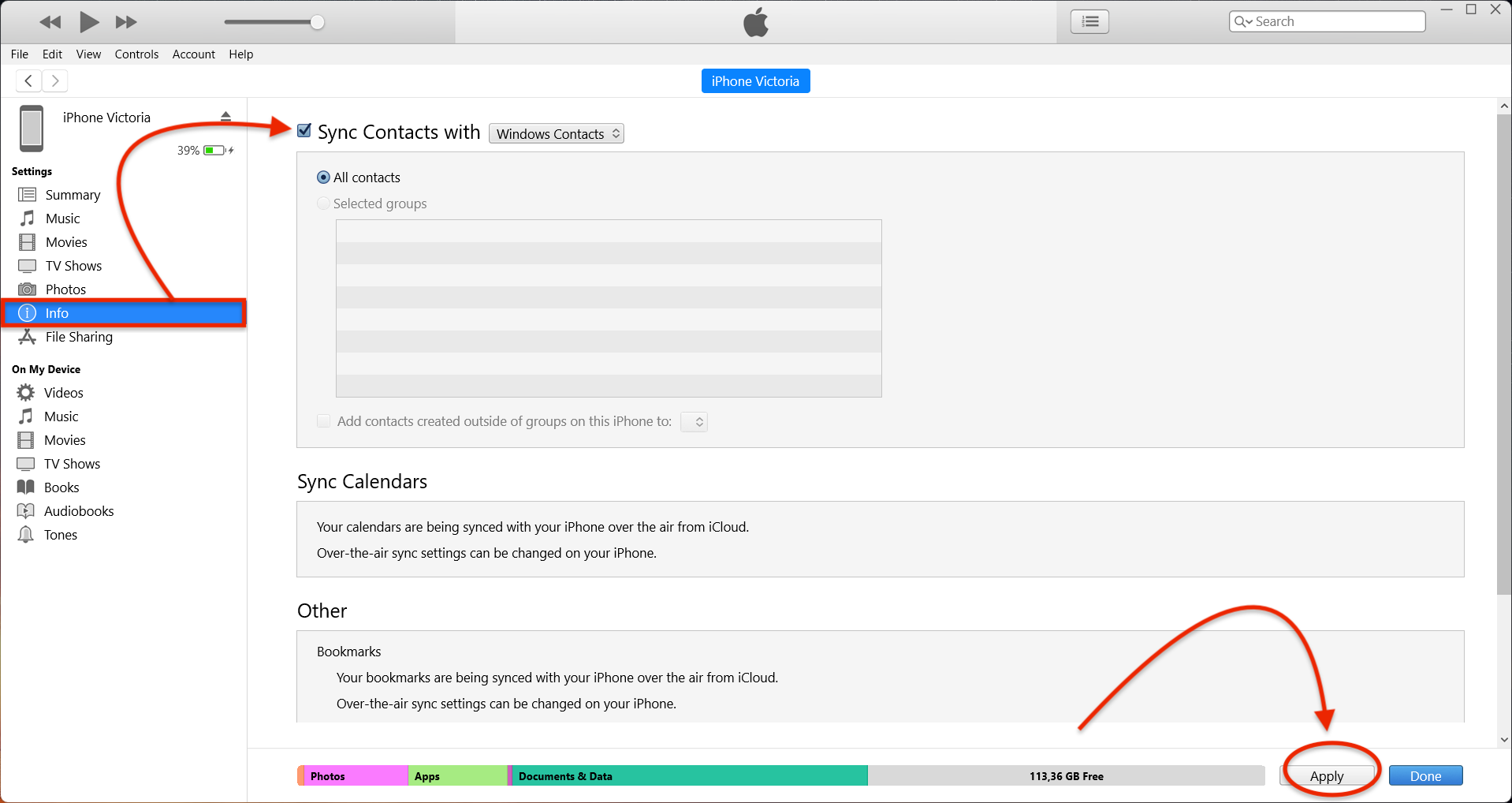
Use this only if your Windows/iTunes setup still supports the contact sync option. Apple has been moving Windows users toward newer Apple apps, and iTunes on Windows remains the software equivalent of a drawer full of mystery cables.
How to export iPhone contacts to CSV for Excel or Outlook
If your real goal is a spreadsheet, VCF may annoy you. A vCard is made for address books. CSV is made for rows and columns.
The cleanest way to export iPhone contacts to CSV is through Google Contacts:
- On your iPhone, open Settings > Contacts > Accounts.
- Add or select your Google account.
- Turn on Contacts sync.
- Open Google Contacts on your computer.
- Select the contacts you want.
- Choose Export.
- Pick Google CSV, Outlook CSV, or vCard based on where the file will go next.
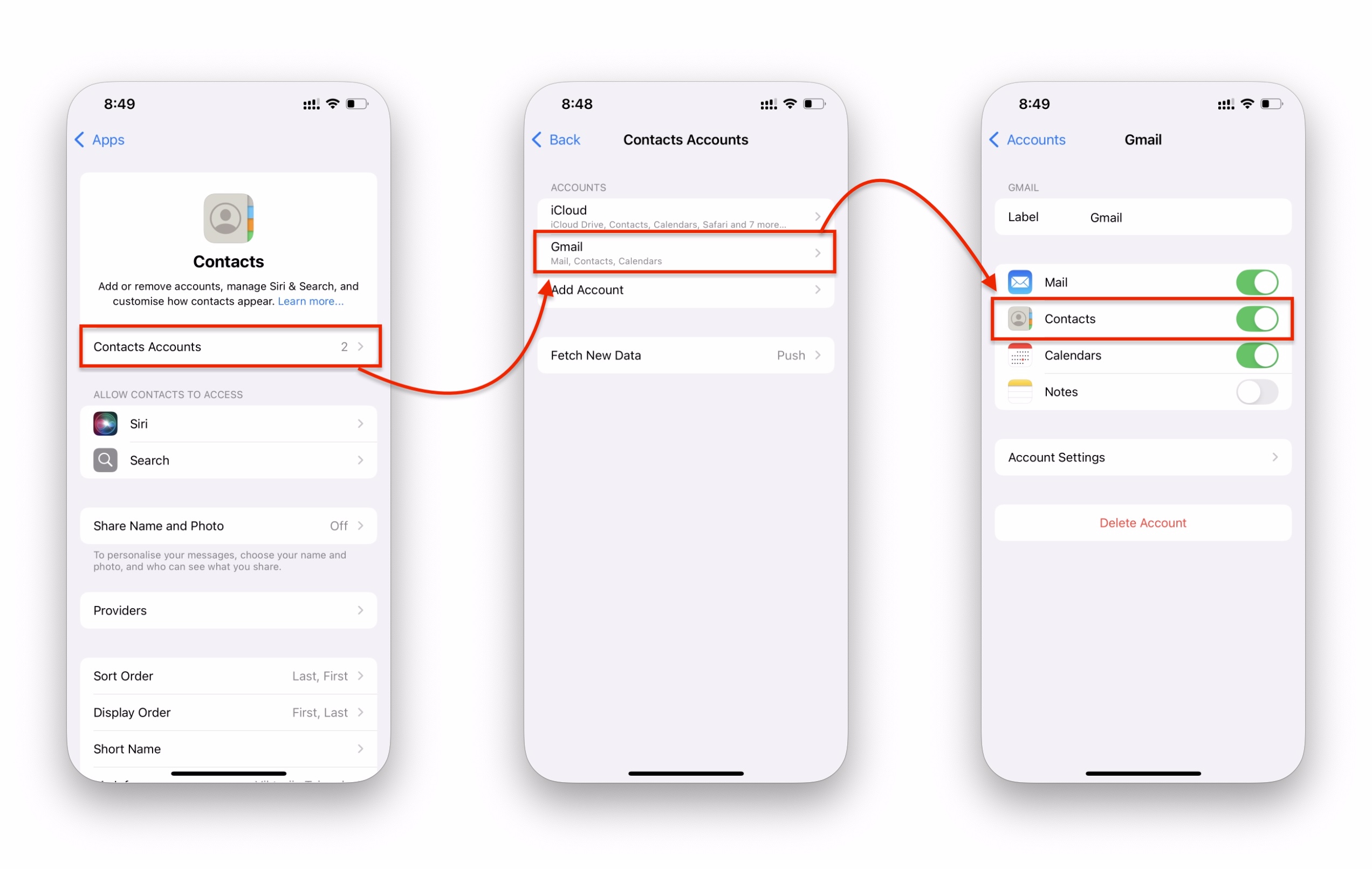
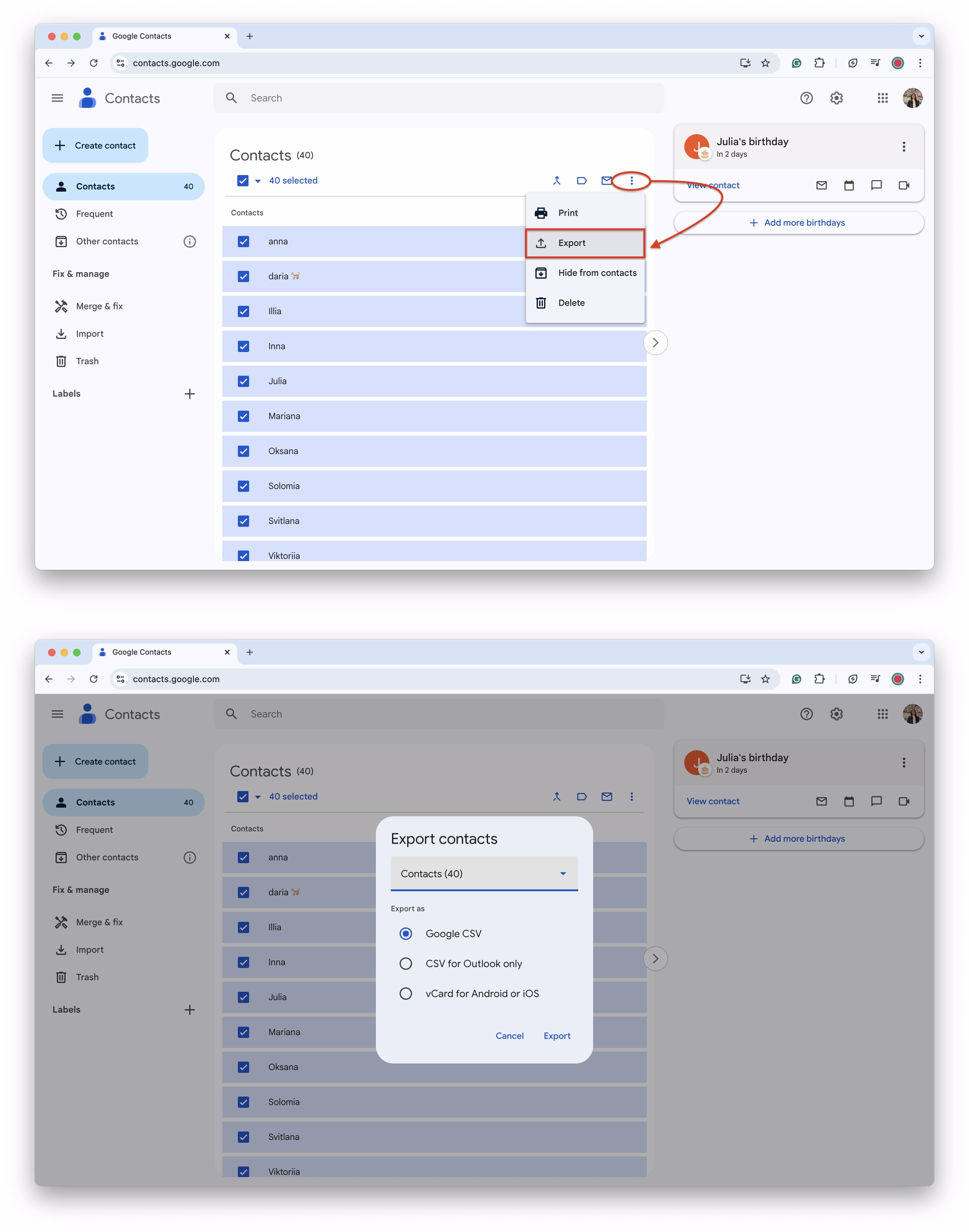
Use Google CSV if you plan to re-import contacts into Google. Use Outlook CSV for Outlook or many Windows contact workflows. Use vCard if you plan to move contacts back to an iPhone, iPad, Mac, or another phone.
How to export contacts from iPhone without iCloud
You can export contacts from iPhone without iCloud in 3 practical ways.
- Use the Contacts app export flow on the iPhone, then save the VCF to Files, Mail, Drive, or another destination.
- Use AltTunes on Windows when you want a local PC-side export and broader iPhone data management.
- Use Google Contacts if the contacts already sync through Google and you need CSV.
The no-iCloud route depends on what you want to avoid. If you only dislike iCloud storage, direct iPhone export works. If you want contacts saved on a Windows PC with the rest of your iPhone data, AltTunes makes more sense. If you want spreadsheet cleanup, Google Contacts wins.
How to email or AirDrop contacts from iPhone to computer
Email works when you only need a quick contact card or a small list. AirDrop works well between iPhone and Mac. Neither is great for a huge contact list on Windows.
For a single contact, open Contacts, choose the person, tap Share Contact, and send it to yourself by Mail, Messages, Files, or another app.
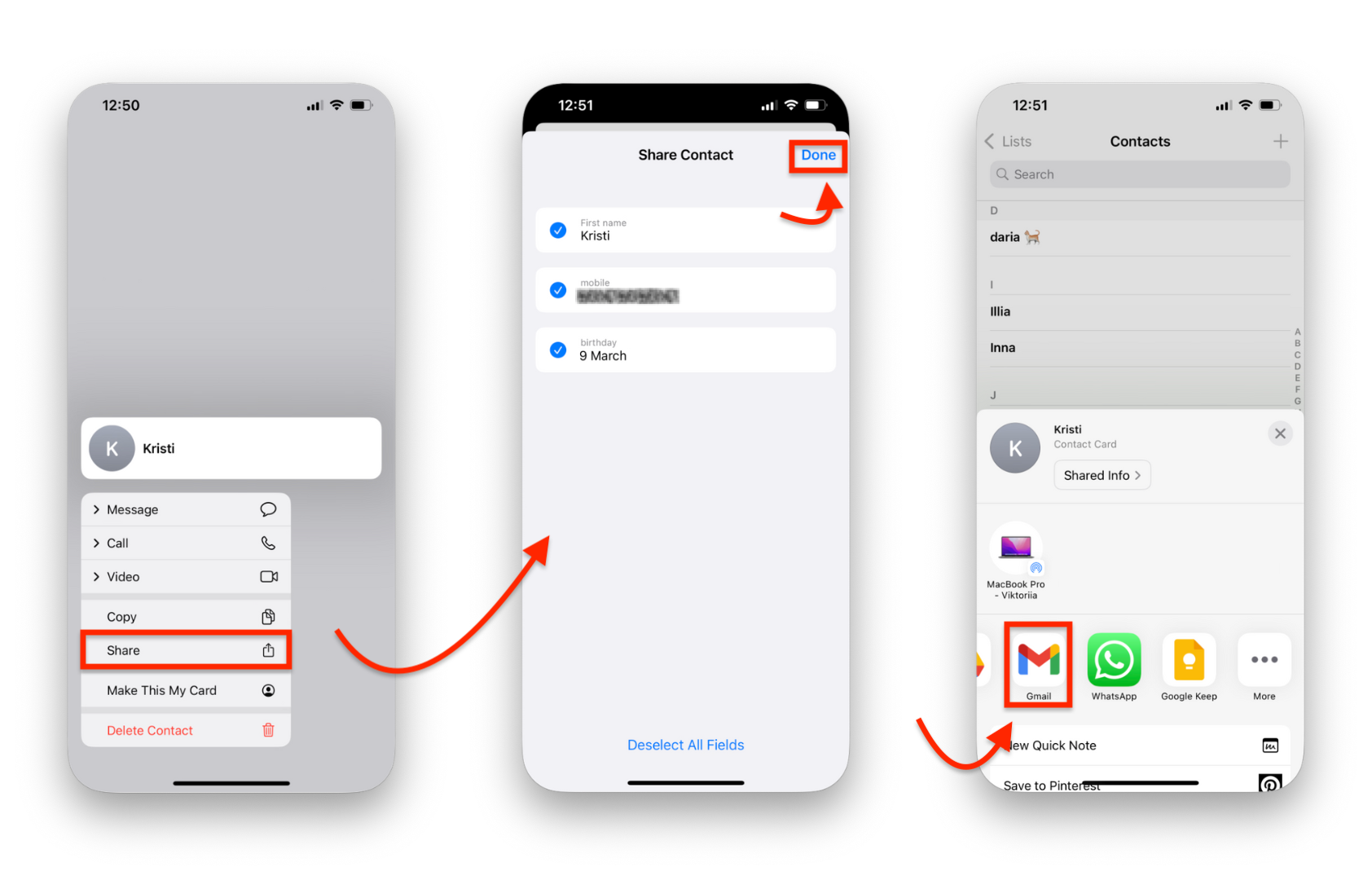
For a list, open Contacts, go to Lists, press and hold the list, choose Export, select the contact fields, then send or save the VCF file.
Open the email or saved file on your computer and download the VCF attachment.
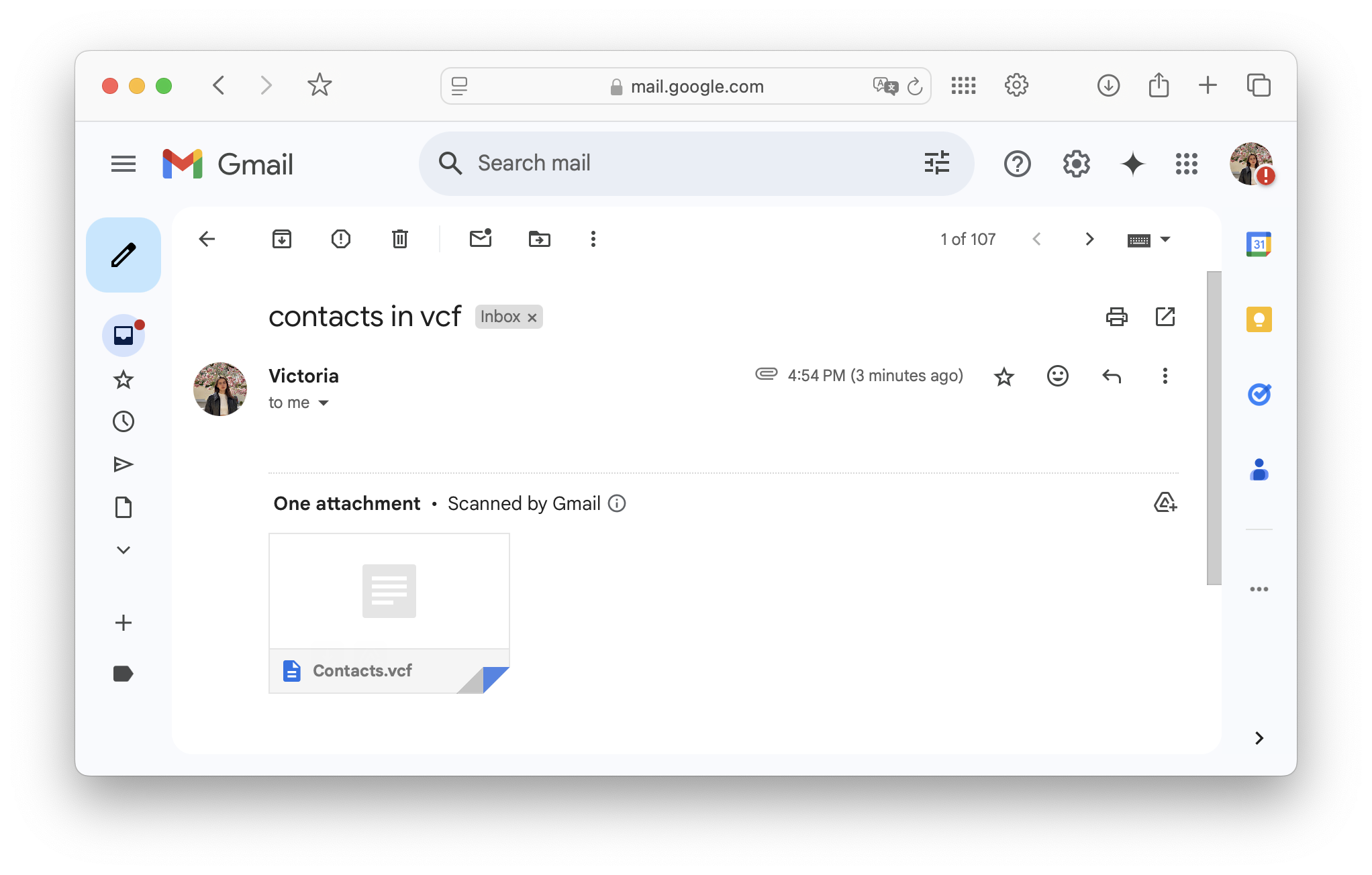
If the file extension says VCF, you have a vCard file. If you see VSF anywhere, that is a typo, not a contact format.
VCF vs CSV: which contact file format should you use?
Use VCF when you want to move contacts between phones, Apple Contacts, Google Contacts, Outlook, or another address book. VCF keeps contact-card details in a format contact apps understand.
Use CSV when you want contacts in Excel, Google Sheets, Outlook imports, database cleanup, or a CRM prep sheet. CSV turns contacts into columns, which makes bulk editing easier but can lose or flatten some contact-card details.
Format | Best for | Common use |
|---|---|---|
VCF / vCard | Phones and address books | Moving contacts between iPhone, iCloud, Google Contacts, Outlook, and Mac |
CSV | Spreadsheets and Outlook-style imports | Cleaning, sorting, auditing, and importing contact lists |
If you are not sure, export a VCF first. It is the safer backup format for contact apps. Create CSV only when you know the next app needs it.
Troubleshooting: why your iPhone contacts will not export
If contacts do not appear where you expect, check the account source first. iPhone contacts can live in iCloud, Gmail, Outlook, Exchange, or a local account. Exporting from one account will not always include contacts stored in another.
- Contacts missing from iCloud: Turn on iCloud Contacts and wait for sync. Also check whether contacts are under Gmail or Outlook instead.
- Export option missing on iPhone: Update iOS and use the Contacts app Lists view. Apple's export flow lives there, not inside every single contact screen.
- VCF opens strangely on Windows: Import it into Outlook, Google Contacts, or another contact app instead of double-clicking and expecting a spreadsheet.
- Need Excel columns: Use Google Contacts export or another CSV-capable contact manager.
- Duplicates after import: Merge duplicates in the destination app before syncing back to your phone.
- PC cannot see the iPhone: Unlock the iPhone, approve Trust, and use a data cable.
Do not delete contacts from the iPhone until you have opened the exported file somewhere else. Contact recovery is a worse afternoon than contact export.
Bottom line
The best way to export contacts from iPhone depends on the destination. Use the iPhone Contacts app or iCloud.com for a vCard. Use Google Contacts for CSV. Use AltTunes when you are on Windows and want a local copy on your PC without turning the job into an iCloud scavenger hunt.
If you want a Windows-first way to save contacts locally and manage more iPhone data from one place, try AltTunes to export iPhone contacts to a Windows PC. It also helps with photos, music, messages, files, notes, and backups.
Moving to another iPhone too? Use Softorino's guide to transfer contacts to a new iPhone. If you use more than one Softorino app, the Universal License bundles the core apps for about $3/month.
FAQ
What is the easiest way to export contacts from iPhone to computer?
The easiest way is the built-in Contacts app export. Open Contacts, go to Lists, press and hold All Contacts, choose Export, select the fields, and save or send the VCF file to your computer.
How do I export contacts from iPhone to PC without iCloud?
Use the Contacts app export flow and send the VCF file to your PC, or use AltTunes on Windows for a local PC-side contact export. Google Contacts also works if your contacts sync through Google.
Can I export iPhone contacts to CSV?
Yes. The cleanest route is Google Contacts. Sync iPhone contacts with Google, open Google Contacts on your computer, select the contacts, choose Export, and pick Google CSV or Outlook CSV.
What is the difference between VCF and CSV contacts?
VCF, also called vCard, is made for contact apps and phones. CSV is made for spreadsheets, Outlook-style imports, cleanup, and row-by-row editing.
Can I export all iPhone contacts at once?
Yes. Use the Contacts app Lists export, iCloud.com, Google Contacts, or a Windows tool such as AltTunes. For one-off sharing, email is fine. For a full contact list, use an export method.
Does AltTunes work on Mac?
No. AltTunes is a Windows app. Mac users should use the iPhone Contacts app export, iCloud.com, AirDrop, or Apple Contacts.

AltTunes
Seamlessly Browse, Manage & Export iOS Data
