How to Backup iPad to iCloud, Mac, PC, and AltTunes

Your iPad probably holds more than you think: photos, notes, documents, app data, messages, settings, downloads, and the half-finished ideas you swear you will organize later.
If you want the safest answer, use more than one iPad backup method. iCloud is easiest for automatic wireless backups. Finder on Mac or Apple Devices on Windows gives you an official local backup. AltTunes gives Windows users a simpler way to keep iPad data under local control, especially when iCloud storage or iTunes gets annoying.
Here is the quick call:
Best for | Use this iPad backup method | Why |
|---|---|---|
Automatic backup with no cable | iCloud Backup | Runs when your iPad is locked, charging, and online |
Official full local backup on Mac | Finder | Built into macOS Catalina or later |
Official full local backup on Windows | Apple Devices app | Apple's current Windows backup app |
Older Windows or older macOS | iTunes | Still works as a fallback |
Local control, external drive storage, and easier Windows handling | AltTunes | Better when you want files and backups on your terms |
Below, you will learn how to backup iPad with iCloud, Mac, Windows, iTunes, and AltTunes. You will also see what each method does not back up, because Apple hides the boring details where people get burned.
Before we begin
Windows users can download AltTunes to create a local iPad backup on a PC and review the stored data before an update, reset, or device move. Keep one separate backup until the iPad restore is confirmed.
Not every iPad backup works the same way. That matters when you need to restore after a reset, move to a new iPad, or recover a file without nuking the whole device.
iCloud Backup
iCloud Backup is the easiest option if you want automatic backups. You turn it on once, and your iPad backs up when it is locked, connected to power, and connected to Wi-Fi. Some cellular iPads can also back up over 5G if your carrier and settings allow it.
Use iCloud if you want the least manual work. Avoid relying on iCloud alone if your iCloud storage is full or your internet connection is slow.
Finder on Mac
Finder is the standard local backup tool on macOS Catalina and later. You connect your iPad with a cable, open Finder, choose your iPad, and click Back Up Now.
Use Finder if you want an Apple-approved local backup on your Mac. Choose encrypted backup if you want sensitive data such as Health, Activity, Wi-Fi passwords, and saved passwords included.
Apple Devices on Windows
Apple Devices is Apple's current Windows app for iPhone and iPad syncing, backup, and restore. If you use Windows 10 or Windows 11, start here before reaching for iTunes.
Use Apple Devices if you want the official Windows path without the old iTunes mess.
iTunes Fallback
iTunes still works for older Windows setups and macOS Mojave or earlier. It can back up and restore an iPad, but nobody should pretend the app is pleasant.
Use iTunes only when Finder or Apple Devices is not available.
AltTunes
AltTunes is a Windows iPhone and iPad manager for people who want local control without fighting iTunes. It helps you export photos, music, videos, messages, contacts, files, and backups to your PC or external drive.
Use AltTunes when you want your iPad data stored where you choose, not squeezed into iCloud or buried inside an Apple app.
1. How to Backup iPad with AltTunes on Windows
AltTunes is best when you want a practical iTunes alternative on Windows. It is not trying to replace every Apple backup path for every user. It is for the specific pain that sends people searching: "I want my iPad data on my PC or external drive, and I do not want iTunes involved."
Step 1. Download and Install AltTunes on Your PC
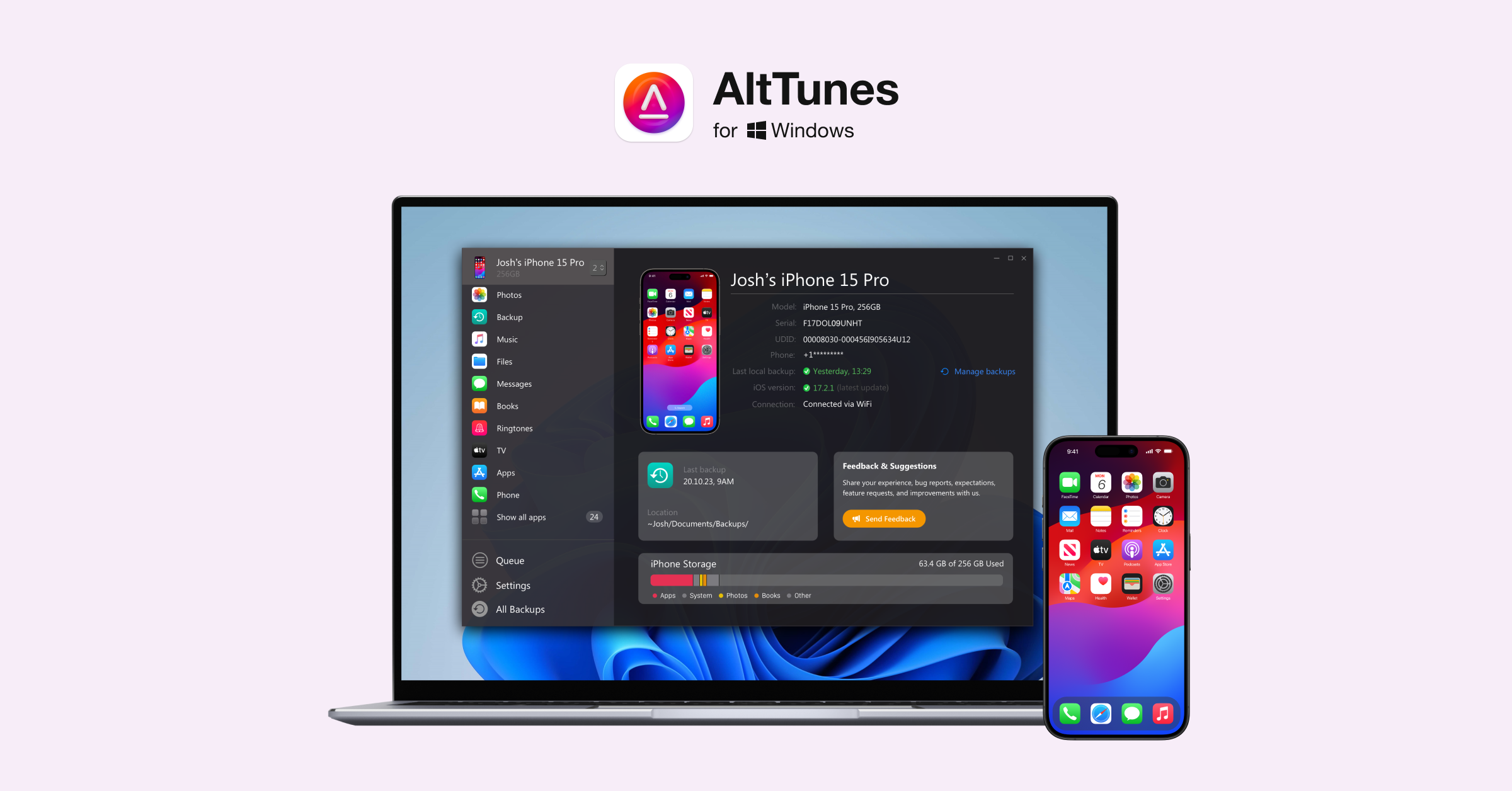
Download AltTunes on your Windows PC, install it, and open the app. Connect your iPad with a USB cable.
If your iPad asks whether you trust this computer, tap Trust and enter your passcode. That unlocks access for local transfer and backup tasks.
AltTunes includes a free trial, so you can test the workflow before paying. That is useful if your main goal is to confirm your iPad appears, choose a backup location, and see how exports work on your PC.
Step 2. Connect Your External Drive and iPad
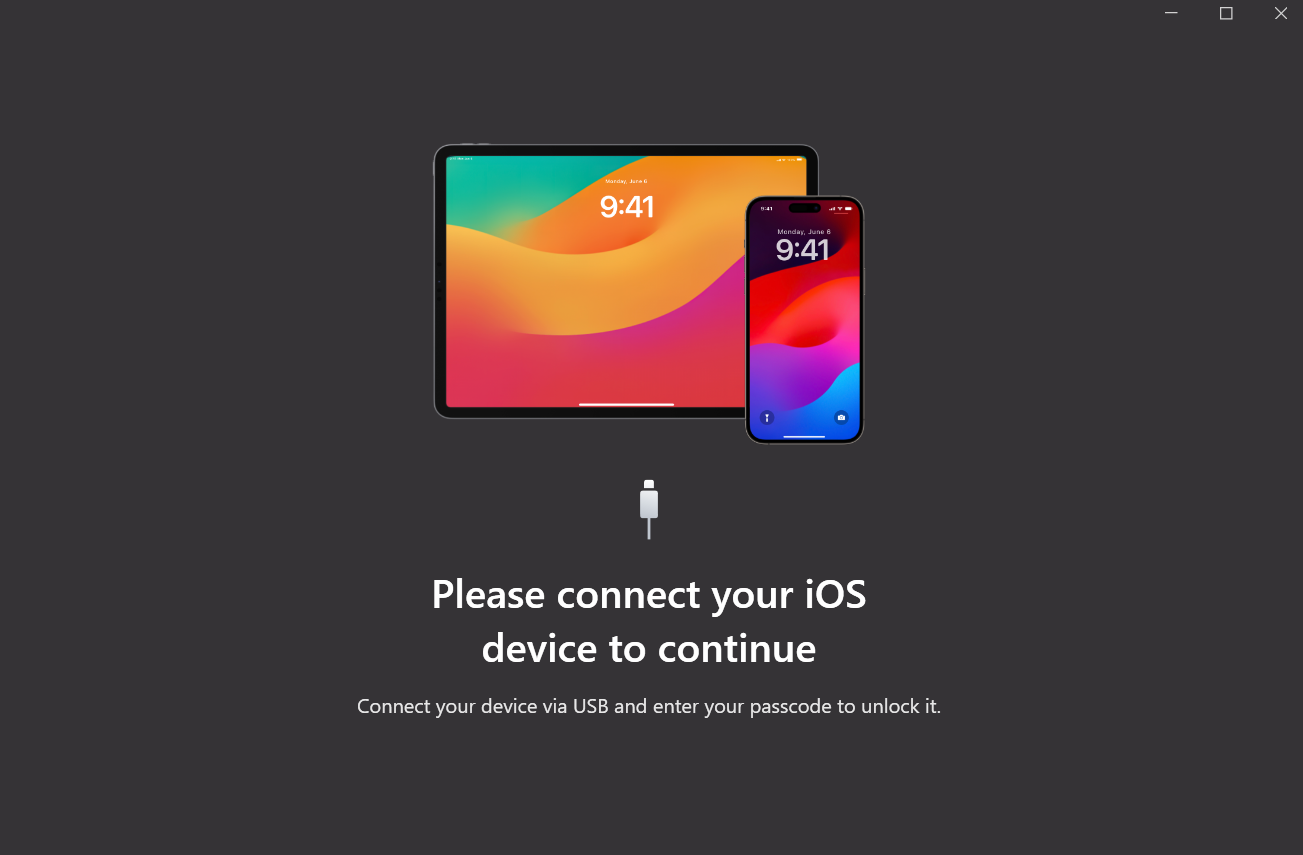
Plug your external drive into your PC before you start. This matters if your computer has limited storage or you want a portable local copy.
AltTunes lets you choose where your iPad data goes. That is the main advantage over iCloud's storage limit and iTunes-style "trust us, it is somewhere on your computer" backup handling.
Step 3. Open AltTunes and Select Your iPad
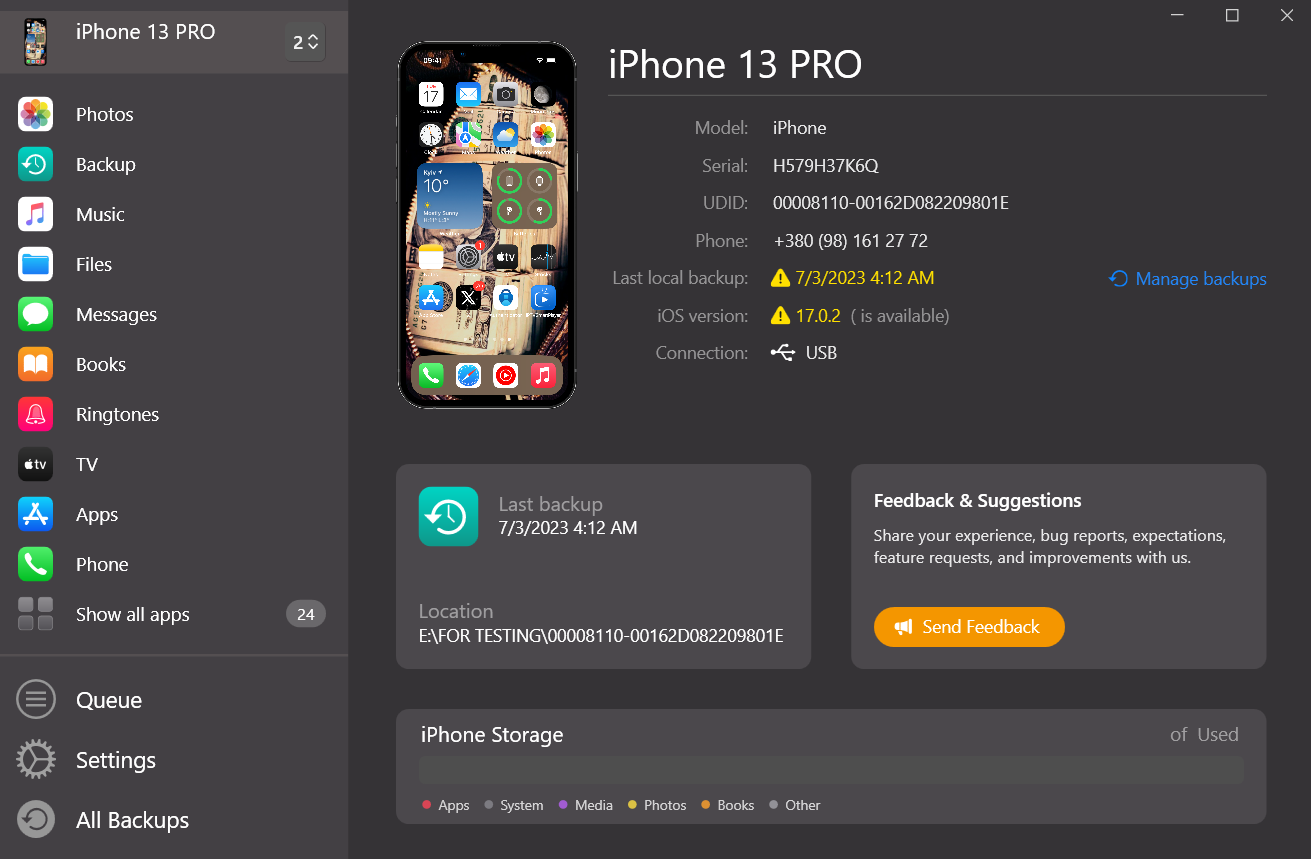
AltTunes should detect your connected iPad. If it does not, unplug the cable, unlock the iPad, reconnect it, and approve the Trust prompt again.
Once the device appears, choose the backup or export option you need. For many Windows users, the useful part is selective control: photos, music, messages, contacts, videos, and other device data can be handled without digging through iTunes.
Step 4. Choose Your External Drive as the Destination
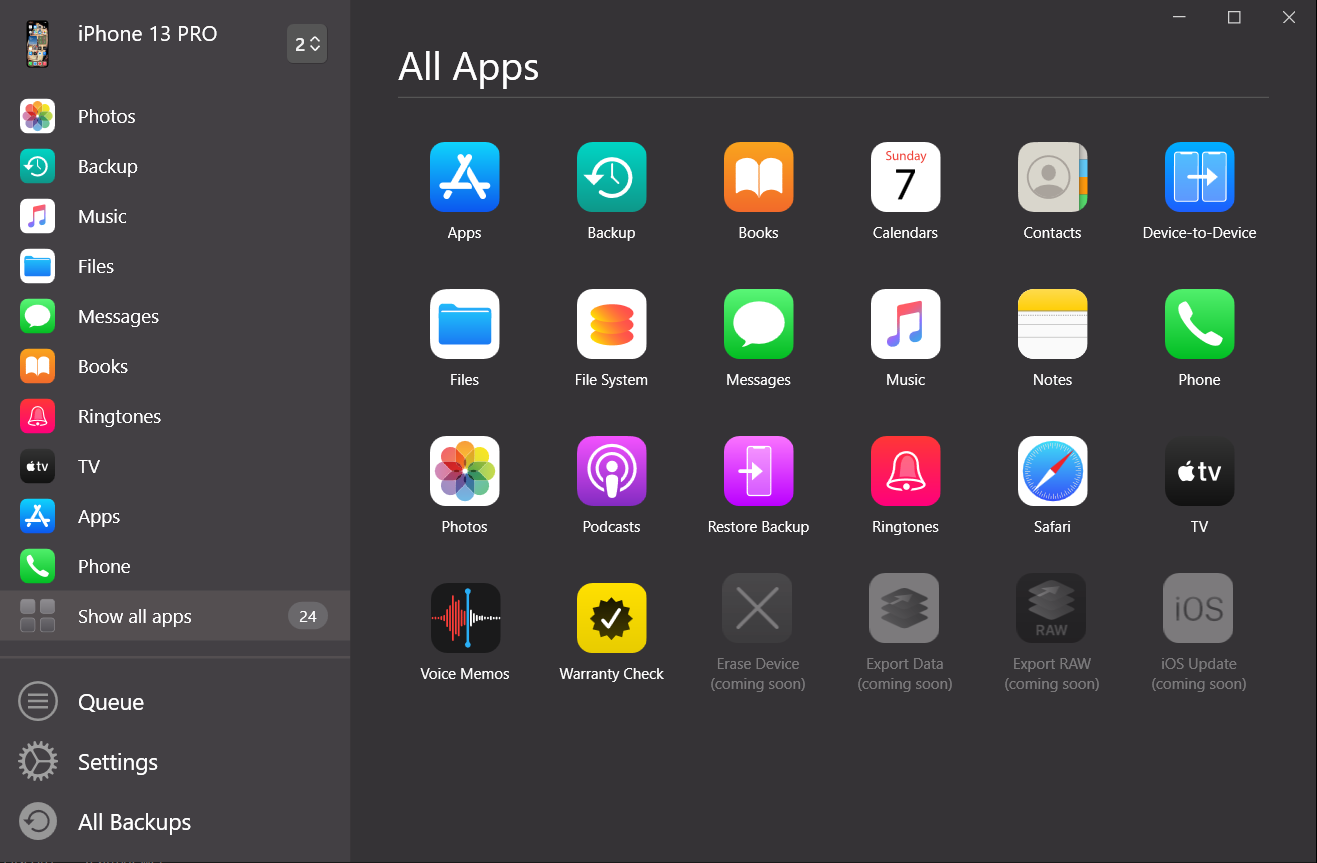
Choose your external drive or preferred folder as the destination path. Then start the backup or export.
Keep the iPad connected until AltTunes finishes. Do not yank the cable early. Backups hate drama.
What Else AltTunes Can Do
AltTunes is also useful beyond iPad backup:
If iCloud keeps asking for paid storage, or iTunes makes a simple backup feel like paperwork, AltTunes gives you a cleaner local path.
Export text messages and contacts.
Move photos, music, and videos from iPad to PC.
Store selected iPad data on an external drive.
Transfer apps, documents, eBooks, and pictures between your device and computer.
View device details without opening iTunes.
Manage more than one Apple device from the same Windows PC.
2. How to Backup iPad to iCloud
iCloud is the simplest way to back up iPad automatically. It works best when you have enough iCloud storage and a reliable Wi-Fi connection.
How to Turn On iCloud Backup
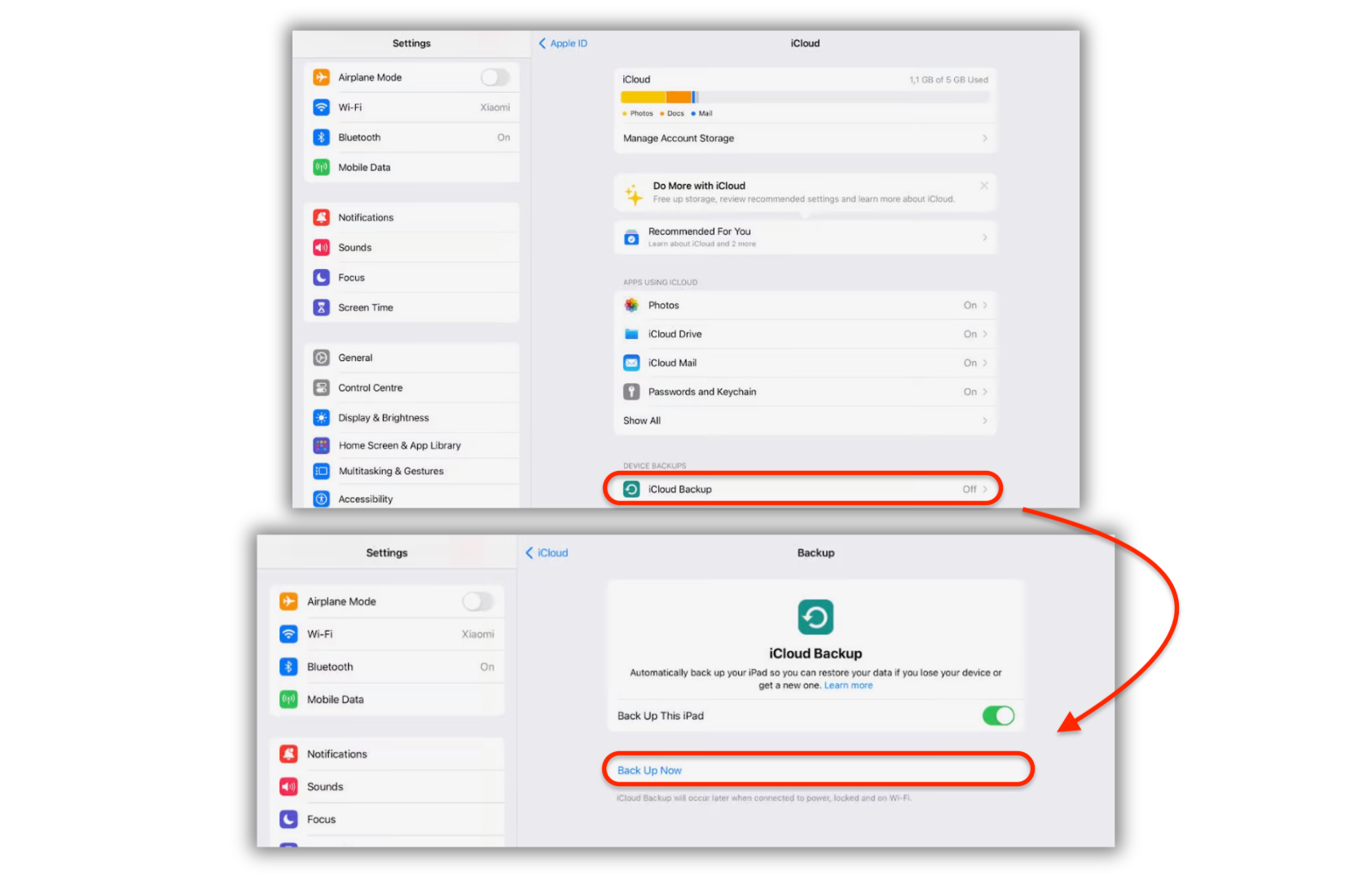
Your iPad will back up automatically when it is locked, charging, and online. To run a manual iPad backup, tap Back Up Now on the same iCloud Backup screen.
- Open Settings on your iPad.
- Tap your name at the top.
- Tap iCloud.
- Tap iCloud Backup.
- Turn on Back Up This iPad.
- Connect your iPad to Wi-Fi and power.
- Lock the screen.
If your iPad supports cellular backup, you may see Backup Over Cellular. Use it carefully. A full iPad backup can burn through mobile data.
What iCloud Backup Includes
iCloud Backup saves many device settings, app data, Home Screen layout, purchase history, Apple Watch backups if paired through an iPhone, and other data Apple can restore during setup.
But iCloud Backup does not duplicate everything. Data already synced to iCloud may not live inside the backup because it already lives in iCloud. This can include iCloud Photos, Messages in iCloud, Apple Mail data, contacts, calendars, notes, and files stored in iCloud Drive.
That is not bad. It means backup and sync are different. If you delete something from a synced service, that deletion can sync everywhere. A backup does not always save you from sync mistakes.
How to Check iCloud Backup Size
If iCloud says you do not have enough storage, check what is taking space:
Turn off backup for apps you do not need, delete old device backups, or upgrade iCloud storage if the backup matters more than the monthly fee.
- Open Settings.
- Tap your name.
- Tap iCloud.
- Tap Account Storage or Manage Storage.
- Tap Backups.
- Choose your iPad.
- Review the backup size and app backup list.
iCloud Backup Pros and Cons
Pros
Cons
- Runs automatically.
- Does not need a computer.
- Easy to restore during new iPad setup.
- Good for normal users who want set-and-forget backup.
- Free iCloud storage is only 5 GB.
- Large photo libraries can fill storage fast.
- Slow Wi-Fi can make the first backup take hours.
- You need to erase an already-set-up iPad before restoring from iCloud in many cases.
3. How to Backup iPad to Mac with Finder
If you use macOS Catalina or later, Finder handles iPad backup. This is the official local backup method on modern Macs.
How to Back Up iPad with Finder
- Connect your iPad to your Mac with a USB cable.
- Unlock your iPad.
- Tap Trust if the prompt appears.
- Open Finder on your Mac.
- Select your iPad in the Finder sidebar.
- Click General.
- Choose Back up all of the data on your iPad to this Mac.
- Optional: select Encrypt local backup.
- Click Back Up Now.
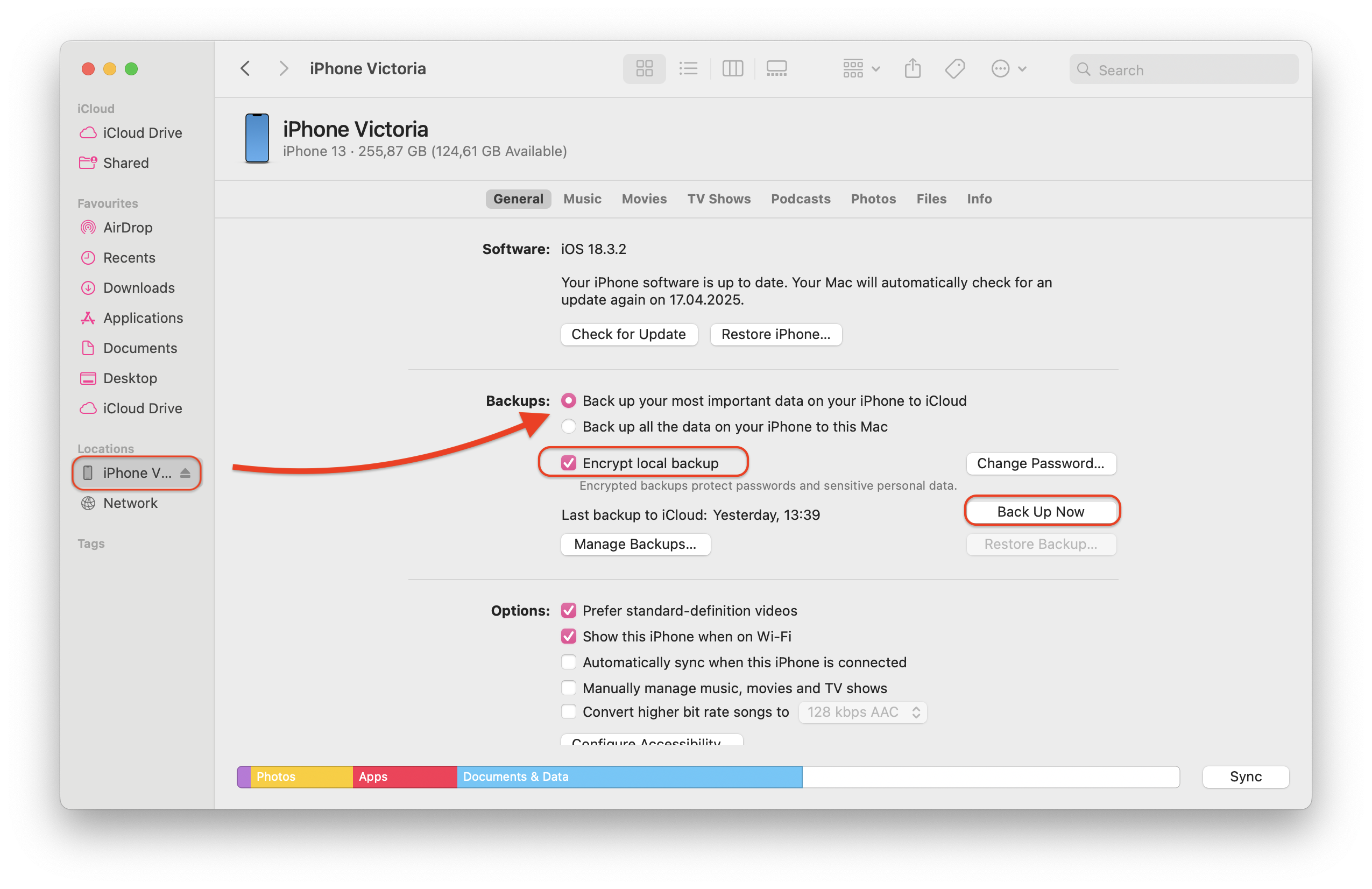
Finder will save the iPad backup on your Mac. Keep the iPad connected until the backup ends.
Should You Encrypt a Finder Backup?
Yes, if you want a fuller backup. Encrypted computer backups can include sensitive data Apple excludes from unencrypted local backups, such as saved passwords, Wi-Fi settings, website history, and Health-style data. The catch: store the encrypted backup password somewhere safe. Apple cannot recover it for you. If you lose that password, you may not be able to restore from that encrypted backup.
4. How to Backup iPad to Windows with Apple Devices
If you use Windows 10 or Windows 11, Apple's current backup app is Apple Devices. It replaced much of the old iTunes device-management work.
How to Back Up iPad with Apple Devices on Windows
The Apple Devices app is the right first choice for official Windows backups. If it does not work on your PC, use iTunes as the fallback or use AltTunes when your goal is easier local file control.
- Install Apple Devices from the Microsoft Store.
- Connect your iPad to your PC with a USB cable.
- Unlock your iPad and tap Trust if prompted.
- Open Apple Devices.
- Select your iPad.
- Choose the backup section.
- Select your computer as the backup destination.
- Optional: turn on encrypted local backup and set a password.
- Click Back Up Now.
5. How to Backup iPad with iTunes
iTunes still appears in many tutorials because it was Apple's Windows answer for years. It still works on older Windows setups and macOS Mojave or earlier.
How to Back Up iPad Using iTunes
- Install the latest available version of iTunes for your setup.
- Connect your iPad to your computer with a USB cable.
- Unlock your iPad and tap Trust if prompted.
- Open iTunes.
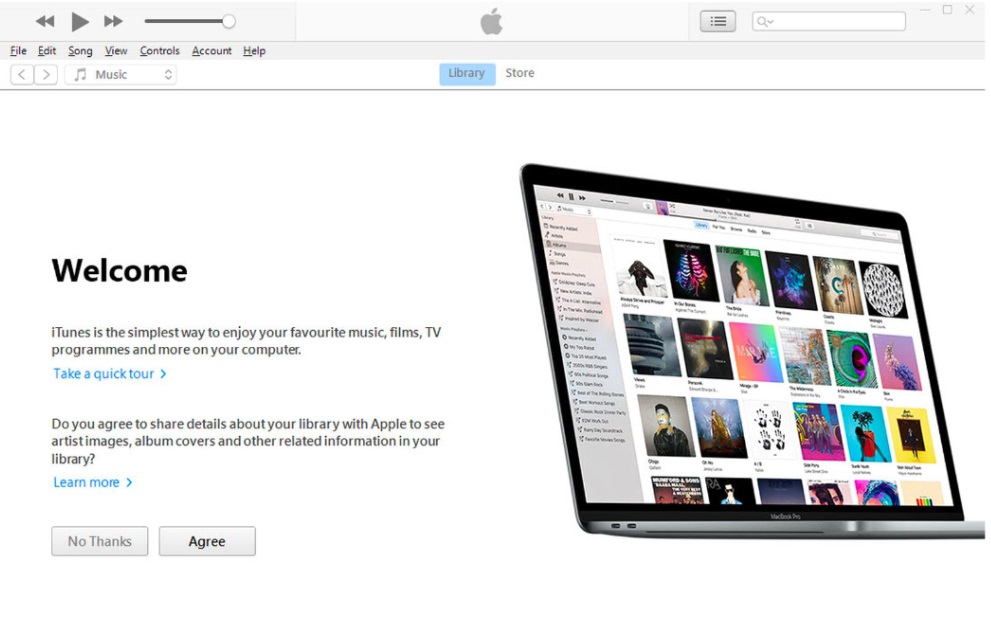
- Click the iPad or device button near the top-left of the iTunes window.
- Click Summary.
- Under Backups, choose This Computer.
- Optional: select Encrypt local backup and create a password.
- Click Back Up Now.
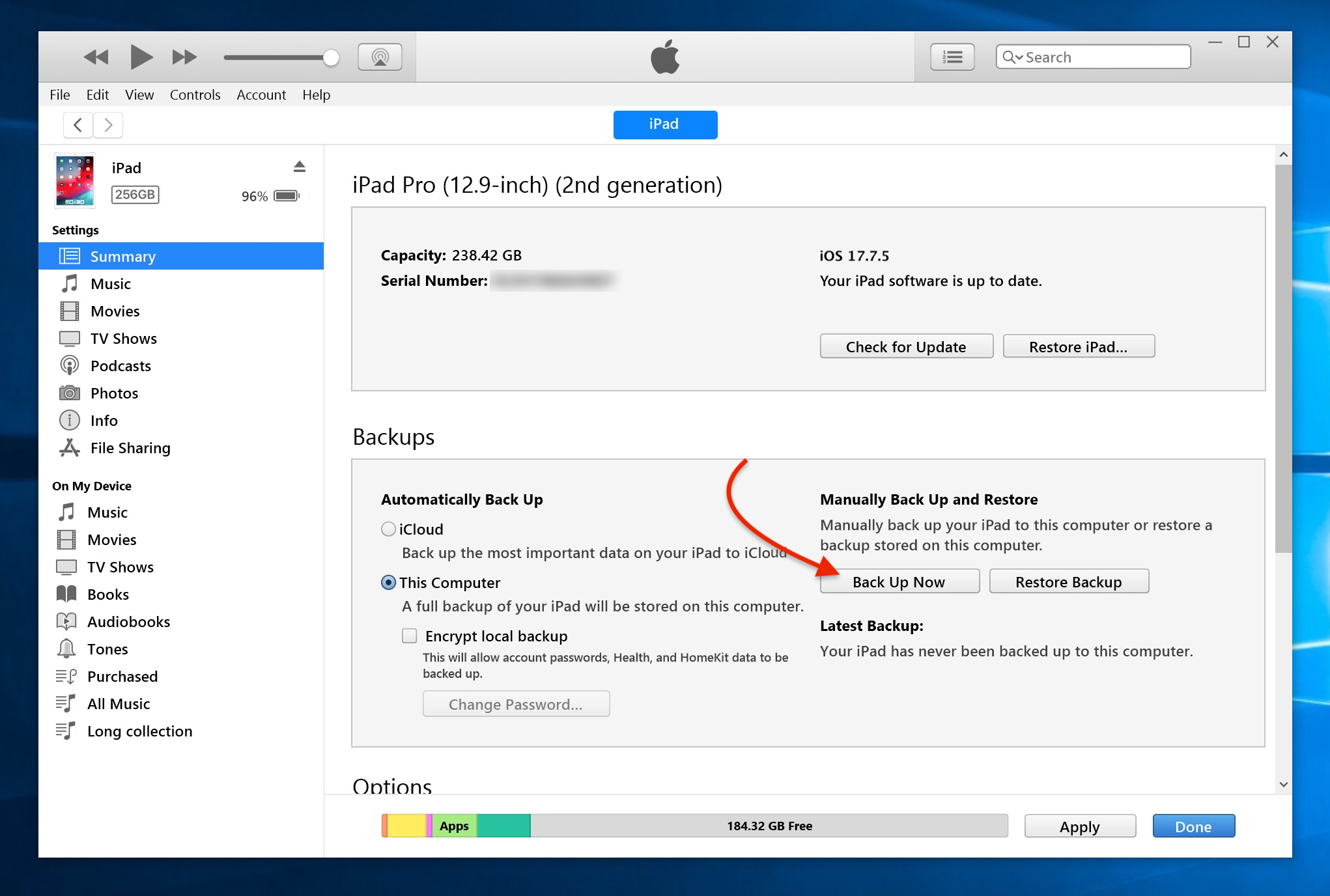
When the backup finishes, check the latest backup date in iTunes. Do this before you reset, sell, or update the iPad.
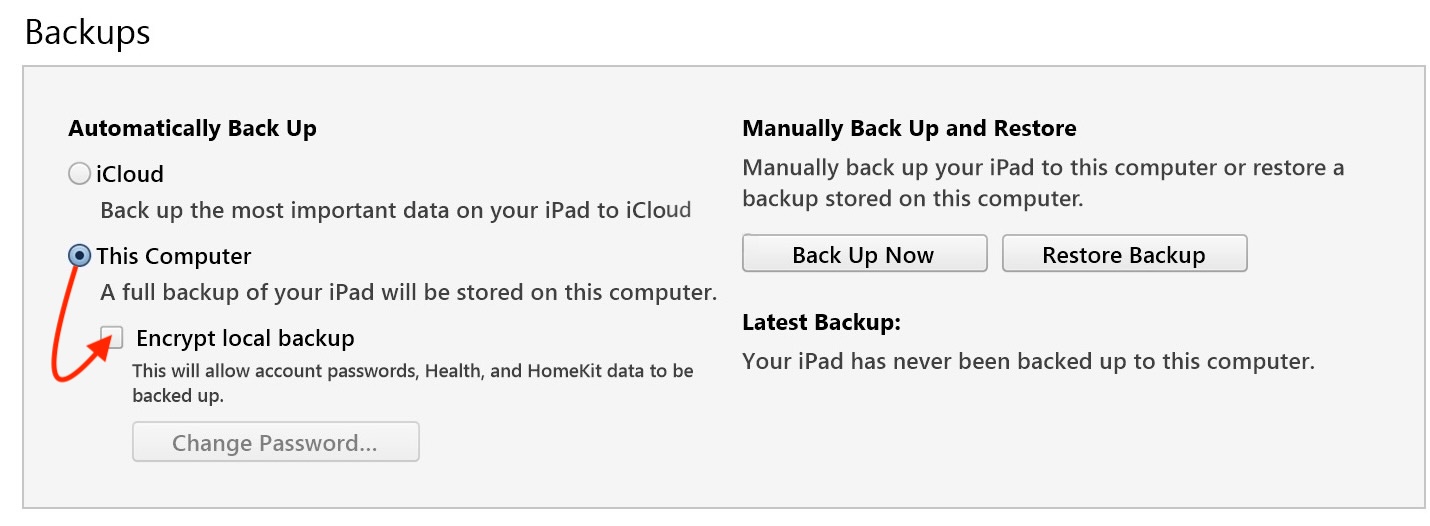
Important: Encrypt local backup if you need sensitive local data included. Write down the password. No password means no restore from that encrypted backup.
What iPad Backups Do Not Include
This is the part most backup guides skip. A backup is not a magic clone of every byte on the iPad.
iCloud backups may not include data already synced to iCloud, such as iCloud Photos, iCloud Drive files, contacts, calendars, notes, and messages when Messages in iCloud is enabled. That data syncs separately.
Computer backups may not include content synced from Finder or iTunes, such as imported MP3s, CDs, videos, books, and photos already synced from a computer. Apple expects you to keep the original copy on that computer.
Unencrypted computer backups can also exclude sensitive data. Use encrypted backup if you need the most complete local restore path.
How to Restore iPad from Backup
Restoring depends on the backup method. The most important rule: iCloud restore usually happens during setup. If your iPad is already set up, you may need to erase it before restoring from iCloud.
How to Restore from iCloud Backup
- Turn on a new or erased iPad.
- Follow the setup screens.
- Choose Restore from iCloud Backup.
- Sign in with your Apple Account.
- Choose the backup you want.
- Keep the iPad connected to Wi-Fi and power until restore finishes.
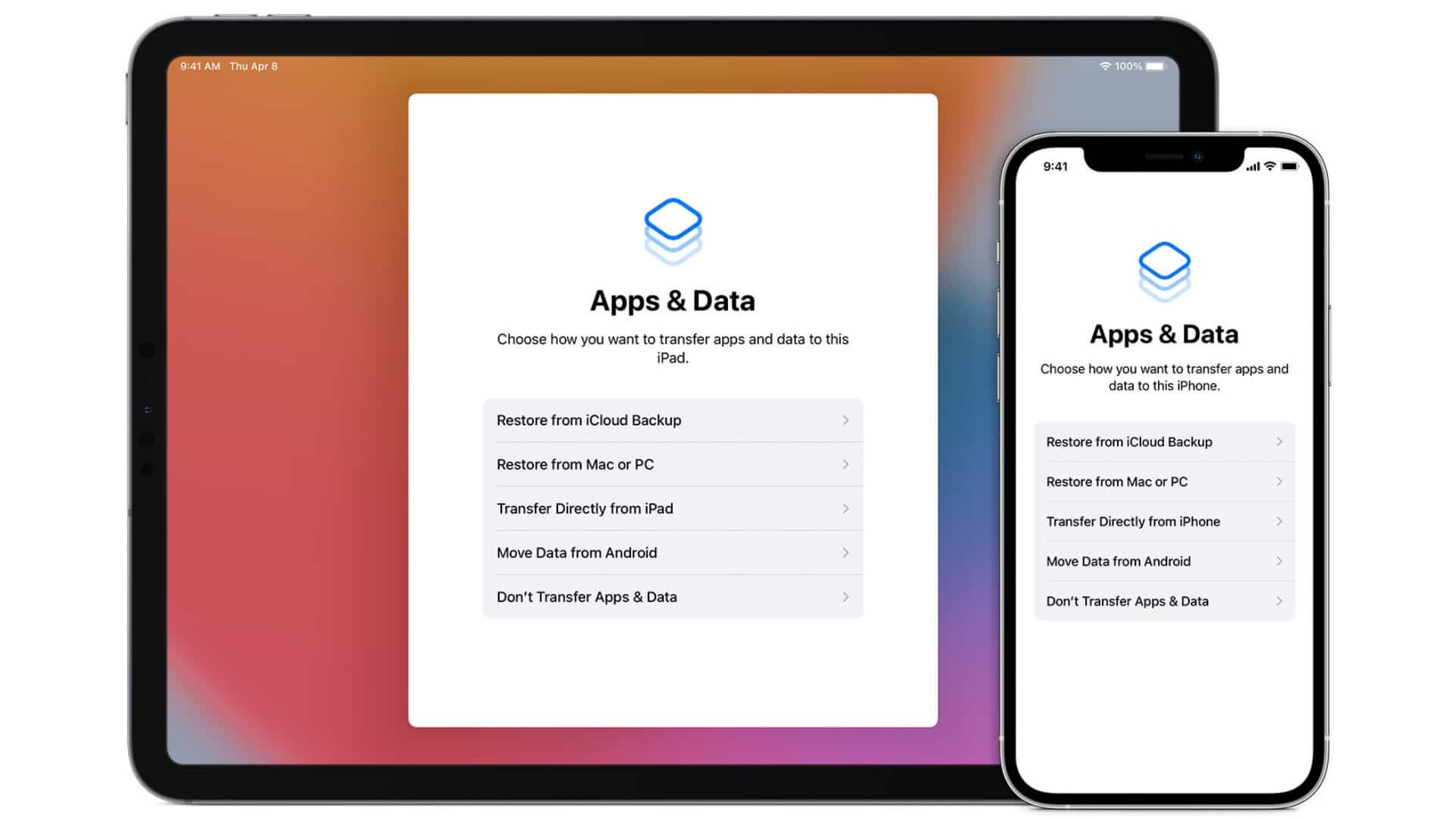
Apps and media may continue downloading after the main restore. Keep the iPad online until everything settles.
How to Restore from a Computer Backup
- Connect your iPad to your Mac or PC.
- Open Finder, Apple Devices, or iTunes.
- Select your iPad.
- Click Restore Backup.
- Choose the backup.
- Enter the encrypted backup password if needed.
- Wait for the restore to finish.
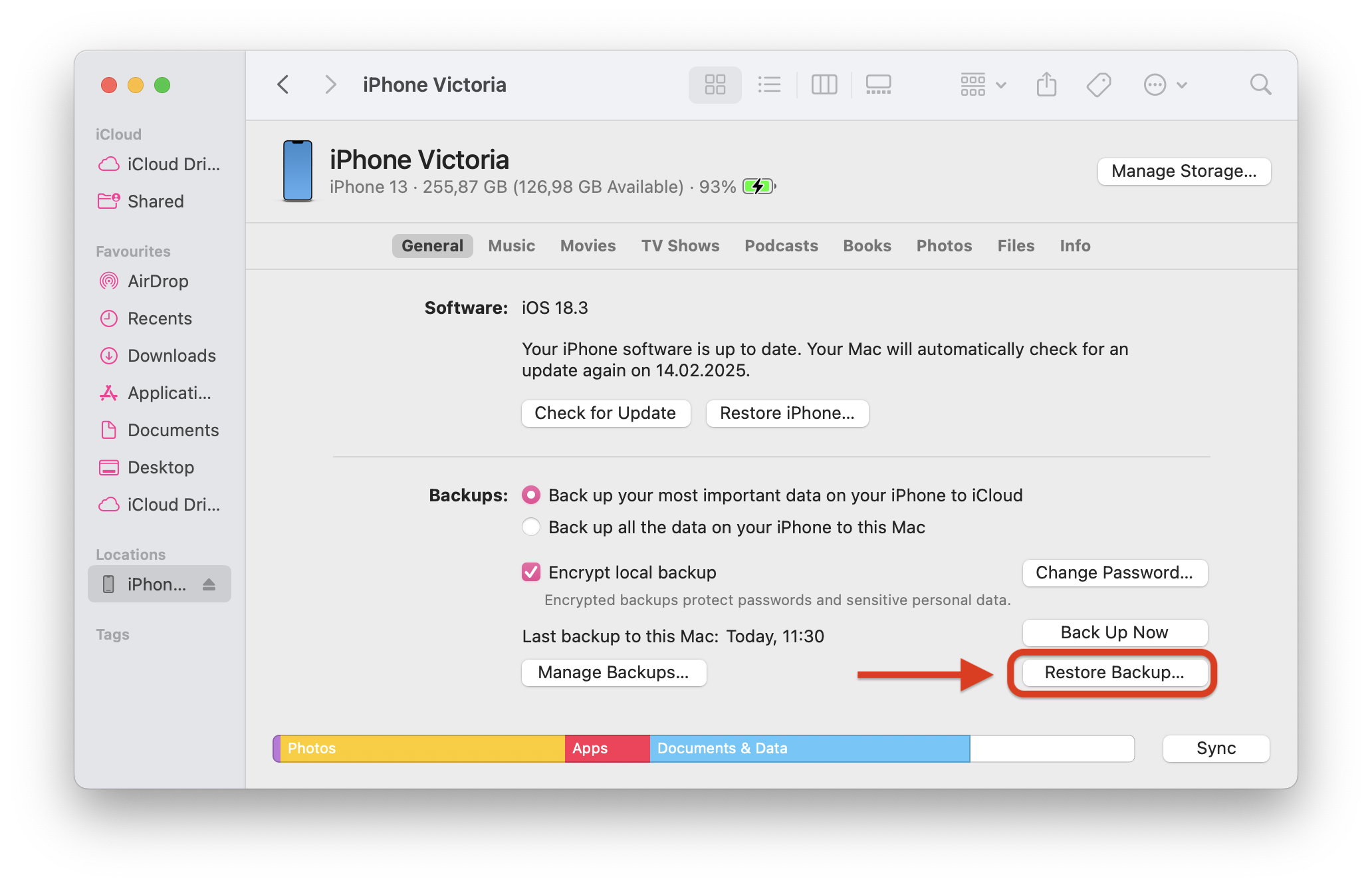
Do not disconnect the iPad during restore. After it restarts, keep it connected until the computer says the process is complete.
Pre-Reset iPad Backup Checklist
Before you erase, trade in, repair, or update your iPad, run this quick check:
A backup is only useful if you can restore it. Verify before you wipe anything.
- Check the latest iCloud backup date.
- Check the latest computer backup date if you use Finder, Apple Devices, or iTunes.
- Confirm you know the encrypted backup password.
- Keep your old iPad until the new one restores correctly.
- Make sure you can access your Apple Account, trusted phone number, and 2FA codes.
- Export key photos, files, or messages separately if they are critical.
- Keep at least one local copy if the data matters.
Best Way to Backup iPad: Final Recommendation
For most people, the best iPad backup plan is simple: turn on iCloud Backup for automatic protection, then create an encrypted local backup before any big move.
Use Finder if you are on Mac. Use Apple Devices if you are on Windows. Use iTunes only if your setup is older.
If you want more control on Windows, use AltTunes to keep iPad data on your PC or external drive without wrestling iTunes. If you use more than one Softorino app, the Universal License gives you the full toolkit for about $3/month.
FAQ
What is the easiest way to backup iPad?
The easiest way to backup iPad is iCloud Backup. Turn it on in Settings, connect your iPad to Wi-Fi and power, and let it run automatically when the iPad is locked.
How do I backup iPad without iCloud?
Back up iPad without iCloud by using Finder on Mac, Apple Devices on Windows, iTunes on older setups, or AltTunes if you want a Windows iPad manager with local storage and export control.
Can I backup iPad to an external hard drive?
Apple's official tools usually save backups to the computer's default backup location. AltTunes is the better fit when you want to choose an external drive as the destination for local iPad data handling.
How do I backup iPad to a Mac?
Connect your iPad to your Mac, open Finder, select the iPad in the sidebar, choose the General tab, select local backup, and click Back Up Now. Encrypt the backup if you want sensitive data included.
How do I backup iPad to a PC?
Use Apple Devices on Windows 10 or Windows 11. Connect your iPad, trust the computer, choose your iPad in Apple Devices, select computer backup, and click Back Up Now. Use iTunes only as a fallback.
Is Apple Devices better than iTunes for iPad backup?
For modern Windows PCs, yes. Apple Devices is Apple's current app for iPhone and iPad backup on Windows. iTunes still works for older setups, but it is no longer the first tool to try.
Should I encrypt my iPad backup?
Encrypt local iPad backups if you want the most complete computer backup. Encrypted backups can include sensitive data that unencrypted backups leave out. Store the password safely, because Apple cannot recover it.
Does iCloud Backup include photos?
iCloud Backup may include photos only when iCloud Photos is not enabled. If iCloud Photos is turned on, your photos sync through iCloud Photos instead of being duplicated inside iCloud Backup.
Can I restore an iPad from iCloud after setup?
Usually, you restore from iCloud during the setup process. If your iPad is already set up, you may need to erase it first, then choose Restore from iCloud Backup during setup.
Where are iPad backups stored on a computer?
Finder, Apple Devices, and iTunes store iPad backups in Apple's backup folders on your Mac or PC. Apple does not design those folders for manual editing. Use the app's restore button instead of moving files by hand.

AltTunes
Seamlessly Browse, Manage & Export iOS Data
