How to backup iPhone on Mac, Windows, iCloud, or AltTunes

Backing up your iPhone is boring until it saves your photos, messages, contacts, passwords, and app data from a very expensive bad day. Apple gives you 3 official routes: iCloud, Finder on Mac, and Apple Devices or iTunes on Windows. AltTunes gives you another route when you want local control without iCloud storage warnings or the old iTunes mess.
Here is the short version. Use iCloud if you want automatic wireless backups. Use Finder if you have a Mac and want a full local backup. Use Apple Devices on Windows if you want Apple’s current PC method. Use AltTunes if you want an easier Windows workflow, local backup control, and selective access to iPhone data.
Before we begin
Windows users can download AltTunes to create a local iPhone backup and inspect selected photos, messages, contacts, music, and other data without iCloud. Use an encrypted Apple backup when Health, Activity, or Keychain data must be included.
Why backup your iPhone before anything goes wrong
Your iPhone holds more than photos. It holds contacts, conversations, notes, app data, Wi-Fi settings, Health data, and the small bits of digital life you only notice after they disappear.
Back up your iPhone before you:
A backup gives you a way back. Without one, you are guessing, hoping, and checking random cloud apps to see what survived.
One warning matters here: not every backup contains everything. iCloud backups and computer backups have exclusions. Encrypted computer backups include more sensitive data than unencrypted ones, but you must keep the encryption password safe. Apple cannot recover that password for you.
Update iOS
Repair the phone
Trade in or sell the phone
Move to a new iPhone
Reset the device
Test beta software
How to backup iPhone: choose the right method first
There is no single best iPhone backup method for every situation. The right choice depends on storage, privacy, speed, and what you need to restore later.
Method | Best for | What you need | Watch out for |
|---|---|---|---|
iCloud Backup | Automatic wireless backups | Wi-Fi, power, enough iCloud storage | Apple gives 5 GB free, which fills fast |
Finder on Mac | Full local backup on modern macOS | Mac, USB cable, local storage | Encrypt it if you need Health, Activity, and password-related data |
Apple Devices on Windows | Official PC backup on current Windows | Windows PC, Apple Devices app, USB cable | Use iTunes only as a fallback |
iTunes | Older macOS or older Windows setups | iTunes, USB cable | Clunky, outdated, and still annoying on Windows |
AltTunes | Local control, backup browsing, selective export | Windows PC and AltTunes | Treat it as a practical management tool, not a magic replacement for every Apple restore path |
If you only want a set-it-and-forget-it safety net, iCloud works. If you want a full local backup before repair or a reset, use Finder, Apple Devices, or iTunes. If you want to avoid iCloud limits and manage iPhone data on Windows without fighting iTunes, use AltTunes.
How to backup iPhone with AltTunes for local control
AltTunes is useful when Apple’s default tools get in the way. iCloud runs into storage limits. iTunes feels old. Apple Devices handles official backups, but it still follows Apple’s rigid backup logic. AltTunes gives Windows users a cleaner way to back up, browse, export, and restore iPhone data locally.
Use AltTunes when you want to:
- Back up iPhone data to your computer instead of iCloud
- Export photos, music, messages, contacts, videos, files, and backups
- Browse backup versions without digging through Apple’s backup folder
- Avoid iTunes on Windows
- Keep multiple backup points for safer recovery
- Convert HEIC photos to JPG during export
AltTunes fits the person who says, “I do not want to sync my life to iCloud. I want a copy on my PC where I can see it.” Fair.
Step 1. Download and install AltTunes
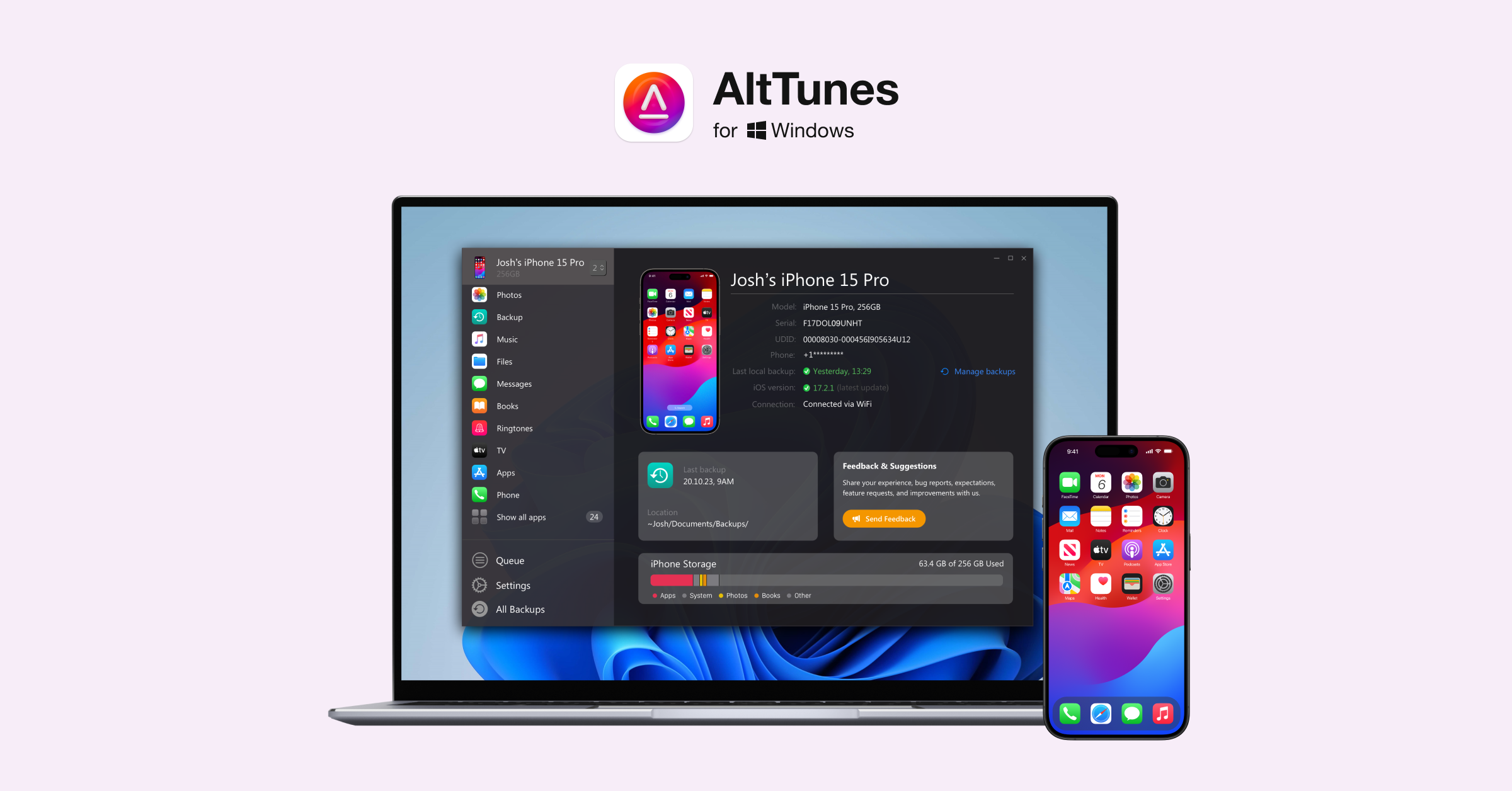
Download AltTunes for Windows, run the installer, and open the app. The free trial lets you test the workflow before you commit.
After installation, keep your iPhone cable nearby. Local backups work best over USB because the connection is stable and faster than Wi-Fi.
Step 2. Connect your iPhone to the computer
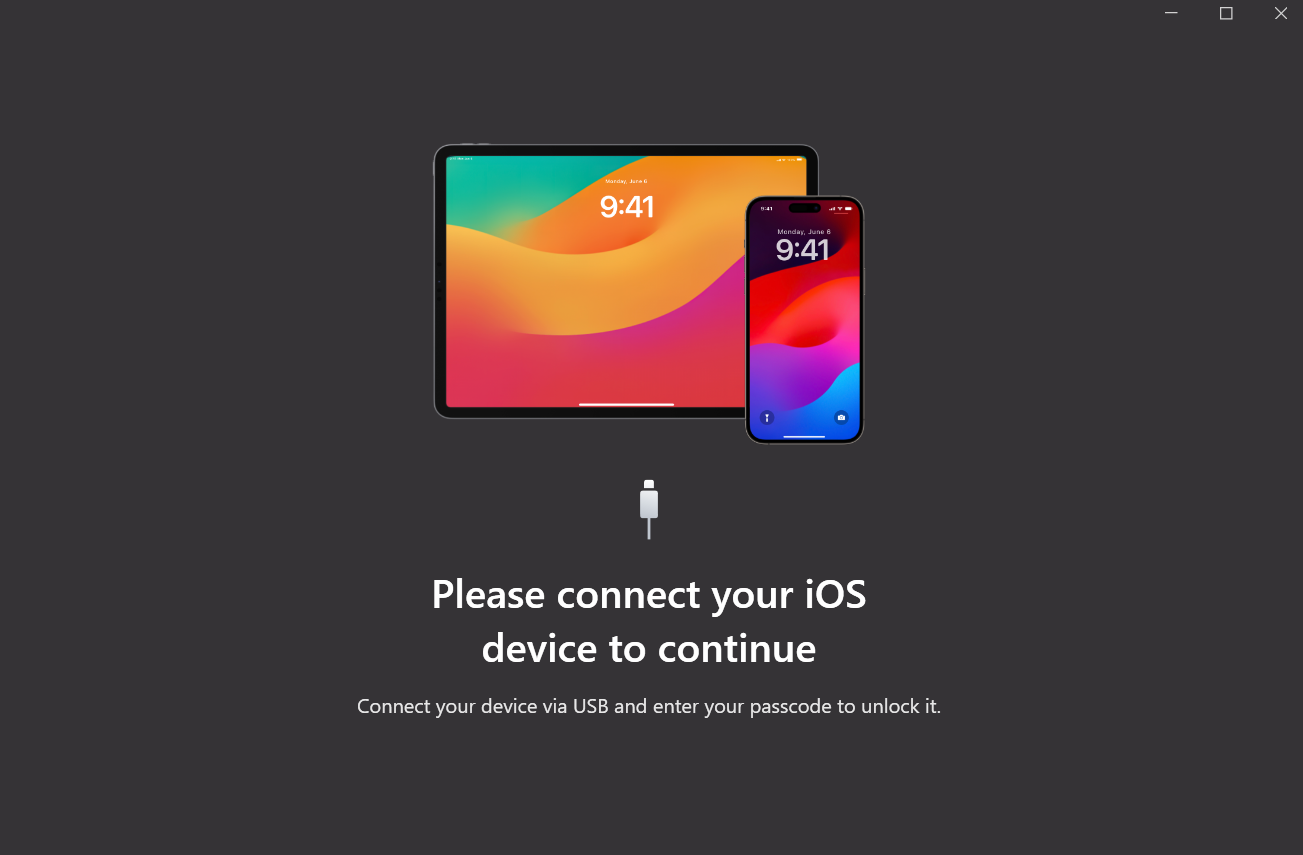
Plug your iPhone into the Windows PC. If iOS asks whether you trust this computer, tap Trust and enter your iPhone passcode.
AltTunes should detect the iPhone after the trust step. If it does not, unlock the iPhone, reconnect the cable, and try another USB port.
Step 3. Start the backup
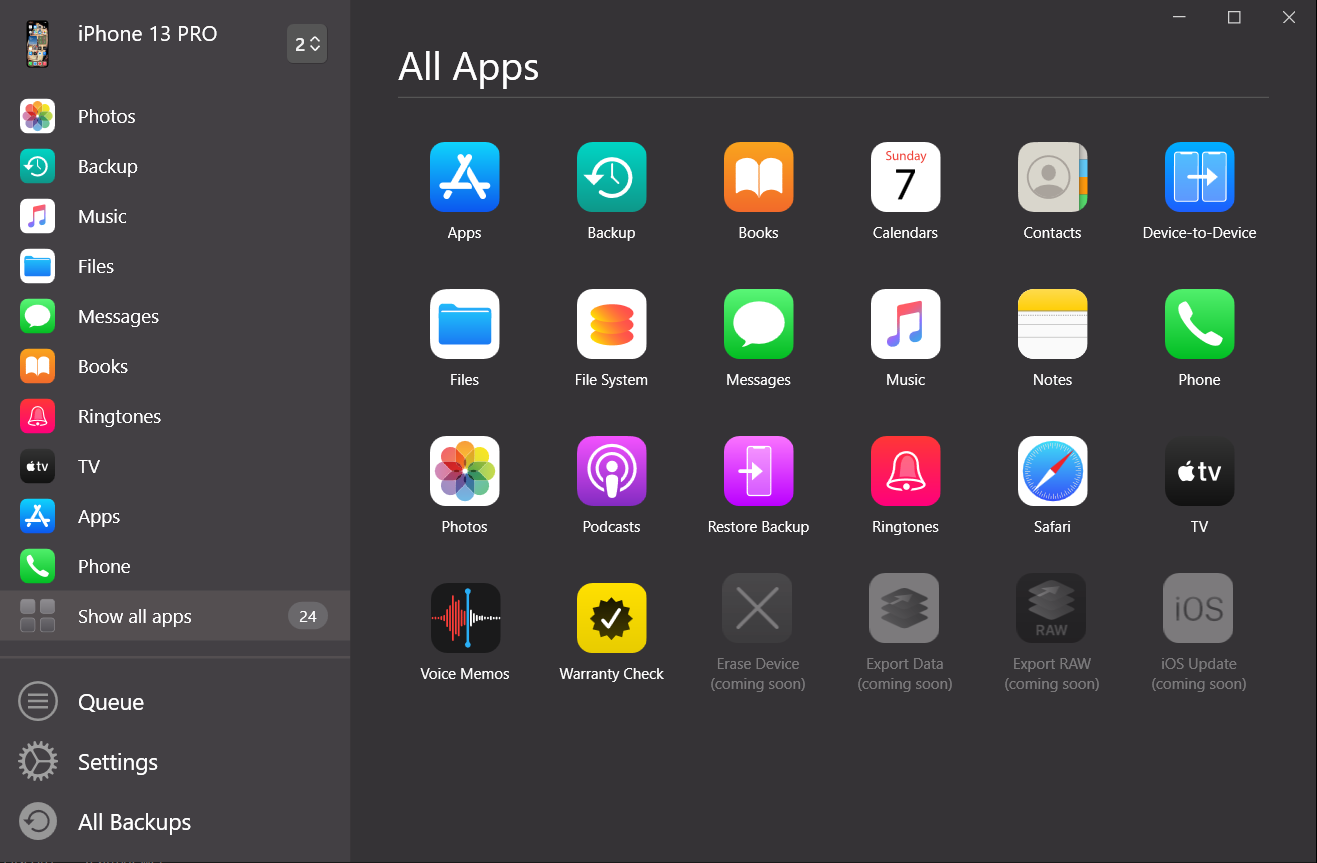
Open the Backup section in AltTunes. Review the backup options, choose where you want the backup stored, then click Back Up.
This is where AltTunes feels less painful than iTunes. You see the backup flow in plain language, and you do not have to hunt through Apple’s old sync screens.
Step 4. Check the backup before you relax
Do not assume a backup worked because a button said so. Open the backup list, confirm the date, and make sure the size looks realistic for your device.
If you are backing up before repair, keep the old iPhone until you confirm the restore on the new or repaired device. Also check app-specific accounts, authenticator apps, passkeys, and 2FA access before wiping anything.
Restoring your iPhone with AltTunes
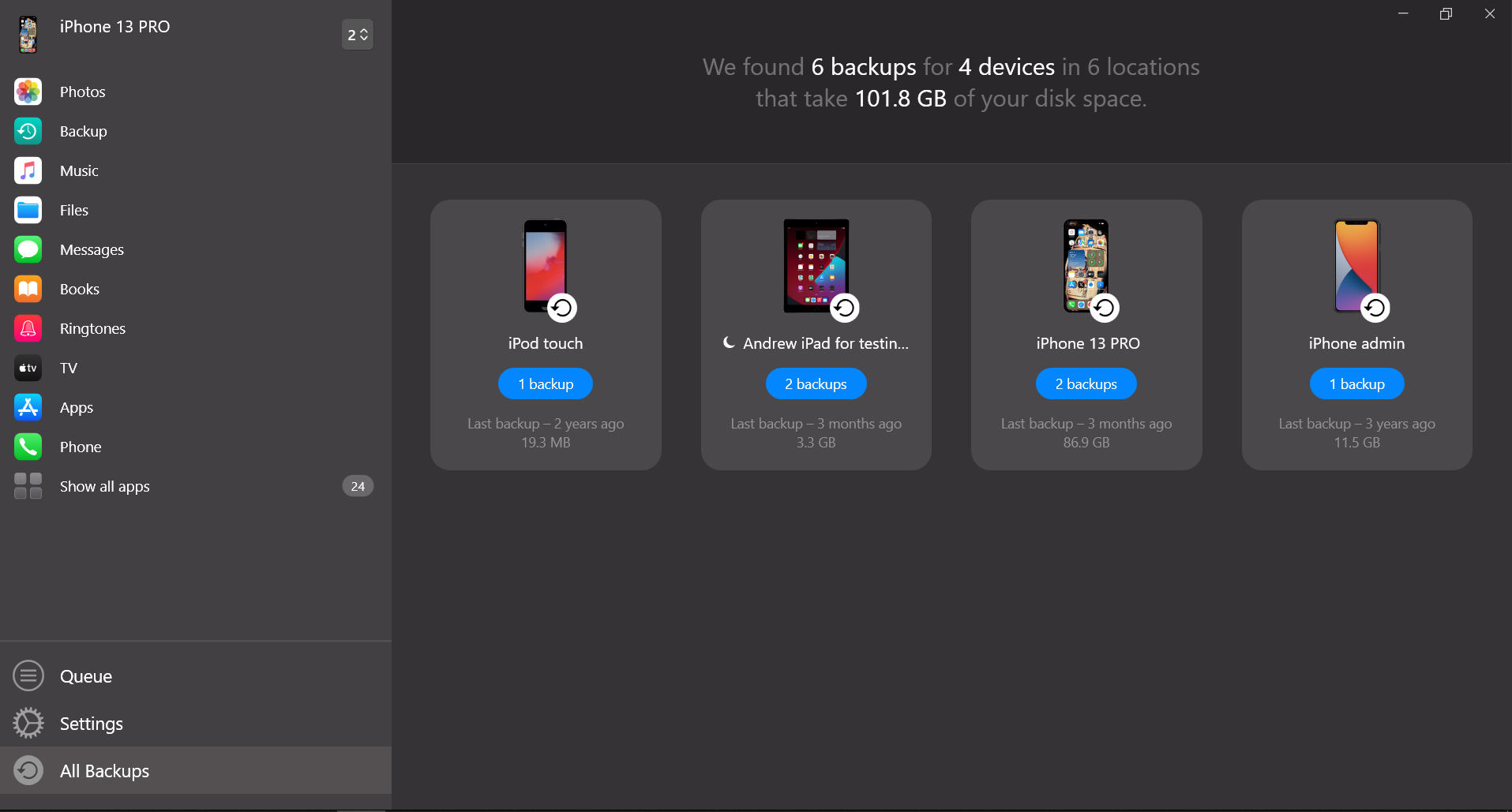
A backup only matters if you can restore from it. In AltTunes, connect your iPhone, open Restore, choose the backup version you want, and start the restore.
Use this when you need to move data back onto your current iPhone or onto a new iPhone. If you want the official full-device Apple restore path, use iCloud, Finder, Apple Devices, or iTunes. If you want easier local management and selective access, AltTunes is the better fit.
For a deeper no-iCloud route, read Softorino’s guide on how to backup iPhone without iCloud.
How to backup iPhone to iCloud

iCloud is the easiest iPhone backup method because it can run automatically. You do not need a cable. You do need Wi-Fi, power, and enough iCloud storage.
Apple says iCloud can back up daily when your iPhone is connected to power, locked, and on Wi-Fi. Some supported 5G plans also allow cellular iCloud backups.
To back up your iPhone to iCloud:
- Connect your iPhone to Wi-Fi.
- Open Settings.
- Tap your name.
- Tap iCloud.
- Tap iCloud Backup.
- Turn on Back Up This iPhone.
- Tap Back Up Now if you want a manual backup immediately.
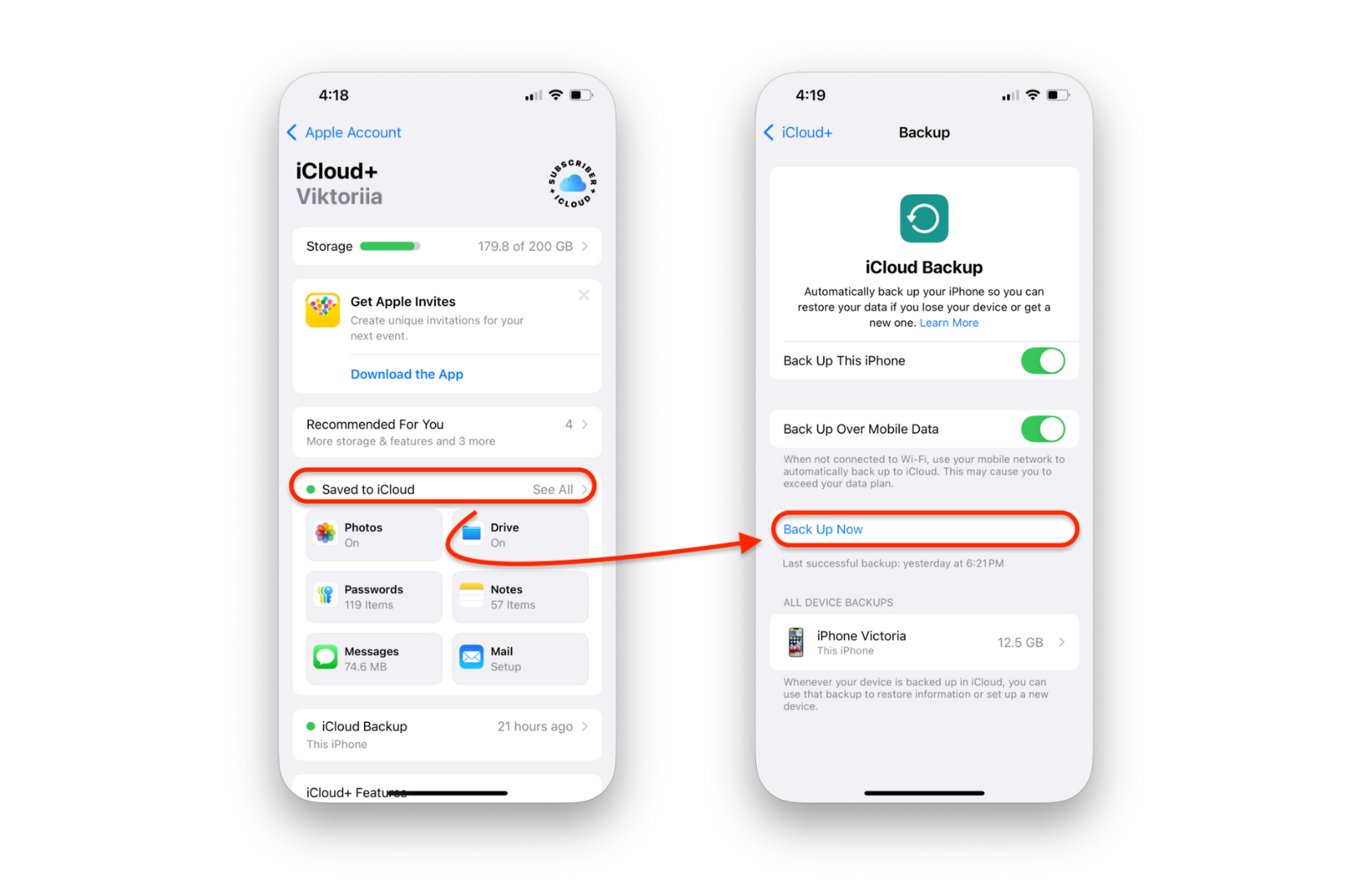
Apple includes 5 GB of free iCloud storage. That sounds fine until photos, videos, messages, and app data show up. If iCloud says there is not enough storage, you need to buy more iCloud storage, reduce what gets backed up, or use a local backup.
Before you erase, repair, or trade in your iPhone, check the latest backup date. Go to Settings, tap your name, tap iCloud, then tap iCloud Backup. If the last backup is old, run Back Up Now and stay connected until it finishes.
iCloud is good for convenience. It is not ideal if you have slow internet, limited iCloud storage, privacy concerns, or a huge photo library.
For related iCloud cleanup and storage workflows, see Softorino’s guide on moving photos to iCloud and managing iCloud messages.
How to backup iPhone to PC with Apple Devices or iTunes
Windows users should use Apple Devices first. Apple now points Windows users to the Apple Devices app for current iPhone backup workflows. iTunes still works as a fallback on some setups, but it should not be your first stop unless Apple Devices is unavailable.
To back up your iPhone on Windows with Apple Devices:
- Install Apple Devices from Microsoft Store.
- Connect your iPhone to the PC with a USB cable.
- Unlock your iPhone and tap Trust This Computer if asked.
- Open Apple Devices.
- Select your iPhone.
- Open the General section.
- Choose the backup option for this computer.
- Turn on encrypted backup if you need Health, Activity, saved passwords, Wi-Fi settings, website history, or call history.
- Click Back Up Now.
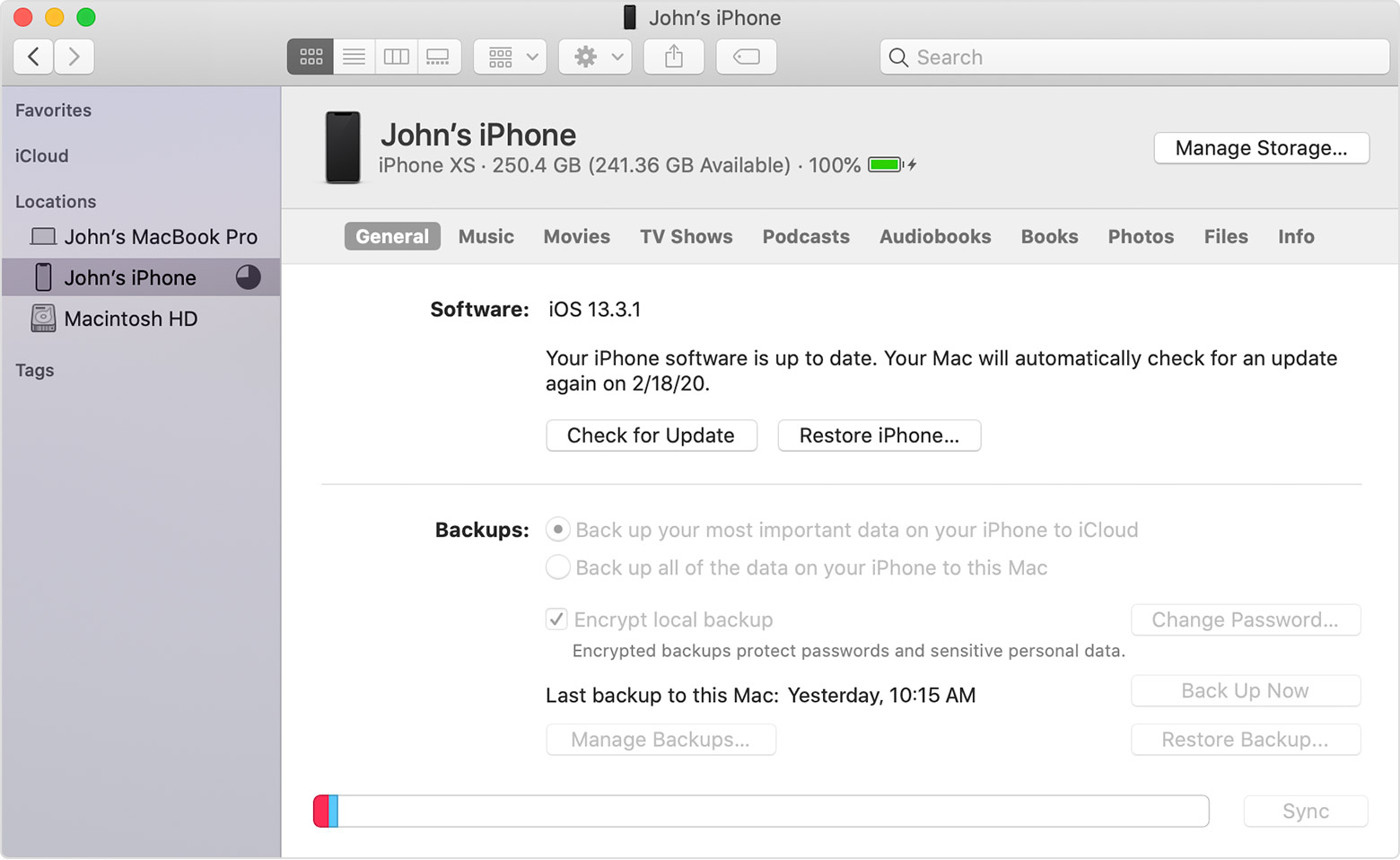
Use iTunes if your Windows setup does not support Apple Devices or if you are on an older macOS version before Catalina.
To back up with iTunes:
- Install or update iTunes.
- Connect your iPhone with a USB cable.
- Tap Trust This Computer on your iPhone if prompted.
- Click the iPhone icon in iTunes.
- Open Summary.
- Click Back Up Now.
- Select Encrypt iPhone Backup if you need sensitive data included.
iTunes can still work, but Windows users have better options now. Try Apple Devices for the official Apple route or AltTunes if you want local backup control without old iTunes screens.
If your iPhone does not appear in Apple Devices or iTunes, unlock the phone, reconnect the cable, try another USB port, restart the PC, and confirm the trust prompt appeared on the iPhone.
How to backup iPhone to Mac with Finder
Finder replaced iTunes for iPhone backups on macOS Catalina and later. If your Mac runs macOS Catalina, Big Sur, Monterey, Ventura, Sonoma, Tahoe, or newer, use Finder.
A Finder backup stores your iPhone backup on your Mac. This is useful before a repair, iOS update, device reset, or new-phone migration.
To back up your iPhone to a Mac:
- Connect your iPhone to your Mac with a USB cable.
- Unlock the iPhone.
- Tap Trust This Computer if iOS asks.
- Open Finder.
- Select your iPhone in the Finder sidebar.
- Open the General tab.
- Choose Back up all of the data on your iPhone to this Mac.
- Select Encrypt local backup if you want Health data, Activity data, saved passwords, Wi-Fi settings, website history, and call history included.
- Click Back Up Now.
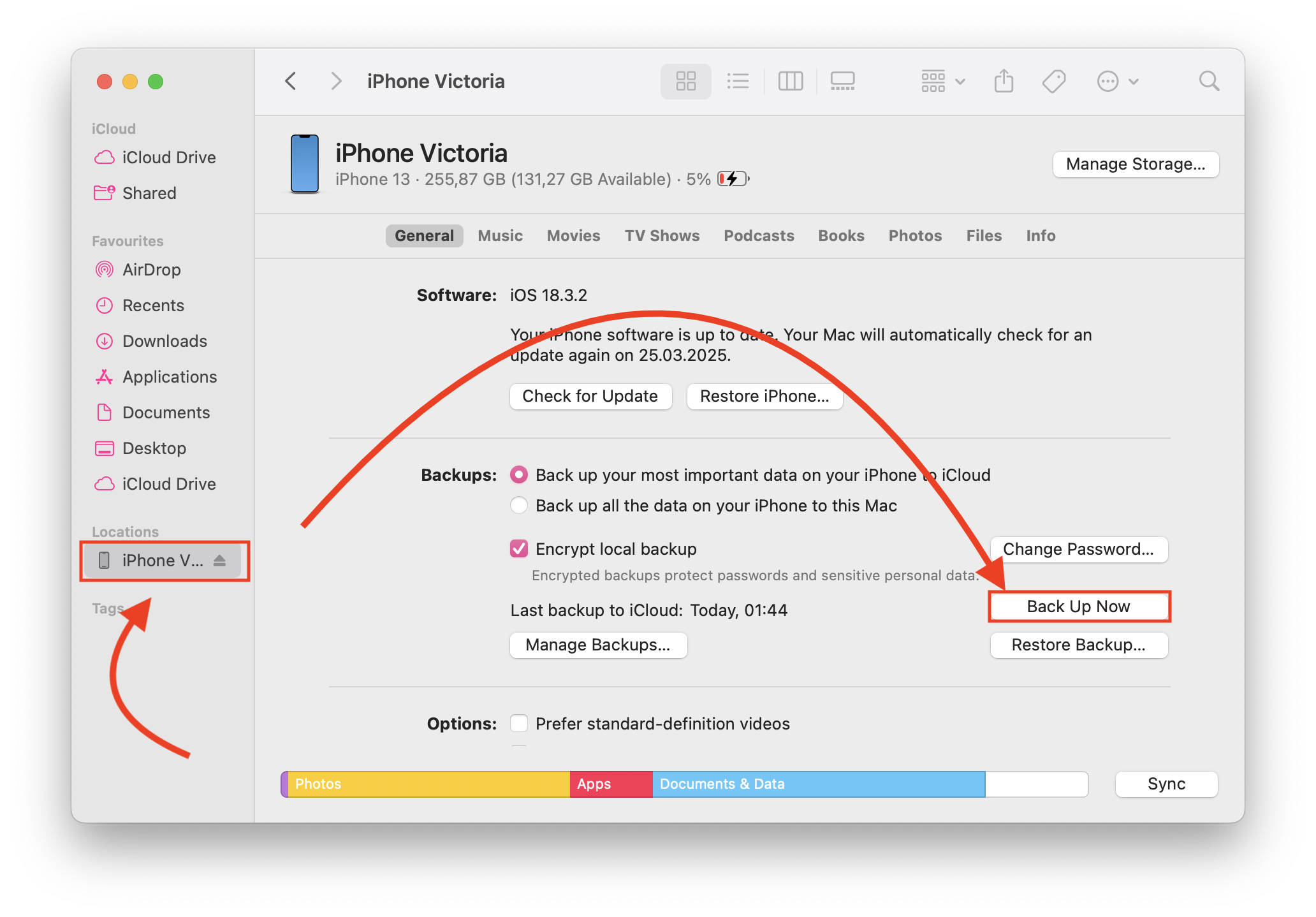
Finder backups live on your Mac. Make sure your Mac has enough free storage before you start. If the backup fails halfway through, storage is one of the first things to check.
Encrypting the backup is the safer choice for most people. The tradeoff is simple: keep the password. If you forget the encrypted backup password, Apple cannot recover it.
What iPhone backups include and what they miss
This part matters because “backed up” does not always mean “everything is safe.” Apple excludes some data from iCloud and computer backups, especially data already synced somewhere else.
iCloud backups usually do not include data already stored in iCloud, such as iCloud Photos, iCloud Messages, Contacts, Calendars, Notes, and some synced files. That data may still be safe, but it is synced separately rather than stored inside the backup.
Computer backups can exclude content synced from Finder or iTunes, App Store content, Apple Pay information, Face ID and Touch ID settings, Apple Mail data, and some cloud-synced files.
Encrypted computer backups can include more sensitive data, including saved passwords, Wi-Fi settings, website history, Health data, Activity data, and call history. Unencrypted computer backups skip some of that.
Before you reset or replace an iPhone, check these separately:
If one of those apps has its own backup process, do it before erasing the phone. iPhone backup tools do a lot. They do not fix every app-specific mistake.
- Photos and videos.
- Messages.
- Contacts.
- Notes.
- Authenticator apps.
- Passkeys and password manager access.
- Banking and work apps.
- WhatsApp, Telegram, Signal, or other app-specific backups.
How to restore your iPhone from a backup
Restoring is where many backup guides get too casual. Apple’s restore paths have rules.
For iCloud restore, the iPhone usually needs to be on the Hello setup screen. If the device is already set up, you may need to erase it first, then choose Restore from iCloud Backup during setup.
For a Mac backup, connect the iPhone to the Mac, open Finder, select the device, and choose Restore Backup. If the backup was encrypted, enter the password.
For a Windows backup, open Apple Devices or iTunes, select the iPhone, choose Restore Backup, and keep the device connected until the restore and sync finish.
For AltTunes, open Restore, choose the backup version, and follow the app prompts.
Do not erase the old iPhone until you confirm the new or restored iPhone has the important data. Check photos, messages, contacts, authenticator apps, and work apps. Boring? Yes. Better than discovering the problem 2 days later? Also yes.
Common iPhone backup problems and fixes
iCloud says there is not enough storage
Apple gives 5 GB free. Modern iPhones can fill that with one vacation and a few long videos. Upgrade iCloud storage, turn off backup for low-value apps, move photos elsewhere, or use a local backup.
iCloud backup is stuck
Connect to stable Wi-Fi, plug the iPhone into power, keep it locked, and give it time. If the backup still stalls, restart the iPhone and check iCloud storage.
Finder, Apple Devices, or iTunes cannot see the iPhone
Unlock the iPhone. Confirm Trust This Computer. Try another cable or USB port. Restart both devices. On Windows, update Apple Devices or iTunes.
The computer says there is not enough storage
Local iPhone backups can be large. Delete old backups, move files off the Mac or PC, or use a machine with more free storage. Do not start a major restore with almost no disk space left.
You forgot the encrypted backup password
You cannot recover that password through Apple. You can make a new encrypted backup after resetting backup password settings on the device, but you cannot unlock the old encrypted backup without the password.
FAQ
What is the easiest way to back up an iPhone?
iCloud is the easiest way because it can back up automatically over Wi-Fi. Use Finder on Mac, Apple Devices on Windows, or AltTunes if you want a local backup on your computer.
How do I backup iPhone without iCloud?
Use Finder on Mac, Apple Devices on Windows, iTunes on older setups, or AltTunes if you want a cleaner local backup and export workflow on Windows.
How do I back up iPhone to Mac?
Connect the iPhone to your Mac, open Finder, select the iPhone in the sidebar, choose the General tab, then click Back Up Now. Turn on Encrypt local backup if you need Health, Activity, and password-related data included.
How do I back up iPhone to PC?
Use Apple Devices on Windows first. Connect the iPhone, trust the computer, select the device, and click Back Up Now. Use iTunes only if Apple Devices is unavailable.
Should I encrypt my iPhone backup?
Yes, if you want saved passwords, Wi-Fi settings, website history, Health data, Activity data, and call history included. Store the encryption password somewhere safe because Apple cannot recover it.
What does an iPhone backup not include?
Backups can exclude data already synced to iCloud, App Store content, Apple Pay information, Face ID and Touch ID settings, Apple Mail data, synced media, and some app-specific data. Check critical apps before erasing the phone.
How often should I back up my iPhone?
Let iCloud back up daily if you use iCloud. Make a fresh local backup before iOS updates, repairs, resets, trade-ins, or moving to a new iPhone.
Where are iPhone backups stored?
iCloud backups are stored in iCloud. Finder, Apple Devices, and iTunes backups are stored on your Mac or PC. AltTunes backups are stored locally in the destination you choose inside the app.

Conclusion
The safest setup is boring and redundant: iCloud for automatic daily backup, plus a local backup before big moments like repairs, updates, resets, and new-phone migration. If you use a Mac, Finder handles the official local backup.
If you use Windows, start with Apple Devices. If you want local control, backup browsing, selective export, and less iTunes pain, try AltTunes and keep your iPhone data where you can see it.

AltTunes
Seamlessly Browse, Manage & Export iOS Data
