How to Recover Permanently Deleted Photos on iPhone, Mac, and Windows

Deleted a photo and now the panic has arrived? Start with the place where the photo lived. iPhone Photos, iCloud Photos, Google Photos, Mac Trash, Windows Recycle Bin, SD cards, and backups all have different recovery rules.
The honest answer: you can recover permanently deleted photos only if they still exist in a Recently Deleted folder, cloud trash, backup, Time Machine snapshot, File History copy, or recoverable storage space. If the photo was deleted from every synced copy and no backup exists, recovery is unlikely. Any tool promising guaranteed recovery is selling hope.
Quick answer: how to recover permanently deleted photos
Use this order. It gives you the best odds and avoids making things worse.
If you are working with an iPhone backup on Windows, AltTunes can help you browse backups, export iPhone photos to a PC, and restore selected data instead of replacing the whole phone. It is not a magic recovery tool for photos that no longer exist anywhere. It is useful when the photos are inside a compatible backup.
- Check Recently Deleted or Trash first. iPhone, iCloud Photos, Mac Photos, Google Photos, OneDrive, Dropbox, and Windows all have a temporary recovery area.
- Check synced devices. A photo deleted from iCloud Photos may sync everywhere, but a device that has been offline may still have a copy.
- Check backups. Use iCloud Backup, Finder/iTunes backups, Time Machine, File History, OneDrive backup, or another backup tool.
- Stop using the drive or SD card. On local storage, new files can overwrite deleted photo data.
- Use recovery software only when it fits the storage type. It can help with SD cards, external drives, and some computer drives. It usually cannot pull truly deleted photos from a modern iPhone without a backup.
- If a backup exists, use a selective restore tool instead of wiping the whole device.
Before we begin
Windows users can download AltTunes to browse existing iPhone backups and export photos that are still stored there. It cannot recover a photo that is absent from the device, Recently Deleted, and every available backup.
What “permanently deleted” really means
“Permanently deleted” does not always mean the same thing.
On iPhone and Mac Photos, it usually means the photo left the Recently Deleted album. Apple keeps deleted photos there for about 30 days before removing them from that recovery path. If iCloud Photos is on, deleting a photo from one device can delete it from iCloud and from other synced Apple devices too.
On Google Photos, items in Trash can be restored while Google still keeps them. Once Google Photos marks an item as permanently deleted, Google says it cannot restore it through Google Photos.
On Windows, SD cards, USB drives, and external disks, deleted files may still exist in unused disk space until new data overwrites them. That is why you should stop using the device right away.
On backups, “permanent” deletion matters less. If an older backup contains the photo, you can restore or extract it from that backup.
Recover deleted photos on iPhone from Recently Deleted
Start here if the photo was deleted from the iPhone Photos app.
- Open the Photos app.
- Scroll to Utilities.
- Open Recently Deleted.
- Unlock the album with Face ID, Touch ID, or your passcode if iOS asks.
- Tap Select.
- Choose the photos or videos you want back.
- Tap Recover.
- Confirm Recover Photo or Recover Video.
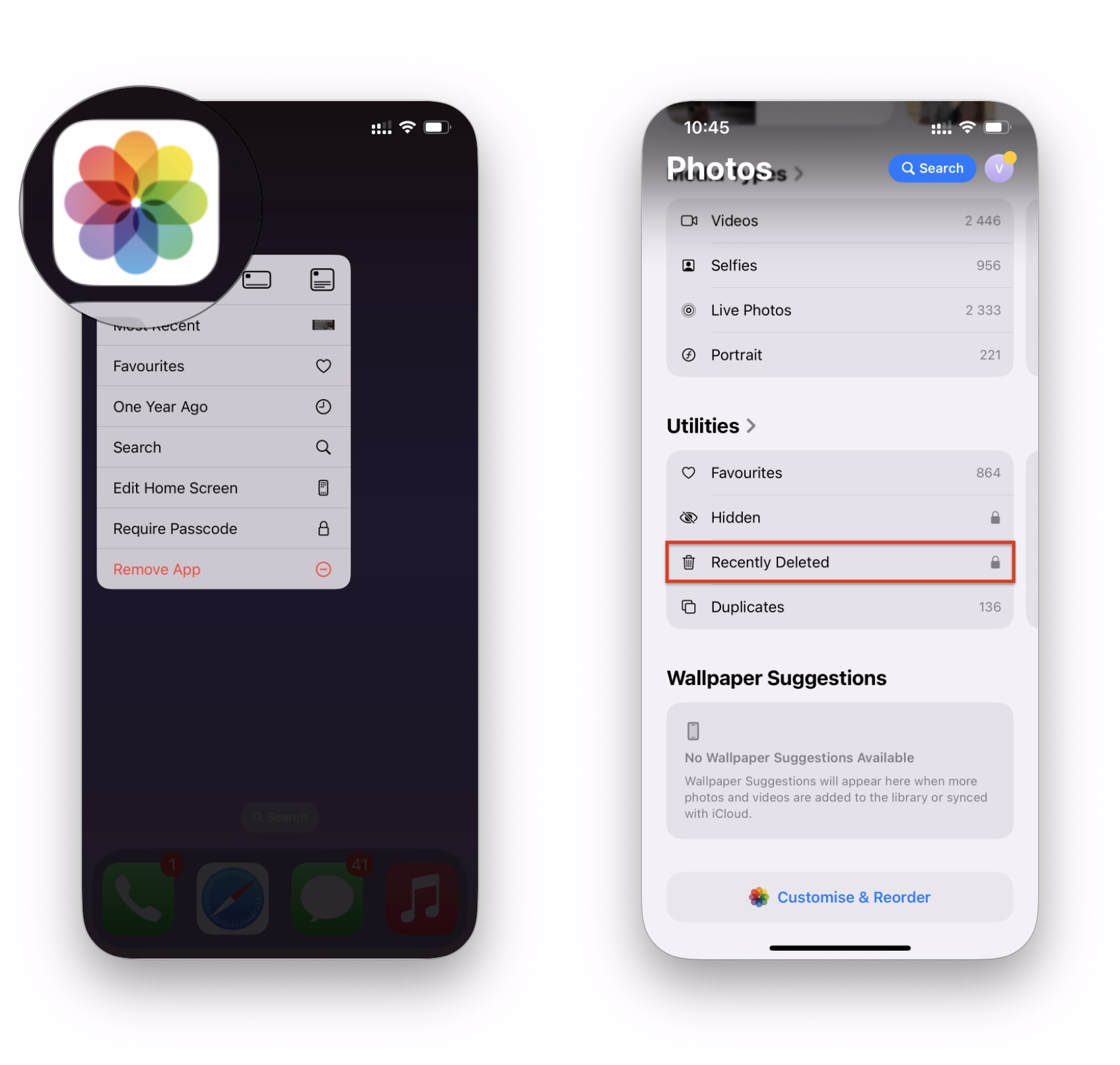
Recovered photos return to the main Photos library. If iCloud Photos is enabled, they should sync back to your other Apple devices signed in to the same Apple Account.
If the photos are not in Recently Deleted, move to backups. Do not erase your iPhone yet.
Recover deleted photos from Mac Photos or Mac Trash
Mac recovery depends on how the photo was deleted.
If you deleted it inside the Photos app, check Photos first:
If you deleted an image file from Finder, check the Trash:
- Open Photos on your Mac.
- Click Recently Deleted in the sidebar.
- Unlock the album if macOS asks.
- Select the photos or videos.
- Click Recover.
- Open Trash from the Dock.
- Search for the deleted photo file.
- Right-click the photo.
- Choose Put Back.
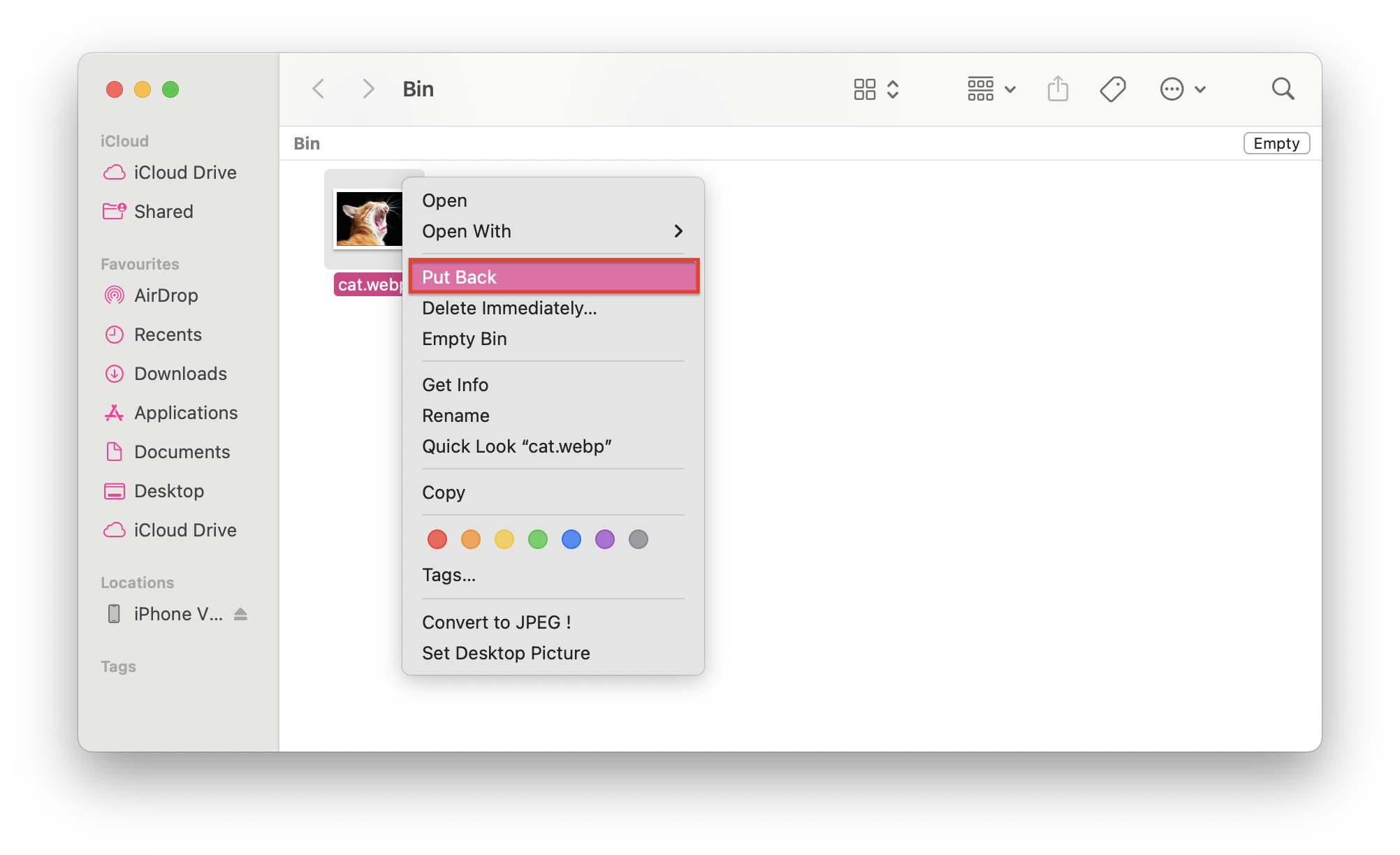
Photos deleted from the Photos library and files deleted from Finder are not the same thing. A JPG sitting in Downloads may be recoverable from Trash. A photo inside the Photos library needs Photos Recently Deleted, Time Machine, or another backup.
If the photo is gone from Recently Deleted and Trash, open Time Machine if you use it. Go back to a date before deletion and restore either the individual exported image file or the Photos Library package, depending on where the photo lived.
Recover deleted photos on Windows
On Windows, start with the Recycle Bin. It is the fastest path and does not need extra software.
The photo returns to its original folder.
If the Recycle Bin is empty, check File History if you had it enabled:
If you do not have File History, Microsoft offers Windows File Recovery, a command-line recovery tool. Use it on a different drive from the one you are recovering. Saving recovered files to the same drive can overwrite the photos you are trying to rescue.
- Open Recycle Bin.
- Search for the photo by name, date, or file type.
- Right-click the file.
- Choose Restore.
- Open the folder where the photo used to live.
- Right-click inside the folder.
- Choose Show more options > Restore previous versions.
- Pick a version from before the deletion.
- Restore the file or copy it somewhere safe.
Recover photos from an iCloud Backup
Use iCloud Backup only when you believe the photo was included in an old device backup.
This method has a big catch: restoring an iCloud Backup erases your current iPhone and replaces it with the backup state. That can bring old photos back, but it can also remove newer messages, photos, app data, and settings.
Before you erase anything:
To restore from iCloud Backup:
- Check Recently Deleted on iPhone and iCloud.com.
- Check another synced device.
- Export anything current that you cannot lose.
- Confirm the backup date is before the photo deletion.
- Open Settings on your iPhone.
- Tap General.
- Tap Transfer or Reset iPhone.
- Tap Erase All Content and Settings.
- After restart, choose Restore from iCloud Backup.
- Sign in with your Apple Account.
- Select a backup from before the photos were deleted.
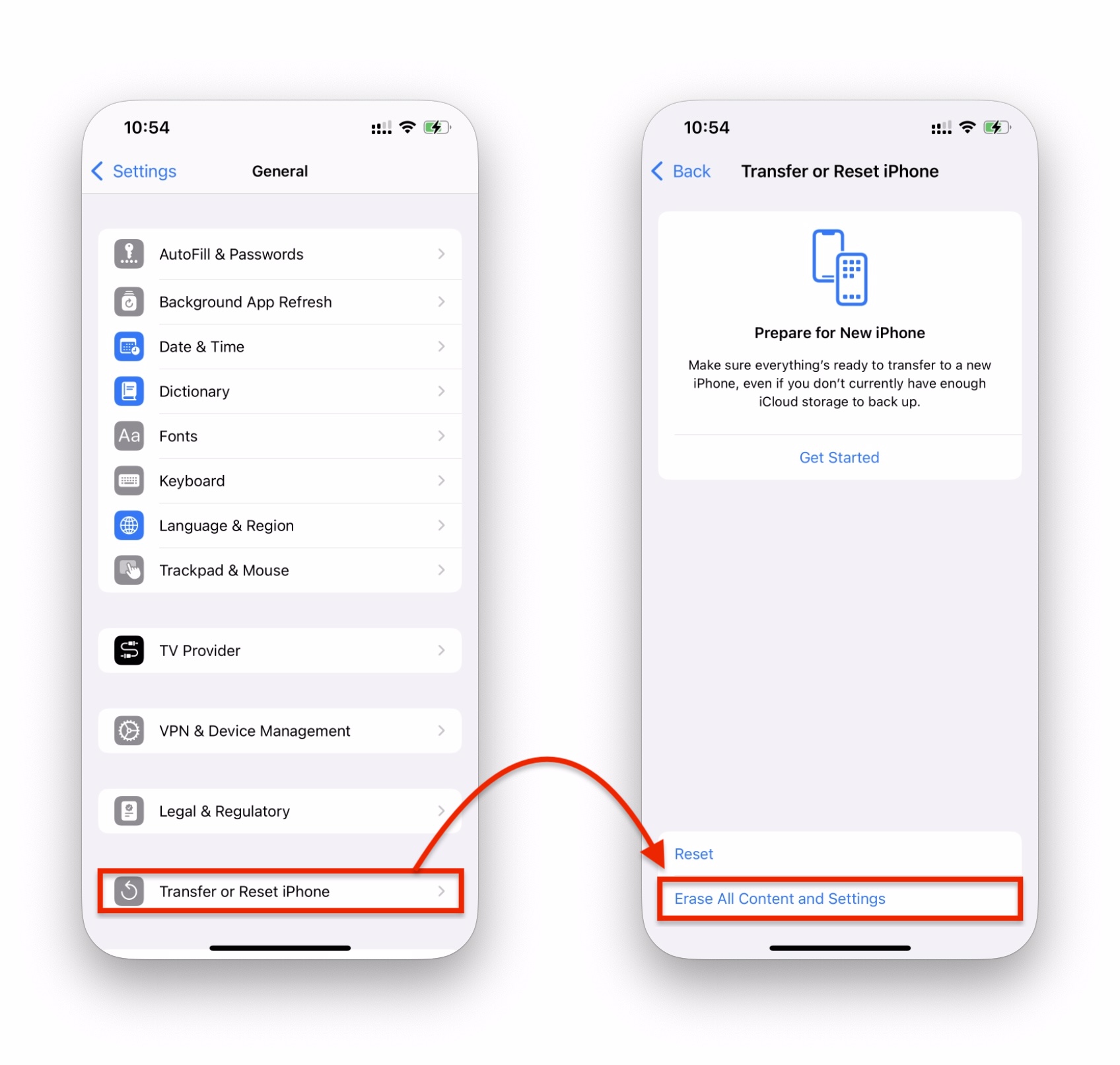
This is a full-device restore. If you only need photos from a backup, a selective backup browser is usually safer.
Recover lost photos from Finder or iTunes backup
Finder on newer Macs and iTunes on older Macs or Windows PCs can restore an iPhone backup. The problem is the same as iCloud Backup: Apple’s native restore replaces the current device state.
Use this method only if you are comfortable rolling the iPhone back to the backup date.
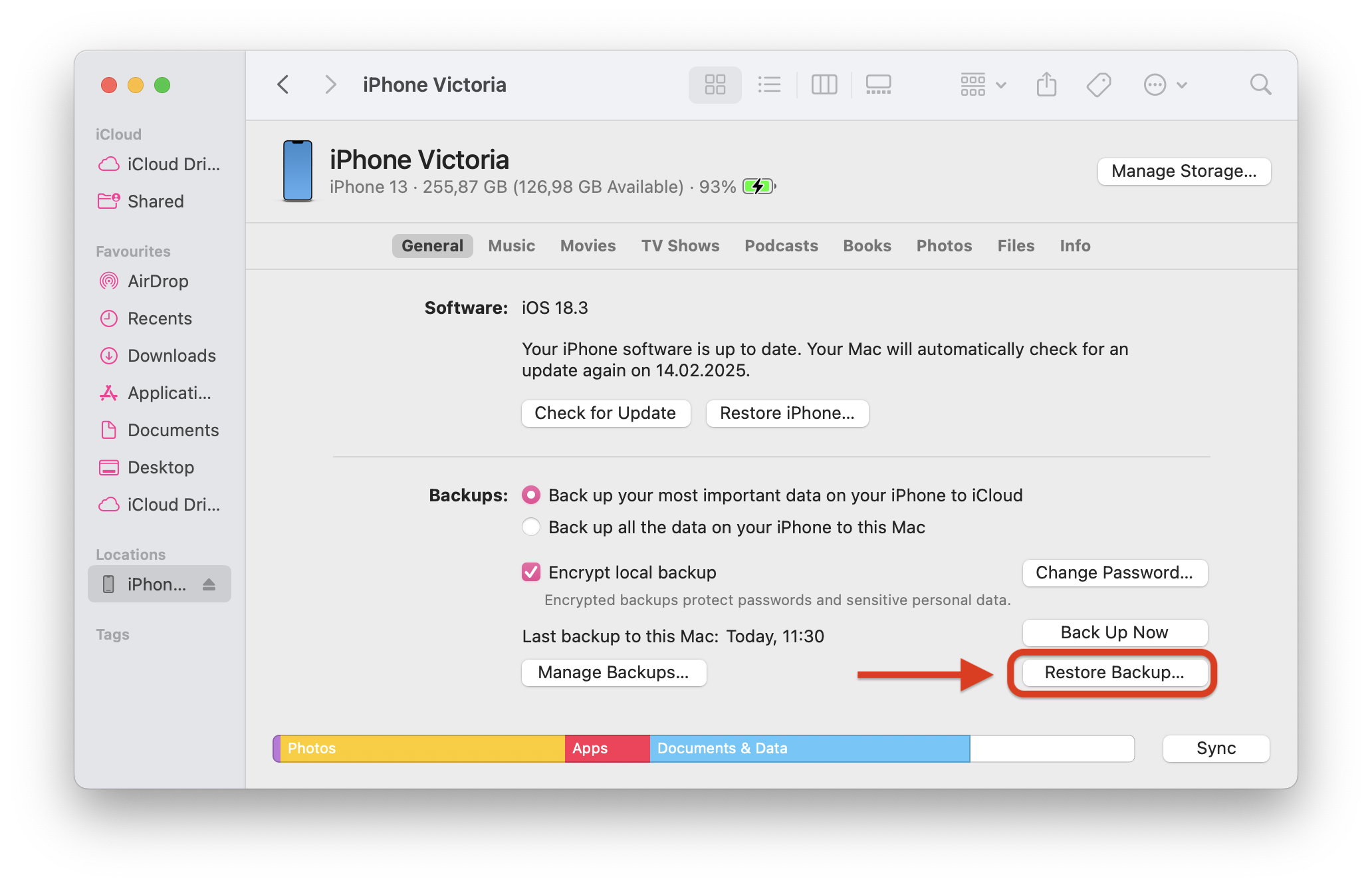
- Connect your iPhone to the computer with a USB cable.
- Open Finder on macOS Catalina or later, or open iTunes on Windows or older macOS.
- Select your iPhone.
- Click Restore Backup.
- Choose a backup from before the deletion.
- Confirm and wait for the restore to finish.
If the backup is encrypted, you need the backup password. Without it, you cannot restore that encrypted backup.
This method can recover deleted photos only if the backup contains them. It does not recover photos from thin air.
Restore selected photos from an iPhone backup with AltTunes
If you have an iPhone backup but do not want to wipe the whole device, use AltTunes to work with the backup more carefully. AltTunes is built for Windows users who want an iTunes alternative that does not feel like punishment.
Use AltTunes when:
Do not use AltTunes as a promise of no-backup recovery. If no backup contains the photo, AltTunes cannot invent one.
- The deleted photos are inside an iTunes, Finder, or AltTunes backup.
- You want to browse backup data before restoring.
- You want to export photos to a PC.
- You want to restore selected data instead of replacing the whole iPhone.
Step 1: Download and install AltTunes
Download AltTunes for Windows from Softorino. Install it, open the app, and start the free trial if you want to test the workflow first.

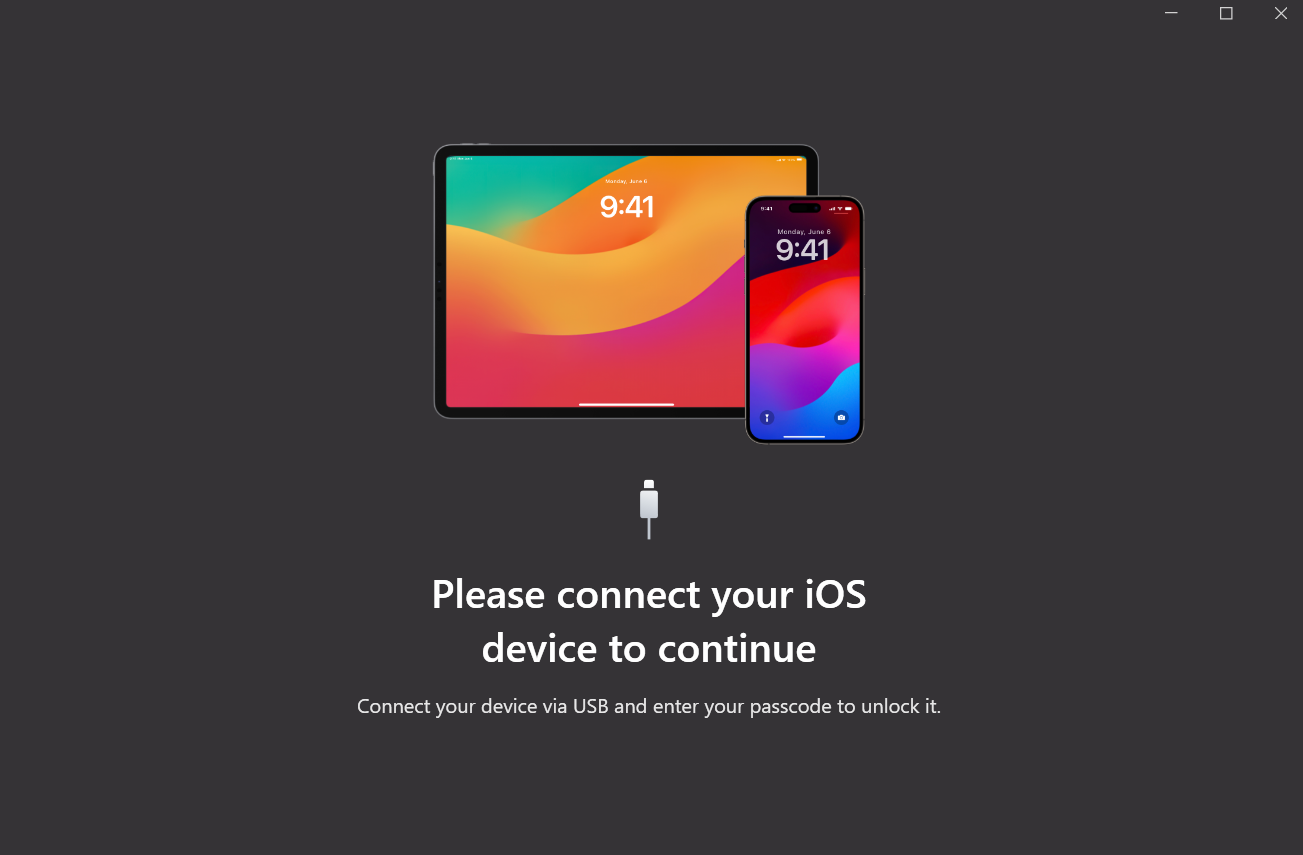
Step 2: Connect your iPhone
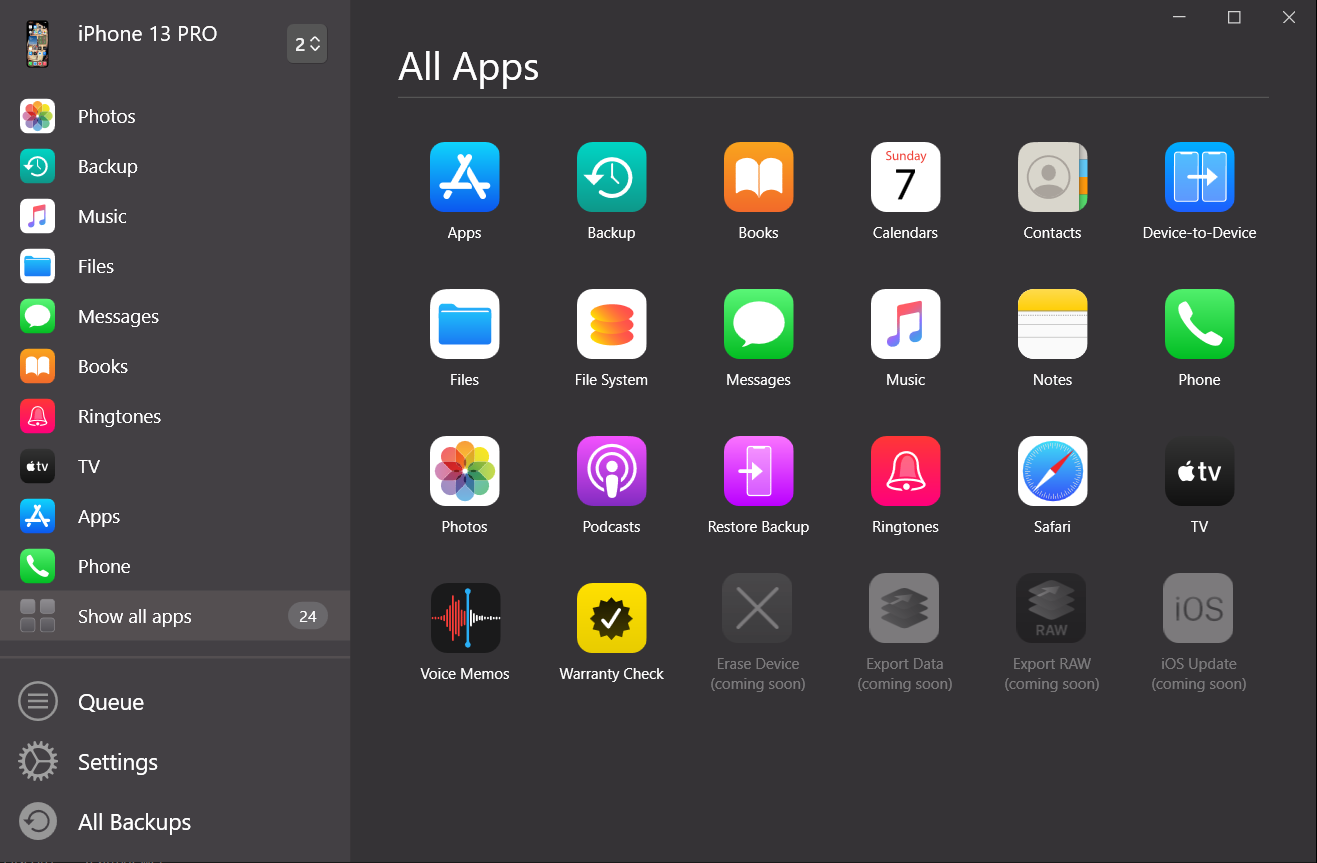
Use a USB cable and unlock your iPhone. Select the device in AltTunes, then choose Restore a Backup from the actions panel.
Step 3: Choose the right backup
Pick a backup from before the photos were deleted. If you are not sure, start with the newest backup older than the deletion date.
Step 4: Select photos instead of restoring everything
Choose the photo data you want to restore or export. Confirm the action and keep the iPhone connected until the process finishes.
If the backup is encrypted, enter the backup password when AltTunes asks. No password means no access to the encrypted backup.
AltTunes helps most when Apple’s native restore feels too blunt. iCloud and iTunes want to roll back the whole phone. AltTunes lets you be more surgical when a usable backup exists.
Recover photos from Google Photos
Google Photos has its own Trash. Check it even if the original photo was on an iPhone, Android phone, or computer, because Google Photos may have backed it up separately.
If the photo is not in Trash, check Archive and Locked Folder too. People often think a photo was deleted when it was hidden or moved.
- Open Google Photos.
- Go to Collections or Library.
- Open Trash.
- Select the deleted photos or videos.
- Tap Restore.

Google’s own help is clear: items that are permanently deleted cannot be restored through Google Photos. If Google Photos was your only copy and Trash is empty, your next chance is another synced device, a phone backup, a computer copy, or local storage recovery from an SD card.
Recover photos from Google Drive, Dropbox, OneDrive, or iCloud.com
Cloud drives usually keep deleted files in a trash or recycle bin for a limited time. The exact window depends on the service, account type, and admin settings.
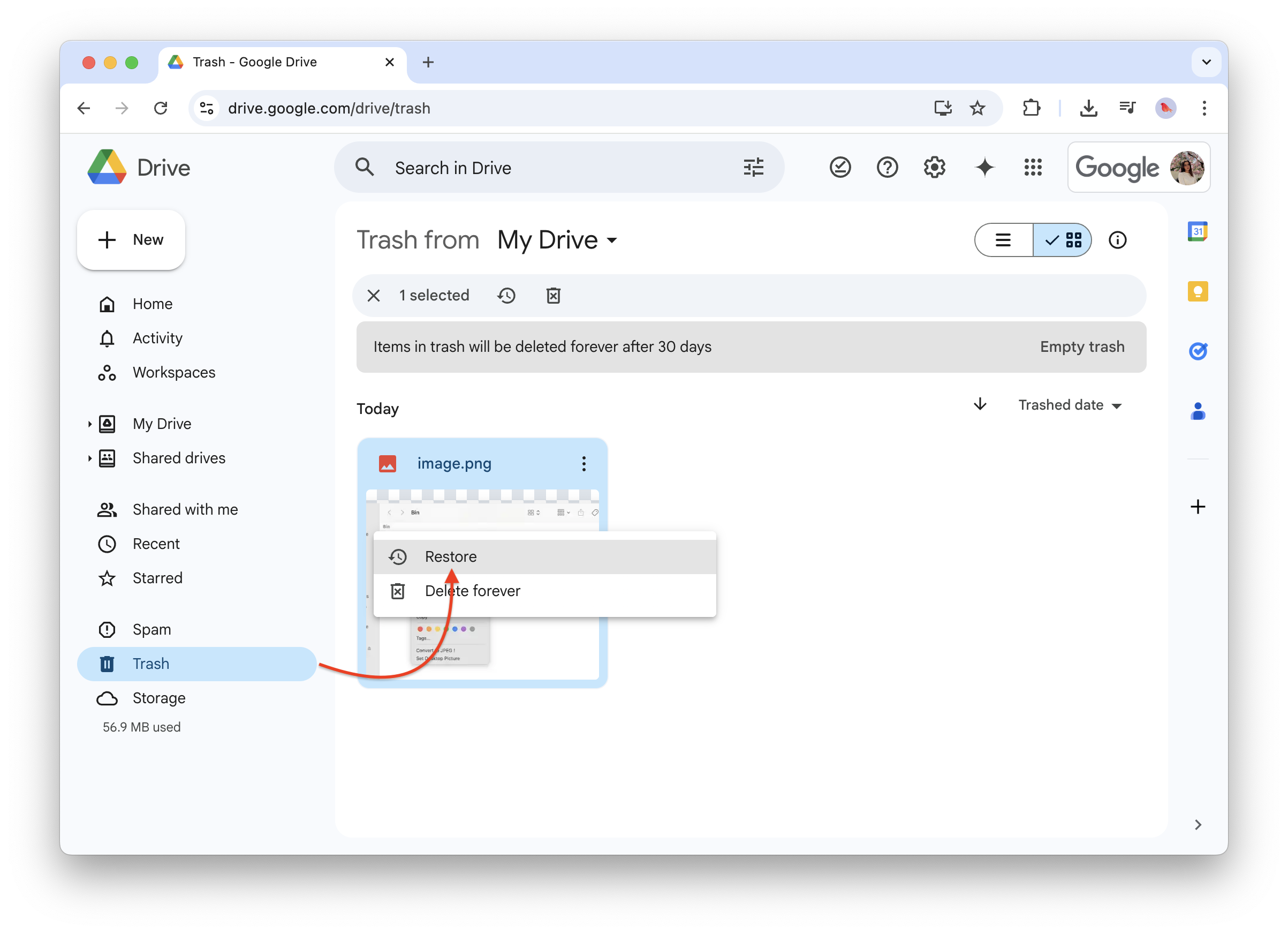
Google Drive
- Open Google Drive.
- Go to Trash.
- Select the deleted photo file.
- Click Restore.
Dropbox, OneDrive, or iCloud.com
- Sign in to the cloud service in a browser.
- Open Deleted files, Trash, or Recycle bin.
- Select the photos.
- Choose Restore.
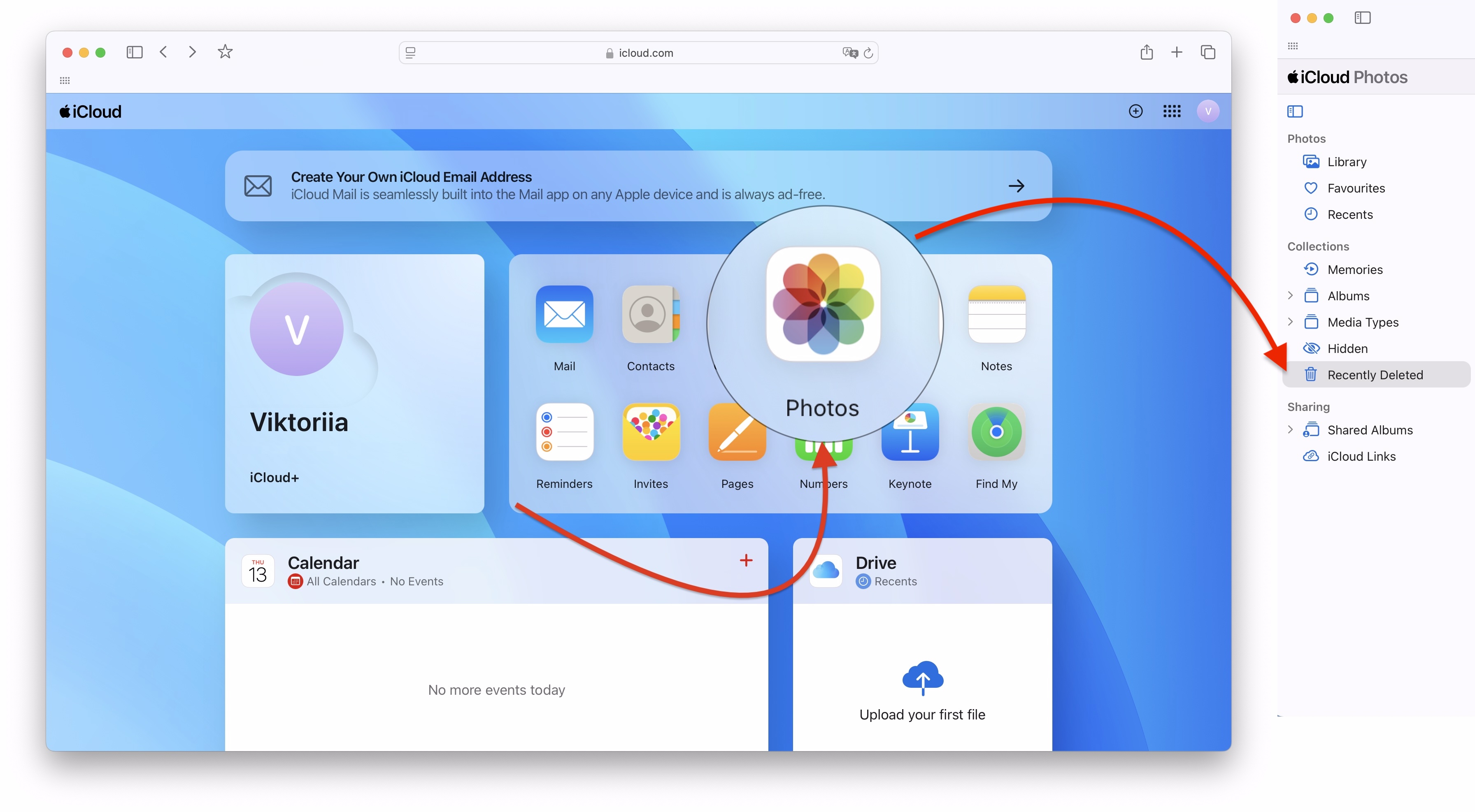
For OneDrive, Microsoft says personal account recycle bin items are usually removed after 30 days. Work and school accounts can have different retention windows. Dropbox and Google Drive rules also depend on the plan and account type, so check the provider’s help page if the photos matter.
One warning: cloud sync can work against you. If you delete a synced photo on one device, that deletion may sync to the cloud and other devices. Check cloud trash before you assume the file is gone.
When photo recovery software helps
Recovery software can help when deleted photos lived on local storage:
It works by scanning storage for deleted file data that has not been overwritten yet. That is why the first rule is to stop using the drive.
Recovery software is much less reliable for modern iPhones. iPhone storage is encrypted, and deleted photo data is not usually available to normal recovery apps after it leaves Photos, Recently Deleted, and backups. If a tool claims it can always recover permanently deleted iPhone photos without a backup, be skeptical.
For local drives, recover to a different disk. For SD cards, remove the card from the camera or phone and scan it from a computer. Do not take more photos on that same card.
- SD cards from cameras
- USB drives
- external hard drives
- Windows folders
- some Mac folders or drives
Comparing your recovery options
Method | Best for | Risk | Selective recovery? |
|---|---|---|---|
Recently Deleted / Trash | Recent deletions | Low | Yes |
iCloud Photos / Google Photos trash | Cloud-synced photos | Low | Yes |
iCloud Backup restore | Old iPhone backup recovery | High, full-device erase | No |
Finder / iTunes restore | Computer backup recovery | High, full-device restore | No |
AltTunes backup restore/export | Backup-based iPhone photo recovery on Windows | Lower than full restore | Yes, when backup supports it |
Time Machine / File History | Mac or Windows local files | Low to medium | Yes |
Recovery software | SD cards, external drives, local disks | Medium, depends on overwrite | Usually yes |
Prevent future photo loss
Recovery is stressful because you are guessing under pressure. Set up boring backups now so future you does not have to pray to the Recycle Bin.
- Keep iCloud Photos or another cloud photo backup on if you want automatic sync.
- Keep a separate backup too. Sync is not backup. Deleted photos can sync as deleted.
- Use Time Machine on Mac.
- Use File History or another backup tool on Windows.
- Export important iPhone photos to a computer before deleting large batches.
- Keep camera SD cards untouched until you confirm imports finished.
- Use AltTunes if you want a Windows iPhone manager that can export photos and work with backups without iTunes.
- Consider the Softorino Universal License if you use several Softorino apps across iPhone, Mac, and Windows.
Final thoughts on how to recover permanently deleted photos
You can recover permanently deleted photos when another copy still exists somewhere: Recently Deleted, cloud trash, a backup, Time Machine, File History, an SD card, or recoverable local storage. Start with the built-in recovery paths. They are safer and faster.
Use full iCloud, Finder, or iTunes restore only when you accept the rollback risk. Use AltTunes when you have a compatible iPhone backup and want to recover or export selected photos without turning the whole phone into a time machine.
FAQ
Can permanently deleted photos be recovered?
Sometimes. You can recover permanently deleted photos if they still exist in a backup, cloud trash, Time Machine snapshot, File History copy, or recoverable local storage. If every copy is gone and no backup exists, recovery is unlikely.
How long do deleted iPhone photos stay in Recently Deleted?
Deleted iPhone photos usually stay in Recently Deleted for about 30 days. After that, Apple removes them from that album. If iCloud Photos is enabled, the deletion can sync across your Apple devices.
Can I recover photos after deleting them from Recently Deleted on iPhone?
Only if another copy exists. Check iCloud.com, other synced devices, iCloud Backup, Finder or iTunes backups, and computer exports. A modern iPhone usually will not let normal recovery software recover photos after Recently Deleted is emptied and no backup exists.
Does iCloud delete photos everywhere?
If iCloud Photos is enabled, deleting a photo on one device deletes it from iCloud and from other devices using the same Apple Account. Recently Deleted still gives you a short recovery window.
Can Google Photos recover permanently deleted photos?
Google Photos can restore photos from Trash while they are still there. Google says permanently deleted items cannot be restored through Google Photos. Check another device, backup, or local copy if Trash is empty.
What should I do first after deleting photos from a PC or SD card?
Stop using that drive or card. Do not save new files to it. Check Recycle Bin or backups first, then scan the storage with recovery software and save recovered files to a different drive.

AltTunes
Seamlessly Browse, Manage & Export iOS Data
