FLAC to M4A Converter Guide: ALAC Without Quality Loss

Trying to convert FLAC to M4A usually means one of 2 things. You either want a smaller Apple-friendly audio file, or you want your lossless music to work cleanly inside an Apple workflow. Those are different jobs.
The short answer: convert FLAC to M4A with ALAC if you want lossless quality. Use AAC inside M4A if you want smaller files and can accept quality loss. If the real problem is getting the music onto an iPhone or iPad, WALTR PRO handles the transfer side without iTunes or Finder sync.
FLAC to M4A: choose ALAC or AAC first
M4A is not one audio codec. It is a container. That container can hold ALAC, which is Apple Lossless, or AAC, which is smaller and lossy. This is the part most converter pages skip, and it is why people end up with the wrong file.
Goal | Choose | Quality result | Best for |
|---|---|---|---|
Keep FLAC quality | M4A with ALAC | Lossless | Music libraries, albums, audiophile collections |
Save storage space | M4A with AAC | Lossy | Casual listening, voice notes, small phone storage |
Move music to iPhone | WALTR PRO transfer workflow | Depends on source and destination settings | Getting audio into Apple Music-compatible places without iTunes |
If quality matters, look for ALAC or Apple Lossless in the output settings. “M4A” by itself does not guarantee lossless audio.
Before we begin
Download WALTR PRO on Mac or Windows to convert FLAC for Apple playback and transfer the music to an iPhone, iPad, or iPod. Choose lossless ALAC when preserving quality matters and keep the FLAC source.
Best FLAC to M4A method by situation
A one-song test file and a full FLAC library need different tools. Pick the method based on file privacy, batch size, and where the music needs to end up.
Situation | Best method | Why it works | Watch out for |
|---|---|---|---|
One small, non-private file | Online FLAC to M4A converter | Fast and no install | You upload the file to someone else’s server |
Private recordings or client audio | Local desktop converter | Keeps files on your computer | Check ALAC vs AAC before exporting |
Full album or music library | Desktop batch converter | Handles folders and repeat settings | Metadata and artwork may need cleanup |
iPhone or iPad playback workflow | WALTR PRO | Transfers music without iTunes or Finder sync | Use a local conversion step when you need exact ALAC output control |
Online tools are fine for disposable files. For rare recordings, paid audio, work files, or a whole music library, local conversion is the safer move.
What FLAC, M4A, ALAC, and AAC mean
The format names get messy because people use them as if they mean the same thing. They do not.
What is FLAC?
FLAC stands for Free Lossless Audio Codec. It compresses audio without throwing away the original audio data, so it is popular for CD rips, live recordings, and high-quality music libraries. The downside is Apple library workflows often prefer Apple’s own lossless format.
What is M4A?
M4A is an audio file container tied to MPEG-4 audio. It can hold AAC audio or ALAC audio. So “convert FLAC to M4A” is incomplete until you choose the codec inside the M4A file.
ALAC vs AAC inside M4A
Codec | Lossless? | File size | Use it when |
|---|---|---|---|
ALAC / Apple Lossless | Yes | Larger | You want FLAC-level quality in an Apple-friendly file |
AAC | No | Smaller | You want a phone-friendly file and do not need perfect source quality |
Why online FLAC to M4A converters are not always enough
The top Google results are mostly upload boxes: CloudConvert, FreeConvert, Convertio, Zamzar, and similar tools. They solve the fast-conversion job. They do not solve privacy, batch library cleanup, metadata, or Apple-device transfer.
- Free plans often limit file size, speed, or daily conversions.
- Large FLAC albums take longer because every file must upload before conversion starts.
- Some tools default to AAC, so you may lose quality without noticing.
- Private recordings leave your computer, even if the service says files are deleted later.
- Artwork, track numbers, and album metadata may not survive cleanly.
Important: Use online converters for small, non-sensitive files. Use a local workflow for personal archives, client audio, unreleased music, or anything you would not email to a stranger.
Where WALTR PRO fits in the FLAC to M4A workflow
WALTR PRO is strongest when the destination is an Apple device. It runs on Mac and Windows, accepts audio formats such as FLAC, AAC, AIFF, WAV, WMA, OGG, and more, then helps move music to iPhone, iPad, or iPod without the usual iTunes ceremony.
Drag music files into the app instead of syncing a whole library.
Transfer over USB or Wi-Fi after setup.
Send supported music into Apple Music-compatible destinations.
Keep the original file on your computer unchanged.
Use automatic metadata and artwork handling when the file needs cleanup.
How to convert FLAC to M4A and transfer it to iPhone
If you only need a local ALAC file, use a trusted desktop converter and choose ALAC as the output codec. If you want that music on your iPhone or iPad after conversion, use WALTR PRO for the transfer step.
Step 1: Download and install WALTR PRO
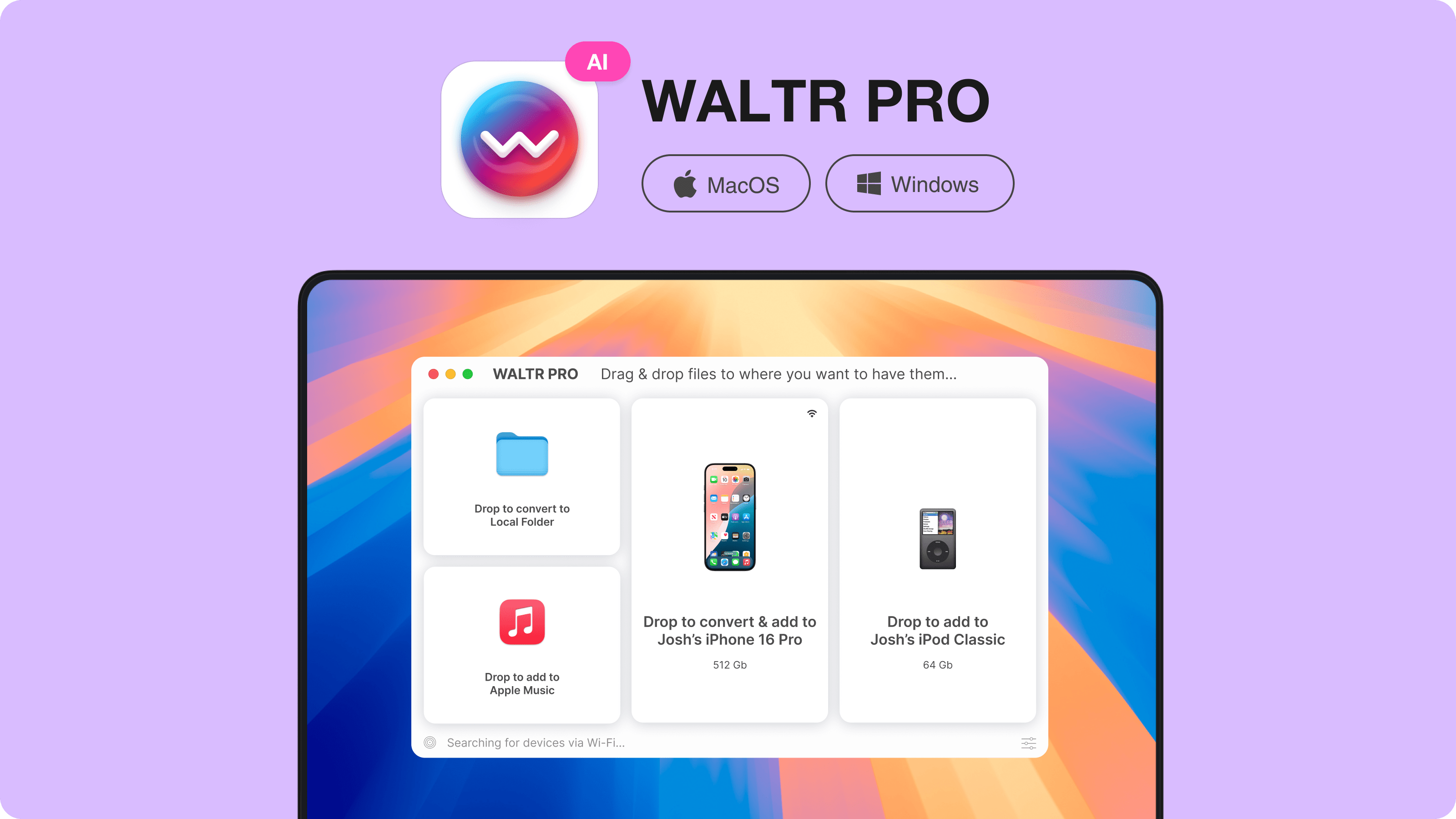
Download the WALTR PRO free trial on your Mac or Windows PC. Open the app and connect the Apple device you want to send music to.
If your source files are already in the format you want, keep them as they are. If you need exact ALAC output, convert FLAC to ALAC/M4A locally first, then transfer the finished files.
Step 2: Connect your iPhone or iPad
Use a USB cable for the first connection. After that, WALTR PRO can use Wi-Fi transfer when your device and computer are on the same network. That saves you from opening iTunes, Finder sync, or the Music app import maze.
Step 3: Convert if needed, then transfer
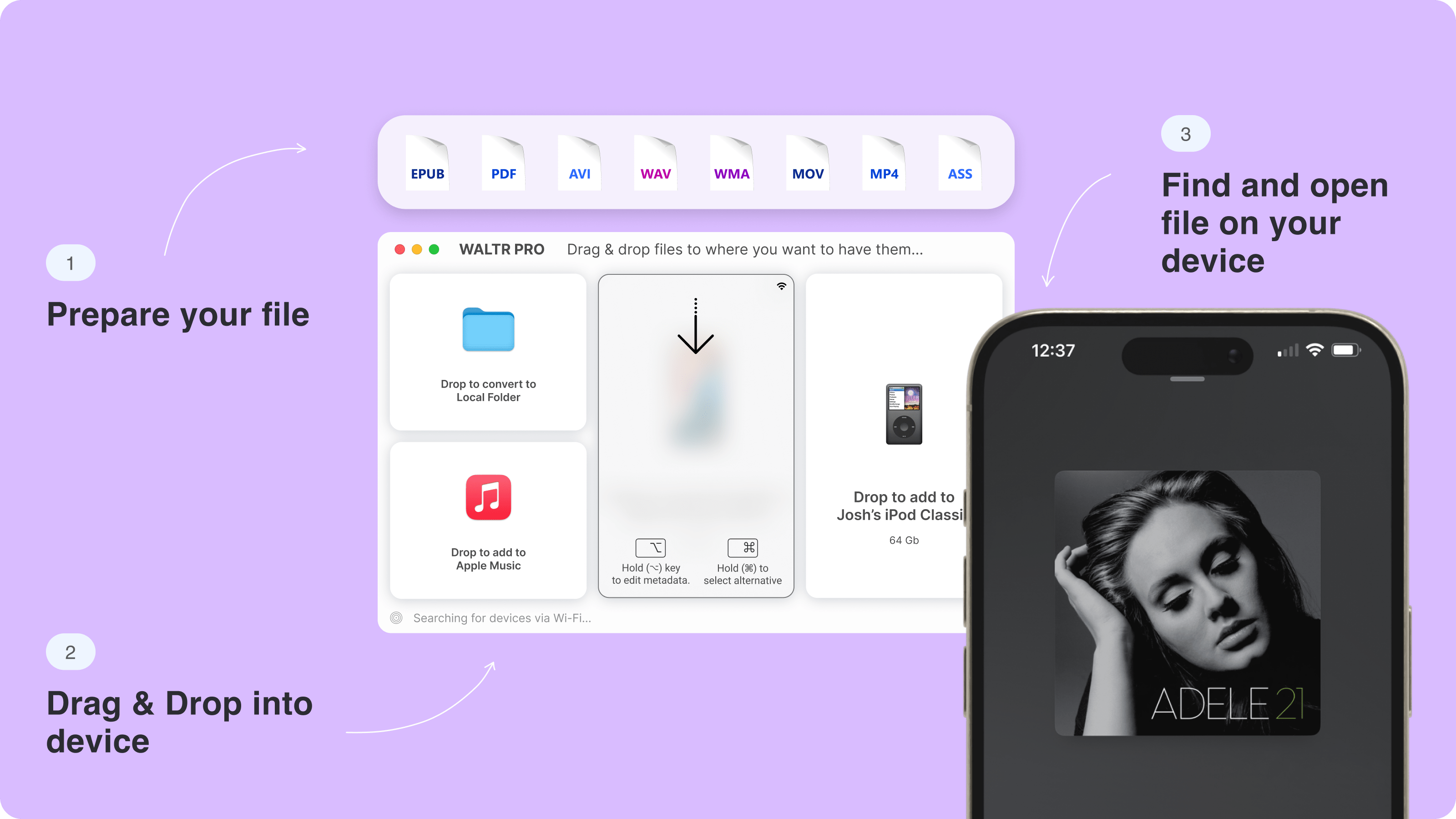
Drag your music files into WALTR PRO or select them from your computer. WALTR PRO keeps the workflow focused: choose the file, choose the destination, and let the app place the audio where your Apple device can use it.
- Convert FLAC to ALAC/M4A first if your main goal is lossless Apple-library compatibility.
- Use AAC/M4A if smaller files matter more than perfect source quality.
- Transfer the finished files with WALTR PRO when the end goal is iPhone, iPad, or iPod playback.
The original FLAC files stay on your computer. That matters if you want to keep a clean archive and make phone-friendly copies separately.
Online FLAC to M4A conversion options
Online converters can help when you need one file converted fast. They are not automatically bad. They are just the wrong tool for files you care about.
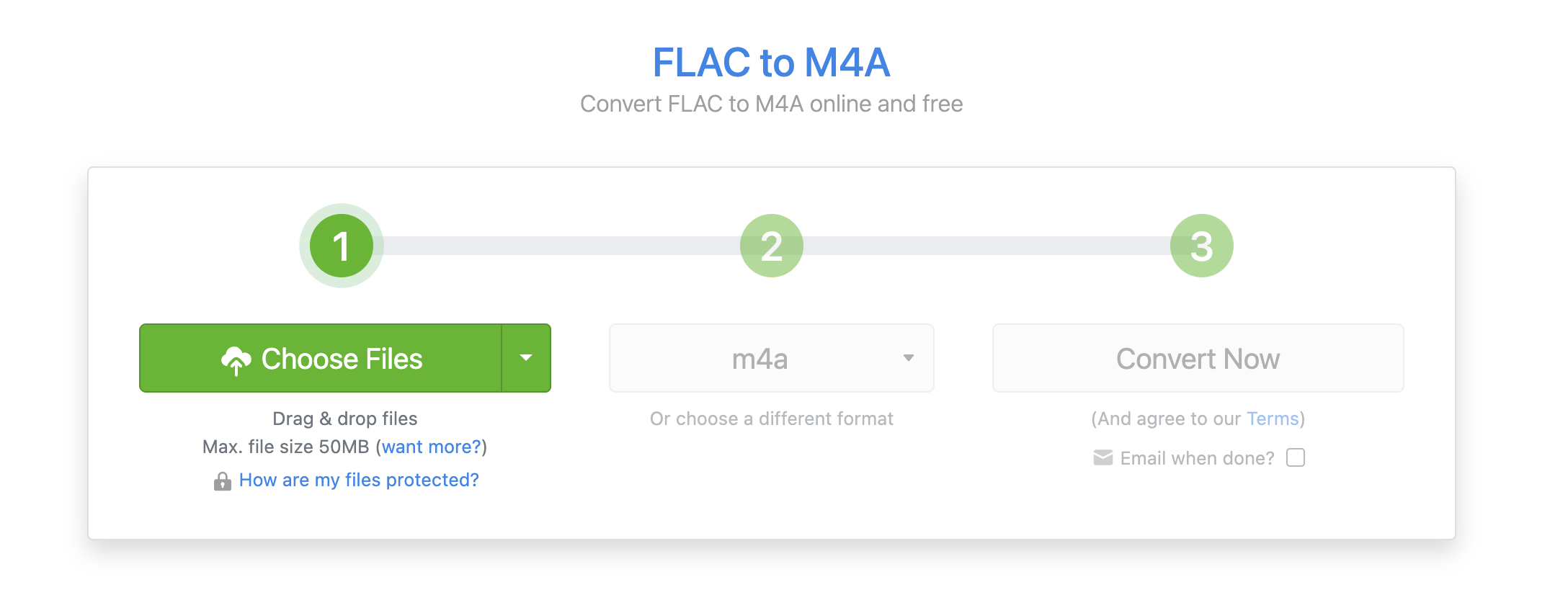
If you use an online FLAC to M4A converter, check the output codec before downloading. Look for ALAC or Apple Lossless when you want lossless audio. If the tool only offers AAC, expect a smaller file with some quality loss.
Tool type | Good for | Not good for |
|---|---|---|
Browser converter | One small file you do not mind uploading | Private audio, full albums, repeat workflows |
Desktop converter | Batch conversion, privacy, ALAC control | One quick file if you hate installing apps |
WALTR PRO | Moving music to Apple devices without iTunes | Replacing a pro audio encoder when you need rare codec settings |
Important: Do not upload private audio just to save 2 minutes. If the recording matters, convert it locally.
Quality settings for FLAC to M4A
For lossless conversion, keep the sample rate and bit depth the same as the source when possible. If your FLAC file came from a CD rip, 44.1 kHz and 16-bit are normal. Higher numbers do not improve a source that was not recorded that way.
- Use ALAC when you want lossless M4A output.
- Use AAC at 256 kbps or 320 kbps when storage matters more than perfect quality.
- Keep metadata and artwork during batch conversion when the converter supports it.
- Run one test file before converting a full album or library.
FLAC to M4A troubleshooting
Most conversion problems come from codec choice, metadata, or the transfer step after conversion. Check these before blaming the file.
Problem | Likely cause | Fix |
|---|---|---|
The M4A sounds worse than the FLAC | The converter exported AAC | Export as ALAC / Apple Lossless instead |
The file is too large | ALAC keeps lossless data | Use AAC if smaller size matters more |
The song does not show on iPhone | Transfer or library import failed | Use WALTR PRO to send it directly to the device |
Album art is missing | Metadata was stripped during conversion | Use a converter or transfer tool with metadata handling |
A protected file will not convert | DRM or corruption blocks the encoder | Use an unprotected source file you own |
Final takeaway
Convert FLAC to M4A as ALAC when you want lossless Apple-friendly audio. Convert to AAC/M4A when you want smaller files. Do not treat M4A as automatically lossless, because the codec inside the container decides that.
If the end goal is your iPhone or iPad, conversion is only half the job. WALTR PRO handles the part Apple still makes annoying: getting music onto the device without iTunes or Finder sync. Start with the WALTR PRO free trial and move a test album first.
FAQ
Is FLAC to M4A lossless?
FLAC to M4A is lossless only when the M4A file uses ALAC, also called Apple Lossless. If the M4A uses AAC, the conversion is lossy.
Is M4A the same as ALAC?
No. M4A is the file container. ALAC is one codec that can live inside that container. AAC can also live inside M4A, and AAC is lossy.
Can iPhone play FLAC files?
Modern Apple device specs list FLAC support, but Apple Music and library workflows still work better with Apple-friendly formats like ALAC/M4A. Playback support and clean library transfer are not the same thing.
Should I convert FLAC to ALAC or AAC?
Choose ALAC if you want to preserve FLAC quality. Choose AAC if you want a smaller file for casual listening.
Is an online FLAC to M4A converter safe?
It can be fine for small, non-private files. Do not upload private recordings, client audio, unreleased music, or full libraries to a random browser converter.
How do I transfer FLAC or M4A to iPhone without iTunes?
Use WALTR PRO. Connect your iPhone or iPad, drag the music into the app, and transfer it without syncing your whole library through iTunes or Finder.

WALTR PRO
Convert & Push Any File into Any Apple Device
