How to Add Email to iPhone: Gmail, Outlook and More

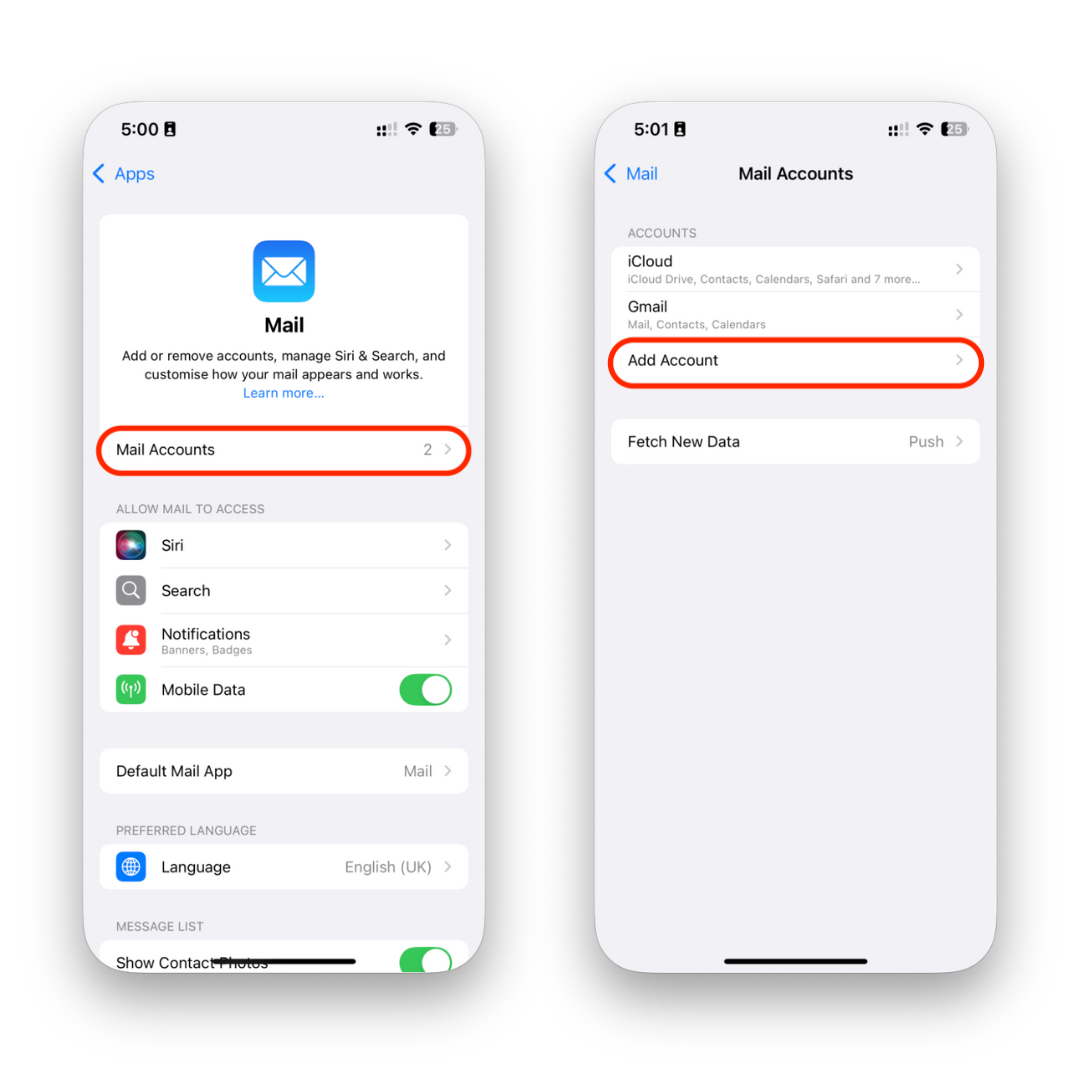
To add email to iPhone, open Settings > Apps > Mail > Mail Accounts > Add Account. Choose your provider, sign in, turn on Mail, and tap Save. Gmail, Outlook, iCloud, Yahoo, and many Exchange accounts use a provider sign-in page. Custom domains may need manual IMAP, POP, and SMTP details.
Quick Answer: How to Add Email to iPhone
Open Settings > Apps > Mail > Mail Accounts > Add Account. Enter your email address, follow the provider sign-in screen, approve two-factor authentication if asked, turn on Mail, and tap Save. Open the Mail app and check Mailboxes for the new inbox.
On an older iOS version, Mail may sit directly on the main Settings screen. The labels can differ, but you still need Accounts or Mail Accounts, followed by Add Account.
Quick Takeaways for iPhone Email Setup
- Common providers: iCloud, Gmail, Outlook.com, Yahoo, AOL, and standard Microsoft Exchange accounts use provider sign-in.
- Manual setup: custom domains and private servers need details supplied by the provider or workplace.
- IMAP: this is the normal choice unless the provider specifically requires POP.
- Verification: the new inbox should appear under Mailboxes after saving.
- Re-adding: account removal belongs at the end of troubleshooting, after credential and server checks.
Before we begin
Email setup happens in iPhone Settings. WALTR PRO does not configure Mail. If your next job is moving PDF attachments or other local files from a Mac or Windows PC to iPhone, download WALTR PRO for that separate file-transfer job.
Have your full email address, password, and two-factor login method ready. For a custom domain or managed work account, get the exact incoming server, outgoing server, ports, SSL choice, username, and authentication method from the provider or IT team.
Do not guess server values. One wrong character can stop verification, and changing random ports usually creates a second problem.
Which iPhone Email Setup Path Should You Use?
Choose the route that matches the account. The iPhone model does not decide the menu path. The installed iOS version does.
Account type | Route | What you need |
|---|---|---|
iCloud, Gmail, Outlook.com, Yahoo, AOL | Provider sign-in | Full address, password, two-factor code |
Microsoft 365 or Exchange work account | Microsoft Exchange | Address, sign-in approval, possible admin permission |
Custom domain or unlisted provider | Other or Add Other Account | Provider-supplied IMAP, POP, and SMTP details |
If your workplace requires the Outlook app or managed-device enrollment, Apple Mail cannot bypass that policy. Follow the employer's instructions.
How to Add Email to iPhone Mail Automatically
Use automatic setup for a common provider. Apple Mail hands the sign-in step to Google, Microsoft, Yahoo, or the selected provider, so you do not need to type server names.
- Open Settings on your iPhone.
- Tap Apps, then Mail.
- Tap Mail Accounts.
- Tap Add Account.
- Enter your email address if iOS asks for it first.
- Choose iCloud, Google, Microsoft Exchange, Yahoo, AOL, Outlook.com, or the provider shown.
- Sign in on the provider's official screen.
- Approve the two-factor or permission prompt if one appears.
- Turn on Mail. Turn on Contacts, Calendars, or Notes only if you want them synced.
- Tap Save.
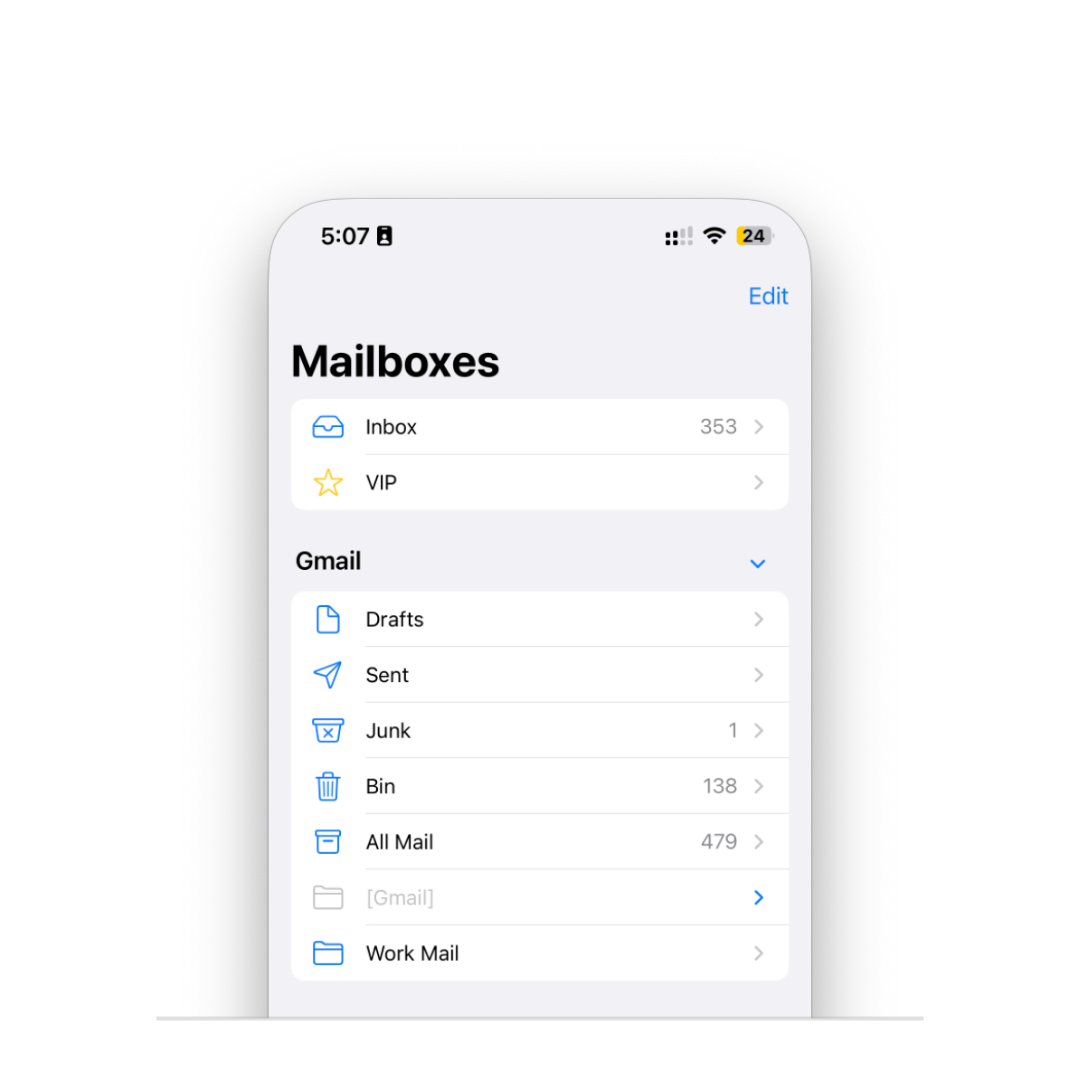
Open Mail and tap Mailboxes. The account should appear under its provider name, description, or email address. Pull down inside the inbox to refresh if messages do not appear at once.
That Mailboxes check confirms the account saved. It does not prove outgoing mail works, so send a test message after the inbox loads.
Apple documents the current automatic and manual flows in its Mail account setup guide. Use that page if an iOS update changes a label or moves a button.
How to Add Work Email or Exchange to iPhone
For Microsoft 365 or Exchange, choose Microsoft Exchange during account setup. Enter your work address, then use Sign In when your organization supports Microsoft's login page.
Some organizations show a permissions screen. Read it, then accept only if it matches your work account and company policy. Your employer may also require the Outlook app, device management, or administrator approval.
Use Configure Manually only when your IT team supplies the server information. Microsoft's iOS Mail setup guide covers Sign In, manual configuration, permissions, and administrator help.
If a work account fails after the correct password and two-factor approval, contact the administrator before deleting the account or changing server fields. Company policy may block Apple Mail.
How to Add Email to iPhone Manually
Use manual setup for a custom domain, a smaller provider, or a private mail server. Apple's current screen order may ask for your address before it shows Add Other Account.
- Open Settings > Apps > Mail > Mail Accounts.
- Tap Add Account.
- Enter the email address if iOS asks, then tap Next.
- Tap Add Other Account or Other.
- Tap Mail Account or Add Mail Account.
- Enter your name, full email address, password, and a useful description.
- Tap Next.
- Choose IMAP or POP based on your provider's instructions.
- Enter the exact incoming mail server details.
- Enter the exact outgoing SMTP server details.
- Tap Next and wait for iPhone to verify the account.
- Turn on Mail, then tap Save.
Field | What to enter |
|---|---|
Name | The sender name recipients should see |
Your complete email address | |
Password | Your normal or provider-issued app password |
Description | A label such as Work or Personal |
Incoming host name | The IMAP or POP server from your provider |
Outgoing host name | The SMTP server from your provider |
Username | Usually the full email address, but verify it |
Choose IMAP for normal multi-device use. IMAP keeps server mail synchronized across your iPhone, webmail, and computer. Choose POP only when the provider requires it. POP behavior depends on the provider and client settings, so it can produce confusing differences between devices.
If verification fails, compare every field with the provider's official support page. Do not copy generic server names or port numbers from an unrelated guide.
Apple Mail vs Gmail or Outlook App
Apple Mail is the practical choice when you want one built-in inbox for several providers. It works with iOS sharing, system notifications, Contacts, Calendar, and account-level sync controls.
Use the Gmail app when you depend on Gmail labels, category tabs, or Google account controls. Google's Gmail app account guide explains how to add Gmail and supported non-Gmail accounts.
Use Outlook when your workplace requires it or when Microsoft 365 policies do not allow Apple Mail. A different app will not repair a wrong password, invalid server value, or blocked company account.
You can keep work mail in Outlook and personal mail in Apple Mail. Avoid adding the same account to several apps unless you want duplicate notifications.
How to Manage Multiple Email Accounts on iPhone
Open Mail and tap Mailboxes after you add a second account. All Inboxes combines incoming messages, while each account keeps its own Sent, Drafts, Archive, Trash, and provider folders.
When you compose a message, tap the From field to choose the sending account. Check that field before sending work mail from a personal address or the other way around.
To control synced data, open Settings > Apps > Mail > Mail Accounts and tap an account. Turn Mail, Contacts, Calendars, or Notes on only where you want them. The Mail switch must stay on for that inbox to appear in Apple Mail.
How to Fix iPhone Email Setup and Sync Problems
Start with the safest checks. Deleting the account too early can leave you searching for a forgotten password or missing server values.
- Confirm that Safari loads a website and check whether the email provider reports an outage.
- Sign in on the provider's official website or app with the full email address and password.
- Approve any two-factor, security, or permission prompt.
- Create a provider-approved app password if that account requires one for Apple Mail.
- Open Settings > Apps > Mail > Mail Accounts, tap the account, and confirm that Mail is on.
- Open Fetch New Data and check the account's delivery setting.
- For a custom account, compare server names, ports, SSL, username, and authentication with provider or IT documentation.
- For managed work mail, ask the administrator whether Apple Mail is allowed.
- Remove and add the account again only after you know the correct credentials and settings.
Email account will not connect
A failed connection usually points to credentials, provider security, company policy, or manual server details. Test the same address and password on the provider's official site before changing iPhone settings.
Email is not showing in Apple Mail
Open Settings > Apps > Mail > Mail Accounts, tap the account, and turn on Mail. Then open Mail, tap Mailboxes, enter the account inbox, and pull down to refresh.
New messages arrive late
Go to Settings > Apps > Mail > Mail Accounts > Fetch New Data. Push support varies by account. Accounts without Push use a fetch schedule, and longer intervals can delay delivery.
Apple's iPhone Mail account guide covers adding, disabling, removing, and fetching accounts.
VPN or network blocks setup
A workplace network, strict VPN, or broken Wi-Fi connection can block sign-in or server verification. Try another trusted network before editing every server field.
How to Disable, Remove, or Reconnect Email
Turn off Mail when you want to hide an inbox without deleting the account. Open Settings > Apps > Mail > Mail Accounts, tap the account, and turn off Mail. For iCloud Mail, Apple may show Use on this iPhone instead.
To remove a non-iCloud account, open the same account screen and tap Delete Account. Confirm the removal. Deleting the account from iPhone does not cancel Gmail, Outlook, Yahoo, Exchange, or another email service. It removes the account from that iPhone.
To reconnect Mail, first confirm the Mail switch, provider sign-in, and Fetch setting. If the provider asks you to authenticate again, complete that official prompt. Remove and re-add the account only after the earlier checks fail.
Related iPhone Setup Guides
Once Mail works, these Softorino guides cover adjacent setup jobs:
- The iPhone backup guide covers preparation for a device change or reset.
- The iMessage setup guide covers activation and Send & Receive.
- The iPhone app-blocking guide covers Screen Time controls.
Frequently Asked Questions About iPhone Email
Why can't I connect my email to my iPhone?
Your iPhone may reject the account because the address or password is wrong, the provider blocked the sign-in, two-factor approval is waiting, company policy blocks Apple Mail, or manual server values do not match the provider's settings.
How do I add another email address to my iPhone?
Open Settings > Apps > Mail > Mail Accounts > Add Account. Enter the second address, choose its provider, finish the sign-in, turn on Mail, and tap Save. Both accounts then appear under Mailboxes.
How do I reconnect Mail on my iPhone?
Open Settings > Apps > Mail > Mail Accounts and tap the affected account. Turn on Mail, complete any provider sign-in prompt, check Fetch New Data, and refresh the inbox. Remove and re-add the account only if those checks fail.
Why is my email not showing up on my iPhone?
The Mail switch may be off, the account may need a fresh sign-in, Fetch may delay delivery, or the provider may have blocked the connection. Check the account under Mail Accounts, then refresh its inbox in Mail.
Should I choose IMAP or POP on iPhone?
Choose IMAP unless your provider tells you to use POP. IMAP keeps server mail synchronized across iPhone, webmail, and other clients. POP behavior varies and can make mail look different across devices.
Do I need Outlook for a work email account?
You need Outlook only when your organization requires it or blocks Apple Mail through company policy. Many Microsoft 365 and Exchange accounts work in Apple Mail through Microsoft Exchange sign-in, but an administrator may control access.
How do I add the Mail app back to my Home Screen?
Swipe left to the App Library, search for Mail, press and hold the Mail icon, then drag it to the Home Screen. If you deleted Mail, download Apple's Mail app again from the App Store.
Final Check After Adding Email to iPhone
Open Mail, tap Mailboxes, select the new inbox, and send a test message to another address you can check. Reply to that message to confirm both outgoing SMTP and incoming mail work.
If automatic setup fails, use manual setup only with exact provider or IT values. Keep those details in a password manager or another secure place. You will need them again after a password change or when you move to a new iPhone.

AltTunes
Seamlessly Browse, Manage & Export iOS Data
