How to Block No Caller ID on iPhone
No Caller ID calls are annoying because there is no number to tap and block. If you came here for the clean answer: you cannot natively block only No Caller ID calls on iPhone. Apple does not give iOS a private-number-only block switch.
The closest built-in fix is Silence Unknown Callers. It sends calls from numbers your iPhone does not recognize to voicemail, while saved contacts can still ring. You can also screen unknown callers on current iOS versions, use Focus mode for stricter quiet hours, block visible spam numbers from Recents, and add carrier or call-identification filtering.
Quick answer: how to block No Caller ID on iPhone
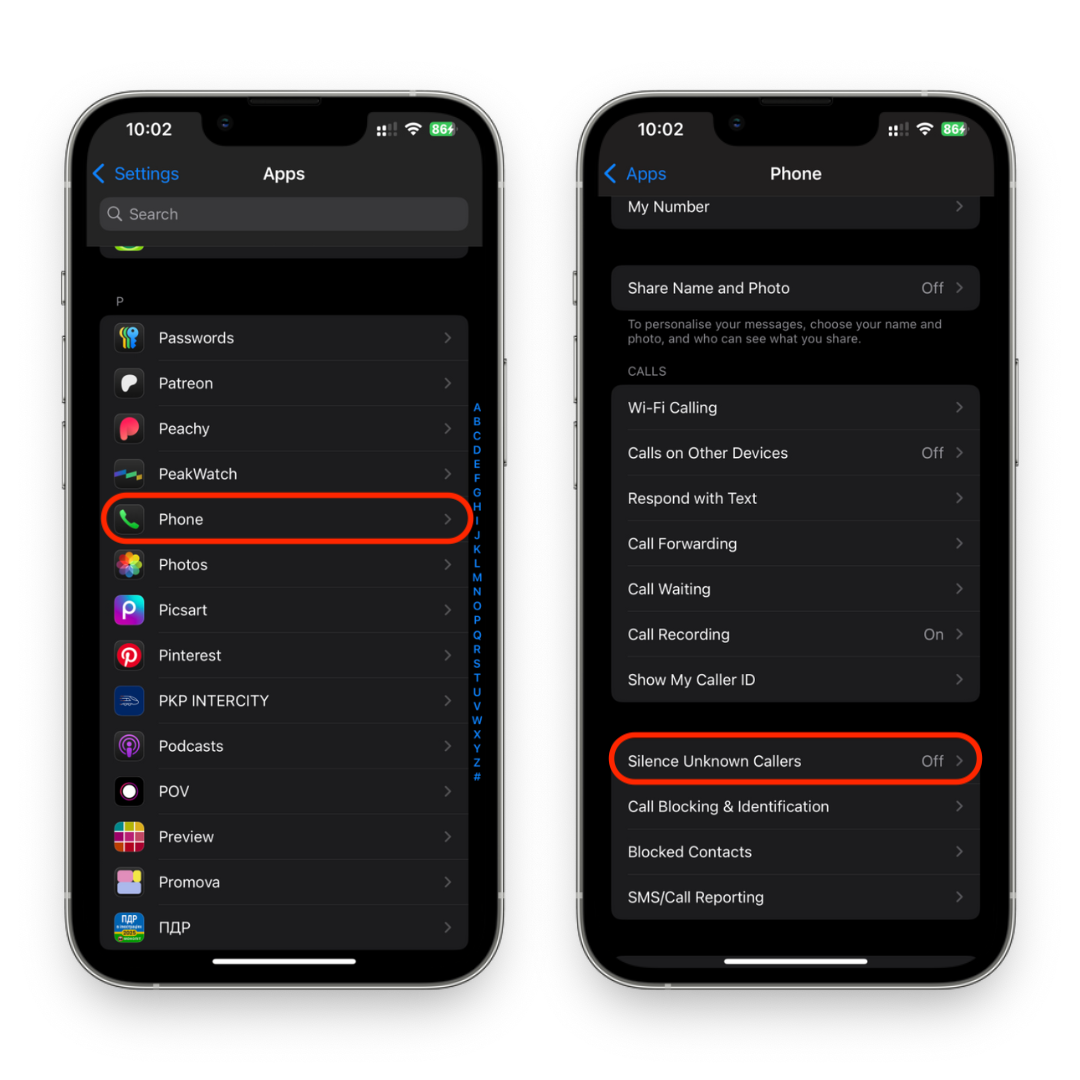
To block No Caller ID on iPhone as closely as iOS allows, turn on Silence Unknown Callers:
- Open Settings on your iPhone.
- Go to Apps > Phone.
- Tap Silence Unknown Callers.
- Turn it on.
On older iOS versions, the path may be Settings > Phone > Silence Unknown Callers.
This does not target only the No Caller ID label. It silences calls from numbers that are not saved in Contacts and may also treat some numbers from recent calls, messages, or Siri suggestions differently depending on your iOS version. The call can still go to voicemail and appear in Recents.
If you want the least risky setup, add important unsaved numbers to Contacts first. Doctors, schools, banks, delivery drivers, repair techs, and work callers often use numbers you have not saved yet.
Before we begin
Windows users can download AltTunes to export important iPhone call history to a PC before changing spam-call settings. AltTunes does not block callers; use Silence Unknown Callers, carrier tools, or the blocking methods below.
What No Caller ID means on iPhone
No Caller ID means the caller hid their caller ID before calling you. Your iPhone receives the call, but it does not receive a visible phone number you can block like a normal contact.
That is why No Caller ID feels slippery. You can block a visible spam number from Recents because iOS has a number to save in Blocked Contacts. With a private call, iOS only shows a label.
Here is the practical difference:
Call label | What it means | Best iPhone fix |
|---|---|---|
No Caller ID or Private Number | The caller hid the number | Silence or screen unknown callers, or use carrier filtering |
Unknown Caller | iPhone cannot identify the caller or the number is not saved | Silence Unknown Callers or Call Screening |
Visible spam number | A real number appears in Recents | Block the caller from Recents |
Spoofed spam number | A scammer shows a fake visible number | Block repeat numbers, report spam, and use carrier filtering |
This is the main point most quick guides blur. Blocking a number and silencing a hidden caller are different jobs.
How to silence unknown callers on iPhone
Silence Unknown Callers is the fastest iPhone setting for people who want fewer anonymous and unsaved calls. It is also the setting most people mean when they search how to block unknown callers on iPhone.
Use it like this:
- Open Settings.
- Tap Apps.
- Tap Phone.
- Tap Silence Unknown Callers.
- Turn on Silence Unknown Callers.
After you turn it on, your iPhone should stop ringing for many calls from unsaved numbers. Those calls can still land in voicemail and Recents, so check both if you are waiting for something important.
Before you enable it, save numbers you expect to hear from. Add your doctor, school, workplace, bank, landlord, delivery service, vet, and family members. If you only save first names and old numbers, iPhone cannot guess the rest.
If you are job hunting, apartment hunting, dealing with medical appointments, or waiting on a delivery, Silence Unknown Callers may be too aggressive for that week.
How to screen unknown callers on current iOS versions
Call Screening gives you a softer way to handle unknown calls where Apple supports it. Instead of making every unsaved number ring, your iPhone can ask the caller to say why they are calling before you decide whether to answer.
Apple documents unknown-caller controls in the iPhone User Guide under Phone and FaceTime settings. On current iOS versions, check Settings > Apps > Phone and look for unknown-caller, screening, silence, or call-identification options available on your device and carrier.
Screening helps when you still want a chance to catch real calls. A doctor's office, school office, or delivery driver can explain the reason for the call. A robocall usually cannot.
There are caveats. Apple notes that call screening may turn off for 24 hours after you call emergency services. Apple also notes that phone calls may not be screened while roaming. Treat screening as a helpful layer, not a perfect wall.
Useful Apple references:
How to block visible spam numbers from Recents
You can block visible spam numbers from Recents. This works only when your iPhone shows a number.
- Open the Phone app.
- Tap Recents.
- Find the call you want to block.
- Tap the info button next to the number.
- Scroll down and tap Block Caller.
- Confirm Block Contact.
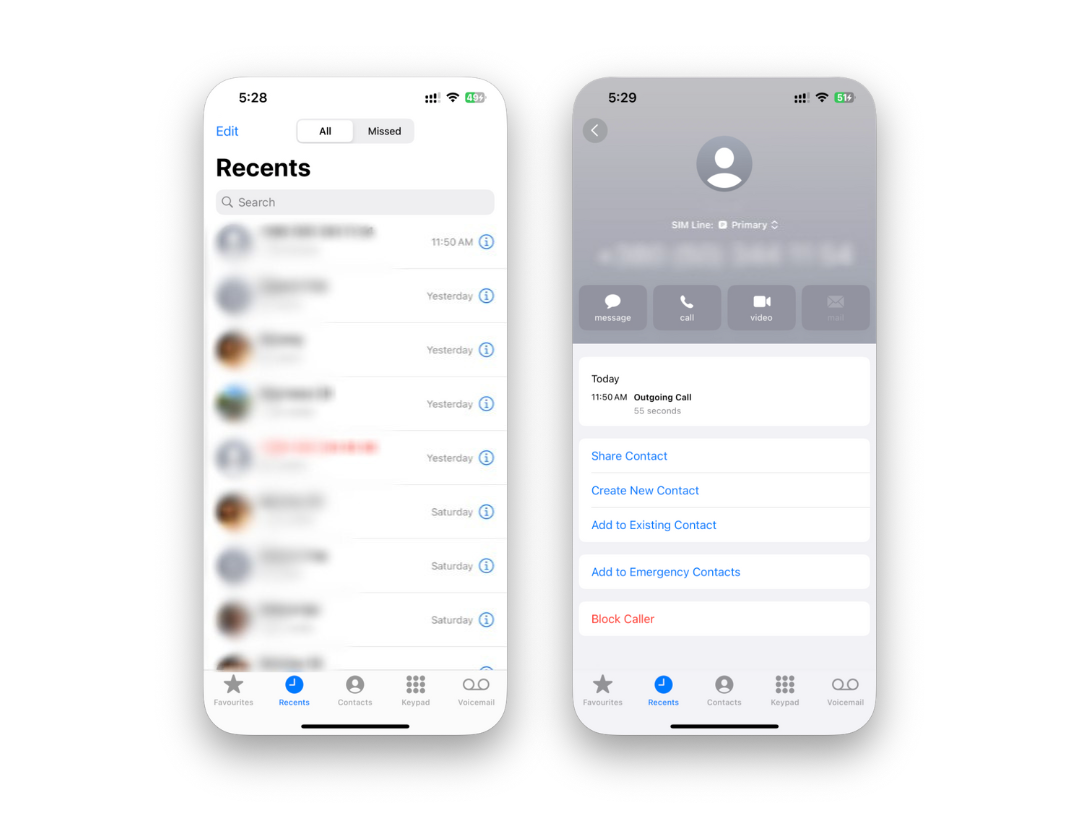
After that, iPhone adds the number to Blocked Contacts. Future calls from that exact number should not ring like normal calls. Depending on your carrier and iOS behavior, blocked callers may still be able to leave voicemail.
This method does not solve No Caller ID calls because there is no visible number to select. Use it for repeat spam numbers, spoofed numbers that keep reappearing, and nuisance callers who forget to hide their caller ID.
To review your blocked list later, go to Settings > Apps > Phone > Blocked Contacts. On older iOS versions, use Settings > Phone > Blocked Contacts.
Focus mode and Do Not Disturb: strict but risky
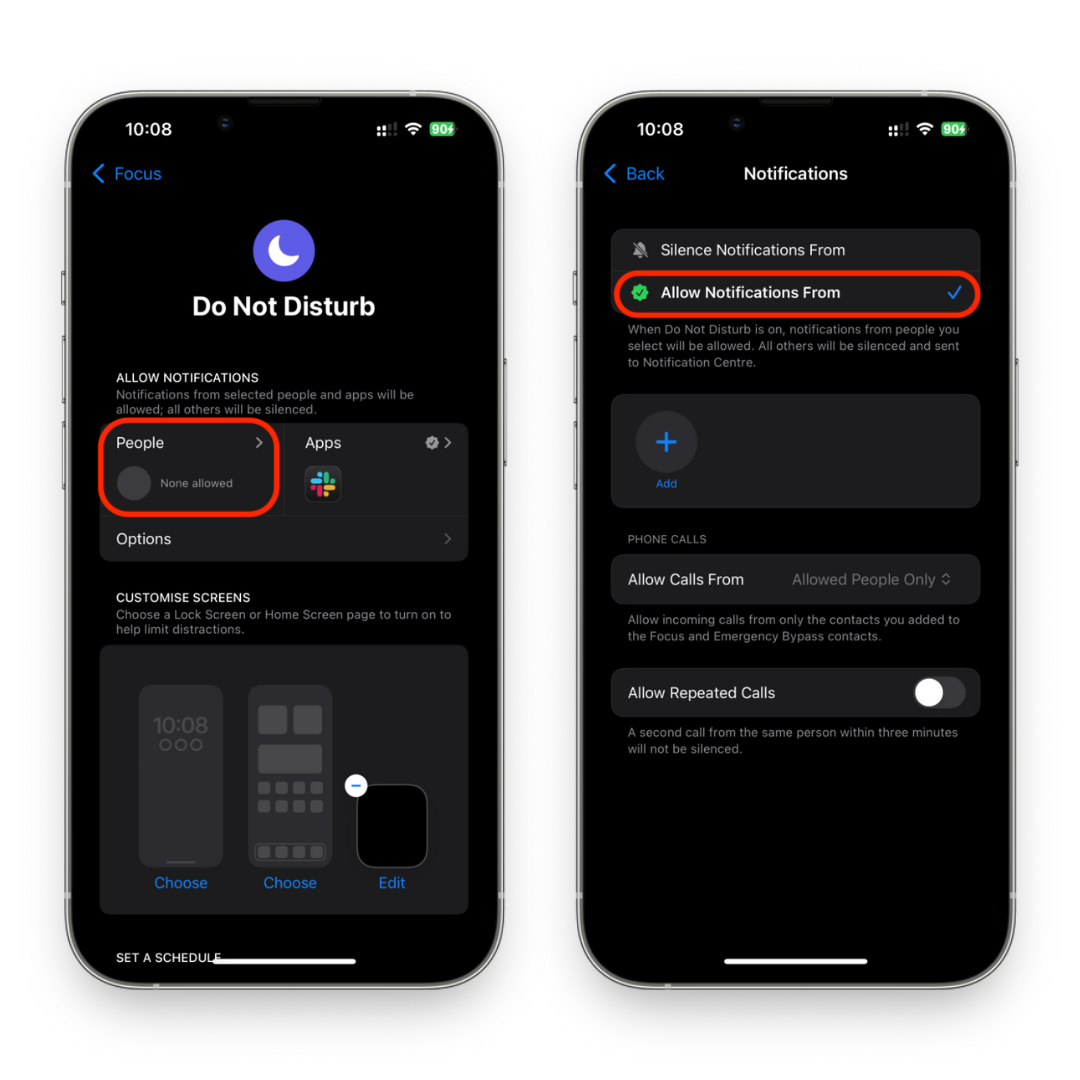
Focus mode can quiet almost everyone except the people you allow. It is useful at night, during work blocks, or when one week of spam calls turns your phone into a tiny rage machine.
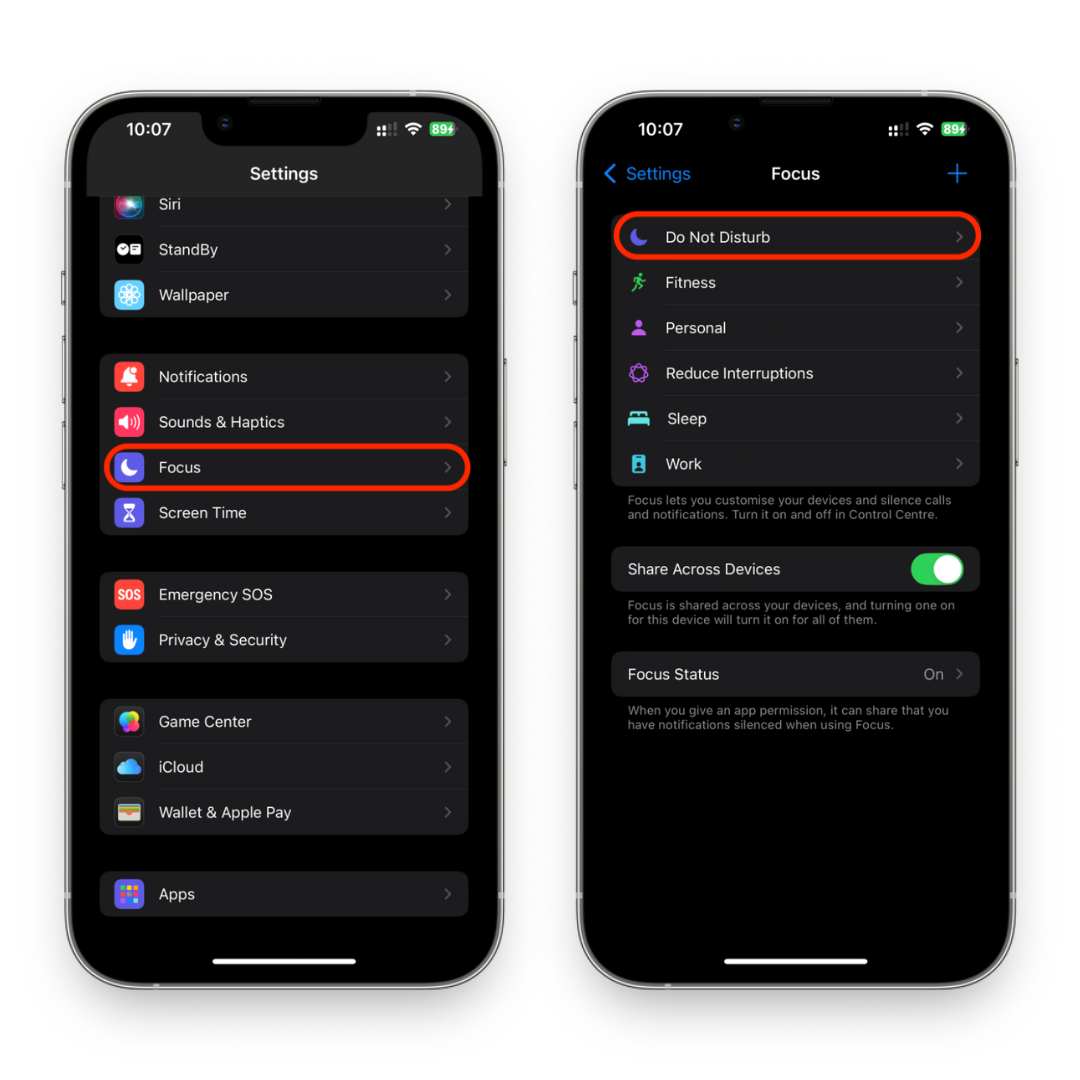
To set it up:
- Open Settings.
- Tap Focus.
- Choose Do Not Disturb or create a custom Focus.
- Tap People.
- Allow calls from selected contacts or groups.
- Schedule the Focus if you only need it at certain times.
Focus is not call blocking. It controls notifications and ringing behavior. If you allow only contacts, unsaved real callers can still get silenced. That may be fine at 11 p. m. It may be a problem at 11 a. m. when your bank calls from a branch number you never saved.
Use Focus when you want a quiet window. Use Silence Unknown Callers when you want broad unknown-call handling all day.
Carrier filters and call-identification apps: when they help
Carrier spam filters and call-identification apps can help reduce junk calls, but they cannot promise to reveal every private number. If a caller hides caller ID, no consumer app should be treated as magic caller-ID x-ray vision.
On iPhone, supported apps and carriers can plug into Call Blocking & Identification. You can usually find those options under Settings > Apps > Phone > Call Blocking & Identification if your device, region, carrier, and installed apps support them.
These tools work best for known spam patterns, robocalls, and numbers that other users have reported. They are weaker against one-off private calls or spoofed numbers that change constantly.
If you are in the United States, the FTC National Do Not Call Registry can reduce legitimate telemarketing calls. It will not stop scammers, private callers, or every robocall. Still, it is worth doing if your number is not registered.
Which option should you use?
Pick the setting based on what you are trying to stop:
Goal | Best option | Trade-off |
|---|---|---|
Stop most anonymous and unsaved calls | Silence Unknown Callers | May send real unsaved callers to voicemail |
Let real callers explain themselves | Call Screening | Availability depends on iOS, region, carrier, and settings |
Stop one visible spam number | Block Caller from Recents | Does not work for No Caller ID |
Keep nights or work blocks quiet | Focus or Do Not Disturb | Can silence important unsaved callers |
Reduce robocalls and known spam | Carrier/app filtering | Does not reveal every hidden private caller |
For most people, the best setup is simple: save important numbers, turn on Silence Unknown Callers, block visible repeat spam numbers, and check voicemail for the first few days. If too many real calls get caught, switch to screening or a scheduled Focus instead.
How to block No Caller ID on iPhone without missing important calls
Before you decide how to block No Caller ID on iPhone, do this first so the fix does not create a new problem:
- Save important contacts. Add doctors, schools, banks, work numbers, delivery services, and family numbers.
- Check Recents and voicemail after enabling the setting. A missed call may be real.
- Keep call screening in mind if you need more flexibility than full silencing.
- Use Focus for time-based quiet, not as your only spam-call strategy.
- Block visible repeat offenders from Recents.
- Use carrier filtering if robocalls keep slipping through.
The goal is not to make your iPhone unreachable. The goal is to stop junk calls without missing the calls you need. That is the safest way to handle how to block No Caller ID on iPhone in real life.
A quick Softorino note
Softorino does not make a call-blocking app, and we are not going to pretend otherwise. Blocking No Caller ID calls is an iOS, carrier, and call-identification problem.
If your separate iPhone headache is moving music, videos, PDFs, or ringtones without iTunes, WALTR PRO helps you move files to iPhone without iTunes. Different problem. Different fix.
FAQs
Can I block only No Caller ID calls on iPhone?
No. iPhone does not have a native setting that blocks only No Caller ID calls while allowing every other unsaved number. The closest built-in fix is Silence Unknown Callers, but it affects broader unknown or unsaved callers.
Does Silence Unknown Callers block all unknown calls?
No. Silence Unknown Callers is closer to silencing than blocking. Unknown or unsaved calls can go to voicemail and may still appear in Recents.
Will I miss calls from my doctor, school, or delivery driver?
You might. If those numbers are not saved in Contacts, Silence Unknown Callers can silence them. Save important numbers before you turn it on.
Can third-party apps reveal private numbers?
Do not count on it. Call-identification apps can help flag known spam and robocalls, but they cannot guarantee they will reveal every private or hidden number.
Why do No Caller ID calls still appear in Recents or voicemail?
Silencing a call is not the same as deleting it. iPhone can keep a record in Recents and route the caller to voicemail even when the phone does not ring.
What is the safest setup if I get a lot of spam calls?
Save important numbers, turn on Silence Unknown Callers, block visible repeat spam numbers from Recents, and add carrier or app filtering if robocalls continue. If you start missing real calls, switch to screening or use Focus only during quiet hours.
Bottom line
You can stop most No Caller ID disruption on iPhone, but you need the right expectation. If someone asks how to block No Caller ID on iPhone, the honest answer starts with Apple’s limits. iOS cannot block only hidden private callers with one perfect switch. It can silence unknown callers, screen calls, block visible numbers, and work with carrier or app filters.
Start with the least risky setup: save important contacts, enable Silence Unknown Callers, and watch voicemail for a few days. If it catches too much, loosen the setup before you miss something that matters.

AltTunes
Seamlessly Browse, Manage & Export iOS Data
