How to Free Up RAM on Windows and Mac in 2026

If your computer feels slow, do not start by killing random processes. Start by checking what is using memory. The safest way to free up RAM is to find the hungry app, close what you recognize, reduce browser load, disable startup clutter, then restart if memory still stays high.
RAM problems make a computer feel broken in 6 different ways. Apps freeze. Browser tabs reload. The fan gets loud. Games stutter. Even the mouse starts moving like it has a grudge.
This guide shows you how to free up RAM on Windows 11, Windows 10, and macOS without breaking system settings. It also explains what RAM cleanup can and cannot fix, when Chrome is the real problem, and when a RAM cleaner or hardware upgrade makes sense.
Quick answer: how to free up RAM safely
To free up RAM fast, use this order:
Do not disable random Windows services. Do not use registry cleaner scripts. Do not force-close processes with names you do not recognize. That is how a slow PC becomes a weird PC.
- Open Task Manager on Windows or Activity Monitor on Mac.
- Sort apps and processes by memory usage.
- Close apps, tabs, and background tools you know you do not need.
- Restart the app if its memory keeps growing.
- Turn on Chrome Memory Saver if Chrome is the biggest memory user.
- Disable startup apps that do not need to run after login.
- Restart the computer if it has been sleeping for days.
- Leave virtual memory/page file settings system-managed unless you know why you need to change them.
Important: If you cannot explain what a process does, do not kill it. Search the app name first or leave it alone.
Before we begin
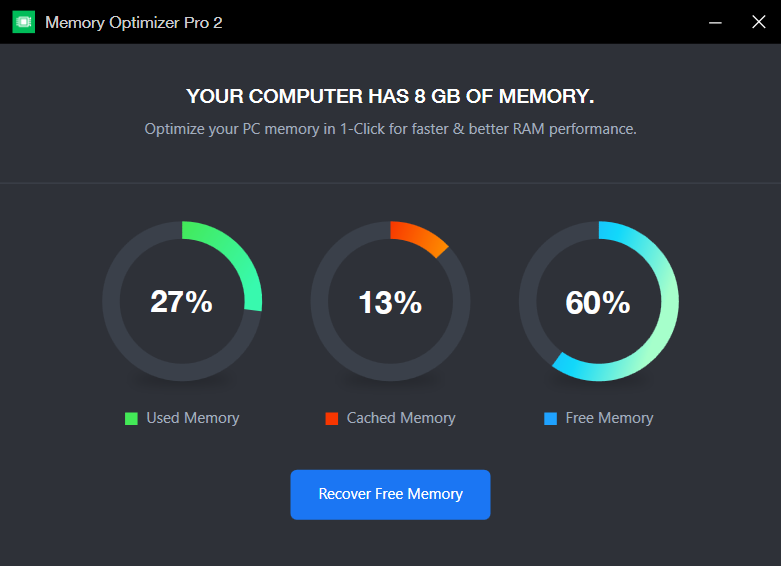
Windows users can download Memory Optimizer 2 to monitor memory use and run a one-click RAM cleanup. Close work you do not need first, then use the live memory graph to confirm whether the cleanup helped.
What RAM does, and why full RAM is not always bad
RAM is your computer's short-term working memory. Windows, macOS, apps, browsers, games, and background tools use it to keep active work fast.
High RAM usage is not automatically bad. Modern operating systems use free memory for cache because empty RAM does nothing for you. Apple says Activity Monitor shows Memory Pressure, physical memory, app memory, wired memory, compressed memory, cached files, and swap used. Cached files can improve performance until your Mac needs that memory for something else.
Windows also keeps memory cached or reserved when it expects you to reopen files and apps. The number can look scary if you only stare at the percentage.
Worry about RAM when you see these signs:
If none of that is happening, your computer may be using RAM normally.
- Memory stays near 90-100% during normal work.
- Apps freeze, crash, or refuse to open.
- Your disk runs hard because the system keeps paging to storage.
- One app keeps growing in memory until you restart it.
- High RAM usage returns after a clean reboot with only a few apps open.
Check what is using RAM before you free up RAM
You cannot fix memory pressure until you know where the memory went. Start with the tools already on your computer.
How to check RAM usage on Windows 10 and Windows 11
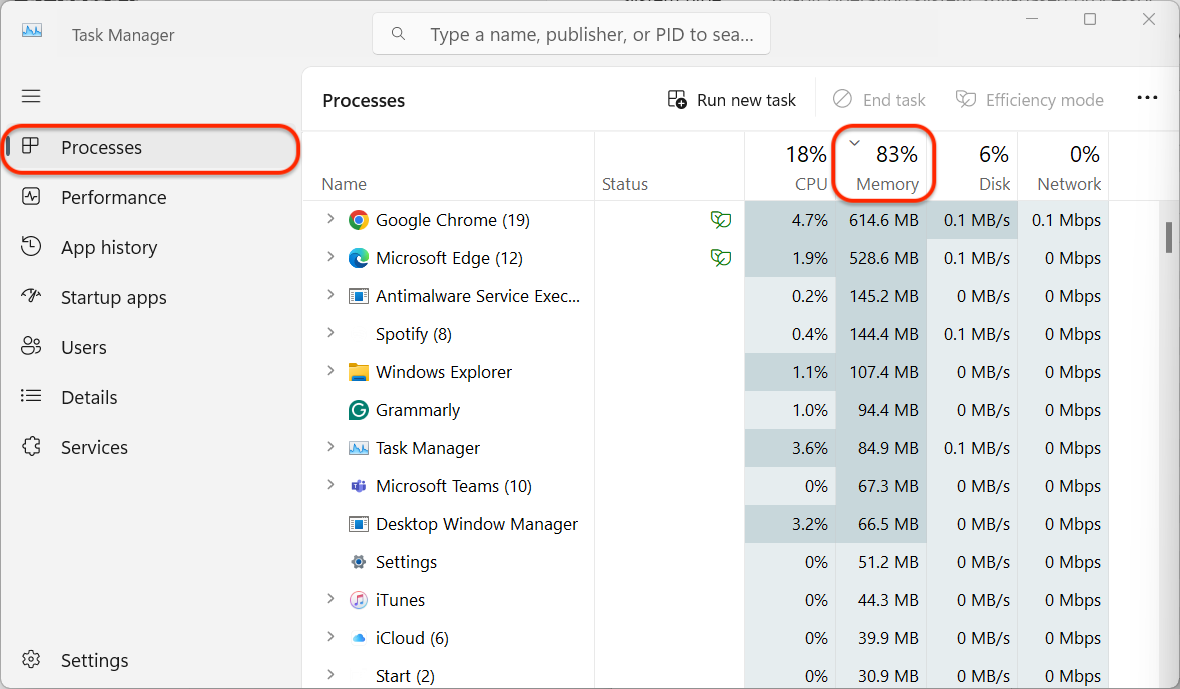
- Press Ctrl + Shift + Esc to open Task Manager.
- Click Processes.
- Click the Memory column to sort apps by RAM usage.
- Check whether the top item is an app you opened, a browser, a game, a launcher, or something unfamiliar.
- Click Performance > Memory to see total RAM, used RAM, available RAM, cached memory, and speed.
For a deeper look, open Resource Monitor:
Task Manager is enough for most people. Resource Monitor helps when the Processes tab looks too vague.
- Press Win + R.
- Type resmon and press Enter.
- Open the Memory tab.
- Check which processes use the most memory and whether the system is under heavy pressure.
How to check RAM usage on Mac
- Press Command + Space.
- Type Activity Monitor and open it.
- Click the Memory tab.
- Sort by the Memory column.
- Watch Memory Pressure at the bottom of the window.
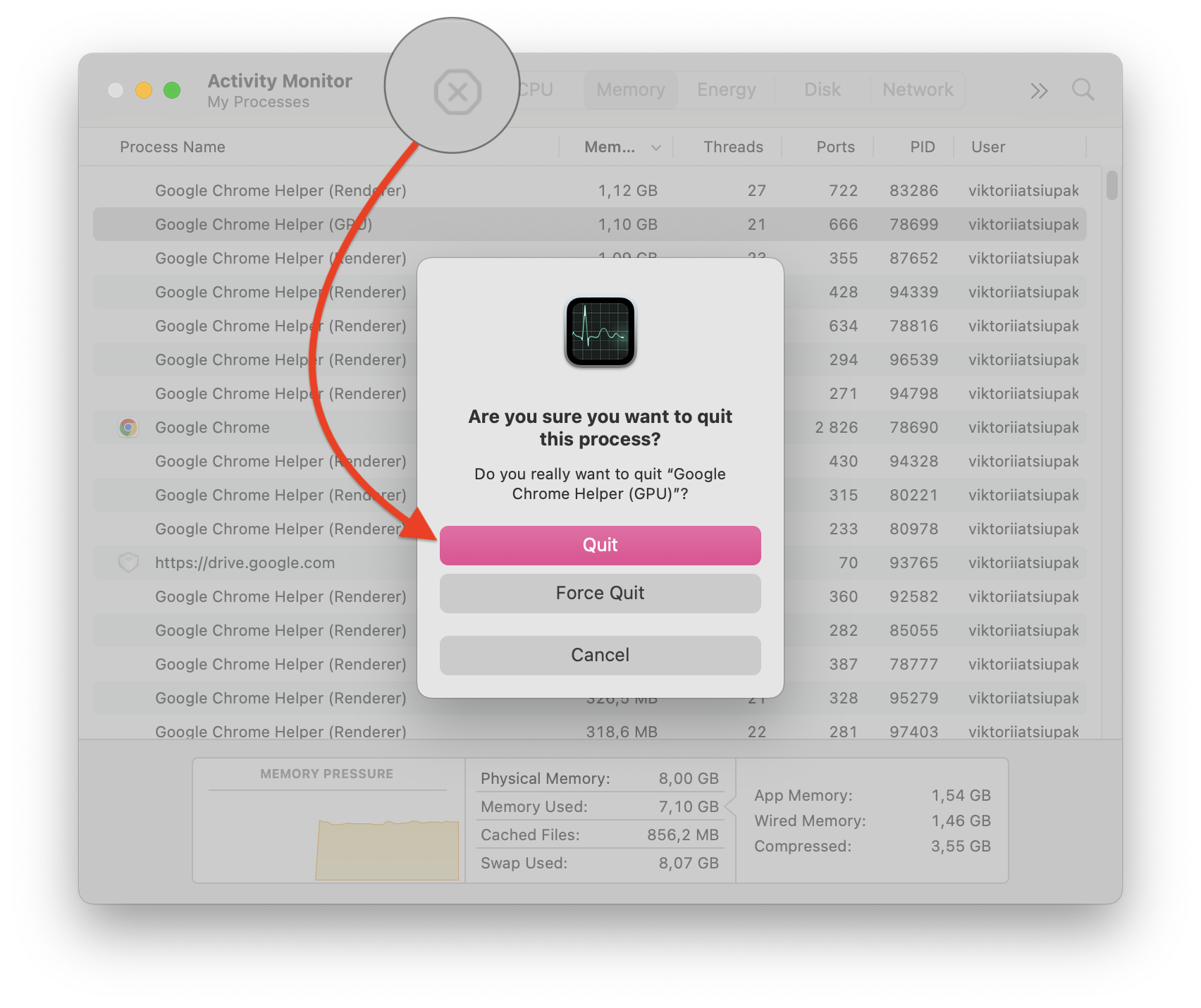
Memory Pressure matters more than raw used RAM on macOS. Green usually means your Mac is fine. Yellow means memory is tight. Red means your Mac needs attention.
Also check Swap Used. If swap keeps climbing and your Mac feels slow, macOS is moving data between RAM and storage because memory is tight.
Close apps and tabs that use the most RAM
Every open app uses RAM. Some use a little. Some sit there like they pay rent.
Use Task Manager or Activity Monitor to close the biggest known memory hogs first. Close apps you recognize and are not using. Do not end system processes or security tools just because they appear near the top.
On Windows:
If an app is frozen and Task Manager feels clumsy, Windows users can also use Task ForceQuit Pro 2 to force-close known apps faster. Do not use it on mystery services.
On Mac:
If a known app freezes often, close it, reopen it, then update it. If the same app keeps eating more memory over time, you may be dealing with a memory leak.
- Open Task Manager.
- Sort by Memory.
- Select an app you recognize and do not need.
- Click End task.
- Open Activity Monitor.
- Sort by Memory.
- Select an app you recognize.
- Click the X button.
- Choose Quit or Force Quit if the app is frozen.
Restart to clear stuck memory
A restart is boring advice because it works.
Restarting clears stuck background processes, memory leaks from apps that have been open too long, and temporary system state. It will not make 8 GB of RAM behave like 32 GB forever, but it can make a slow machine usable again in 2 minutes.
On Windows:
On Mac:
Restart first if high RAM usage appeared after days of sleep mode, a big app crashed, or Chrome has been open since the last time you saw daylight.
- Click Start.
- Click the power button.
- Choose Restart.
- Click the Apple menu.
- Choose Restart.
Restart once a week if you keep dozens of apps and browser tabs open. Sleep mode is convenient, but it does not replace a clean start.
Reduce Chrome memory usage
Chrome is often the reason people search how to clear RAM. Each tab, extension, and web app can run as its own process. That design helps stability, but it can chew through memory fast.
Start here:
Then turn on Chrome Memory Saver:
Google says Memory Saver deactivates tabs you are not using so active tabs can run better. When you return to an inactive tab, Chrome reloads it.
Also check extensions. Ad blockers, coupon tools, screenshot tools, AI sidebars, and old productivity extensions can keep background processes alive.
To check extensions:
If one browser keeps causing trouble, try the same workload in Edge, Firefox, or Safari for a day. Do not switch for ideology. Switch if the RAM graph calms down.
- Close tabs you do not need.
- Bookmark pages instead of keeping them open for days.
- Open Chrome Task Manager with Shift + Esc.
- Sort by memory footprint.
- End the tab or extension you recognize as the problem.
- Open Chrome.
- Go to Settings > Performance.
- Turn on Memory Saver.
- Add important sites to the always-active list if you do not want Chrome to sleep them.
- Go to chrome://extensions.
- Disable anything you do not use weekly.
- Restart Chrome.
- Watch memory usage again.
Disable startup apps and background clutter
Startup apps are why a fresh boot can already feel heavy. Chat apps, launchers, cloud sync tools, updaters, menu bar utilities, and printer helpers all want a seat at breakfast.
Disable startup apps on Windows 11
You can also use Task Manager:
- Open Settings.
- Go to Apps > Startup.
- Turn off apps you do not need right after login.
- Open Task Manager.
- Click Startup apps.
- Disable apps with high startup impact if you do not need them.
Keep security apps, drivers, backup tools, and hardware utilities enabled unless you know they are unnecessary.
Control background activity on Windows
Some Windows apps keep running in the background to send notifications, sync data, or stay updated. Microsoft says supported apps can be controlled under Settings > System > Power & battery > Battery usage.
Set background activity to Never only for apps you recognize and do not need running while closed. Notifications and syncing may change.
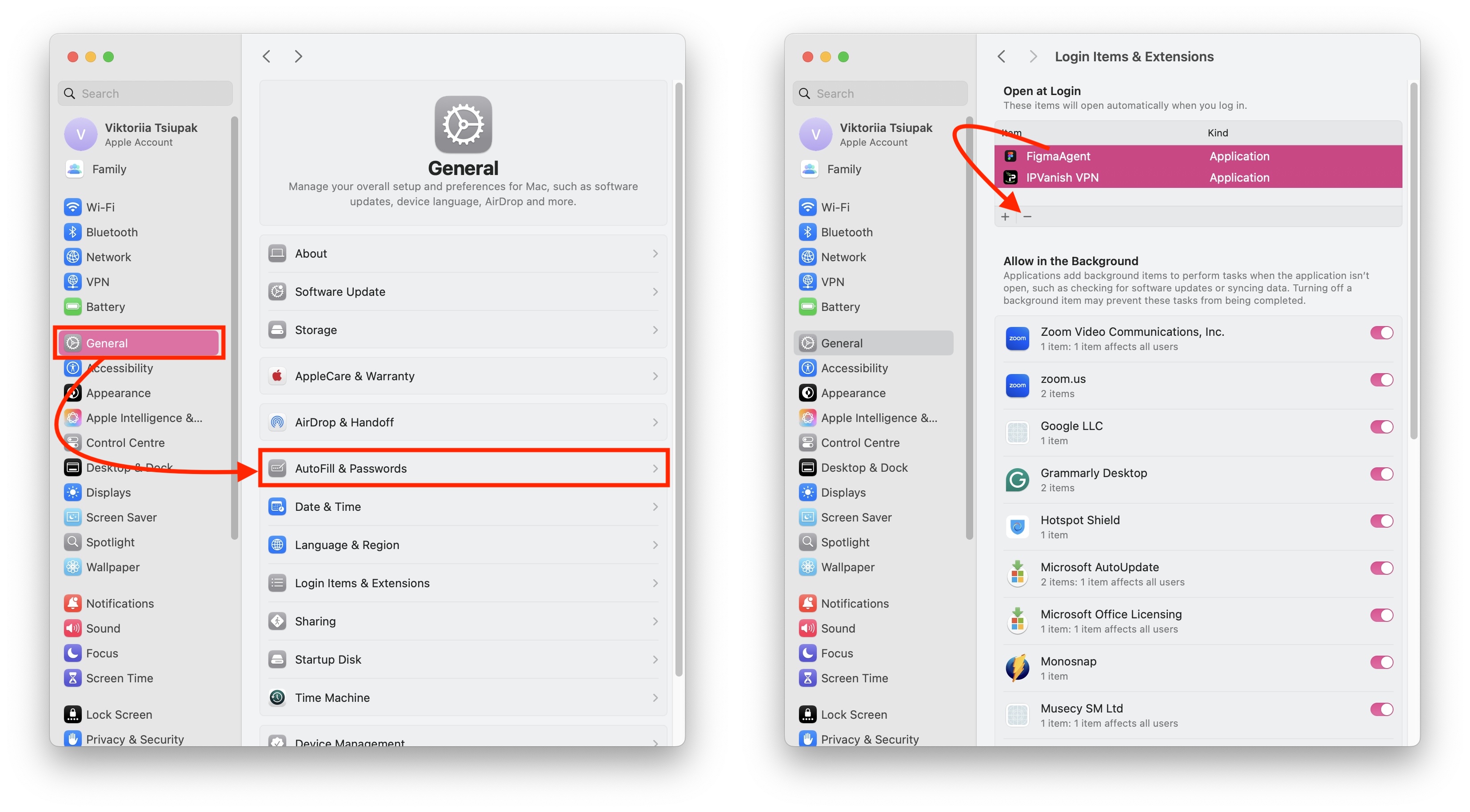
Disable Login Items on macOS
On older macOS versions, go to System Preferences > Users & Groups > Login Items.
- Open System Settings.
- Go to General > Login Items & Extensions.
- Remove apps you do not need at login.
- Review background items and turn off ones you recognize and do not use.
Clear cache, but know what it does
Cache cleanup is not the same as RAM cleanup. Browser cache and temporary files mostly affect storage. Some apps keep cached data and helper processes active, so cleanup can help in specific cases, but it should not be your first move.
Use cache cleanup when:
On Windows:
On Mac:
- A browser or app behaves badly after an update.
- You are low on storage and the system keeps swapping to disk.
- A specific app's cache has grown out of control.
- You already closed memory-heavy apps and want basic maintenance.
- Open Settings > System > Storage.
- Use Temporary files or Storage Sense.
- Review what Windows will delete before you confirm.
- Quit the app whose cache you want to clear.
- Open Finder.
- Press Command + Shift + G.
- Type ~/Library/Caches.
- Delete only cache folders you understand, then restart the app.
Important: Do not delete random Library or system folders. If you are not sure what a folder belongs to, leave it alone.
Use Memory Optimizer 2 to free up RAM on Windows
After you know what is using memory, a cleanup utility can save clicks. Memory Optimizer 2 is Softorino's Windows app for 1-click RAM cleanup and live memory graphs.
Use it for:
To free up RAM with Memory Optimizer 2:
Memory Optimizer 2 is useful when you want a simple button and clearer memory view. It is not magic. It will not remove malware, patch a memory leak, make a broken app behave, or turn a low-RAM PC into a workstation.
If you already use Softorino apps, the Universal License may make more sense than buying tools one by one.
- Quick RAM cleanup on Windows.
- Seeing used, cached, and reserved memory in a simpler graph.
- Reclaiming memory after closing heavy apps.
- Keeping a lightweight RAM utility around if Task Manager feels noisy.
- Download and install Memory Optimizer 2.
- Open the app.
- Check the current memory graph.
- Click Recover Free Memory.
- Recheck Task Manager if your computer still feels slow.
Increase virtual memory only when you know why
Virtual memory on Windows uses your drive as overflow space when RAM gets tight. You may also see it called the page file.
For most people, the best setting is Automatically manage paging file size for all drives. Windows usually handles this better than a random forum guide telling you to type a giant number into a box.
If you want to check the setting on Windows 11:
Increasing virtual memory can help prevent crashes when RAM runs out, but it does not add real RAM. Storage is slower than memory. If your computer depends on the page file all day, close heavier apps or add physical RAM where possible.
On macOS, you do not manage virtual memory manually. Watch Memory Pressure and Swap Used in Activity Monitor instead.
- Open Settings.
- Search for Advanced system settings.
- Under Performance, click Settings.
- Open Advanced.
- Under Virtual memory, click Change.
- Keep Automatically manage paging file size for all drives enabled unless you have a specific reason to change it.
Turn down visual effects if your PC is older
Visual effects are not usually the main reason RAM is full, but they can add pressure on older Windows PCs with limited memory and weak graphics.
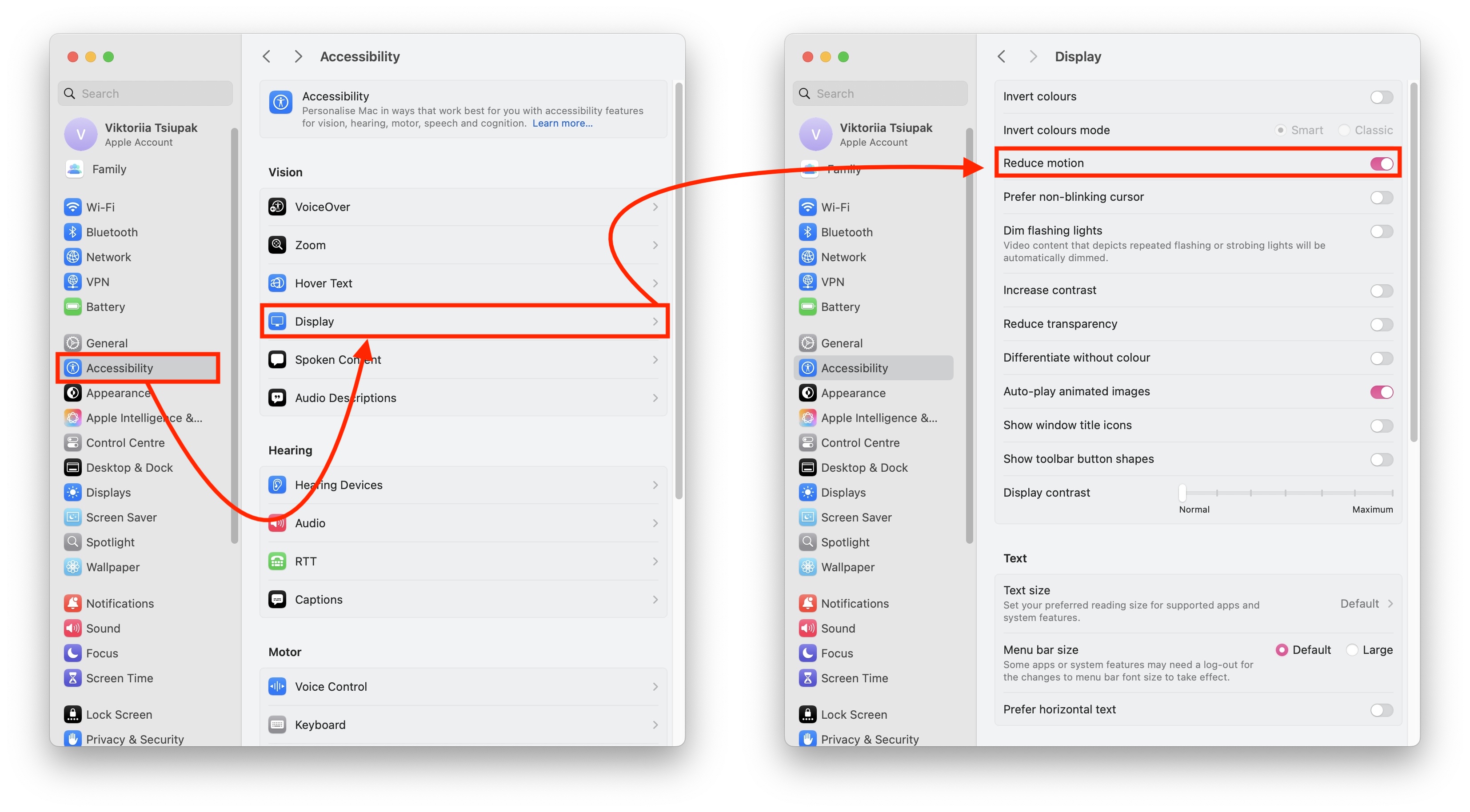
To reduce visual effects on Windows:
This will not fix a memory leak or a browser with 80 tabs. It can make an older PC feel less heavy.
- Search for Adjust the appearance and performance of Windows.
- Open the Performance Options window.
- Choose Adjust for best performance if the PC is struggling.
- Or choose Custom and turn off animations you do not care about.
- Click Apply.
Fix high RAM usage when nothing seems open
If RAM usage is high when nothing is open, something is open. It may be hidden, backgrounded, or part of the system.
Check these causes:
On Windows, open Task Manager and check both Apps and Background processes. On Mac, Activity Monitor shows all processes, not only visible windows.
If one app keeps using more memory every hour, restart it and update it. If the same app keeps doing it, uninstall and reinstall it or contact the app developer.
Microsoft documents Runtime Broker as one example of a process that can use too much memory. The fix starts with Task Manager, not guesswork.
- Startup apps launched at login.
- Cloud sync tools indexing files.
- Browser extensions running in the background.
- Game launchers or chat apps sitting in the tray.
- Windows Search or Photos indexing after an update.
- Antivirus scans.
- A driver or app with a memory leak.
- Malware or potentially unwanted apps.
Scan for malware and unwanted apps
Malware is not the most common reason for high RAM usage, but it belongs on the checklist when memory usage looks strange.
On Windows:
On Mac:
Do not disable Defender, Gatekeeper, or other security features to save RAM. That trade is not worth it.
- Open Windows Security.
- Go to Virus & threat protection.
- Run a full scan.
- Check App & browser control for reputation-based protection.
- Install macOS updates.
- Remove apps you do not recognize from Login Items.
- Check browser extensions.
- Use a trusted malware scanner if behavior still looks suspicious.
Add more RAM when cleanup is no longer enough
Sometimes the honest fix is hardware.
You may need more RAM if:
Windows desktop PCs and some laptops can often be upgraded. Many newer Macs cannot be upgraded after purchase, so check your exact model before buying anything.
If your computer cannot take more RAM, your options are simple: run fewer heavy apps at once, use lighter alternatives, close browser tabs, or replace the machine when the workload outgrows it.
- Memory pressure stays high after closing apps.
- You use video editing, virtual machines, large design files, games, or many browser tabs.
- Your PC has 8 GB of RAM and you regularly multitask.
- Swap or page file usage stays high during normal work.
- Your machine slows down again minutes after every cleanup.
What not to do when you free up RAM
Bad RAM advice is everywhere. Skip these moves:
If a guide sounds like it is trying to turn Windows into a stripped-down science project, close it.
- Do not disable random Windows services.
- Do not run registry cleaner scripts.
- Do not turn off Windows Security to save memory.
- Do not kill unknown system processes.
- Do not install sketchy free RAM cleaners from pop-up sites.
- Do not assume cache cleanup fixes memory leaks.
- Do not manually change page file settings because a forum said so.
Final checklist: clear RAM without breaking things
Use this sequence when your computer feels slow:
That is how to free up RAM safely: diagnose first, close what you recognize, skip risky tweaks, and use cleanup tools as helpers instead of miracle cures.
- Check memory usage in Task Manager or Activity Monitor.
- Close known heavy apps and tabs.
- Restart frozen or leaking apps.
- Turn on Chrome Memory Saver.
- Disable unnecessary startup apps.
- Restart the computer.
- Scan for malware if usage still looks strange.
- Keep virtual memory system-managed.
- Use Memory Optimizer 2 on Windows if you want one-click cleanup and live graphs.
- Add more RAM if your normal workload is bigger than your machine.
FAQ
How do I free up RAM fast?
Open Task Manager on Windows or Activity Monitor on Mac, sort by memory, then close apps and tabs you recognize and do not need. Restart the computer if memory stays high after closing heavy apps.
How do I clear RAM cache?
Restarting clears temporary memory state. Closing heavy apps and browser tabs usually helps more than deleting browser cache. Cache files mostly affect storage, not active RAM.
Is it safe to clear RAM?
Yes, if you close apps you recognize or restart the computer. It is not safe to kill unknown system processes, disable security tools, or change advanced boot settings without knowing what they do.
Why is my RAM usage high when nothing is open?
Your computer may still be running startup apps, browser helpers, cloud sync tools, antivirus scans, indexers, drivers, or background services. Task Manager and Activity Monitor show those hidden processes.
How do I reduce Chrome memory usage?
Close unused tabs, remove extensions you do not need, open Chrome Task Manager with Shift + Esc, and turn on Settings > Performance > Memory Saver. Chrome reloads inactive tabs when you return.
How do I free up RAM on Mac?
Open Activity Monitor, click the Memory tab, sort by memory, quit apps you recognize, remove unnecessary Login Items, and restart. Watch Memory Pressure. Green usually means macOS is managing memory fine.
Is a RAM cleaner worth it?
A RAM cleaner can be worth it on Windows if you want a faster way to see memory usage and recover memory after closing apps. It should not replace Task Manager, app updates, malware scans, or a RAM upgrade.
Should I increase virtual memory on Windows 11?
Most users should let Windows manage the page file automatically. Manual changes can help edge cases, but virtual memory uses storage, not real RAM. If Windows depends on it constantly, you need fewer heavy apps or more RAM.
When should I add more RAM?
Add more RAM when memory pressure stays high during normal work after you close apps, disable startup items, restart, and check for app problems. Heavy workloads often need more than a basic RAM setup.

Memory Optimizer 2
Free Up RAM for Faster & Better PC Performance
