How to Hide Caller ID on iPhone: 2026 Guide

Here is how to hide caller ID on iPhone: open Settings > Apps > Phone > Show My Caller ID and turn the switch off. On an older layout, look under Settings > Phone. Your carrier must support caller ID blocking.
To make a No Caller ID call, change your outgoing caller ID. Blocking incoming private calls is a separate setting. You do not need an app to use the iPhone switch.
If Show My Caller ID is missing or dimmed, contact your carrier. A supported one-call prefix is another option, but use the code your carrier documents for your country.
Quick answer: how to hide caller ID on iPhone
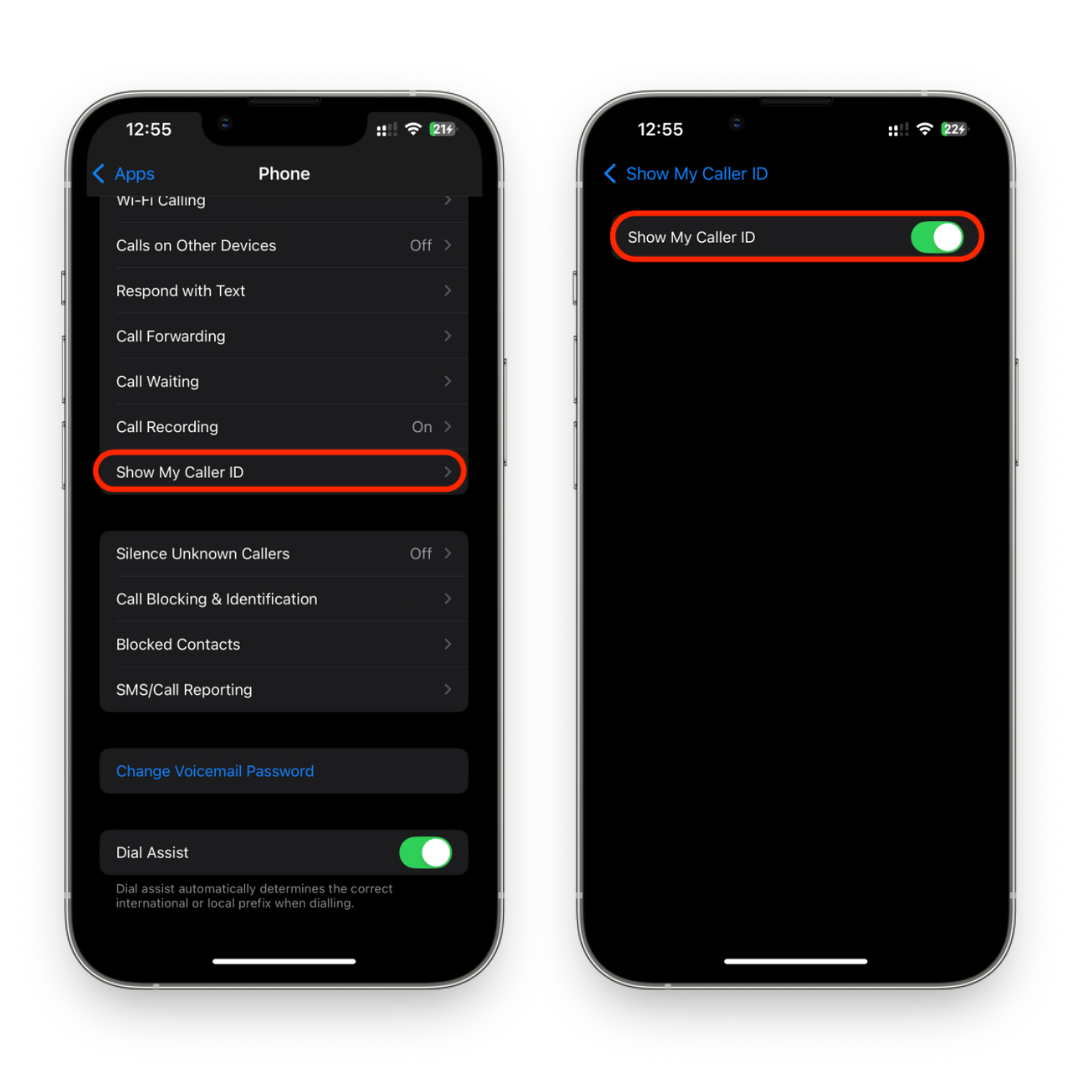
The fastest method is the iPhone caller ID switch:
- Open Settings.
- Tap Apps.
- Tap Phone.
- Tap Show My Caller ID.
- Turn Show My Caller ID off.
If your iPhone uses an older layout, go to Settings > Phone > Show My Caller ID instead.
When this works, people you call will usually see No Caller ID, Private, Unknown, or Private Number instead of your phone number. The exact label depends on their device, carrier, and region.
If the switch is missing or greyed out, Apple says to contact your carrier. In the source screenshot below, Show My Caller ID is still green (on). Turn it off to request outgoing caller ID blocking.
Before we begin
For a separate call archive, download AltTunes for Windows. You can export available iPhone call history to a PC as CSV. The free trial is optional; AltTunes does not hide caller ID, and an export is not required to change this setting.
How to turn off Show My Caller ID for all outgoing calls
Use Show My Caller ID for ongoing outgoing-call privacy when your carrier supports it. Carrier exceptions still apply, so do not assume your number will stay hidden on every call.
- Open Settings on your iPhone.
- Tap Apps, then Phone.
- Tap Show My Caller ID.
- Turn off Show My Caller ID.
- Call a trusted ordinary number and ask what appears. Do not call an emergency number to test.
Unlike a per-call prefix, the switch is an ongoing setting. You do not need to enter a code each time you dial.
If you need your number visible again, return to the same screen and turn Show My Caller ID on. Check the setting before a call where someone needs to recognize your number or call you back.
Apple's caller ID instructions confirm this route and direct you to your carrier if the switch is dimmed or absent. A different menu layout alone does not mean you need a new app.
How to hide your number on iPhone for one call
Use a per-call prefix when you want caller ID hidden for one call, not every call.
Verizon documents *67 for one-call blocking: enter *67, then the phone number including area code, and tap Call. Verizon says the recipient sees Private, Anonymous, or another indicator.
Follow the number format for your carrier:
- Verizon: enter *67, then the number including its area code, then tap Call.
- T-Mobile US: its documented per-call format is *671+PhoneNumber. Enter *67 followed by 1 and the phone number; the plus sign joins the parts, rather than being a key to dial.
T-Mobile's short-code table also lists #31#1+PhoneNumber as showing your name and number. Do not use #31# as a generic privacy fallback or guess which prefix has the opposite effect.
Before an important private call, try the documented code with someone you trust and ask what appears. Use an ordinary number, not an emergency line. If the code fails, ask your carrier for the correct local instructions.
Carrier limits matter: Verizon says caller ID blocking does not apply to 800 or 911 calls. T-Mobile lists exceptions for certain business numbers, 911, 900 and toll-free numbers. These US instructions do not establish the right code for another country.
What people see when your caller ID is hidden
When caller ID hiding works, the person you call usually sees one of these labels:
- No Caller ID
- Private
- Unknown
- Private Number
- A carrier-specific anonymous caller label
Hidden caller ID is not guaranteed anonymity. It changes the caller ID display for supported calls. The emergency and toll-free exceptions above are reasons not to rely on that display setting to conceal your number in every situation.
A private-call label also gives the recipient less information about who is calling. If you need a callback, consider showing your number rather than leaving the person without a number to return.
For a work or medical callback, agree on how the other person can reach you. Hiding outgoing caller ID does not create an alternative callback number.
Why Show My Caller ID is missing, dimmed, or not working
If Show My Caller ID is missing or dimmed, contact your carrier. Apple gives this advice directly; the missing switch alone does not tell you which account restriction or service rule applies.
Ask your carrier these specific questions:
- Does my line support outgoing caller ID blocking through the iPhone switch?
- Can you enable ongoing blocking on my account, and does it cost extra?
- What is the documented per-call code and number format in my country?
If the setting exists but your number still appears, check the call you are making:
- Check that Show My Caller ID is off.
- Check that you are making a normal phone call rather than relying on the setting to configure another app.
- Check your carrier instructions for destination exceptions, including emergency and toll-free calls.
- Call a trusted ordinary number to check the display, then report the result to your carrier.
Avoid random reset advice or unverified dial codes. Carrier confirmation is more useful than guessing that your plan, a work profile, or Wi-Fi Calling caused the problem.
Hide caller ID vs block No Caller ID calls
Hiding caller ID controls what other people see when you call them. Silencing unknown callers controls incoming calls to your iPhone. Choose the setting for the direction of the call.
Feature | What it does | Where to look |
|---|---|---|
Show My Caller ID off | Requests ongoing outgoing number blocking | Settings > Apps > Phone > Show My Caller ID |
Carrier per-call prefix | Requests blocking for one supported call | Verizon: *67, then number including area code |
Screen Unknown Callers: Silence | Silences incoming unsaved numbers and sends them to voicemail | Settings > Apps > Phone > Screen Unknown Callers, when shown |
Older Silence Unknown Callers toggle | Incoming-call control, not outgoing privacy | Settings > Apps > Phone > Silence Unknown Callers on older layouts |
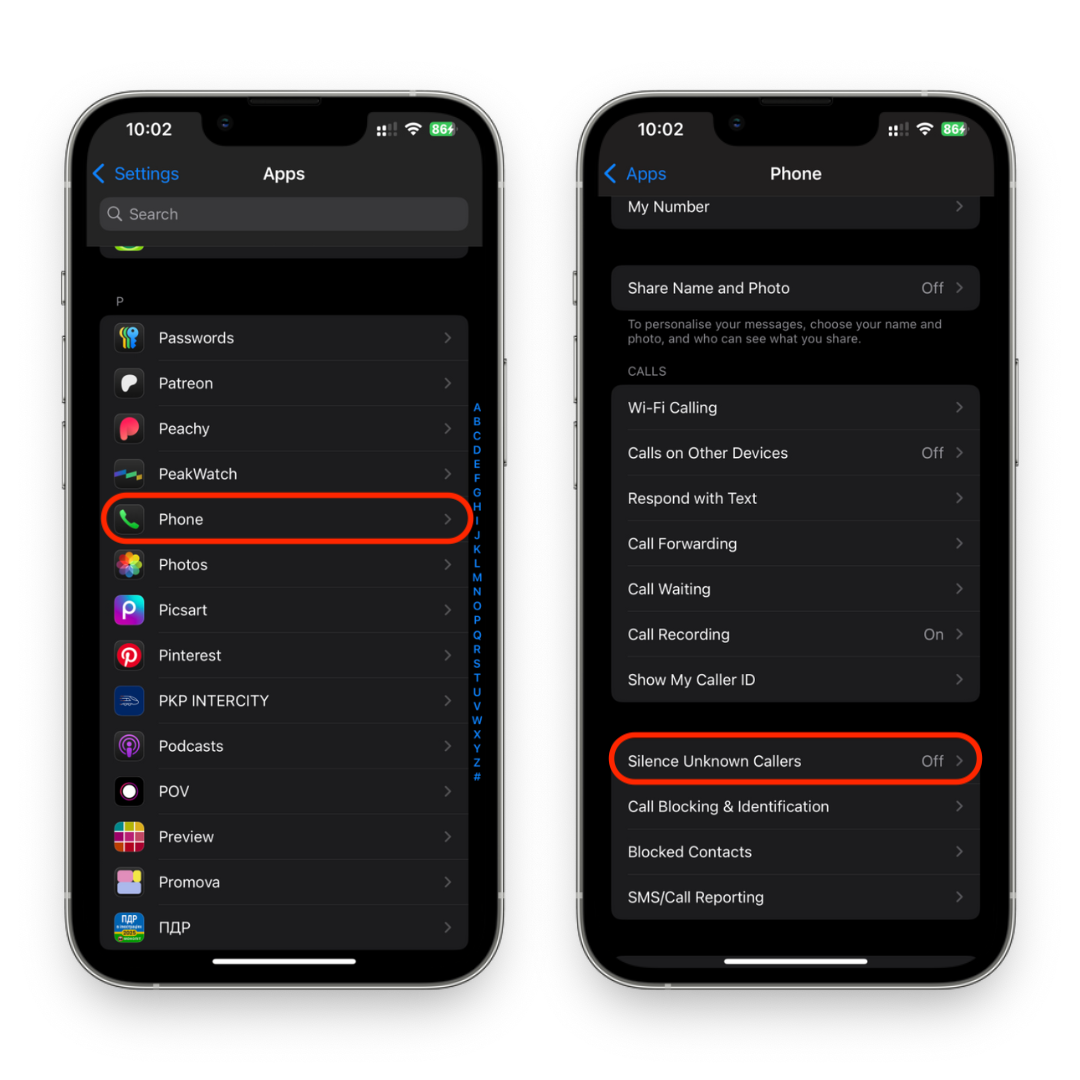
For incoming spam or unwanted callers, use our guide to block unwanted calls on iPhone. The source screenshot below shows an older layout with Silence Unknown Callers; your current menu may say Screen Unknown Callers.
How to silence unknown callers on iPhone
Silencing unknown callers does not hide your outgoing number. Apple's current incoming-call guide describes Screen Unknown Callers > Silence for calls from unsaved numbers. Use the option your iPhone shows.
If your iPhone shows Screen Unknown Callers:
- Open Settings.
- Tap Apps, then Phone.
- Tap Screen Unknown Callers.
- Choose Silence to send unsaved incoming calls to voicemail.
On an older layout like the screenshot, look for Silence Unknown Callers instead. The screenshot is a reference to that older menu, not proof of the labels on your current iPhone.
This setting can help with nuisance calls, but it can also silence useful calls from delivery drivers, doctors, banks, schools, or a new work contact. Use it only if that tradeoff works for you.
Keep incoming-call screening separate from your outgoing caller ID choice. You can decide whether to silence unfamiliar callers without changing the number you show when you call someone.
Does the Phone caller ID switch cover texts and other apps?
The steps above cover outgoing phone calls. Do not treat Show My Caller ID as a privacy control for everything you send from your iPhone.
For messages, FaceTime, WhatsApp, or another calling app, check that app's own identity and privacy settings before using it. A carrier dial code is not an instruction for configuring those services.
When showing a callback number makes more sense
Caller ID hiding suits a call where you do not want to share your number and do not need a return call. If a callback matters, choose how the recipient should reach you before dialing.
If you already have a separate work number, consider using it for work callbacks instead of hiding your personal number. Check the outgoing display on that line; do not assume a second number guarantees privacy.
For ongoing caller ID blocking, ask your carrier whether it can enable the feature on your line. Confirm any limits and fees before changing the account.
For a one-off call, use the supported per-call method. To return to showing your number after using the iPhone switch, turn Show My Caller ID back on.
FAQ
Can I hide caller ID on iPhone for every call?
For ongoing blocking, go to Settings > Apps > Phone > Show My Caller ID and turn it off, if your carrier supports it. Carrier exceptions still apply, including the Verizon 800/911 limits described here; this is not a guarantee for every call.
Why is Show My Caller ID not available on my iPhone?
If Show My Caller ID is missing or dimmed, Apple says to contact your carrier. Ask whether your line supports outgoing blocking and whether a carrier-side change is needed.
Does *67 work on iPhone?
Verizon documents *67 followed by the phone number including area code. T-Mobile US also documents per-call blocking with *67 and its specified number format. Check your own carrier before assuming the same method works on your line.
Should I try #31# if *67 does not work?
Do not use #31# as a generic fallback. T-Mobile US lists #31#1+PhoneNumber as showing your name and number. Ask your carrier for its blocking code instead of copying a code meant for another service.
Can I hide caller ID for text messages?
The Show My Caller ID instructions here apply to outgoing phone calls. Do not rely on this switch to hide your identity in text messages; check the messaging service before sending.
Can I hide caller ID for FaceTime?
Do not assume the Phone caller ID switch hides your identity in FaceTime. Check FaceTime settings separately; these carrier-code instructions cover ordinary phone calls, not FaceTime configuration.
Does hiding caller ID block No Caller ID calls?
No. Hiding caller ID affects outgoing calls you make. Blocking or silencing No Caller ID calls affects incoming calls from other people.
Can people still find out my number?
Caller ID blocking does not guarantee anonymity. Verizon excludes 800 and 911 calls from blocking, and T-Mobile documents emergency, toll-free and other exceptions. Confirm the limits with your carrier.
Key takeaways for hiding caller ID on iPhone
Use Show My Caller ID for ongoing outgoing privacy when supported. Use your carrier's documented per-call code for one call. Keep incoming-call screening separate, and do not use a generic #31# fallback.
If the switch is missing or dimmed, contact your carrier. Confirm the limits before a private call and use a trusted ordinary number if you want to check what the recipient sees.

AltTunes
Seamlessly Browse, Manage & Export iOS Data
