How to Turn On Find My iPhone: Quick Setup Guide

How to Turn On Find My iPhone: Quick Answer
Quick answer: To turn on Find My iPhone, open Settings > your name > Find My > Find My iPhone. Turn on Find My iPhone, Find My network, and Send Last Location where offered. Set this up before the phone goes missing; you cannot enable Find My remotely for the first time.
Before we begin
For a separate local iPhone backup on Windows, download AltTunes. A backup is optional, not a prerequisite for enabling Find My. AltTunes can help you browse an existing backup later, but it cannot locate a lost phone or turn on Find My.
How to Turn On Find My iPhone: Quick Steps
Use these steps on your iPhone: Sign in to your Apple Account in Settings if your name is not shown.
- Open Settings.
- Tap your name at the top.
- Tap Find My.
- Tap Find My iPhone.
- Turn on Find My iPhone.
- Turn on Find My network.
- Turn on Send Last Location.
After setup, open Find My > Devices and check that your iPhone appears. The historical screenshot below shows all three switches on. Its Find My iPhone switch is dimmed because Stolen Device Protection requires it to stay on; that is not the same as a greyed-out Apple Account.
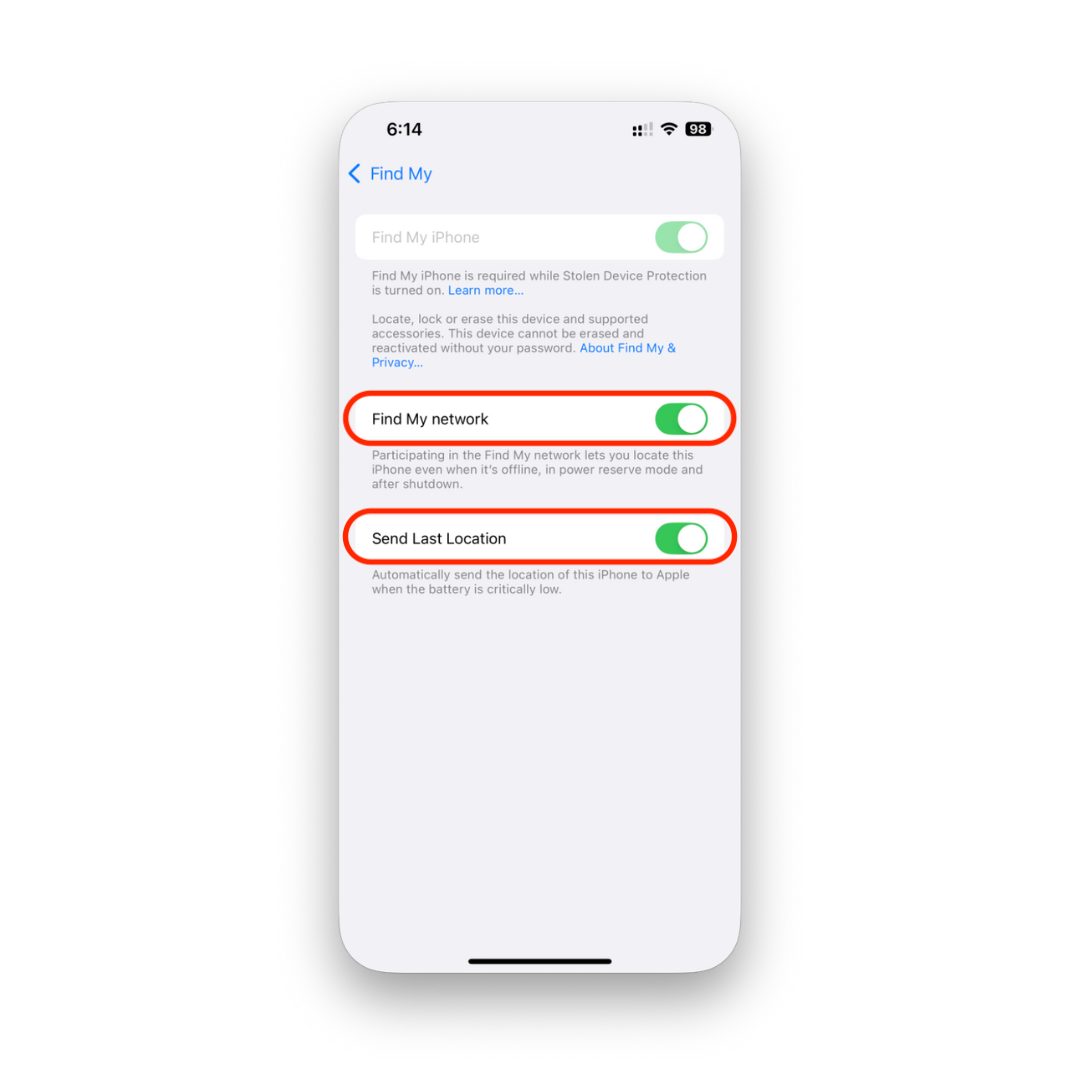
Turning on Find My also turns on Activation Lock. Apple links this protection to your Apple Account so someone else cannot erase and reactivate your iPhone as their own. Keep your account password private.
Apple's official setup guide also uses this Settings path: Set up Find My on your iPhone, iPad, Mac, and Apple Watch.
Which Find My Settings Should You Turn On?
Turn on all 3 switches if your iPhone offers them. Each one solves a different problem.
Setting | What it does | Recommended setting |
|---|---|---|
Find My iPhone | Lets you locate, lock, or erase the iPhone from Find My or iCloud.com/find. | On |
Find My network | Helps locate supported devices even when they are offline by using Apple's encrypted Find My network. | On |
Send Last Location | Sends the iPhone's location to Apple when the battery gets critically low. | On |
Find My network helps locate supported devices while offline, but it does not promise a fresh location at all times. Send Last Location reports the location when the battery is critically low. A last known location is not proof that the phone is still there.
If you are helping a family member, enable these settings with their permission while they have the phone. Keep each person signed in to their own Apple Account.
How to Turn On Find My iPhone on iPad and Mac
To turn on Find My on an iPad, use the same path as iPhone: Settings > your name > Find My > Find My iPad. Turn on Find My iPad, Find My network, and Send Last Location if those options appear.
On current macOS, use the path below. The historical screenshot shows where to find See All and Find My Mac; other versions may use different labels.
- Open the Apple menu > System Settings.
- Click your name, then iCloud.
- Click See All, then Find My Mac.
- Click Turn On. Enter your Apple Account password if asked.
- Click Turn On, then Allow when macOS asks to use your Mac’s location.
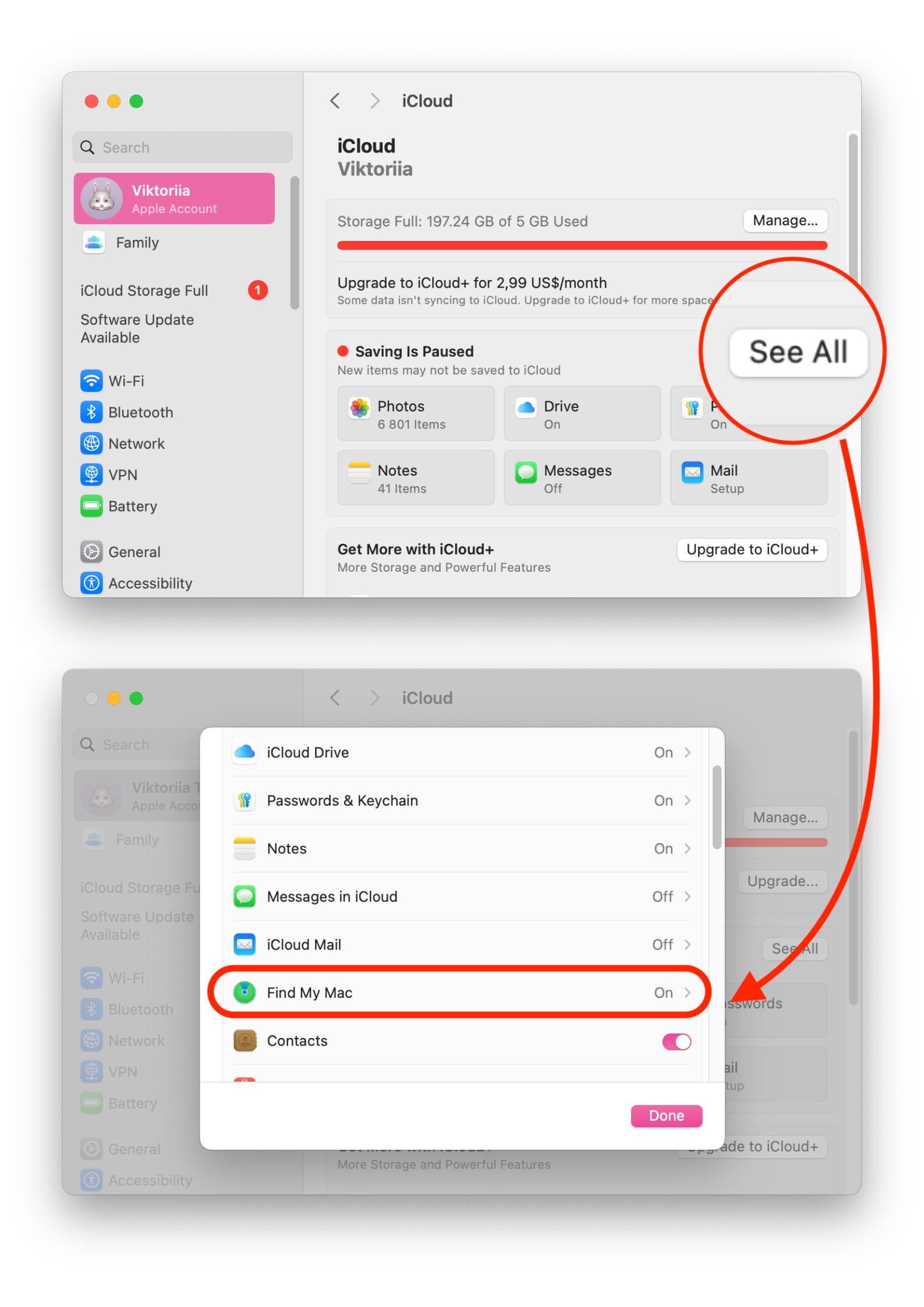
If Find My Mac is greyed out, check System Settings > Privacy & Security > Location Services. Location Services needs to be on for Find My to report the Mac's location.
For broader iPhone safety prep, pair Find My with a real backup plan. Softorino's guide on how to back up iPhone covers iCloud, Mac, and PC options.
How Apple Watch, AirPods, and AirTags Work with Find My
Find My also covers Apple devices and supported items tied to your Apple Account. Pairing and location features vary by accessory.
Start with Find My enabled on the iPhone or iPad you use to pair the accessory:
- Apple Watch joins Find My when paired with an iPhone that has Find My enabled.
- AirPods join Find My when paired with an iPhone or iPad that has Find My enabled. Available location features depend on the model.
- Add AirTags and supported third-party items through the Items tab in Find My.
- Turn on Find My for Macs and iPads in their own settings.
If you are setting up AirPods specifically, read Softorino's related guide: how to add AirPods to Find My iPhone.
Check the location timestamp rather than assuming an accessory is reporting live. Find My network support, nearby finding, and sound playback differ by model and connection state.
How to Use Find My After It Is Turned On
Once Find My is on, you can locate your iPhone from another Apple device or from a browser.
From another iPhone, iPad, or Mac signed in to the same Apple Account:
- Open the Find My app.
- Tap or click Devices.
- Choose your iPhone.
- Check its location and the time shown on the map.
- Use Play Sound for a nearby phone, or Mark as Lost if it is missing. Read the erase warning below before considering that option.
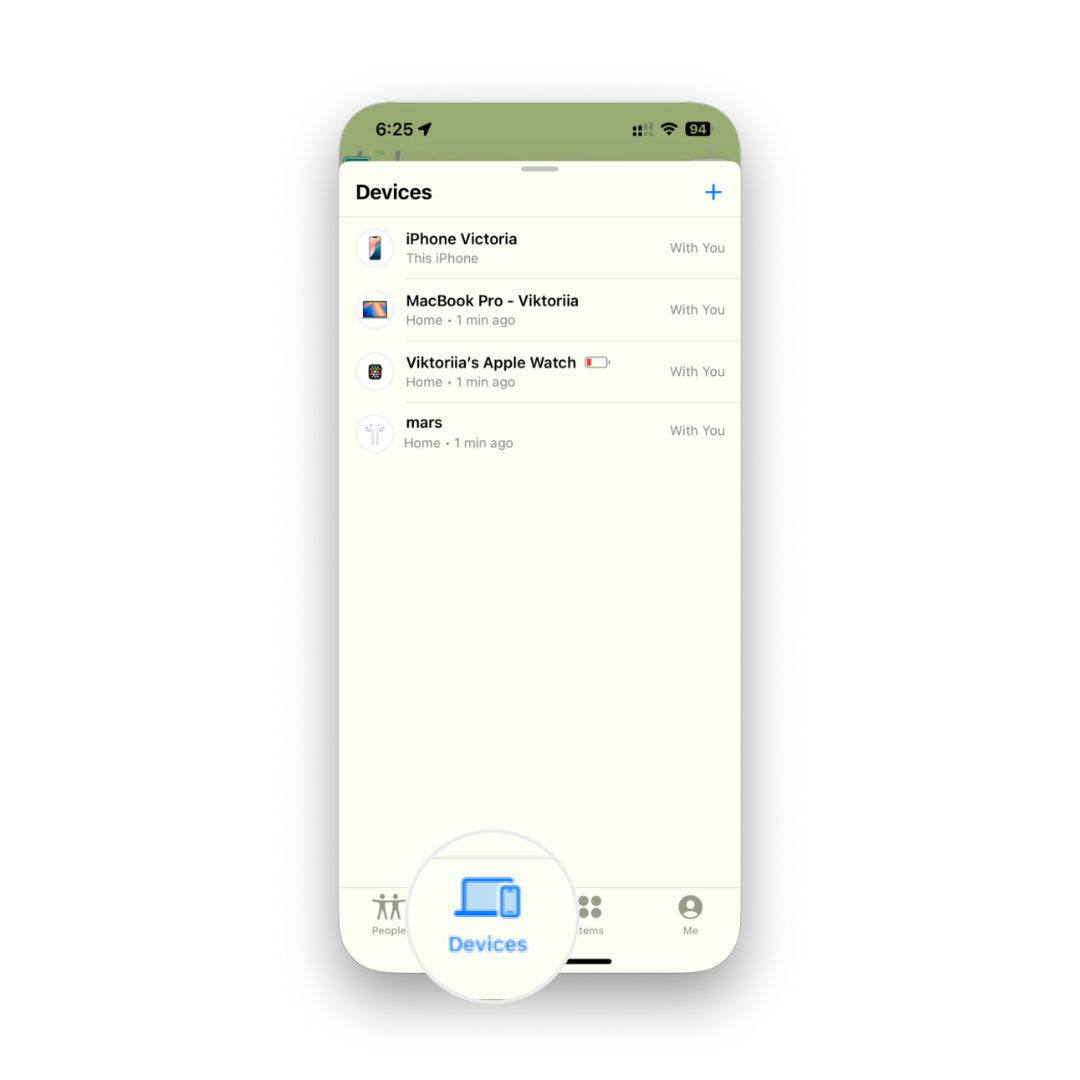
From a browser, open iCloud.com/find and sign in with your Apple Account. You do not need a verification code to use Find Devices there. If a code prompt appears, choose Find Devices. Use a trusted browser and sign out afterward.
Use the recovery actions carefully:
- Play Sound helps you find a nearby iPhone, such as one under a couch cushion.
- Mark as Lost locks the phone and lets you display a message or contact number.
- Erase This Device deletes the phone’s data once it connects. Once erased, you cannot undo it. On iOS 15 or later, you can still use Find My to locate the erased iPhone.
Warning: Do not remove a lost or stolen iPhone from Find My, even after erasing it. Removal disables Activation Lock and makes resale easier. Follow Apple’s lost-iPhone guidance before taking action. An offline erase request waits until the phone connects.
Can You Turn On Find My iPhone After It Is Lost?
No. You cannot turn on Find My iPhone remotely for the first time after losing the phone. Enable it on the device before it goes missing.
The Find Devices website can locate, lock, or erase an iPhone only after you have set up Find My. Signing in from another computer does not switch on the missing phone’s Find My setting.
If your iPhone is missing and Find My was off, protect your account and report the loss:
- Change your Apple Account password.
- Contact your carrier and report the device missing.
- Remove cards from Apple Pay if needed.
- Report the lost device to local authorities if theft is possible.
- Watch for phishing messages claiming your iPhone was found.
Apple does not contact you to say it has found your iPhone. Do not give anyone your device passcode, account password, or verification codes.
What to Check If Find My iPhone Is Not Working
Check your Apple Account and setup first. A phone missing from the Devices list is a different problem from a phone listed with an old location. The checks below help separate those cases.
Your name or Apple Account is greyed out
Screen Time can block account changes. In Settings > Screen Time > Content & Privacy Restrictions, look for Accounts under the allowed-settings changes. Apple’s greyed-out account guide shows the route for current software. Labels vary by iOS version. Ask the parent, guardian, or authorized administrator before changing restrictions on a managed phone.
The iPhone is not showing in Find My
Check that Find My was enabled and that you are viewing the same Apple Account used on the iPhone. Being offline affects location updates; it does not by itself prove that the phone was never added. For a family member’s device, check the Family Sharing setup.
The location is old or not updating
Check the time beside the location. An offline, powered-off, or depleted iPhone may not send a fresh position. If you still have the phone, check Find My network and Send Last Location. You cannot enable these settings from the website after losing access to the phone.
Location Services are off
Go to Settings > Privacy & Security > Location Services and turn Location Services on. Find My needs location access to work properly.
You are checking someone else’s device
A friend’s iPhone does not belong in your own Devices list. Let the friend sign in with their own Apple Account at iCloud.com/find. Family Sharing is separate: each family member must set up location sharing for that feature.
If you are also locking down a child's phone, the related guide on how to block apps on iPhone may help with Screen Time settings.
Find My iPhone vs Find My Friends: What Changed?
Find My iPhone and Find My Friends are no longer separate apps on current iOS versions. Apple merged device tracking, item tracking, and people sharing into the Find My app.
Use these tabs:
- Devices for iPhone, iPad, Mac, Apple Watch, and AirPods.
- Items for AirTags and supported accessories.
- People for friends or family members who share location with you.
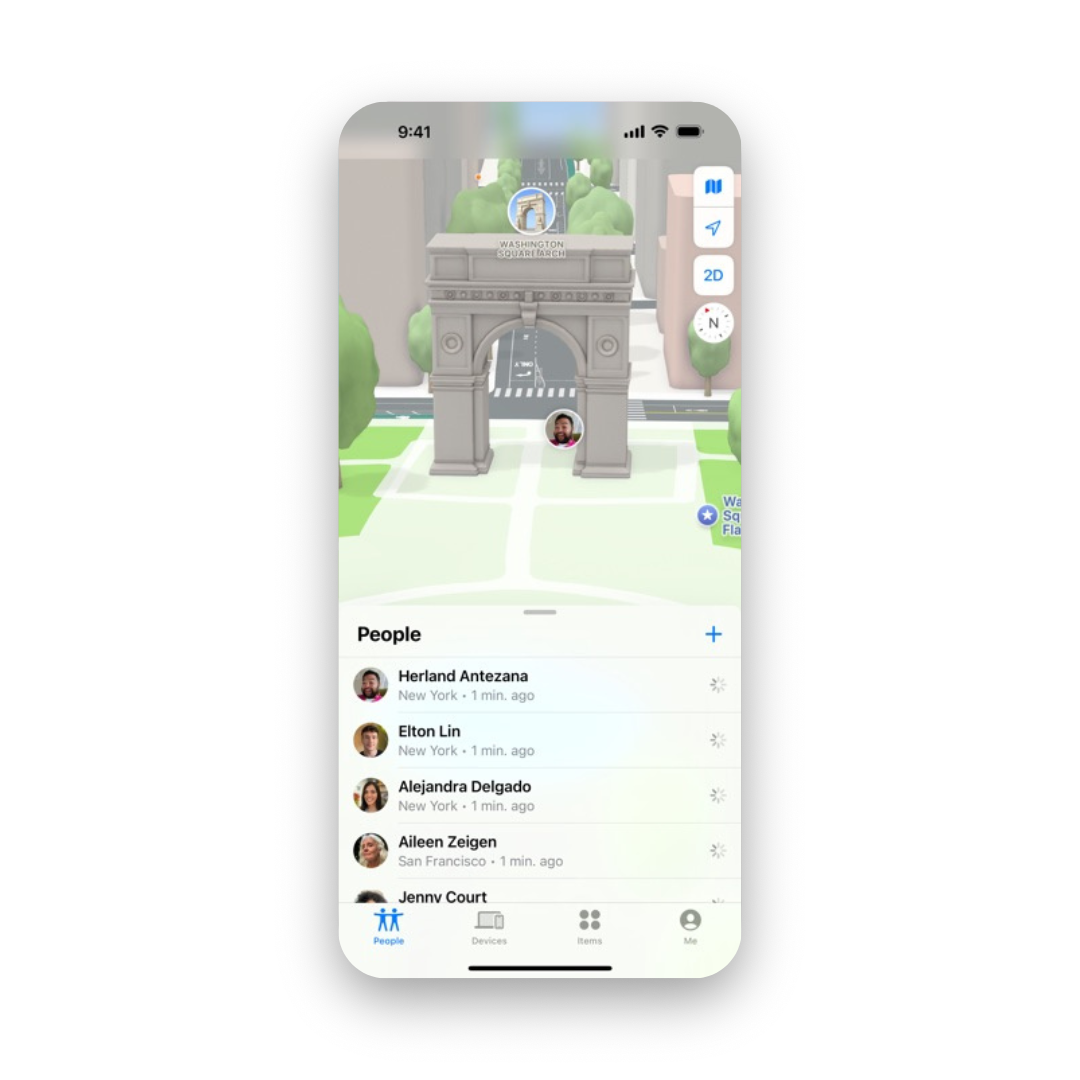
Use People for location sharing with consent, not to add someone else’s phone to your account. Family devices can appear below yours when the family has set up sharing. A friend should use their own Apple Account to find their phone.
Quick Takeaways for Find My iPhone Setup
Before you close Settings, check each item yourself:
You are signed into the correct Apple Account.
Find My iPhone is on.
Find My network is on.
Send Last Location is on.
Location Services are on.
Your iPhone appears in the Find My app under Devices.
You know how to reach iCloud.com/find from a browser.
For a separate copy of your data on a Windows PC, download the AltTunes free trial while you still have the iPhone. Use Find My for location and lost-device protection; a local backup serves a different purpose.
FAQ
How do I turn on Find My iPhone quickly?
Open Settings > your name > Find My > Find My iPhone, then turn on Find My iPhone, Find My network, and Send Last Location.
Should Find My network be on?
Yes. Find My network can help locate supported devices when they are offline. It is not a guarantee, but it is better than leaving the setting off.
What does Send Last Location do?
Send Last Location sends your iPhone's location to Apple when the battery gets critically low. If the phone dies, that last known location can be the only useful clue.
Can I turn on Find My iPhone after losing my phone?
No. Find My iPhone must be enabled before the device is lost. The Find Devices website can help after setup, but it cannot enable Find My remotely for the first time.
Can I use iCloud.com/find from Windows?
Yes. You can use iCloud.com/find from a Windows browser to locate, lock, or erase an iPhone after Find My was already set up.
Why is my iPhone not showing in Find My?
First confirm that Find My was enabled and that you are checking the iPhone’s Apple Account. An old location is a separate issue: the phone may be offline or unable to report a fresh position.
Can someone turn off Find My iPhone without my Apple Account password?
Apple normally requires Apple Account authentication to turn off Find My or remove Activation Lock. Keep your Apple Account password private and use two-factor authentication.

AltTunes
Seamlessly Browse, Manage & Export iOS Data
