How Can I Sync Music on My iPod Without iTunes in 2026?

If you are asking "how can I sync music on my iPod without iTunes," the short answer is yes: use an iPod transfer app instead of Apple's old library-sync system. For music files already on your Mac or Windows PC, the cleanest Softorino route is WALTR PRO. Connect the iPod, drag in 2 test songs, and check the Music library before you move a full album folder.
The right method depends on 2 things: your iPod model and where the music starts. Local MP3, AAC, ALAC, WAV, or FLAC files belong in a WALTR PRO workflow. Online audio or video, such as a YouTube clip you are allowed to save, belongs in SYC PRO. Manual disk copying can store files on some old iPods, but it usually does not add playable tracks to the iPod Music library.
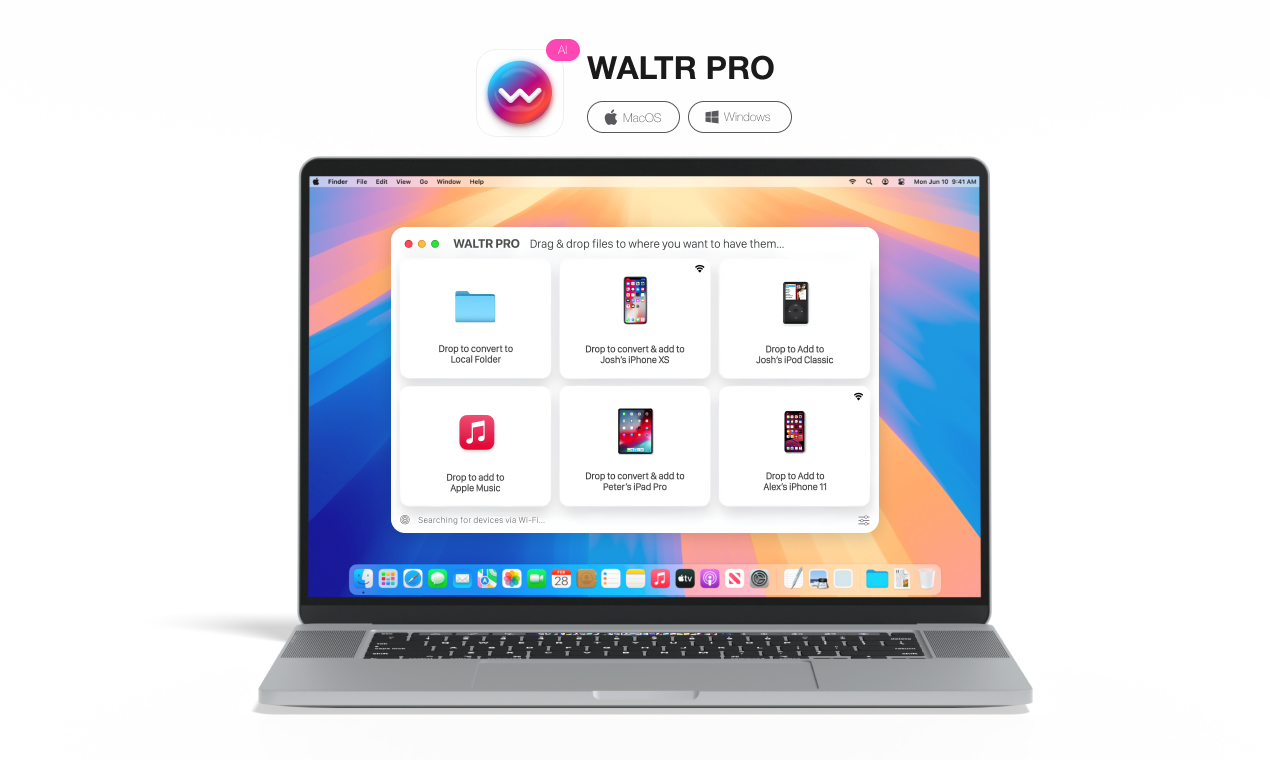
TL;DR: To sync music to iPod without iTunes, connect the iPod by cable, open WALTR PRO, drag in 2 test MP3 or AAC files, wait for transfer to finish, eject the iPod, and confirm the tracks appear under Music.
Quick Takeaways Before You Sync Music to iPod Without iTunes
Use WALTR PRO for local music files on Mac, Windows 10, or Windows 11.
Use SYC PRO only when the source starts online and you have the right to download it.
Test with 2 clean MP3 or AAC files before a large transfer.
Treat iPod Classic, Nano, and Shuffle as cable-first devices.
Do not use manual disk mode as a normal music-transfer method.
Choose the Right iPod Method First
Do this before you download any app. The iPod model decides which advice is useful and which advice is nonsense.
iPod model | Best first method | File advice | What to avoid |
|---|---|---|---|
iPod Classic | Cable transfer with WALTR PRO | MP3, AAC, ALAC, AIFF, or WAV first | Cloud-only tips and random disk copying |
iPod Nano | Cable transfer with WALTR PRO | Test MP3 or AAC before albums | Big folders with messy metadata |
iPod Shuffle | Cable transfer with simple files | Keep tags clean and formats boring | Phone-style app/cloud workflows |
iPod Touch | Cable transfer works; app/cloud options may also apply | MP3 or AAC first, then expand | Applying Touch advice to Classic/Nano/Shuffle |
The table matters because many guides treat every iPod like an iPhone. That breaks fast. iPod Classic, Nano, and Shuffle are not built around cloud music apps. They need a cable, playable formats, and music that lands in the iPod Music library.
Best Method: Sync Music to iPod Without iTunes Using WALTR PRO
The best method for most readers is WALTR PRO because it focuses on one job: moving media files to Apple devices without the iTunes sync maze. You do not need to rebuild an iTunes library. You do not need to sync the whole device. You do not need to convert every format by hand before you start.
WALTR PRO works on Mac and Windows. It accepts the kinds of files real music libraries collect over the years: MP3, AAC, FLAC, AIFF, WAV, Apple Lossless, and more. Older iPods still have playback limits, so the transfer app matters. A file that works on your Mac is not automatically a file an iPod Classic can play natively.
Use this path when your songs are already on your computer:
- Install and open WALTR PRO on Mac or Windows.
- Connect the iPod with a working cable.
- Drop songs, albums, or folders into WALTR PRO.
- Let the app transfer and handle Apple-friendly conversion where needed.
- Eject the iPod and check the Music library.
WALTR PRO is for local files. SYC PRO is for online audio or video downloads. Mixing those workflows is where most iPod guides get messy.
How to Sync Music to iPod Without iTunes on Mac or Windows
Start small when you sync music to iPod without iTunes. Download WALTR PRO from Softorino at https://softorino.com/waltr-pro, open the app, and connect the iPod before moving a big library. A tiny test transfer saves you from guessing whether the cable, device, format, or metadata caused a problem.
Step 1. Connect your iPod by cable
Plug the iPod into your Mac or Windows PC with the correct cable. iPod Classic, Nano, and Shuffle models are cable-first devices. Some need the original 30-pin cable or a reliable legacy adapter.
If you use an iPod Touch, you may have more connection options after setup, but do not overthink it. A cable is still the simplest first transfer. Unlock the device and approve any trust prompt if the iPod Touch asks for one.
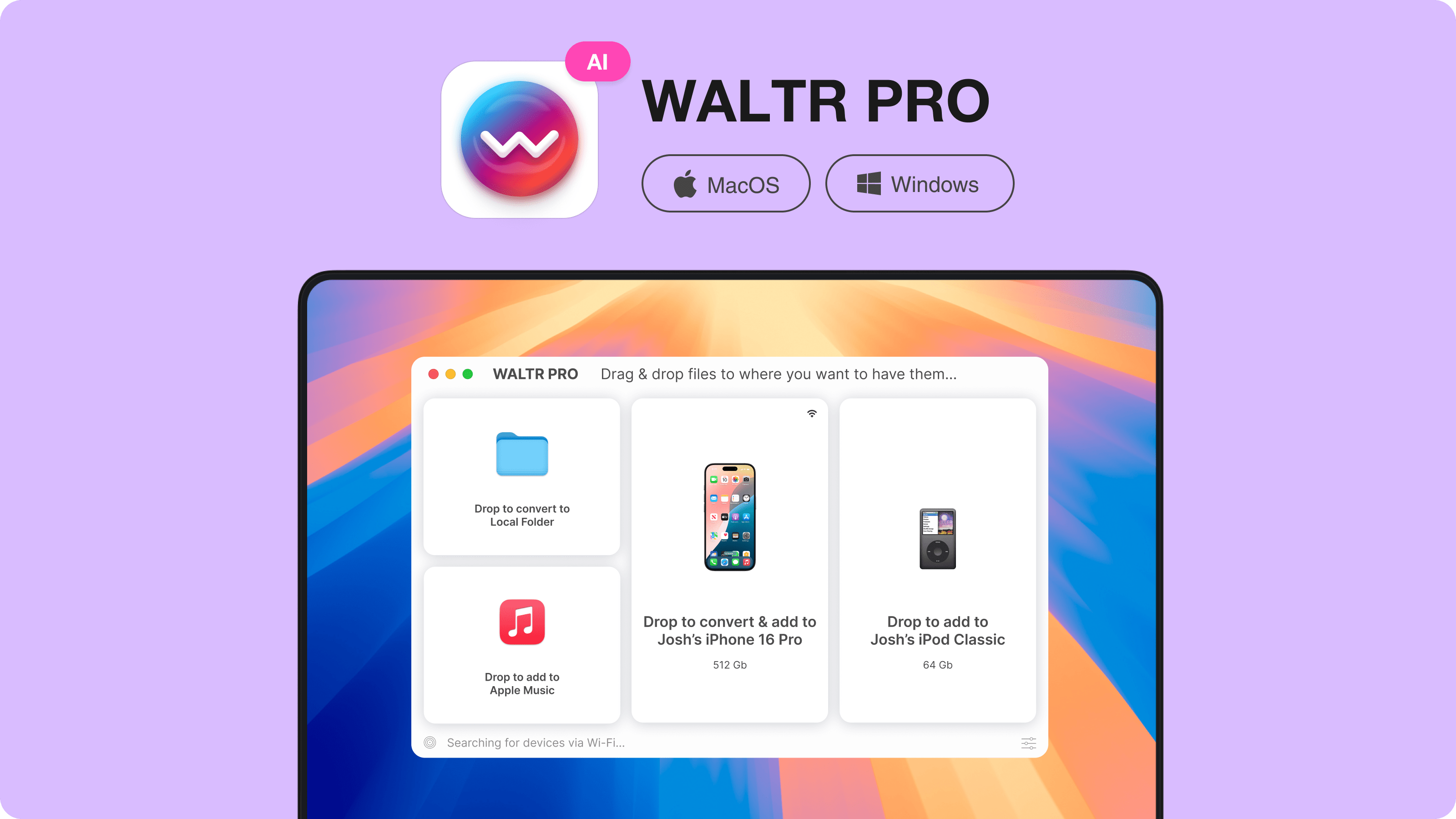
Step 2. Open WALTR PRO and wait for the device
Open WALTR PRO and give it a moment to detect the iPod. If the app does not see the device, try a different USB port, skip the USB hub, or swap the cable. Bad cables cause a stupid number of iPod transfer problems.
Do not start with a 400-song folder. Drag in 2 test MP3 or AAC files first. If those tracks appear under Music, your connection works and you can move on to formats, albums, and bigger folders.
Step 3. Drag songs, albums, or folders into WALTR PRO
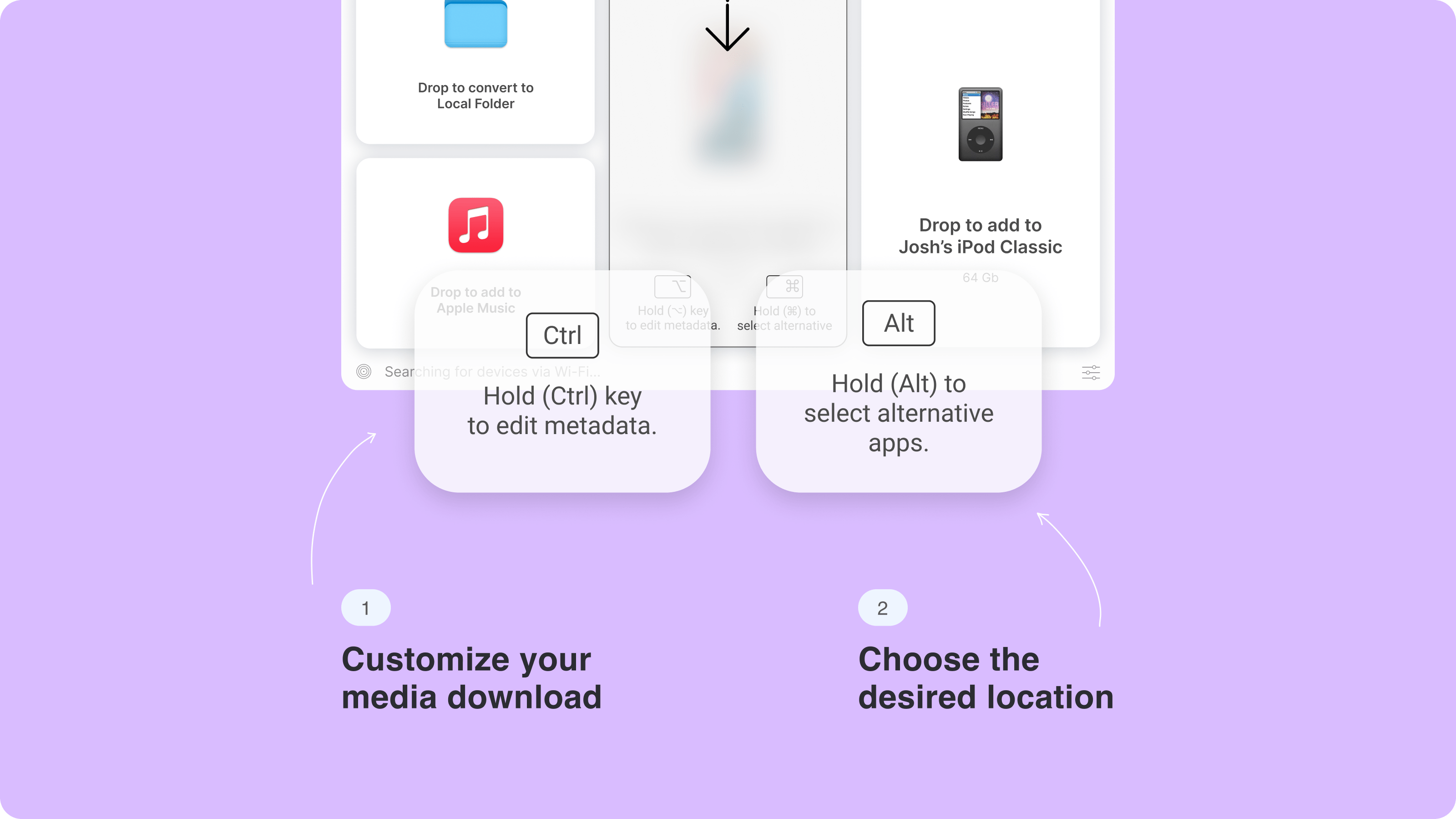
Select the music you want to add and drag it into WALTR PRO. The app starts the transfer without forcing a full Apple Music or iTunes sync. That matters if you only want to add a few songs to an old iPod, not reorganize the whole device.
Use folders when your metadata is clean. Use smaller batches when your library is messy. Older iPods rely heavily on artist, album, and track fields, so bad tags can make transferred music hard to find.
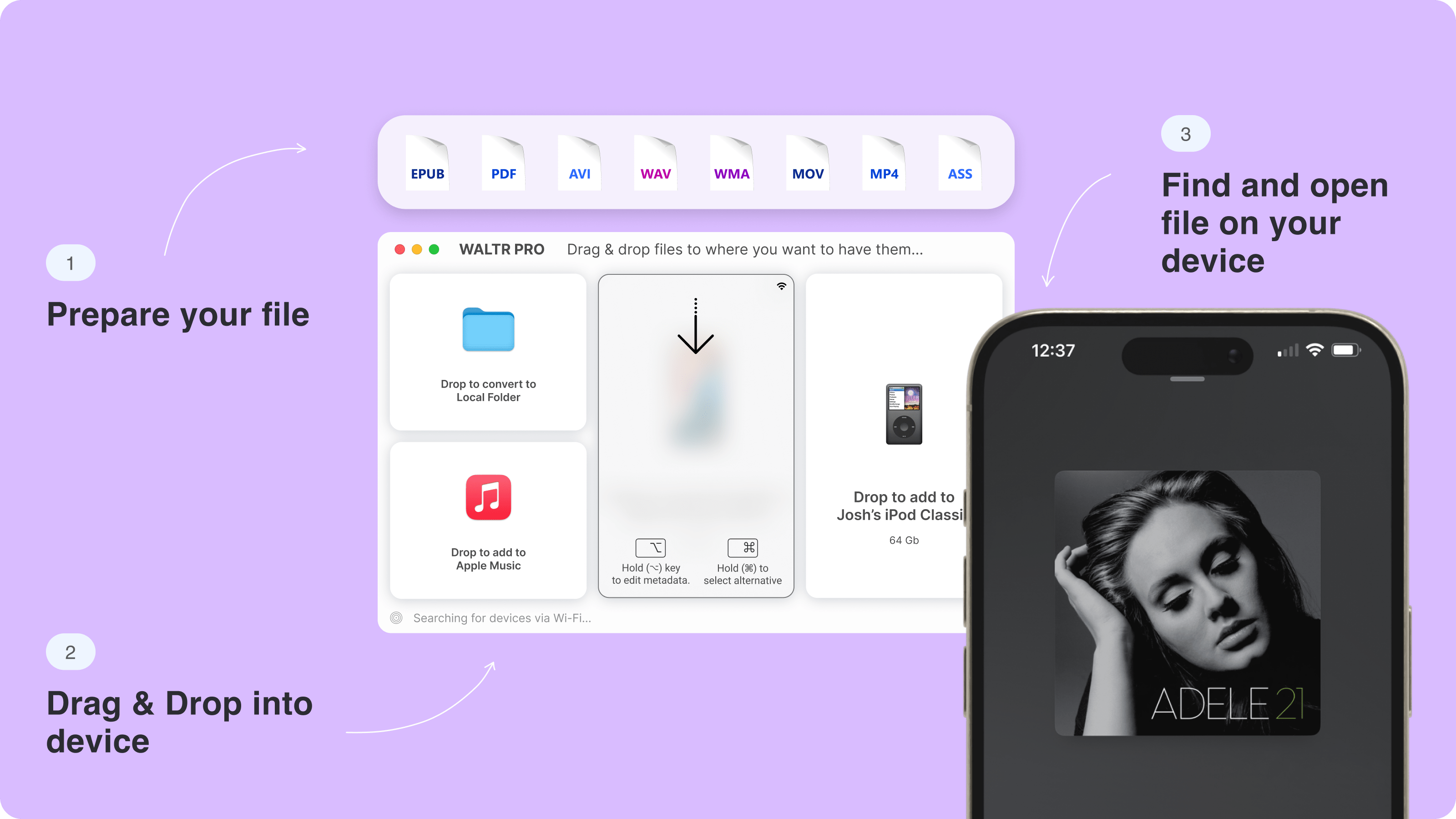
Step 4. Let WALTR PRO handle format conversion
Apple's iPod Classic specs list AAC, Protected AAC, MP3, MP3 VBR, Audible formats, Apple Lossless, AIFF, and WAV as supported audio formats. MP3 and AAC are the safest everyday choices. Apple Lossless, AIFF, and WAV also fit the classic Apple-device format world.
FLAC is the format that trips people up. FLAC is great for archiving, but Apple does not list FLAC as a native iPod Classic playback format. If your library includes FLAC, transfer through WALTR PRO so the app can handle the Apple-friendly workflow, or convert FLAC to Apple Lossless or AAC before transfer.
FLAC is not broken. It is just not a native iPod Classic format. Convert during transfer instead of copying a file that may sit on the device and never show up in Music.
Step 5. Check the iPod Music library
When the transfer finishes, eject the iPod safely and open the Music library. Check the artist, album, and track names. If the tracks show up correctly, move the rest of the album or folder.
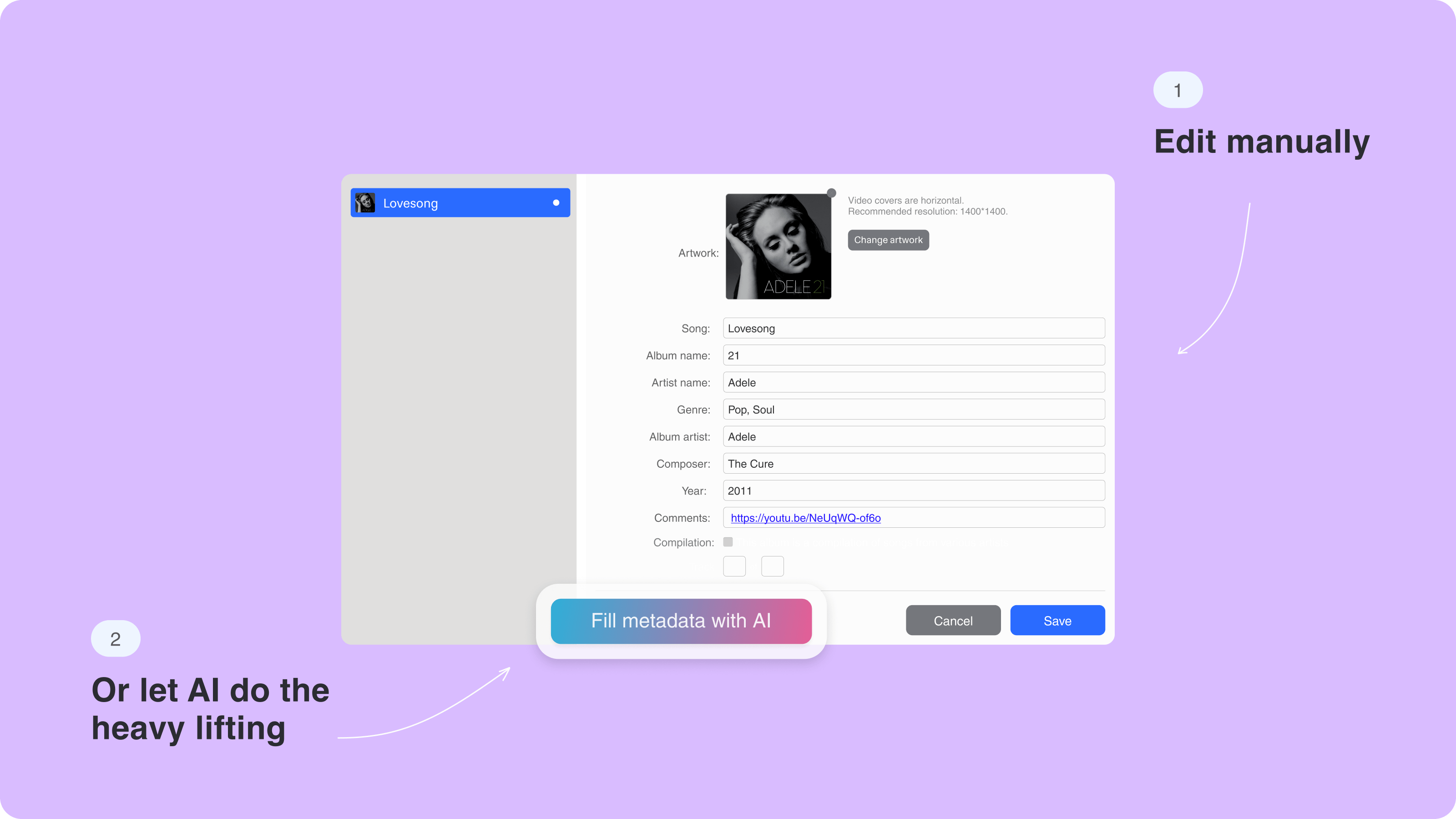
If the songs appear but metadata looks wrong, fix the file tags on your computer and transfer the tracks again. Clean metadata matters more on iPod Classic, Nano, and Shuffle because browsing is built around simple library fields.
How to Add Music to iPod Without iTunes on Windows 10 or Windows 11
Windows 10 and Windows 11 users should use the same cable-first test. Connect the iPod, open WALTR PRO, send 2 MP3 or AAC files, eject the iPod, and confirm playback. If that works, the Windows machine, cable, and iPod are talking correctly.
If you searched for a free Windows option, CopyTrans Manager is the honest name to know. It can work for Windows users who want a free iTunes alternative. The tradeoff is that it is more of a library manager. WALTR PRO is the cleaner Softorino choice when you want Mac plus Windows support, drag-and-drop transfer, and help with file-format friction.
Which Method Works for iPod Classic, Nano, Shuffle, or Touch?
The iPod model decides how careful you need to be. iPod Classic, Nano, and Shuffle are not small iPhones. They were built around cable sync, supported audio formats, and simple music libraries.
Do not trust a guide that treats every iPod the same. Apple changed connectors, storage sizes, supported formats, and sync behavior across generations. The safe universal habit is simple: test with 2 MP3 or AAC files, confirm playback, then transfer the rest.
- iPod Classic: use cable transfer, keep metadata clean, and prefer MP3, AAC, ALAC, AIFF, or WAV.
- iPod Nano: use cable transfer and test small batches before sending a large folder.
- iPod Shuffle: keep files simple. MP3 or AAC with clean tags is safer than a mixed-format archive.
- iPod Touch: cable transfer works, and some cloud or app-based methods may apply because it runs iOS.
Why Manual Disk Mode Is Not the Same as Adding Songs
Manual disk mode is the trap in many older guides. It can make an iPod behave like external storage, so you can drag files onto the device. That does not mean those files become songs in the Music library.
A playable iPod library needs more than a copied file. The iPod expects music to be indexed in the right place with readable metadata. If you copy an MP3 into a random folder through disk mode, the file may exist on the storage side while the Music menu shows nothing useful.
Use manual copying only if you understand that storage and playback are different jobs. For normal listening, use a transfer app that writes music into the device workflow. That is the difference between "the file is somewhere on the iPod" and "the song appears under Music."
If the Music Is on YouTube, Use SYC PRO Instead
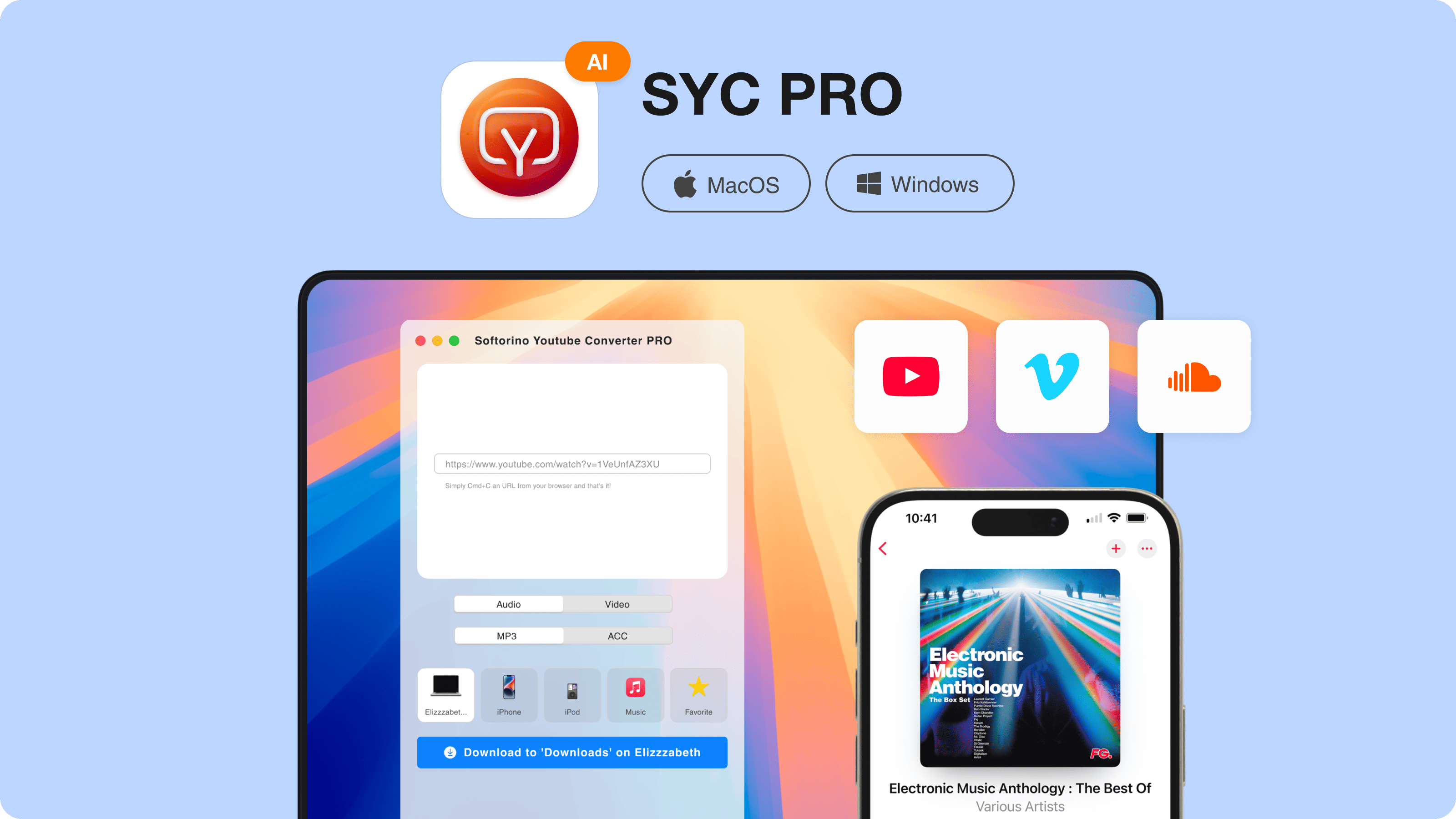
SYC PRO is the better Softorino path when the music starts as online audio or video. Use it for rights-authorized downloads from sources supported by Softorino YouTube Converter PRO, such as YouTube, Vimeo, or SoundCloud.
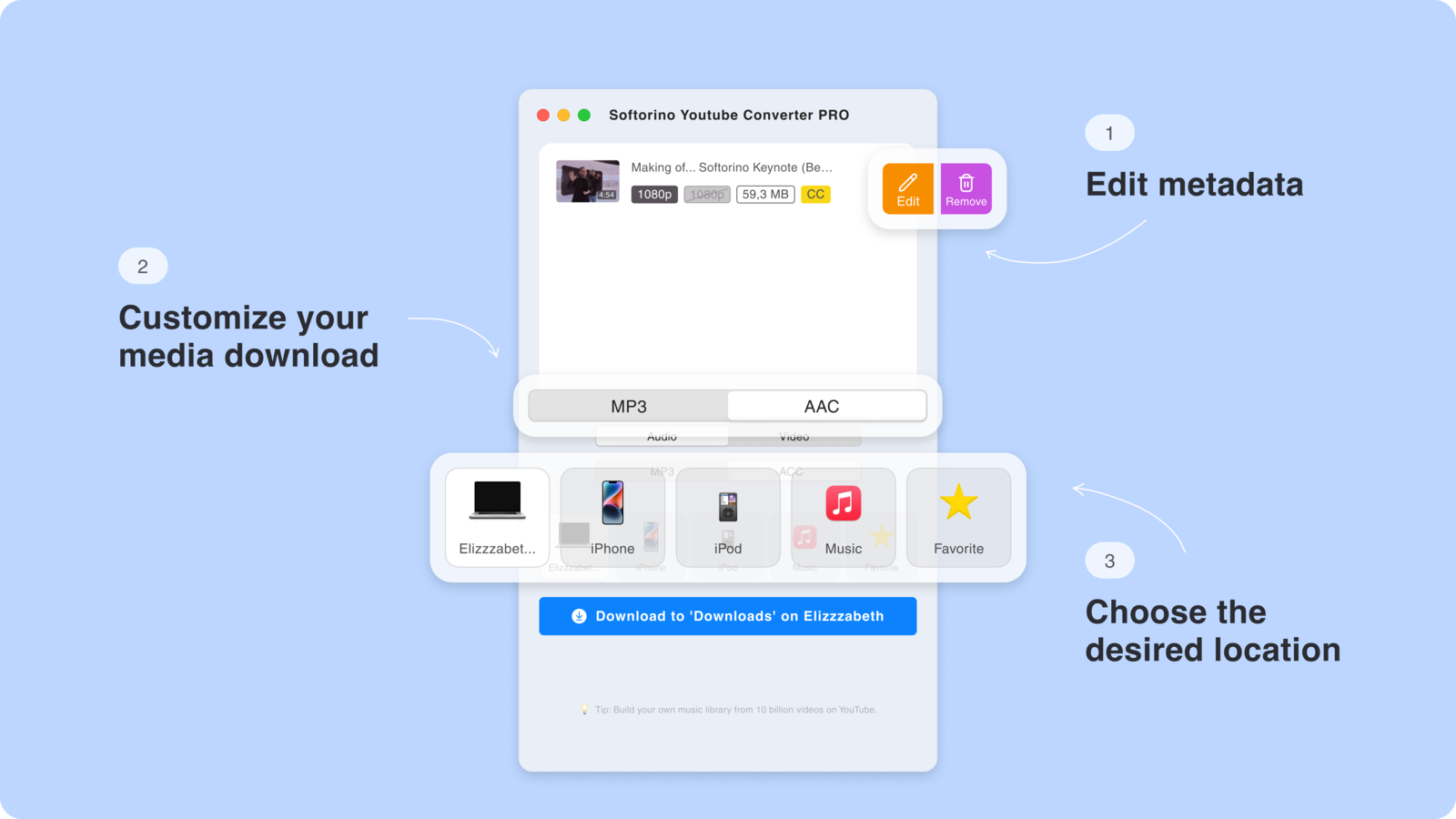
The workflow is different from local transfer. Open SYC PRO at https://softorino.com/syc-pro, copy the video or audio URL, choose an audio output when you want music, select the connected Apple device or computer destination, and download.
Keep SYC PRO in its lane. If you already have a local MP3, AAC, FLAC, ALAC, AIFF, or WAV file on your computer, WALTR PRO is the cleaner answer. If you first need to save an online source you are allowed to keep offline, SYC PRO makes more sense.
WALTR PRO vs CopyTrans, iMazing, MediaMonkey, and Manual Transfer
You have other ways to put music on an iPod without iTunes. Some are fine. Some are overkill. Some solve the wrong problem.
CopyTrans earns its place in search results because Windows users want a free iTunes alternative. iMazing earns attention because it manages more than music. WALTR PRO wins when the job is narrower: move music files to an iPod without iTunes and without turning one album transfer into a device-management project.
Option | Best for | Cost fit | Main caution |
|---|---|---|---|
WALTR PRO | Local music files on Mac or Windows | Paid app with trial | Keep claims cautious for very old iPod models |
CopyTrans Manager | Free Windows music management | Free Windows option | Windows-only and more library-manager shaped |
iMazing or AnyTrans | Broader device management | Paid | Overkill if you only need music transfer |
MediaMonkey | Music library management | Free/paid tiers | More setup than a quick iPod transfer |
Manual disk copy | File storage on old iPods | Free | May not add playable songs to Music |
Supported Music Formats for iPod
Supported formats depend on the iPod model, but Apple's iPod Classic 160GB technical specs are a useful baseline. Apple lists AAC, Protected AAC, MP3, MP3 VBR, Audible formats, Apple Lossless, AIFF, and WAV.
For the fewest problems, start with MP3 or AAC. For lossless Apple-device playback, use Apple Lossless. For FLAC libraries, use WALTR PRO conversion or convert to Apple Lossless before transfer.
Apple's format list is the evidence that matters here. Competitor pages can recommend lots of tools, but the iPod still has to play the final file.
Troubleshooting: iPod Not Showing Up or Songs Missing
If the iPod does not show up, start with boring fixes. They work more often than clever ones.
Use a known working data cable, not a charge-only cable.
Plug directly into the computer instead of a USB hub.
Unlock the iPod Touch and approve the trust prompt if it appears.
Restart WALTR PRO and reconnect the iPod.
Transfer 2 clean MP3 or AAC files before sending a full folder.
Try another USB port if detection fails.
If songs transfer but do not appear on the iPod, check format and metadata. Unsupported formats, broken tags, or files copied through disk mode can disappear from the Music library. If one clean MP3 works, your device connection is probably fine. Then you can troubleshoot the file instead of blaming the iPod.
Test with one small album before you move a huge library. If the iPod reads that album correctly, you have a working path.
Best Method by Situation
Choose the method by source and device, not by whatever tool appears first in search results.
Situation | Use this | Why |
|---|---|---|
Local MP3, AAC, ALAC, AIFF, WAV, or FLAC on your computer | WALTR PRO | It handles the computer-to-iPod transfer without iTunes sync. |
Rights-authorized online audio or video | SYC PRO | It starts from the online URL workflow, not a local file folder. |
iPod Classic, Nano, or Shuffle | Cable-first transfer | These models are not cloud-first devices. |
iPod Touch | Cable transfer first; cloud/app methods only if they fit | Touch behaves more like an iPhone than older iPods. |
Free Windows-only music management | CopyTrans Manager | It answers the free-tool intent, but it is not the Softorino path. |
Sources and Citations
- Apple iPod Classic technical specifications: https://support.apple.com/en-us/112601
- Apple iPod manuals and documentation: https://support.apple.com/en-us/docs/ipod
- WALTR PRO product page: https://softorino.com/waltr-pro
- SYC PRO product page: https://softorino.com/syc-pro
Bottom Line: How Can I Sync Music on My iPod Without iTunes?
You can sync music to iPod without iTunes in 2026. For local music files, use WALTR PRO, connect the iPod, drag in a few test tracks, and confirm they appear in the Music library before transferring a full folder.
Use SYC PRO only when the source is online audio or video you have the right to download. Use manual disk mode only when you understand its limits. If you need both local transfer and online-download workflows, the Softorino Universal License can make sense because it covers multiple Softorino apps under one subscription.
Related Softorino reading: transfer music from computer to iPod at https://softorino.com/blog/how-to-transfer-music-from-computer-to-ipod and transfer music from computer to iPhone at https://softorino.com/blog/how-to-transfer-music-from-computer-to-iphone.
FAQ
Is there an alternative to iTunes for iPods?
Yes. You can use an iPod transfer app such as WALTR PRO to add local music files without iTunes. Connect the iPod, drag in a small MP3 or AAC test batch, and confirm the songs appear under Music before transferring more.
What is the free software to transfer music to iPod without iTunes?
CopyTrans Manager is a common free Windows option for iPod music management. Use WALTR PRO if you want the Softorino route: Mac plus Windows support, drag-and-drop transfer, and help with format friction.
Can you still transfer music to an iPod Classic?
Yes, if the iPod Classic still works and your computer can connect to it. Use a cable-based transfer workflow and stick to supported formats such as MP3, AAC, Apple Lossless, AIFF, or WAV.
Can I put my own music on my iPod?
Yes. If the music files are already on your computer, open WALTR PRO, connect the iPod, drag in your songs, and verify playback in the Music library. Do not use this for DRM-protected subscription tracks unless you have clear rights and compatible files.
How do I add MP3 files to an iPod without iTunes?
Connect the iPod to your computer, open WALTR PRO, and drag the MP3 files into the app. After transfer, eject the iPod and check the Music library before moving a larger folder.
Can I transfer music to iPod without iTunes on Windows 10 or Windows 11?
Yes. On Windows 10 or Windows 11, start with a cable connection and 2 MP3 or AAC test files. If they appear under Music, transfer the rest in batches and keep file tags clean.

WALTR PRO
Convert & Push Any File into Any Apple Device
