Can't Add Songs to iPhone? 7 Fixes for iTunes, Apple Music, and Sync Library in 2026

If you can't add songs to iPhone, the problem usually comes from one of 4 places: Sync Library is on, iTunes/Finder sync is misconfigured, the file format does not play nicely with Apple Music, or your iPhone has no space left.
The annoying part is that Apple does not always tell you which one broke. A song may stay greyed out. iTunes may refuse to drag it over. Finder may sync nothing. Apple Music may act like your local files do not exist.
This guide walks through the safe fixes first. If you want to skip the iTunes mess, WALTR PRO lets you drag music from a Mac or Windows PC to your iPhone without iTunes. It works over USB or Wi-Fi and sends music to the native Music app.

Before we begin
Download WALTR PRO on Mac or Windows to add local songs to an iPhone when iTunes or Finder syncing keeps failing. Connect the iPhone and transfer the audio files directly instead of resyncing the full music library.
Why you can't add songs to iPhone
Most iPhone music transfer problems fall into a few buckets:
- Sync Library is turned on. Apple Music or iTunes Match manages your library through iCloud, so manual syncing can stop working the way you expect.
- The iPhone is not trusted by the computer. If you skipped the Trust prompt, iTunes, Finder, or Apple Music may not get full access.
- Manual music management is off. Apple still supports local sync, but you need the right settings.
- The file is unsupported, corrupted, or DRM-protected. Apple Music and iTunes handle MP3, AAC, Apple Lossless, AIFF, and WAV well. FLAC, OGG, WMA, and older protected files can cause friction.
- The song is already tied to another library. iTunes sync is old-school. One wrong setting can replace music instead of adding it.
- Your iPhone is full. No space means no new songs.
- Your cable, USB port, driver, or app version is failing. Boring, but common.
Start with Sync Library. It causes more confusion than any other setting because it makes your music library cloud-managed instead of manually managed.
Quick fix table
Problem | What you see | Best fix |
|---|---|---|
Sync Library conflict | You cannot drag songs manually | Turn off Sync Library, then sync again |
iPhone not trusted | Device does not appear in Finder or iTunes | Reconnect and tap Trust on the iPhone |
Manual sync off | Songs do not copy over | Turn on Manually manage music, movies, and TV shows |
Unsupported format | FLAC, OGG, WMA, or APE will not transfer | Convert the file or use WALTR PRO |
DRM-protected song | Song is greyed out or cannot convert | Use an unprotected copy |
No storage | Sync starts, then fails | Free space in iPhone Storage |
iTunes bug | Sync freezes or does nothing | Update iTunes, Apple Music, Finder, and iOS |
Fix 1: Update iTunes, Apple Music, Finder, and iOS
Old software can break music sync for boring reasons. Start here because it is safe and quick.
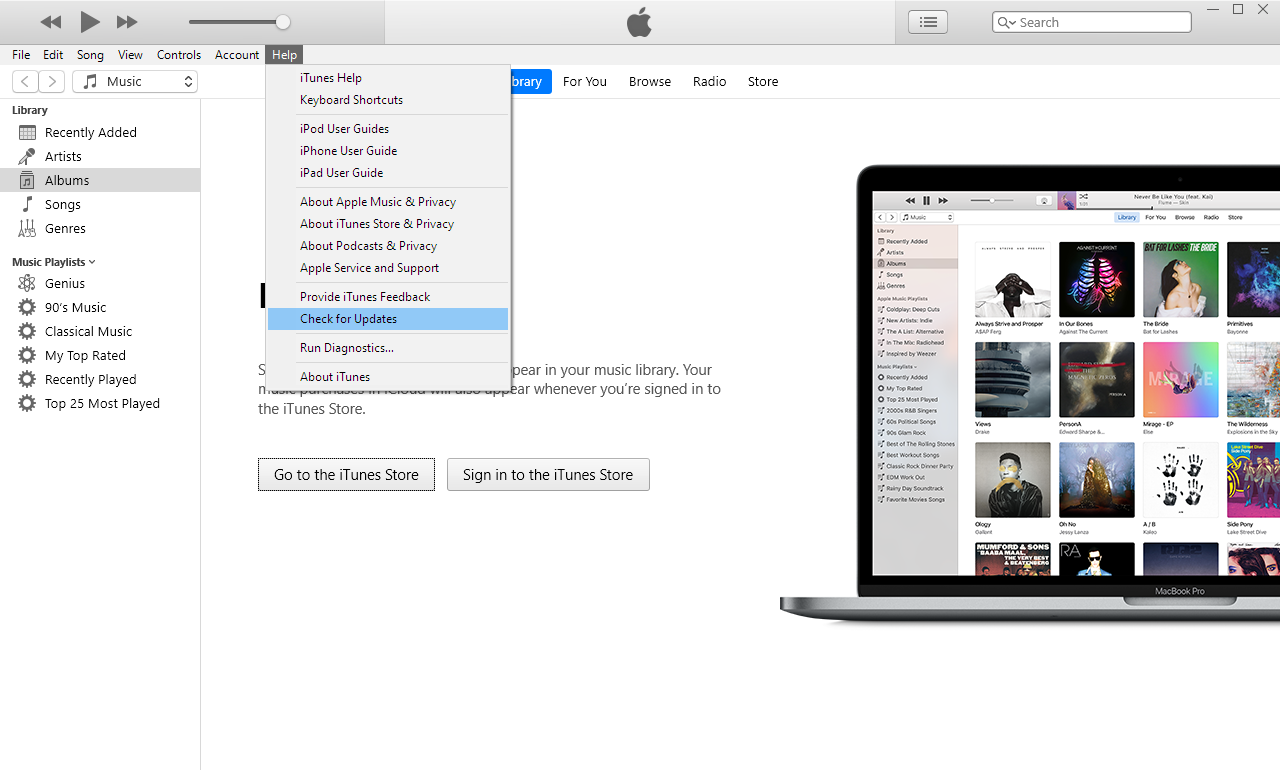
On Windows, update iTunes from the Microsoft Store if you installed it there. If you use Apple's standalone installer, open iTunes and check Help > Check for Updates.
On Mac, music sync now runs through Finder and the Apple Music app. Update macOS from System Settings > General > Software Update.
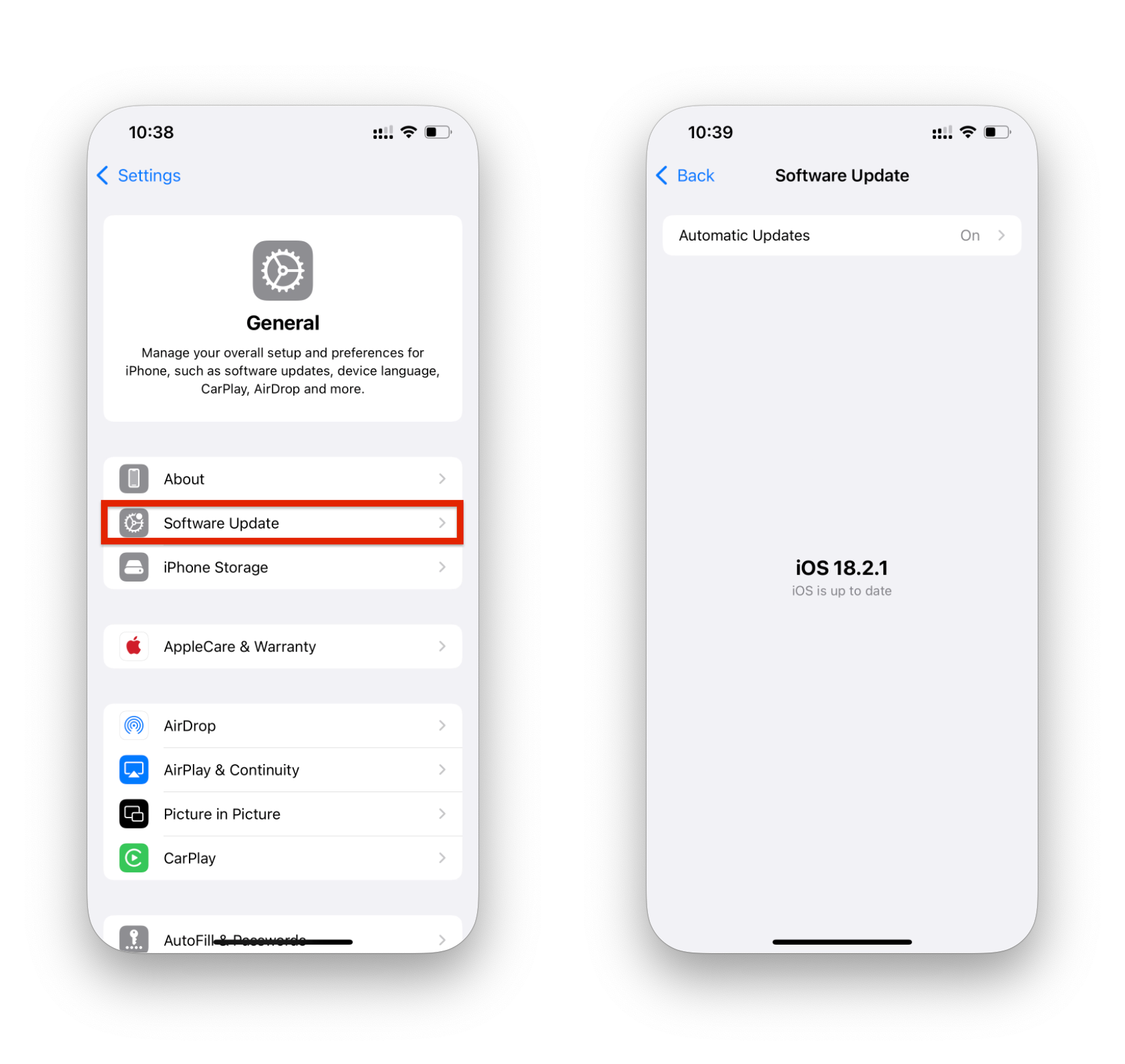
On your iPhone, go to Settings > General > Software Update. Install any available update, then restart your iPhone and computer.
If you use Windows 11, check the Microsoft Store first. A stale Store version of iTunes can look fine until sync starts failing.
After updating, connect the iPhone again. Unlock it. Tap Trust This Computer if the prompt appears.
Fix 2: Turn off Sync Library if you want manual transfers
If Apple Music Sync Library is on, Apple expects your music to sync through iCloud. That can block manual song transfers from iTunes or Finder.
Apple's own Sync Library guide says the feature streams your music library across devices signed in with the same Apple Account. That is useful if you live inside Apple Music. It is annoying if you want to drag 20 local MP3s or FLAC albums from a computer to your iPhone.
On iPhone:
- Open Settings.
- Tap Music.
- Turn off Sync Library.
- Connect your iPhone to the computer again.
- Try syncing the songs manually.
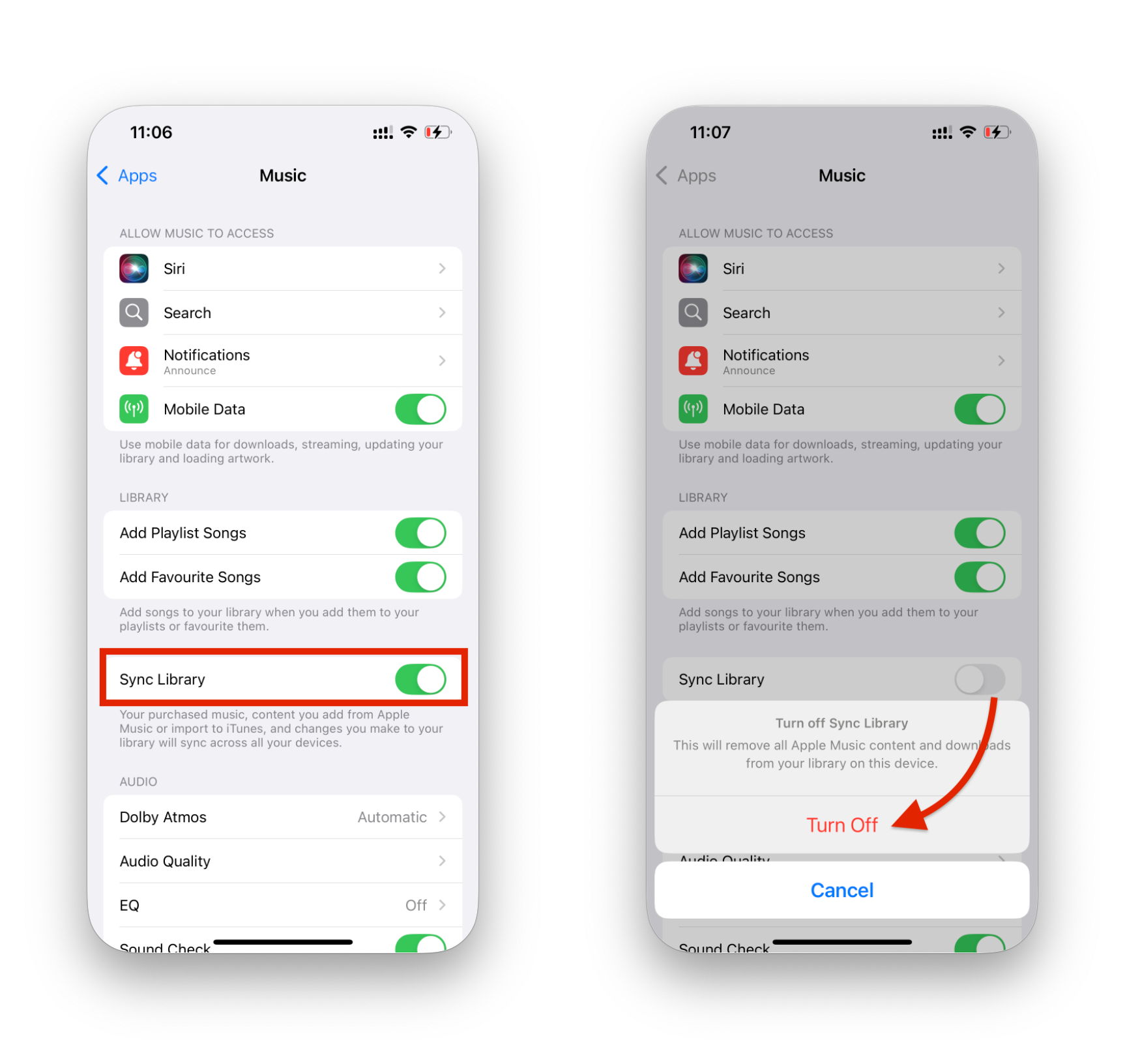
On Windows, iTunes may call the same feature iCloud Music Library. On Mac, check the Apple Music app settings too.
Turning off Sync Library can remove cloud-synced Apple Music tracks from the device. Back up your music library before changing this setting.
If you rely on Apple Music playlists every day, this tradeoff may not be worth it. In that case, use cloud sync for Apple Music and use WALTR PRO for local files you want to move without fighting iTunes.
Fix 3: Turn on manual music management
If Sync Library is off and you still cannot drag songs to your iPhone, manual management may be disabled.
On Mac, Apple says you can connect your device to sync Music content through Finder and the Music app. Use this path if you want the official route.
Now drag a small test file first. Use a normal MP3, not a whole album. If that works, add the rest.
On Mac:
- Connect your iPhone with USB or USB-C.
- Open Finder.
- Select your iPhone in the sidebar.
- Click General.
- Select Manually manage music, movies, and TV shows.
- Click Apply.
On Windows:
- Open iTunes.
- Connect your iPhone.
- Click the iPhone icon.
- Open Summary.
- Select Manually manage music and videos.
- Click Apply.
Fix 4: Check the audio format before blaming iTunes
Apple Music and iTunes can convert or handle common formats like MP3, AAC, Apple Lossless, AIFF, and WAV. Problems start when your files are in formats Apple does not like, such as FLAC, OGG, WMA, APE, or odd lossless rips.
Apple's music conversion guide says you can convert songs in Apple Music on Mac or iTunes for Windows. It also warns that converting between compressed formats can reduce sound quality. So if the original source matters, keep a backup before converting.
To check a song format:
- Right-click the file on your computer.
- Open Get Info on Mac or Properties on Windows.
- Check the file extension and codec.
- Test with one MP3 or AAC file.
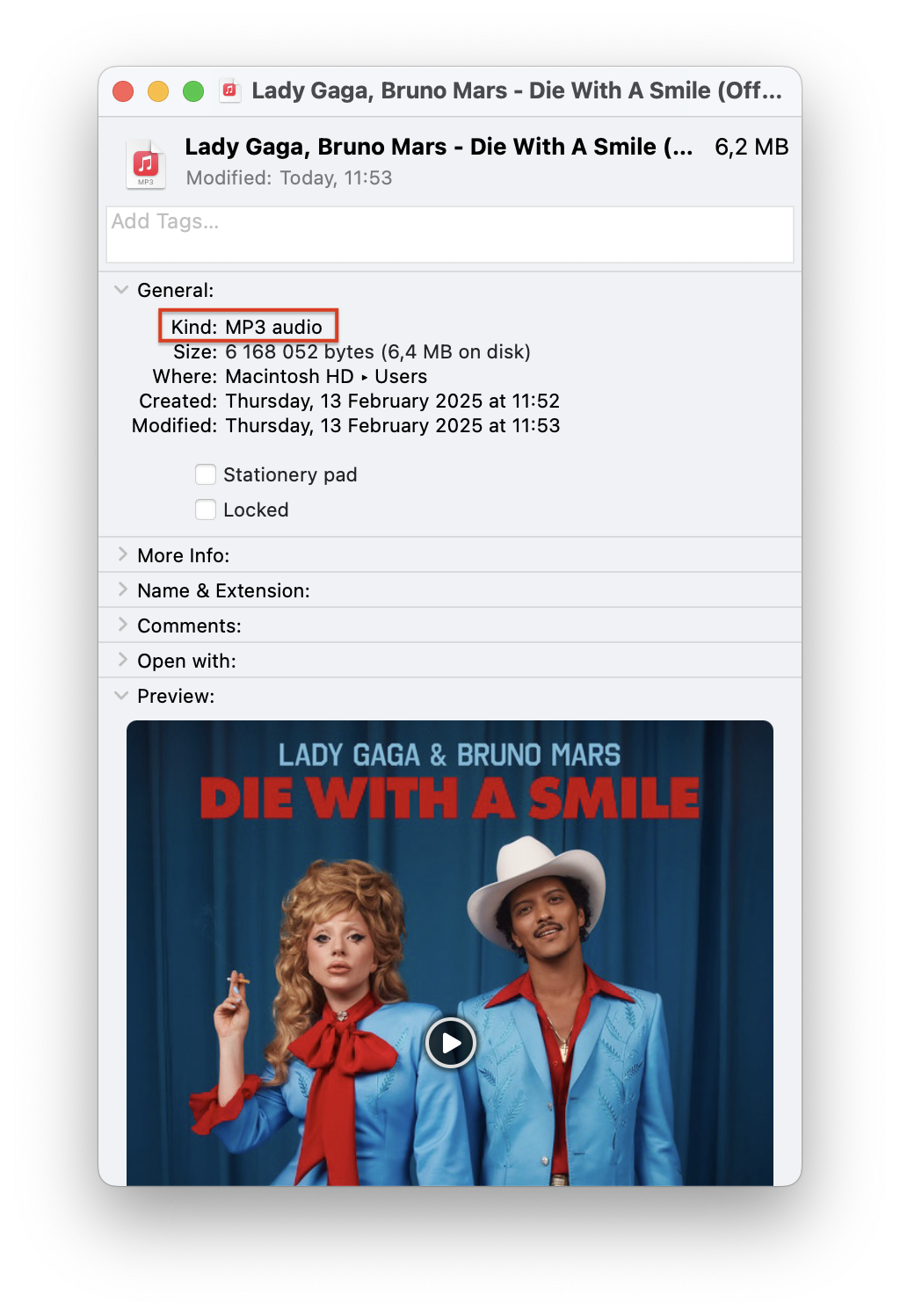
If a normal MP3 transfers but your FLAC album does not, the issue is the format. You can convert the album first, or skip conversion and use WALTR PRO. WALTR PRO supports formats like MP3, FLAC, AAC, AIFF, WAV, WMA, OGG, APE, and more, then sends the file to the right Apple destination.
For a Windows-first iPhone file manager, AltTunes covers broader export and backup tasks. For music-only transfer, WALTR PRO is the cleaner fit.
Fix 5: Use WALTR PRO to transfer music to iPhone without iTunes
If you do not want to debug iTunes, use WALTR PRO to transfer music to iPhone without iTunes.
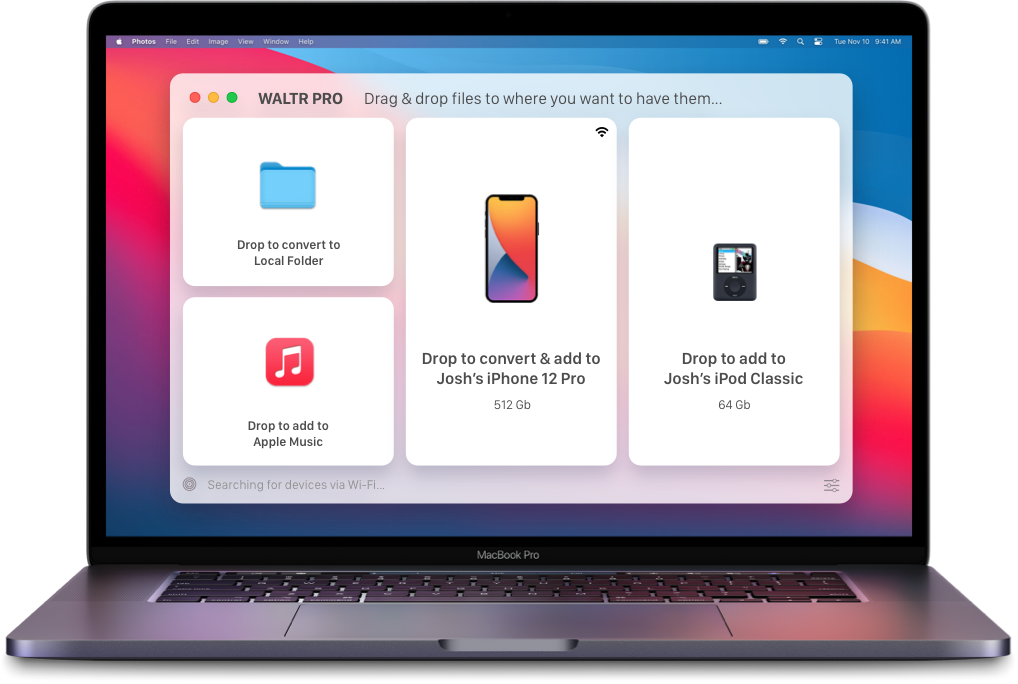
It works on Mac and Windows. You drag files into WALTR PRO, choose your iPhone, and the app transfers music to the native Music app. It also handles non-Apple formats that usually send iTunes into a sulk.
1. Download and install WALTR PRO
Install WALTR PRO on your Mac or Windows PC. Open it before connecting your iPhone.
WALTR PRO is the right fit if you want to transfer music from a computer to iPhone without rebuilding your Apple Music library or converting every file by hand.
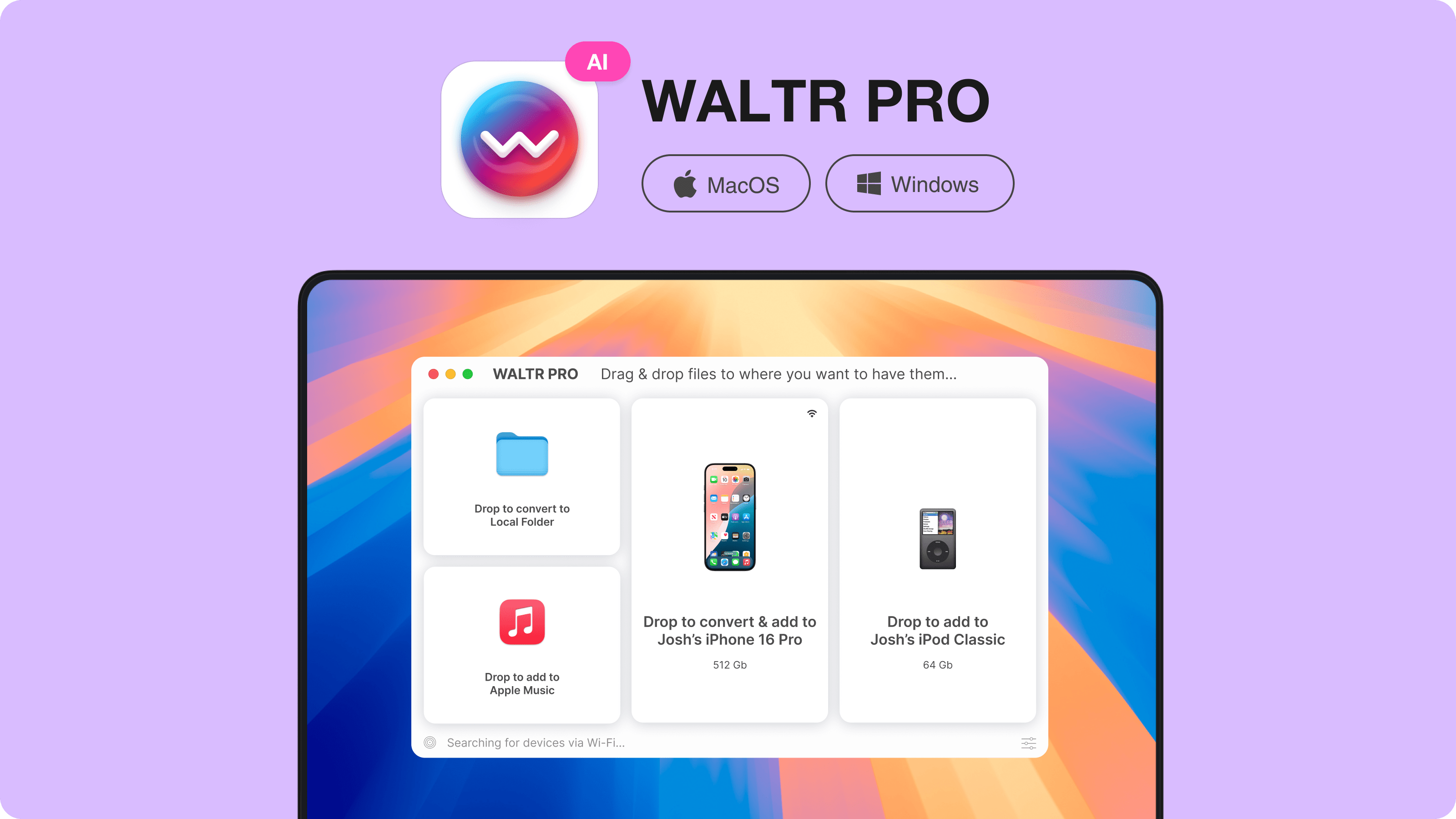
2. Connect your iPhone over USB or Wi-Fi
Connect your iPhone with a cable first. Unlock the phone and tap Trust.
WALTR PRO can also transfer over Wi-Fi. Use USB for the first connection if you want the least drama. After that, turn on Wi-Fi connectivity in WALTR PRO settings and keep the phone and computer on the same network.
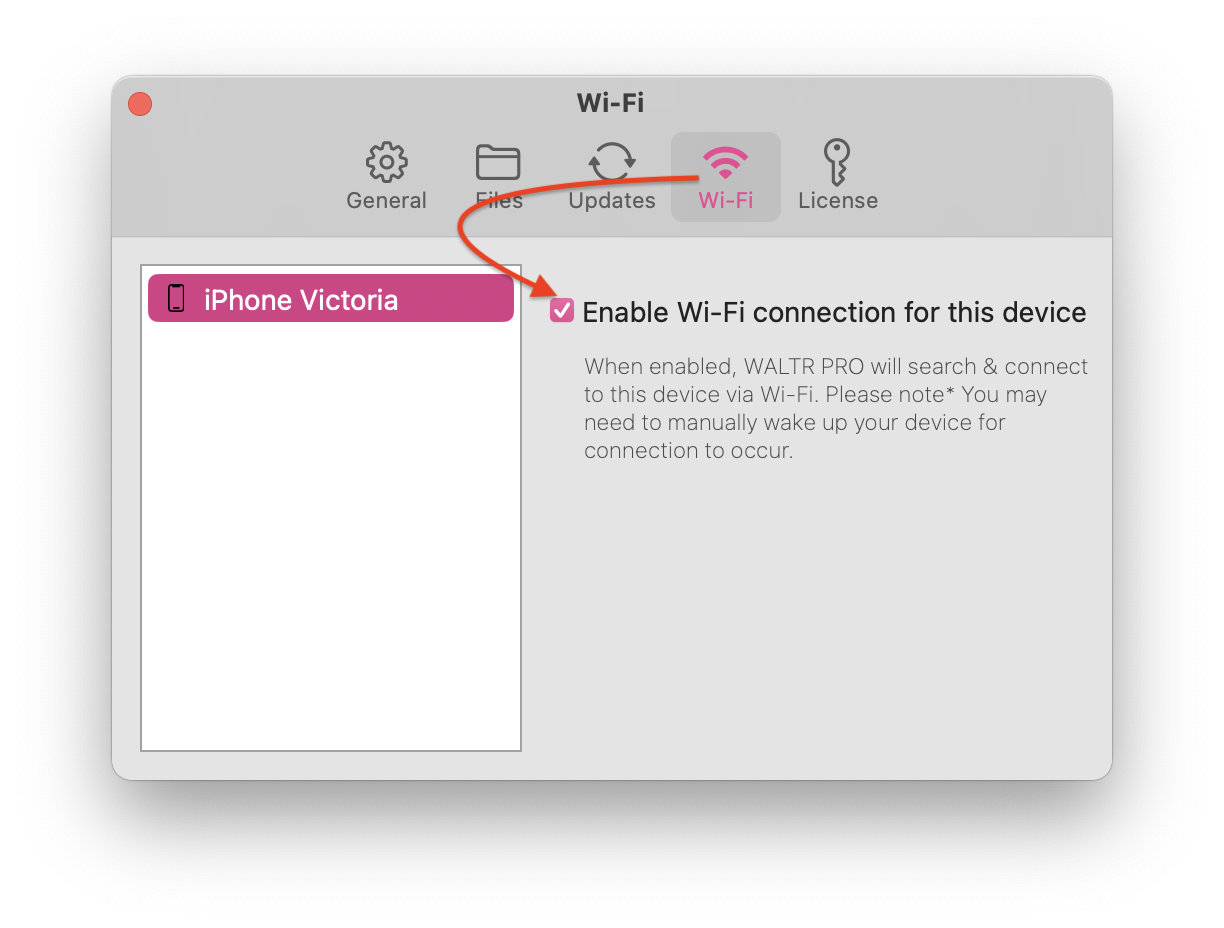
3. Drag your songs into WALTR PRO
Drag your music files into the WALTR PRO window. Use MP3, FLAC, AAC, WAV, WMA, OGG, or another supported audio file.
WALTR PRO detects the file type and sends music to the right Apple app. For music, that means the native Music app.
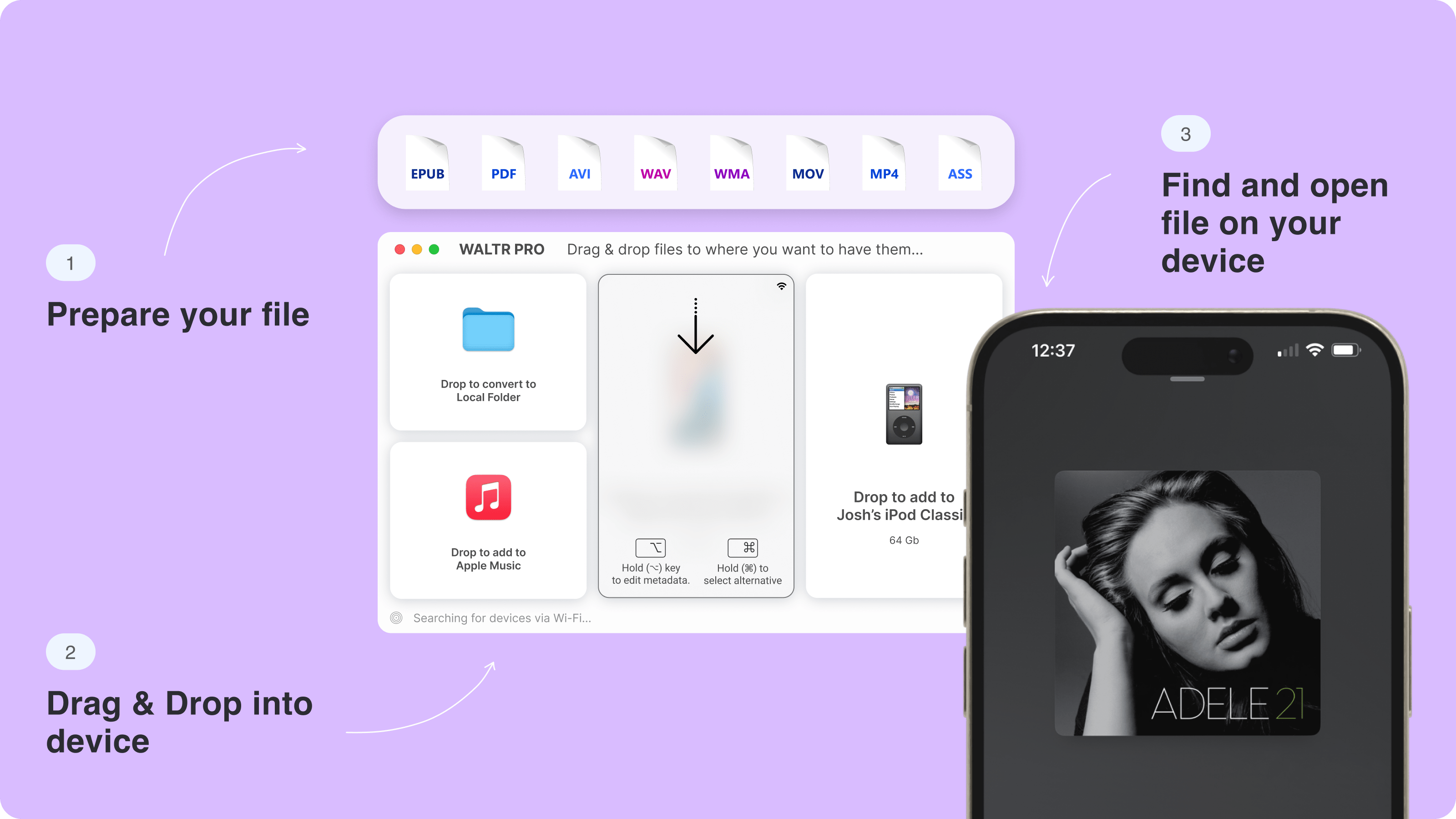
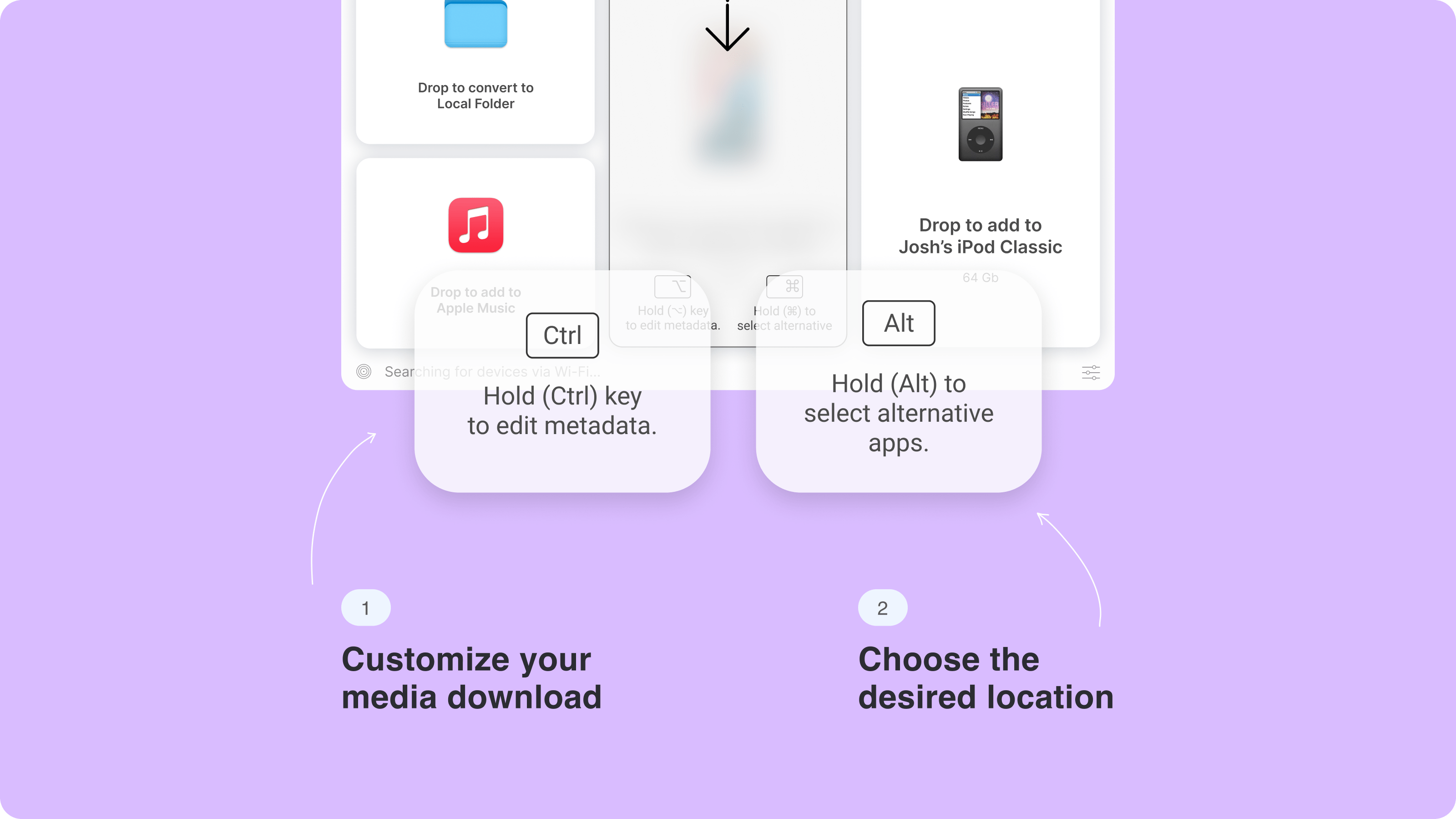
4. Edit metadata before transfer
If your file names are a mess, fix the title, artist, album, or cover art before transfer.
You can also choose another app or destination when needed. This helps when a file should land in a specific third-party player instead of the default Apple app.
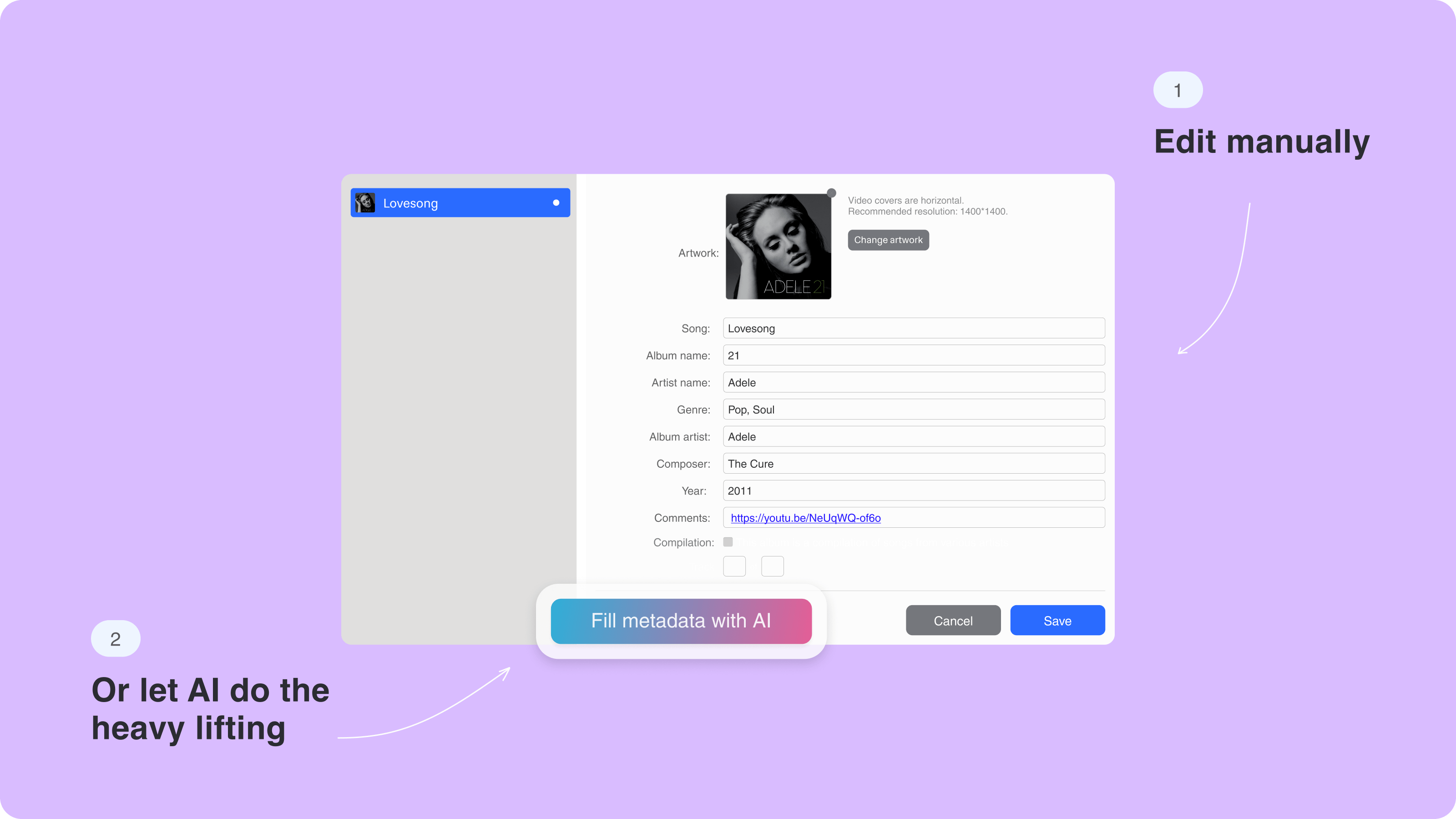
Optional: Fill metadata with AI
WALTR PRO can fill metadata with AI for supported media. Use it when your song or album has missing artwork, wrong artist names, or ugly track titles.
5. Let WALTR PRO transfer and convert when needed
WALTR PRO transfers the file to your iPhone and handles conversion when the Apple destination needs it. You do not need to create an AAC copy first, then import it, then sync it, then hope iTunes behaves.
For frequent transfers, turn on Wi-Fi connectivity in WALTR PRO. Next time, you can send music without plugging in the phone.
This is also where WALTR PRO beats the usual online converter route. Your files stay on your computer and phone. You are not uploading private music files to a random website.
Fix 6: Free up storage on your iPhone
If your iPhone storage is full, music sync may fail halfway or refuse to start.
Check storage on iPhone:
- Open Settings.
- Tap General.
- Tap iPhone Storage.
- Delete apps you do not use.
- Remove old videos, downloads, or duplicate photos.
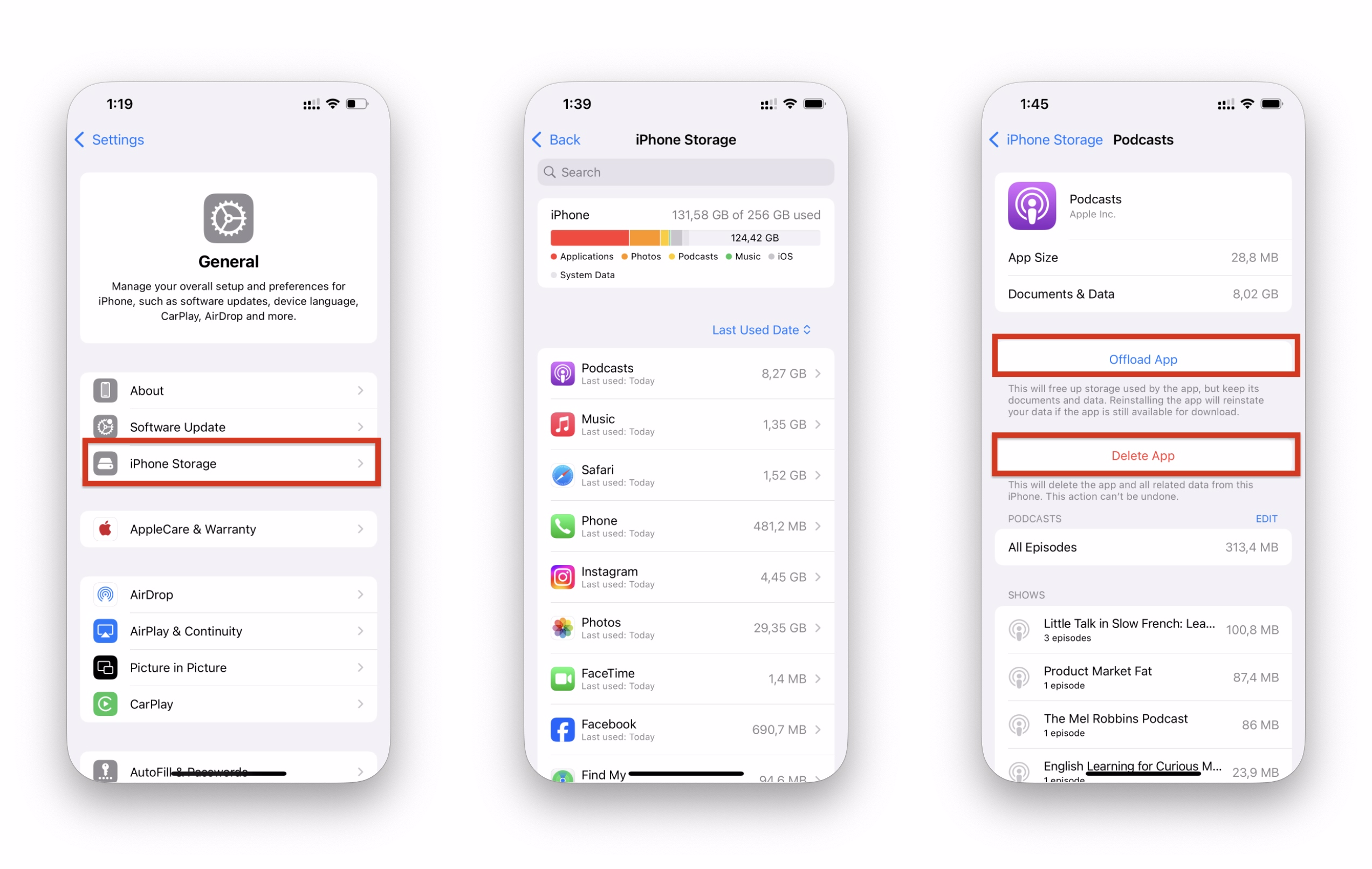
Also empty Recently Deleted in Photos if you removed videos or large photo batches. Those files still take space until you clear them.
Leave more space than the album size. iOS needs room for temporary files during sync.
Fix 7: Check DRM, greyed-out songs, and duplicate library problems
If a song is greyed out, do not keep dragging it into iTunes for 20 minutes. Check the source.
Common causes:
- The file is DRM-protected.
- The file path changed, so iTunes cannot find it.
- The song exists in Apple Music but not as a local file.
- The track is corrupted.
- The iPhone is synced with another library.
Apple says older purchased songs can use Protected AAC, which prevents conversion. If you see that, use a non-DRM copy from your own library.
If iTunes says the iPhone is synced with another library, stop and read the prompt. Accepting can erase music already on the phone. Back up first.
Fixes if you can't add songs to iPhone after all settings look right
If you still can't add songs to iPhone after checking Sync Library, manual sync, format, and storage, test the boring hardware path. Use a different cable, a different USB port, and one small MP3 file. If that works, the original file batch was the problem. If it fails, the connection or Apple sync layer is the problem.
Why online music transfer tools are a bad bet
Online converters look convenient until you upload a large album, wait through ads, and get a low-quality file back.
They also create 3 problems:
- Privacy: your files leave your computer.
- Quality: compressed conversions can reduce audio quality.
- Limits: many tools cap file size, speed, or batch downloads.
A local app is safer for personal music libraries. Use Apple Music or iTunes if you want the Apple route. Use WALTR PRO if you want drag-and-drop transfer without the sync rules.
Best way to add songs to iPhone in 2026
For one or two normal MP3 files, Apple Music, Finder, or iTunes can still work. Turn off Sync Library, turn on manual management, and sync.
For mixed formats, local albums, FLAC files, Windows PCs, and repeat transfers, WALTR PRO is the cleaner path. It avoids the Apple sync maze and sends music straight to the native Music app.
If you also need a broader iPhone file manager on Windows, AltTunes is worth checking. If you want the whole Softorino toolkit, the Universal License covers multiple apps under one subscription.
Final checklist
Before you give up on the transfer, run through this:
- Turn off Sync Library if you want manual local transfers.
- Update iTunes, Apple Music, Finder, macOS, Windows, and iOS.
- Tap Trust on the iPhone.
- Turn on manual music management.
- Test with one MP3 file.
- Check for DRM or corrupted files.
- Free up iPhone storage.
- Use WALTR PRO for FLAC, OGG, WMA, or bulk transfers.
If iTunes still will not add songs to your iPhone after that, the fastest fix is to stop using iTunes for this job.
FAQ
Why can't I add songs to my iPhone from iTunes?
The most common reason is Sync Library. If Apple Music Sync Library or iCloud Music Library is on, Apple manages your library through iCloud and manual transfers can fail. Other causes include outdated iTunes, a missing Trust permission, unsupported formats, DRM-protected songs, or full iPhone storage.
Can I manually add music to iPhone if Sync Library is on?
Usually, no. Sync Library is built for cloud-managed music across devices. If you want to manually sync local files from a computer, turn off Sync Library on the iPhone and in Apple Music or iTunes settings first. Back up your music library before changing it.
How do I add music to iPhone without iTunes?
Use WALTR PRO. Install it on Mac or Windows, connect your iPhone over USB or Wi-Fi, drag music into the app, and let WALTR PRO send it to the native Music app. It is the simplest route for local files and unsupported formats like FLAC.
Why are some iTunes songs greyed out on my iPhone?
Greyed-out songs can mean the file is missing, corrupted, DRM-protected, not fully synced, or tied to a cloud Apple Music version instead of a local file. Check the file location on your computer and test with one clean MP3.
Can I transfer FLAC to iPhone?
iTunes is not the best route for FLAC. You can convert FLAC to an Apple-friendly format first, or use WALTR PRO to transfer FLAC files to iPhone without manual conversion.
Does WALTR PRO work on Windows?
Yes. WALTR PRO works on Mac and Windows. It transfers music, videos, PDFs, ringtones, and other files to iPhone or iPad without iTunes.
Is iTunes still needed to add music to iPhone?
No. You can use Finder on newer Macs, Apple Music sync, cloud services, or a third-party transfer app. iTunes is still an option on Windows, but it is not the only way to move music to an iPhone.

WALTR PRO
Convert & Push Any File into Any Apple Device
