WMV to MP4: Convert Files for iPhone, Mac, and PC in 2026

A WMV file is fine until you try to open it on an iPhone, iPad, Mac, or Apple TV. Then Apple shrugs. QuickTime may refuse it, Photos may ignore it, and your iPhone will not magically understand a Windows Media Video file.
The fix is simple: convert WMV to MP4, or send the video through a tool that makes it Apple-ready during transfer. This guide covers the practical routes: online converters, VLC, HandBrake, FFmpeg, and WALTR PRO when your real goal is playing the video on an Apple device without iTunes.
Quick answer: the best way to convert WMV to MP4
If you just need a fast WMV to MP4 file and the video is not private, an online converter can work. Upload the file, choose MP4, download the result.
If the file is large, personal, work-related, or you need it on an iPhone or iPad, use a local app instead. Local conversion avoids upload limits, keeps the file on your computer, and gives you more control over quality.
Method | Best for | Watch out for |
|---|---|---|
Online WMV to MP4 converter | Small, non-private videos | Upload limits, privacy, ads, slower downloads |
WALTR PRO | Apple playback and transfer | Best when the destination is iPhone, iPad, Apple TV, or a local Apple-ready file |
VLC | Free desktop conversion | Interface is clunky, settings can confuse beginners |
HandBrake | Local conversion with presets | WMV support depends on the file and codec |
FFmpeg | Technical users and batch jobs | Command-line setup required |
Adobe or video editor | Editing before export | Heavier than needed for a simple conversion |
Here is the short version: use an online converter for a throwaway clip. Use WALTR PRO if you want the converted video to land where it belongs on your Apple device. Use FFmpeg if you are comfortable with Terminal or PowerShell.
Before we begin
Download WALTR PRO on Mac or Windows to make a local WMV video Apple-ready and transfer it to an iPhone or iPad without iTunes. Use a local converter instead when you only need an MP4 file on the computer.
Why WMV files fail on iPhone, iPad, and Mac
WMV means Windows Media Video. Microsoft built it for the Windows world. Apple devices mostly expect formats and codecs that fit the Apple media stack, such as MP4, MOV, M4V, H.264, and HEVC.
That is why a WMV file can play on an old Windows PC but fail on an iPhone. The file extension is only part of the story. A video also has codecs inside it. Apple may support the container but not the codec, or the codec but not the way the file was encoded.
Apple's own support docs say older or specialized media formats may not work in Apple apps and devices. Apple also tells users to search by file extensions such as .wmv when a file will not open. In plain English: Apple knows these formats can be a problem.
QuickTime is not a full WMV to MP4 converter either. Apple's QuickTime export guide says exported movies are QuickTime movies using H.264 or HEVC. It does not export straight MP4 files. So if you need a real MP4, use a proper converter.
WMV vs MP4 vs M4V: what actually matters
WMV, MP4, and M4V are containers. They hold video, audio, subtitles, and metadata. The container matters, but the codec inside the container matters too.
Do not overthink this. If you want a file that plays almost anywhere, convert WMV to MP4 with H.264 video and AAC audio. If your target is an Apple device, a tool like WALTR PRO can handle the Apple-compatible output and transfer path for you.
- WMV is a Microsoft format. It is common in older Windows videos, screen recordings, and archives. It is not a safe format for Apple playback.
- MP4 is the safest target for general use. It works across phones, browsers, social apps, TVs, and most media players when encoded with common codecs like H.264.
- M4V is Apple's close cousin of MP4. Apple apps often handle it well, but M4V can also carry Apple DRM in some cases.
How to convert WMV to MP4 with WALTR PRO
WALTR PRO is the best Softorino fit for this article because it solves the second headache too. Most converters stop after creating a file. WALTR PRO can convert the WMV and put the video on your iPhone, iPad, or Apple TV path without the iTunes sync mess.
WALTR PRO supports WMV input along with MKV, AVI, MP4, MOV, TS, MTS, FLV, WEBM, VOB, and other video formats. It can send compatible video to Apple devices or a local folder. That matters when you do not just want an MP4 sitting in Downloads. You want the video to play.
Step 1: Download and install WALTR PRO
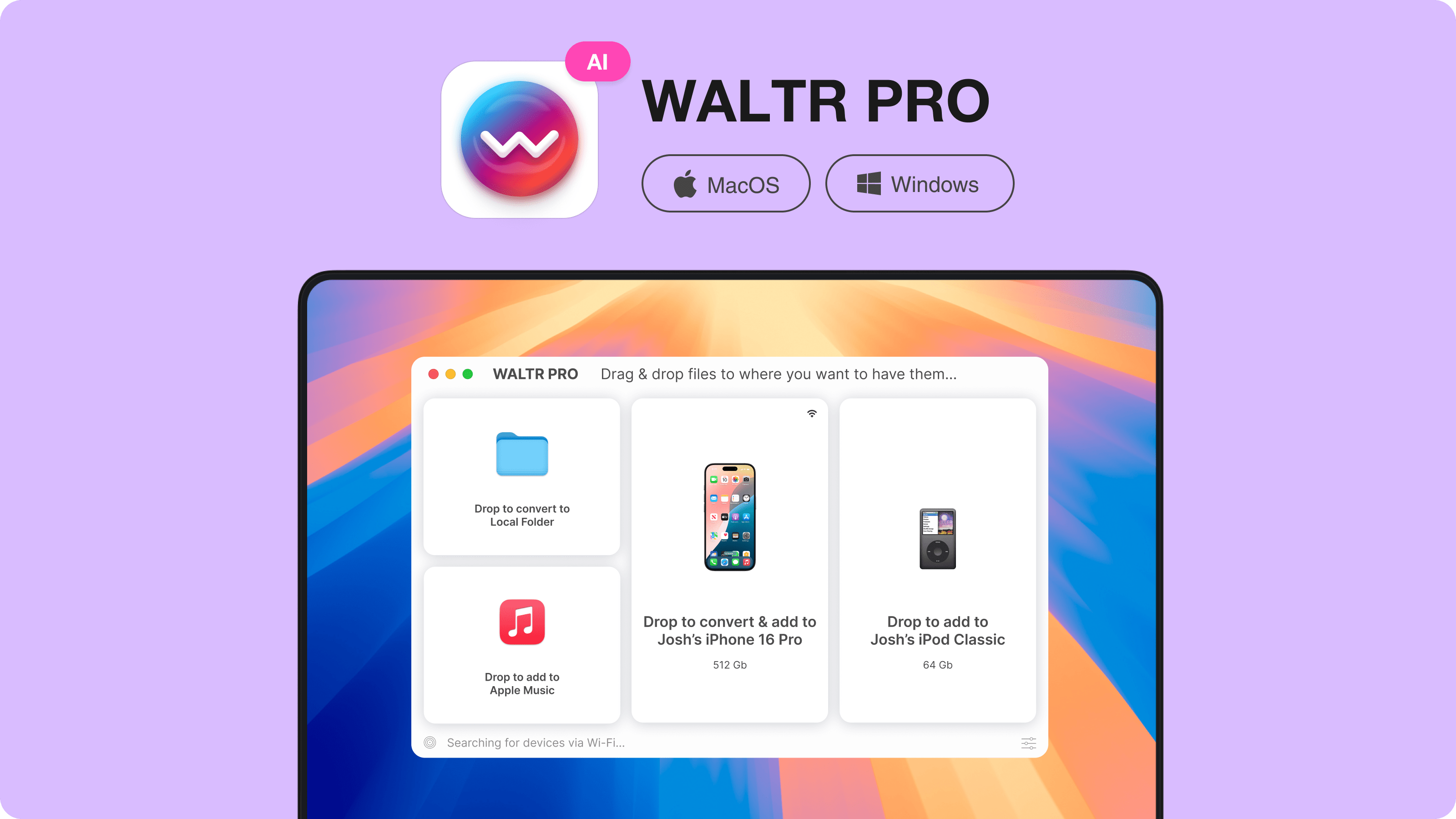
Download WALTR PRO from Softorino and install it on Mac or Windows. The app is built for drag-and-drop transfer, so there is no iTunes library setup and no Finder sync ritual.
Step 2: Open WALTR PRO
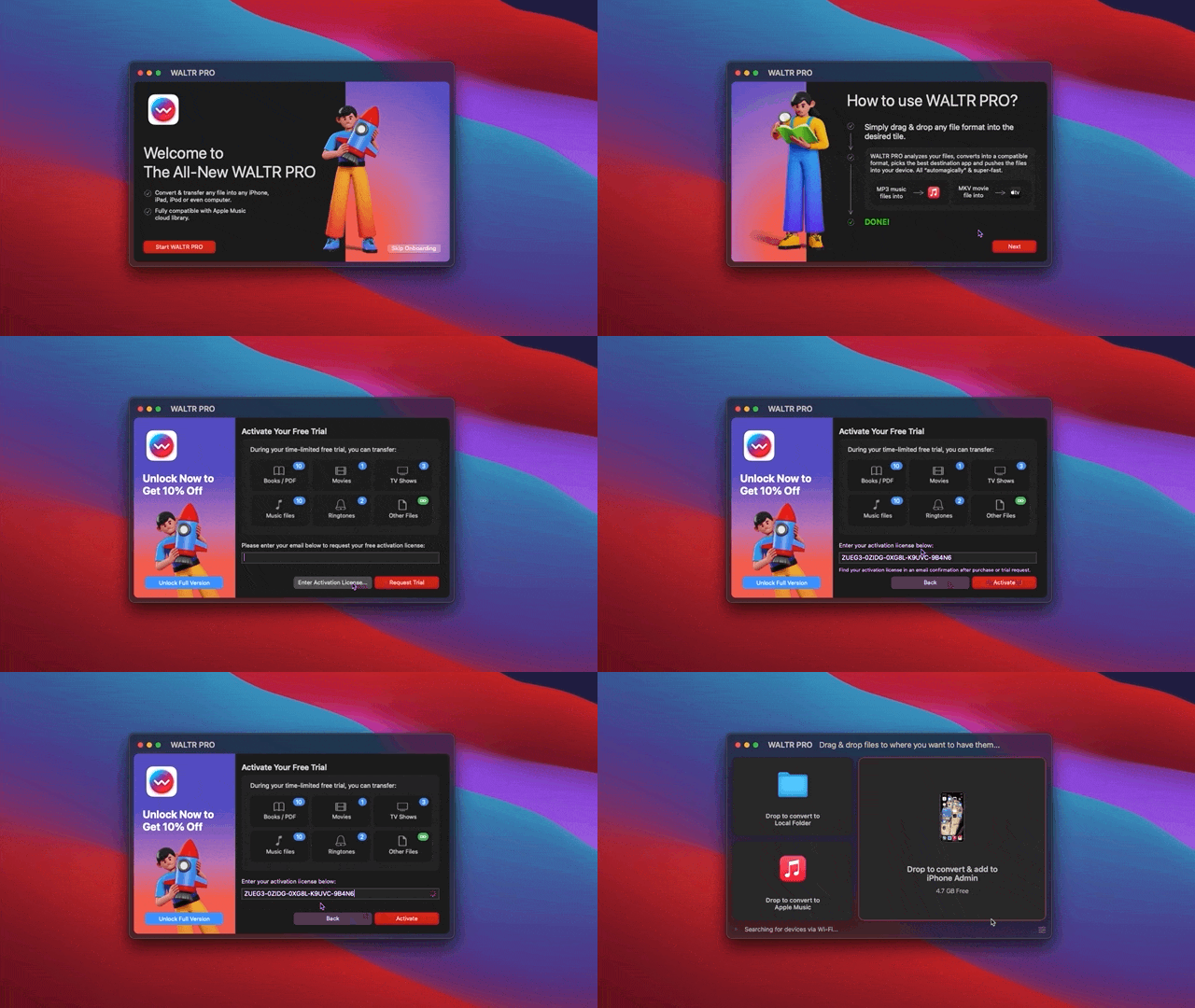
Launch WALTR PRO. You can activate your license or use the free trial to test the WMV conversion workflow with your own file.
Step 3: Connect your Apple device, if needed
If you want the converted file on your iPhone or iPad, connect the device first.
- Use USB for first-time setup.
- Tap Trust This Computer on the device when iOS asks.
- After that, Wi-Fi transfer can work when both devices are on the same network.
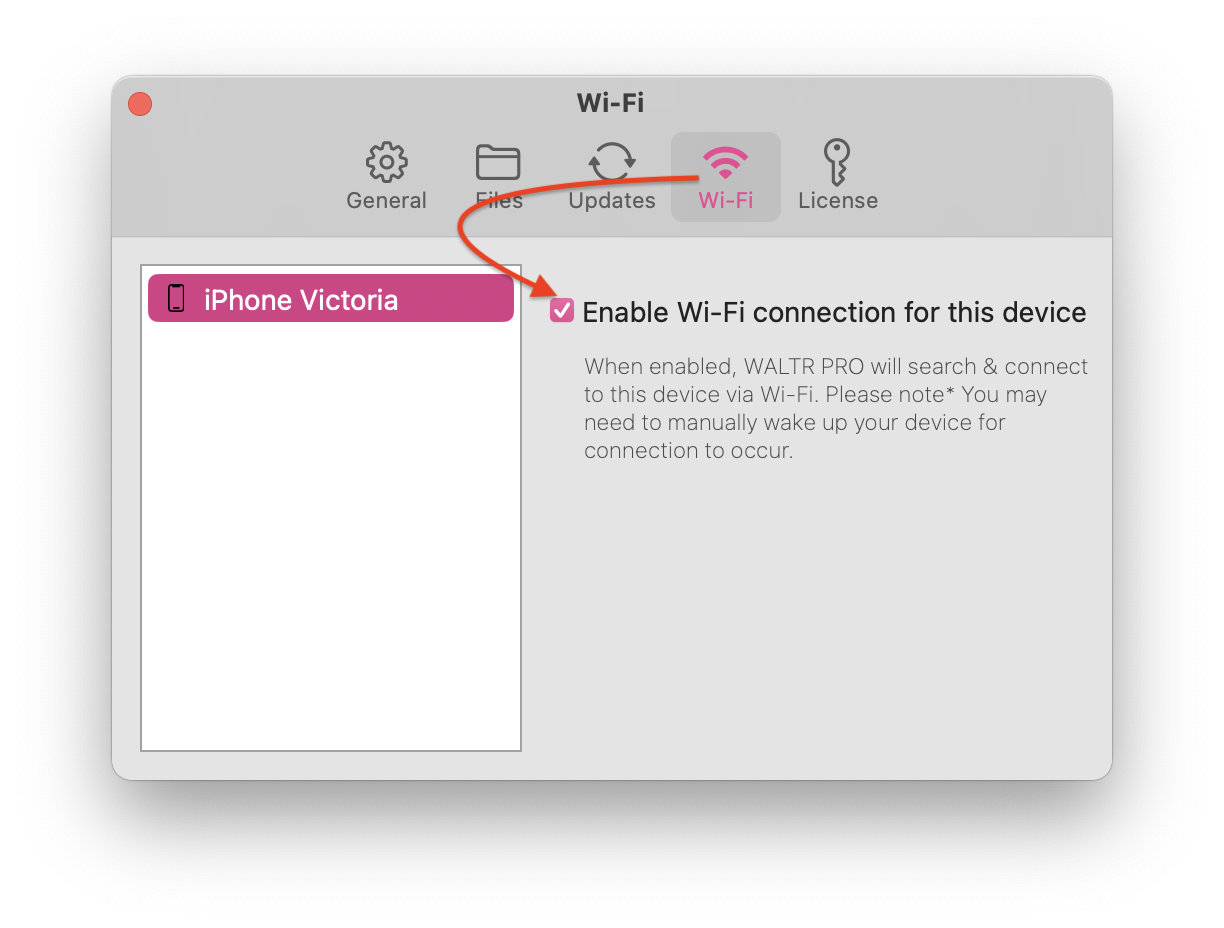
You can also use a local folder destination if you want to create an Apple-compatible file on your computer first.
Step 4: Drag the WMV file into WALTR PRO
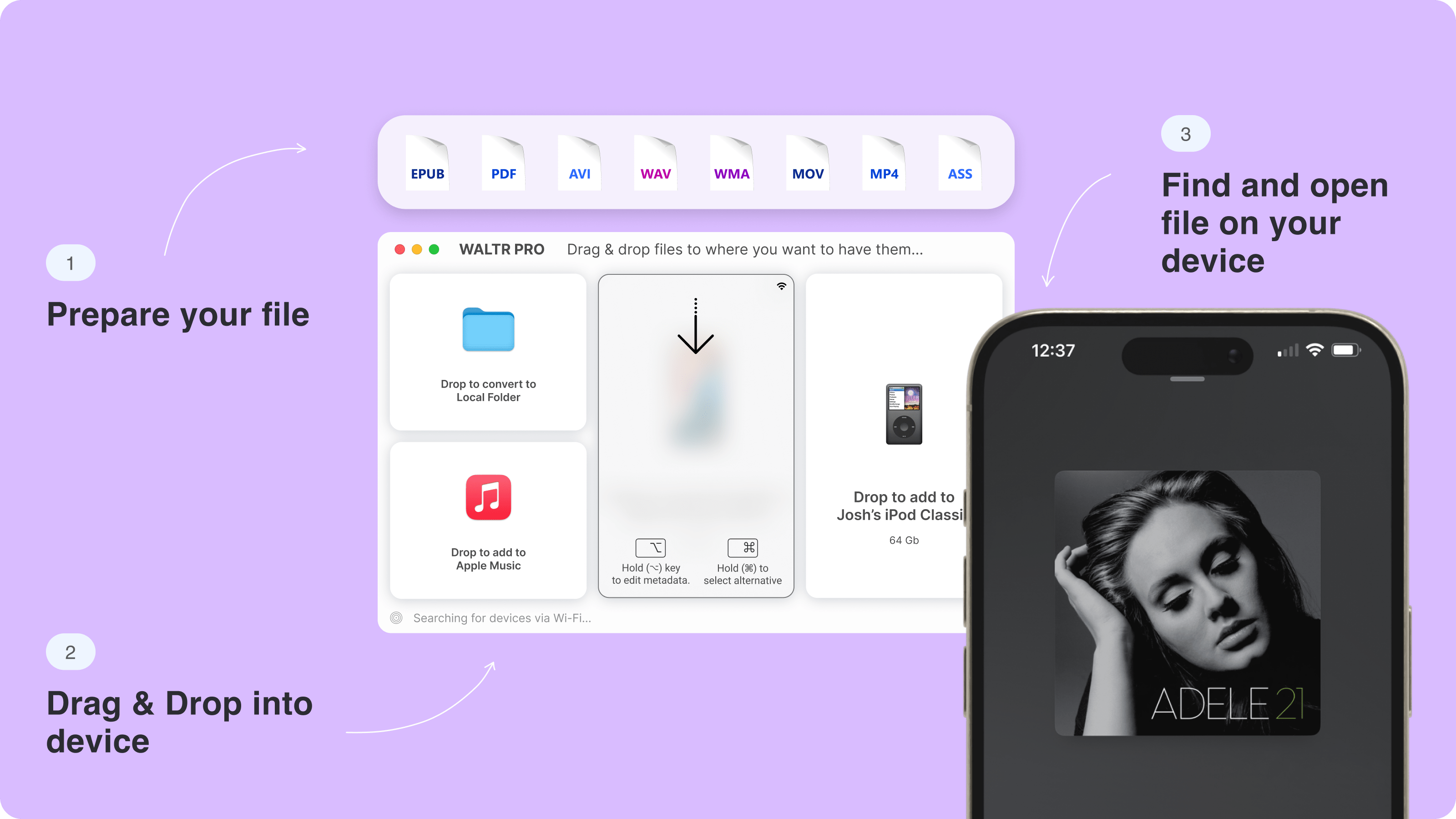
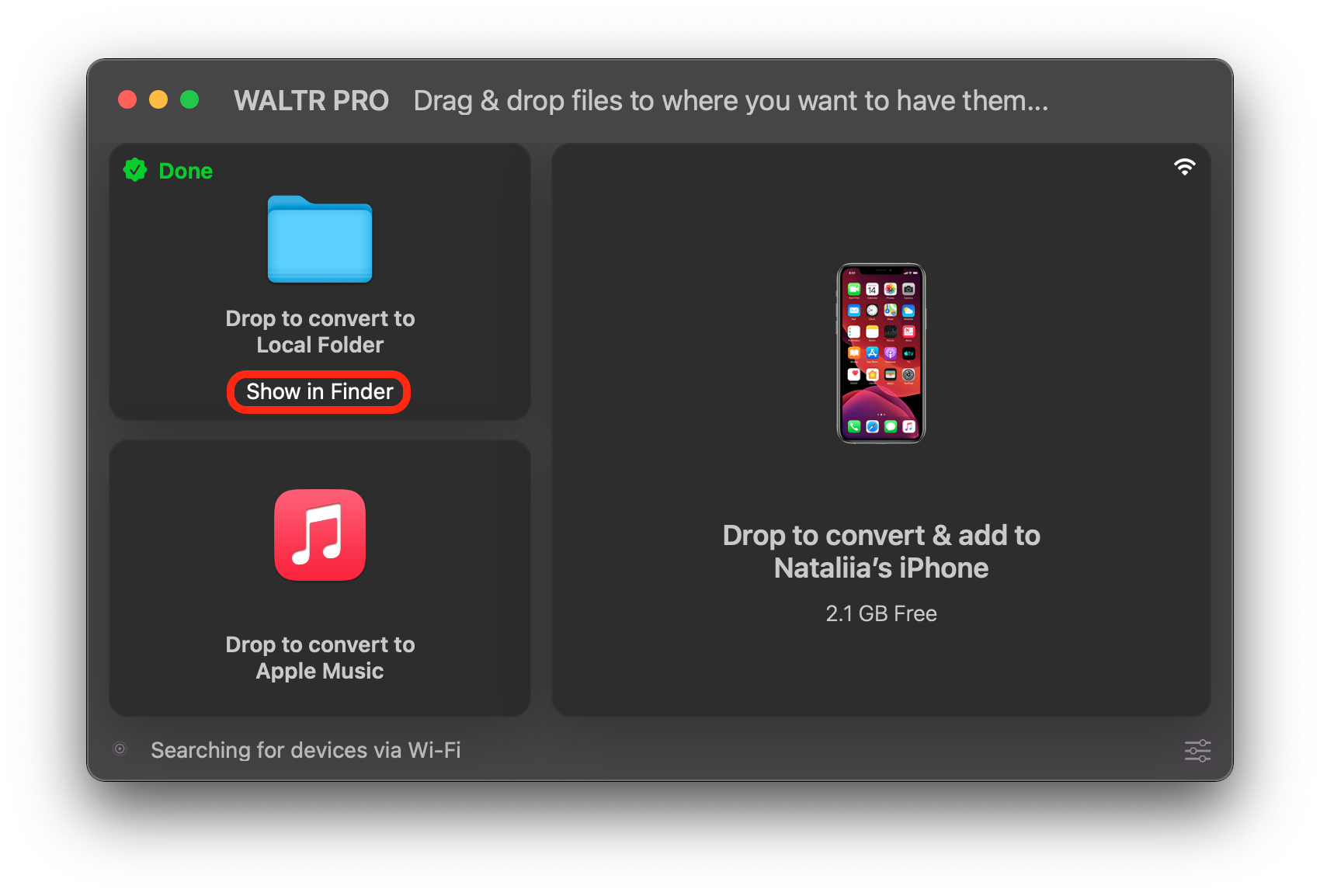
WALTR PRO handles the format work in the background. When it finishes, the file is ready for playback in the right place instead of buried in some folder you will forget about.
- Open the folder that contains your WMV video.
- Drag the file into WALTR PRO.
- Pick the destination: device or local folder.
- Wait while WALTR PRO converts and transfers the video.
How to convert WMV to MP4 online
Online WMV to MP4 converters win on speed. They are good when the file is small, boring, and not private.
The basic flow is usually the same:
That is fine for a short clip. It is not ideal for family videos, client work, medical files, legal files, or anything you would not email to a random website. You are uploading the video to someone else's server. Some services delete files after a set time, but you still need to trust their policy.
Online tools also hit limits. Large WMV files can upload slowly, fail mid-way, or require a paid account. If you have a big archive, a local WMV to MP4 converter will save time and irritation.
- Open an online converter.
- Upload the WMV file.
- Choose MP4 as the output format.
- Start the conversion.
- Download the MP4 file.
How to convert WMV to MP4 with VLC
VLC is free and available on Mac, Windows, and Linux. It can convert many video formats, including some WMV files.
On Windows, the path usually looks like this:
VLC works, but the interface feels like it was designed during a committee meeting in 2008. If the output has no audio or looks wrong, check the selected profile. The safest target is H.264 video with AAC audio inside an MP4 container.
- Open VLC.
- Go to Media > Convert / Save.
- Add your WMV file.
- Click Convert / Save.
- Choose an MP4 profile, usually H.264 video plus AAC audio.
- Pick a destination file name ending in .mp4.
- Start the conversion.
How to convert WMV to MP4 with HandBrake
HandBrake is a strong free option for local conversion. It is better than online converters for private files because everything stays on your machine.
Use this route when you want a smaller MP4, a clear preset, or more control over file size.
One catch: HandBrake may not open every WMV file. Older WMV files can use codecs that do not behave well outside Windows. If HandBrake refuses the file, try VLC, FFmpeg, or WALTR PRO instead.
- Open HandBrake.
- Add the WMV file.
- Choose a preset like Fast 1080p30 or Fast 720p30.
- Set the format to MP4.
- Pick the destination.
- Start encoding.
How to convert WMV to MP4 with FFmpeg
FFmpeg is the power-user route. It is fast, scriptable, and good for batch jobs. It is also a command-line tool, so it is not the friendliest first choice.
A basic conversion looks like this in Terminal or PowerShell:
ffmpeg -i input.wmv -c:v libx264 -c:a aac output.mp4
That command re-encodes the video to H.264 and audio to AAC. It creates an MP4 that works in more places.
If the source codecs are already compatible, you may be able to remux instead of re-encode. Remuxing changes the container without changing the video stream. It is faster and avoids generation loss. But it only works when the codecs inside the WMV file fit the MP4 container.
For most normal users, this is too much work. For technical users with folders full of WMV files, FFmpeg is hard to beat.
Can you convert WMV to MP4 without losing quality?
Sometimes. Not always.
There are 2 different operations people mix up:
Most WMV to MP4 conversion uses re-encoding because WMV codecs usually do not belong inside a normal MP4 file. Good settings can preserve the visible quality well. Bad settings can create blur, blocky motion, audio drift, or giant files.
If quality matters, keep the resolution and frame rate close to the source. Use H.264 with a reasonable quality setting. Do not convert the same file again and again. Every re-encode can degrade the video.
WALTR PRO is useful here because it removes guesswork for Apple playback. It does not force you to upload the file or hand-pick technical settings just to make a WMV play on your iPhone.
- Remuxing changes the container. This can preserve the original video and audio streams when the codecs are compatible.
- Re-encoding creates new video and audio streams. This can look very close to the original, but it is not mathematically identical.
Troubleshooting WMV to MP4 conversion problems
The MP4 has no sound
The audio codec may not have converted correctly. Try exporting with AAC audio. If you used VLC, choose a profile that includes both H.264 video and AAC audio.
The converted MP4 is huge
Your bitrate is probably too high. Use a standard 720p or 1080p preset in HandBrake, or lower the video bitrate in your converter.
The WMV file will not open
The file may be damaged, protected by DRM, or encoded with an old codec. Try opening it in VLC first. If VLC cannot play it, conversion may not work without repairing the file or finding the original source.
The video plays on Mac but not iPhone
The file may be MP4 by extension, but still use a codec iPhone does not support. Convert to H.264 video plus AAC audio, or use WALTR PRO to send the file in an Apple-compatible way.
QuickTime exports MOV instead of MP4
That is expected. QuickTime Player can export movies, but Apple documents those exports as QuickTime movies. If you specifically need MP4, use a WMV to MP4 converter instead.
Which WMV to MP4 method should you use?
Choose based on the real job.
Goal | Use this |
|---|---|
Convert one tiny, non-private clip | Online converter |
Convert a private or large file | VLC, HandBrake, FFmpeg, or WALTR PRO |
Put the video on iPhone or iPad | WALTR PRO |
Convert a batch of files | FFmpeg |
Edit the video before export | A video editor |
Stream video from Mac to Apple TV without converting |
If your goal is "I need this WMV to play on my iPhone," do not make the job harder than it needs to be. Convert it and transfer it in one flow with WALTR PRO. If you use more than one Softorino app, the Universal License covers the core apps for about $3/month.
Final take
WMV is a Windows format. MP4 is the safer format for modern playback. That is the whole story.
For a small public clip, an online WMV to MP4 converter is fine. For private files, large videos, or Apple playback, use a local tool. If you want the cleanest Apple-device route, WALTR PRO converts the file and puts it where you can actually watch it.
You can also keep going with related guides: convert TS to MP4, transfer videos from computer to iPhone, or add subtitles to iPhone video.
If you only need to convert an occasional file, use Softorino's free WMV to MP4 converter. It processes the video locally in your browser without uploading it.
FAQ
How do I convert WMV to MP4?
Use an online converter for a small non-private file, or use a local app like WALTR PRO, VLC, HandBrake, or FFmpeg. Choose MP4 as the output format. For broad compatibility, use H.264 video and AAC audio.
Can Windows Media Player convert WMV to MP4?
No. Windows Media Player can play many WMV files, but it is not a practical WMV to MP4 converter. Use a converter app, VLC, HandBrake, FFmpeg, or WALTR PRO instead.
Why can’t I play WMV files on my iPhone?
The iPhone does not natively handle WMV as a normal playback format. Convert the file to MP4 with iPhone-friendly codecs, or send it through WALTR PRO so it lands ready to play.
What is the best WMV to MP4 converter for iPhone?
WALTR PRO is the best fit when the destination is iPhone or iPad because it handles conversion and transfer in one flow. If you only need a file on your computer, VLC, HandBrake, or FFmpeg can also work.
Is MP4 better than WMV?
MP4 is better for compatibility. WMV can still be useful inside older Windows workflows, but MP4 is safer for phones, browsers, TVs, social apps, and Apple devices.
Can I convert WMV to MP4 on Mac?
Yes. Use a local converter such as WALTR PRO, VLC, HandBrake, or FFmpeg. QuickTime is not the best choice if you need a real MP4 output because it exports QuickTime movie files.
Can I convert WMV to MP4 without uploading the file?
Yes. Use a local desktop app. WALTR PRO, VLC, HandBrake, and FFmpeg can work without uploading your video to a third-party server.
Does converting WMV to MP4 reduce quality?
It can. Re-encoding can change quality, especially with low bitrate settings. Use high-quality settings, avoid repeated conversions, and keep the source resolution when possible.

WALTR PRO
Convert & Push Any File into Any Apple Device
