How to Change Folder Color on Mac in 2026

Here's how to change folder color on Mac in 2026: use the native folder customization option in newer macOS versions, edit the folder icon manually with Preview and Get Info, or use Folder Colorizer for Mac when you want faster styling, multiple folders, emojis, decals, and image backgrounds.
Apple made this confusing for years. Some Macs now have native folder customization. Older macOS versions still need the Preview workaround. And if you want a whole color system instead of one edited icon, the manual route gets old fast.
This guide shows the clean way to do each method, how to undo the change, and what to do when Paste refuses to work in Get Info.
Quick answer: how to change folder color on Mac
The fastest route depends on your macOS version and how many folders you want to change.
Method | Best for | What you need |
|---|---|---|
Native macOS folder customization | Supported newer macOS versions | Finder and the built-in Customize Folder option |
Preview + Get Info | Older macOS versions, one folder at a time | Finder, Preview, and a few copy/paste steps |
Folder Colorizer for Mac | Many folders, custom colors, emoji, decals, images | Folder Colorizer for Mac |
Finder Tags | Sorting and filtering files | Finder tags, not real folder icon color changes |
If you only need one folder changed, try the native or Preview method first. If you want to color-code a whole desktop, project archive, school folder, or client library, use Folder Colorizer for Mac and save yourself the repetitive clicking.
Windows user? This guide is for Mac. Softorino also has a separate guide to change folder colors on Windows.
Before we begin
Download Folder Colorizer for Mac to apply custom colors to Mac folders without rebuilding icons by hand. Decide on a simple color system first so each folder color keeps a clear meaning.
Method 1: Change folder color on Mac with the native option
Newer macOS versions include a native folder customization flow for supported folders. Use this first if your Mac shows the option in Finder. Apple also documents the fallback icon workflow in its folder and file customization guide.
- Select the folder you want to customize.
- Right-click it or open the Finder menu.
- Choose Customize Folder if your macOS version shows it.
- Pick a color, symbol, or emoji from the customization options.
- Apply the change and check the folder in Finder.
This method is the cleanest because it stays inside macOS. No extra app. No icon copy/paste gymnastics.
The catch: not every Mac shows this option. If you do not see Customize Folder, you are probably on an older macOS version or the folder does not support that native flow. Use Preview instead.
Method 2: How to change folder color on Mac with Folder Colorizer
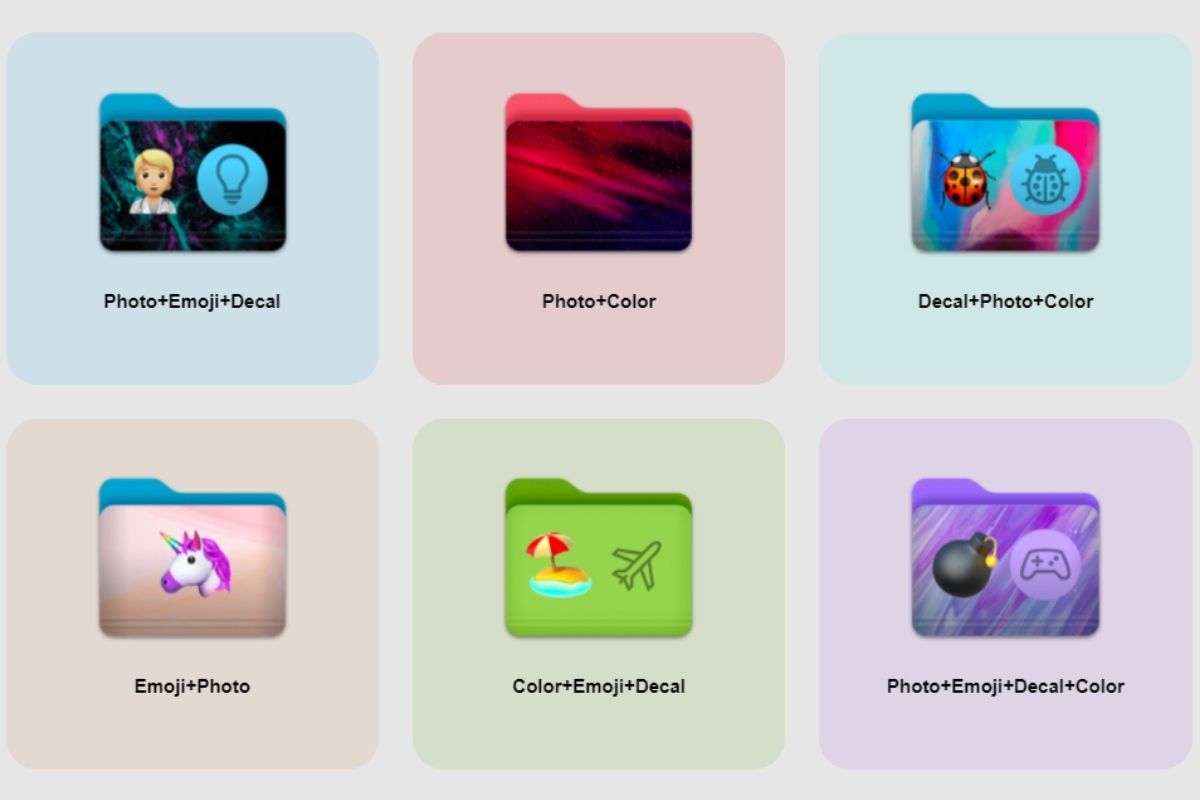
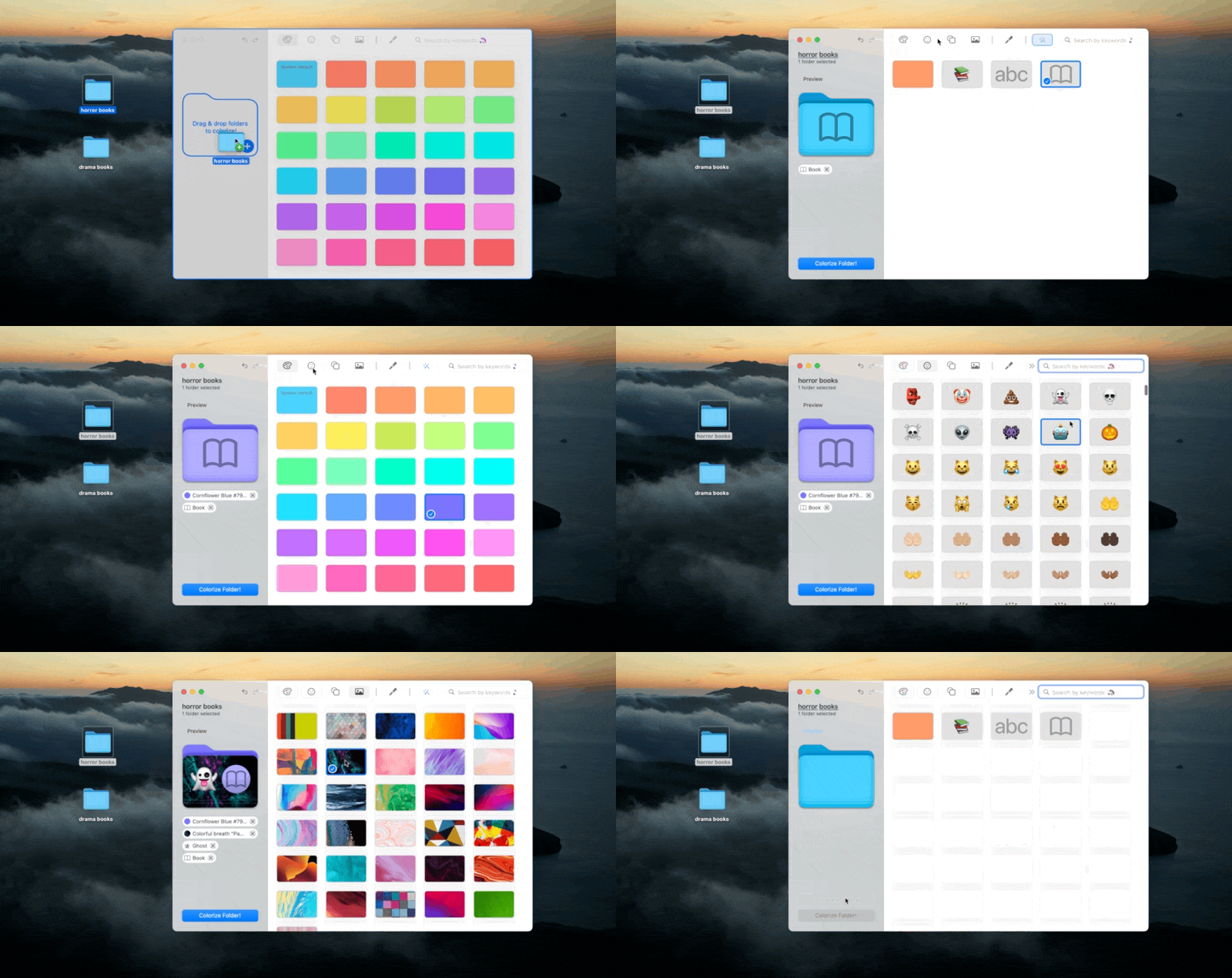
Folder Colorizer for Mac is the faster route when you want more than one colored folder. It lets you change folder colors, add emojis, apply decals, use image backgrounds, style multiple folders, and revert changes without rebuilding every icon by hand.
Use it when you want visual organization, not a one-off icon hack.
Step 1: Download and install Folder Colorizer for Mac
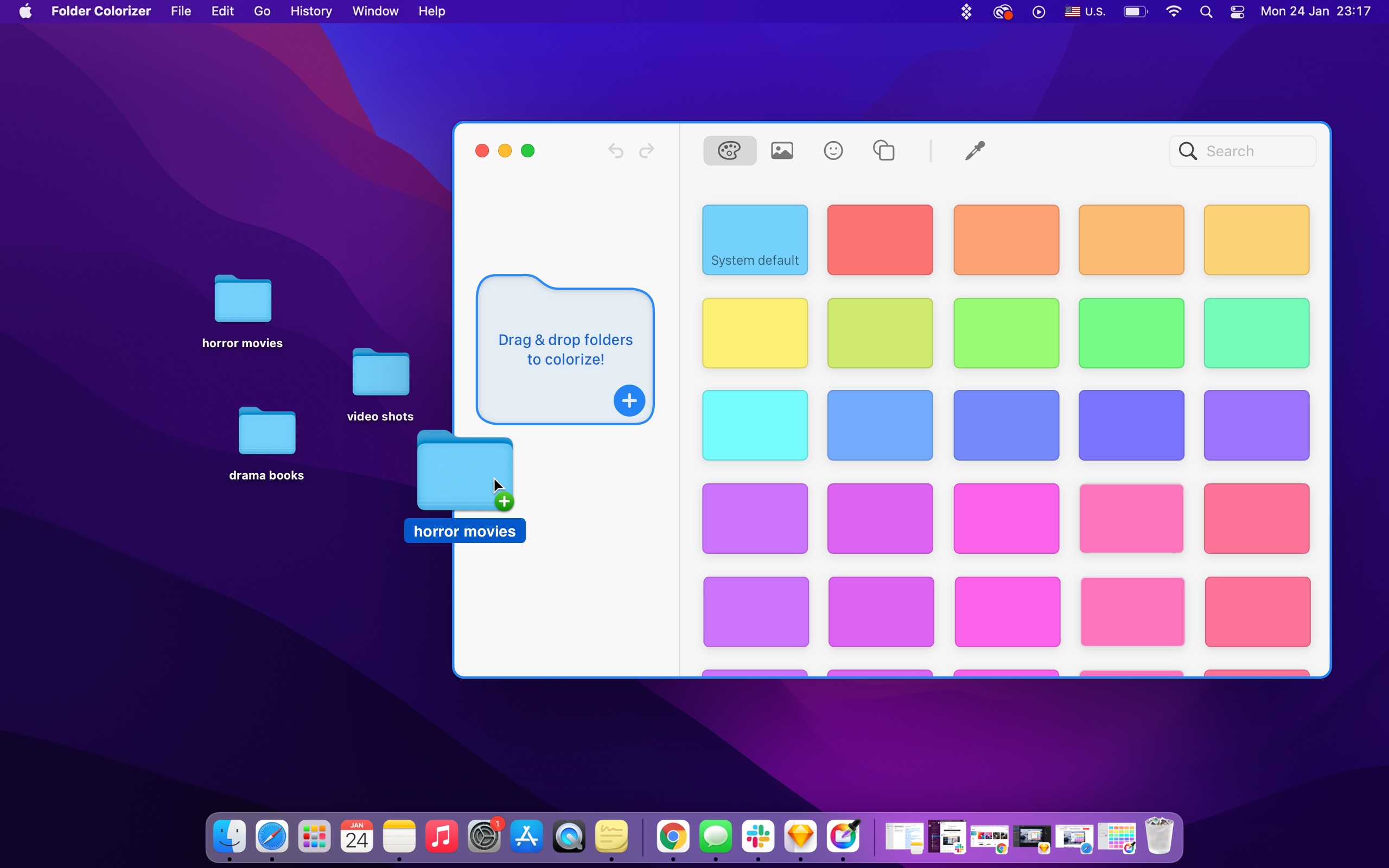
Download Folder Colorizer for Mac, install it, and start the free trial. Add the folders you want to style by dragging them into the app or using the plus button.
You can use Folder Colorizer to:
Change Mac folder colors.
Add emoji or decal markers.
Use your own PNG or JPG images as folder backgrounds.
Apply one design to multiple folders.
Restore folders to their original look.
Step 2: Add your folders
Drag a folder into Folder Colorizer or click the plus icon in the sidebar to choose one from Finder. If you are organizing a project folder, add the related folders together so you can apply a consistent system in one pass.
Step 3: Choose a color
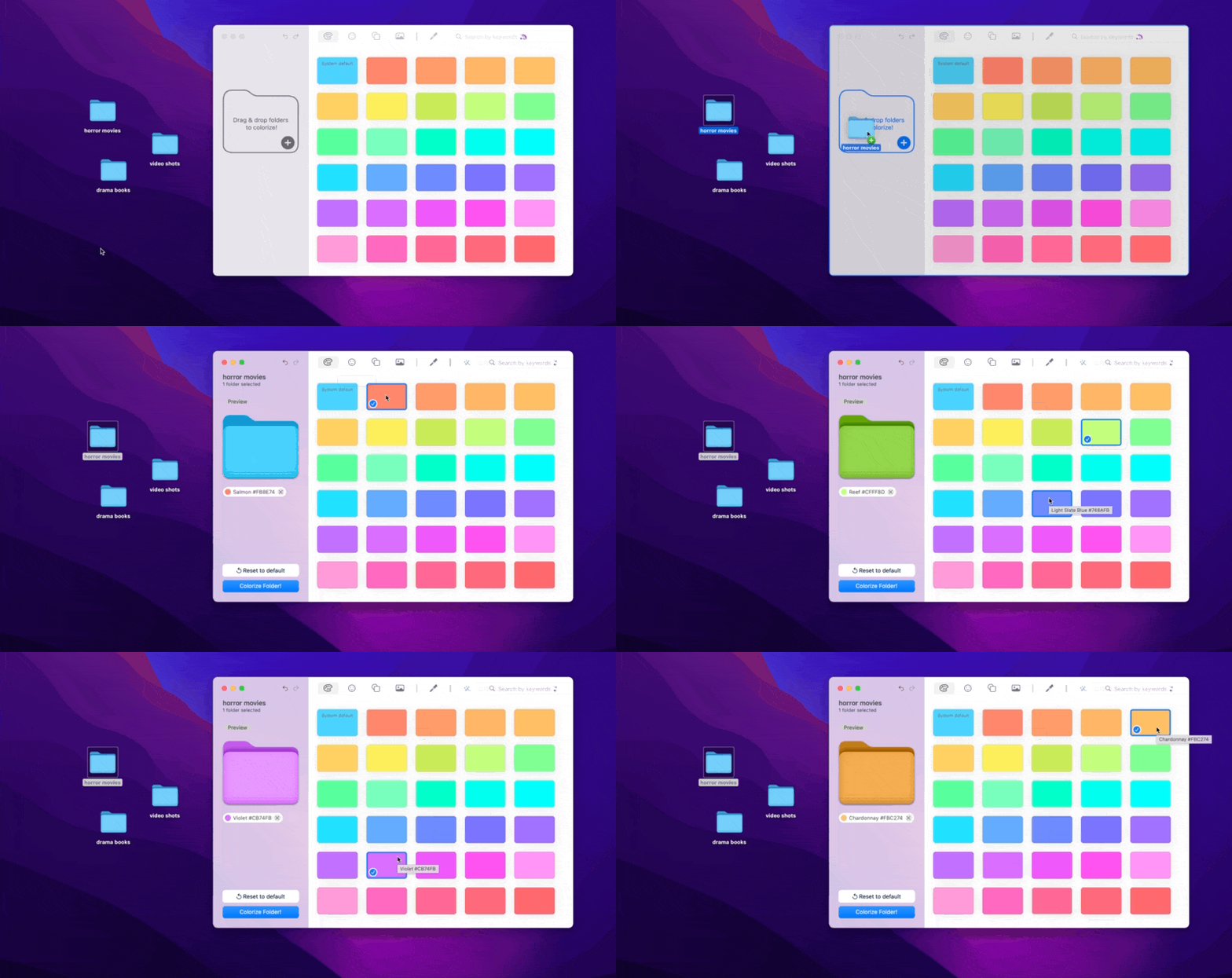
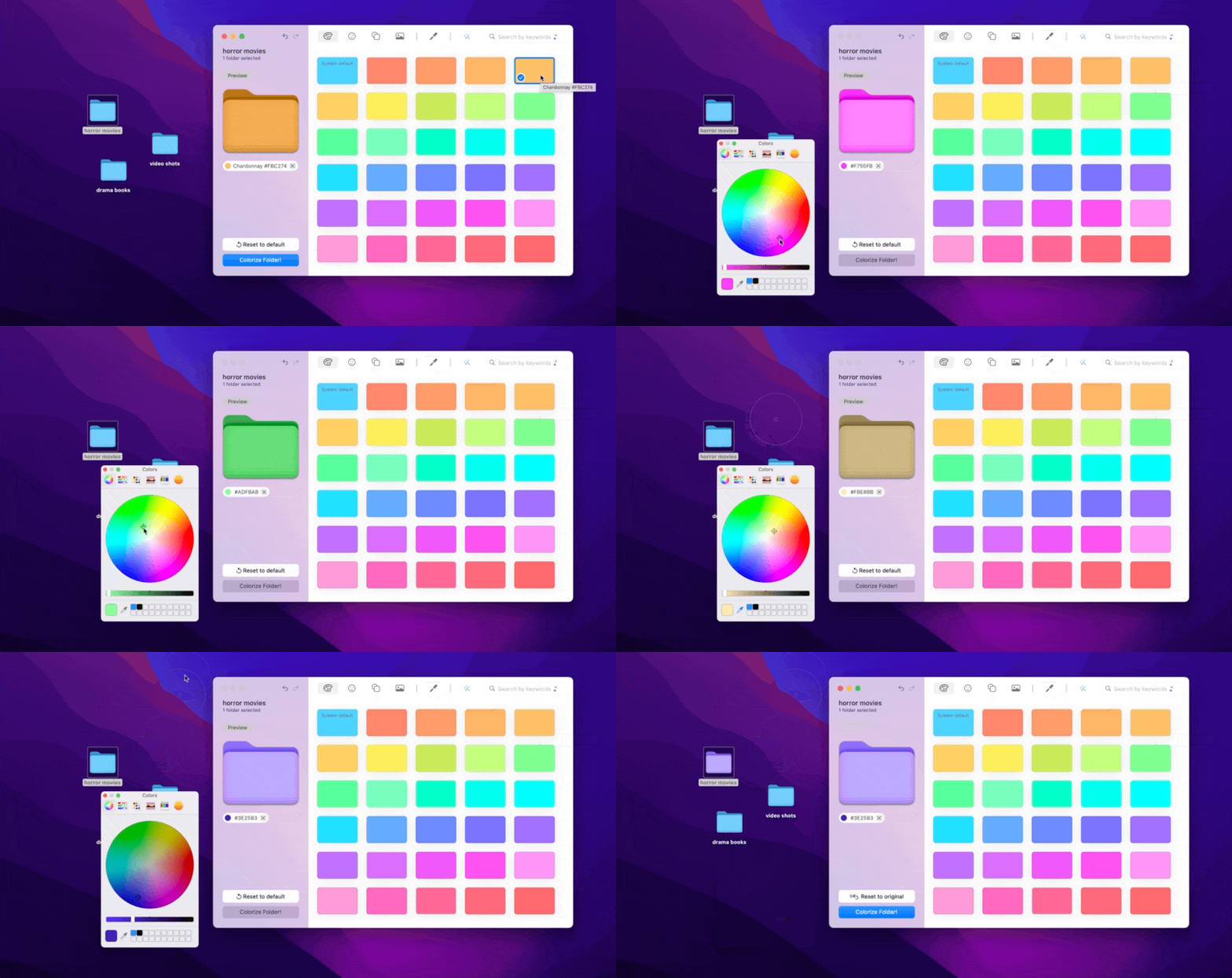
Open Colors Gallery, pick a preset, or create a custom shade with the color picker. Use one color for one meaning. For example, red for urgent, green for active, gray for archive, blue for client work.
Color workflow:
- Open Colors Gallery.
- Pick a preset color or use the Color Picker Panel.
- Adjust the tint until the folder still looks readable in Finder.
Step 4: Add emoji, decals, or images
Folder colors help at a glance. Symbols help when color alone is not enough.
Use emojis for quick categories, such as money, travel, school, or photos. Use decals for project status. Use image backgrounds when you want a folder to stand out without reading the label.

Emoji and symbol workflow:
- Open Symbols Gallery.
- Choose an emoji or symbol.
- Place it on the folder icon.
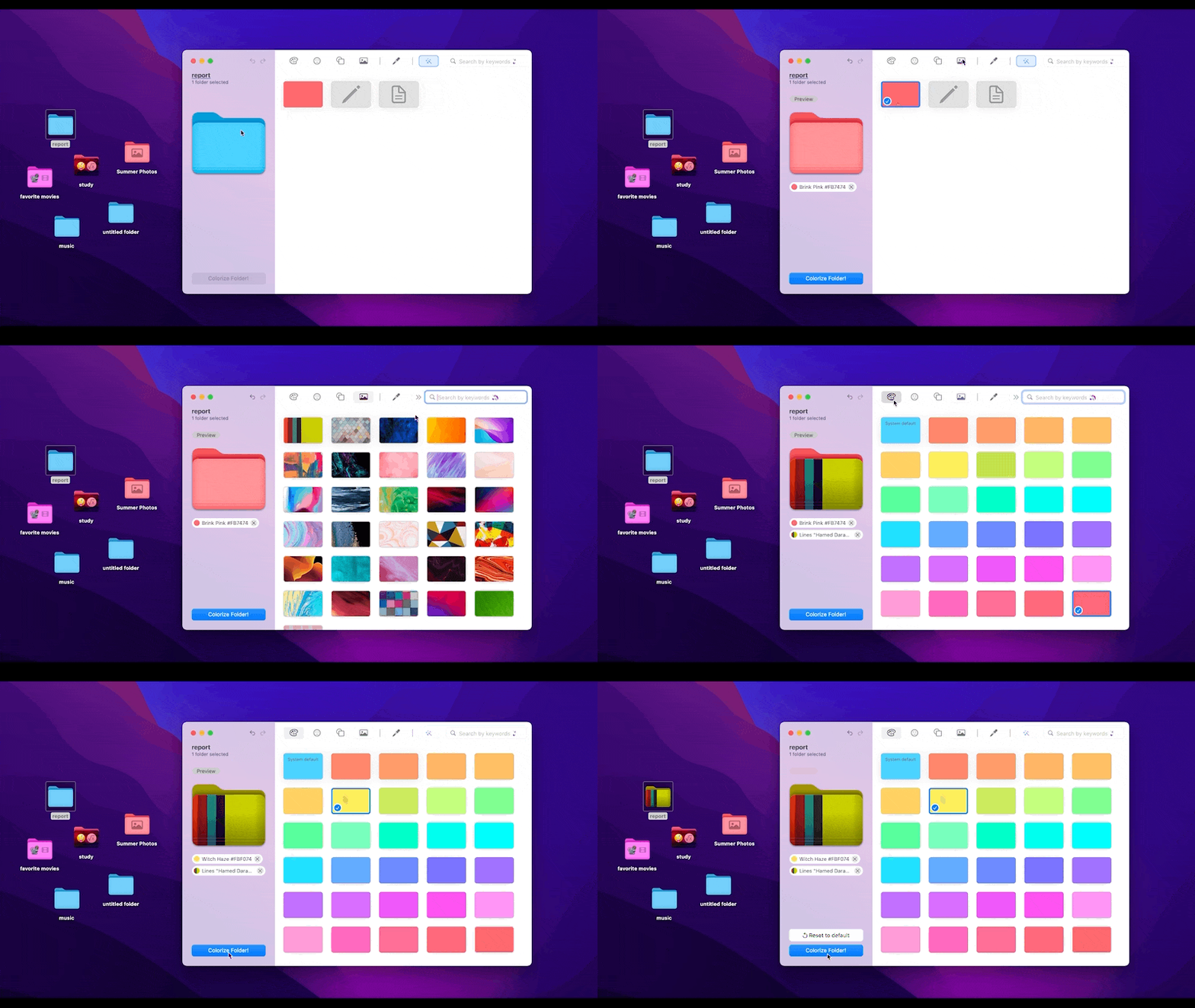
Decal workflow:
- Open Decals Gallery.
- Pick a decal that matches the folder's job.
- Keep the decal simple so it stays clear at small Finder sizes.
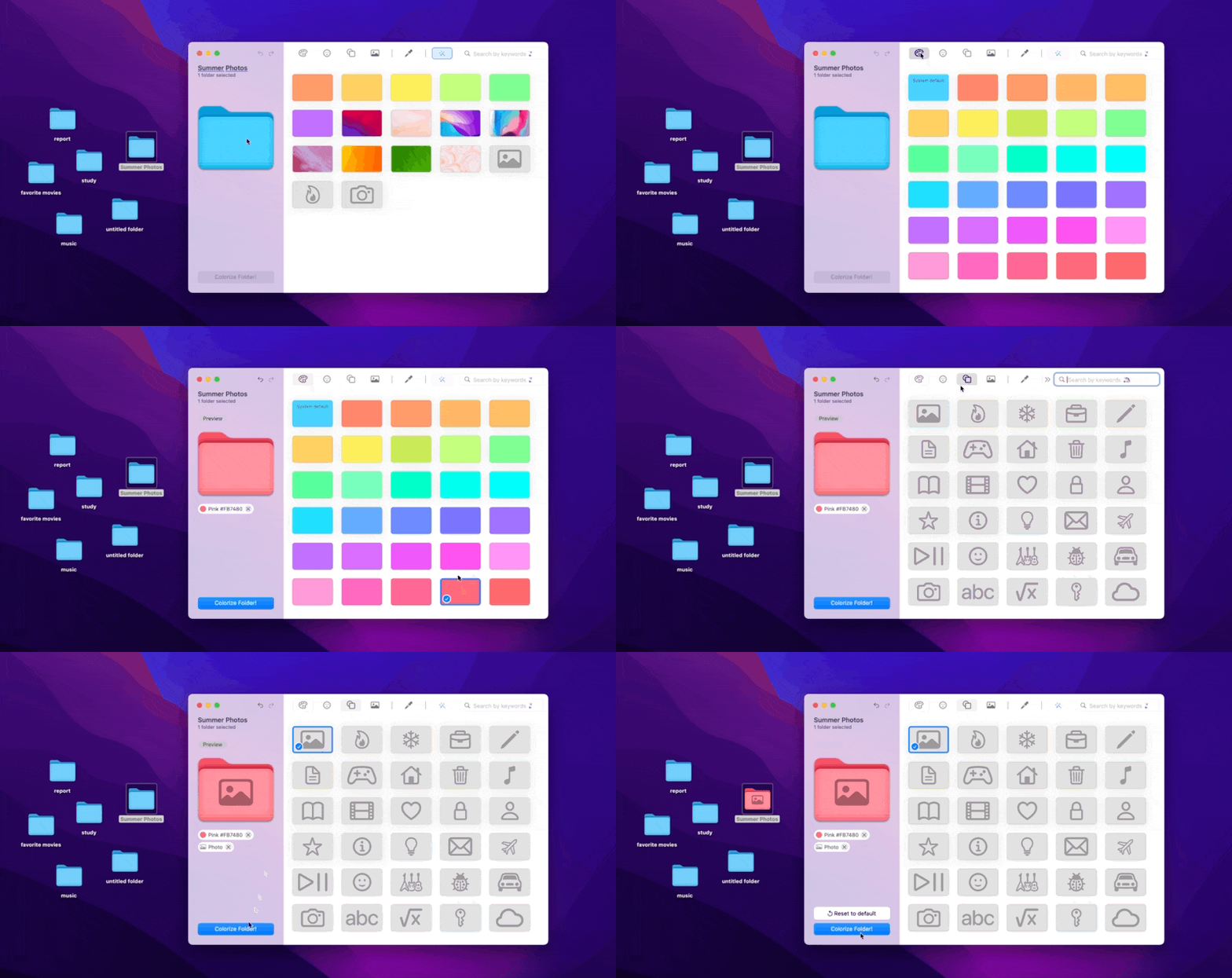
Image background workflow:
- Open Images Gallery.
- Pick a built-in image or upload your own PNG or JPG.
- Preview the folder before applying the design.
Step 5: Preview and apply the folder design
The preview pane shows the folder before you apply the change. Check the color, symbol, and background together. If the label becomes hard to read or the folder looks too busy, simplify it.
Click Apply when the folder looks right.
How to change multiple folder colors on Mac at once
Folder Colorizer is most useful when you style many folders at once. Add multiple folders, create a design, preview the result, and apply it to the whole set.
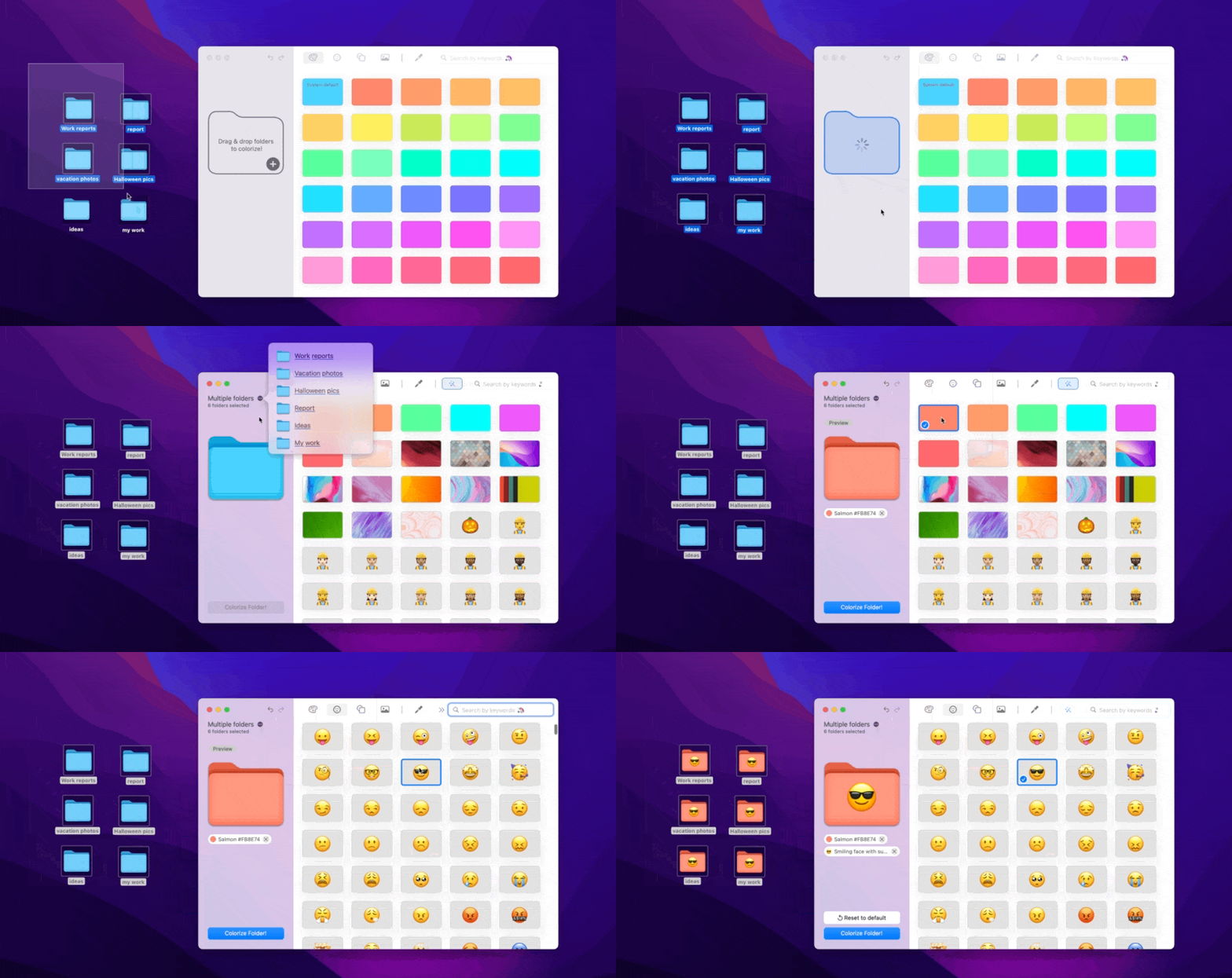
This is the main reason to use the app. Preview can recolor a folder, but it does not give you a sane bulk workflow. Folder Colorizer turns folder styling into one repeatable system.
Use AI Magic when you do not want to design from scratch
AI Magic suggests a folder design based on the folder name. It does not need to read your private folder contents to do that.
- The app looks at the folder name.
- It suggests colors, emojis, and backgrounds that fit the label.
- You can apply the suggestion or adjust it before saving.
Method 3: Change folder color on Mac manually with Preview
The Preview method works on older macOS versions because you are editing the folder icon image itself. It is free, built in, and fine for one or two folders.
The annoying part is precision. You must select the small icon at the top-left of the Get Info window. If you click the large preview icon instead, Paste may stay unavailable.
Step 1: Copy the folder icon
- Right-click the folder you want to recolor.
- Choose Get Info.
- Click the small folder icon in the top-left corner of the Info window.
- Press Command+C.
- Open Preview.
- Choose File > New from Clipboard.
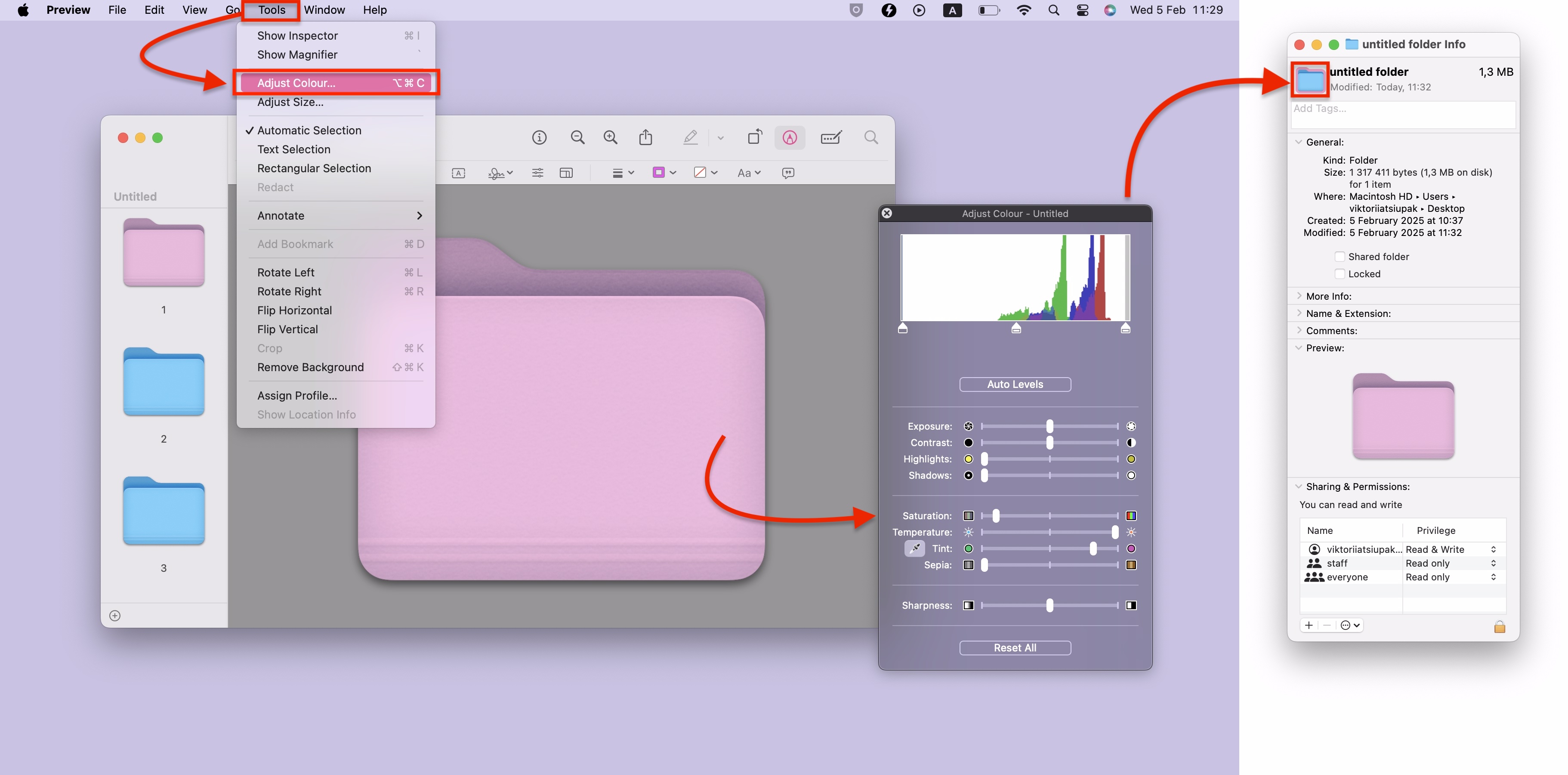
Step 2: Recolor the icon in Preview
- In Preview, open the Markup toolbar.
- Use the color adjustment controls.
- Change tint, temperature, saturation, or exposure until the folder has the color you want.
- Press Command+A to select the edited icon.
- Press Command+C to copy it.
Do not overdo the adjustment. A neon folder looks fun for 5 minutes, then turns your Finder into a warning label.
Step 3: Paste the edited icon back into Finder
- Go back to the folder's Get Info window.
- Click the small folder icon in the top-left again.
- Press Command+V.
- Close the Info window.
- Check the folder in Finder.
The folder should now show the new color. If nothing changes, skip to the troubleshooting section below.
Use a custom image as a Mac folder icon
You can also use a custom image instead of recoloring the default folder icon.
- Copy a PNG or JPG image.
- Right-click the folder and choose Get Info.
- Click the small icon in the top-left corner.
- Press Command+V.
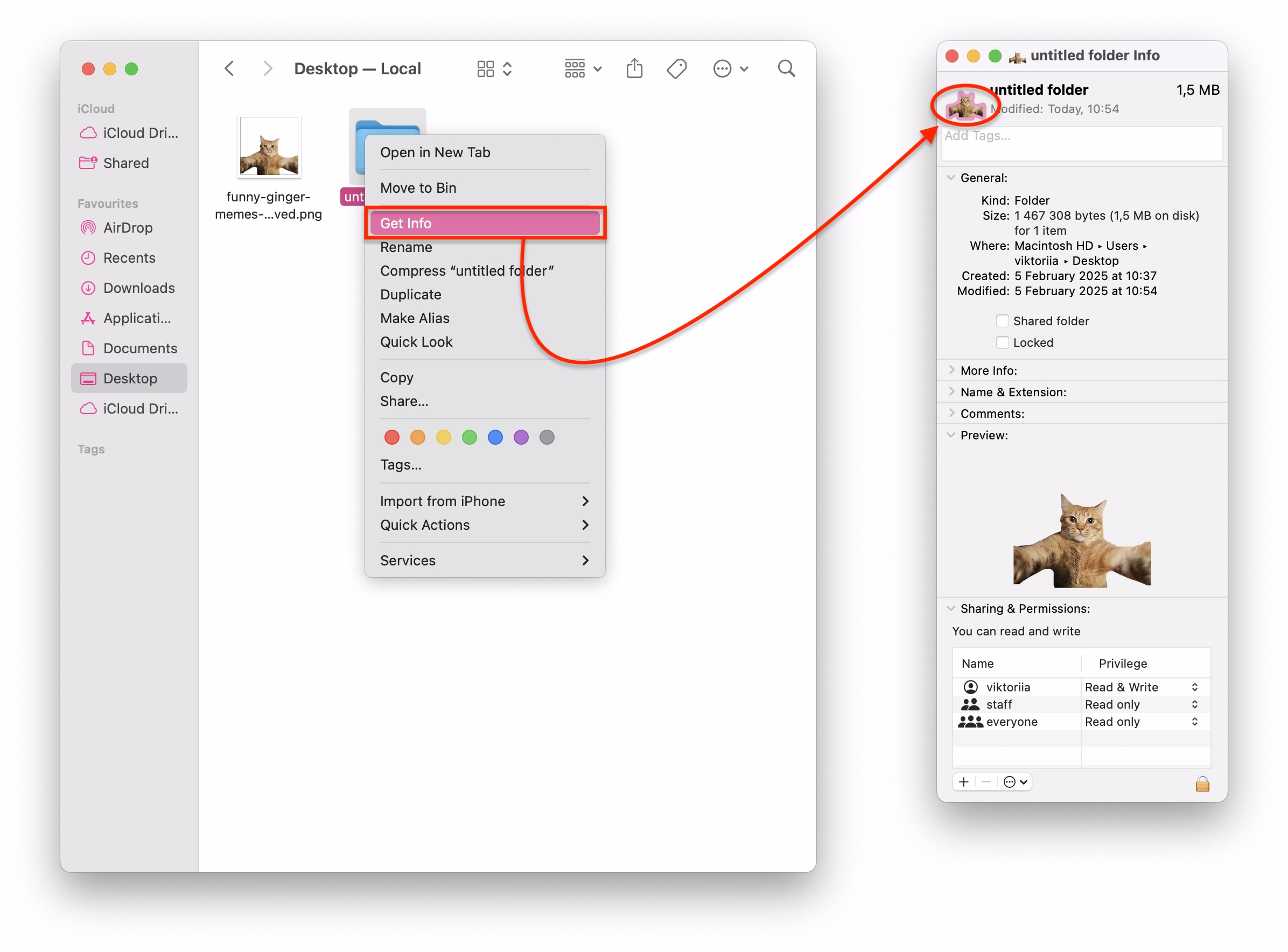
Use a clean image with enough contrast. Busy photos look muddy when Finder shrinks them into an icon.
Finder Tags vs custom folder colors
Finder Tags and custom folder colors solve different problems.
Finder Tags help you sort, filter, and group files across Finder. You can tag folders by project, client, or status. The tag appears as a small colored dot next to the item name.
Custom folder colors change the folder icon itself. That makes folders easier to spot visually when you scan a desktop, Downloads folder, or project directory.
Use Finder Tags when you need filtering. Use folder colors when you need visual recognition. Use both if your Finder is where projects go to multiply.
How to restore the original Mac folder icon
You can undo a custom folder icon from Finder.
- Right-click the folder.
- Choose Get Info.
- Click the small icon in the top-left corner of the Info window.
- Press Delete, or choose Edit > Cut.
- Close the Info window.
macOS should restore the default folder icon. If you used Folder Colorizer for Mac, use the app's restore option to revert the folder to its original look.
Troubleshooting Mac folder color problems
Folder icon changes fail for a few boring reasons. Start here before blaming macOS. It is not always innocent, but it is not always guilty either.
Paste is unavailable in Get Info
You probably selected the wrong icon. Click the small icon at the top-left of the Info window, not the large preview image lower in the panel. The small icon should highlight before you press Command+V.
The folder color did not update
Close and reopen the Finder window. If the icon still looks old, relaunch Finder from the Force Quit menu or restart your Mac. Finder can lag behind icon changes.
The folder resets after sync or a macOS update
Manual icon changes can reset when folders sync through iCloud, move between drives, or after some macOS updates. Folder Colorizer for Mac is a better fit if you need styles to stick across iCloud folders, shared folders, external drives, or another Mac.
You cannot change a protected system folder
Leave protected system folders alone. Focus on your own folders: Desktop, Documents, project folders, client folders, downloads, archives, school folders, and external drives.
The custom image looks blurry
Use a clear PNG or JPG with enough resolution. Tiny images stretch badly when macOS turns them into folder icons.
Mac folder color ideas that stay useful
A color system works only if you can remember it next week. Keep it boring enough to use.
Red: urgent work or deadlines.
Green: active projects.
Yellow: waiting on someone else.
Blue: client folders.
Purple: creative assets.
Gray: archive or completed work.
Do not customize every folder. You want signal, not confetti. Color the folders you reach for every day and leave the rest alone.
Wrap-up: pick the method that matches the job
If your Mac supports the native folder customization option, start there. If you are on an older macOS version and only need one folder, Preview and Get Info work fine.
If you want a visual folder system, use Folder Colorizer for Mac. It handles colors, emojis, decals, image backgrounds, multiple folders, iCloud/shared folders, external drives, and easy restore without making you repeat the Preview method all afternoon.
Softorino also includes Folder Colorizer for Mac in the Universal License, along with the rest of its Mac and iPhone utility apps.
FAQ
How do I change folder color on Mac?
Use the native Customize Folder option if your macOS version supports it. On older macOS versions, copy the folder icon from Get Info, recolor it in Preview, then paste it back onto the small icon in Get Info.
Can I change folder color on Mac without Preview?
Yes, if your macOS version supports native folder customization or if you use Folder Colorizer for Mac. Older macOS versions usually need Preview for the built-in manual method.
Can I change multiple folder colors at once on Mac?
Yes. Folder Colorizer for Mac lets you apply a folder color or design to multiple folders at once. The manual Preview method only changes one folder at a time.
How do I add emojis or images to Mac folder icons?
Use Folder Colorizer for Mac to add emojis, decals, or image backgrounds. You can also paste a custom image through Get Info, but the app gives you a cleaner preview and faster repeat workflow.
How do I restore the default folder icon on Mac?
Right-click the folder, choose Get Info, select the small icon in the top-left, then press Delete or choose Edit > Cut. If you used Folder Colorizer, use its restore option.
Are Finder Tags the same as changing folder colors?
No. Finder Tags add small colored labels for sorting and filtering. Changing folder color changes the folder icon itself, which is better for visual scanning.

AltTunes
Seamlessly Browse, Manage & Export iOS Data
