How to Put Music on iPod 2026 Without Deleting Songs

Quick Answer: How to Put Music on iPod
To put music on an iPod, transfer compatible local files with WALTR PRO or Apple’s music-management tools. Choose by iPod model and computer OS. WALTR PRO supports Shuffle on Windows only. Apple offers manual adding as well as automatic sync. Cancel any erase prompt; protect irreplaceable songs before changing the library.
The video below is a general WALTR PRO demonstration, not a new test of every iPod generation. The steps here follow current Apple and Softorino documentation; no new on-device testing took place.
Before we begin
Download the WALTR PRO free trial to transfer selected local songs without an iTunes library sync. Use Mac or Windows for supported models, but Windows only for iPod Shuffle. Check the model guidance below before connecting an iPod with songs you cannot replace.
Pick a method based on your model and library. Apple’s manual music management can add selected tracks too. Raw disk copying only stores files; it does not add them to the playable music library.
Method | Best for | Model / computer | What to check |
|---|---|---|---|
WALTR PRO | Selected files and conversion. | Mac or Windows; Shuffle is Windows-only. | Legacy models may need Disk Use and Apple drivers. |
iTunes manual music management | Adding selected library tracks. | Classic, Nano and Shuffle on Windows. | Disable automatic sync and review device settings. |
Finder / Apple Devices | Managing an iPod touch library. | Finder on modern Mac; Apple Devices on supported Windows setups. | Check selected content before applying sync. |
Raw disk copying | External file storage only. | Compatible legacy iPods. | Files copied this way are not added as playable songs. |
Quick Takeaways Before You Transfer
- Identify the iPod model before choosing an app. Classic, Nano and Shuffle use a cable.
- WALTR PRO transfers selected local files; Shuffle support is Windows-only.
- Apple supports manual music management as well as automatic sync. Cancel unexpected erase prompts.
- Disk storage and playable music are different. Use a music-management app for listening.
- Keep another copy of irreplaceable songs. After setup, confirm playback with a few MP3 or AAC tracks.
Check Your iPod Before Transferring Music
An iPod touch has apps and wireless options that a Classic, Nano or Shuffle does not. Start by identifying the model and checking the computer’s operating system. Do not use a phone tutorial as proof that the same controls exist on a click-wheel iPod.
For Classic and Nano, WALTR PRO may need Disk Use enabled. Softorino’s Mac recognition guide describes that option in iTunes and confirms that Shuffle support is Windows-only. On a Mac without iTunes, do not look for an app you no longer have; ask support for the route that fits your setup.
Before you transfer music, check these details:
- Model: iPod touch, Classic, Nano or Shuffle.
- Cable: use a compatible data cable and a secure computer connection.
- Battery: charge the iPod before a long transfer.
- Storage: check free space before queuing a large folder.
- Files: start with ordinary DRM-free MP3 or AAC songs you own or have permission to copy.
- Existing songs: if the iPod holds your only copy, arrange a safe copy or recovery plan before changing its library.
Protect your old songs first. A selected-file transfer is not a backup. WALTR PRO avoids an iTunes library sync, but that is not a no-data-loss guarantee. If you see an erase or replacement prompt, cancel it until you understand the change and have another copy of anything irreplaceable.
Method 1: Put Music on iPod Without iTunes Using WALTR PRO
WALTR PRO combines selected-file transfer with conversion. Drag local songs into the app rather than rebuilding an iTunes music library. Apple’s manual method also lets you select tracks; WALTR PRO is useful when you want that file-based workflow plus format conversion.
Use a cable for iPod Classic, Nano and Shuffle. Wireless transfer applies only to supported iOS devices, such as compatible iPod touch setups. WALTR PRO also offers metadata editing for titles, artists, albums and artwork. Its product page lists supported inputs and device features.
Step 1: Download WALTR PRO and connect your iPod
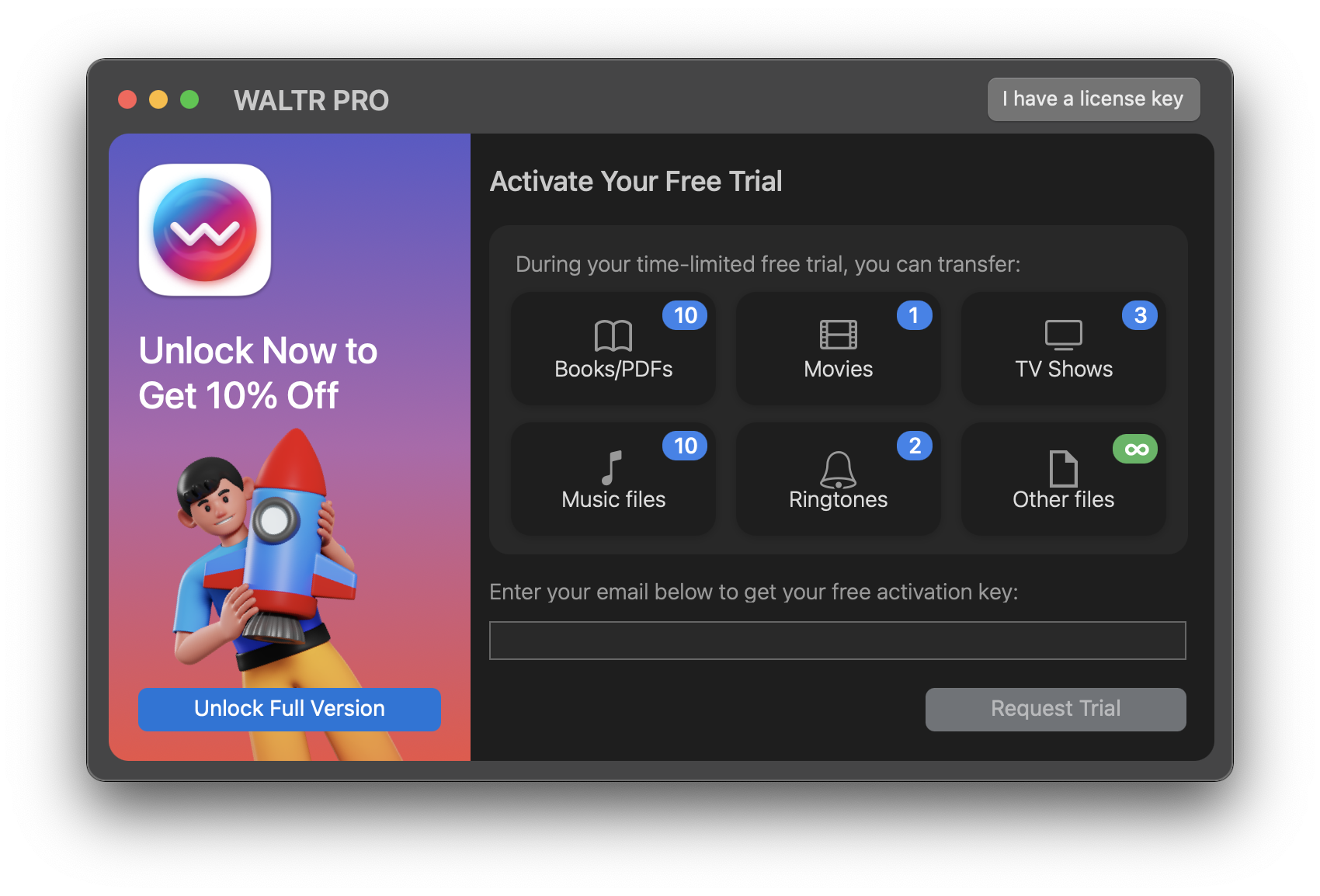
Install WALTR PRO from Softorino and check the current trial terms in the app. The historical trial screen below is an illustration, not a current quota or discount offer. Choose the version for your computer; Shuffle requires Windows.
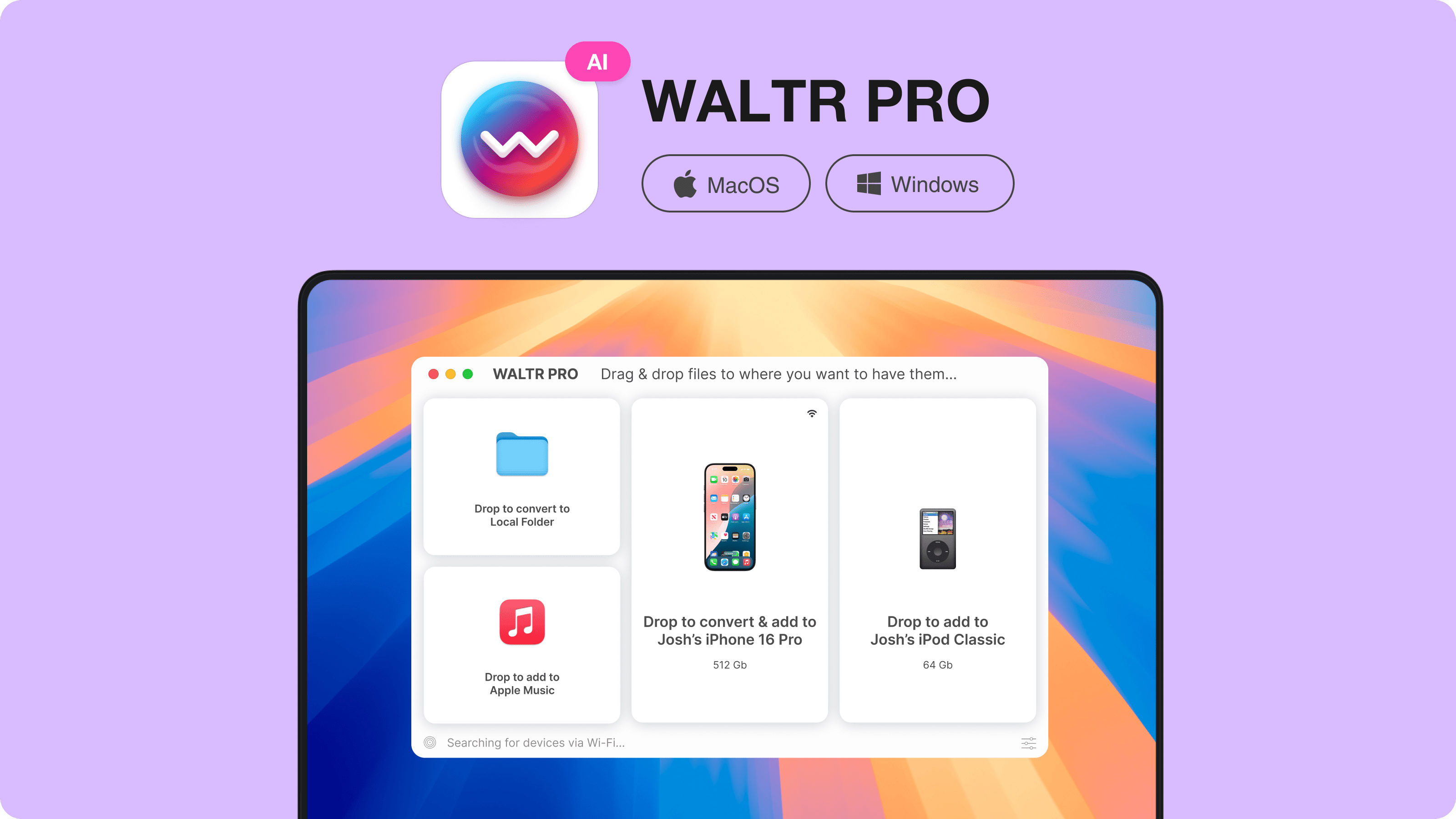
Connect the iPod by USB, then choose its destination in WALTR PRO. For Windows recognition problems, follow Softorino’s driver and Disk Use guidance below. On an iTunes-equipped Mac, the vendor guide describes Enable Disk Use for Classic and Nano. The graphic below illustrates destinations, not those settings or a completed transfer.
Step 2: Drag music from your computer to WALTR PRO
Open the folder with your music files. Drag selected songs or an album into the WALTR PRO drop zone and choose the connected iPod. You can also use the folder button to browse for files. Start with a few compatible tracks before queuing more.
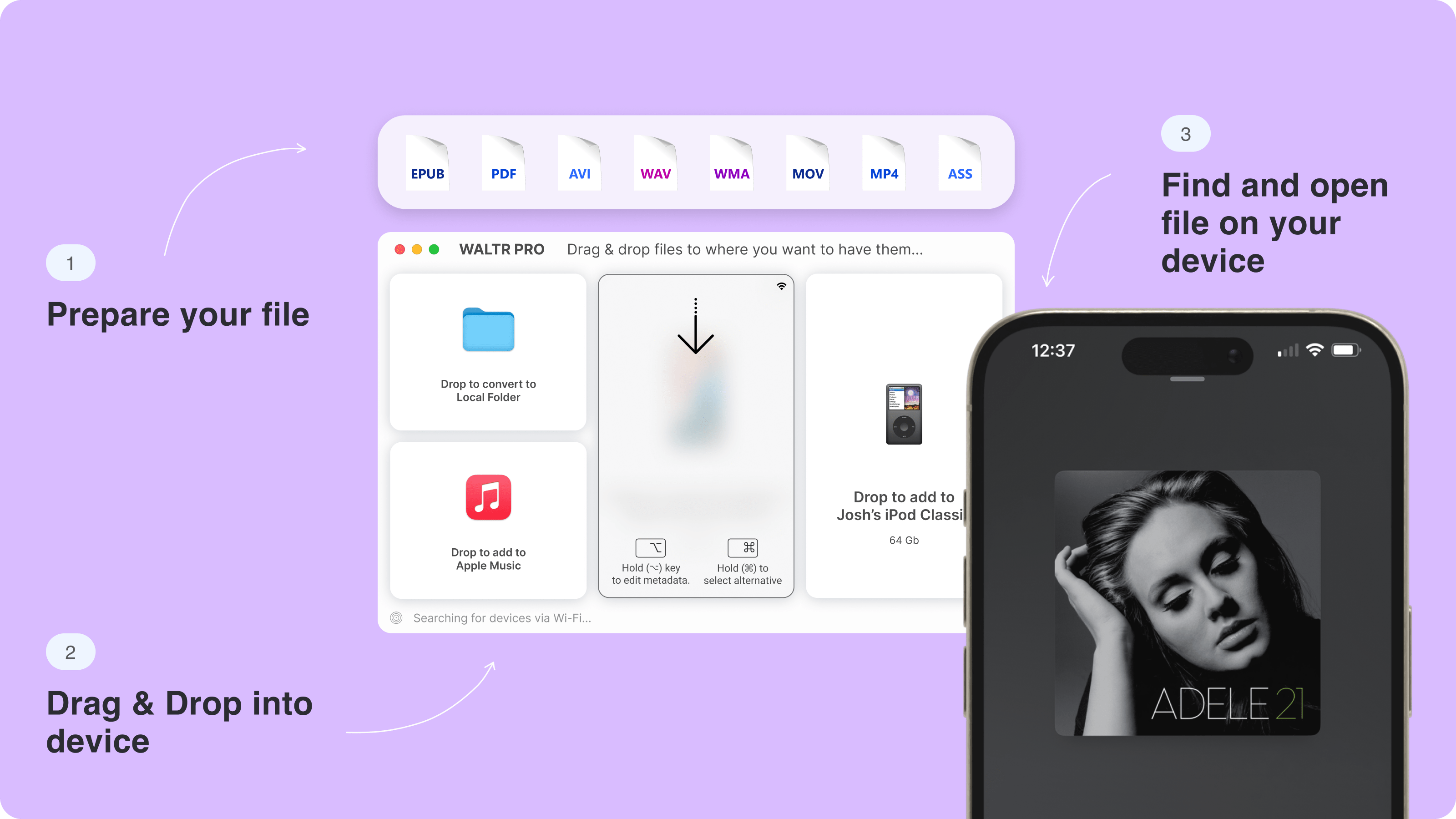
The graphic above illustrates drag and drop with an iPhone as well as an iPod destination. Its PDF, subtitle and video icons do not establish support for those files on your iPod. For this music workflow, choose audio files and confirm playback on the actual model.
Step 3: Edit song details before transfer
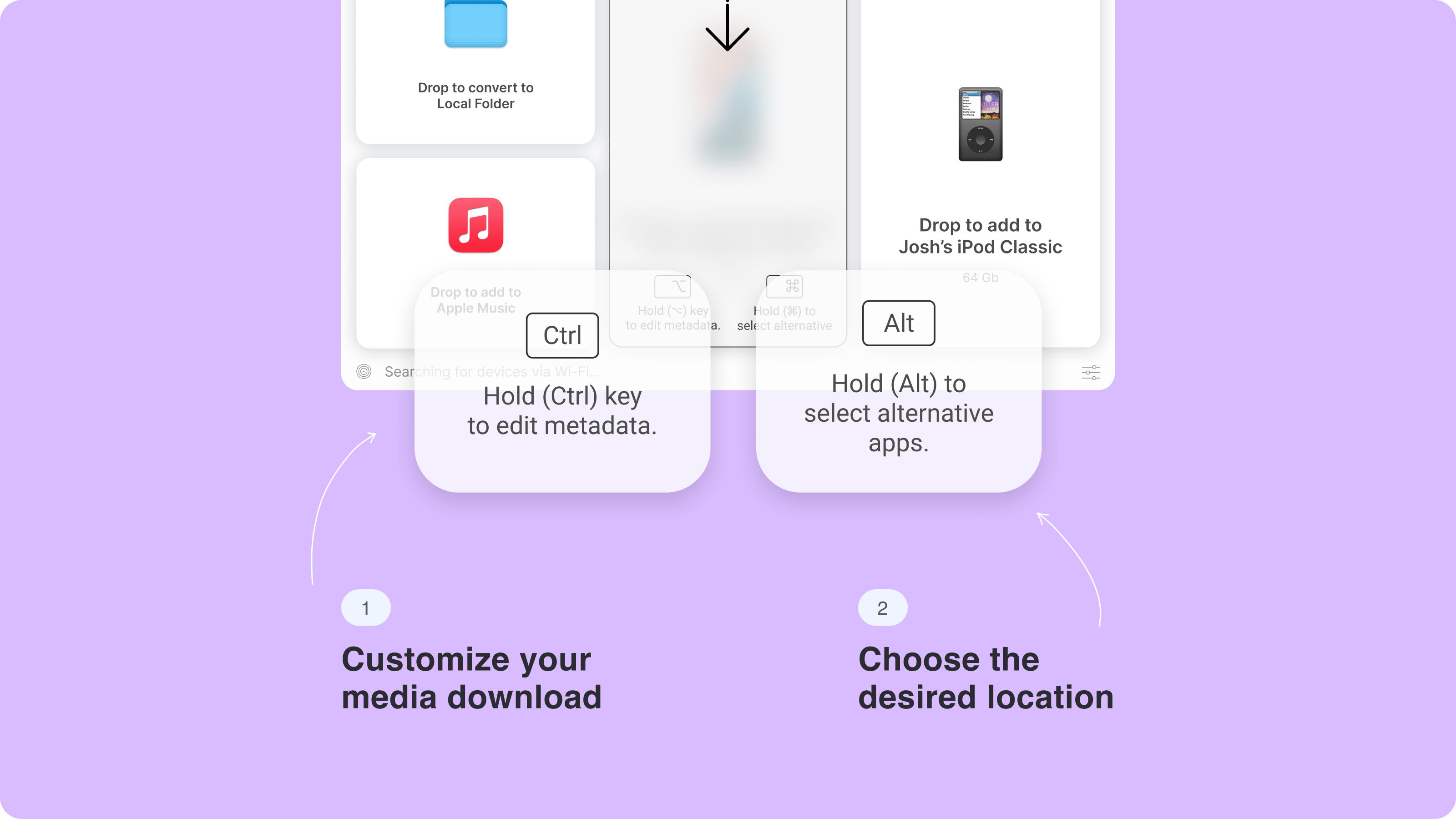
If the song title, artist, album or cover art looks wrong, edit the fields before sending the track. The illustration below uses Windows Ctrl/Alt labels; Mac shortcuts differ. Its alternative iOS app destinations do not apply to a click-wheel iPod.
- Edit metadata: adjust title, artist, album, genre, or artwork before sending the track.
- Keep albums together: transfer album folders instead of scattering single tracks across different folders.
- Use clean filenames: “Artist - Song.mp3” beats “track-final-v7.mp3” when metadata is missing.
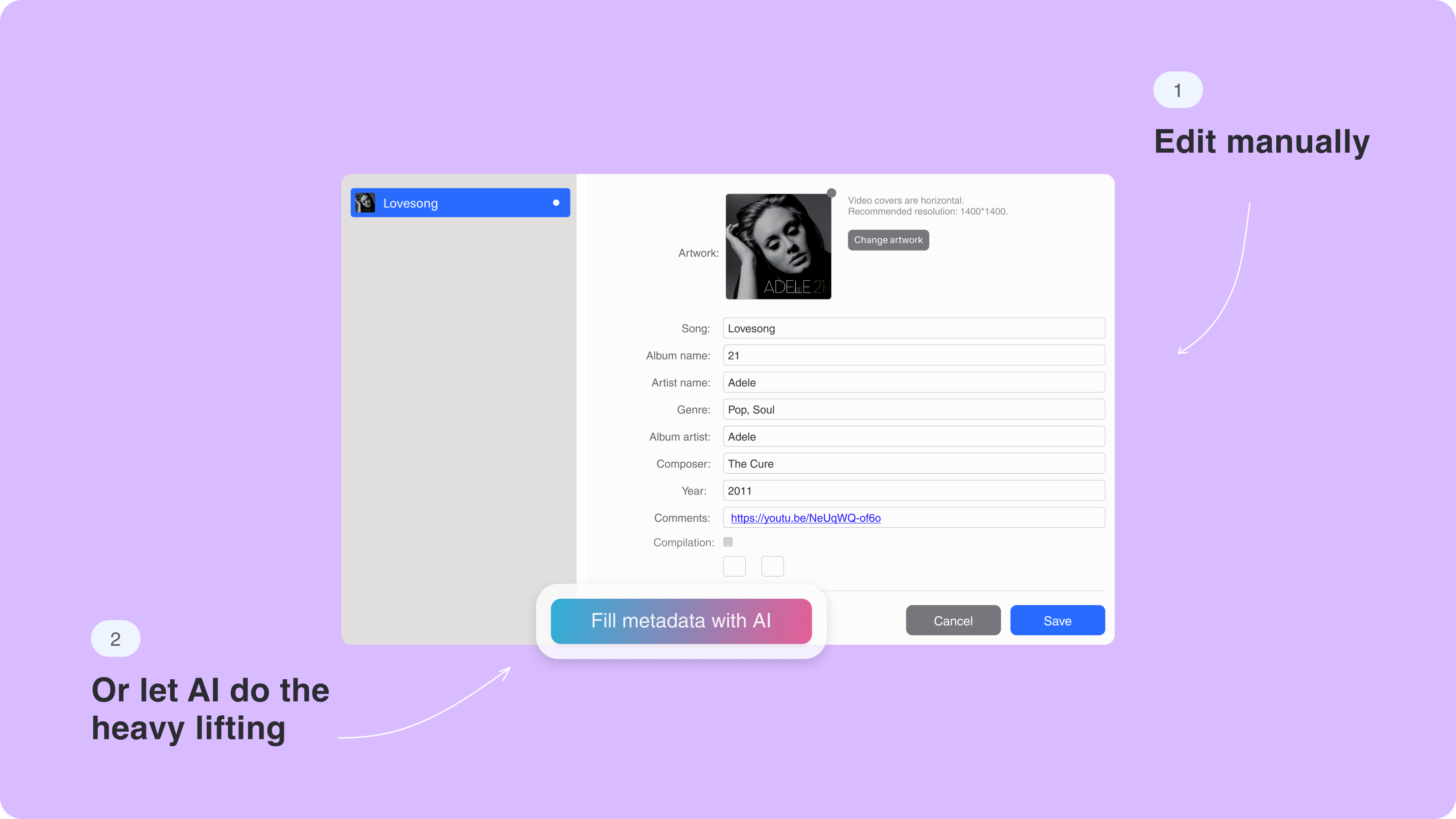
Optional: let WALTR PRO fill metadata with AI
Use Fill Metadata with AI if you want help filling track details and artwork. Review the suggested fields before sending the music. The desktop editor below illustrates that control; it is not an iPod Music screen or proof that every suggested tag is correct.
Step 4: Wait for WALTR PRO to finish and eject the iPod
Let the transfer finish before unplugging the cable, then eject the iPod from the computer. On touch, open Music; on Classic or Nano, check the music menu. On Shuffle, connect headphones and confirm audio playback instead of looking for a screen.
Check the added tracks before sending a larger folder. If songs are missing, use the troubleshooting section below rather than repeating the full transfer. Keep the original music files on your computer.
Why WALTR PRO Works Well for Old iPods
Selected-file workflow: add local songs without an iTunes library sync.
Format conversion: use supported inputs such as MP3, AAC, FLAC and WAV. Output depends on the device and file.
Drag and drop: choose files from a computer folder.
Metadata editing: review titles, artists, albums and artwork before transfer.
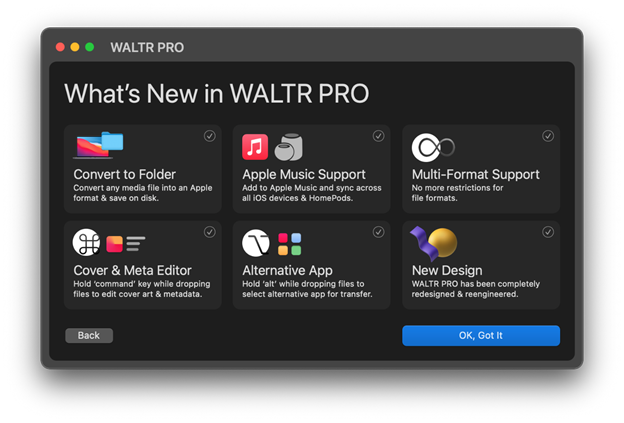
The historical feature panel above shows WALTR PRO features across devices. Alternative apps and other iOS features are not available on Classic, Nano or Shuffle. For an old iPod, the relevant job is transferring playable local music with suitable tags.
If you want a comparison of other transfer tools, read our iPod music-transfer alternatives guide. This tutorial focuses on moving songs from your computer to the iPod, not exporting or recovering its existing library.
How to Transfer FLAC and WAV Music to iPod
Start with ordinary MP3 or AAC tracks when checking a connection. Once playback works, try the other formats in your library. A file that WALTR PRO accepts as input is not necessarily a format your iPod plays natively.
WALTR PRO accepts inputs including FLAC, APE, WAV, MP3, AAC and AIFF, and converts unsupported playback formats as needed. For the distinction between a FLAC source and the file on the player, read our iPod Classic FLAC guide.
Do not assume every old model preserves the source format, sample rate or lossless quality. The iPod generation, file and conversion route matter. Confirm playback with a small batch before moving the rest of the collection.
Source format | File type | What it means for transfer |
|---|---|---|
MP3 / AAC | Lossy audio. | Useful starter files for a playback check. |
WAV / AIFF | Usually uncompressed audio. | Large files; check space and model limits. |
FLAC / APE | Lossless audio. | Accepted inputs are not a promise of native iPod playback. |
ALAC | Apple Lossless audio. | Confirm support for the particular iPod and file. |
Method 2: How to Put Music on iPod with Apple Tools
Apple offers manual adding as well as automatic syncing. For Classic, Nano and Shuffle on Windows 10 or later, use iTunes, not Apple Devices. Apple’s syncing introduction names these models and explains manual music management with multiple libraries.
- Windows with Classic, Nano or Shuffle: use iTunes to manage the music library and device.
- Windows with iPod touch: use the supported Apple Devices setup; Apple Music manages the computer library.
- macOS Catalina or later with iPod touch: use Finder for device sync and Music for the library.
- An older Mac with iTunes: use its supported device-management workflow. Check recognition before changing a legacy iPod’s library.
- In iTunes on Windows, open Edit > Preferences > Devices and enable the option to prevent automatic iPod syncing before connecting.
- Add compatible local songs to the iTunes library, then connect and select the iPod.
- Review the device Summary settings and the manually manage music option. Cancel any erase prompt if the consequences are unclear.
- For manual adding, choose downloaded items in the library and drag them to the device. Review selections before applying any change.
- Wait for the operation to finish, then eject the iPod. Confirm playback before adding more music.
Review the settings for the method you chose. Apple’s iTunes step guide distinguishes manual adding, automatic sync and Autofill. Avoid Autofill’s replace-all option if you want to keep existing songs. For iPod touch on modern Mac, follow Apple’s Finder sync guide; those Touch instructions do not establish support for every legacy model.
Why Disk Copying Does Not Add Playable iPod Songs
Disk Use lets a compatible iPod store files like an external drive. Copying an audio file there through Explorer or Finder does not add it to the playable music library. Apple’s manual music management, described above, adds tracks through the music software instead.
- If you copied files onto the iPod as a disk, keep the originals on your computer.
- Use WALTR PRO or Apple’s supported music-management workflow to add playable tracks.
- Eject the iPod after the transfer, then check its music menu or listen on Shuffle.
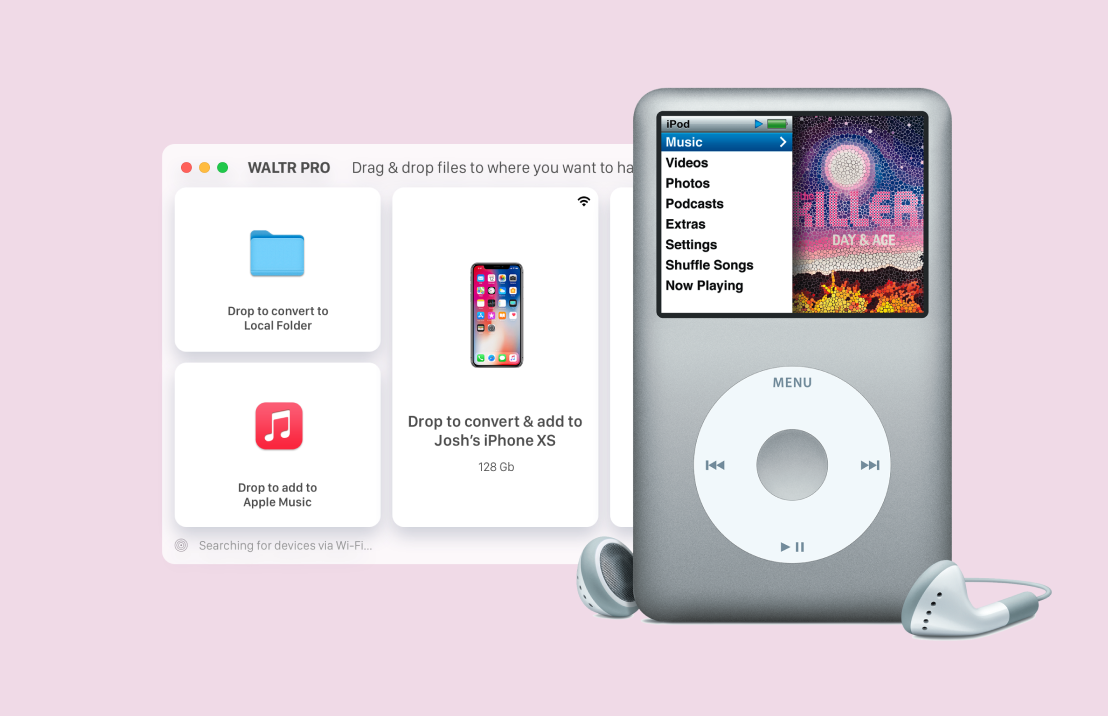
The image below returns to the WALTR PRO/iPod workflow. It is not a Disk Use screenshot. The background destination is an iPhone; its Wi-Fi indicator does not show wireless support for the click-wheel iPod in front.
Troubleshooting: When Music Will Not Transfer to iPod
Start with the cable, battery, free space and model-specific recognition settings. Change one part of the setup at a time so you can identify the cause. Do not reset or erase an iPod to solve a transfer problem before protecting its existing songs.
WALTR PRO does not see the iPod
Try another data cable and restart WALTR PRO. Unlock an iPod touch if needed. For Classic, Nano or Shuffle on Windows, Softorino’s recognition guide covers standalone iTunes, drivers and Enable Disk Use. “Without iTunes sync” does not mean no Apple software components. For a Mac without the documented controls, contact support rather than guessing.
Songs transferred, but I cannot find them on the iPod
Check whether you used a real music transfer method or only copied files in disk mode. Disk mode can store files without adding them to the playable music library. Also test with a normal MP3 file before transferring a full FLAC folder.
Apple sync wants to erase the iPod
Cancel the prompt. An erase request can mean the device is linked to another library or that the selected settings would replace content. Read the exact message and arrange another copy of irreplaceable songs before proceeding. Switching transfer apps is not a backup or recovery plan.
Apple Music or Spotify tracks will not move
Subscription tracks are not normal local music files. Do not try to copy DRM-protected Apple Music or Spotify songs to an old iPod Classic. Use music files you own, such as MP3, AAC, WAV, FLAC, or ALAC.
The transfer is slow
Keep the iPod connected until the operation finishes. Try a smaller batch and check free space. Classic, Nano and Shuffle use cable transfer; Wi-Fi troubleshooting applies only to supported iPod touch setups. A different cable can help diagnose repeated disconnects, but it does not guarantee faster transfers.
Best Method by iPod Model in 2026
iPod model | Selected-file option | Apple route / caveat |
|---|---|---|
iPod touch | WALTR PRO on supported Mac or Windows setups. | Finder on modern Mac; supported Apple Devices or iTunes setup on Windows. |
iPod Classic | WALTR PRO over a cable. | iTunes on Windows; check the available Mac controls. Disk Use may be needed. |
iPod Nano | WALTR PRO over a cable. | iTunes on Windows; check the available Mac controls. Disk Use may be needed. |
iPod Shuffle | WALTR PRO on Windows only. | iTunes on Windows is also an option. Confirm audio playback; there is no screen. |
Unknown iPod | Identify the model before transfer. | Do not accept erase prompts while investigating. |
How to add songs to iPod Nano in 2026
Use a cable and check the Nano’s free space. If WALTR PRO cannot see it, follow the recognition guide for your computer. Enable Disk Use where the documented iTunes control is available. Confirm playback with a small album before adding more; generation-specific format limits still apply.
How to put music on iPod Shuffle in 2026
Use WALTR PRO on Windows, not Mac, for iPod Shuffle. Connect with the correct cable and follow the Windows recognition guide if needed. Apple’s iTunes manual music management is another option. After ejecting the Shuffle, listen through headphones to confirm the new songs play.
How iPod touch is different
An iPod touch uses iOS and can have app and wireless options that Classic, Nano and Shuffle lack. Support depends on its software and hardware. For local computer files, use a supported WALTR PRO or Apple transfer setup. Apple Music subscription downloads remain different from ordinary files you can copy.
So, Should You Use WALTR PRO or Apple Sync?
Use WALTR PRO when you want selected local-file transfer with conversion and metadata editing. Check compatibility first, especially for Shuffle. It avoids an iTunes library sync, but it does not replace a backup of songs that exist only on your iPod.
Use Apple’s manual music management if your tracks already sit in its library and you want to add selected songs. Automatic sync suits a library you want to mirror to the device. Review the settings and stop if a prompt proposes deleting music you want to keep.
Once your existing music is safe, download the WALTR PRO free trial, connect the supported iPod and transfer a few songs. Confirm playback before sending more. Use the trial to check your setup rather than assume every model behaves the same way.
FAQ: Adding Music to Your iPod
Can I still put music on an iPod in 2026?
Yes. Use compatible local music files, a working cable and software that supports your model. WALTR PRO transfers selected files; Apple offers manual adding and automatic sync. Classic, Nano and Shuffle on Windows use iTunes for Apple’s route.
How do I transfer music from computer to iPod without iTunes?
WALTR PRO lets you drag local songs from your computer to a supported iPod without an iTunes library sync. Shuffle requires Windows. Some Windows setups still need Apple drivers or standalone iTunes for device recognition; that is separate from syncing a music library.
Can I put music on iPod without deleting old songs?
You can add selected tracks through WALTR PRO or Apple’s manual music management, but neither choice excuses ignoring erase prompts. If the iPod holds your only copy of valuable songs, make a safe copy or recovery plan before changing the library. Cancel unexpected replacement prompts.
Can I transfer music to iPod Classic in 2026?
Yes. Use compatible local audio and a supported transfer tool. WALTR PRO may need Disk Use enabled on an iTunes-equipped setup. On Windows, Apple documents iTunes for Classic. If the available controls differ, check support before changing device settings.
Does WALTR PRO support iPod Nano and iPod Shuffle?
WALTR PRO supports iPod Nano and supports iPod Shuffle on Windows only. Both use a cable in this workflow. Follow the recognition guide for your computer if the device is missing, then confirm playback before adding a large folder.
What music formats can I transfer to iPod?
Start with DRM-free MP3 or AAC songs. WALTR PRO also accepts inputs such as FLAC, APE, AIFF and WAV, but input support does not mean native playback on every iPod. Conversion and device limits still apply; check a few files first.
Can I transfer Apple Music or Spotify songs to an old iPod?
Do not treat Apple Music or Spotify subscription tracks like normal local files. Protected subscription songs are not meant for manual transfer to old iPods. Use local music files you own.
Can I transfer music to iPod over Wi-Fi?
Classic, Nano and Shuffle use a cable for this workflow. WALTR PRO wireless transfer applies to supported iOS devices, including compatible iPod touch setups after configuration. Do not interpret an iPhone Wi-Fi illustration as wireless support for a click-wheel iPod.
What is the safest method if I do not know what iPod model I have?
Identify the iPod model and your computer’s operating system before selecting a method. Keep another copy of irreplaceable songs and cancel any erase prompt. Then check compatibility and try a few ordinary MP3 or AAC tracks, rather than sending an entire library.

WALTR PRO
Convert & Push Any File into Any Apple Device
