How to Open EPUB on iPhone and iPad Without iTunes

Quick Answer: How to Open EPUB on iPhone
Here is how to read EPUB on iPhone: open the file in Apple Books. Save the EPUB in Files, Safari Downloads, Mail, Messages, or AirDrop. Tap the file, then choose Books from the Share menu if it does not open there automatically.
Use the native path first when the EPUB is already on your iPhone or another Apple device: Apple Books, Files, Share, AirDrop, or email. You do not need iTunes, Finder, WALTR PRO, or a separate EPUB reader for a normal DRM-free EPUB that is already on the device.
If the EPUB is on your Mac or Windows PC, transfer it first. Use AirDrop from a Mac or email for one small book. Finder on Mac can sync a Books library. Apple Devices on Windows offers File Sharing for compatible apps. WALTR PRO sends EPUB or PDF files from either computer platform to Books without managing a sync library.
TL;DR: Apple Books is the reader. Files and Share help you import a saved EPUB. AirDrop or email can move one book. Finder syncs a Mac Books library; Apple Devices File Sharing copies into a compatible app. Use WALTR PRO when your EPUB or PDF is on Mac or Windows and you want direct Books delivery.
Before we begin
Download WALTR PRO on Mac or Windows to send EPUB books you already have to an iPhone or iPad without iTunes. Connect the device, drag in the EPUB file, and open it from the Books app after transfer.
Quick Takeaways for opening EPUB on iPhone
Apple Books reads EPUB on iPhone, iPad, and Mac. Tap a saved EPUB on your iPhone or iPad to open it in Books. Apple explains both reflowable and fixed-layout books in its EPUB format guide.
Open EPUB from Files and the Share sheet
- Open Files on your iPhone or iPad.
- Go to Browse > Downloads, iCloud Drive, On My iPhone, or the folder where the EPUB was saved.
- Tap the EPUB file.
- If it previews instead of importing, tap Share.
- Choose Books from the app row, or tap More and then Books.
The book should appear in Apple Books. If you use iCloud for Books, it may sync to your other Apple devices after a short delay. Storage and iCloud space still matter for large ebook libraries.
Open EPUB from Safari Downloads
Safari usually saves downloaded EPUB files into the Downloads folder in Files. Tap the downloads icon in Safari, open the file, then use Share > Books if the EPUB does not jump into Books on its own.
You can download and open the EPUB on your iPhone without a computer or cable. If the book came from a store with DRM, use that store’s app or account.
Open EPUB from Mail or Messages
Open the message or email with the EPUB attachment. Tap the file, then choose Share > Books. If Books does not appear, swipe through the app row, tap More, and look for Books there. Email is fine for one small EPUB, not for moving a whole library.
Method 2: Move EPUB from a computer without iTunes
Start with Apple’s native transfer methods. AirDrop is best from a nearby Mac. Finder can sync books from a Mac library. Apple Devices on Windows can copy files only into iPhone or iPad apps that support File Sharing, so it is not the same as dropping an EPUB straight into Apple Books.
Books syncing and File Sharing are different workflows. In Finder, the Books tab syncs your Mac library. The Files tab only lists apps that support File Sharing. On Windows, shared files open in the app you chose. See Apple’s Finder File Sharing guide and Apple Devices File Sharing guide.
WALTR PRO offers another computer-to-Books transfer route. The existing video below illustrates the app; the steps that follow focus on EPUB files.
Method | Best when | Destination | Limits |
|---|---|---|---|
Apple Books + Files/Share | EPUB is already on iPhone or iPad | Apple Books library | DRM/store-protected ebooks may need the original reader app |
AirDrop | Mac and iPhone are nearby | Books, Files, or selected app | Apple-only; not available from Windows |
Email or messenger | One small EPUB | Books, Files, or message app | Bad for large libraries and storage cleanup |
Finder Books sync on Mac | You manage books in a Mac library. | Synced Books content. | Read sync and removal prompts before applying changes. |
Apple Devices File Sharing | Windows user needs app-specific file copy | The app selected in File Sharing | Only apps that support File Sharing; files are not available everywhere |
WALTR PRO | EPUB/PDF is on Mac or Windows and direct Books delivery is easier | Apple Books | Paid app/trial limits; transfers files but does not read or unlock DRM |
Use WALTR PRO for normal DRM-free EPUB and PDF transfers. Protected ebooks may still need the store, account, or reader app they came from. WALTR PRO is a transfer tool, not an EPUB reader or DRM remover.
Step 1: Install WALTR PRO on your computer
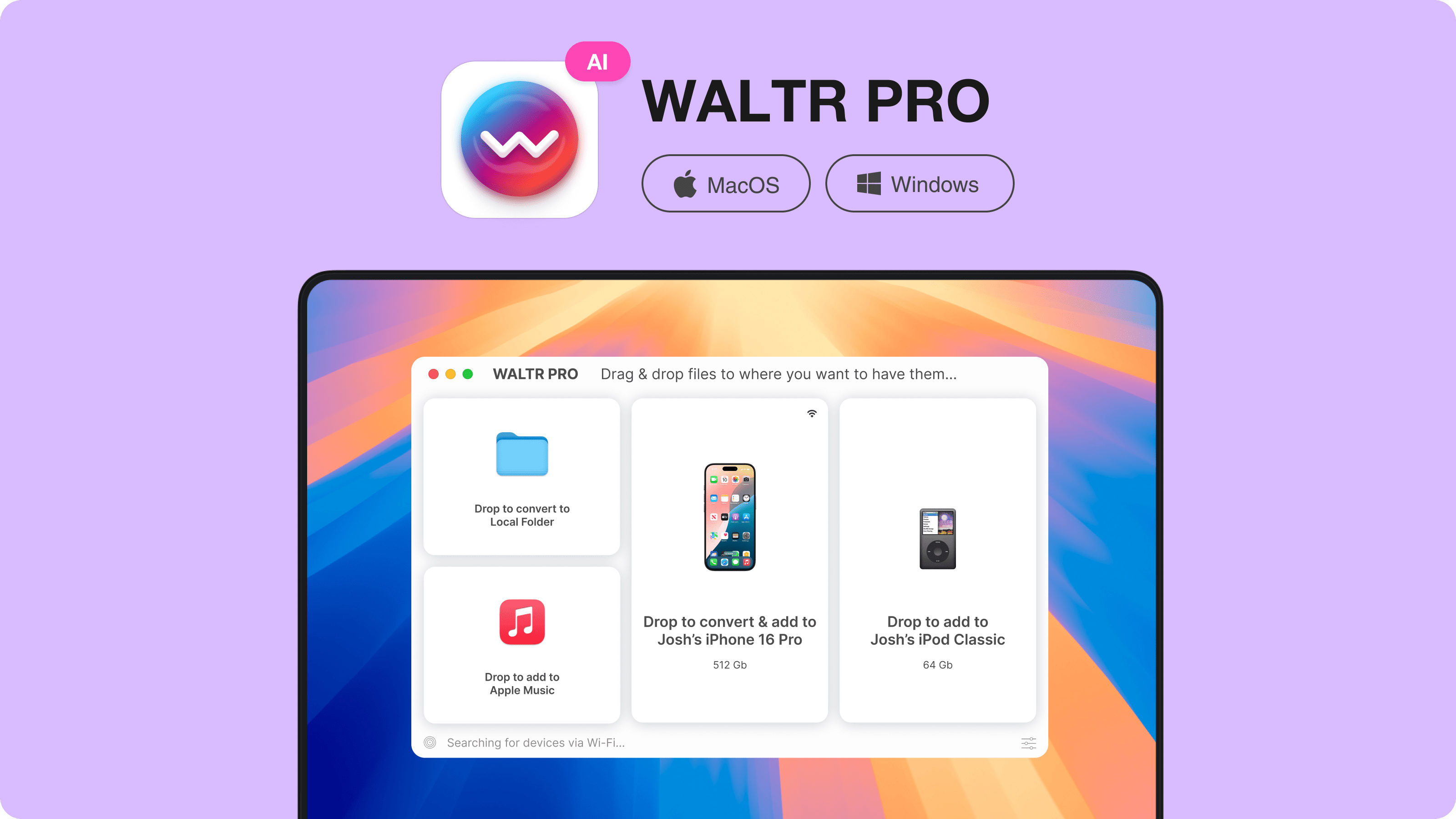
Download WALTR PRO on your Mac or Windows PC. The official trial terms specify 24 hours from activation and a Books/PDF limit of 10 files. The image below shows the app’s device drop area.
Step 2: Connect your iPhone or iPad
Open WALTR PRO. Connect your iPhone or iPad with USB, or use Wi-Fi transfer when both devices are on the same network.
If the device does not appear, unlock the iPhone, trust the computer when iOS asks, and reconnect the cable. Wi-Fi transfer also depends on both devices seeing each other on the same network.
Step 3: Check the EPUB destination
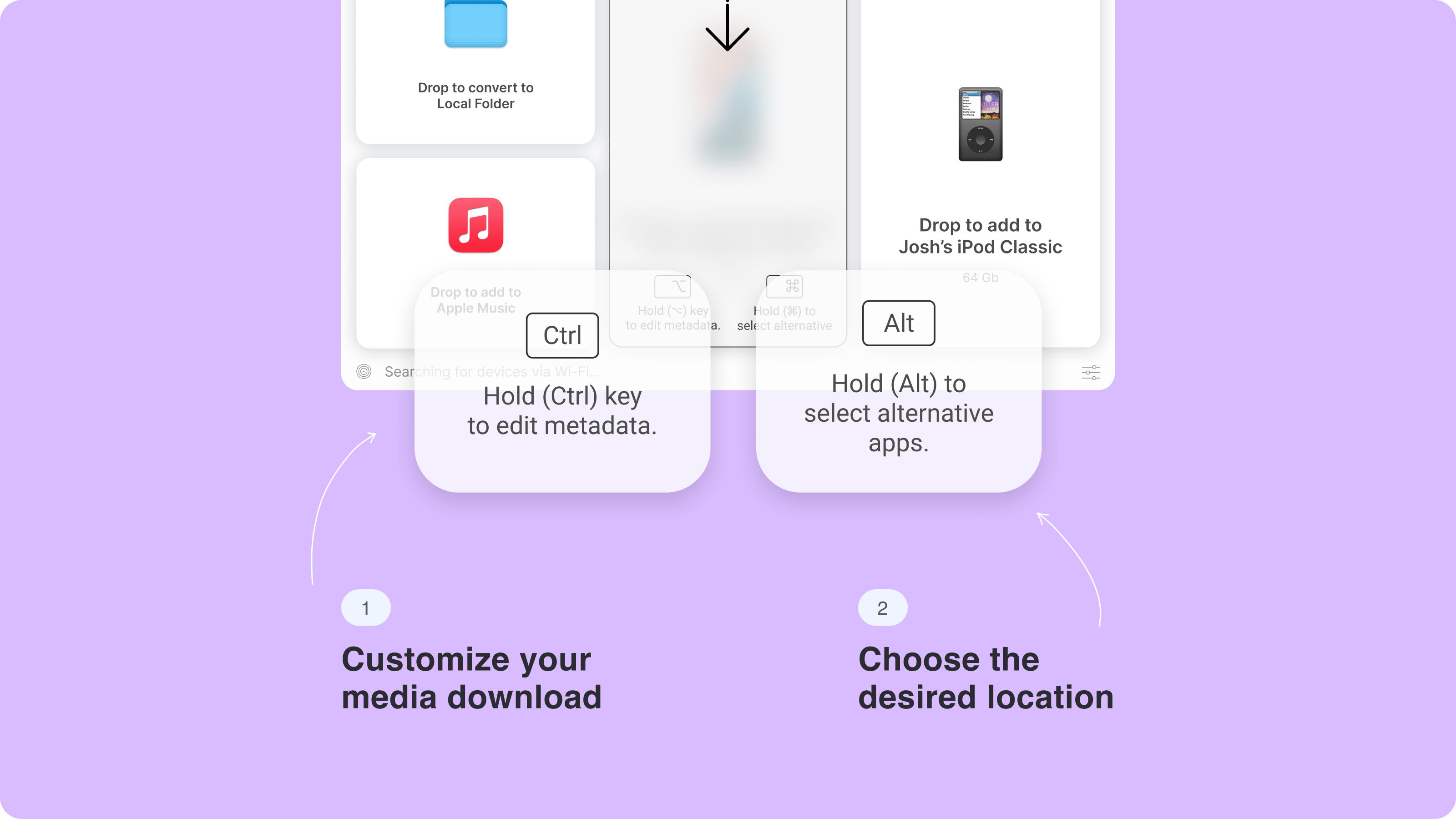
WALTR PRO sends EPUB and PDF files to Books, according to its supported formats guide. The illustration below shows optional metadata and alternative-app controls. You do not need to choose another app for the normal EPUB-to-Books route.
Step 4: Drop the EPUB into WALTR PRO
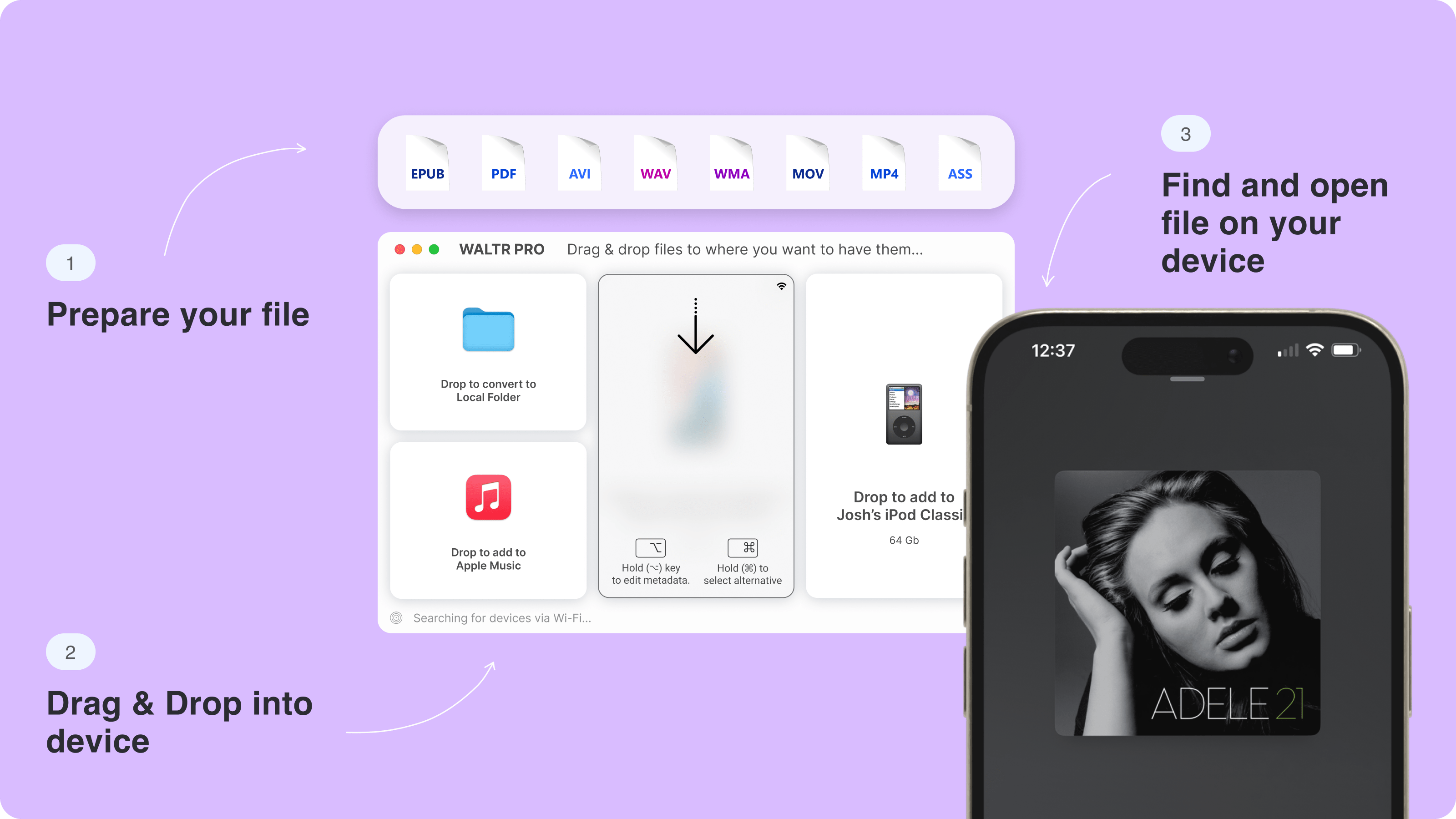
Drag the EPUB file onto your iPhone or iPad’s device area in WALTR PRO. Wait for the transfer to finish. The illustration below shows a general file-transfer workflow with a music example; your EPUB destination is Books.
Step 5: Open the EPUB in Apple Books
Open Apple Books on your iPhone or iPad and look in Library. Softorino’s file-destination guide places EPUB, PDF, and M4B audiobooks in Books. The existing screenshot below shows the Library view, not a new transfer test.
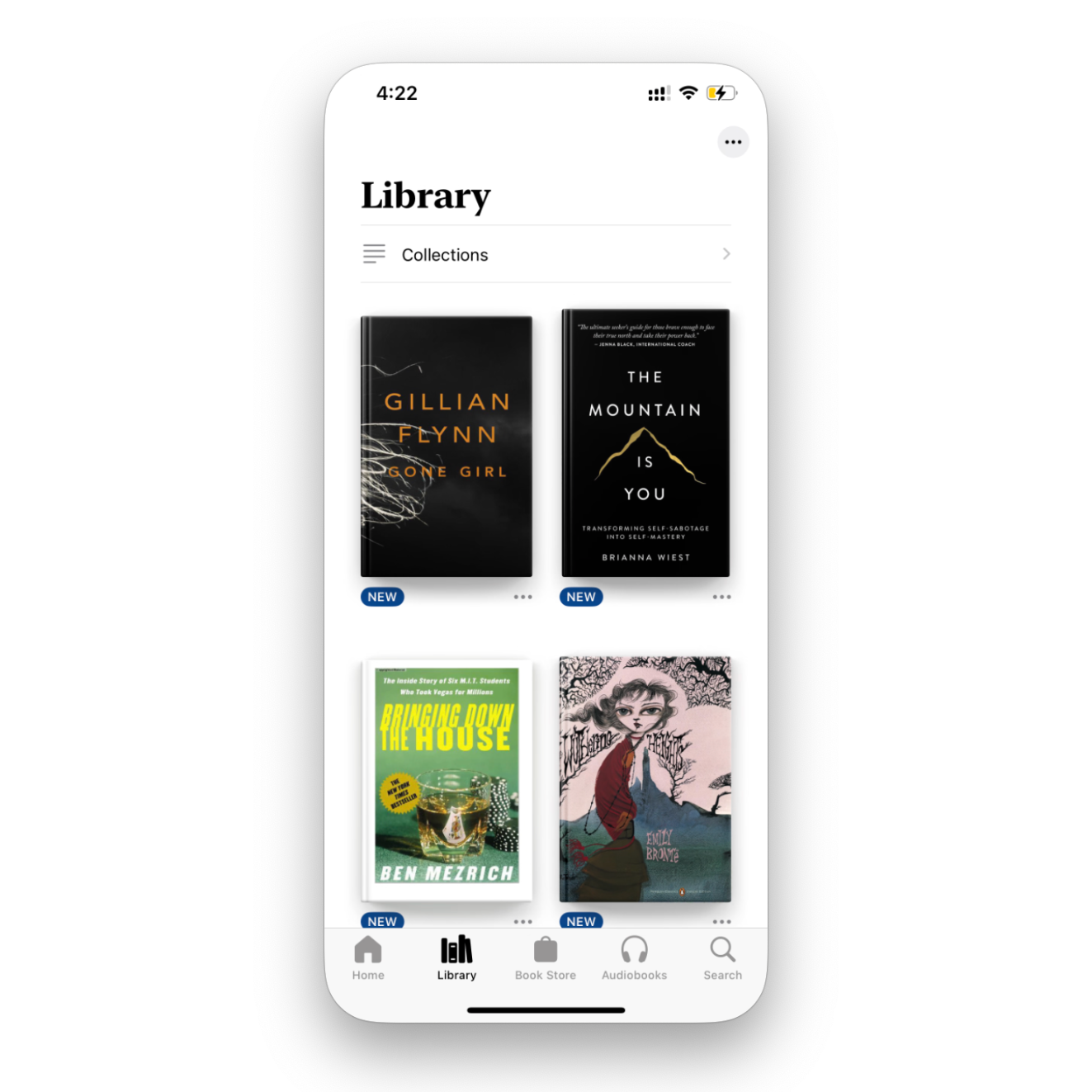
The preserved images illustrate WALTR PRO and Books. This guide follows product documentation; no new on-device testing took place for this refresh.
Method 3: Send one EPUB with AirDrop or email
For one small EPUB, AirDrop, Mail, or a messenger can be enough. This is not the best system for a library, but it works when you need one book on your phone now.
AirDrop from Mac or another Apple device
- Right-click the EPUB on Mac.
- Choose Share > AirDrop.
- Pick your iPhone or iPad.
- Accept the file on your device.
- Open it in Books when iOS asks.
AirDrop works between nearby Apple devices. Windows users can use email, compatible-app File Sharing, or WALTR PRO instead.
Email or messenger apps
You can also send the EPUB to yourself through Mail, Telegram, Viber, or another messenger. The existing example below shows Telegram’s Share button, Books in the Share sheet, and the Books Library.
- Send the EPUB file to yourself.
- Open the message on your iPhone.
- Tap the EPUB attachment.
- Tap Share.
- Choose Books.
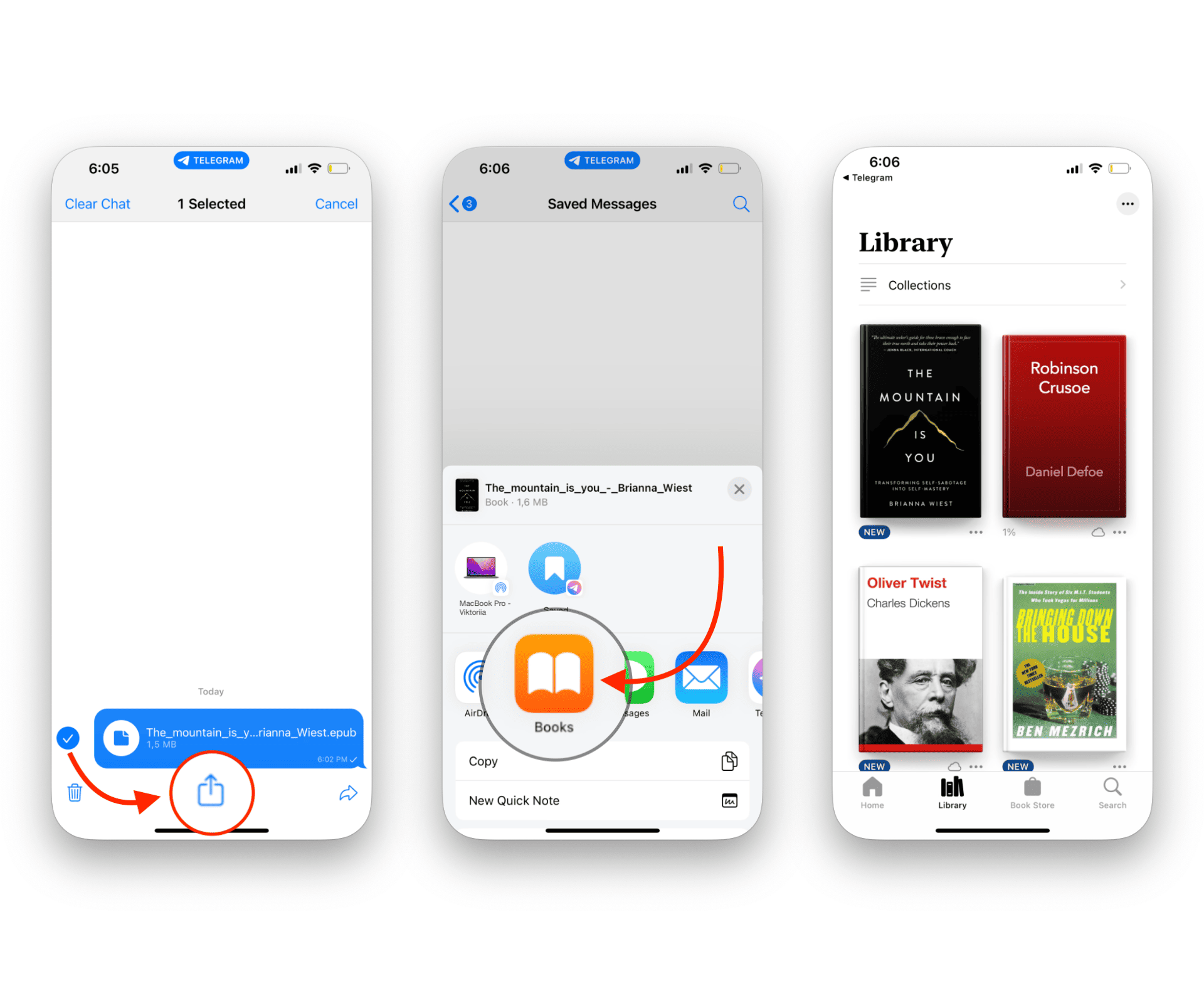
Use this for one file. For many EPUBs, use AirDrop, Finder, or WALTR PRO so you are not digging through chat history for books later.
Method 4: Sync EPUB from Mac with Finder
Finder can sync books from a Mac library to your iPhone or iPad. Use the Books tab, not the Files tab. Apple’s Finder sync guide explains content selection and sync prompts.
- Connect your iPhone or iPad to your Mac.
- Open Finder.
- Select your device in the sidebar.
- Open the Books tab.
- Turn on Sync books onto [device name].
- Choose All books or Selected books.
- Keep your original files, read any sync or removal prompts, then click Apply if the selection is correct.
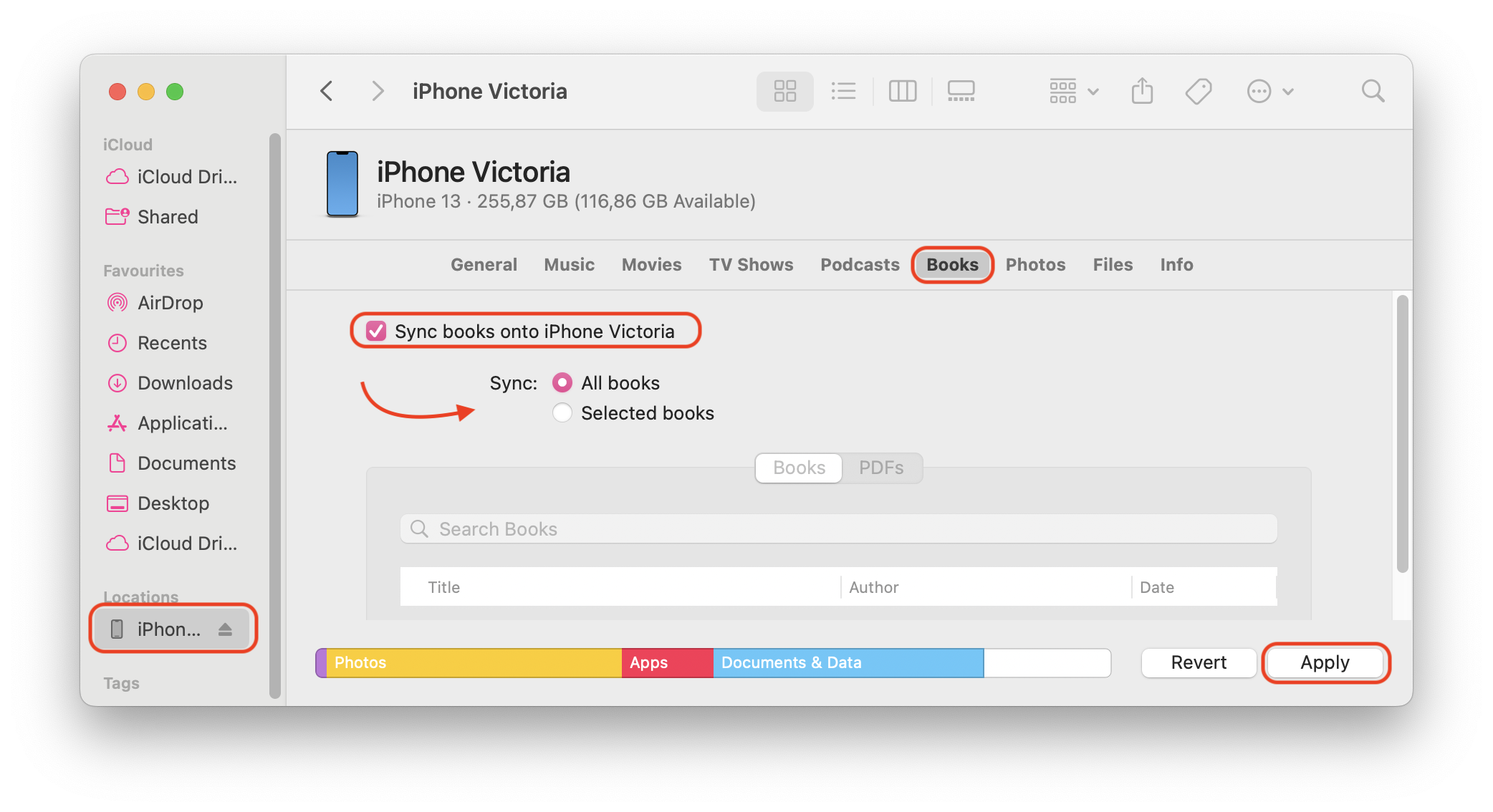
The screenshot shows the Books tab with All books selected. Choose Selected books instead if you only want certain titles. Finder Books sync is a Mac workflow; Apple Devices File Sharing on Windows copies into a compatible app.
Use Finder when you want to manage a synced Mac Books library. WALTR PRO offers direct EPUB or PDF transfer from Mac or Windows without choosing a sync library.
Apple Books vs EPUB reader apps
Apple Books is enough for most EPUB files on iPhone and iPad. It reads normal DRM-free EPUB and PDF files, remembers your place, lets you change the reading view, and keeps your library inside Apple’s ecosystem.
A third-party EPUB reader can still make sense if you want advanced library controls, custom themes, cloud storage integrations, or support for unusual formats. Store-protected books may also require the official app from that store.
File type | Can Apple Books read it? | WALTR PRO destination | Important limit |
|---|---|---|---|
EPUB | Yes, for normal DRM-free EPUB files | Books app | Fixed-layout EPUBs may behave differently from reflowable books |
Yes, for reading and library storage | Books app | Use Files instead when you need folders, uploads, or renaming | |
M4B audiobook | Yes, as audiobook content | Books app | Audiobooks must use .m4b to be recognized correctly |
Store-protected ebook | Usually no outside its store/account | Not a bypass | Use the original store or reader app |
ZIP containing an EPUB | Open the extracted EPUB, not the outer ZIP. | Transfer the EPUB after extraction. | Files can extract ZIP. Other archive formats need a compatible tool. |
Use Apple Books first for normal DRM-free EPUB files already on iPhone.
Use Files and Share when the EPUB stays in Downloads or iCloud Drive.
Use AirDrop or email for one small book.
Use Finder Books sync for a Mac library; use Apple Devices File Sharing only with a compatible receiving app.
Use WALTR PRO when EPUB/PDF files are already on Mac or Windows and direct Books delivery is easier.
Why your EPUB will not open on iPhone
If your EPUB will not open on iPhone, the problem is usually the file source, the Share menu, or DRM. Work through these checks before blaming the iPhone.
Books does not appear in the Share menu
Swipe to the end of the app row and tap More. Check that Apple Books is installed; if it is missing, download it from the App Store. Do not delete an existing Books library to troubleshoot a missing Share option.
The EPUB stays in Files but not in Books
Open the EPUB from Files, tap Share, and choose Books. Tapping the file may preview it, but the Share menu is what imports it into the Books library.
The EPUB is inside a ZIP or another archive
If you downloaded a ZIP containing the book, tap the ZIP in Files to extract it. Open the extracted folder, then the EPUB. Do not unpack the actual .epub file or rename it to .zip. For RAR or another archive type, use a compatible extraction tool or ask the sender for the EPUB itself.
The EPUB is DRM-protected
DRM-protected EPUB files may only open in the app or account that authorized them. Do not use tools that promise to bypass DRM. Use the store's official app or download a DRM-free copy if the publisher provides one.
The book imported but does not show up
Check the Apple Books library filters. Look under Library, Collections, and PDFs if the file was not a true EPUB. If iCloud sync is involved, give it a moment and confirm you are signed in with the same Apple Account.
EPUB vs PDF: which format should you use on iPhone?
A reflowable EPUB adjusts text to the screen and lets you change the font size. That suits novels on an iPhone. Some EPUBs use a fixed layout, so not every book offers the same reading controls. Fixed layout alone does not mean the file is broken.
PDF preserves a page’s layout. Manuals, forms, and scanned pages often suit PDF better than reflowable EPUB. For saving and storage steps, see how to download a PDF on iPhone.
For novels, guides, and most ebooks, EPUB is the better iPhone reading format. For documents where the page must look the same everywhere, use PDF.
WALTR PRO can transfer EPUB and PDF files to iPhone or iPad. Apple Books can read both, but each format behaves differently once it lands there.
Final take for opening EPUB
If the file is already on your iPhone, open EPUB on iPhone with Apple Books through Files or the Share menu. That is the native answer, and it works for most DRM-free books.
On a Mac, use AirDrop for a file or Finder for Books-library syncing. On Windows, Apple Devices File Sharing needs a compatible receiving app. For direct EPUB or PDF delivery from either platform to Books, download the limited WALTR PRO trial. Apple Books remains the reader.
EPUB FAQ questions and answers
Can Apple Books open EPUB files on iPhone?
Yes. Apple Books can open normal DRM-free EPUB files on iPhone and iPad. Save the EPUB to Files, tap the file, then use Share > Books if it does not import automatically.
How do I open an EPUB from the Files app?
Open Files, find the EPUB, tap it, then use Share > Books if it does not import automatically. The book should appear in your Apple Books library. If it stays in Files, try the Share sheet again.
How do I open an EPUB from Safari Downloads?
Tap the Safari downloads icon, open the EPUB, then choose Share > Books. Safari usually stores downloads in the Downloads folder inside Files, so check Files > Browse > Downloads if you cannot find it.
Can WALTR PRO transfer EPUB to Apple Books?
Yes. WALTR PRO can transfer normal DRM-free EPUB files from Mac or Windows to iPhone or iPad, and the file appears in Apple Books. WALTR PRO transfers the ebook; Apple Books is still the reader.
Why will my EPUB not open on iPhone?
Check whether the EPUB needs Share > Books, is hidden by a library filter, or is still inside an outer ZIP. Extract the ZIP first, but leave the actual EPUB intact. Store-protected books may need their original app or account. Fixed layout alone does not prevent an EPUB from opening.

WALTR PRO
Convert & Push Any File into Any Apple Device
