How to Add Music to iPhone Without iTunes

You want to know how to add music to iPhone because Apple somehow made a basic job feel like a small tax audit. If you subscribe to Apple Music, the answer is easy: add the song and tap Download. If you have MP3, FLAC, AAC, M4A, or AIFF files on a computer, the answer gets messier.
This guide separates those 2 jobs. You will see how to add music to iPhone with Apple Music, how to transfer local music from a Mac or Windows PC, and how to avoid the iTunes sync trap when you only want your own files in the Music app.
Quick answer: best ways to add music to iPhone
The best method depends on what kind of music you have. Subscription music and local files behave differently on iPhone. Pick the path that matches your situation before you start moving files around.
Method | Best for | Goes to Music app? | Needs iTunes? | Main catch |
|---|---|---|---|---|
WALTR PRO | Local MP3, FLAC, AAC, M4A, AIFF, WAV and similar files from Mac or PC | Yes | No | Paid app with free trial |
Apple Music | Downloading subscription music for offline listening | Yes | No | Needs an active Apple Music subscription |
Finder or Music on Mac | Official Mac sync from a local library | Yes | No iTunes, but still sync-based | Sync settings can confuse people |
iTunes on Windows | Official Windows sync from an iTunes library | Yes | Yes | Syncing can remove unmatched songs |
Dropbox, Google Drive, OneDrive, iCloud Drive, VLC | Temporary playback or file access | Usually no | No | Songs stay in a separate app or file area |
If your goal is the native Music app and you own the files, WALTR PRO is the shortest route. If your goal is offline streaming from Apple Music, use Apple Music. If you want Apple’s official local-file route, use Finder on Mac or iTunes on Windows and read the sync warning first.
Before we begin
Download WALTR PRO on Mac or Windows to add local music to an iPhone without syncing the whole library through iTunes. Connect the iPhone by cable or Wi-Fi, then drag MP3, FLAC, or AAC files to the device.
How to add music to iPhone without iTunes using WALTR PRO
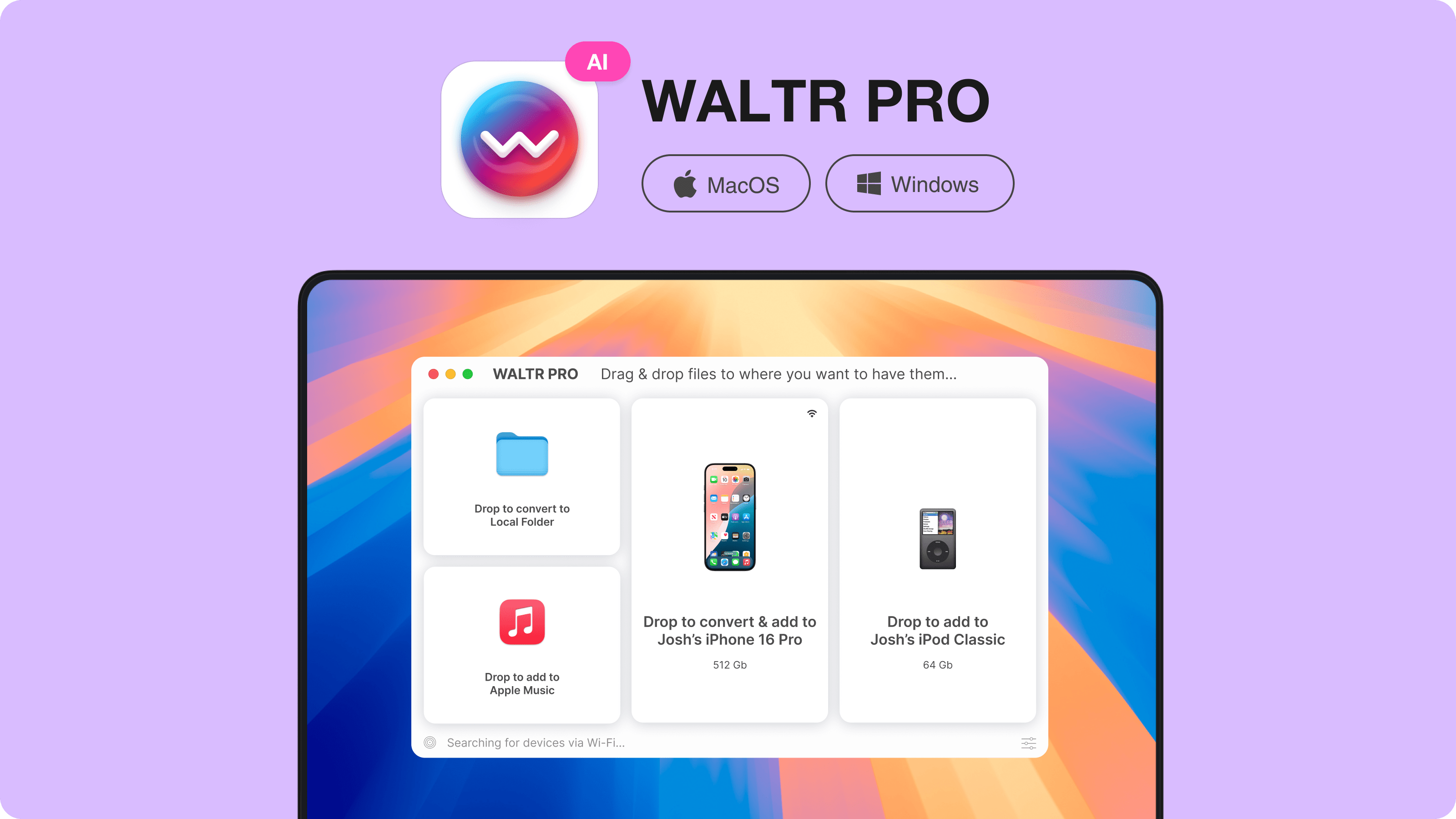
WALTR PRO is the Softorino route for local music files. You drag songs into the app, connect your iPhone, and WALTR PRO sends the files into the right native app. Music goes to Music. Videos go to TV or Videos. Books and PDFs go where Apple expects them.
Use WALTR PRO when you want to transfer music to iPhone without turning your whole library into an iTunes sync project. It works on Mac and Windows, supports USB and Wi-Fi transfer after setup, and handles common audio formats including MP3, FLAC, AAC, AIFF, WAV, WMA, OGG, M4R, and M4B.
Why use WALTR PRO for iPhone music transfer?
Transfer local music files to iPhone without iTunes syncing.
Send music into the native Music app, not a random file folder.
Use Mac or Windows with USB transfer and Wi-Fi transfer after setup.
Move common formats like MP3, FLAC, AAC, M4A, AIFF, WAV, WMA, OGG, M4R, and M4B.
Edit or fill metadata and artwork before the music lands on your iPhone.
Step 1: Download and install WALTR PRO
Download WALTR PRO for Mac or Windows. Install it like any normal desktop app. During startup, WALTR PRO may ask for your email to activate the free trial, so you can test the workflow before buying.
Open the app and keep your music files ready. A folder of MP3s works. A few FLAC albums work. A single M4A track works too. You do not need to import everything into iTunes first.
Step 2: Connect your iPhone by USB first
Connect your iPhone with a USB cable and unlock the phone. If iOS asks whether to trust this computer, tap Trust. WALTR PRO should detect the iPhone and show available storage.
The first connection is best over USB. After that setup, you can use Wi-Fi transfer when your iPhone and computer sit on the same Wi-Fi network.
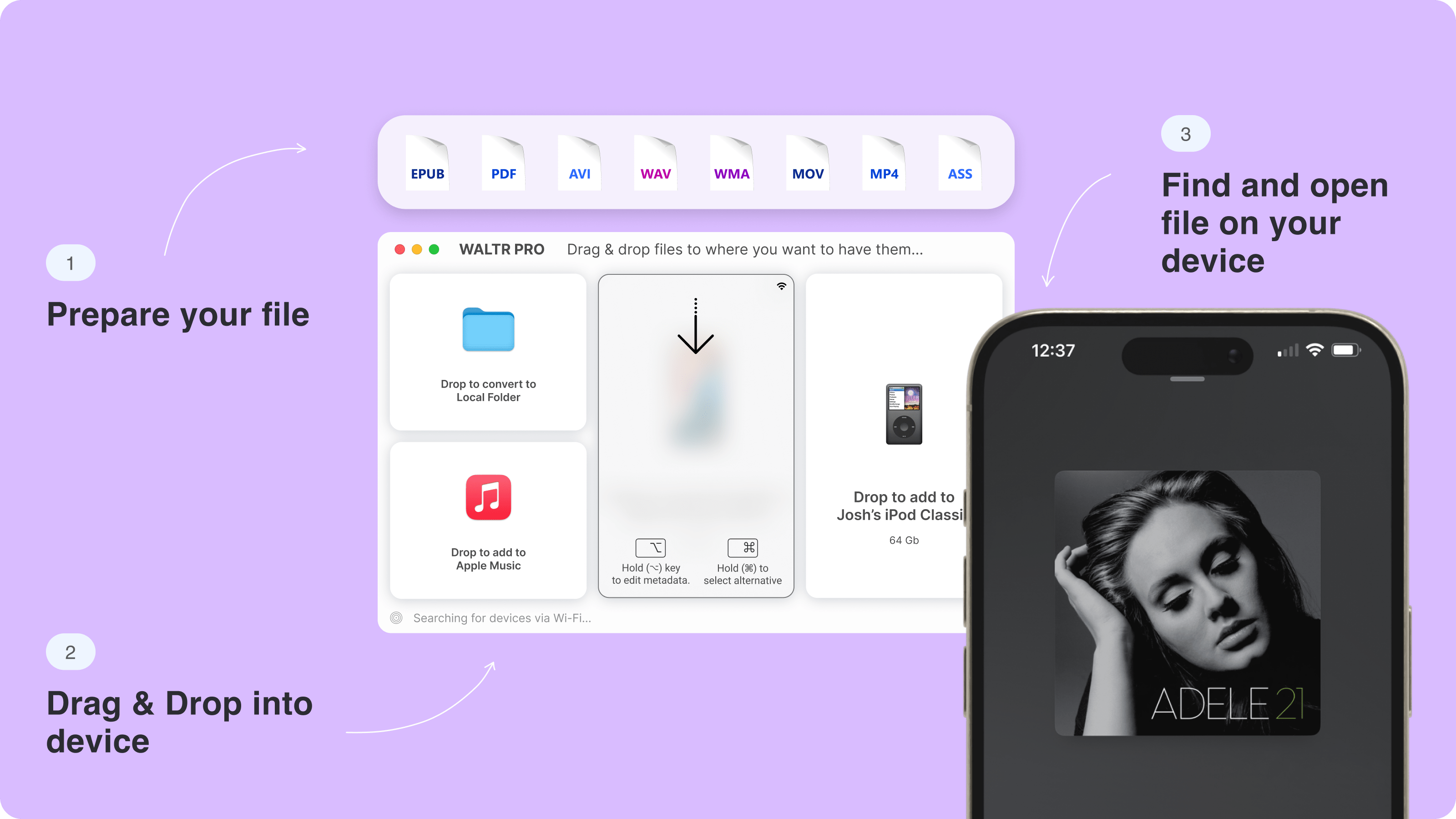
You can drag files into the WALTR PRO window, or use Select Files when you want to browse to a folder manually. Both paths do the same job: they send music from computer to iPhone without building a sync library.
Step 3: Edit metadata, then transfer music to iPhone
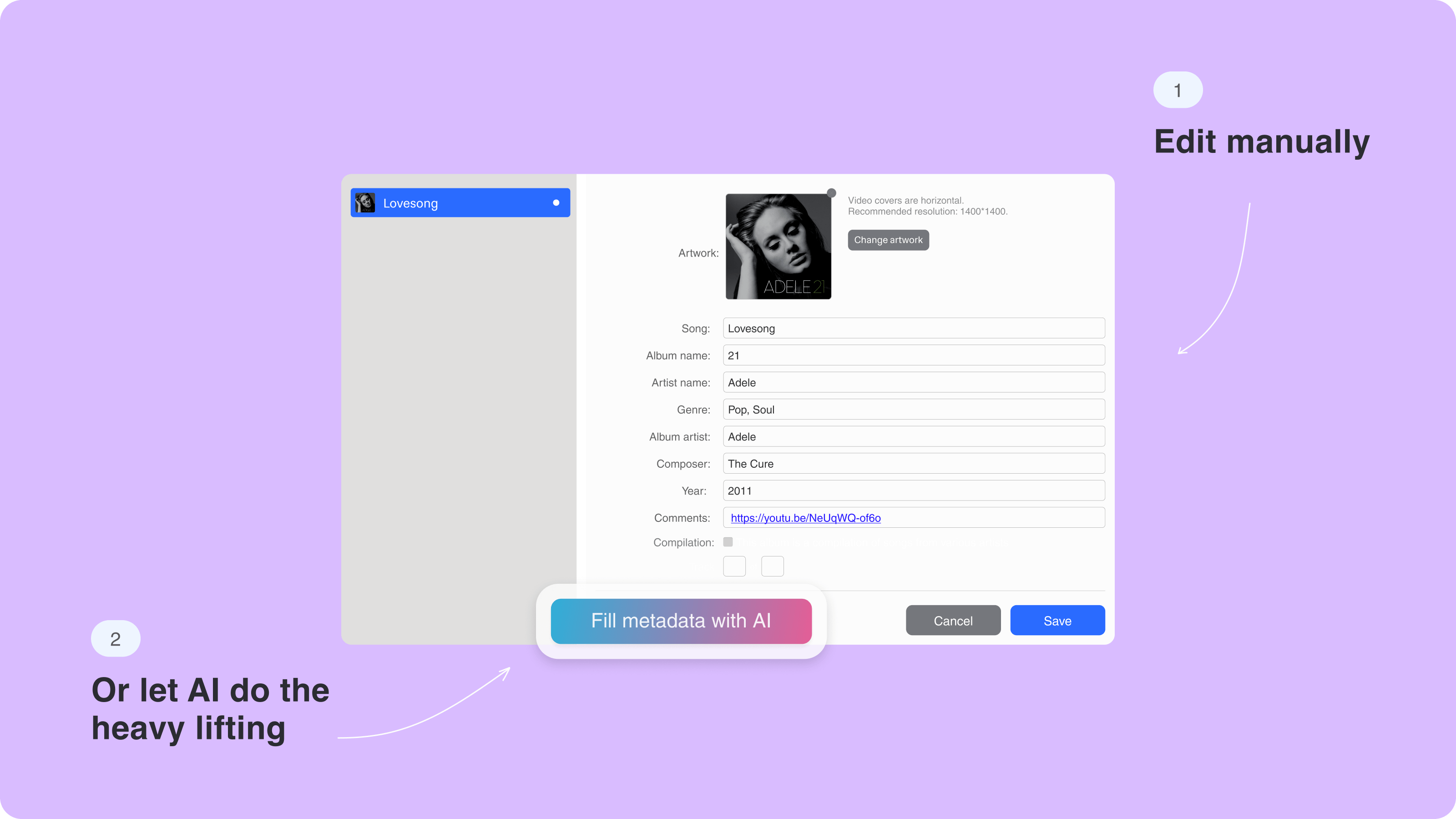
Before transfer, check the track names, artist names, album title, and artwork. Clean metadata matters because this is what you see later in the iPhone Music app. WALTR PRO can help fill or edit metadata, so your library does not become a pile of Track 01 files.
Drop the songs into WALTR PRO and wait for the Done message. MP3, FLAC, M4A, AAC, AIFF, WAV, WMA, OGG, M4R, and M4B are safe examples from the product fact check. Do not read that as “every file format ever created.” Weird files still exist. Apple has seen to that.
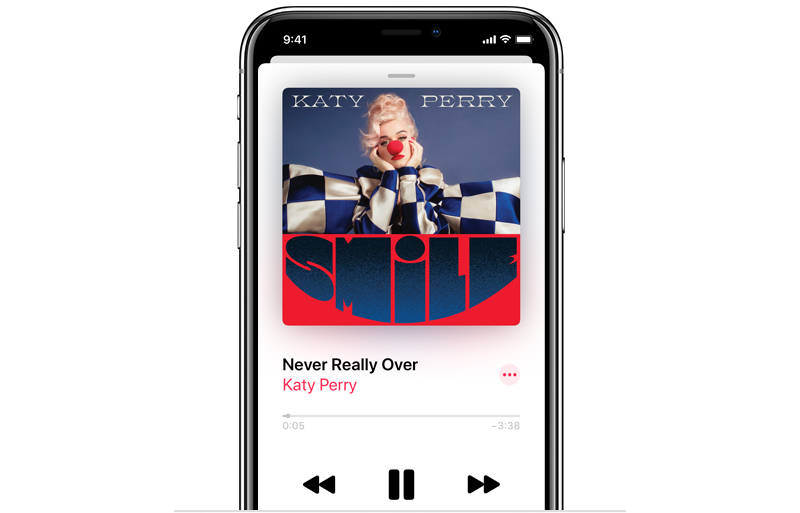
Open the Music app on your iPhone and check the Library. The transferred tracks should appear there, not inside Files or a third-party player. You can use the same Softorino workflow to transfer music to an iPad or move music from your computer to your iPod when those devices are part of your setup.
Use WALTR PRO when you want local files inside the Music app without sync risk. Use Apple Music when you want subscription songs for offline listening. Those are different problems.
How to add music to iPhone from Apple Music
If you have an Apple Music subscription, this is the official Apple route. Open the Music app, find a song, album, or playlist, add it to your library, then download it for offline listening. Apple explains this workflow in its Apple Music download guide.
- Open the Music app on your iPhone.
- Find a song, album, playlist, or video you want to keep offline.
- Tap Add or the plus button to add it to your library.
- Tap the Download button to save it for offline listening.
- Turn on Sync Library if you want Apple Music library changes to appear across devices.
This method does not transfer your personal MP3 folder from a Windows PC. It downloads Apple Music catalog items tied to your subscription. If your subscription ends, your downloaded Apple Music tracks do not become permanent local files.
How to add music to iPhone from Mac with Finder or Music
On macOS Catalina and later, Finder replaced iTunes for device syncing. You can still transfer music to iPhone from a Mac, but the workflow is sync-based. That means you choose music from your Mac library and apply those sync settings to the iPhone.
Steps to transfer music from Mac to iPhone
- Connect your iPhone to the Mac with a USB cable.
- Open Finder and select your iPhone in the sidebar.
- Click Music.
- Check Sync music onto your iPhone.
- Choose the whole library or selected artists, albums, genres, and playlists.
- Click Apply or Sync.
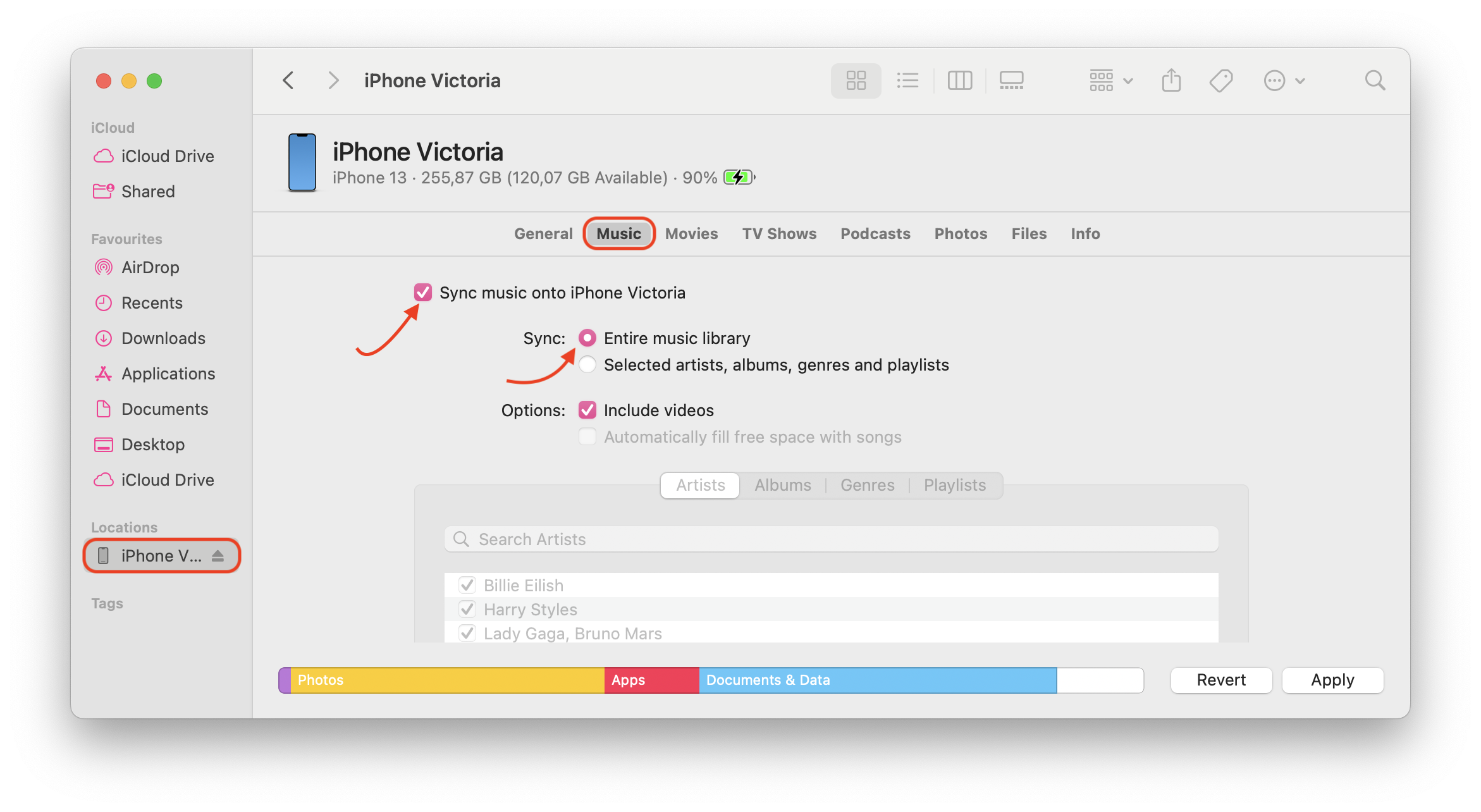
Important: Finder is official, but it still behaves like a sync tool. Check the selected music before you click Apply, especially if the iPhone already has songs from another computer.
This is fine if you already manage your music library on one Mac. It is less fun if your iPhone has tracks from multiple places and you only want to add 3 songs without touching anything else.
How to add music to iPhone with cloud storage or VLC
Cloud storage can move audio files onto an iPhone, but it usually does not add songs to the native Music app. Think of Dropbox, Google Drive, OneDrive, iCloud Drive, and VLC as file access or playback workarounds.
Steps to use Dropbox, Google Drive, OneDrive, or iCloud Drive
- Upload the music file from your computer to the cloud service.
- Open the same service app on your iPhone.
- Download the file for offline access if the app supports it.
- Play the file inside that cloud app or share it to a compatible audio player.
- Use VLC if you want a dedicated local player for files outside the Music app.
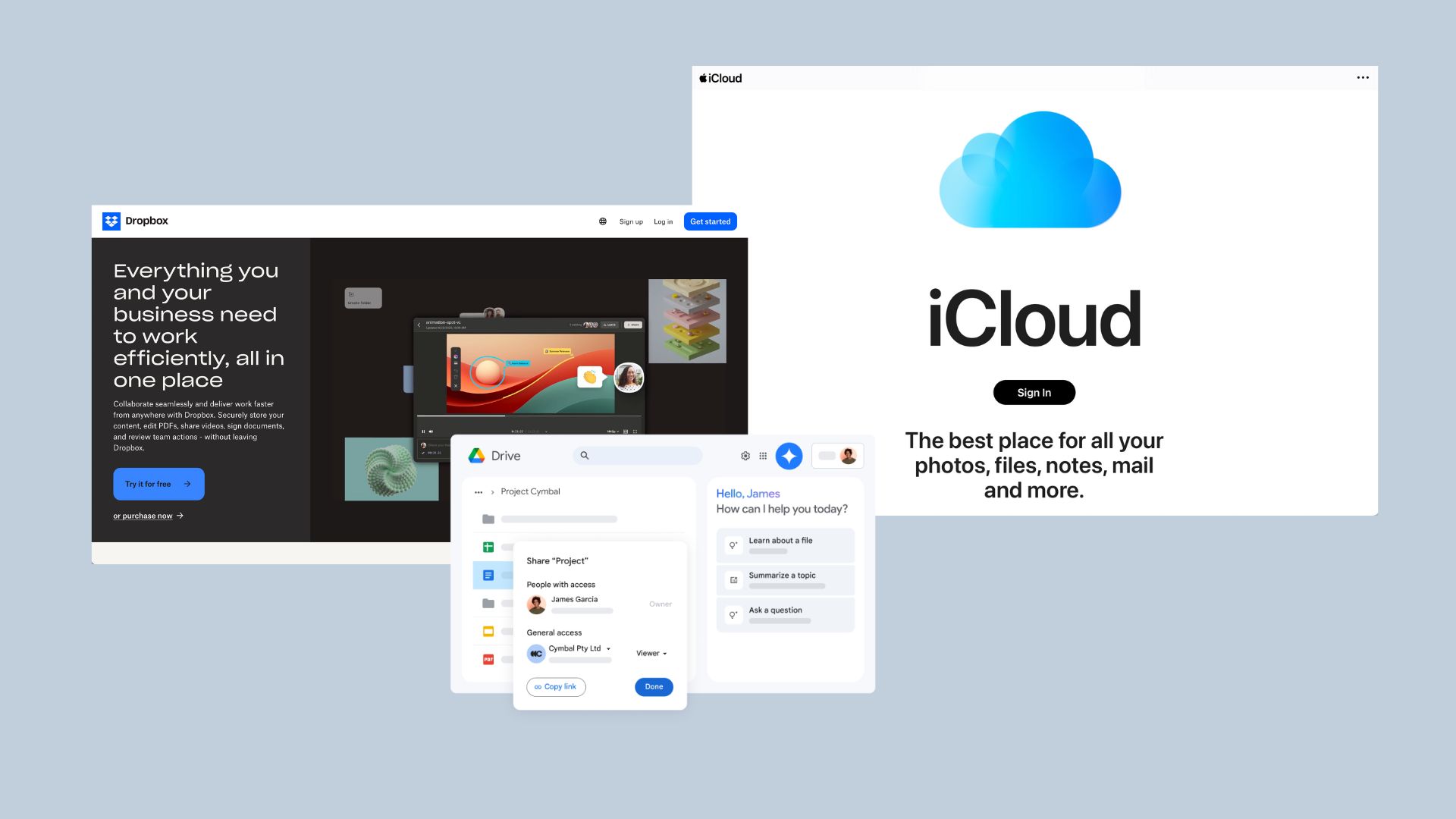
Cloud storage is useful when you need quick access to one file. It is not the clean answer when you want songs sorted inside the iPhone Music app.
Use this route for temporary files, voice notes, small audio clips, or tracks you do not care about organizing. If you want album art, artists, playlists, and the native Music library, use WALTR PRO or an Apple sync method.
How to add music to iPhone from PC with iTunes
Windows users still see iTunes in many music-transfer guides because it remains Apple’s familiar PC sync path. Apple’s own iTunes sync guide for Windows covers the official process.
Use iTunes if you already keep a clean iTunes library and you understand syncing. Skip it if you are trying to add a few files without affecting the rest of your iPhone music library.
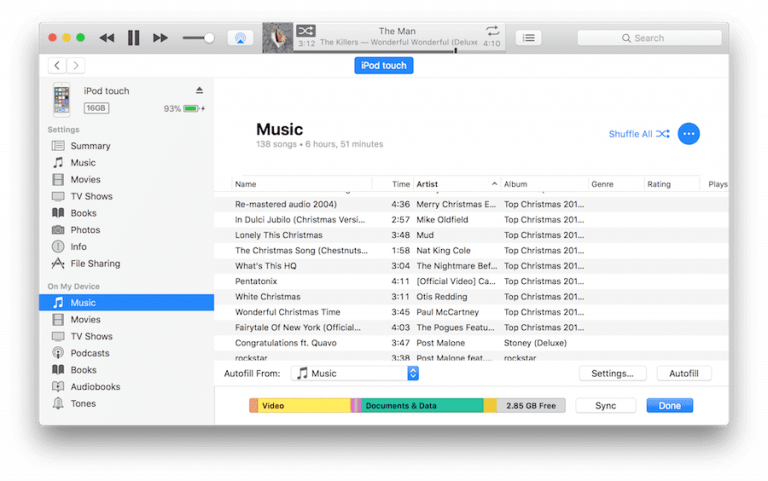
Before you connect the iPhone, add the music files to your iTunes library. Open iTunes on Windows, go to File, add the file or folder, and confirm the songs appear in the Music section.
Steps to add music to iPhone using iTunes on Windows
Step 1: Add your music to the iTunes library
Open iTunes and add the songs, albums, or playlists you want to transfer. If your files do not appear in iTunes, they will not sync to the iPhone through this method.
Step 2: Connect your iPhone and open Music sync settings
Connect your iPhone with a USB cable. Click the small device icon near the top-left corner of iTunes, then choose Music in the sidebar.
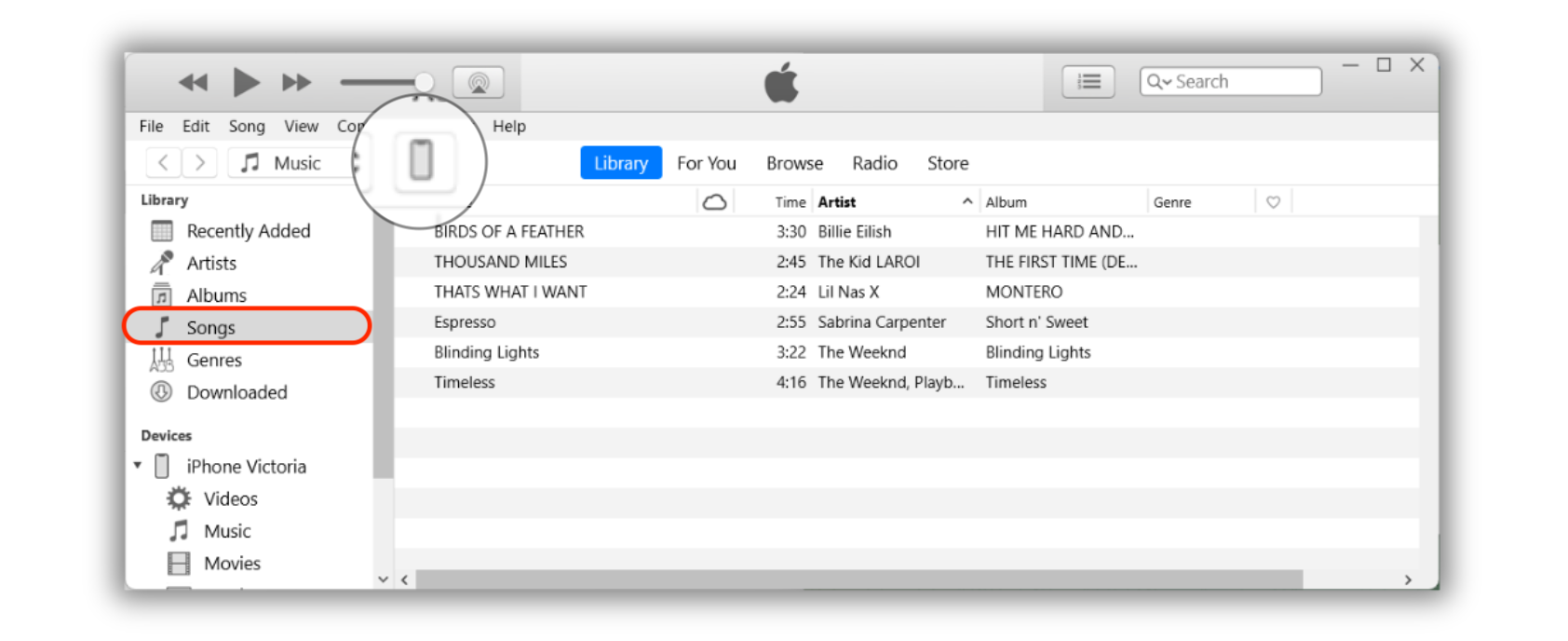
Step 3: Choose what to sync
Check Sync Music. Then choose whether to sync the entire library or selected playlists, artists, albums, and genres. Read every option on this screen before you continue.
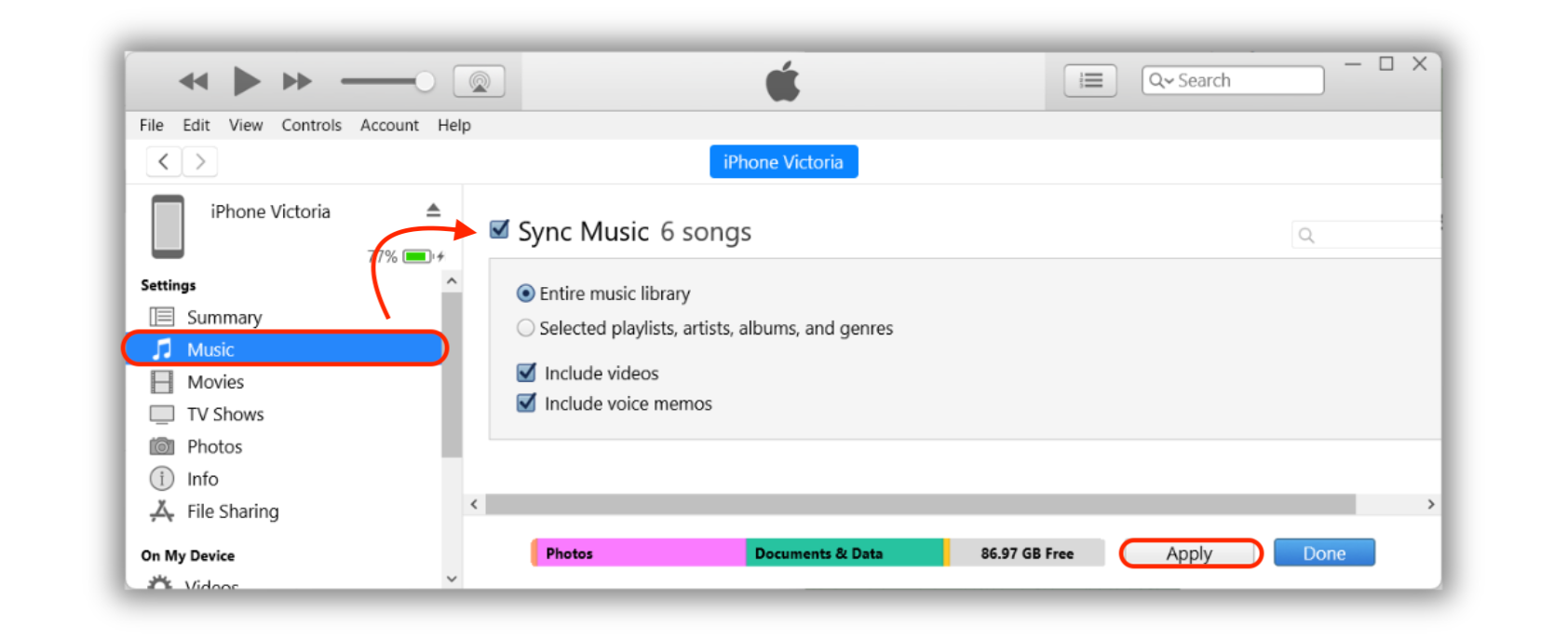
Click Apply, then Sync. Keep the iPhone connected until iTunes finishes. After that, open the Music app on your iPhone and check whether the songs arrived.
Important: iTunes syncing can remove songs from your iPhone when those songs are not part of the selected iTunes library or sync settings. That is the pain WALTR PRO avoids.
Which method should you use?
Use Apple Music if your music already lives in Apple’s subscription catalog. Use Finder on Mac if you trust your Mac music library and want Apple’s official sync path. Use iTunes on Windows only if you understand sync behavior and do not mind managing a library first.
Use WALTR PRO when you have local files and want the no-iTunes route. That includes old MP3 folders, FLAC albums, downloaded lectures, AIFF files, audiobooks, ringtone files, and music you ripped from discs you own.
Use cloud storage or VLC when you only need playback in a separate app. It works, but it is not the same as adding music to the iPhone Music app.
FAQ
How do I put music on an iPhone without iTunes?
Use WALTR PRO for local files. Install WALTR PRO on Mac or Windows, connect your iPhone, drag in MP3, FLAC, AAC, M4A, AIFF, WAV, WMA, OGG, M4R, or M4B files, and let the app send music to the native Music app. You can also use cloud storage or VLC, but those usually keep playback outside the Music app.
Can I transfer MP3 files to iPhone without syncing?
Yes. WALTR PRO transfers MP3 files to iPhone without iTunes syncing. That is the safer route when you want to add a few songs without replacing or changing your existing iPhone music library.
Can I add FLAC files to iPhone?
Yes, you can add FLAC files to iPhone with WALTR PRO. WALTR PRO can transfer common audio formats and convert unsupported files into Apple-friendly formats during transfer. The tracks land in the Music app when the format and metadata are handled correctly.
Why did iTunes remove songs from my iPhone?
iTunes is a sync tool. If your iPhone syncs with an iTunes library that does not contain certain songs, iTunes can remove those songs during syncing depending on your settings. Always check the selected library, playlists, and sync options before clicking Apply.
Does Dropbox add music to the iPhone Music app?
Usually no. Dropbox, Google Drive, OneDrive, iCloud Drive, and similar apps can store or play audio files on iPhone, but they do not normally add songs into the native Music app library. Use them for temporary access, not for building a Music library.
Can I transfer music over Wi-Fi?
Yes. WALTR PRO supports Wi-Fi transfer after setup when your computer and iPhone use the same Wi-Fi network. iTunes can also sync over Wi-Fi after you configure it, but it still uses the same sync model.
What is the best way to add music to iPhone from a Windows PC?
For local music files, WALTR PRO is the simplest no-iTunes method because it works on Windows and sends music to the native Music app. iTunes is the official Apple path, but it requires library syncing and can change existing music on the iPhone.
Final take
The clean answer to how to add music to iPhone depends on the source. Apple Music handles Apple Music downloads. Finder and iTunes handle official syncing. Cloud apps handle temporary playback. WALTR PRO handles the annoying case Apple still makes harder than it should be: putting your own local music files into the iPhone Music app without iTunes.
If that is your problem, try WALTR PRO. Drag in your songs, connect your iPhone, and keep the iTunes sync drama out of it.

WALTR PRO
Convert & Push Any File into Any Apple Device
