Change Folder Color Windows 11 or 10: 2 Safe Methods

Quick answer: change folder color Windows
If you want to change folder color Windows gives you one built-in workaround: change the folder icon through Properties > Customize > Change Icon. That works, but Windows does not include a normal color picker for regular File Explorer folders.
The faster option is Folder Colorizer 2. It adds a right-click Colorize menu to Windows, so you can pick preset colors, enter a custom HEX color, save favorite colors, and restore the original folder later.
Short answer: use the Windows manual icon method for 1 or 2 folders. Use Folder Colorizer 2 when you want repeatable right-click folder colors across client, project, school, archive, or work folders.
Before we begin
Choose the method based on scale. The Windows icon method is fine for one or two folders. Folder Colorizer 2 is faster when you want a repeatable color system across many folders. Keep custom .ico files in a stable location if you use the manual method.
Quick takeaways for changing folder colors in Windows
- Windows 11 and Windows 10 can change folder icons, but they do not give normal folders a built-in color picker.
- The manual method needs a colored .ico file and a stable file path.
- Folder Colorizer 2 is better for repeated folder color-coding because it works from the right-click menu.
- OneDrive for Business or School may show folder color options for synced cloud folders. That is not the same as a universal Windows File Explorer feature.
- If the color does not show, refresh File Explorer first. Then check icon cache, moved .ico files, cloud policies, and context-menu setup.
Watch how to quickly change Windows folder color
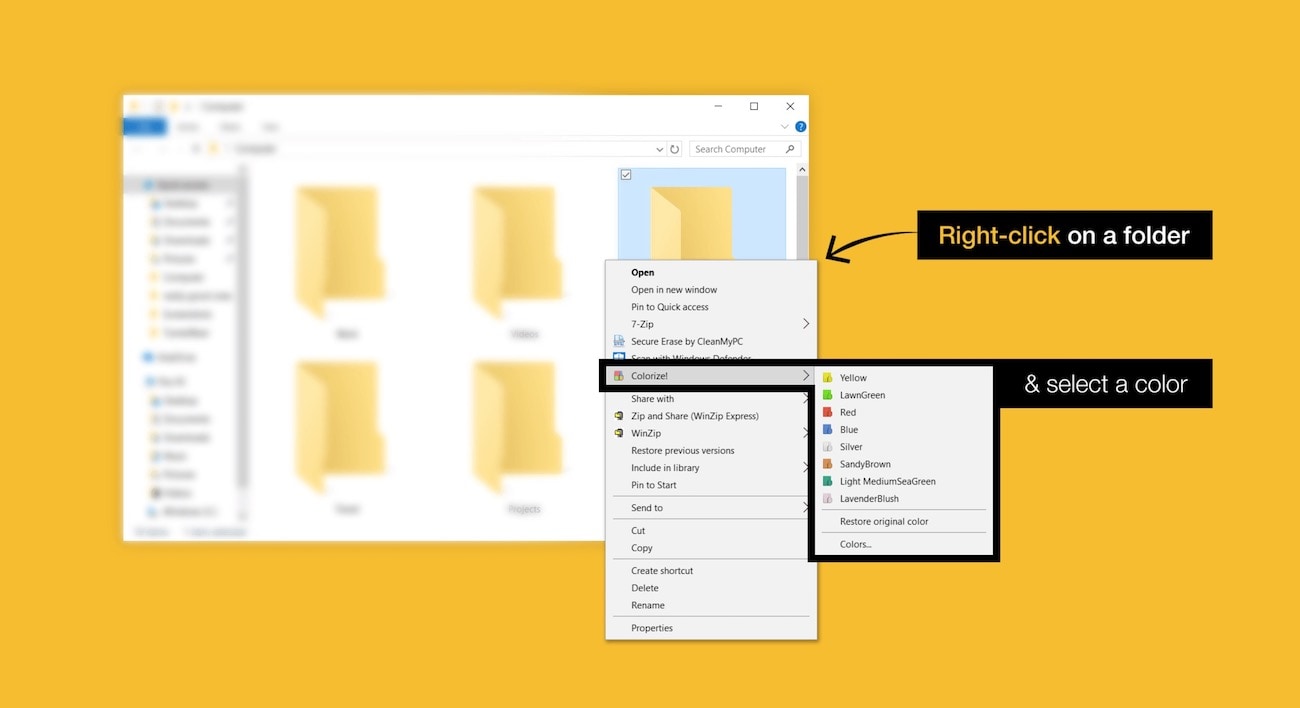
This short video shows the Folder Colorizer 2 workflow: right-click a folder, choose Colorize, pick a color, and apply it.
Can Windows change folder colors by default?
Standard Windows File Explorer does not include a built-in folder color picker for normal folders. Windows lets you change a folder icon, which can make the folder look colored if you choose a colored .ico file.
That distinction matters. If you remember seeing a Folder color option in Windows 11, you may have seen a OneDrive for Business or School feature, a managed workplace folder, or a third-party context-menu app. A Microsoft Q&A thread about Windows 11 folder colors shows the same confusion: some folders expose cloud-specific color options, while normal local folders do not.
For a plain local folder, Windows gives you this path: right-click the folder, open Properties, choose Customize, and change the icon. That is safe, free, and slow.
Method 1: manually change a folder icon in Windows
Use the manual method when you only need one custom folder and you do not want to install anything. You will need a colored .ico file before Windows can make the folder look different.
How to manually change folder icons in Windows
- Save the colored .ico files in one stable folder, such as C:\Icons.
- Right-click the folder you want to customize.
- Choose Properties.
- Open the Customize tab.
- Under Folder icons, click Change Icon.
- Click Browse and choose your custom .ico file, or pick one of the default Windows icons.
- Click OK, then Apply.
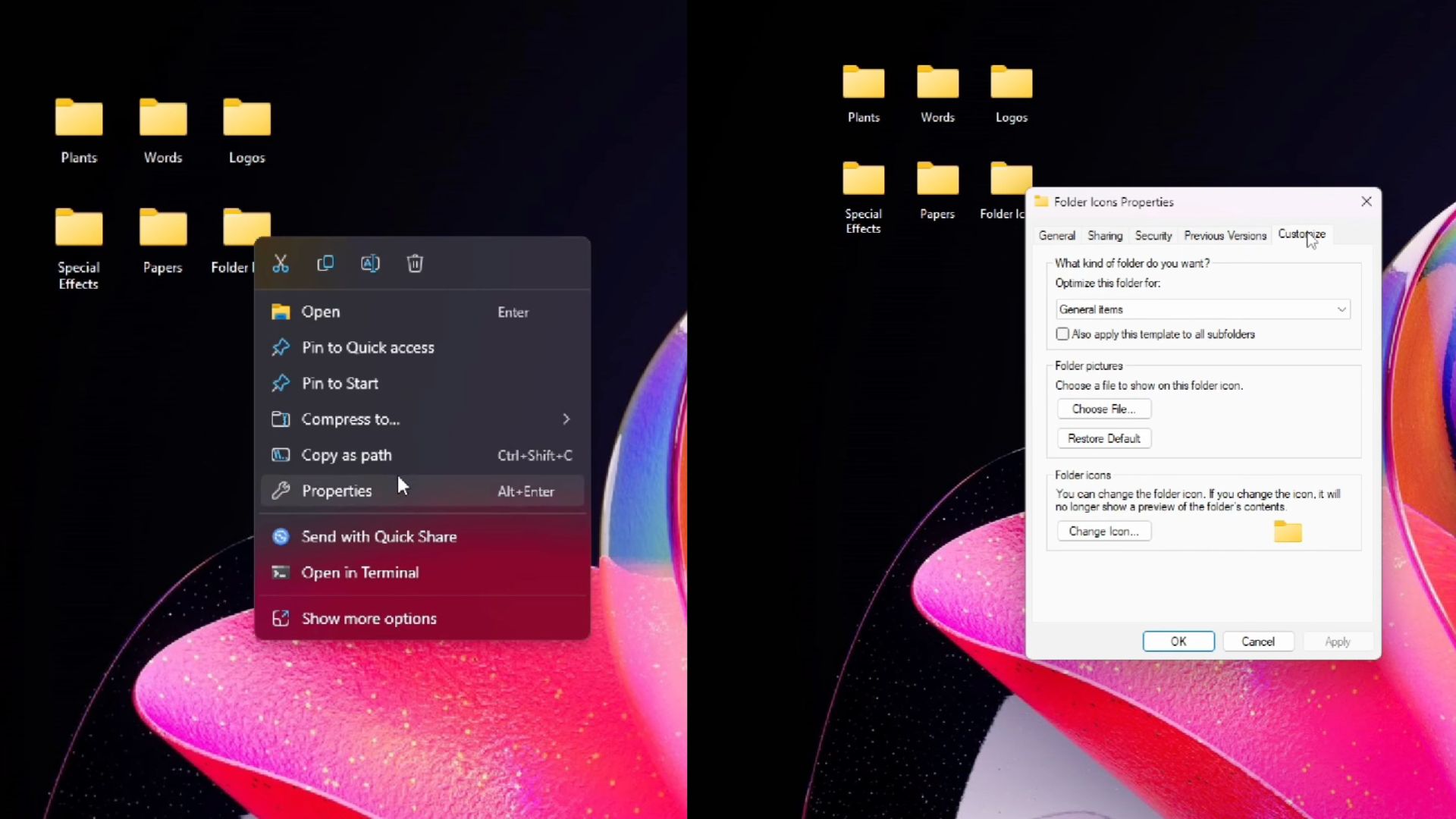
The stable icon folder matters. Windows stores a path to the .ico file. If you later delete the icon, move it from Downloads, or rename the folder that contains it, the custom folder icon can disappear or reset.
Manual method limit: Manual icon changes are fine for a few folders. They get annoying when you manage dozens of folders and need the same color system every week.
Limits of the manual Windows method
- Windows does not include a normal color picker for local File Explorer folders.
- You need a separate .ico file for each colored folder style.
- You must repeat Properties > Customize > Change Icon for every folder.
- You do not get saved colors, HEX colors, or a right-click color library.
- Restore is manual unless you remember the original icon setting.
There is also an advanced desktop.ini route. Skip it unless you already know Windows shell customization. It is useful for scripting or locked-down setups, but it is overkill for most people who only want folders they can scan faster.
Method 2: change folder color Windows with Folder Colorizer 2
Folder Colorizer 2 is the practical method when you want to color-code folders in Windows more than once. It adds the color workflow where you expect it: the folder right-click menu.
Step 1: Download and install Folder Colorizer 2
Download Folder Colorizer 2 from Softorino and install it on your Windows PC. After installation, File Explorer gets a Colorize option in the folder context menu.
Folder Colorizer 2 is the Windows product. Softorino also has Folder Colorizer for Mac, but that is a separate macOS app with a different workflow.
Step 2: Right-click a folder and choose Colorize
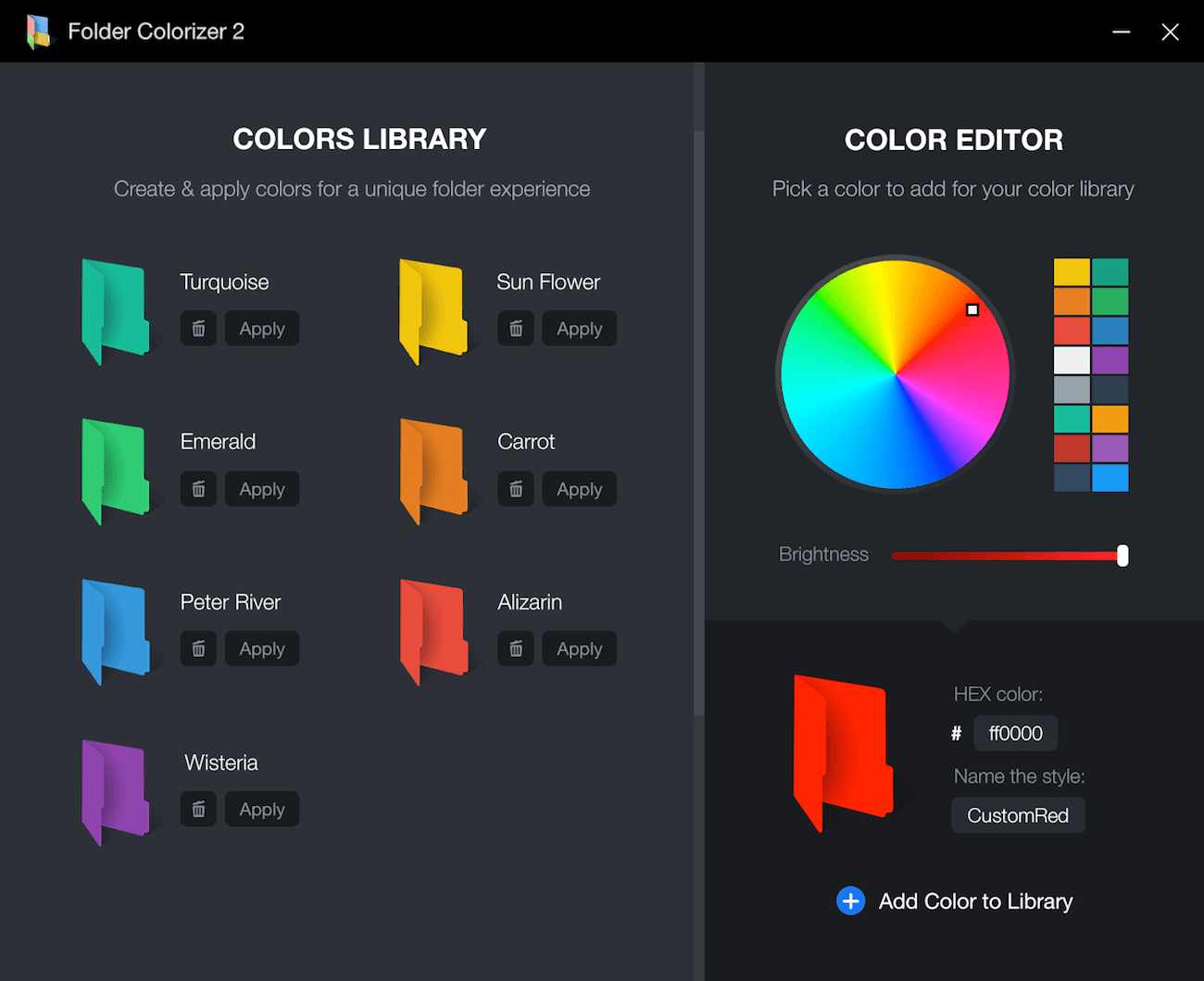
Open File Explorer, right-click a normal folder, and choose Colorize. On some Windows 11 setups, you may need to choose Show more options first because Microsoft hides older context-menu entries behind the expanded menu.
Start with a folder where color helps the decision. A client folder, urgent project folder, finance folder, or archive folder makes more sense than coloring random folders because they look fun for 10 minutes.
Step 3: Pick a preset or create a custom HEX color
Folder Colorizer 2 includes preset colors for quick organization. If you need a specific shade, open the color editor, enter or choose a custom HEX color, save it, and apply it to the folder.
This is where the app beats manual icon swapping. Designers can reuse exact project colors. Agencies can keep client folders consistent. Developers can mark active repos, old repos, and build folders without reading every folder name.
Step 4: Apply the color and restore it later
After you choose a color, the folder changes in File Explorer. Folder Colorizer 2 stores the choice, so the folder color stays after restart based on Softorino product context.
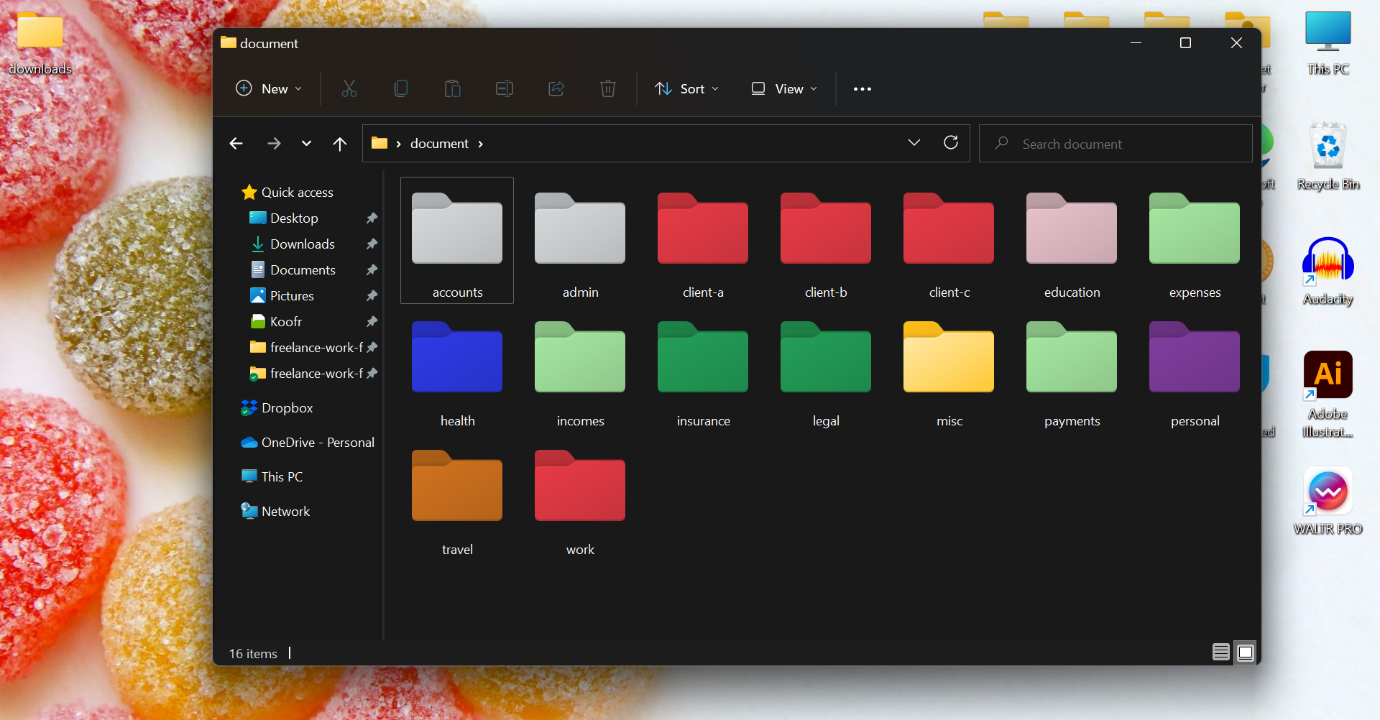
If your color system gets messy, right-click the folder again and restore the original look. That restore path makes experimenting safer than a pile of downloaded icons with mystery filenames.
Windows default vs Folder Colorizer 2 vs free folder color tools
Choose the method based on how many folders you want to manage and how often you will repeat the change.
Method | Best for | Speed | Custom colors | Restore | Tradeoff |
|---|---|---|---|---|---|
Windows Change Icon | One-off folder icon changes | Slow | Only with .ico files | Manual reset | Free, but repetitive |
Folder Colorizer 2 | Color-coding many Windows folders | Fast | Presets, custom colors, HEX, saved colors | Right-click restore | Paid after trial or license terms |
Free folder color tools | Users who like tinkering | Medium | Depends on the tool | Depends on the tool | Some need admin rights, registry/context-menu setup, icon packs, or extra cleanup |
OneDrive business folder colors | Synced cloud folders in supported accounts | Fast when available | Limited to that cloud workflow | Built into that account flow | Not a universal local Windows feature |
Microsoft's OneDrive folder organization guide also references folder colors inside the OneDrive web workflow. Treat that as a cloud-folder feature, not proof that every local Windows folder has a color menu.
The key difference is workflow. Windows changes icons. Folder Colorizer 2 gives you a repeatable folder-color workflow from the right-click menu.
Color-coding ideas that actually help
A folder color system works when each color means one thing. If every color means important, you have a rainbow and no system.
Try one simple setup first:
- Clients: one color per client or account.
- Project status: red for urgent, yellow for waiting, green for done.
- File type: blue for documents, purple for design files, orange for exports.
- School or work: one color per class, department, or project.
- Personal folders: green for finance, teal for travel, gray for archives.
- Media folders: one color for raw assets, another for finished exports.
Do not color every folder. Color the folders that help you make a faster decision when you open File Explorer.
How to restore the original folder color or icon
You can undo both methods. The right restore path depends on how you changed the folder.
For Folder Colorizer 2, right-click the folder, open Colorize, and choose the restore option. The folder returns to its original Windows look.
For the manual Windows method, right-click the folder, open Properties > Customize > Change Icon, and choose the default folder icon again. If the icon still looks wrong, click Restore Default in the Customize tab.
If you used a free third-party icon tool, check that tool's restore option before uninstalling it. Some tools write icon or context-menu settings that are easier to reverse while the app is still installed.
Troubleshooting: folder color not showing in File Explorer
If the folder color or custom icon does not appear, start with the boring fixes. File Explorer caches icons, so a valid change can lag.
- Refresh the File Explorer window.
- Close and reopen File Explorer.
- Restart Windows Explorer from Task Manager.
- Restart the PC if the icon cache still looks stale.
- Confirm manual icon files use the .ico format.
- Make sure manual .ico files still live in the same folder path.
- Check OneDrive or business-managed folders for sync or IT policy limits.
- On Windows 11, choose Show more options if the Colorize menu is hidden.
- Reinstall Folder Colorizer 2 if the right-click Colorize option never appears.
Avoid changing protected system folders unless you know why you are doing it. Project folders, client folders, school folders, media folders, and local work folders are the right targets.
Mac users need the Mac folder color guide
Folder Colorizer 2 is for Windows. If you are on macOS, use Folder Colorizer for Mac or a Mac-specific folder color guide instead.
The Mac product supports Mac folder customization such as colors, emoji, decals, custom background images, iCloud folders, and external drives. Do not use the Windows app for Mac folder customization.
Bottom line: make File Explorer easier to scan
You can change folder color in Windows in 2 safe ways. The manual Windows method swaps a folder icon. Folder Colorizer 2 gives you the right-click color workflow most people expected Windows to have.
Use the manual icon method for one folder. Use Folder Colorizer 2 when you manage many folders and want colors you can apply, reuse, and restore without digging through Properties every time.
Try Folder Colorizer 2 if you want to color-code Windows folders by client, project, urgency, school, archive, or file type without turning File Explorer into a scavenger hunt.
If you already use more than one Softorino app, the Softorino Universal License can cover Folder Colorizer 2 with the rest of the Softorino toolkit.
For visual organization in Windows, Folder Colorizer 2 lets you color-code folders so active projects are easier to scan.
FAQ
Can Windows 11 change folder colors without software?
Windows 11 can change folder icons without software, but standard File Explorer does not include a built-in color picker for normal folders. For real folder colors, use custom .ico files manually or a tool like Folder Colorizer 2.
How do I change folder color in Windows 10 or 11?
Use Folder Colorizer 2 for the fastest workflow: install it, right-click a folder in File Explorer, choose Colorize, pick a preset or custom HEX color, and apply it. The manual method is Properties > Customize > Change Icon.
Can I create custom folder colors?
Yes. Folder Colorizer 2 lets you create custom folder colors, including HEX colors, and save them to your color library. The manual Windows method can only use whatever colored .ico files you already have.
Do folder colors stay after restart?
Folder Colorizer 2 folder colors persist after restart based on Softorino product context. Manual icon changes also remain, but only while Windows can still access the .ico file you selected.
Why did a Windows 11 folder color option disappear?
A folder color option may come from OneDrive for Business, OneDrive for School, a workplace policy, or a third-party context-menu app. Standard local Windows folders do not all get that option by default.
Is Folder Colorizer 2 free?
Folder Colorizer 2 offers a trial, then paid access or a Softorino license may be needed for continued use. Use the trial to test right-click folder coloring before buying.
Why is my custom folder icon not showing?
File Explorer may still be showing a cached icon. Refresh File Explorer, restart Windows Explorer, and confirm the custom .ico file still lives in the same path. Manual folder icons break when the source .ico file moves.

Folder Colorizer 2
Change Folder Color on Windows PC in 1-Click
