How to Transfer Photos from PC to iPhone


Quick answer: how to transfer photos from PC to iPhone
The safest way to transfer photos from PC to iPhone depends on where you want the photos to land. Use Apple Devices if you want Apple's official Windows sync path into the Photos app. Use iCloud Photos if you want cloud sync across Apple devices. Use WALTR PRO if you want a local no-iTunes transfer from Windows without sending the photos through a cloud service.
Here is the catch Apple does not make obvious: an iPhone does not behave like a USB flash drive. Windows File Explorer can read the iPhone DCIM folder for importing photos from iPhone to PC, but it is not a reliable way to copy PC photos into the iPhone Photos library.
Before we begin
Download WALTR PRO on Mac or Windows to transfer local photos and media files to an iPhone without an iTunes sync. Connect the iPhone by USB, test a small batch first, and confirm the files appear in the expected app.
Quick takeaways before you pick a method
- Use Apple Devices for the official Windows method.
- Use WALTR PRO when you want to transfer photos from PC to iPhone without iTunes or iCloud.
- Use iCloud Photos when you already pay for iCloud storage and want photos inside Apple Photos.
- Use Google Photos, OneDrive, or Dropbox when cloud access matters more than Apple Photos placement.
- Use File Explorer, Microsoft Photos, or AltTunes for the reverse workflow: iPhone to PC.
- AirDrop does not work from Windows to iPhone. It only works between Apple devices.
Best way to transfer photos from PC to iPhone: quick picker
Method | Best when | Where photos land | Main catch |
|---|---|---|---|
Apple Devices | You want Apple's official Windows sync app | iPhone Photos app as synced photos | Sync can replace the previous synced folder |
WALTR PRO | You want local transfer without iTunes or cloud upload | iPhone storage, often Files by WALTR before moving to Photos | Do not assume every file lands in Apple Photos automatically |
iTunes | You already use the old Windows Apple workflow | iPhone Photos app as synced photos | Legacy app with the same sync caveat |
iCloud Photos | You want photos in Apple Photos across devices | iCloud Photos and iPhone Photos | Needs internet and enough iCloud storage |
Google Photos | You already use Google Photos | Google Photos app, then save locally if needed | Needs Google storage for original quality |
OneDrive or Dropbox | You use cloud folders on Windows | Cloud app, then save locally if needed | Not ideal for large albums |
Email or messenger | You need 2 or 3 images fast | Message attachment, then Save Image | Compresses or limits files |
File Explorer | You want iPhone photos copied to PC | PC folder from iPhone DCIM | Wrong direction for PC-to-iPhone Photos |
AirDrop | Your computer is a Mac | iPhone Photos or Files, depending on share | No native AirDrop on Windows |
If you only want the shortest answer, start with Apple Devices for official sync, WALTR PRO for local no-iTunes transfer, and iCloud Photos for cloud sync. The rest of the methods solve narrower cases.
Method 1: Transfer photos from PC to iPhone with Apple Devices
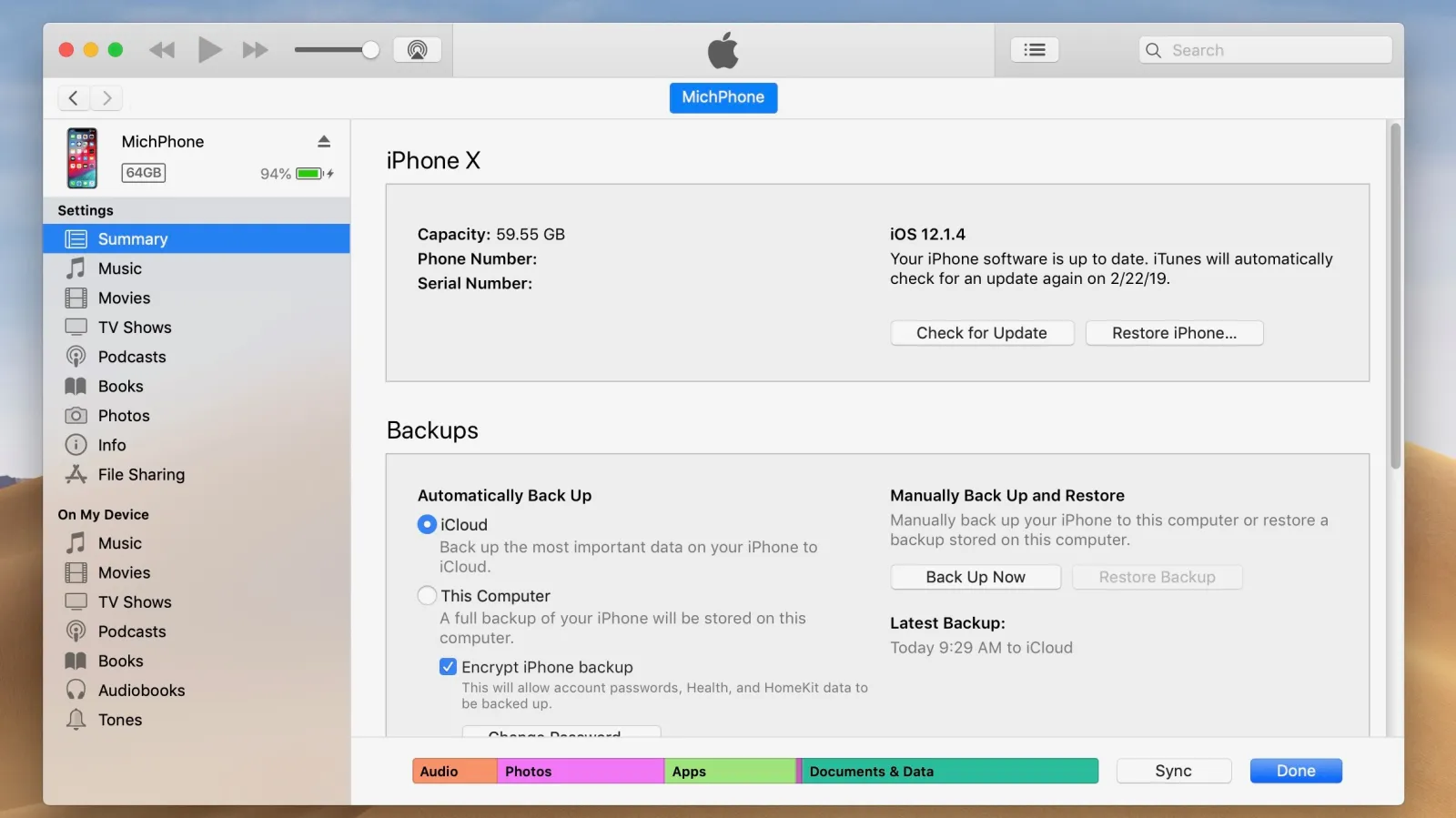
Apple Devices is Apple's current Windows app for managing iPhone sync on Windows 10 and Windows 11. If you want the official Apple route, start here.
This method syncs a photo folder from your PC to your iPhone. Syncing is not the same as copying random files into a USB folder. If you later change the selected folder, the synced photo set on your iPhone can change too.
Important: Before you sync, put every photo you want on the iPhone into one clean PC folder. Check old synced albums first, because changing the sync folder can remove the old synced set.
- Install Apple Devices from the Microsoft Store.
- Connect your iPhone to the PC with a USB cable.
- Unlock the iPhone and tap Trust This Computer if iOS asks.
- Open Apple Devices and select your iPhone in the sidebar.
- Open Photos.
- Choose the PC folder that contains the photos you want on the iPhone.
- Click Apply or Sync.
- Keep the iPhone connected until Apple Devices finishes.
Use Apple Devices when you want the supported Windows path and you understand the sync model. Skip it if you want drag-and-drop control without Apple folder mirroring.
Method 2: Transfer photos from PC to iPhone without iTunes via WALTR PRO
If your goal is to transfer photos from PC to iPhone without iTunes, WALTR PRO is the clean Softorino route. It works on Windows and Mac, connects by USB or Wi-Fi, and lets you send files onto your iPhone without opening Apple's sync maze.
WALTR PRO fits a specific job: local transfer. No iCloud upload. No Google account. No iTunes library. You pick the files, drop them into WALTR PRO, and send them to the iPhone.
- Step 1: Download and install WALTR PRO on your Windows PC.
- Step 2: Connect your iPhone by USB, or use Wi-Fi transfer after the device is available.
- Step 3: Unlock your iPhone and tap Trust This Computer if the prompt appears.
- Step 4: Open WALTR PRO and wait for your iPhone to appear.
- Step 5: Drag the selected photos into the WALTR PRO window.
- Step 6: Confirm the iPhone destination if WALTR PRO asks.
- Step 7: Wait until the transfer finishes before unplugging the cable.
- Step 8: Check Files by WALTR on the iPhone if the image does not appear directly in Apple Photos.
- Step 9: Save or move the image into Photos from the iPhone share menu if iOS requires that extra step.
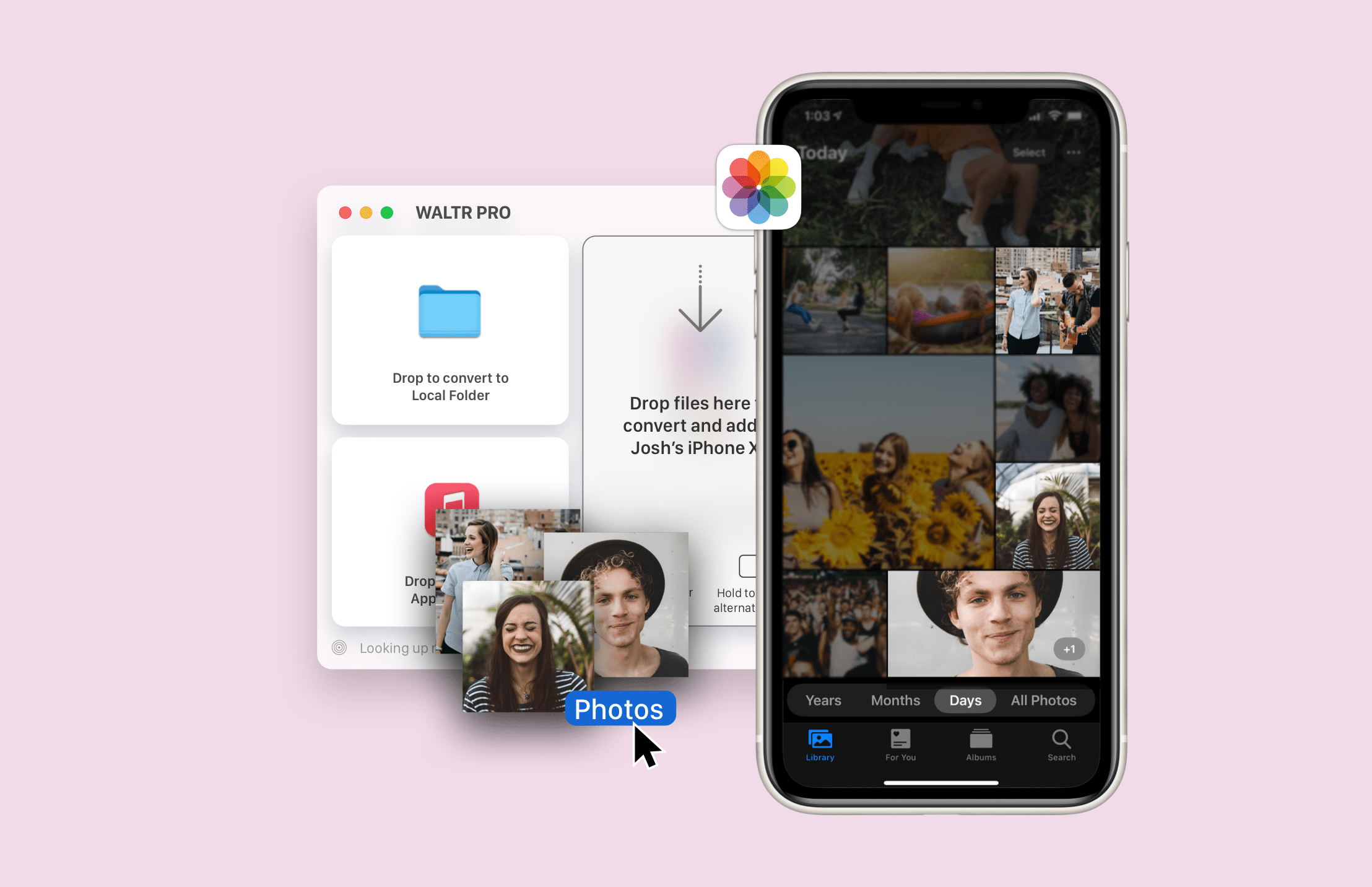
That last caveat matters. WALTR PRO can transfer photos from computer to iPhone, and the product page explains that transferred photos may appear in Files by WALTR before you move them to the phone gallery. Do not treat WALTR PRO like an Apple Photos sync clone. Treat it as the local no-iTunes transfer path when you want control without cloud storage.
Need the reverse workflow? Use AltTunes when you want to export photos from iPhone to a Windows PC. WALTR PRO sends files onto the iPhone. AltTunes gets iPhone data back to Windows.
Method 3: Sync photos from PC to iPhone with iTunes
iTunes still works as a fallback for Windows users who already have it installed. It is no longer the best first choice, but it can still sync a PC photo folder to your iPhone.
Use iTunes when Apple Devices is not available on your PC, your company workflow still depends on iTunes, or you need to follow an older Apple guide.
- Install or open iTunes for Windows.
- Connect your iPhone to the PC with a USB cable.
- Click the iPhone icon inside iTunes.
- Choose Photos in the sidebar.
- Select Sync Photos.
- Pick the PC folder you want to sync.
- Click Apply.
- Wait for the sync to finish before disconnecting the iPhone.
The same warning applies here: iTunes photo sync can replace the existing synced photo set. If iCloud Photos is turned on, Apple may hide manual sync options because iCloud manages the photo library instead.
Method 4: Upload photos from PC to iPhone using iCloud Photos
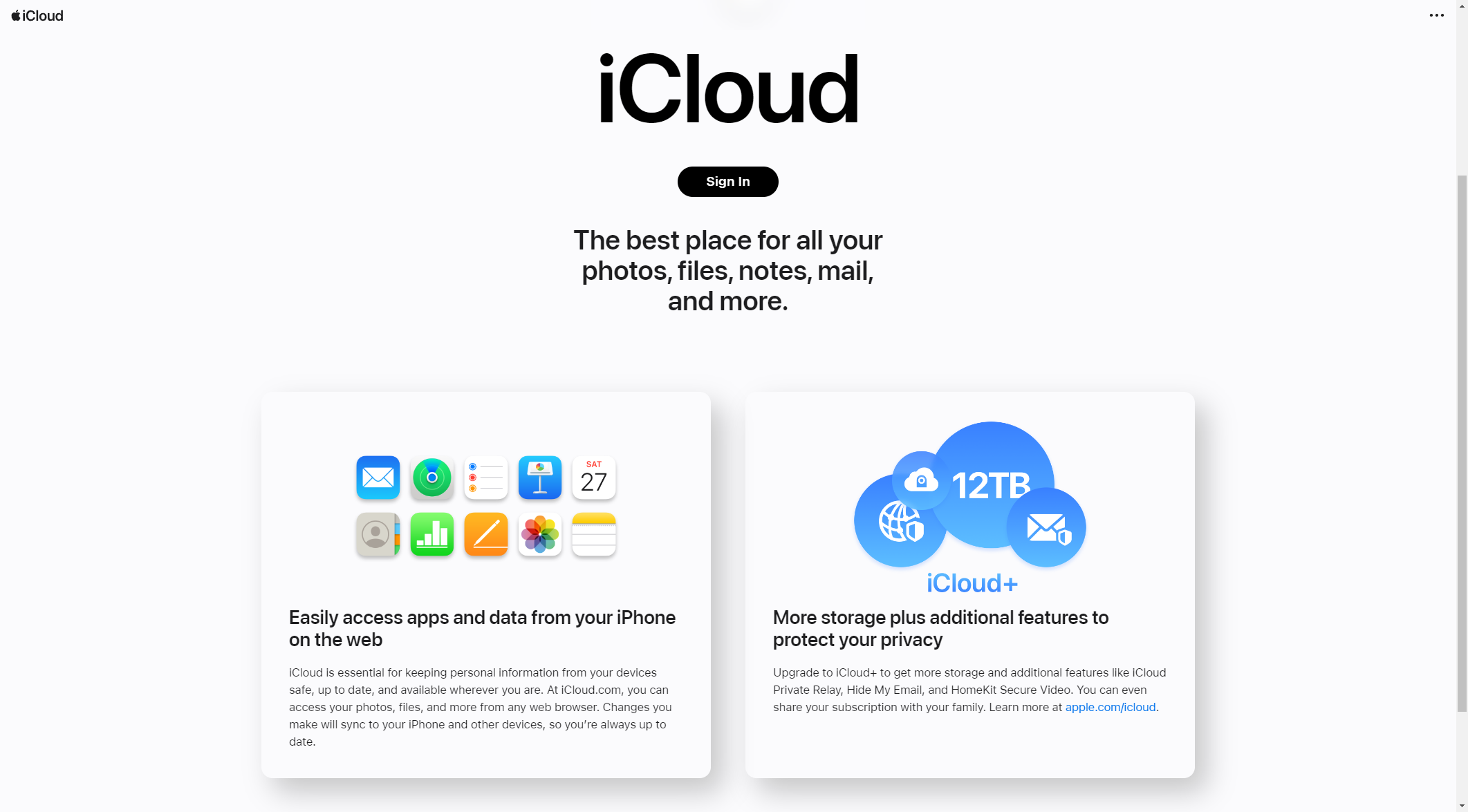
iCloud Photos is the cleanest option when you want the pictures inside the native Photos app and across your Apple devices. You upload photos from Windows, and iCloud syncs them to your iPhone.
This is not a cable transfer. It uses your Apple Account, internet connection, and iCloud storage. Apple includes 5GB of free iCloud storage, which runs out fast if you upload full albums or videos.
- Install iCloud for Windows, or open iCloud Photos in a browser.
- Sign in with the same Apple Account you use on your iPhone.
- Turn on iCloud Photos in iCloud for Windows.
- Upload or copy your pictures into the iCloud Photos folder on your PC.
- On your iPhone, open Settings > Photos.
- Turn on iCloud Photos.
- Wait for upload and sync to finish.
- Open Photos on the iPhone and check the uploaded images.
Use iCloud Photos when you want Apple Photos placement and you already trust iCloud with your library. Avoid it for a quick one-time transfer if your iCloud storage is full or your connection is slow.
Method 5: Use Google Photos to move pictures from PC to iPhone

Google Photos works well when you share albums, use Android and iPhone, or already keep your photo library in Google. It does not need iTunes. It does need a Google account and enough storage for the quality you choose.
- Open Google Photos on your PC.
- Sign in with your Google account.
- Upload the photos from your computer.
- Install Google Photos on your iPhone.
- Sign in with the same Google account.
- Open the uploaded photos on your iPhone.
- Save selected photos to the iPhone if you need local copies in Apple Photos.
Google Photos is great for viewing and sharing. If your goal is to see every image in Apple's Photos app, save the images from Google Photos onto the iPhone after upload.
Method 6: Transfer pictures from PC to iPhone with OneDrive or Dropbox

Cloud drive apps are fine when you already use them. OneDrive fits Windows users because Microsoft accounts often include it. Dropbox works well for shared folders and client files.
Transfer photos using OneDrive
- Put the photos into a OneDrive folder on your PC.
- Wait until OneDrive finishes uploading.
- Install OneDrive on your iPhone.
- Sign in with the same Microsoft account.
- Open the folder.
- Save the photos you need to the iPhone if you want local copies.
Transfer photos using Dropbox
- Install Dropbox on your PC and iPhone.
- Upload your photos to a Dropbox folder from Windows.
- Open Dropbox on your iPhone.
- Select the photos.
- Save them locally if you need them outside Dropbox.
These apps work for occasional batches. They are not the fastest way to transfer a large photo library, and they put another cloud account between your PC and iPhone.
Method 7: Send a few photos by email or messenger
Email, WhatsApp, Telegram, iMessage, and other messaging apps work when you need to move 2 or 3 pictures. They are terrible for albums.
- Attach the photos to an email or message on your PC.
- Send the message to yourself.
- Open the message on your iPhone.
- Save the photos to your device.
Use this for screenshots, receipts, and quick one-off images. Do not use it for a wedding album unless you enjoy fighting attachment limits and compression.
Method 8: Why File Explorer does not copy PC photos into iPhone Photos
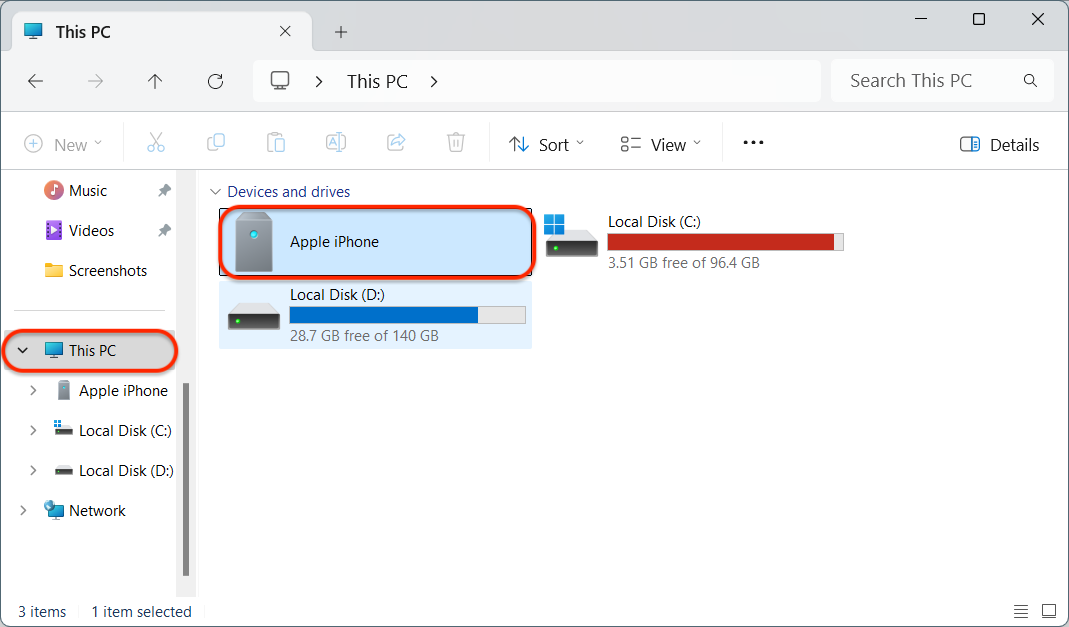
This is the trap. Windows File Explorer can show your iPhone's DCIM folder when the phone is connected by USB. That makes it look like you can drag photos from PC to iPhone by copying files into DCIM.
That is not how the iPhone Photos library works. File Explorer and Microsoft Photos are mainly useful for importing photos from iPhone to PC, not for putting arbitrary PC photos into Apple Photos.
You can use File Explorer for the reverse direction:
- Connect your iPhone to the PC with a USB cable.
- Unlock the iPhone and tap Trust This Computer.
- Open File Explorer.
- Go to This PC > Apple iPhone > Internal Storage > DCIM.
- Copy iPhone photos from DCIM to your PC.
For PC-to-iPhone transfer, use WALTR PRO, Apple Devices, iCloud Photos, or a cloud app. Those methods fit the direction you need.
Method 9: Use AirDrop if your computer is a Mac
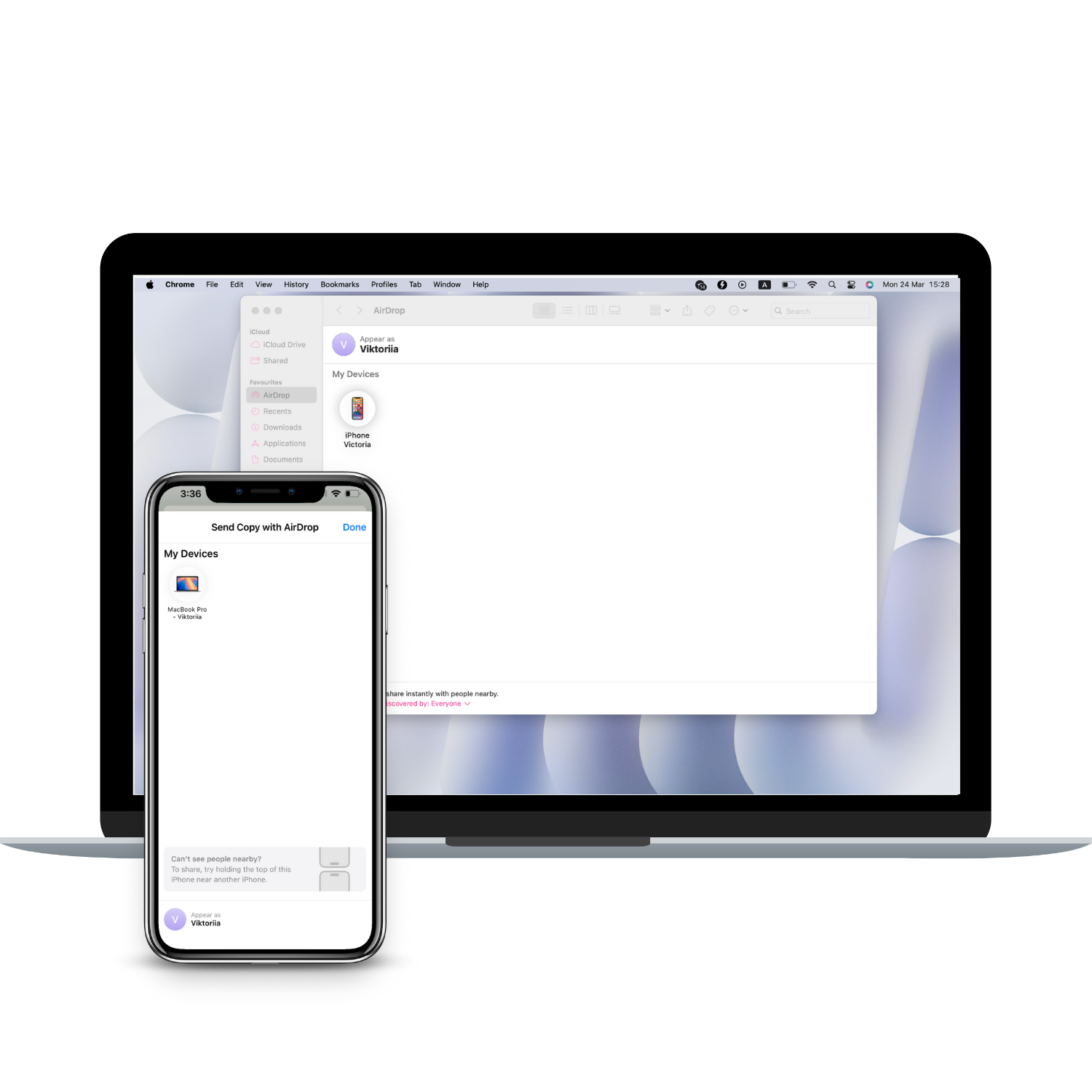
AirDrop is excellent for Mac-to-iPhone photo transfer. It is not a Windows PC method.
If your computer is a Mac, use AirDrop like this:
- Turn on Wi-Fi and Bluetooth on the Mac and iPhone.
- Open Finder and select the photos.
- Click Share > AirDrop.
- Choose your iPhone.
- Accept the transfer on the iPhone.
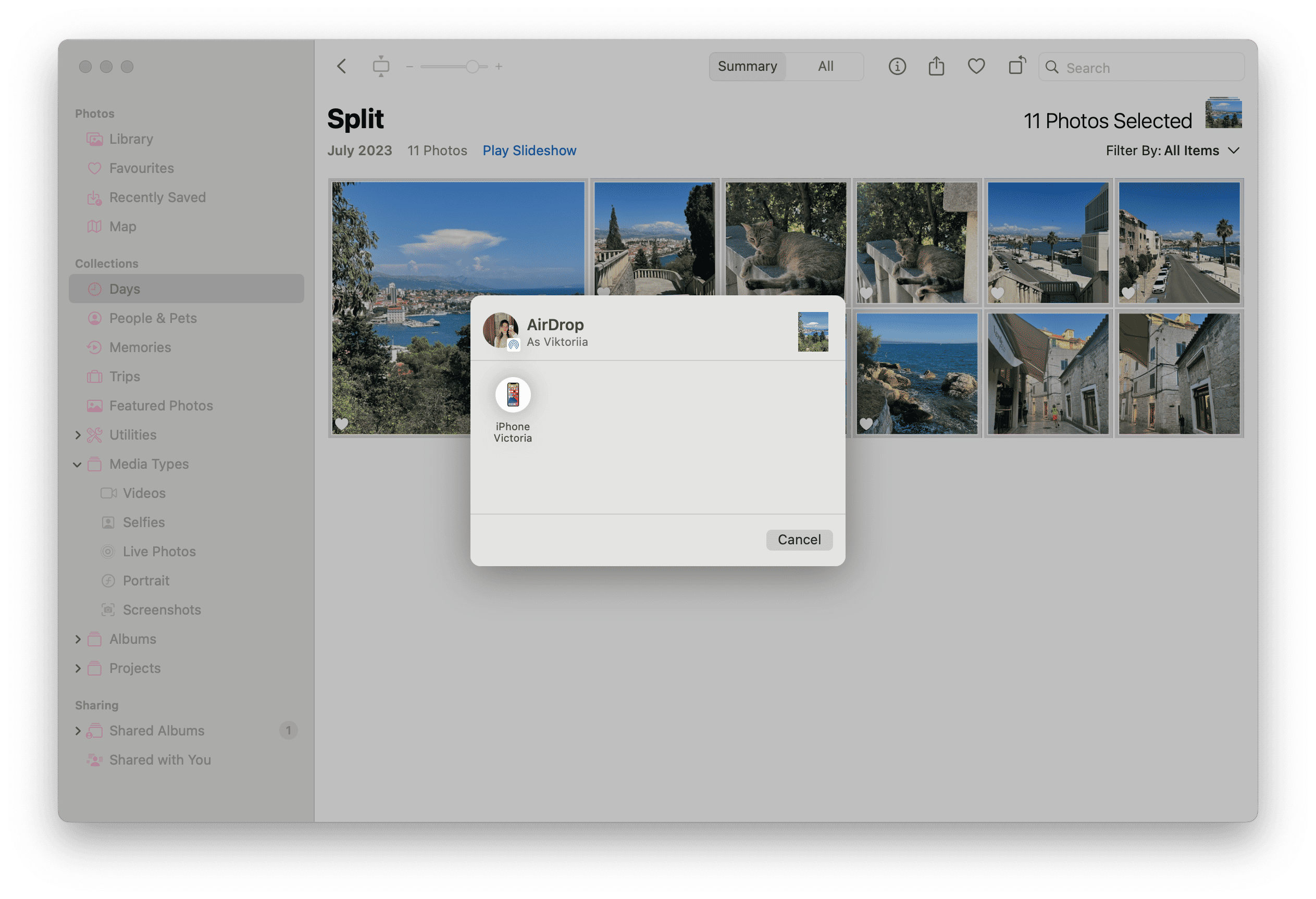
If you are on Windows, skip AirDrop. Apple does not offer AirDrop for Windows PCs.
Where will the photos show up on your iPhone?
This is the detail most bad guides skip. The transfer method affects the destination.
Apple Devices and iTunes sync photos into the iPhone Photos app, but they use Apple's folder sync rules. iCloud Photos also lands in Apple Photos, but it needs cloud storage and time to sync. Google Photos, OneDrive, and Dropbox show photos inside their own apps until you save them locally.
WALTR PRO is different. It sends files locally to the iPhone without iTunes or iCloud, but some photos may appear in Files by WALTR before you move them into the Photos app. That tradeoff is still worth it when you want a local transfer and do not want Apple to mirror a folder.
Troubleshooting PC-to-iPhone photo transfer problems
Your iPhone does not appear on Windows
Unlock the iPhone, use a USB cable that transfers data, and tap Trust This Computer. If the prompt does not appear, unplug the cable, restart both devices, and try another USB port.
Apple Devices or iTunes does not show photo sync
Check whether iCloud Photos is turned on. Apple may hide manual photo sync when iCloud Photos manages the library. On iPhone, go to Settings > Photos and check the iCloud Photos setting.
Syncing replaced or removed albums
Apple photo sync mirrors the selected PC folder. If you change that folder later, the synced set on the iPhone can change too. Keep a master folder on your PC with every photo you want synced.
iCloud Photos is stuck
Check iCloud storage, Wi-Fi, and battery mode. Large uploads can take a while. If your iCloud storage is full, new photos will not sync until you delete files or upgrade storage.
Photos show in Files instead of Photos
Some transfer workflows place files in the Files app instead of Apple Photos. Open the image on your iPhone and use the share menu to save it to Photos if iOS allows it.
HEIC, JPEG, PNG, and TIFF confusion
iPhone handles common image formats like JPEG and PNG well. HEIC is Apple's default photo format. If a PC app struggles with HEIC, export as JPEG before transferring or use iCloud Photos, which handles Apple photo formats more naturally.
Can I use Phone Link to transfer photos from PC to iPhone?
Do not use Phone Link as your main PC-to-iPhone photo transfer method. Microsoft and Apple support content mostly frame Windows photo tools around importing from a phone to a PC, not copying a PC photo library into the iPhone Photos app.
If you need to move the finished file to an iPhone or iPad, WALTR PRO transfers files to iPhone without iTunes.
FAQ
How do I transfer photos from computer to iPhone in 2026?
Use Apple Devices for the official Windows sync method, iCloud Photos for Apple cloud sync, or WALTR PRO for a local no-iTunes transfer. The best choice depends on whether you want Apple Photos placement, cloud sync, or local drag-and-drop control.
How do I transfer photos from PC to iPhone without iTunes?
Use WALTR PRO for local transfer without iTunes or cloud upload. You can also use iCloud Photos, Google Photos, OneDrive, or Dropbox if cloud upload is fine. Apple Devices also avoids iTunes, but it still uses Apple's sync model.
Can I transfer photos from PC to iPhone using USB?
Yes. Use Apple Devices for the official USB sync method, iTunes as the legacy USB method, or WALTR PRO for local USB transfer without Apple's photo sync model. Do not rely on File Explorer for copying PC photos into Apple Photos.
Can I drag photos into iPhone DCIM from File Explorer?
No. File Explorer mainly lets you import iPhone photos to Windows from the DCIM folder. It is not a reliable way to copy PC photos into the iPhone Photos library.
What is the official Apple way on Windows now?
Apple Devices is Apple's current Windows app for managing iPhone sync. iTunes still works as a legacy fallback, but Apple Devices is the better starting point on modern Windows PCs.
Will Apple Devices or iTunes delete my iPhone photos?
Apple Devices and iTunes can replace the synced photo set if you change the selected PC folder. They should not delete iCloud Photos, but sync behavior can surprise people. Back up important photos first.
What is the easiest way to copy photos from PC to iPhone?
For local transfer, WALTR PRO is the easiest no-iTunes option. For official Apple sync, use Apple Devices. For cloud sync into Apple Photos, use iCloud Photos.
Can I transfer a whole folder of photos to iPhone?
Yes, but choose the right method. Apple Devices and iTunes sync a selected folder. iCloud, Google Photos, OneDrive, and Dropbox upload folders through the cloud. WALTR PRO can transfer batches locally.
Does AirDrop work from Windows to iPhone?
No. AirDrop works between Apple devices only. Windows PCs do not have native AirDrop. Use WALTR PRO, Apple Devices, iCloud Photos, or a cloud drive app instead.
Bottom line
The best way to transfer photos from PC to iPhone depends on what you hate least: Apple sync, cloud upload, or installing a transfer app.
Use Apple Devices if you want the official Windows path. Use iCloud Photos if you already trust iCloud with your photo library. Use Google Photos, OneDrive, or Dropbox when the photos can live in a cloud app.
Use WALTR PRO when you want to transfer photos to iPhone without iTunes and without sending them through a cloud service. If you also need Softorino's reverse Windows workflow, AltTunes helps export iPhone photos back to PC. The Universal License covers the core Softorino apps under one subscription.

WALTR PRO
Convert & Push Any File into Any Apple Device
