How to Transfer YouTube to Apple Music in 2026


TL;DR: YouTube has the song. The right YouTube to Apple Music method depends on what you mean by "transfer." If you want to move a YouTube Music playlist, use the official Apple and Google transfer flow.
YouTube has the song. Apple Music is where you want your library. Annoying gap.
The right YouTube to Apple Music method depends on what you mean by "transfer." If you want to move a YouTube Music playlist, use the official Apple and Google transfer flow. If you want a specific YouTube video, remix, cover, live set, SoundCloud track, or Vimeo clip inside your Music app, use SYC PRO to save it as MP3 or AAC and send it without iTunes.
Quick takeaways
The right YouTube to Apple Music method depends on what you mean by "transfer." If you want to move a YouTube Music playlist, use the official Apple and Google transfer flow.
Yes, you can move YouTube to Apple Music, but there are 2 different jobs hiding inside that question.
If your real goal is moving playlists from YouTube Music to Apple Music, start with the official route.
Covered in this guide: Can You Transfer YouTube to Apple Music? First, Pick the Right Job.
Use content you own, created, or have permission to save. If the song already exists in Apple Music, adding it from Apple Music is cleaner than ripping it from YouTube.
Before we begin
Download SYC PRO on Mac or Windows to save permitted YouTube audio directly into Apple Music on an iPhone. Check the metadata and destination before downloading, and use only media you own or may legally save.
Can You Transfer YouTube to Apple Music? First, Pick the Right Job
Yes, you can move YouTube to Apple Music, but there are 2 different jobs hiding inside that question.
One job is playlist migration. You want your YouTube Music playlists copied into Apple Music as streaming references. For that, use Apple and Google's official transfer flow, or a playlist-transfer service.
The other job is media download. You found a YouTube video, remix, cover, interview, live version, or track that Apple Music does not have. For that, you need to save the audio as a file first. SYC PRO handles that job without iTunes or ad-stuffed converter sites.
If you want to... | Use this method | Why |
|---|---|---|
Move a YouTube Music playlist to Apple Music | Apple/Google transfer flow | Official account-to-account playlist route |
Move many playlists between streaming services | TuneMyMusic, Soundiiz, or FreeYourMusic | Built for playlist matching across services |
Add one YouTube song to Apple Music | SYC PRO | Saves the actual audio file as MP3 or AAC |
Avoid iTunes sync | SYC PRO | Sends media to Apple destinations without the old sync maze |
Method 1: Transfer YouTube Music Playlists to Apple Music
If your real goal is moving playlists from YouTube Music to Apple Music, start with the official route. Apple documents the process in its support guide for transferring playlists to Apple Music. Google routes the account transfer through its Takeout transfer page.
This method works best when your playlists contain songs Apple Music can match in its catalog. It does not download YouTube files. It copies playlist references from one streaming service to another.
You usually need:
- An active Apple Music subscription
- A YouTube Music account
- Playlists that contain songs Apple Music can match
- Access to the Google Takeout transfer flow
The limits matter. This route will not move podcasts, audiobooks, uploaded audio, deleted videos, private videos, or songs unavailable in Apple Music. It also will not keep syncing changes after the transfer. If you update the YouTube Music playlist later, you need to run another transfer.
Use this path when you want playlist migration. Do not use SYC PRO for this specific streaming-account job.
Method 2: Download YouTube Songs to Apple Music with SYC PRO
Use SYC PRO when you want a real audio or video file from YouTube, SoundCloud, or Vimeo inside your Apple setup.
This is the better path for a live performance, unavailable remix, cover, lecture, DJ set, personal upload, or any YouTube video you have rights to save. SYC PRO converts the media into a local file, fills metadata, and sends it to the Music app, Apple Music library, iPhone, iPad, Mac, or Apple TV destination where supported.
It works on Mac and Windows. It supports MP3 and AAC for audio, and MP4 for video. It can also handle YouTube playlists as downloadable media, which is different from transferring a streaming playlist between accounts.
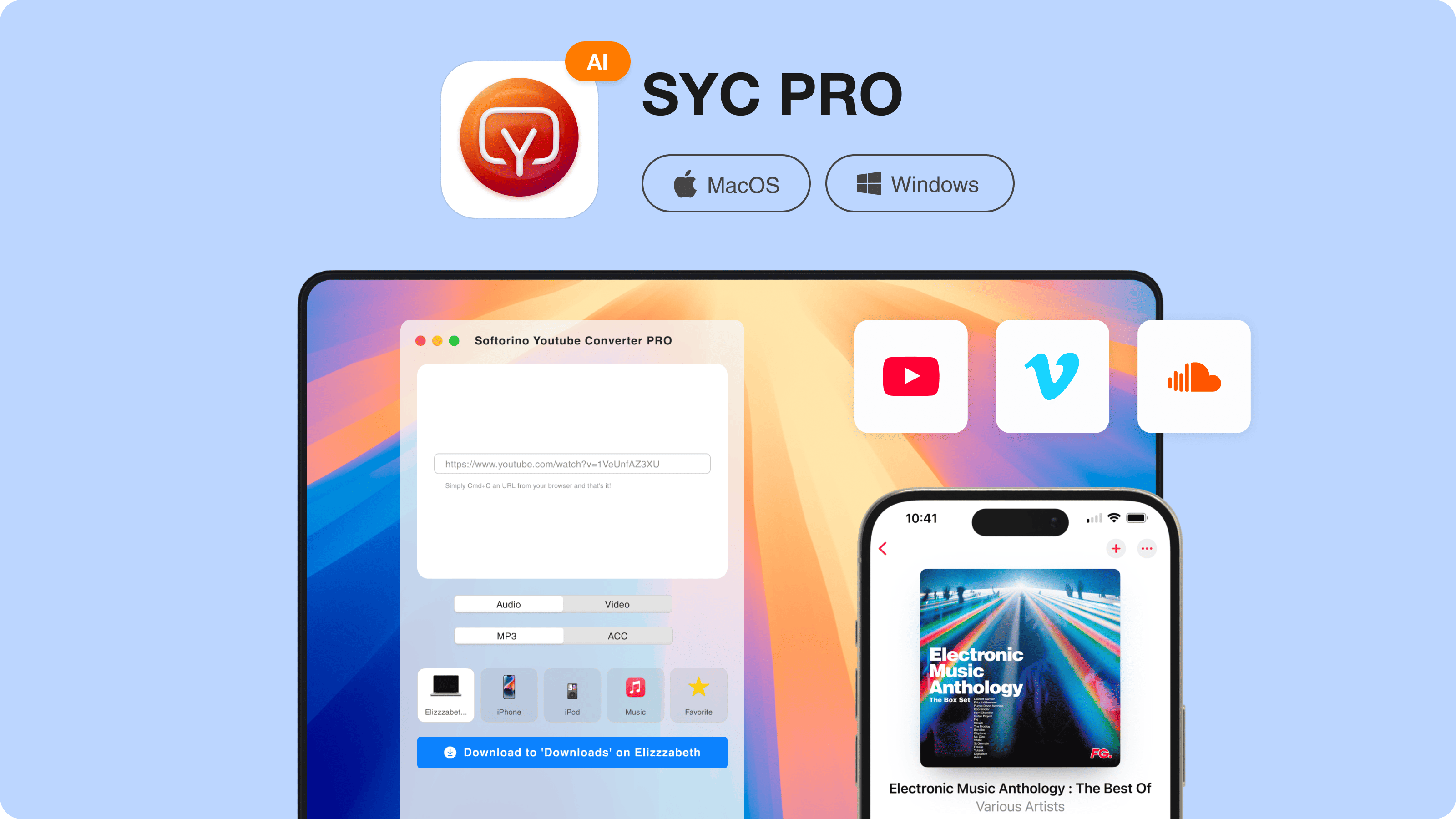
Step 1: Install SYC PRO
Download SYC PRO from Softorino's current product page: /softorino-youtube-converter.
Install it on your Mac or Windows PC. Open the app before you start copying YouTube links so it can detect URLs from your clipboard.
Keep the setup simple. If your goal is YouTube to Apple Music, you do not need iTunes, Apple Music account tricks, or a browser converter full of fake download buttons.
Step 2: Copy the YouTube URL
Open YouTube and copy the URL for the song, video, remix, cover, or live version you want to save. SYC PRO detects the copied link when the app is running.
You can queue more than one URL. For a big YouTube playlist, treat it as media downloading, not streaming playlist migration. If you want Apple Music to match an existing YouTube Music playlist, use Method 1 instead.
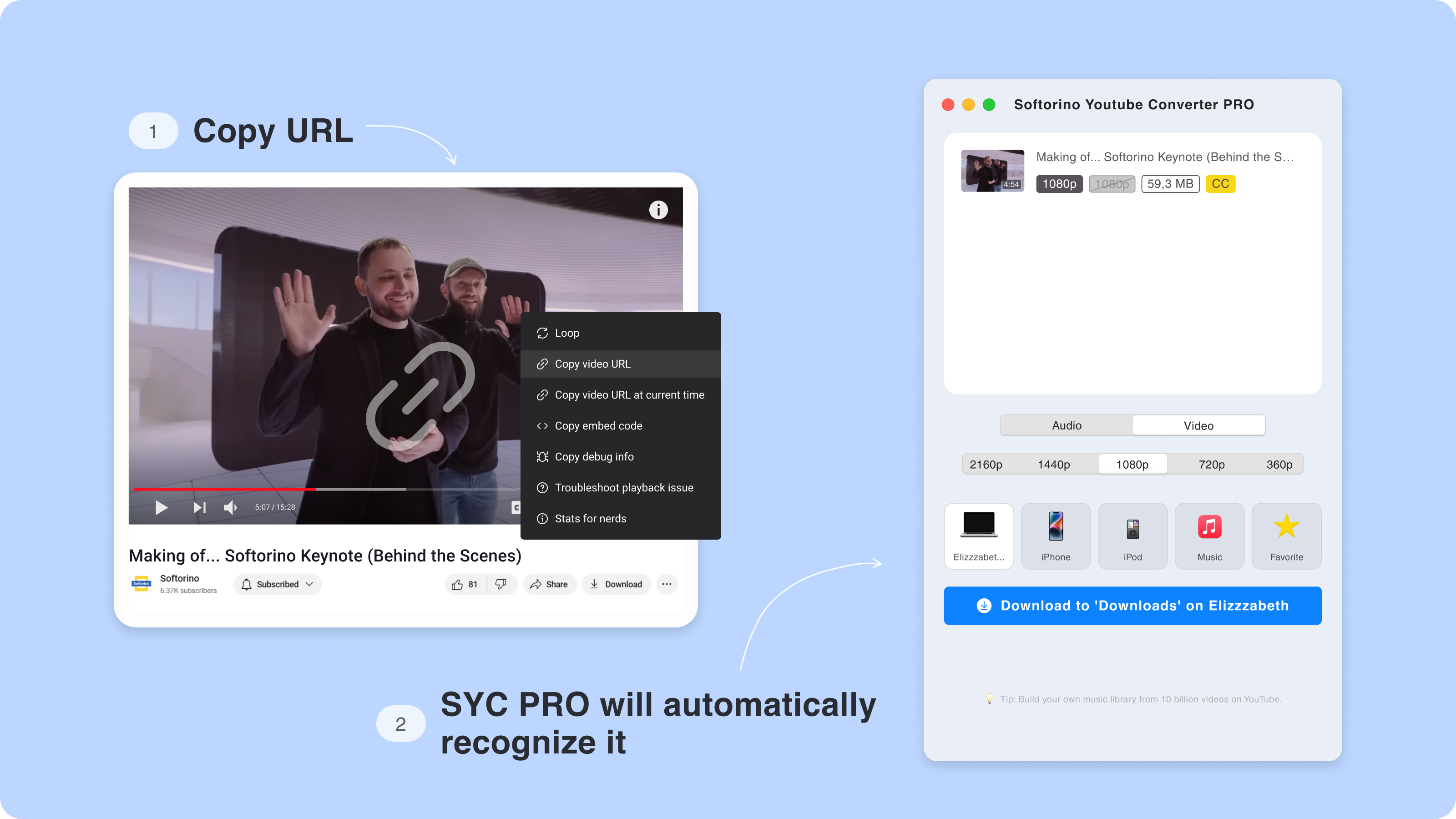
Copy the exact video URL when you care about a specific performance. A live version, cover, or DJ set may not exist in Apple Music's catalog.
Step 3: Choose MP3, AAC, or MP4
Choose MP3 or AAC for audio you want in the Music app or Apple Music library. MP3 is the safest compatibility choice. AAC is Apple-friendly and also works well for music libraries.
Choose MP4 only when you want the video. Video belongs in the Apple TV app or a video destination, not as an Apple Music song.
Do not expect lossless quality from a YouTube source. SYC PRO can save a clean, usable file, but it cannot invent quality that the source never had.
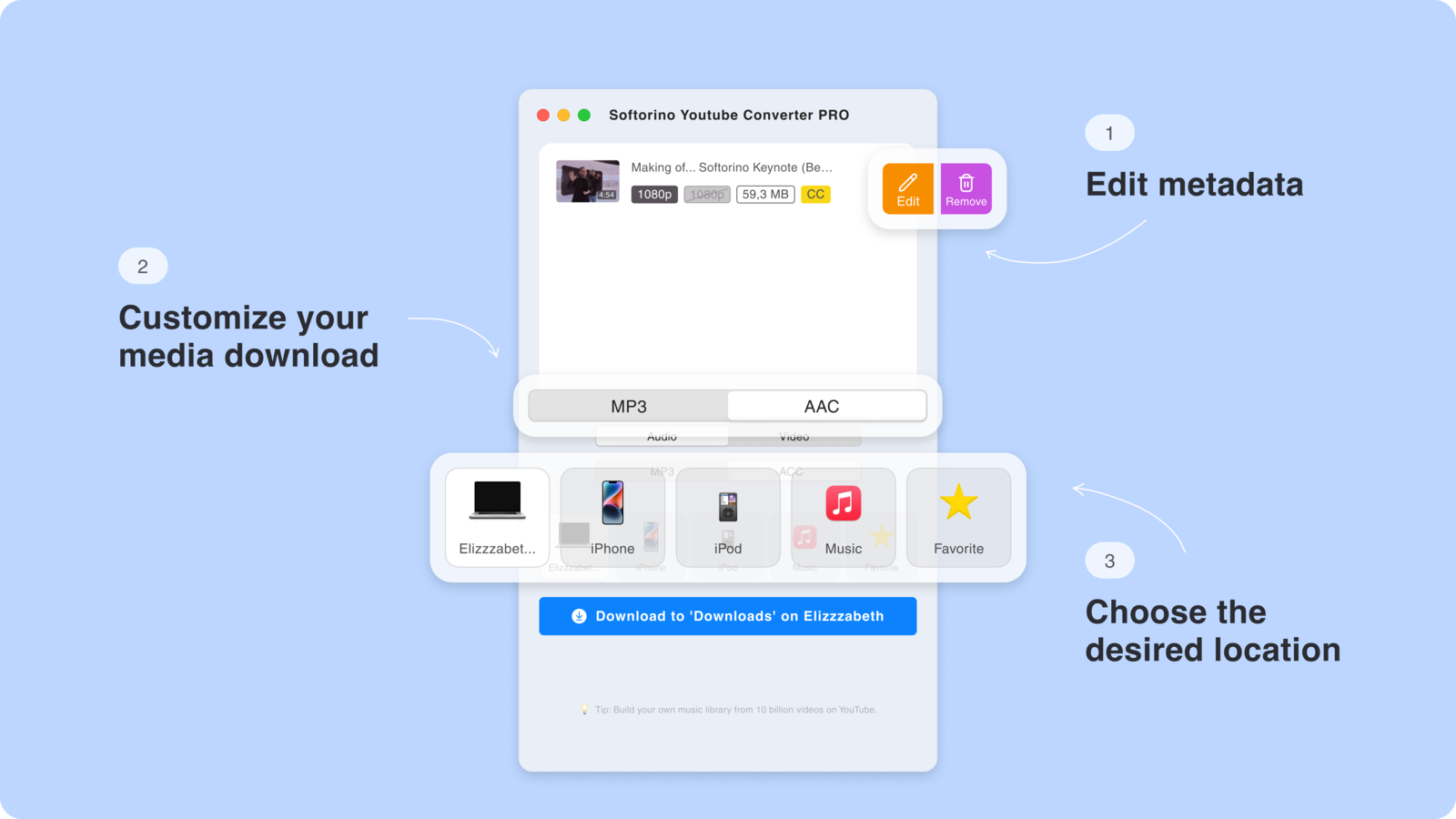
Step 4: Fix the metadata before download
Metadata is the difference between a useful library and a pile of mystery files.
SYC PRO lets you edit the track title, artist, album, and artwork. It also supports AI metadata fill. Use it before downloading so the song lands where you can find it later.
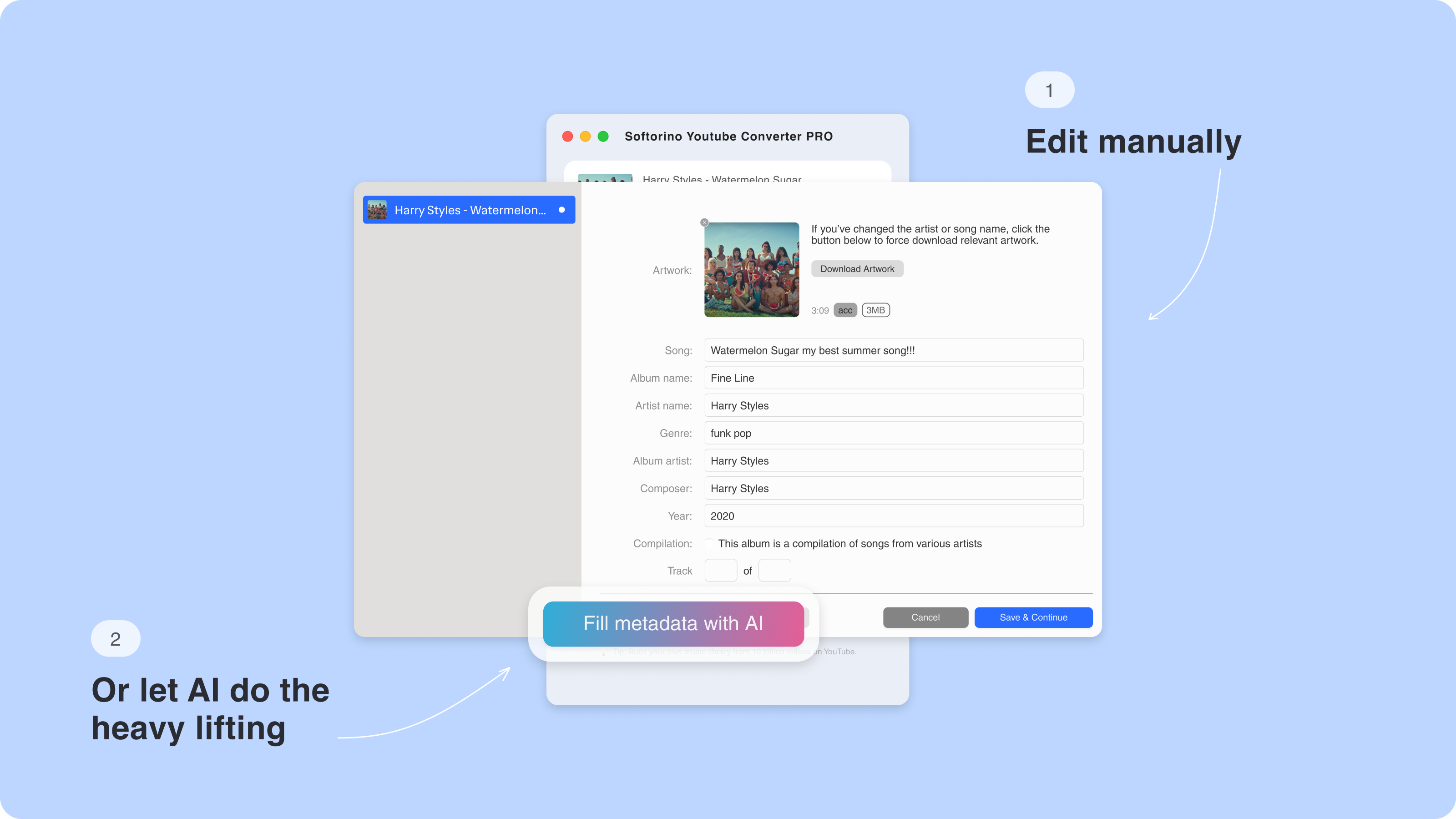
For YouTube to Apple Music workflows, this step matters more than people think. A converted track with the right title and artwork feels like part of your library. A file named videoplayback.mp3 feels like 2009.
Step 5: Download and send to Apple Music or your device
Click Download after you choose the format and destination. SYC PRO saves the media and sends it to the selected Apple destination.
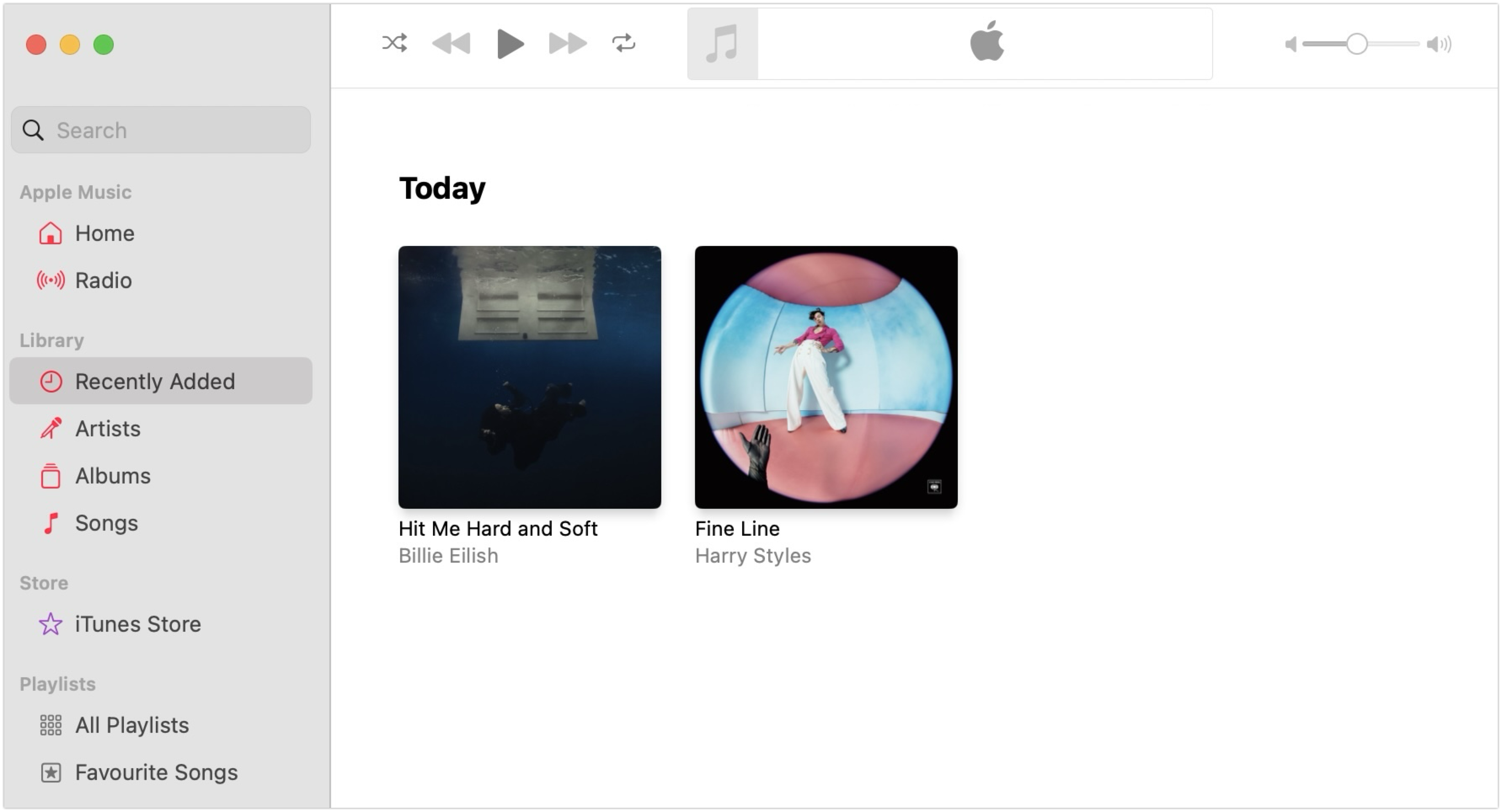
Open Music or Apple Music and check Recently Added. If you sent the file to an iPhone or iPad, check the destination app after the transfer finishes.
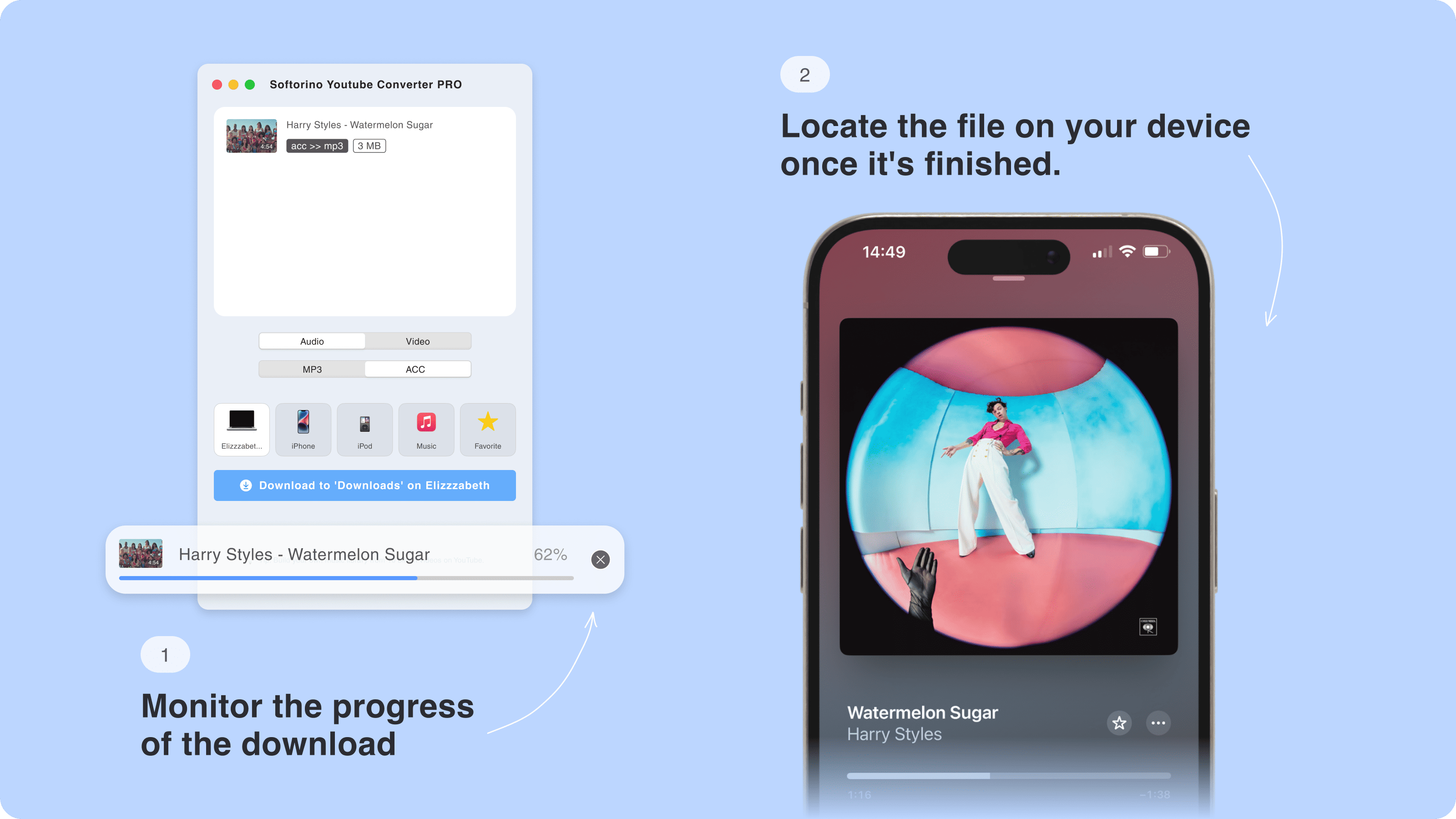
If you need the video version, choose MP4 and send it to the Apple TV/video destination instead.
Playlist Transfer vs YouTube Download: Which Should You Use?
Choose playlist transfer when the music already exists inside streaming catalogs. Choose SYC PRO when the thing you want is the actual YouTube media.
Playlist-transfer tools move references. They ask Apple Music to find matching songs in its catalog. That is useful for normal playlists, but it breaks down when your YouTube playlist includes uploads, remixes, unavailable tracks, podcasts, audiobooks, or private/deleted videos.
SYC PRO saves a file. That makes it better for individual YouTube songs, videos, SoundCloud tracks, Vimeo clips, and personal-rights content. It also avoids iTunes sync, which is still a special kind of punishment.
Scenario | Better choice |
|---|---|
You want a YouTube Music playlist copied into Apple Music | Apple/Google transfer flow |
You want a Spotify-style playlist migration tool | TuneMyMusic, Soundiiz, or FreeYourMusic |
You want a YouTube video as an audio file | SYC PRO |
You want a cover, remix, or live version Apple Music lacks | SYC PRO |
You want a video file for Apple TV | SYC PRO with MP4 |
What YouTube Content Will Not Transfer Cleanly?
Some content will not move cleanly from YouTube to Apple Music, no matter which tool you use.
- Private or deleted YouTube videos
- Songs Apple Music cannot match during playlist transfer
- Podcasts and audiobooks in playlist-transfer flows
- YouTube Music uploads that are not in Apple Music's catalog
- DRM-protected or subscription-only content
- Playlists that change after a one-time transfer
If the track already exists in Apple Music, use Apple Music. If it only exists as a YouTube video and you have the right to save it, SYC PRO is the practical route.
Why Use SYC PRO Instead of iTunes or Online Converters?
iTunes can import a file after you already have one. It does not download YouTube audio for you. iCloud also does not turn YouTube videos into Apple Music tracks.
Online converters can work, but they usually come with fake buttons, popups, low-quality files, and no clean path to your iPhone. You still have to move the file after conversion.
SYC PRO is built for the whole YouTube to Apple Music job:
- Copy a YouTube, SoundCloud, or Vimeo URL.
- Choose MP3, AAC, or MP4.
- Fix title, artist, album, and artwork.
- Download without sketchy converter pages.
- Send to Apple Music/Music, iPhone, iPad, Mac, or Apple TV destinations where supported.
- Avoid iTunes sync.
If you also need to move local tracks you already own, read Softorino's guide to transfer local music from computer to iPhone. If you want to protect your library later, see how to back up music from iPhone to computer.
Best Formats for YouTube to Apple Music: MP3, AAC, or MP4?
For most YouTube to Apple Music audio jobs, choose MP3. It is widely compatible, easy to manage, and works across Mac, Windows, iPhone, and iPad.
AAC is also a good Apple-friendly audio option. Use it when you prefer Apple's native format and the app/source supports it.
Use MP4 for video only. If you download a concert video, tutorial, or music video, send it to an Apple TV/video destination instead of treating it like a song.
Is YouTube to Apple Music Safe?
The safe rule is boring because it works: download only content you own, created, or have permission to save.
Do not use this workflow to bypass paid music, break platform rules, or collect copyrighted tracks you do not have rights to use. If a song exists in Apple Music, add it from Apple Music. That gives you the cleanest library entry and supports the artist through the licensed service.
Use SYC PRO for the edge cases Apple Music does not solve well: your own uploads, permission-cleared clips, live performances, covers, demos, and videos that need to become local media.
Getting Started with YouTube to Apple Music
Start with the method picker. Playlist migration belongs with Apple/Google Takeout or a playlist-transfer tool. Individual YouTube media belongs with SYC PRO.
For the Softorino route, copy the YouTube URL, choose MP3 or AAC, fix the metadata, and send the file to your Music app or Apple device. Then open Recently Added and make sure the title, artist, and artwork look right.
That is the whole point. YouTube has the odd corner of the internet you want to save. Apple Music has the library where you want to keep it. SYC PRO closes the gap without dragging iTunes back into your day.
Try SYC PRO with the free download and move one track first. If it lands cleanly, build the rest of your library from there.
FAQ
Can I transfer a song from YouTube to Apple Music?
Yes. If the song exists in Apple Music, add it from Apple Music. If the exact track only exists as a YouTube video and you have permission to save it, use SYC PRO to convert it to MP3 or AAC and send it to your Music app or Apple Music library.
Can I put a YouTube video on Apple Music?
Not as a streaming Apple Music catalog item. You can save the video's audio as a local MP3 or AAC file, then add it to your Music app/library. If you want the video itself, save it as MP4 and use an Apple TV/video destination.
How do I turn a YouTube video into a song in Apple Music?
Copy the YouTube URL, open SYC PRO, choose MP3 or AAC, edit the metadata, and download/send the file to Music or your Apple device. Check Recently Added after the transfer finishes.
Can I transfer a YouTube Music playlist to Apple Music for free?
Use the Apple/Google transfer flow first if it is available for your account. You need an active Apple Music subscription, and only eligible songs that Apple Music can match will transfer. Playlist-transfer apps can also help, but they have their own limits.
Do I need an Apple Music subscription?
For official playlist transfer from YouTube Music to Apple Music, yes. For local files in the Music app, you can manage music without an active Apple Music streaming subscription, depending on your device and sync setup.
Can I download YouTube music to Apple Music without iTunes?
Yes. SYC PRO lets you convert YouTube to Apple Music-compatible audio and send it to Apple destinations without the old iTunes sync workflow.
What format should I choose for Apple Music?
Choose MP3 for broad compatibility. Choose AAC if you prefer an Apple-friendly audio format. Choose MP4 only when you want the video in a video destination, not a song in Apple Music.

SYC PRO
Download Web Videos Like a PRO
