iTunes Not Recognizing iPhone? Fixes for Windows & Mac

iTunes Not Recognizing iPhone: Start Here
TL;DR: For iTunes not recognizing iPhone, unlock the phone, trust your computer, and use a cable that carries data. Open Apple Devices on current Windows setups or Finder on macOS Catalina and later. Follow the iTunes-specific service checks only if you still use iTunes for device management.
Check the app before changing drivers. Apple Devices can manage your iPhone even when iTunes does not show it. That alone does not mean iTunes is broken.
Before we begin
After your iPhone connection works, download AltTunes for Windows to export accessible photos, contacts, messages, or keep local backups. AltTunes needs an unlocked, trusted iPhone and a working connection. It does not repair USB faults or bypass Apple permissions.
Why iTunes Is Not Recognizing Your iPhone
Start with access, the cable, and the correct app. A missing iPhone can reflect any of these problems:
- The iPhone is locked or has not trusted the computer.
- The cable supplies power but cannot transfer data.
- Apple software or Windows drivers need attention.
- You are looking in iTunes when Apple Devices or Finder handles your phone.
Apple says to check the cable, port, and apps before seeking service. A Windows connection sound, or access to photos, does not prove that iTunes can manage your phone.
Quick Takeaways for iTunes Connection Problems
Try these first:
Unlock your iPhone and keep it awake.
Reconnect with a data-capable USB cable, not a charge-only cable.
Tap Trust This Computer on the iPhone if the prompt appears.
Open Apple Devices on current Windows setups, or Finder on macOS Catalina and later. Use iTunes only for a legacy device-management setup.
Restart both devices, then connect the iPhone again.
If your iPhone charges but does not appear in iTunes, do not trust the cable yet. Charging only proves power works. It does not prove data transfer works.
First, Open the Right App: Finder, Apple Devices, or iTunes
Before you troubleshoot drivers, make sure you are looking in the right place.
Computer or setup | App to check | What to look for |
|---|---|---|
macOS Catalina or later | Finder | iPhone in the sidebar |
Windows with Apple dedicated apps | Apple Devices | iPhone in the sidebar; iTunes is for podcasts and audiobooks |
Legacy Windows device management | iTunes | Device button after connecting and trusting the phone |
Apple's current Windows app guide assigns iPhone updates, backups, restores, and sync to Apple Devices. In that setup, iTunes handles podcasts and audiobooks. Use the iTunes fixes below only for an installation that still manages your phone.
On a Mac: click Allow if macOS asks whether the accessory can connect. In Finder, choose View > Show Sidebar if the sidebar is hidden. If Apple Devices already shows your iPhone on Windows, continue there rather than repairing iTunes for an expected app split.
Fix 1: Unlock iPhone and Tap Trust This Computer
Unlock the iPhone and approve access on both devices when prompted. Only trust a computer you control: a trusted computer can access photos, videos, contacts, and other content.
- Disconnect and unlock the iPhone.
- Reconnect it directly to the computer with USB.
- Select the phone in Finder or Apple Devices and click Trust if asked. In iTunes, click Continue if prompted.
- Tap Trust on the iPhone and enter the passcode if asked.
If you tapped Don't Trust by mistake, reconnect first. The reset procedure in Fix 7 is for a missing or unresponsive prompt.
- Keep the iPhone unlocked while checking for the alert.
- Look at both the computer and phone for permission dialogs.
- On a managed computer, ask IT before changing security settings.
Trust gives the computer access to personal data. Do not approve an unfamiliar public computer just to see whether the phone connects.
Fix 2: Use a Data-Capable USB Cable and Direct USB Port
Charging does not prove the cable carries data. Try a known-good data cable with the right connector for your iPhone. Avoid a cable that works only when bent.
Check the connection like this:
Use a connector-appropriate cable that supports both data and charging.
Plug the cable directly into the computer, not a USB hub, dock, or monitor port.
Try a different USB port.
Inspect the iPhone port for debris or damage. Do not scrape inside it or insert tools; seek service if needed.
Test another cable if the iPhone only charges.

If the phone appears with another cable on the same port, stop using the old cable for transfers. If several cables fail on one port, try another port or computer.
If iTunes recognition cuts in and out when the cable moves, treat the cable or port as faulty. Intermittent USB data is enough to break backups and syncs.
Fix 3: Restart the iPhone and Computer
Restart both devices after the cable and trust checks. This is a low-risk next step when the app still does not show the phone.
Use this order:
- Disconnect the iPhone.
- Close iTunes or Apple Devices if open.
- Restart the computer.
- Restart the iPhone.
- Unlock the iPhone.
- Connect it directly by USB.
- Open the correct app for your computer.
Do not reconnect while both devices are still booting. Wait until the iPhone is unlocked and the computer is ready.
Fix 4: Update iOS, Windows, macOS, Apple Devices, and iTunes
Update the iPhone, computer, and the Apple app you use. Apple's recognition checklist includes current iOS, Windows, and macOS versions. Do not install a random driver updater.
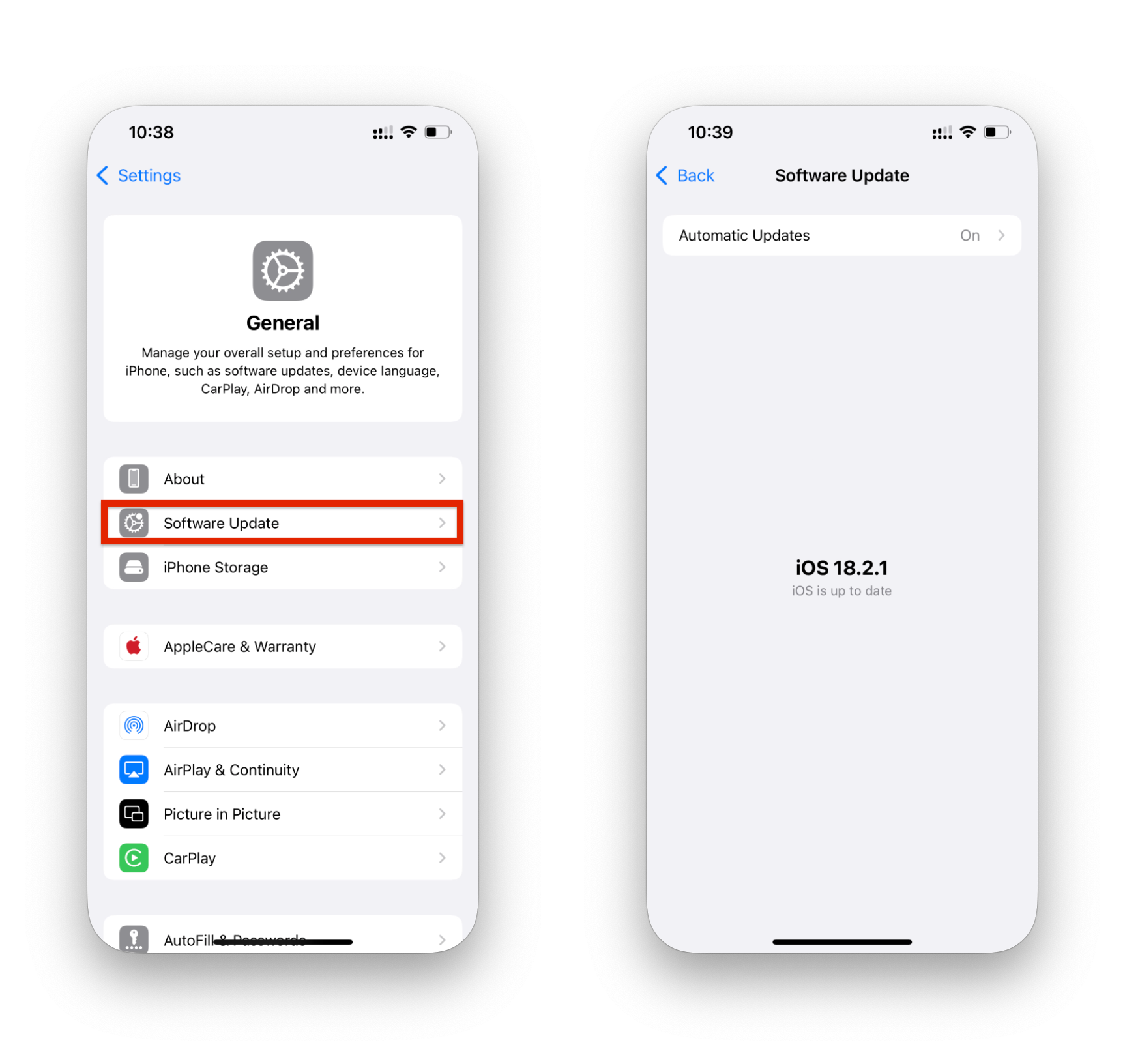
For iPhone or iPad: use Software Update. The preserved screenshot below illustrates the Settings path, not a recommendation to install its pictured historical version.
- Open Settings.
- Go to General > Software Update.
- Install the update if one appears.
- Keep the device charged during the update.
For Windows:
- Open Settings > Windows Update.
- Install available Windows updates.
- Update Apple Devices from the Microsoft Store if you use it.
- Update iTunes from the Microsoft Store or Apple's installer, depending on your version.
- Restart the PC.
For Mac:
- Open System Settings.
- Go to General > Software Update.
- Install available macOS updates.
- Reconnect the iPhone after the Mac restarts.
If your Mac is on macOS Catalina or later, do not waste time looking for iTunes. Use Finder. Apple moved iPhone device management there.
Fix 5: Restart Apple Mobile Device Service for Windows iTunes
Apple Mobile Device Service (AMDS) is a Windows service used by iTunes. Follow Apple's AMDS steps if iTunes on Windows cannot find the phone, especially if the error says the service is not started.
Use the Services console for this change, not Task Manager's End task button:
- Close iTunes and disconnect the iPhone.
- Press Windows + R, type services.msc, and press Enter.
- Right-click Apple Mobile Device Service and choose Properties.
- Set Startup type to Automatic. Click Stop, then Start after the service stops.
- Click OK and restart the PC.
- Open iTunes, unlock the iPhone, and reconnect it.

The screenshot above shows Task Manager and End task, not the AMDS restart screen. Use the Services steps instead. A USB driver, the Apple Mobile Device Support app package, and AMDS are separate parts. Do not remove one because another has a similar name.
You may need administrator rights to restart services. If this is a work PC, ask your IT admin before changing service settings.
Fix 6: Check Windows Drivers Without Deleting Devices
If Windows sees the iPhone but iTunes does not, a driver or app issue is possible. Start with Windows and Apple app updates. Do not delete every USB device or download Apple drivers from an unfamiliar site.
Use Device Manager to record what Windows detects:
- Unlock and connect the iPhone.
- Press Windows + X and open Device Manager.
- Look under Portable Devices, Universal Serial Bus devices, and USB controllers for an iPhone or Apple entry.
- Note warning icons and the exact device name for Apple Support or your IT team.
Seeing photos in Windows does not prove that iTunes pairing works. If app and Windows updates do not fix the problem, ask Apple for steps that match your setup before changing drivers.
Fix 7: Reset Trust Settings if Trust This Computer Is Missing
If the Trust alert never appears, update the Apple app, reconnect, and restart both devices first. For Microsoft Store iTunes, Apple also says to turn on iTunes Mobile Device Helper in Windows startup apps.
If the prompt still fails, follow Apple's location and privacy reset instructions:
- On the iPhone, open Settings > General > Transfer or Reset iPhone.
- Tap Reset, then Reset Location & Privacy.
- Reconnect the iPhone to your computer.
- Approve Trust on the computer and iPhone when asked.
Choose Reset Location & Privacy, not Erase All Content and Settings. The privacy reset makes formerly trusted computers ask for approval again. Expect location and privacy permission prompts afterward.
If the alert remains missing after these checks, tell Apple Support which app you opened and whether the phone appears anywhere on the computer. Avoid broader resets merely to force the prompt.
Fix 8: Check for Security Software Conflicts
VPN or third-party security apps can block the connection. Apple also notes that security software can stop AMDS. Ask the vendor or your IT team for help with that app.
Before changing settings, collect the details support needs:
- Record the Apple app name and any error message.
- Note whether the problem began after a security software update.
- Check the vendor's guidance for Apple device connections.
- Ask IT before changing anything on a work computer.
Do not turn off every firewall or antivirus feature. If support asks for a temporary change, follow its exact scope and restore protection afterward.
- One cable fails but another works: replace the suspect cable.
- Every phone fails on one PC: investigate that PC's software and ports.
- One phone fails on several computers: contact Apple about the phone or its port.
Changing power settings on every USB hub is not a general fix for this problem. Narrow the cause with another cable, port, or computer first.
Fix 9: Separate Hardware Detection from App Detection
Check whether the computer detects the iPhone at the USB level. That helps separate a connection problem from an app or permission problem, but it does not prove pairing is complete.
On Mac:
- Hold Option and click the Apple menu.
- Open System Information.
- Click USB.
- Look for iPhone, iPad, or Apple Mobile Device in the USB device tree.
On Windows:
- Open Device Manager.
- Look under Portable Devices and Universal Serial Bus controllers.
- Check whether Apple iPhone or Apple Mobile Device USB Driver appears.
- Watch for warning icons.
If the iPhone is absent at the USB level, try a known-good cable, another port, and another computer. If it appears there but not in the app, recheck app choice and trust before following platform-specific software guidance.
Still Stuck? When to Contact Apple Support
Contact Apple Support if:
- Multiple iPhones fail on the same computer.
- Your iPhone fails on multiple computers and multiple cables.
- The iPhone does not appear in System Information on Mac or Device Manager on Windows.
- The iPhone port looks damaged or only works at a certain cable angle.
- The error remains after software, trust, cable, driver, and service checks.
If these checks fail, contact Apple Support for service guidance. Include the exact error text rather than treating every recognition error as a stopped service.
Record the cables, ports, and computers you tried. That helps support distinguish one failed connection from a problem that follows the iPhone.
After Detection Works: Export iPhone Data with AltTunes
Once the iPhone is unlocked, trusted, and accessible, Windows users can choose a separate export or backup tool. Buying a file manager is not a substitute for fixing a failed connection.
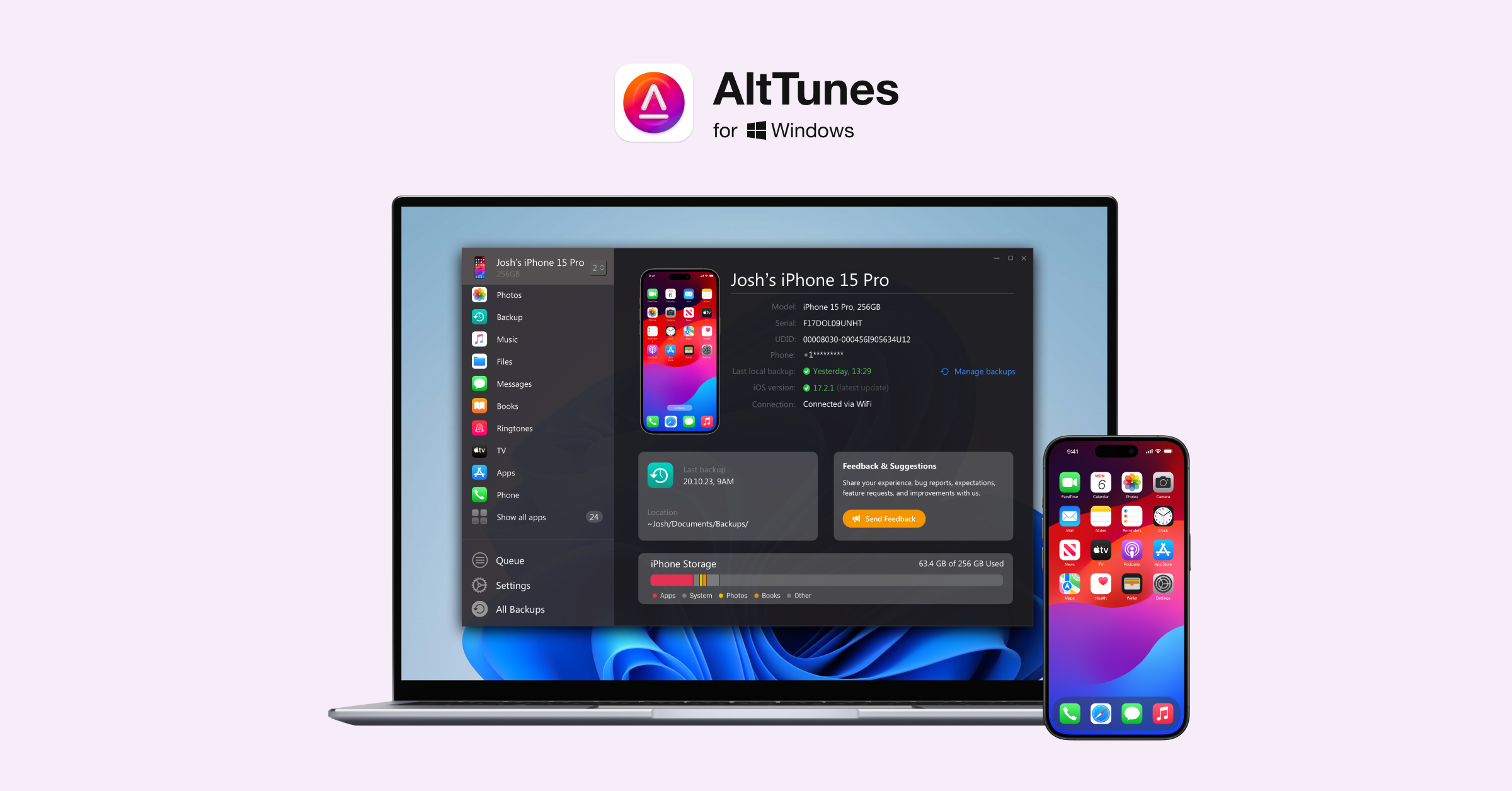
AltTunes is Windows software for iPhone data you can access. You can export photos, contacts, messages, and music or keep local backups. AltTunes does not bypass a passcode or Trust This Computer. It is not a driver repair tool.
Use AltTunes when you want to:
- Photo and video exports to your PC.
- Contacts and messages saved locally.
- Local iPhone backups.
For the separate export-versus-device-management decision, see AltTunes versus Apple Devices. Keep Apple Devices for the Apple management tasks you need.
Need the export workflow after connection succeeds? Read how to transfer files from iPhone to PC. The AltTunes image below is a preserved product illustration, not evidence of a new test.
Prevent Repeat iPhone Connection Problems
You can reduce future iPhone recognition errors with a few habits:
- Current iOS and supported computer software.
- A known-good data cable reserved for backups and transfers.
- A direct USB connection when checking connection faults.
For local backup planning, see backing up an iPhone to an external hard drive. Confirm you can access the phone before planning the destination.
FAQ
Why is my iPhone not showing up in iTunes?
An iPhone may be locked, untrusted, or connected with a cable that cannot carry data. On current Windows setups, open Apple Devices rather than expecting iTunes to manage the phone. On macOS Catalina and later, use Finder. If a legacy Windows iTunes setup still fails, check software updates and AMDS.
Why does my iPhone charge but not appear on the computer?
Charging proves that the iPhone receives power, not that USB data works. Try another data-capable cable and port, unlock the phone, and approve Trust This Computer. If the iPhone remains missing in Apple Devices or Finder across several cables and computers, contact Apple Support.
Should I use Finder, Apple Devices, or iTunes?
Use Finder on macOS Catalina and later. On Windows with Apple's dedicated apps, use Apple Devices for iPhone management; iTunes handles podcasts and audiobooks. Follow legacy iTunes troubleshooting only when iTunes is the device manager in your existing setup.
What if Trust This Computer does not appear?
Update the Apple app, reconnect the iPhone, and restart both devices. For Microsoft Store iTunes, check that iTunes Mobile Device Helper can run at startup. If needed, reset Location & Privacy on the iPhone and approve the new Trust prompts. Expect privacy permissions to ask again.
Can AltTunes fix iTunes recognition errors?
AltTunes does not repair broken USB hardware, bypass the iPhone lock screen, or skip Trust This Computer. AltTunes helps Windows users manage and export iPhone data after the iPhone is unlocked, trusted, and visible to the computer.
Resolve Detection Before Choosing a Transfer App
Start with the correct app, an unlocked iPhone, trust approval, and a known-good data cable. Use the Windows iTunes service steps only for that setup. If the phone still fails across cables and computers, contact Apple rather than erasing it.
After access works, download AltTunes for Windows if you need photo exports or local backups. This guide uses Apple and Softorino help pages reviewed in October 2026. No new on-device testing took place.

AltTunes
Seamlessly Browse, Manage & Export iOS Data
