How to Turn Off Find My iPhone Safely in 2026

TL;DR: Here is how to turn off Find My iPhone: open Settings > [your name] > Find My > Find My iPhone, switch it off, enter your Apple Account password, then tap Turn Off. Turn off Stolen Device Protection first if it is on. Keep a lost or stolen iPhone in Find My.
Before you turn off Find My iPhone
Selling your iPhone? Turning off Find My removes Activation Lock but leaves your personal data on the phone. Repairing it? Follow Apple's service checklist. Preparing for service and permanently removing a device after a sale are different jobs.
Warning: Do not remove a lost or stolen iPhone from Find My, even after erasing it remotely. Removal takes away Activation Lock. Follow Apple's lost-iPhone guidance instead.
Before we begin
On Windows, download AltTunes if you want a local iPhone backup or selected data exports before a sale or reset. AltTunes does not turn off Find My, recover an Apple Account password or remove Activation Lock.
Find My protects more than location. When you turn it on, you also turn on Activation Lock. Apple links the iPhone to your Apple Account to prevent someone else from reactivating it without authorization.
Keep that protection while you still use the phone. If you only want to stop sharing your location with someone, review Share My Location rather than disabling the whole Find My iPhone feature.
Before changing the setting, decide whether you are keeping, selling or servicing the iPhone. The remote steps depend on that choice.
For backup preparation, see our iPhone backup guide. Use iCloud, Finder on Mac or Apple Devices on Windows; older Windows setups may use iTunes. Check the latest completed backup before erasing anything.
AltTunes for Windows also supports backup browsing and selected exports. Saving a few photos or messages separately is useful, but those exports are not the same as a restorable device backup.
Quick Takeaways
- Back up the iPhone and check that the backup finished before any erase step.
- Confirm you can access the Apple Account signed in on the iPhone.
- Keep lost or stolen devices in Find My; reserve removal for an authorized handoff or the appropriate service flow.
Step 1: Check If Find My iPhone Is On
Check the device-protection switch, not Share My Location. The two settings have different purposes.
A green Find My iPhone switch means it is on. If the switch is off, you do not need to turn it off again. Older screenshots may show Apple ID where current documentation says Apple Account.
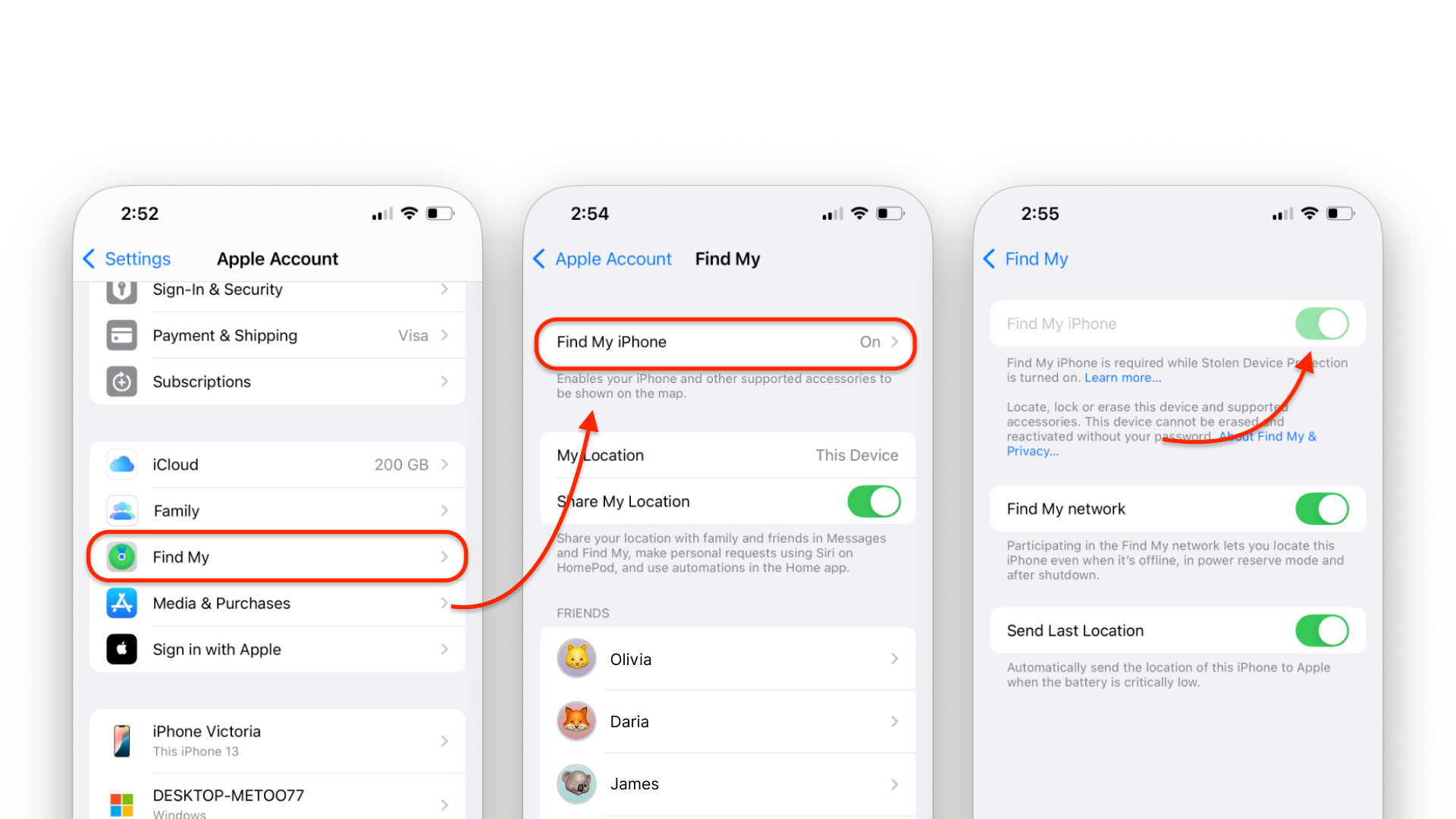
- Open Settings on the iPhone.
- Tap your name at the top.
- Tap Find My.
- Tap Find My iPhone.
- Check the switch next to Find My iPhone.
Step 2: How to Turn Off Find My iPhone in Settings
If you have the iPhone and can unlock it, use Settings. Find My cannot be turned off while Stolen Device Protection is on. Disable that protection through its authenticated settings first; the troubleshooting section explains the possible delay.
Apple's iPhone guide documents this path. After you confirm, Find My and Activation Lock are off for that iPhone. Your personal data remains on the phone until you erase it.
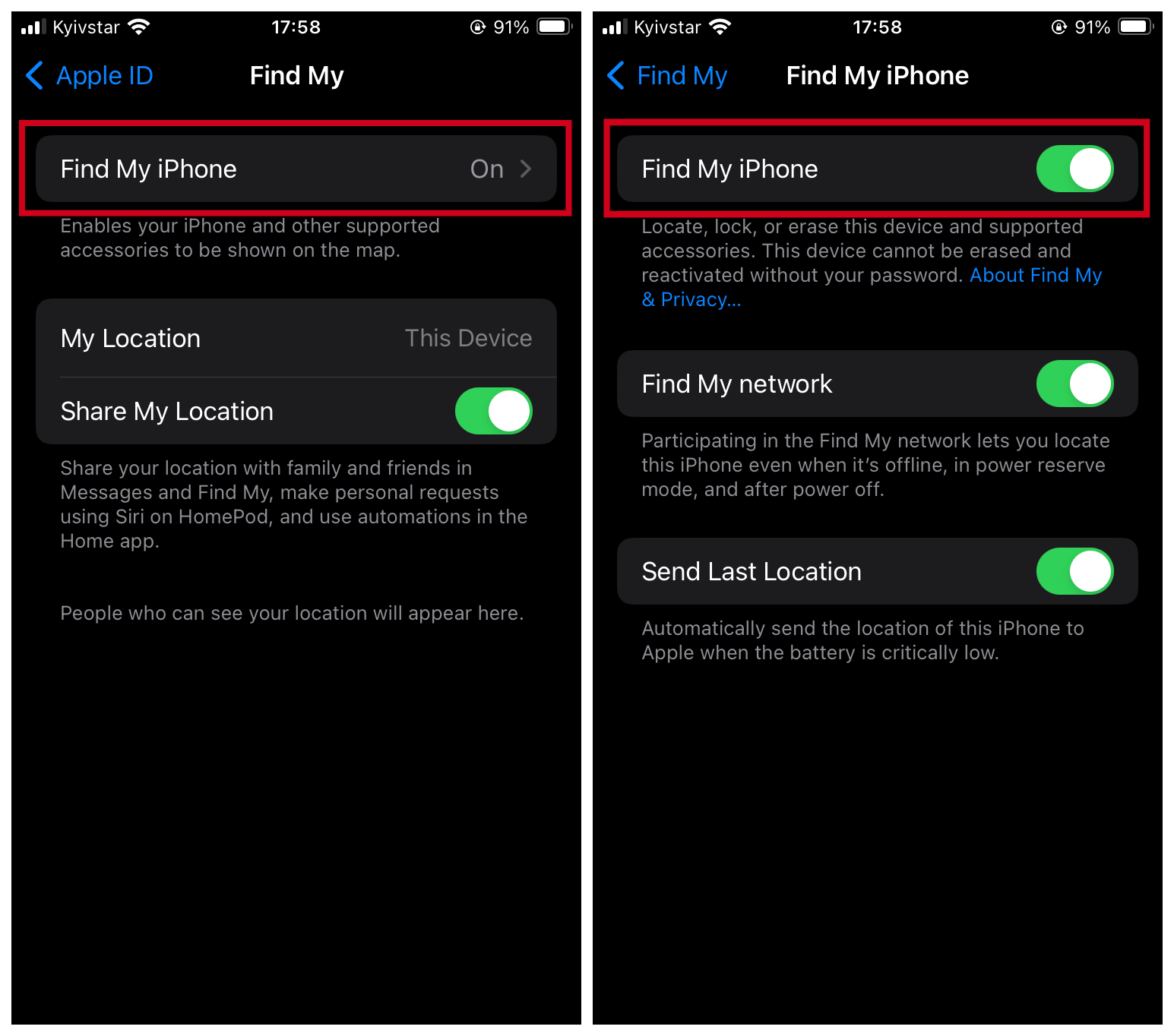
- Open Settings.
- Tap your name.
- Tap Find My.
- Tap Find My iPhone.
- Turn off Find My iPhone.
- Enter your Apple Account password.
- Tap Turn Off.
For a sale, disabling Find My before erasing is a clear sequence when Settings is accessible. Apple also provides authenticated sign-out and erase routes. Turning off Find My alone does not prepare your personal data for a buyer.
How to Turn Off Find My iPhone Remotely After a Sale
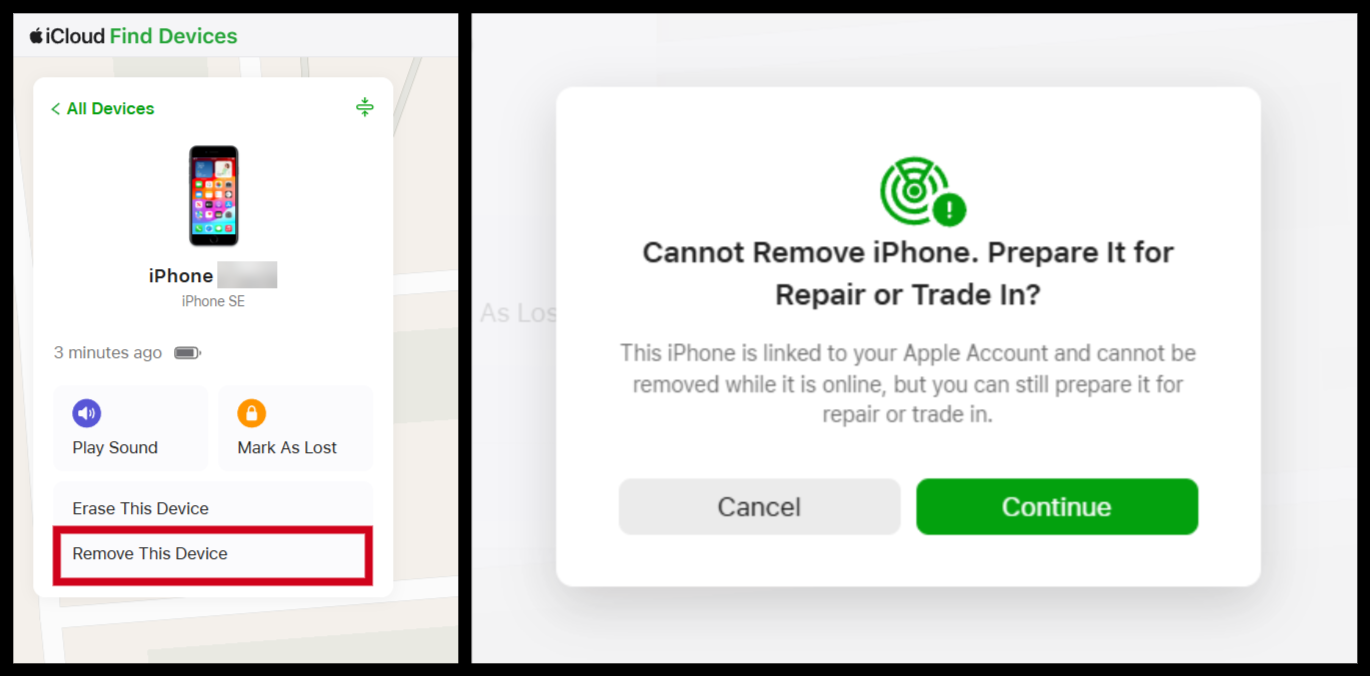
If you sold or gave away the iPhone without signing out, use Find Devices on iCloud. Sign in with the Apple Account used on that phone. Do not apply these ownership-transfer steps to a missing or stolen device.
Warning: Remote erasure deletes the iPhone's content. Confirm you have the data you need, and check that you selected the correct device before requesting an erase.
Apple's remote removal guide separates a sold device from repair readiness. For a phone you sold or gave away, complete the erase before removing the device from your account.
- Open Find Devices at iCloud.com/find and sign in.
- Select the iPhone you sold or gave away.
- Choose Erase This Device and follow the prompts.
- Wait for the erase to finish. If the iPhone is offline, erasure starts when it next connects.
- After erasure, choose Remove This Device to remove Activation Lock for the new owner.
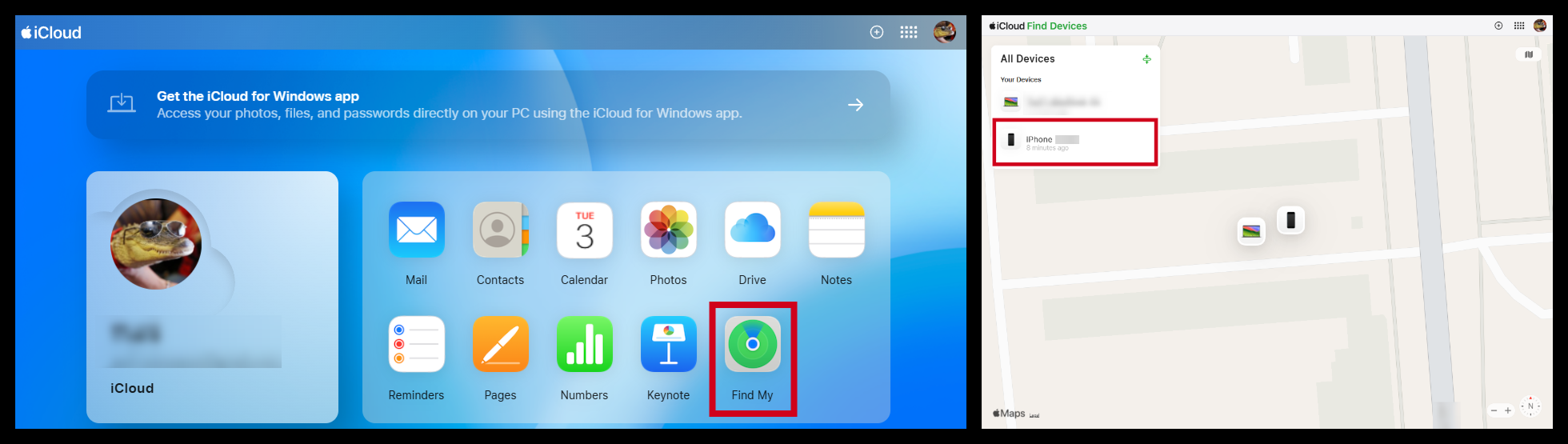
An erase request is not proof of a completed erase. Keep checking the device status before removal. The preserved screenshots illustrate the older web interface; current button labels and available actions depend on device state. Use Apple's current prompts, not the screenshot alone.
Which Find My Method Should You Use?
Your situation | Appropriate route | Important limit |
|---|---|---|
Working iPhone you still own | Settings, with account authentication | Disable Stolen Device Protection first if active |
Sold or given-away iPhone | Remote erase, then remove after erasure | Verify the correct device and completed erase |
Broken iPhone going for repair | Apple's service checklist and Find Devices prompts | Service readiness is not permanent ownership transfer |
Lost or stolen iPhone | Keep Find My, mark it lost | Do not remove it, even after remote erasure |
Used iPhone locked to someone else | Previous owner or Apple's ownership-support route | No universal password bypass |
You still have the iPhone
Use the Settings method when you can unlock the phone and authenticate with your Apple Account. Check the switch afterward instead of assuming a password prompt completed the change.
If you are keeping the iPhone, turn protection back on after the task that required it. Our guide to turning on Find My iPhone covers the opposite workflow.
You no longer have the iPhone
For a sold or given-away iPhone, use the remote erase-then-remove sequence above. The buyer should be able to activate the phone without a request for your Apple Account.
For a lost or stolen iPhone, keep it in Find My and mark it lost. A message asking you to remove a stolen phone is not a reason to surrender its Activation Lock protection.
The iPhone is broken or the screen does not work
Use Find Devices in a browser if you can sign in to the owning Apple Account. For service, follow the repair prompts rather than erasing by default. An inaccessible screen does not make backup recovery or data export possible by itself.
You bought a used iPhone that still shows Activation Lock
Ask the previous owner to remove the iPhone from their Apple Account using Apple's remote instructions. They can complete their account steps without giving you their password.
If the previous owner cannot help, consult Apple's Activation Lock support. Apple may accept an ownership-support request with proof of purchase. Do not assume every receipt qualifies or that support will approve removal.
A repair shop or carrier asks you to turn off Find My
Follow Apple's service preparation checklist. Depending on software and device state, you may turn Find My off or use Ready for Repair or Trade In. Never give a technician your Apple Account password; enter credentials yourself when required.
Can You Turn Off Find My iPhone Without a Password?
The normal Settings method asks for your Apple Account password. If you forgot it, use Apple account recovery. Recovering access is different from bypassing the ownership check.
Some Activation Lock screens offer a device-passcode option. That does not mean a passcode universally replaces the Apple Account password at the Find My switch. Use only the options Apple shows for your device.
For a secondhand phone, the previous owner can complete the removal. If you have valid proof of purchase, Apple's Activation Lock support page explains the support-request route. Neither route guarantees immediate access.
AltTunes and other backup tools do not authorize changes to Find My. Avoid treating an advertised unlock utility as a substitute for Apple's account or ownership checks.
What to Do If Find My iPhone Is Greyed Out
Check Stolen Device Protection first. Open Settings > Face ID & Passcode > Stolen Device Protection. Apple says you cannot turn off Find My while this protection is on.
Turning Stolen Device Protection off can require biometric authentication, an hour-long security delay and authentication again. With the Always setting, the delay applies even in familiar locations. See Apple's Stolen Device Protection instructions; do not expect a passcode shortcut.
- Connect to Wi-Fi or cellular data so account authentication can complete.
- Check that you are using the Apple Account signed in on this iPhone.
- Review Screen Time > Content & Privacy Restrictions if account changes are restricted; ask the person who controls the restriction.
- Contact the administrator for a managed work or school phone. Do not remove management to force the setting.
- Check Apple service availability or contact Apple Support if the setting still will not change.
What to Do Before Erasing, Selling, or Trading In the iPhone
Back up before erasing. Turning off Find My changes device protection; erasing removes local content. A successful account change does not prove you saved the photos or messages you need.
Do not manually delete synced photos, contacts or iCloud files while still signed in. Those deletions can reach iCloud and your other devices. Follow Apple's sale and trade-in checklist for sign-out, erasure and handoff.
For service, Apple's iCloud guide says an online device can show Ready for Repair or Trade In for 30 days. For offline removal, Activation Lock comes off immediately, while list removal takes 30 days. If the phone comes online after 30 days while still signed in, it can reappear and Activation Lock can return. This is not the permanent sale workflow.
- Complete a backup or transfer and confirm the data you need is available.
- Unpair an Apple Watch if you are handing over its paired iPhone.
- Follow Apple's sign-out and Find My instructions for the phone you are selling.
- Erase the iPhone through Settings > General > Transfer or Reset iPhone > Erase All Content and Settings.
- Follow the relevant SIM or eSIM handoff prompts with your carrier.
- Confirm the next owner can activate the phone without your Apple Account. For a remote sale, finish erasure before account removal.
How to Turn Off Find My iPad
On an iPad you own, the Settings path follows the same pattern as iPhone. Use the Apple Account signed in on that iPad.
Turning off Find My iPad also removes its Activation Lock. Back up and erase separately before handing it to a new owner; keep a lost or stolen iPad in Find My.
- Open Settings on the iPad.
- Tap your name.
- Tap Find My.
- Tap Find My iPad.
- Turn it off.
- Enter your Apple Account password.
- Tap Turn Off.
How to Turn Off Find My Mac
On macOS 15 or later, use System Settings and the iCloud app list. Activation Lock applies to supported Mac hardware, not every Mac. Apple's Find My removal guide gives version-specific paths.
- Open the Apple menu and choose System Settings.
- Click your name, then iCloud.
- Click See All next to Saved to iCloud.
- Click Find My Mac.
- Click Turn Off and follow the authentication prompts.
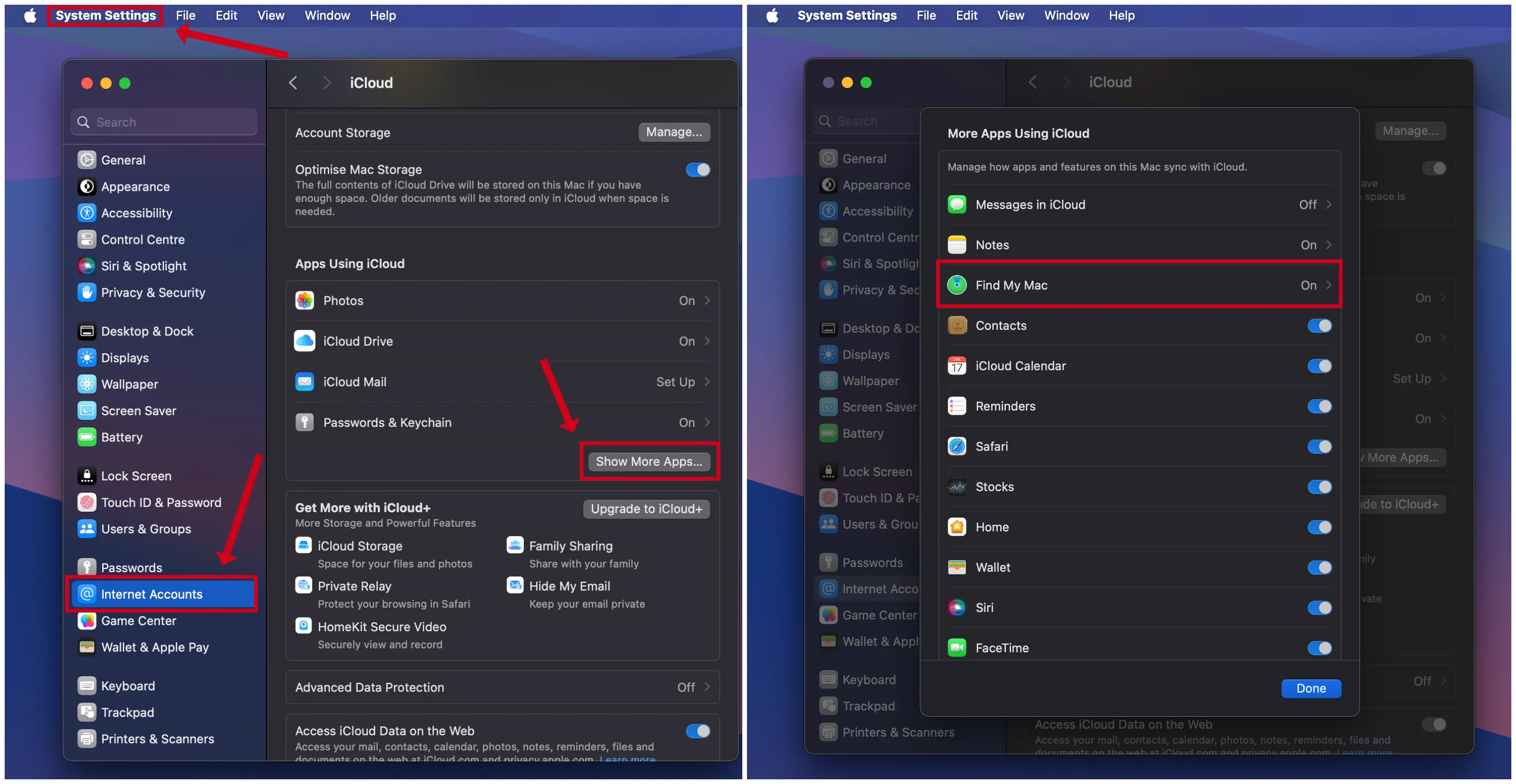
Older macOS versions use a different iCloud layout. The preserved Mac screenshots show earlier interfaces, not a new test on current macOS. Match the labels to your installed version rather than searching for a button your Mac does not have.
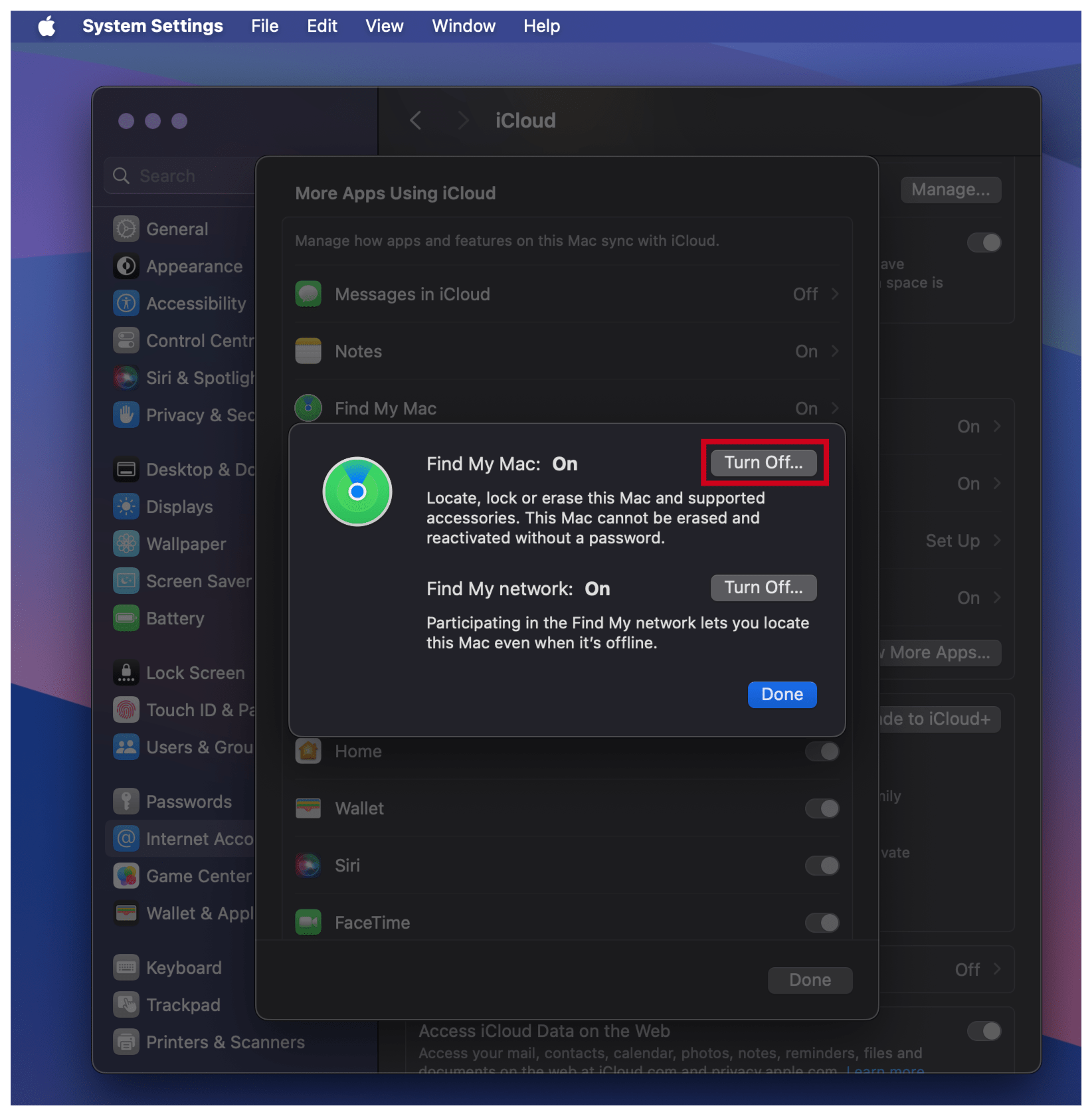
On macOS Monterey and earlier, look in System Preferences > Apple ID > iCloud; older layouts may use Internet Accounts > iCloud. Follow Apple's version-specific guide if the screen differs.
FAQ
Can I turn off Find My iPhone from another phone or computer?
You can use a browser to sign in to Find Devices with the owning Apple Account. For an iPhone you sold or gave away, erase it, wait for completion, then remove it. For repair, follow the service prompts instead.
Should I remove a lost iPhone after remotely erasing it?
No. Keep a lost or stolen iPhone in Find My even after remote erasure. Removing it removes Activation Lock and makes it easier for someone else to reactivate the phone.
Does erasing an iPhone remotely remove Activation Lock?
Remote erasure alone leaves Activation Lock in place. For a sold or given-away iPhone, Apple instructs you to remove the device after erasure completes. Do not take that removal step for a stolen phone.
Why can I not turn off Find My with Stolen Device Protection on?
Apple requires you to turn off Stolen Device Protection before turning off Find My. Authentication and a security delay may apply. Follow the prompts in Settings rather than trying to bypass the protection.
Finish the handoff without losing your data
For a working iPhone, use Settings and confirm Find My is off. For a remote sale, finish erasure before removing the device. For service, follow the current repair instructions. Keep a missing or stolen phone protected.
If you need a separate Windows backup or export tool before a reset, download AltTunes. Check your backup before erasing. This guide uses Apple and Softorino documentation; no new on-device testing took place.

AltTunes
Seamlessly Browse, Manage & Export iOS Data
