How to Convert M2TS to MP4 in 2026

Need to convert an M2TS video because a camcorder clip, Blu-ray rip, or AVCHD file will not play where you need it? You have 4 sane options: use WALTR PRO when the target is iPhone or iPad, use HandBrake for local desktop conversion, use ffmpeg when you need control, or use an online converter for a small non-private file.
The wrong choice wastes time. Online tools are quick, but you upload the video. HandBrake is solid, but you still need to move the finished file. ffmpeg is powerful, but one wrong flag can make a mess. WALTR PRO is the clean route when you want the video on an Apple device without iTunes.
Before we begin
Download WALTR PRO on Mac or Windows when your M2TS video needs to play on an iPhone or iPad without an iTunes sync. Use HandBrake or FFmpeg when you only need a standalone MP4 export.
M2TS to MP4: Which Method Should You Use?
Start with the destination. That decides the tool.
Your goal | Best method | Why it fits |
|---|---|---|
Watch the video on iPhone or iPad | WALTR PRO | Converts and transfers the file into Apple-native apps without iTunes |
Convert a large video on Mac or Windows | HandBrake | Local conversion, presets, no upload |
Keep quality when codecs already fit MP4 | ffmpeg remux | Changes the container without re-encoding when possible |
Convert 1 small non-sensitive file | Online converter | Fast, no install, but upload limits and privacy matter |
Test whether the file plays | VLC | Great playback support, less ideal as your main converter |
If you only remember one thing: convert locally for large, private, or important footage. Use online converters only when the file is small and you do not care about uploading it.
What Is an M2TS File?
M2TS is a video container used by Blu-ray discs, BDAV folders, and AVCHD cameras. You may also see MTS files from Sony, Panasonic, Canon, or other camcorders. M2TS and MTS are close enough that many users search for the same fix: AVCHD to MP4.
M2TS can hold HD video, multiple audio tracks, subtitles, and camera metadata. That is useful for recording and discs. It is annoying when you want to edit the clip, upload it, or watch it on your phone.
Apple says older or specialized media formats may fail when the device, operating system, or app does not support the format. That is the M2TS problem in plain English. Your file may be fine, but your iPhone, iPad, or editing app may not know what to do with it.
Why MP4 Works Better Than M2TS
MP4 works better because more apps, phones, browsers, TVs, and editors expect it. It is the boring format in the best way. You send it, upload it, edit it, or play it, and fewer things complain.
M2TS is a Blu-ray/AVCHD-style container. MP4 is a more widely accepted container for video, audio, subtitles, and streaming data. That is why most converter pages target MP4 first. MP4 is the practical output format.
For Apple devices, you may also see M4V. Do not panic. HandBrake's documentation explains that MP4 and M4V can be the same container with a different extension in many workflows. Apple apps often prefer M4V when chapters, subtitles, or some audio passthrough options are involved.
M2TS, MTS, AVCHD, MP4, and M4V in Plain English
M2TS and MTS
M2TS and MTS are common in AVCHD and Blu-ray camera workflows. If your file came from a camcorder or a disc folder, this is probably what you have.
AVCHD
AVCHD is the camera recording format family many users mean when they say M2TS. If your camera folder says AVCHD, BDMV, MTS, or M2TS, you are in the same neighborhood. The practical goal is still the same: get the video into MP4 so normal apps can open it.
MP4
MP4 is the target format for playback, editing, sharing, and upload. It is not magic. It is still a container, so the video codec inside matters.
M4V
M4V is the Apple-flavored MP4 extension you may see in iPhone, iPad, iTunes, and Apple TV workflows. If WALTR PRO or HandBrake creates an M4V for Apple playback, that is usually fine. The point is compatibility, not the letters after the dot.
If your target is an Apple device, the output may appear as M4V instead of MP4. That is normal in Apple video workflows. Do not rename files at random unless you know the device or app accepts it.
How to Convert M2TS to MP4 with WALTR PRO for iPhone or iPad
Use WALTR PRO when your real job is not just conversion. Use it when you want an MP4 or M4V-style Apple output and need to place the video on iPhone or iPad without iTunes, Finder syncing, or AirDrop drama.
WALTR PRO supports Mac and Windows. The product page lists M2TS, MTS, TS, MKV, AVI, MP4, MOV, WMV, WEBM, VOB, and other video formats. It can convert and transfer files to iPhone, iPad, iPod, USB drives, local folders, or compatible apps.
Step 1: Download WALTR PRO on Mac or Windows
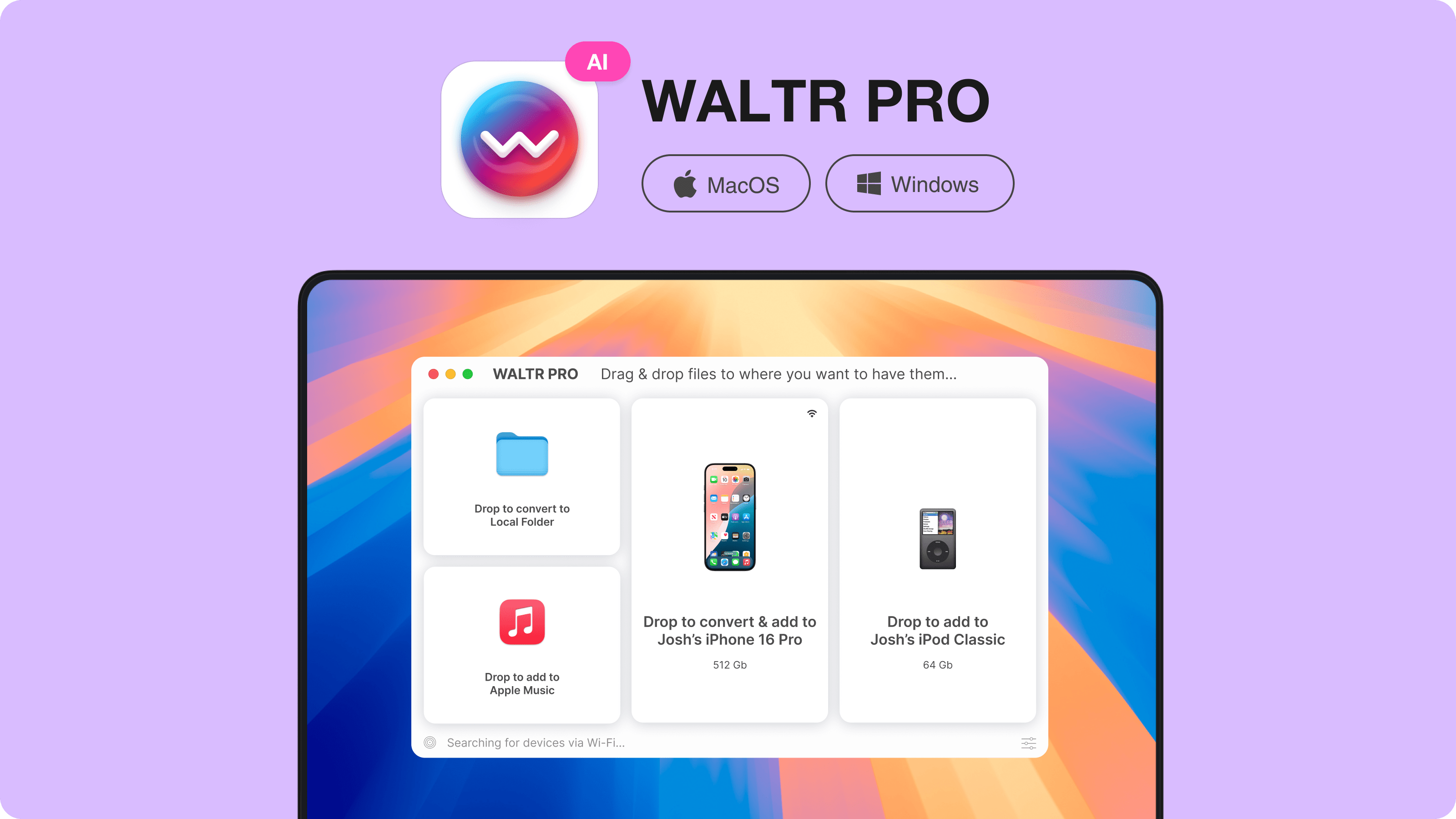
Install WALTR PRO on your computer. Use the Mac version if you are working from macOS. Use the Windows version if your videos are on a PC.
After installing it:
This route fits users who want an M2TS converter and iPhone transfer tool in one place. If you only need a desktop MP4 file for editing, skip to the HandBrake section.
- On Mac, move WALTR PRO to Applications if needed.
- On Windows, run the setup wizard and open the app.
Step 2: Connect Your iPhone or iPad
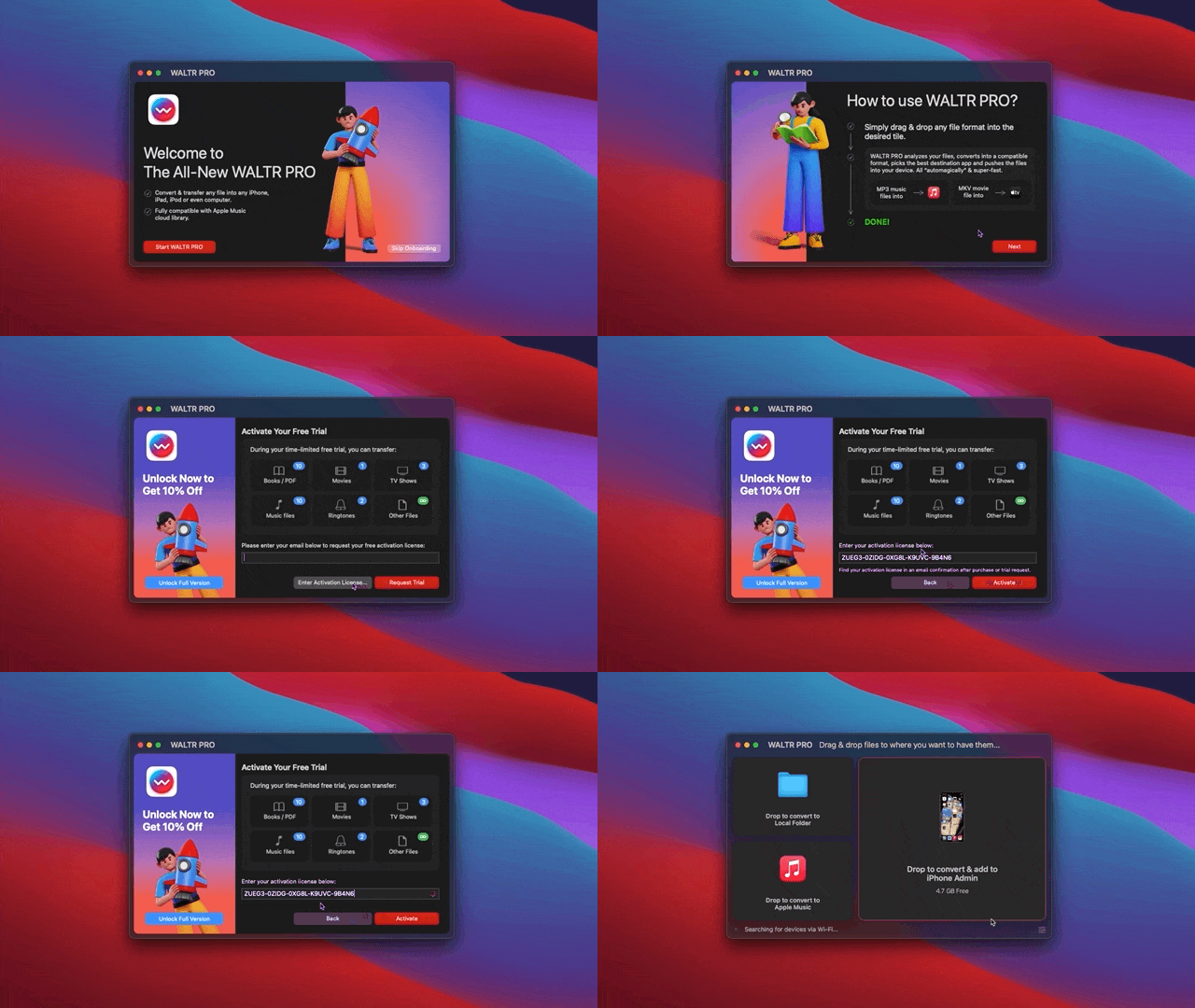
Connect your device with a USB cable first. WALTR PRO also supports Wi-Fi transfer after setup, but cable is the cleaner first run when you are moving a large video.
Wait until WALTR PRO shows your device. This matters because the destination controls what WALTR PRO does with the file.
Step 3: Drop the M2TS File and Pick the Destination
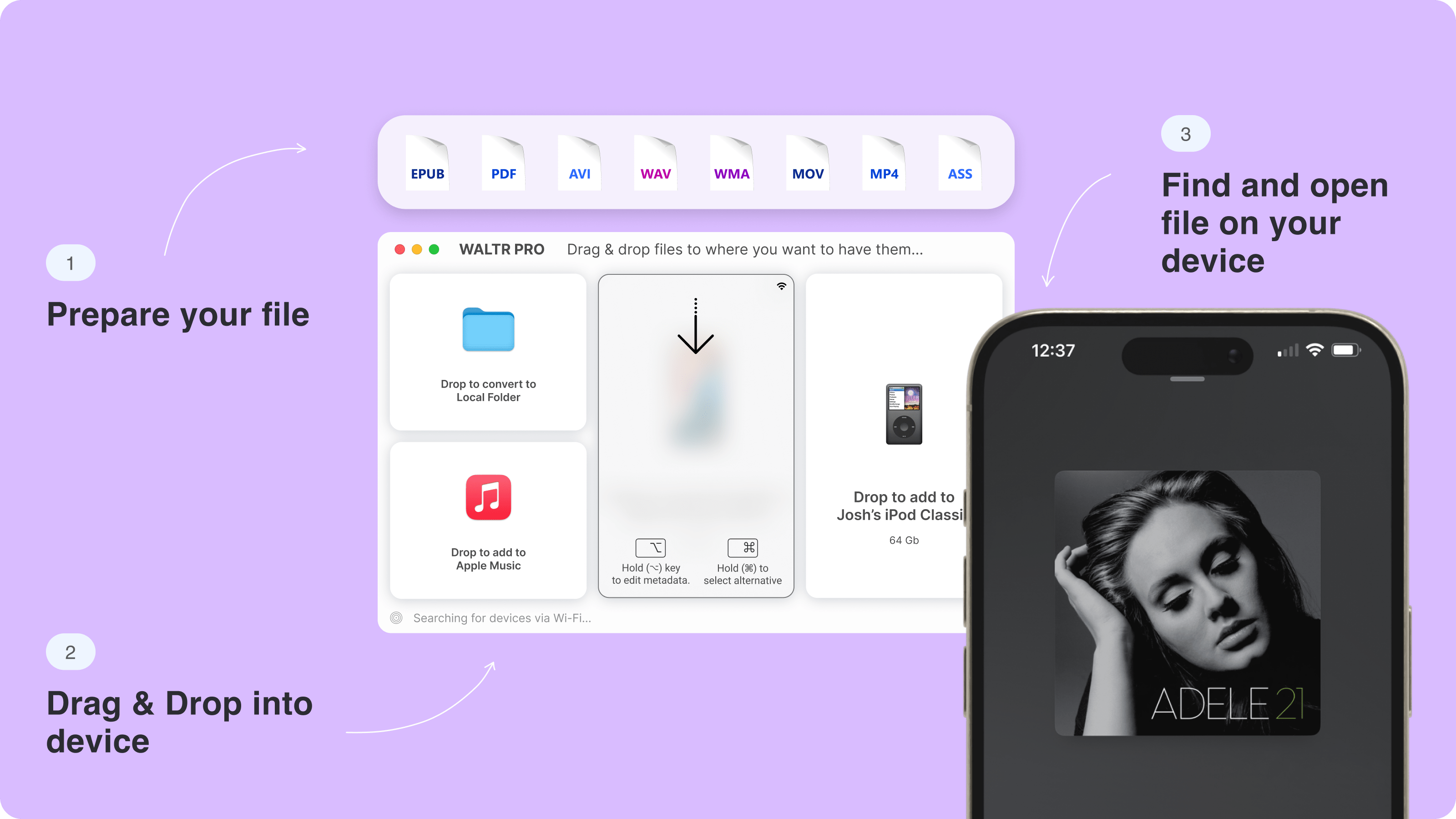
Drag your M2TS file into WALTR PRO. Choose the destination before transfer:
WALTR PRO handles the conversion and transfer. For video, the finished file can land where Apple expects videos, such as the Apple TV app, depending on device and destination.
- Drop the M2TS file into WALTR PRO.
- Pick iPhone, iPad, local folder, USB drive, or a compatible app.
- Edit metadata if needed.
- Send the file.
Pro Tips for WALTR PRO
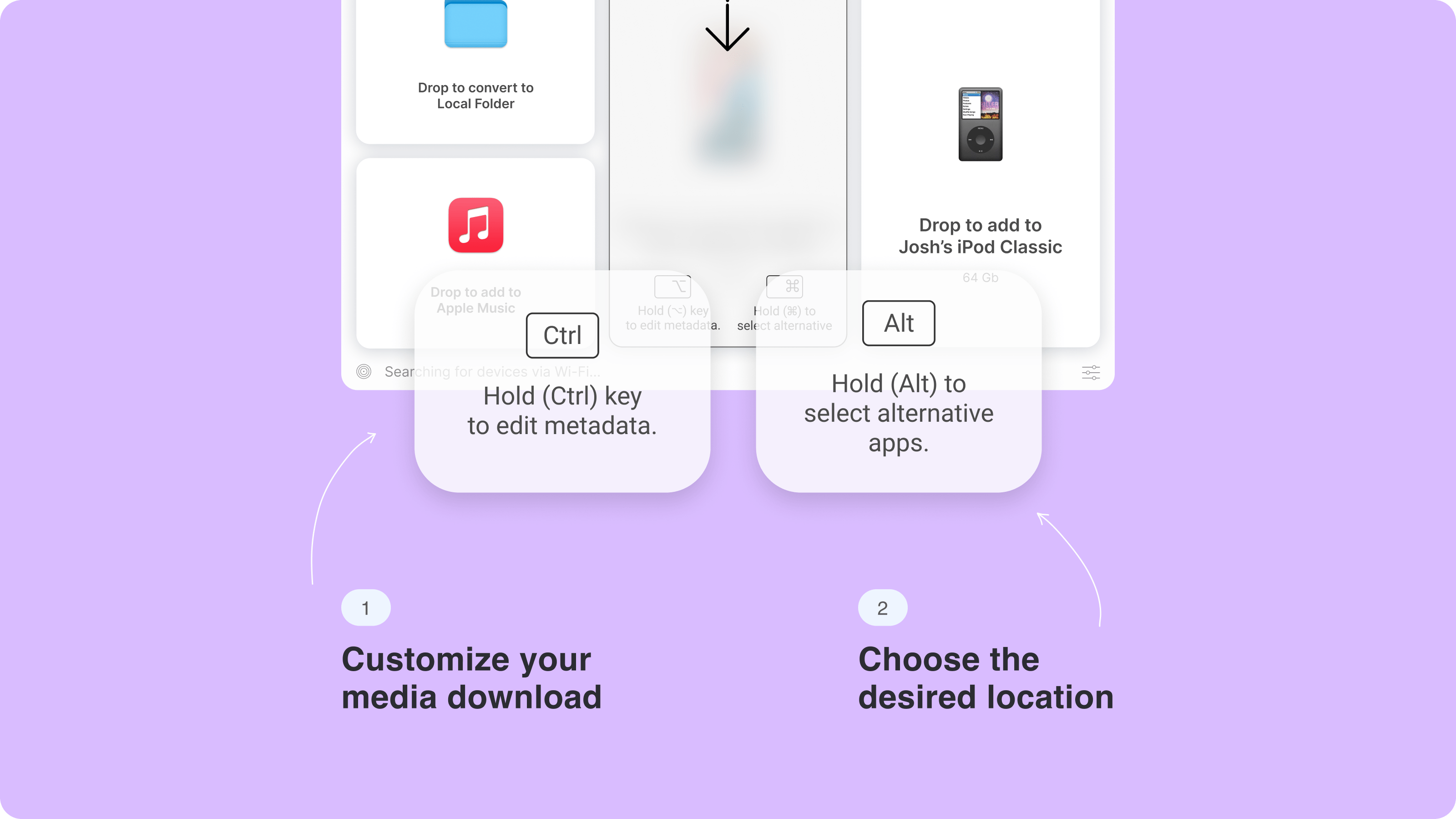
- Hold Ctrl on Windows or Option on Mac when you need metadata options.
- Hold Alt on Windows or Command on Mac when you want to choose a different app or destination.
- Test one M2TS file before dropping a whole camera folder.
- Keep the original file until you confirm audio, subtitles, and playback.
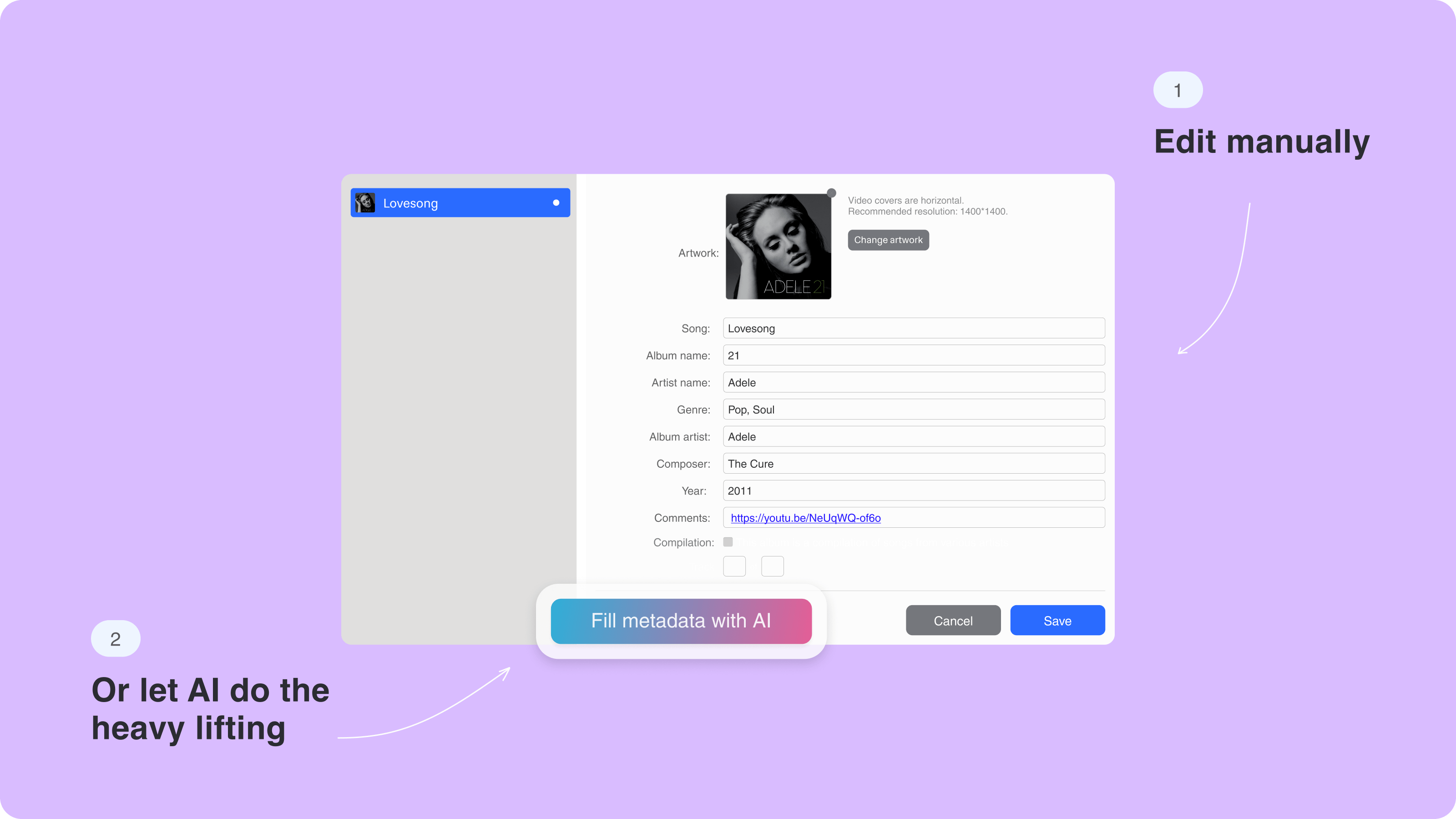
WALTR PRO can also use AI metadata tools to fill cover art, titles, genres, and other media details. That helps when you are moving movies or TV episodes and want them to look normal in the Apple TV app.
How to Convert M2TS to MP4 Online
Online converters are fine for small, non-private files. CloudConvert, FreeConvert, Zamzar, and Online-Convert all show up in the SERP because they answer the fastest version of the search: upload file, choose MP4, download result.
The tradeoff is simple: you upload the video to someone else's server. That may be fine for a test clip. It is a bad fit for family footage, client work, private events, unreleased projects, or large camcorder folders.
A typical online conversion flow looks like this:
Use this route when convenience matters more than control. Do not use it as your main batch workflow for 20 GB of AVCHD footage.
- Open the converter page.
- Upload the M2TS file.
- Choose MP4 as the output.
- Adjust resolution, quality, or file size if the tool offers controls.
- Download the converted MP4.
How to Convert M2TS to MP4 with HandBrake
HandBrake is the best free route for many Mac and Windows users who want local conversion. It does not solve iPhone transfer by itself, but it is a strong converter when you want an MP4 file on your computer.
HandBrake's quick-start guide says it takes videos you already have and makes new ones for phones, tablets, TV players, game consoles, computers, and browsers. It also says the default Fast 1080p30 preset is often a good compatible choice.
A practical HandBrake workflow:
HandBrake is the better pick when you need local control and do not mind waiting for an encode. After conversion, you still need to move the MP4 to your iPhone, iPad, editor, cloud drive, or TV app.
If the next step is iPhone transfer, you can use HandBrake first and then use WALTR PRO to transfer videos to iPhone without iTunes. Or you can let WALTR PRO handle the Apple-device route from the start.
- Open HandBrake.
- Click Open Source and choose your M2TS file.
- Choose the Fast 1080p30 preset for a normal compatibility-first output.
- Set the container to MP4 if needed.
- Choose a destination folder.
- Click Start Encode.
Can You Convert M2TS to MP4 Without Losing Quality?
Sometimes. Not always.
There are 2 different jobs people call “conversion.”
Remuxing
Remuxing changes the container without re-encoding the video stream. This can preserve quality because the video data stays the same. It only works when the video and audio codecs inside the M2TS file are compatible with MP4 and your target device.
Transcoding
Transcoding re-encodes the video or audio. This is slower and can reduce quality if the settings are poor. It is also the fix when the codecs inside the M2TS file will not play on iPhone, iPad, editing software, or a web upload service.
If you care about quality, do not delete the M2TS source after conversion. Check the converted file first. Watch a few minutes. Test audio tracks. Test subtitles. Then archive the original or delete it if you are sure.
M2TS to MP4 with VLC or ffmpeg
VLC is excellent for playback. VideoLAN says VLC plays files, discs, webcams, devices, and streams, and supports many video codecs and containers, including MPEG transport streams and MP4/MOV. That makes VLC a good first test when you only need to open the file.
VLC can convert video too, but it is not the cleanest main workflow for large batches or careful quality settings. Use it when it is already installed and you need a quick attempt.
ffmpeg is the power-user route. It can remux or transcode the file from the command line. Use ffmpeg if you are comfortable with terminal commands, codec flags, and testing output. If that sentence made your shoulders tense, use HandBrake or WALTR PRO instead.
M2TS to MP4 on Mac
Mac users have 4 good choices.
Use WALTR PRO if the destination is iPhone or iPad. It solves both conversion and transfer, which is the part Apple's default tools make weird.
Use HandBrake if you want a local MP4 file for storage, editing, upload, or playback outside the Apple mobile workflow.
Use an online converter for a tiny file you do not mind uploading.
Use ffmpeg if you need remuxing, batch scripts, or strict codec control.
If you want to watch a video on TV from your Mac instead of converting for iPhone, Softorino's Beamer can be a separate path for streaming video files to Apple TV or Chromecast. That is a different job, so keep this flow focused on conversion.
M2TS to MP4 on Windows
Windows users have the same decision, with one extra annoyance: iTunes on Windows is still not where anyone wants to spend a Saturday.
Use WALTR PRO on Windows when your goal is to send the finished video to iPhone or iPad. It avoids iTunes syncing and gives you a direct transfer path.
Use HandBrake for local MP4 output. Use VLC to test playback. Use ffmpeg if you know the codec requirements. Use online tools only for small non-sensitive files.
If you work with many iPhone files on Windows, AltTunes may also fit a broader iPhone file-management job. For this article, WALTR PRO is the right Softorino product because the problem starts with video conversion and transfer.
Where to Find Your Converted Files on iPhone or iPad
After WALTR PRO finishes, the destination depends on what you sent and where you told the app to place it.
Typical destinations:
If you cannot find the video, use WALTR PRO's “Where are my files?” prompt after transfer. It points you to the right app instead of making you hunt through iOS like a raccoon in a filing cabinet.
- Videos and movies: Apple TV or Videos-style media apps.
- Music: Apple Music.
- Books and PDFs: Apple Books or compatible apps.
- Ringtones: iPhone ringtone settings, when the file is a supported ringtone workflow.
- Other files: Files by WALTR or the compatible app you picked.
Why WALTR PRO Is Different From a Normal M2TS Converter
A normal converter gives you an output file. That is useful, but it may not finish the job.
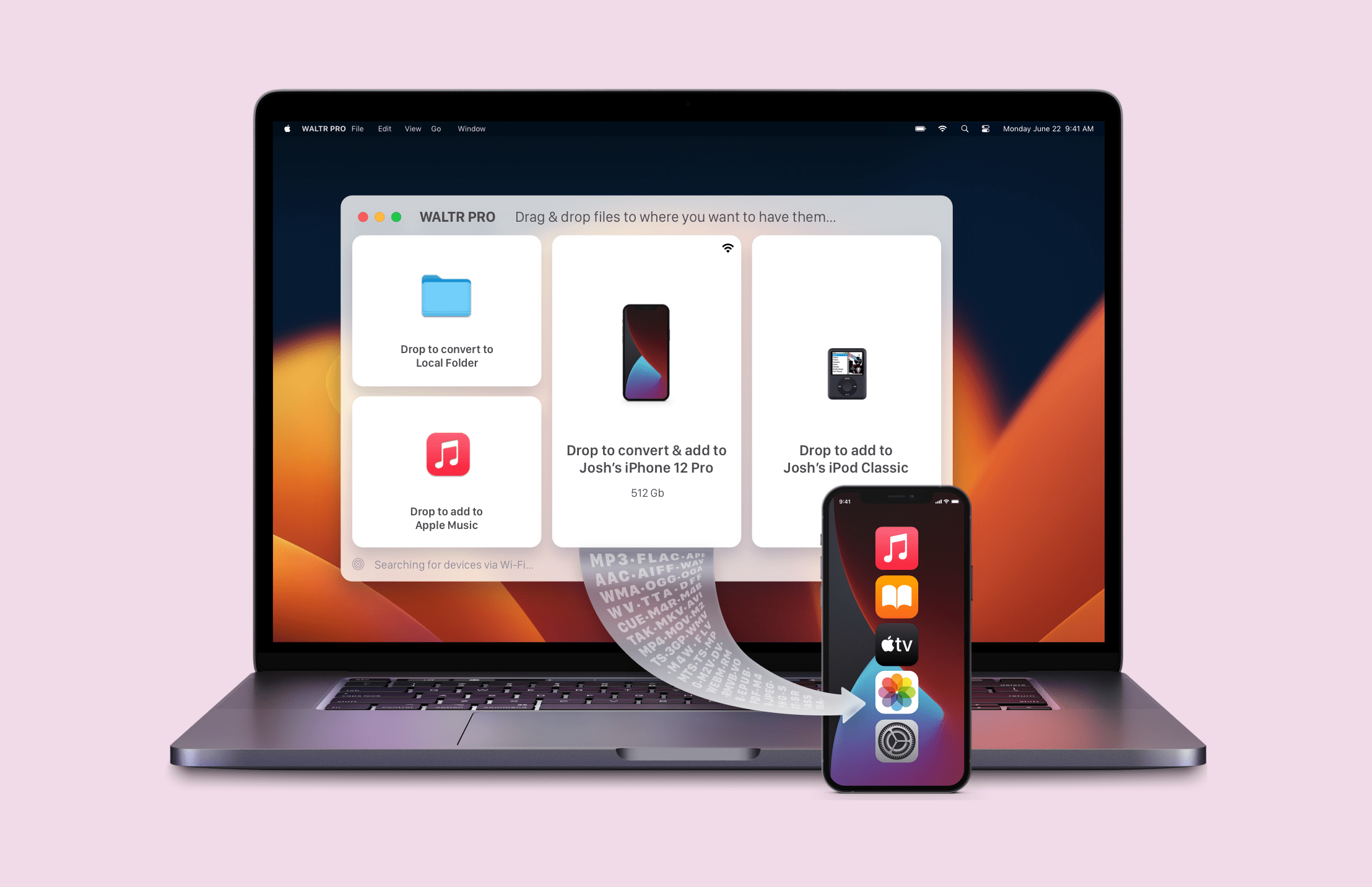
WALTR PRO is different because it handles the Apple-device handoff. You can drag in a video, pick an iPhone or iPad destination, and avoid the usual separate steps: convert, export, open Finder or iTunes, sync, wait, check, repeat.
WALTR PRO is the answer when the next sentence is “I need this on my iPhone.”
If you want access to Softorino's iPhone transfer and utility apps under one plan, the Universal License bundles the core apps for about $3/month.
Best Settings Before You Convert
Use these settings as a safe starting point when a converter asks for details:
Do not chase the smallest file if you care about video quality. Smaller files usually mean heavier compression. Start with a short test clip, then run the full video once the settings look right.
- Container: MP4 or M4V for Apple devices.
- Video codec: H.264 for the widest compatibility.
- Resolution: keep original unless you need a smaller file.
- Frame rate: same as source when possible.
- Audio: AAC for broad device support.
- Subtitles: burn in only if your target app cannot read subtitle tracks.
FAQ
What is the best way to convert M2TS to MP4?
The best method depends on the destination. Use WALTR PRO for iPhone or iPad transfer, HandBrake for local desktop conversion, ffmpeg for advanced remuxing or transcoding, and online converters for small non-private files.
Is M2TS the same as AVCHD?
Not exactly. AVCHD is a recording format used by many camcorders, and M2TS or MTS files often appear inside that workflow. If you searched avchd to mp4, you probably need the same fix.
Can I convert without losing quality?
You can preserve quality if you remux the file and the codecs already fit MP4. If you transcode the video, quality depends on the settings. Do not trust a blanket “lossless” promise unless the tool explains whether it remuxes or re-encodes.
Can HandBrake convert these files?
HandBrake can create MP4 or M4V output from video sources and is a strong local conversion option. It is best when you want a finished file on your computer, not when you also need direct iPhone transfer.
Can VLC convert these files?
VLC can handle many video files and can convert media, but it is better known as a player. Use VLC to test whether the M2TS file opens. Use HandBrake, ffmpeg, or WALTR PRO for a cleaner conversion workflow.
Is an online M2TS converter safe?
Online converters are convenient, but they require upload. Avoid them for private family footage, client files, unreleased projects, or large Blu-ray/camcorder videos. Use a local tool when privacy matters.
Why does WALTR PRO create M4V instead of MP4 for Apple devices?
M4V is common in Apple video workflows and is closely related to MP4. The point is playback compatibility. If the file lands in the right Apple app and plays, the extension is doing its job.
How do I play an M2TS file on iPhone?
Use WALTR PRO when you want the shortest route. Drop the M2TS file into WALTR PRO, choose your iPhone or iPad, and send it. WALTR PRO converts and transfers the video without iTunes.
Bottom Line
If you only need a quick MP4 file, HandBrake or a trusted online converter can work. If you need quality control, learn the remux vs transcode difference before you convert. If you want the video on iPhone or iPad, use WALTR PRO and skip the iTunes obstacle course.
Start with one test file. Confirm playback, audio, and subtitles. Then convert the rest.

WALTR PRO
Convert & Push Any File into Any Apple Device
