Record Audio from YouTube: MP3, Mac & Windows Guide


Need to record audio from YouTube because the song, lecture, podcast, or tutorial disappears the second you lose Wi-Fi? You have 2 paths. You can record the sound in real time, or you can extract the audio into a file.
For most people, extraction is the cleaner answer. A real-time recorder waits through the whole video and can capture notification sounds, microphone bleed, or the wrong speaker output. SYC PRO takes the more direct route: copy the YouTube URL, choose MP3 or AAC, and save the audio to your Mac, Windows PC, iPhone, iPad, or Apple Music library.
Only save YouTube audio you own, have permission to use, or are allowed to download under YouTube's Terms of Service and local law. Copyright rules still apply. Personal listening does not give you reuse rights for someone else's music, course, podcast, or performance.
Quick answer: the best way to record audio from YouTube
If your goal is an audio file, use a YouTube audio downloader or converter instead of a real-time recorder. Direct extraction avoids the usual recorder problems: background noise, clipped starts, volume mistakes, and one-hour waits for one-hour videos.
Use a real recorder only when you need a live capture, microphone mix, private browser session, or a source that cannot be saved as a normal file.
Method | Best for | Output | Main drawback |
|---|---|---|---|
SYC PRO | Saving YouTube audio to MP3/AAC and Apple devices | MP3, AAC, MP4 | Use only for content you can lawfully save |
Audacity | Free Windows system-audio recording | WAV, MP3, other exports | Setup can be fussy |
QuickTime + virtual audio driver | Mac system-audio capture | M4A/MOV depending setup | QuickTime alone records the mic, not system audio |
OBS | Recording video and audio together | MKV/MP4 plus extracted audio | Overkill for a single song |
Online converter | One-off non-private files | Usually MP3 | Ads, limits, privacy tradeoffs |
YouTube Premium | Official offline playback in YouTube apps | App-only offline access | Not a reusable audio file |
If you searched for “record audio from YouTube” but what you want is an MP3 file, do not record playback. Extract or download the audio instead.
Before we begin
Download SYC PRO on Mac or Windows when you need to extract permitted YouTube audio as MP3 or AAC instead of recording playback in real time. Use only content you own or have permission to save, then pick the format that matches the destination player.
Record audio from YouTube with SYC PRO
SYC PRO stands for Softorino YouTube Converter PRO. It is not a microphone recorder. It downloads and converts allowed YouTube media so you can save the audio as MP3 or AAC, then send it where you need it. If your main goal is music, this pairs with Softorino's guide on how to download YouTube music.
That matters if you use Apple devices. A random web converter may leave an MP3 in Downloads. SYC PRO can send the finished audio to an iPhone, iPad, or Apple Music library without the usual cable-and-sync mess.
Use SYC PRO when you want to:
- Save YouTube audio as MP3 or AAC
- Keep music, lectures, or podcasts available offline
- Move audio to iPhone or iPad without iTunes
- Add or clean up metadata before the file lands in your library
- Avoid sketchy popups and extension permissions from browser converters
Step 1: Install SYC PRO and start the free trial
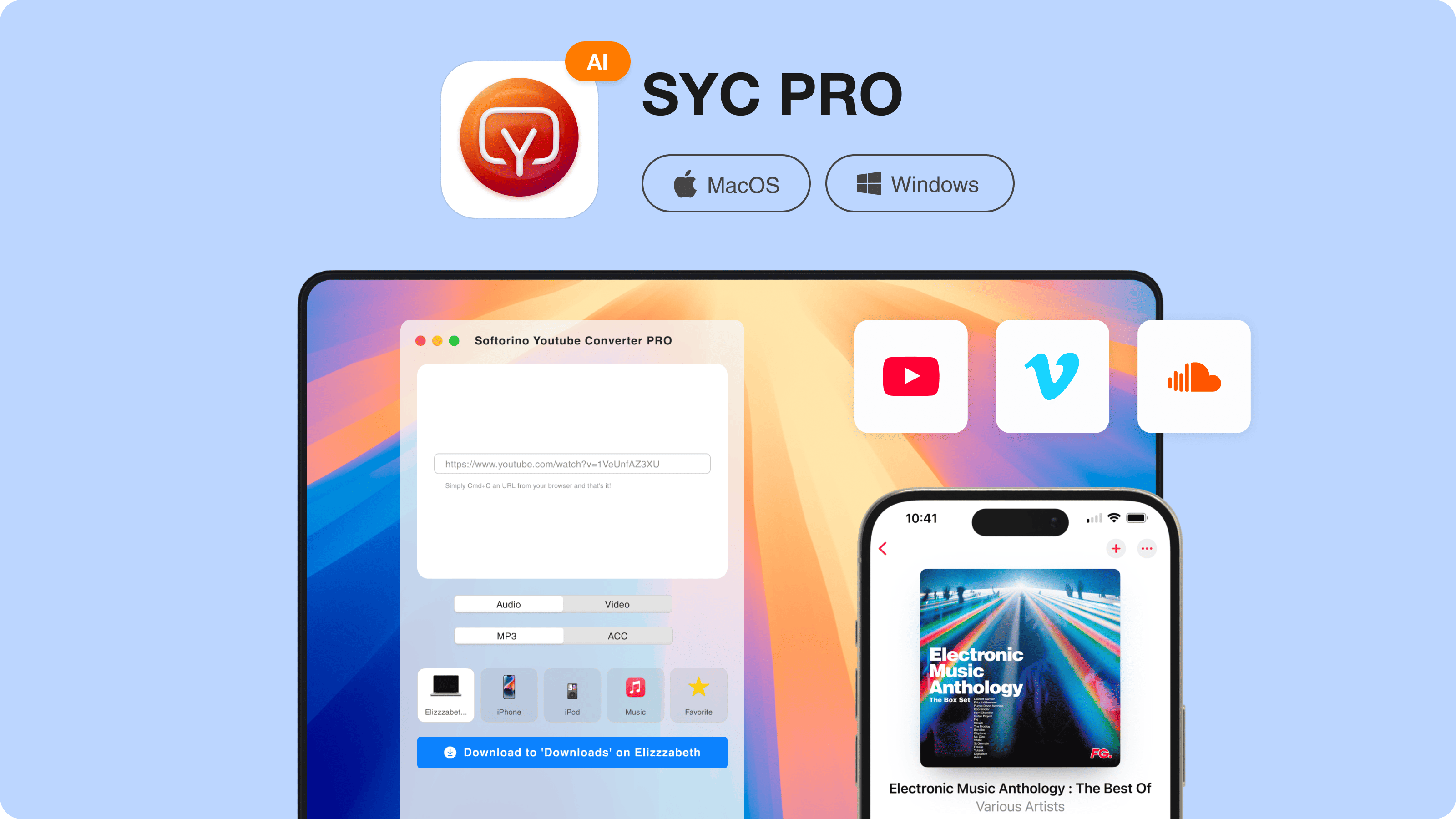
Download SYC PRO from Softorino and install it on Mac or Windows. Open the app and start the free trial if you want to test the workflow before buying anything.
Keep your iPhone or iPad nearby if you plan to send the audio to a device. You can save to the computer first, but direct Apple-device delivery is the point of using SYC PRO instead of another YouTube to MP3 converter.
Step 2: Copy the YouTube URL
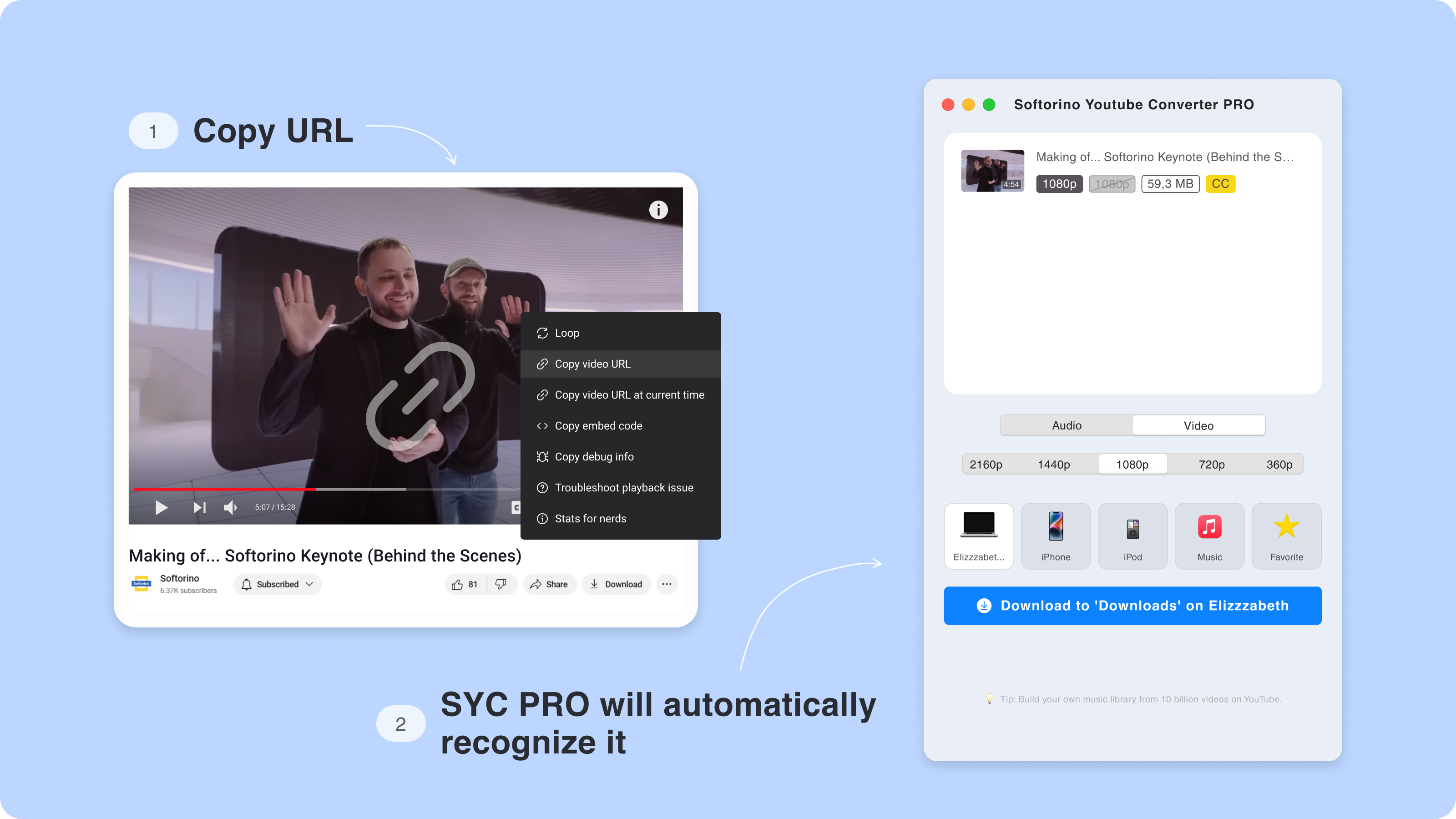
Open YouTube and copy the link to the video you want to save. SYC PRO watches your clipboard, so the URL appears in the app after you copy it.
If you want to save several allowed videos, copy each URL one by one. They stack in the queue. That is useful for lectures, playlists, interviews, or a group of tracks you want in the same library.
Step 3: Choose MP3, AAC, or another audio setting
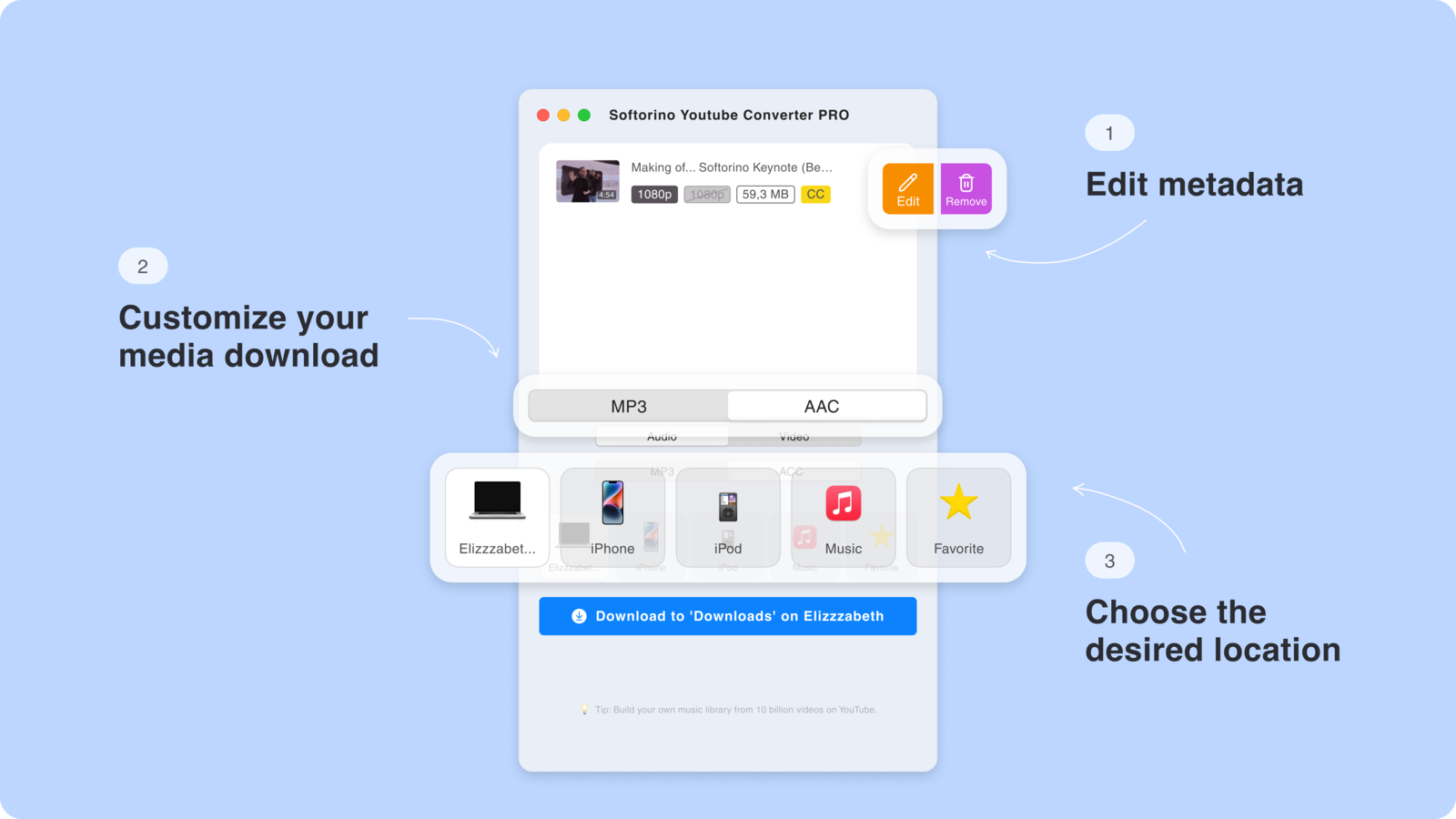
Choose the audio output before you download. MP3 is the safest choice if you want broad compatibility. AAC is a strong pick for Apple Music, iPhone, iPad, and CarPlay.
Pick a destination too. SYC PRO can save to your computer, send audio to an Apple device, or place tracks into your music library depending on your setup.
- MP3 fits when you need a file that plays almost anywhere
- AAC fits when your main devices are iPhone, iPad, Mac, or Apple Music
- A local folder fits when you want to edit the file later
- iPhone, iPad, or Apple Music fits when you want the file ready for listening
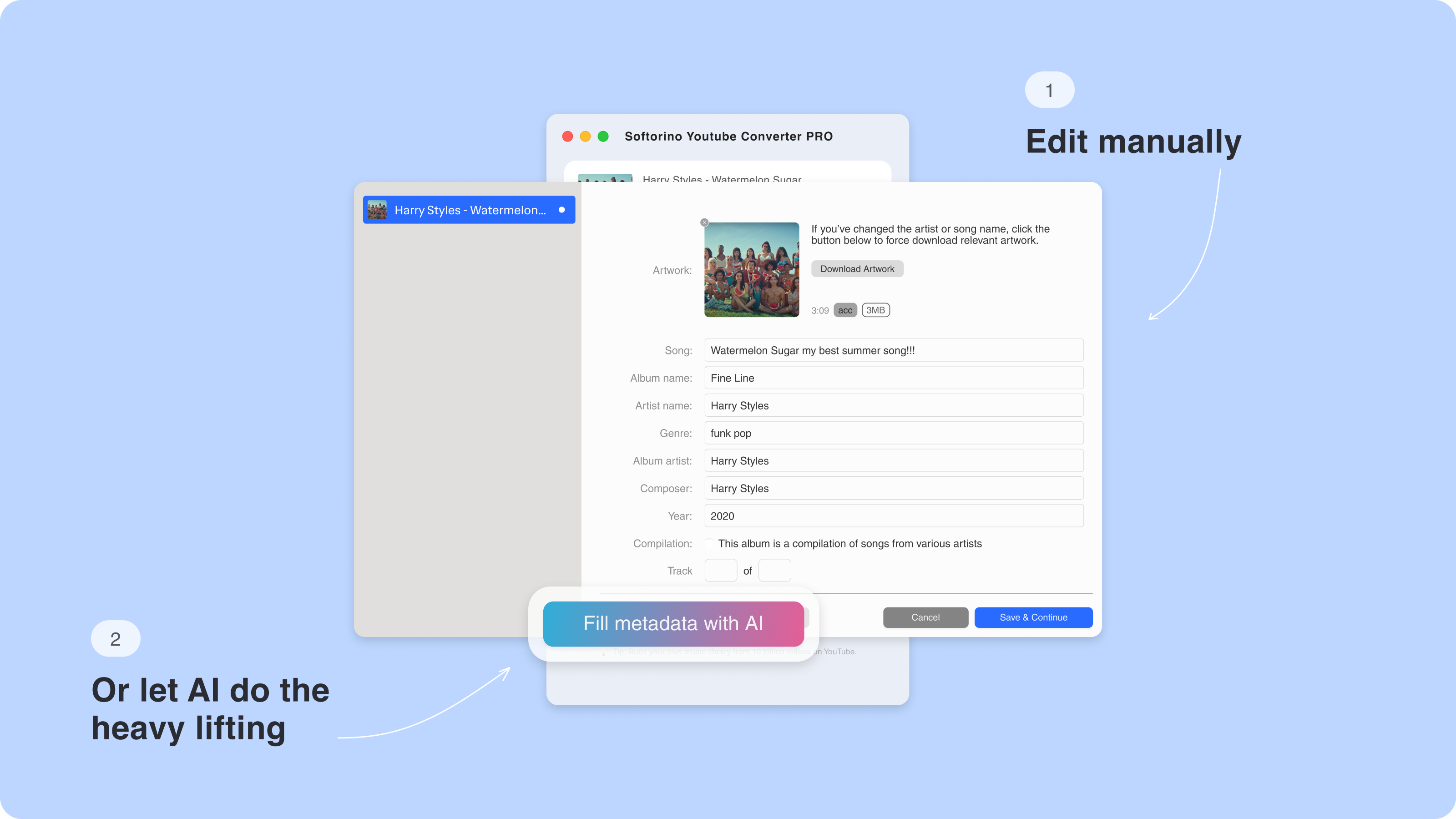
SYC PRO also lets you edit metadata. That means track name, artist, album, genre, and year. It is a small thing until you save 30 tracks and your library turns into “Unknown Artist” soup.
Step 4: Download and save the YouTube audio
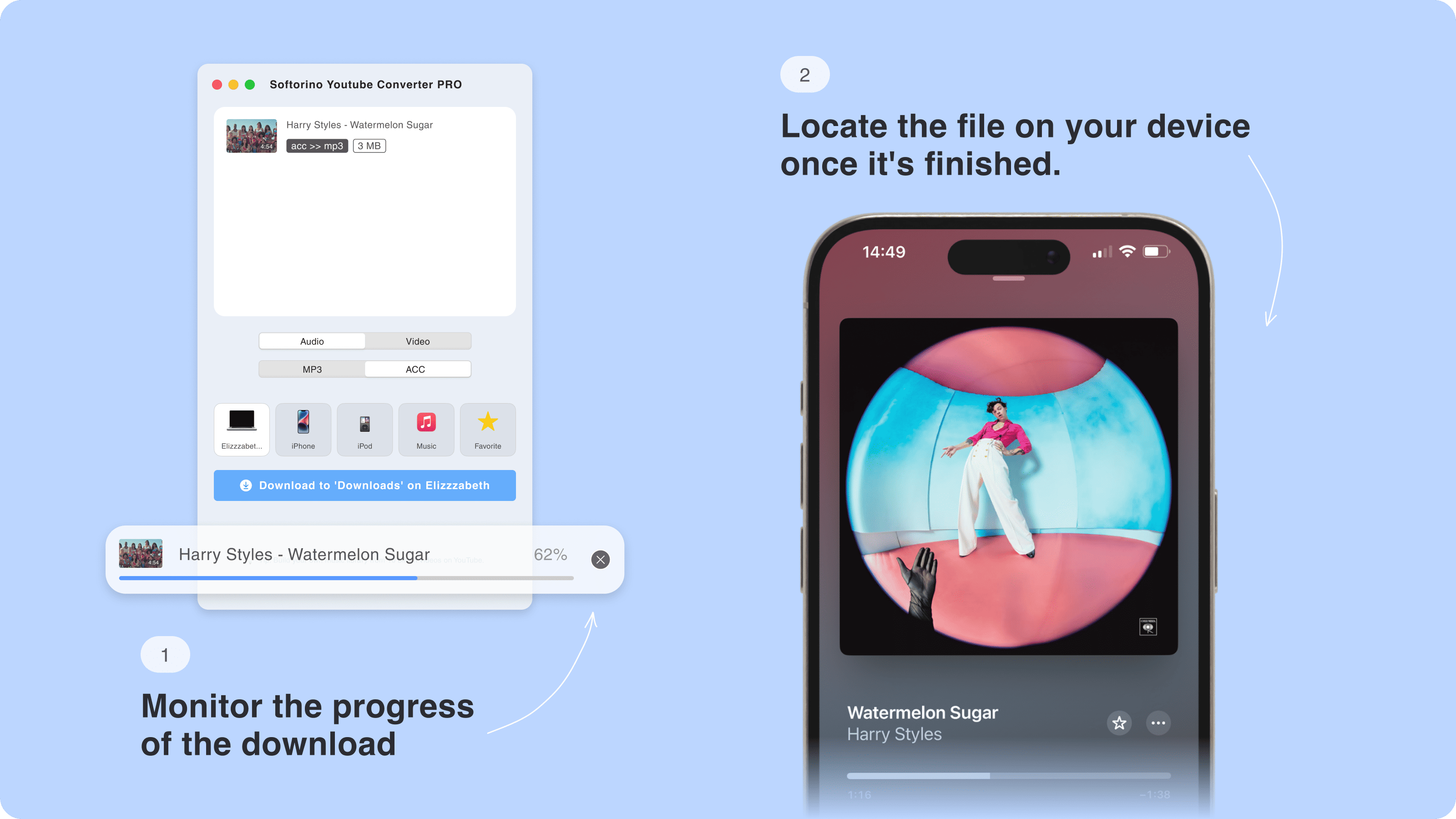
Click download. SYC PRO converts the YouTube video audio into the format you selected and saves it to the destination you picked.
This avoids the real-time recorder trap. You do not need to play the full video, babysit the volume, or hope macOS or Windows captures the correct output device. The final quality still depends on the source and the format you choose, but you skip the extra mess that comes from recording speaker playback.
Step 5: Listen offline or send the file to your device
When the download finishes, open the file or check the destination device. If you saved to Apple Music, confirm the track name and artwork. If you saved to iPhone or iPad, open the relevant app and make sure the audio appears where you expect it.
If your real goal is moving media to iPhone without Apple's sync rules, Softorino's Universal License can also make sense. It includes Softorino apps for YouTube saving, file transfer, and other Apple-device chores for about $3/month.
Recording vs extracting YouTube audio
People use the word “record” for several different jobs. Search engines do not care. Your computer does.
Recording means you capture sound as it plays. Extracting or downloading means you save the audio stream into a file without playing the whole thing in real time.
Task | Better method | Why |
|---|---|---|
Save a YouTube lecture as MP3 | Extract/download | Faster and less error-prone |
Capture a live stream as it happens | Record | There may be no finished file yet |
Save a song for offline listening | Extract/download if allowed | Cleaner metadata and file output |
Record your voice over a YouTube clip | Recorder | You need microphone mixing |
Make a short sample for a project | Recorder/editor | You need trimming and editing |
That is why SYC PRO belongs in this article, even though it is not a classic system-audio recorder. Many users searching for a YouTube audio recorder want a saved audio file. For that job, extraction usually wins.
How to record audio from YouTube on Windows
Audacity is the common free route on Windows. It can record system audio through Windows WASAPI if your device settings cooperate.
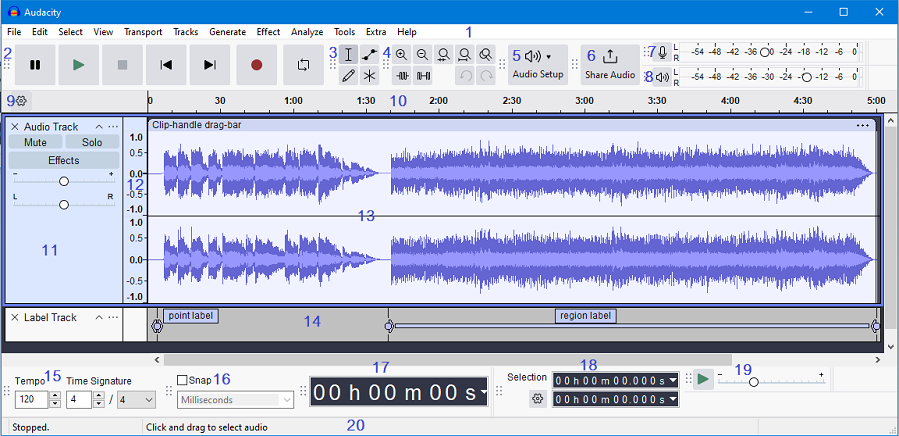
Use Audacity when you need a real recording rather than a download. For example, you may need to capture a livestream segment, include microphone commentary, or edit the audio after recording.
Audacity is powerful, but it is not as clean as a direct YouTube to MP3 workflow. You must set the correct input device. You must record in real time. You must export the file when you finish.
- Install Audacity.
- Open Audio Setup.
- Choose Windows WASAPI as the host.
- Pick your speaker or headphone loopback device as the recording source.
- Start recording in Audacity.
- Play the YouTube video.
- Stop recording and export the audio.
Other desktop YouTube audio recorder options
Some desktop apps record screen and audio together. Others download and convert. They can work, but they usually target a broader job than “give me this YouTube audio as a file.”
Airy Video Downloader
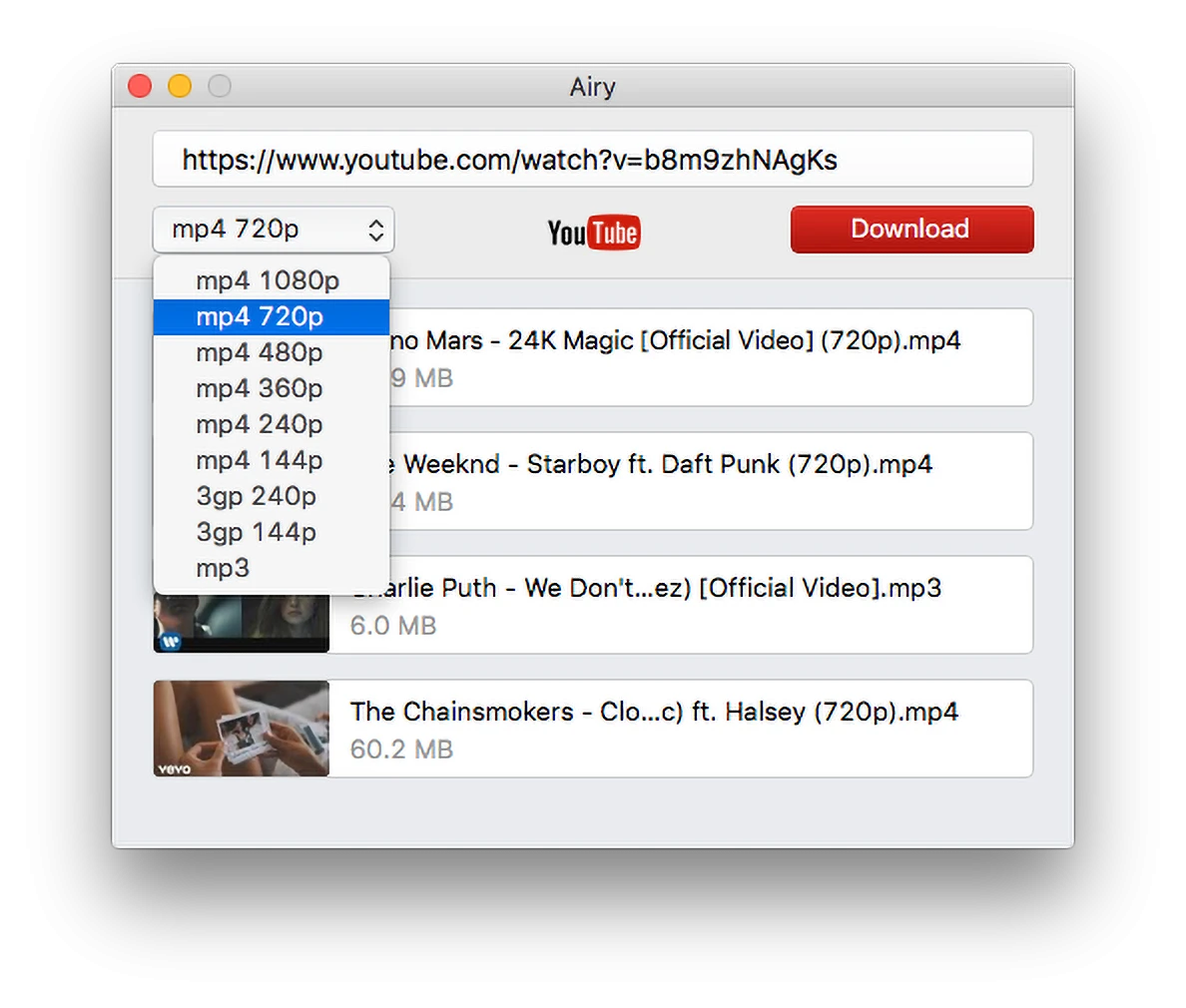
Airy is a simple YouTube downloader. It works for basic downloads and batch jobs, but it does not have the same Apple-device delivery angle as SYC PRO.
- Good for basic YouTube downloads
- Useful when you want a desktop app instead of a browser converter
- Weaker when you want direct iPhone, iPad, or Apple Music delivery
EaseUS RecExperts
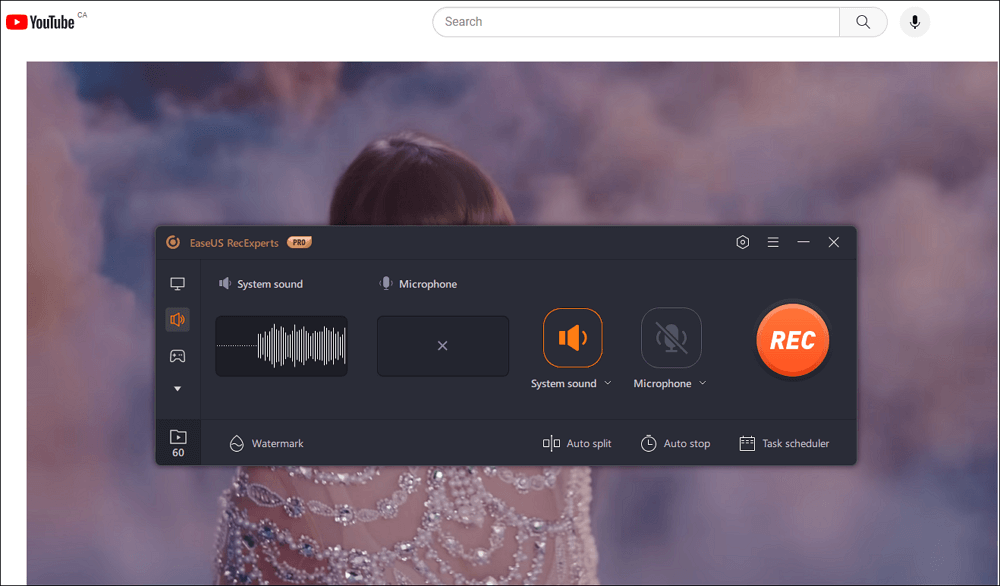
EaseUS RecExperts is closer to a screen recorder. It can capture screen and audio together, which helps if you need the video too.
- Good for screen plus audio capture
- Useful for tutorials, meetings, or mixed-source recordings
- More than you need if you only want a YouTube MP3
VideoProc Converter
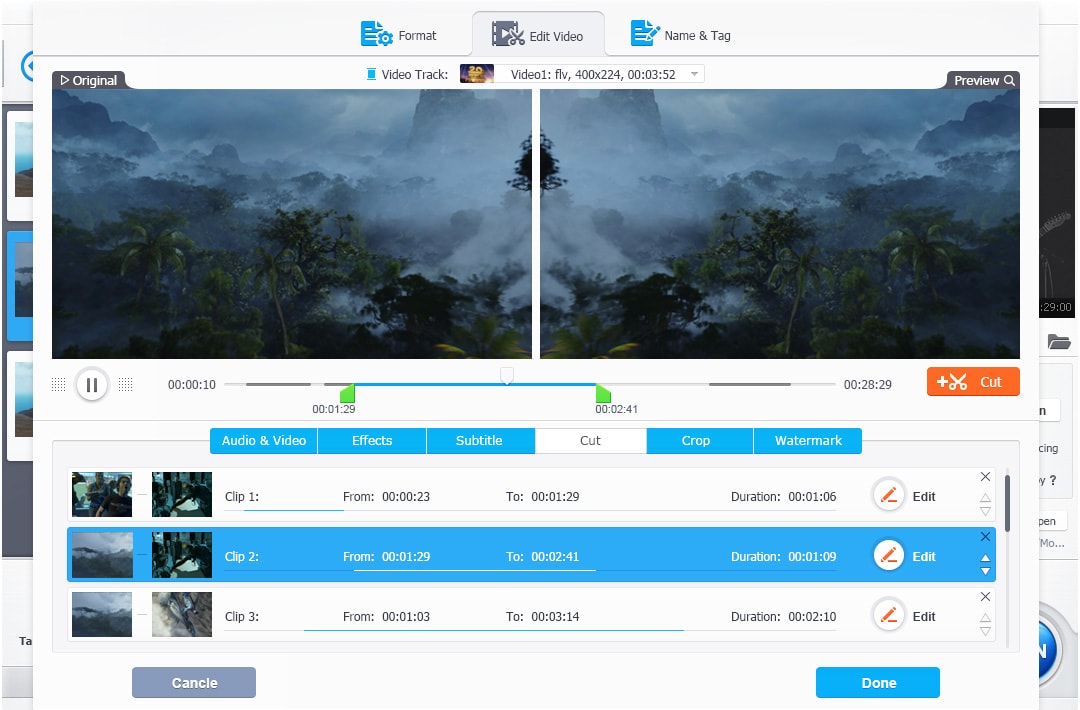
VideoProc Converter covers video conversion and editing jobs. It can help if you need a broader video toolkit, not only YouTube audio.
- Good for users who also edit or convert video
- Useful when you have local files to process
- Less focused on sending audio to Apple devices
4K Video Downloader
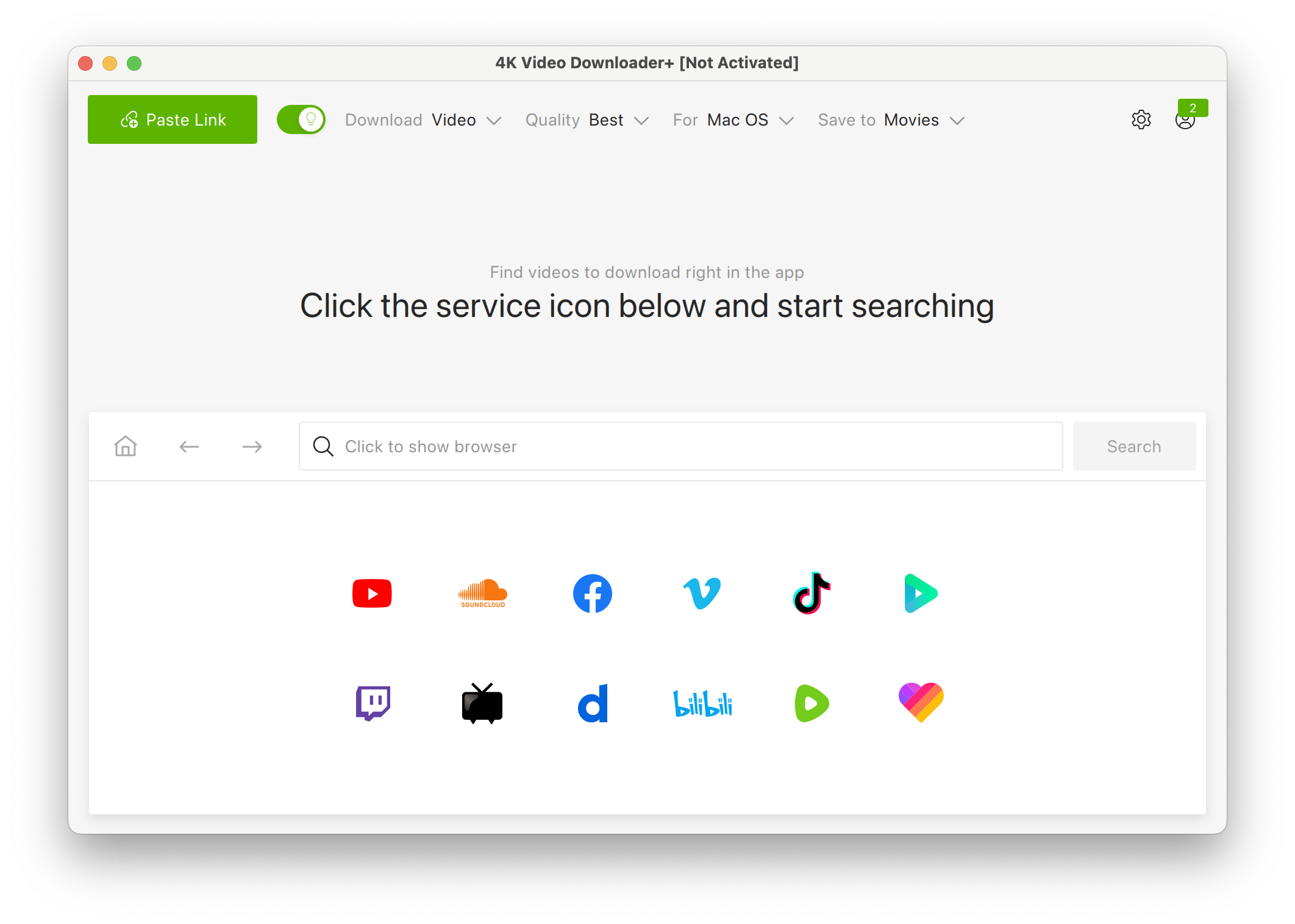
4K Video Downloader is another known option for saving online video and audio. It can work well for playlist-style downloads, depending on the version and limits.
- Good for playlist downloads
- Useful when you need several output options
- Check free-version limits before planning a large queue
Online YouTube audio recorders and converters
Online tools are tempting because they ask for no install. Paste a link, choose MP3, download. That can be fine for one non-private file. If you are comparing options, Softorino's YouTube converters guide covers the broader tool landscape.
The tradeoff is trust. Many online YouTube audio recorder pages come with aggressive ads, fake download buttons, browser permission prompts, extension pitches, file limits, and random failures. You also send the URL or file through someone else's server.
Use online tools only when:
If the audio matters, use a desktop app. If it belongs on your iPhone or iPad, SYC PRO is the cleaner Softorino path.
- The content is not private
- You do not need reliable batch downloads
- You can spot fake buttons and popups
- You do not need metadata cleanup
- You are okay with web-tool limits
How to record YouTube audio on Mac with QuickTime
QuickTime Player can record audio on Mac, but there is a catch. By default, QuickTime records microphone input. It does not capture internal system audio from YouTube by itself.
To record YouTube audio on Mac, you usually need a virtual audio driver or audio-routing app. The common workflow looks like this:
- Install an audio-routing tool such as Loopback or a similar virtual device.
- Route browser audio into that virtual device.
- Open QuickTime Player.
- Choose New Audio Recording.
- Select the virtual device as the input.
- Start recording.
- Play the YouTube video.
- Stop and save the recording.
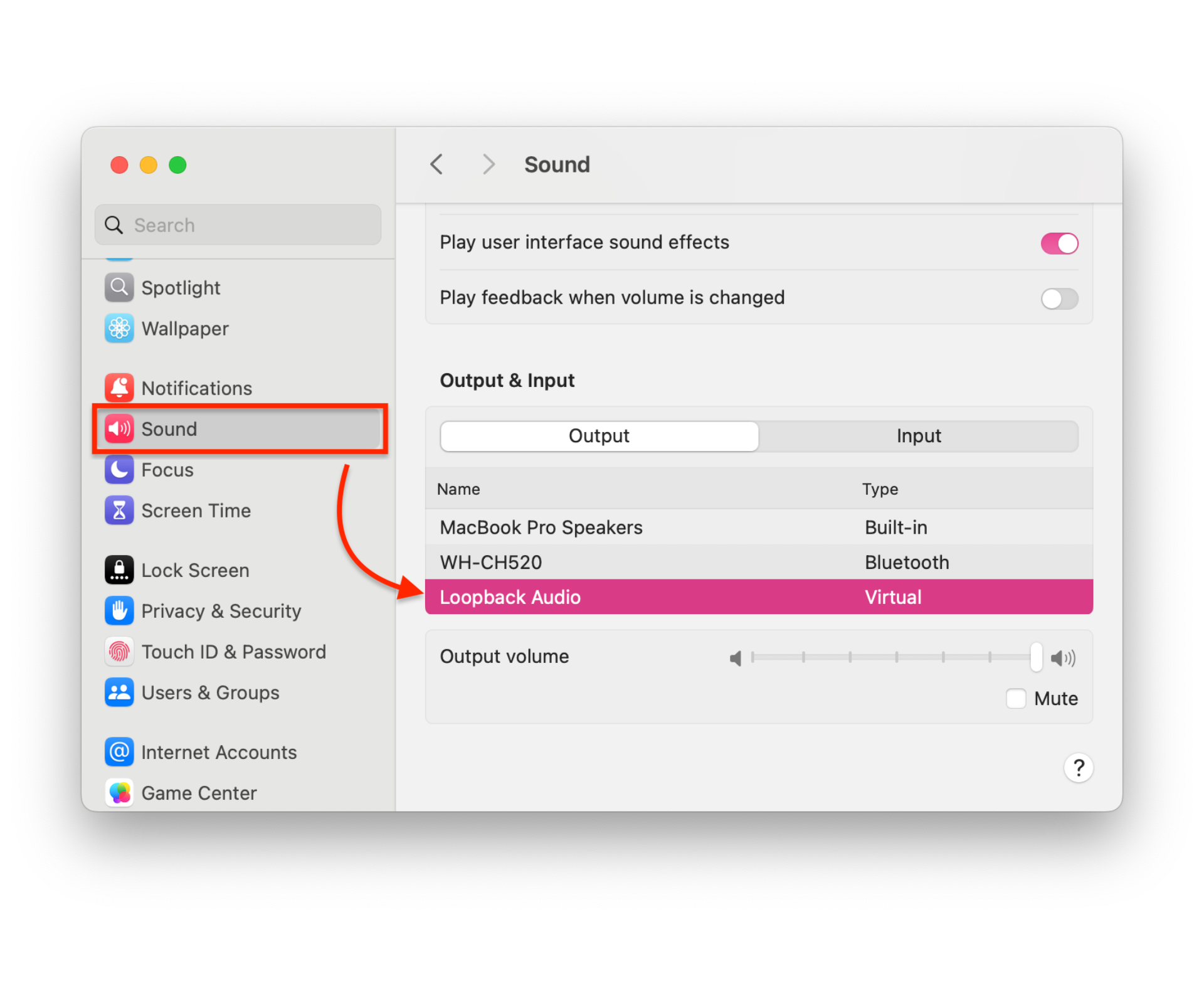
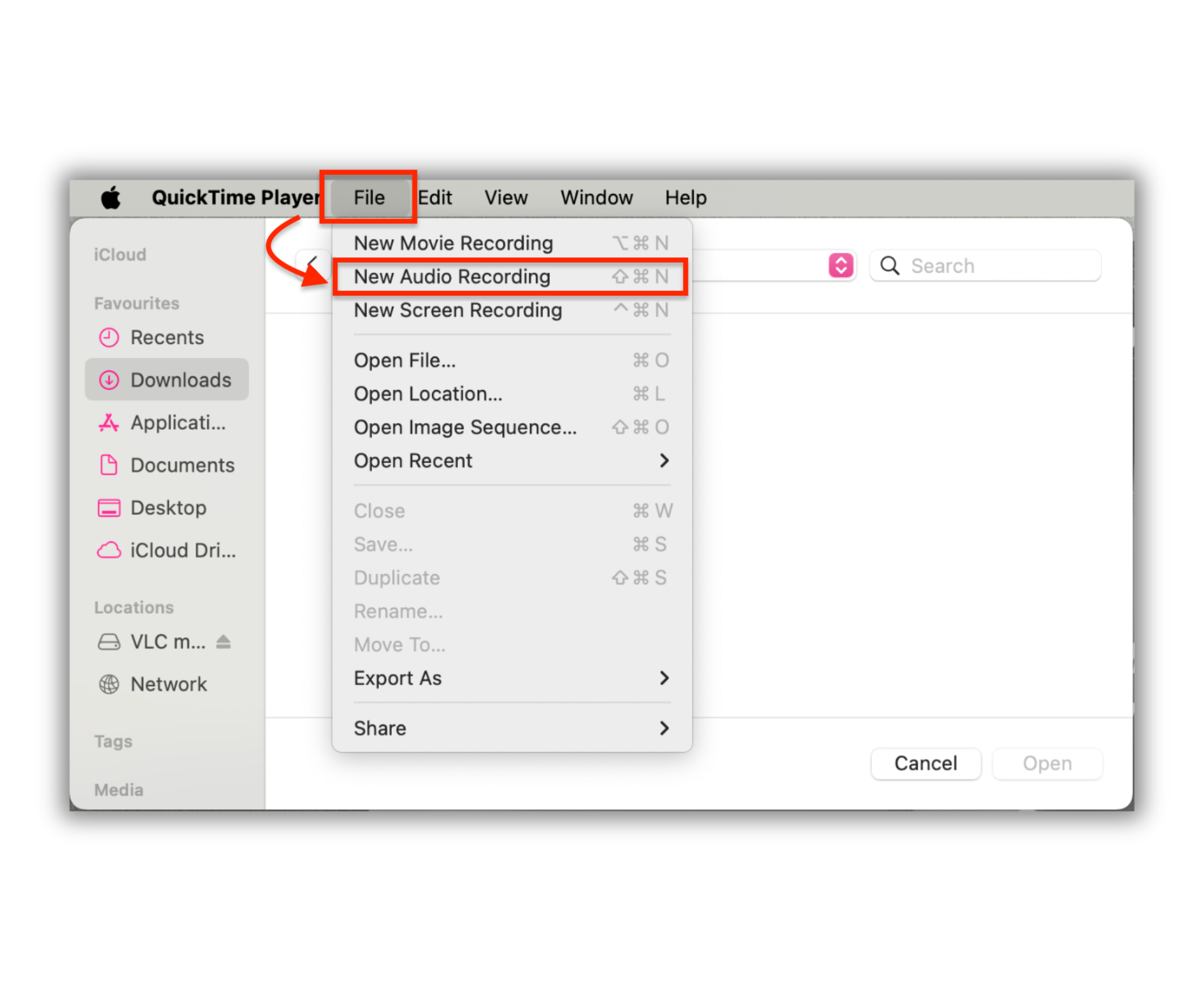
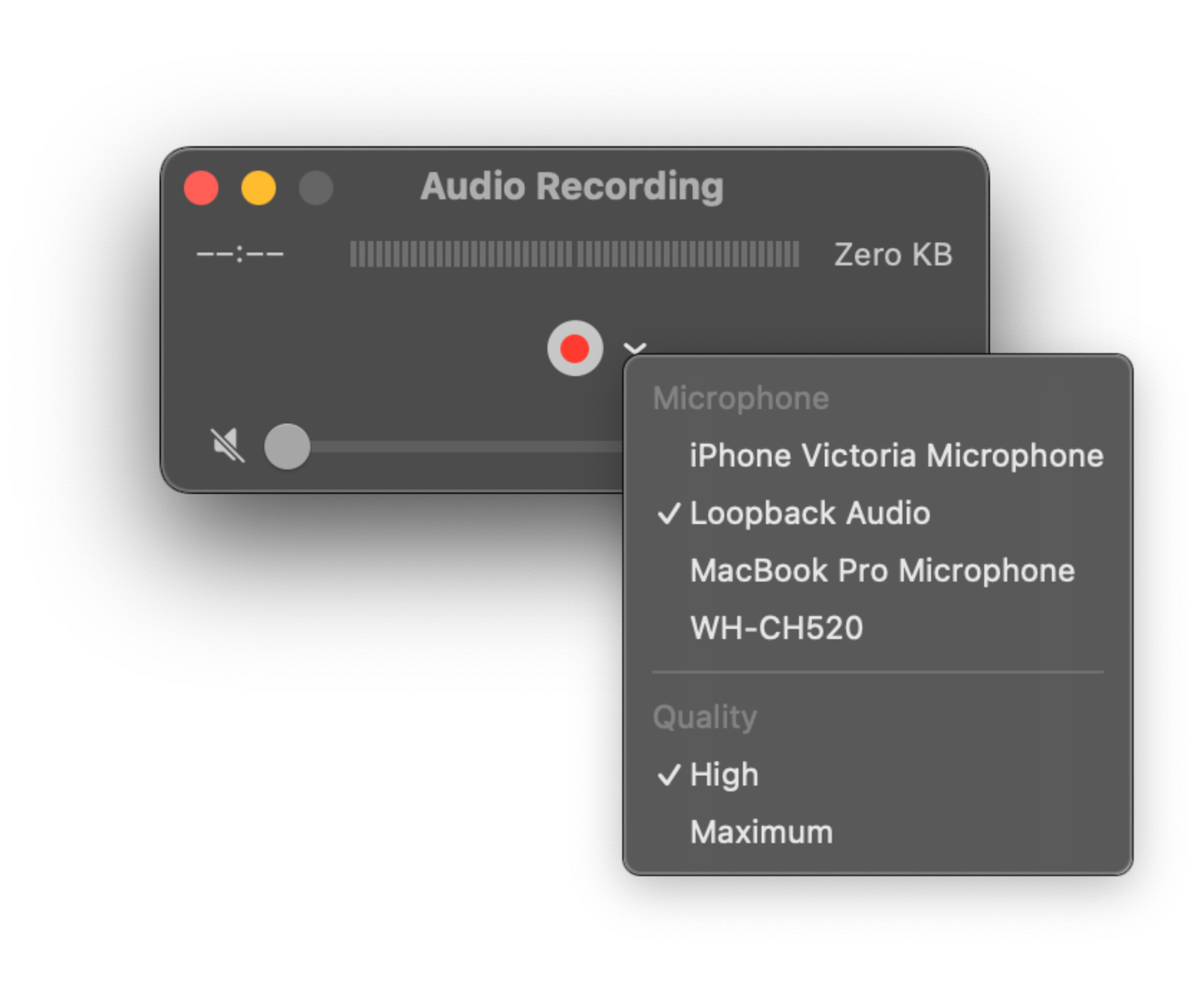
This works, but it is not beginner-friendly. If QuickTime records your room noise instead of YouTube, your input source is wrong. If the file sounds silent, your routing is wrong. If you get notification sounds in the recording, your Mac captured exactly what you told it to capture.
For one clean audio file, use extraction. For a live system-audio capture, use QuickTime only after you set up routing correctly. Apple's own QuickTime Player guide is worth checking if you use QuickTime for recording.
Audio quality settings that matter
A YouTube audio recorder cannot create quality that is not in the source. If the original upload sounds bad, an MP3 export will not rescue it. Choose settings that fit the job.
MP3 is the default for compatibility. AAC is better for Apple workflows. WAV is useful for editing, but it creates larger files and does not magically improve a compressed YouTube source.
Setting | Use it when | Watch out for |
|---|---|---|
MP3 | You want broad playback support | Avoid tiny bitrates if music matters |
AAC | You use iPhone, iPad, Mac, or Apple Music | Not every old device handles every AAC setting |
WAV | You plan to edit audio | Large files, no quality gain from weak sources |
Metadata | You are building a library | Bad metadata creates messy playlists |
Local save | You need editing or backup | You still need to transfer the file later |
For music libraries, metadata matters almost as much as format. A file named videoplayback.mp3 is technically playable. It is also annoying forever.
Troubleshooting: YouTube audio recording problems
Most YouTube audio recording problems come from the capture method, not YouTube itself.
Problem | Likely cause | Fix |
|---|---|---|
The recording has no sound | Wrong input device | Choose system audio or loopback input |
It recorded room noise | Recorder used the microphone | Switch input away from the mic |
Audio starts late | You pressed record after playback | Start recording first, then play |
File sounds distorted | System volume or input gain is too high | Lower output/input levels and retry |
Metadata is missing | Recorder exported raw audio | Add metadata in SYC PRO or a tag editor |
File will not play on iPhone | Format is not Apple-friendly | Use MP3 or AAC/M4A |
Download is unavailable | Video restrictions or legal limits | Use another allowed source or do not save it |
If you keep fighting recorder settings, stop and ask what you need. If you need an audio file, use a converter. If you need a live capture, use a recorder and test 10 seconds before recording the full video.
When SYC PRO is the wrong tool
SYC PRO is a strong fit when you want to save allowed YouTube audio as a file and move it into an Apple-friendly workflow. It is not the right tool for every audio job.
Use a different tool when you need to:
That honesty matters. A downloader solves download problems. A recorder solves recording problems. Pick the tool based on the job, not the keyword you typed at 1 AM.
- Record microphone commentary over the YouTube audio
- Capture a live stream that is not available as a normal video
- Mix system sound from several apps at once
- Edit waveforms in detail
- Record audio from a private page or source SYC PRO cannot access
Bottom line: record less, save cleaner
If you want to record audio from YouTube because you need an MP3 or AAC file, do not sit through a real-time recording unless you have to. Copy the URL, choose the format, and save the file cleanly.
SYC PRO is the Softorino pick for that workflow. It turns allowed YouTube videos into audio files and sends them to the places Apple users care about: Mac, iPhone, iPad, and Apple Music.
Start with the free trial, test it on one allowed video, and see if it beats wrestling with QuickTime, Audacity, browser popups, and mystery download buttons.
FAQ
Can you record just the audio from a YouTube video?
Yes. You can record just the audio from a YouTube video with a system-audio recorder like Audacity, OBS, or QuickTime with a virtual audio driver. If you only need an MP3 or AAC file, a tool like SYC PRO is usually cleaner because it extracts/downloads the audio instead of recording playback in real time.
Is there a way to extract audio from YouTube?
Yes. A YouTube audio downloader or converter can extract audio from a YouTube video into MP3 or AAC, when the content is allowed to be saved. SYC PRO does this for Mac and Windows users and can send the file to Apple devices or Apple Music.
How do I record audio from YouTube on Windows?
Use Audacity with Windows WASAPI if you need a true system-audio recording. Choose the speaker or headphone loopback source, start recording, play the YouTube video, then export the file. If you only want the audio file, use SYC PRO instead and skip the real-time recording.
How do I record audio from YouTube on Mac?
QuickTime alone records your microphone, not YouTube system audio. To record YouTube audio on Mac, route system sound through a virtual audio device, select that device in QuickTime, then record. For a saved MP3 or AAC file, SYC PRO is simpler.
Is it legal to record audio from YouTube?
It depends on the content, your rights, YouTube's rules, and local law. Save only content you own, have permission to use, or are allowed to download. YouTube's Copyright Help explains why reuse rights depend on the specific content and context.
What format should I use for YouTube audio?
Use MP3 if you want broad compatibility. Use AAC if the audio is mainly for iPhone, iPad, Mac, Apple Music, or CarPlay. Use WAV only if you plan to edit the audio and can handle larger files.

SYC PRO
Download Web Videos Like a PRO
