How to Set a Custom Ringtone on iPhone

You can set a custom ringtone on iPhone, but not by tapping an MP3 in Files and choosing “Use as ringtone.” Apple still makes this weird. Files can store the audio, but iPhone needs GarageBand, a ringtone maker, the Tone Store, or a properly imported M4R file before the sound appears in Settings.
The cleanest method depends on where your audio lives. If you only have your iPhone, use GarageBand. If you are on Windows and want to create the tone from a file, YouTube clip, or SoundCloud track, use iRingg, Softorino’s iPhone ringtone maker for Windows. If you want a paid preset tone, use Apple’s Tone Store.
Before we begin
Windows users can download iRingg to turn a local audio file into a custom iPhone ringtone and send it to the phone without iTunes. Trim and preview the exact clip before transferring it.
Fastest way to set a custom ringtone on iPhone from files
Here is the short version. To set a custom ringtone on iPhone from Files, import the audio into GarageBand, trim it to 30 seconds or less, export it as a ringtone, then choose it in Settings > Sounds & Haptics > Ringtone.
If the file sits on a Windows PC, iRingg is usually faster. It lets you choose a local file or personal-use online clip, trim it, add optional effects, and push the finished ringtone to your iPhone without iTunes syncing.
Method | Best for | Computer needed | Works from Files? | Uses iTunes? | Main limit |
|---|---|---|---|---|---|
iRingg | Windows users who want a direct ringtone maker | Windows PC | Imports files from the PC | No | Not a current Mac app |
GarageBand | iPhone-only users with audio in Files | No | Yes | No | Fiddly, and protected songs will not work |
Tone Store | Buying ready-made ringtones | No | No | No | Not for your own file |
Manual M4R transfer | People who already have an M4R file | Mac or PC | Not directly | Sometimes | Format and sync steps are fragile |
Ringtone sites or Zedge | Pre-made tones | Maybe | Usually needs GarageBand after download | No | Not ideal for your own song or clip |
Files is a storage app, not a ringtone setter. If your MP3 or M4R is sitting in Files, you still need GarageBand or another import path to move it into the iPhone ringtone list.
How to set a custom ringtone on iPhone with iRingg on Windows
Use iRingg if you want to set a custom ringtone on iPhone from a Windows PC without building an M4R file by hand. It is made for this exact job: pick the source, trim the clip, and send the ringtone to your iPhone.
iRingg can work with user-owned audio files, MP3s, YouTube clips, and SoundCloud clips where personal use is allowed. It also lets you add fades, voice, or SndMoji sound effects before export.
Step 1: Install iRingg on Windows
Download iRingg for Windows and install it on your PC. The current Softorino product page presents iRingg as a Windows app, so do not use the old “Mac or PC” wording from older guides.
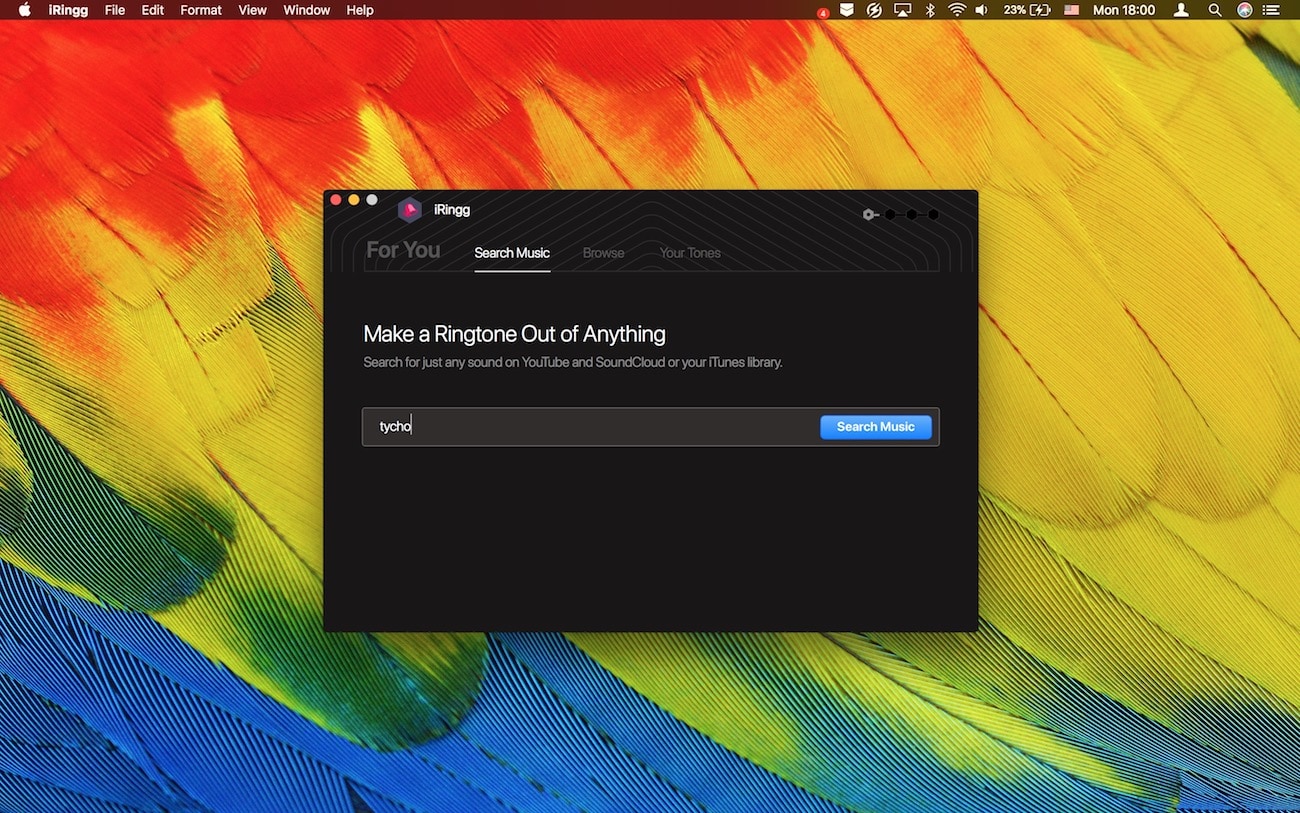
Open iRingg after installation. You can start with a local audio file, search for a clip, or use a supported online source for personal use.
Step 2: Connect and trust your iPhone
Plug your iPhone into the PC with a cable the first time. Unlock the iPhone and tap Trust This Computer if iOS asks.
After the device is trusted, iRingg can also work over Wi-Fi in supported setups. Cable is still the safer first run, especially if the iPhone does not appear right away.
Step 3: Choose the audio source
Pick the song, MP3, voice memo, or compatible audio file you want to use. You can also search YouTube or SoundCloud inside iRingg if the clip is allowed for personal use.
Keep the ringtone short. Apple’s ringtone flow expects a clip of 30 seconds or less, and GarageBand follows the same limit when exporting ringtones.
Step 4: Trim the ringtone and add effects
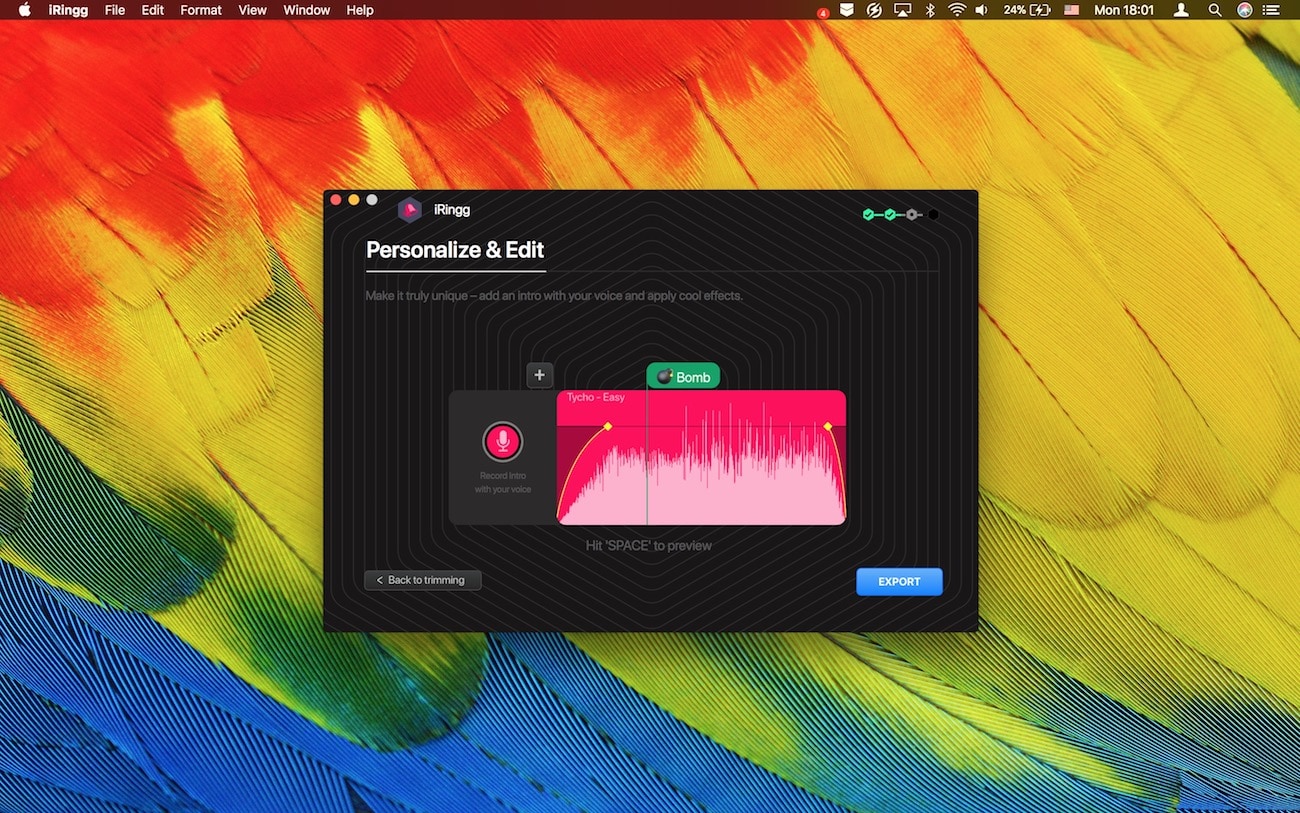
Drag the trim handles around the part you want. A chorus, hook, or short sound effect usually works better than a full intro.
Add fades or SndMoji effects only if they make the ringtone better. A ringtone should be recognizable in 2 seconds, not a tiny audio project.
Step 5: Push the ringtone to iPhone
When the clip is ready, choose Export > Push to iPhone. iRingg converts the audio and sends it to the iPhone ringtone list without the old iTunes sync dance.
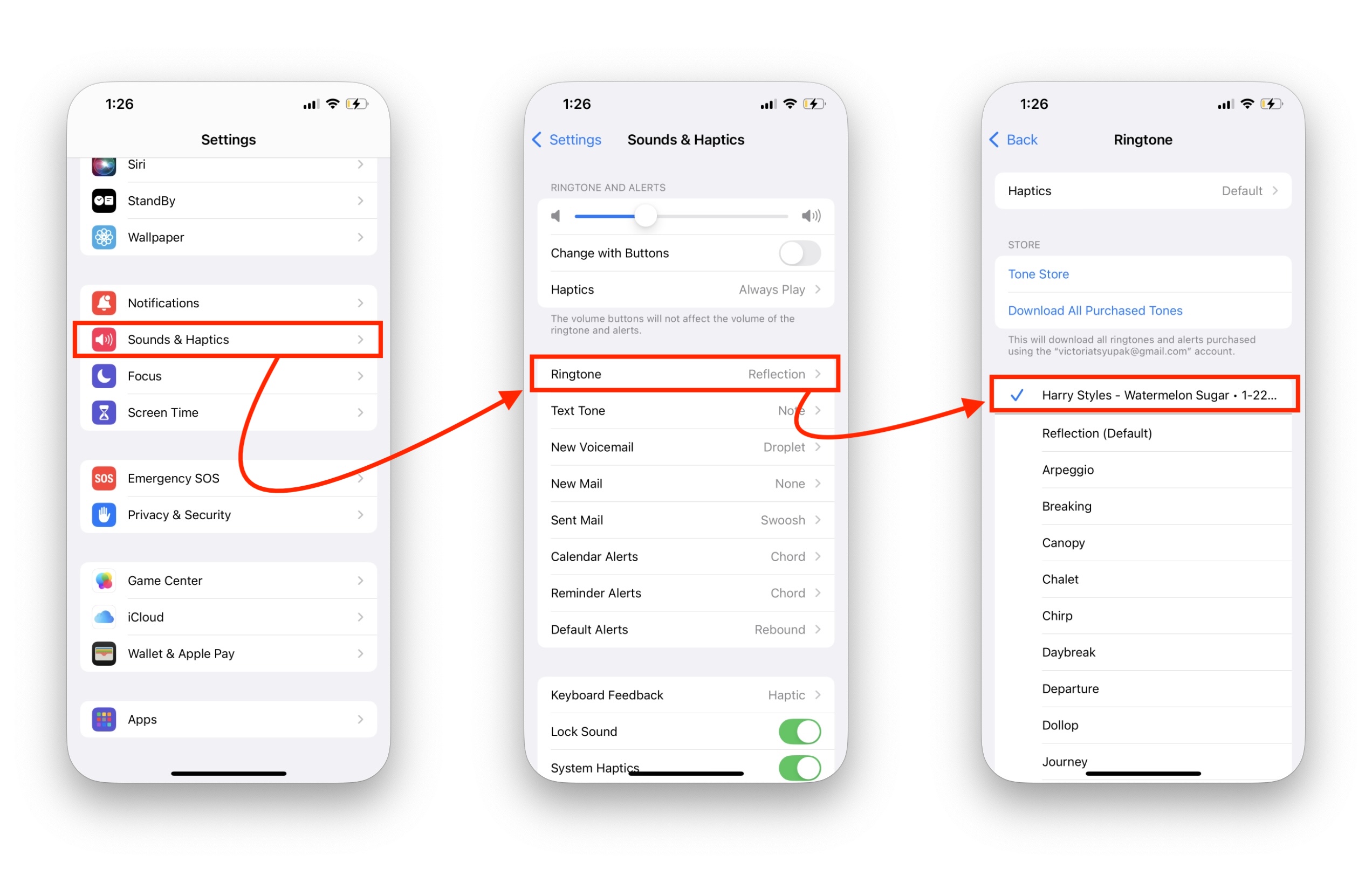
After the transfer finishes, open Settings on your iPhone, then go to Sounds & Haptics > Ringtone. Choose the new ringtone from the list.
Why iRingg is useful for Windows users
Windows users get the worst version of Apple’s ringtone workflow. GarageBand is not a Windows app, iTunes-style syncing is clunky, and manual M4R transfer fails if the file length or format is wrong.
iRingg keeps the ringtone workflow in one place:
Choose a local file, YouTube clip, SoundCloud clip, or compatible audio source.
Trim the ringtone before sending it.
Convert the audio to the iPhone ringtone format.
Push the ringtone to iPhone over cable or Wi-Fi.
Skip iTunes syncing.
If you are on Windows and your goal is “add ringtone to iPhone without iTunes,” iRingg is the Softorino path built for it.
How to set a custom ringtone on iPhone with GarageBand
GarageBand is the best free method if the audio file is already on your iPhone. Apple’s own support guide confirms GarageBand can create a custom ringtone from an audio file, a downloaded Apple Music library song, or a song you made. Protected songs cannot be used.
Use this method when your MP3, WAV, or other compatible audio file is already saved in Files.
- Install GarageBand from the App Store if it is not already on your iPhone.
- Open GarageBand and choose Audio Recorder.
- Tap the track-view icon, then tap the loop icon.
- Go to Files and import your audio file.
- Drag the file into the GarageBand timeline.
- Trim the clip to 30 seconds or less.
- Tap the down arrow, choose My Songs, then long-press the project.
- Tap Share > Ringtone.
- Name the ringtone and tap Export.
- Choose Use sound as > Standard Ringtone, or tap Done and select it later in Settings.
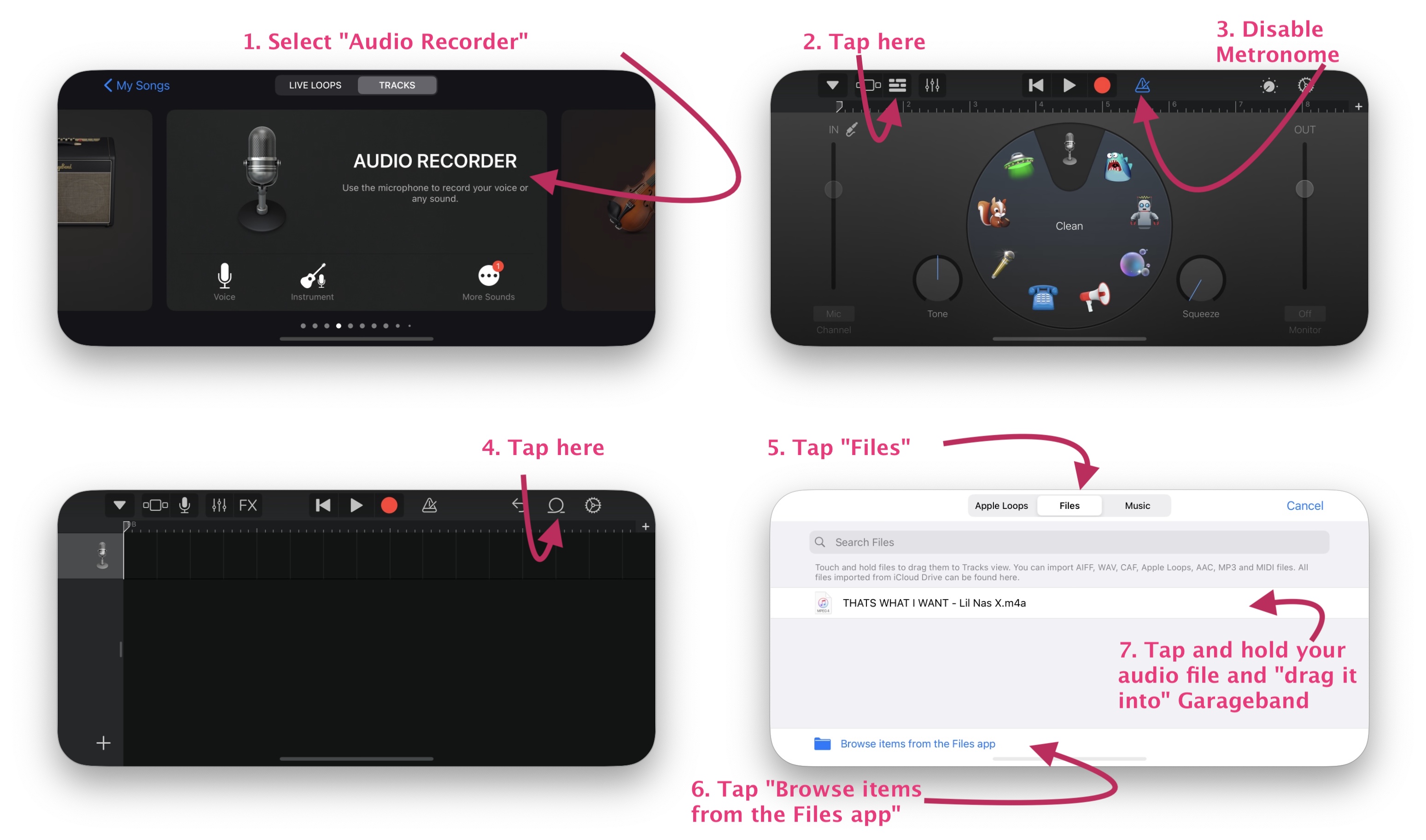
GarageBand works, but it is not obvious the first time. You are using a music creation app to solve a Settings problem. That is Apple logic at its finest.
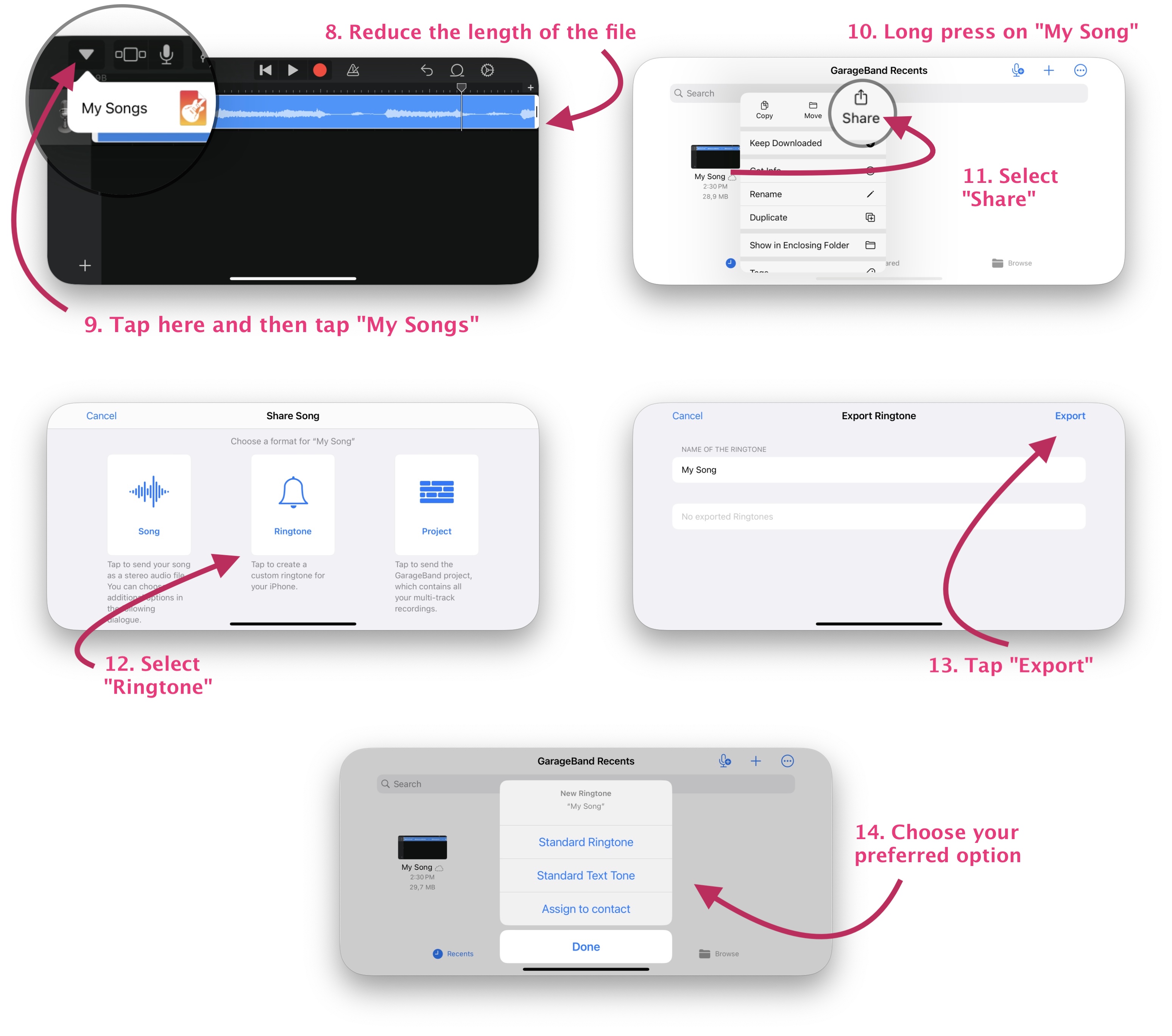
GarageBand caveats to know
Apple limits iPhone ringtones to 30 seconds. If your GarageBand project is longer, iPhone may shorten it or ask you to trim it before export.
DRM-protected Apple Music tracks will not work as ringtones. Use a file you own, a song you made, or a downloaded song Apple allows GarageBand to export.
Can you set a ringtone directly from Files on iPhone?
No, not in the direct way most people expect. You can store an MP3, M4A, WAV, or M4R file in Files, but iPhone does not give most audio files a “set as ringtone” button inside Files.
To set a custom ringtone on iPhone from Files, send the file through GarageBand first. GarageBand exports the clip into the ringtone picker. After that, it appears under Settings > Sounds & Haptics > Ringtone.
If the file lives on a Windows PC, you can use iRingg instead of moving the file into Files first. That is the cleaner route if your source audio is on the computer.
How to buy and set a ringtone from the Tone Store
Use the Tone Store if you do not need a custom audio file. It is the official Apple path for buying ready-made tones.
- Open Settings on your iPhone.
- Go to Sounds & Haptics.
- Tap Ringtone.
- Tap Tone Store.
- Buy a tone, then choose it as your ringtone.
You can also set tones for one person. Open Contacts, choose the contact, tap Edit, then choose Ringtone or Text Tone.
The Tone Store is simple, but it will not help if you want your own song, a voice memo, or a YouTube/SoundCloud clip as the ringtone.
iTunes, Music, Finder, and M4R: when the manual method still works
The manual method still works in some setups, but it is the last resort. Use it only if you already have a proper M4R ringtone file and you are comfortable with device syncing.
The basic rules are strict:
- The ringtone must be 30 seconds or less.
- The file usually needs the .m4r extension.
- The iPhone must trust the computer.
- On newer Macs, device management may happen in Finder or Music, not old iTunes.
- On Windows, iTunes-style device handling may still be involved.
A typical manual flow looks like this:
- Create a 30-second AAC clip.
- Change the file extension from .m4a to .m4r.
- Connect the iPhone and trust the computer.
- Drag the M4R file into the iPhone tone area if your setup supports it.
- Open Settings > Sounds & Haptics > Ringtone on iPhone and choose the tone.
This method breaks easily. If the ringtone is too long, not really AAC/M4R, or the device sync path changed, the tone may never show up.
For a deeper file-format guide, see Softorino’s guide to convert MP3 to M4R for iPhone. If your goal is broader ringtone transfer, read how to add ringtones to iPhone without iTunes.
iRingg vs GarageBand vs manual M4R
Each method can set a custom ringtone on iPhone. The right pick depends on your device and how much patience you have.
Method | Best fit | Strength | Weak spot |
|---|---|---|---|
iRingg | Windows users | Creates and pushes ringtones without iTunes syncing | Windows-focused product |
GarageBand | iPhone-only users | Free, official, works with Files | Hidden workflow, lots of taps |
Tone Store | People buying preset tones | Fast and official | Not custom audio |
Manual M4R | Power users with ready files | No extra ringtone maker needed | Fragile format and sync steps |
If you want to turn a YouTube clip into an iPhone ringtone, iRingg is the stronger fit. If the audio file is already in Files and you do not want a desktop app, GarageBand is the safer official route.
Troubleshooting custom iPhone ringtones
The audio file is in Files, but there is no ringtone option
That is normal. Files does not move audio into the ringtone picker. Import the file into GarageBand and export it as a ringtone, or use iRingg from Windows.
The ringtone is not showing in Settings
Check the clip length first. Keep it at 30 seconds or less. Then confirm the export finished and look under Settings > Sounds & Haptics > Ringtone, not Music or Files.
GarageBand says the song is protected
Protected Apple Music tracks cannot become ringtones. Use a file you own, a song you created, or another audio source Apple lets GarageBand export.
iRingg does not see the iPhone
Unlock the iPhone, use a cable for the first connection, and tap Trust This Computer. If Wi-Fi transfer fails, switch back to cable and try again.
The manual M4R file will not transfer
Check the extension and length. The file should be a short ringtone file, not a full song renamed to M4R. If it still fails, use GarageBand or iRingg instead of fighting the sync flow.
FAQ
What is the easiest way to set a custom ringtone on iPhone?
The easiest way depends on your device. On iPhone only, use GarageBand. On Windows, use iRingg to create and push the ringtone without iTunes syncing.
Can I set a custom ringtone on iPhone from Files?
Yes, but not directly from Files. Import the audio into GarageBand, trim it, export it as a ringtone, then choose it in Settings > Sounds & Haptics > Ringtone.
Can I use an MP3 as an iPhone ringtone?
You can use an MP3 as the source, but iPhone will not set most MP3 files as ringtones directly. GarageBand or iRingg can turn the audio into a ringtone iPhone accepts.
How long can an iPhone ringtone be?
Apple’s ringtone flow supports clips up to 30 seconds. Keep your custom ringtone at 30 seconds or less to avoid export or visibility problems.
Can I make a ringtone from YouTube for iPhone?
Yes, if the clip is allowed for personal use. iRingg can help Windows users create a ringtone from a YouTube clip and push it to iPhone without iTunes syncing.
Is GarageBand better than iRingg?
GarageBand is better if you only have your iPhone and the audio file is already in Files. iRingg is better if you are on Windows and want a desktop ringtone maker that handles trimming, conversion, and transfer.
Final take
If you want to set a custom ringtone on iPhone from Files, use GarageBand. It is official, free, and works once you know where Apple hid the export button.
If you are on Windows, use iRingg. It removes the M4R/iTunes mess and gives you one ringtone workflow from source audio to iPhone Settings.
Want the low-friction route? Download iRingg, make the ringtone, push it to your iPhone, and choose it in Settings.

iRingg
Create Your Own Ringtone And Push Into iPhone
