MP3 Converter: Convert Audio for iPhone, Mac, and PC

Need an MP3 converter because your file will not play where you need it? You have 2 separate jobs. First, convert the audio to MP3. Then, if you use an iPhone or iPad, move that MP3 into the Music app without fighting iTunes or Finder sync.
This guide covers both parts. You will see when to use an online tool, when to use a desktop app, which settings matter, and how WALTR PRO helps when the end goal is an Apple device.
Before we begin
Download WALTR PRO on Mac or Windows to put local MP3 files on an iPhone, iPad, or iPod without managing an iTunes sync. Keep the original audio until playback and metadata are confirmed.
Best MP3 converter method by situation
There is no single best tool for every file. A 20-second voice memo, a private interview, and a full FLAC album need different workflows.
Use this quick picker before you convert anything.
Situation | Best method | Why it works | Watch out for |
|---|---|---|---|
Small, non-private audio file | Online tool | Fast and no install | You upload the file to someone else's server |
Private recording or client audio | Desktop converter | File stays on your computer | Takes a few minutes to install |
Full music library or album | Desktop batch converter | Handles many files and folders | Check metadata before converting everything |
Apple Music or iPhone transfer | WALTR PRO after conversion, or WALTR PRO for supported source files | Sends audio to native Apple apps without iTunes sync | Do not treat MP3 as lossless |
Video you own and need as audio | Desktop extractor | Safer for large files and rights-controlled content | Do not rip copyrighted videos you do not own |
If the file is private, use a local desktop app. Online tools are convenient, but uploading a voice memo, interview, lecture, or client file is usually a bad trade.

What an MP3 converter actually does
The tool changes an audio file from one format into a smaller audio file. The format uses lossy compression, which removes audio data most listeners will not notice.
That tradeoff is the reason the format still matters in 2026. It plays almost everywhere: phones, cars, smart speakers, old media players, web apps, and editing tools. Apple devices also support it, alongside AAC, ALAC, FLAC, WAV, and other formats listed in Apple's audio support docs.
The key detail: it is not the highest-quality format. It is the safest compatibility format. If you need a smaller file that still sounds fine, it makes sense. If you need archival quality, keep FLAC, ALAC, WAV, or AIFF.
For iPhone users, conversion is only half the mess. You can create a good audio file and still get stuck trying to put it into Apple Music. That is where Apple's default workflow gets annoying.
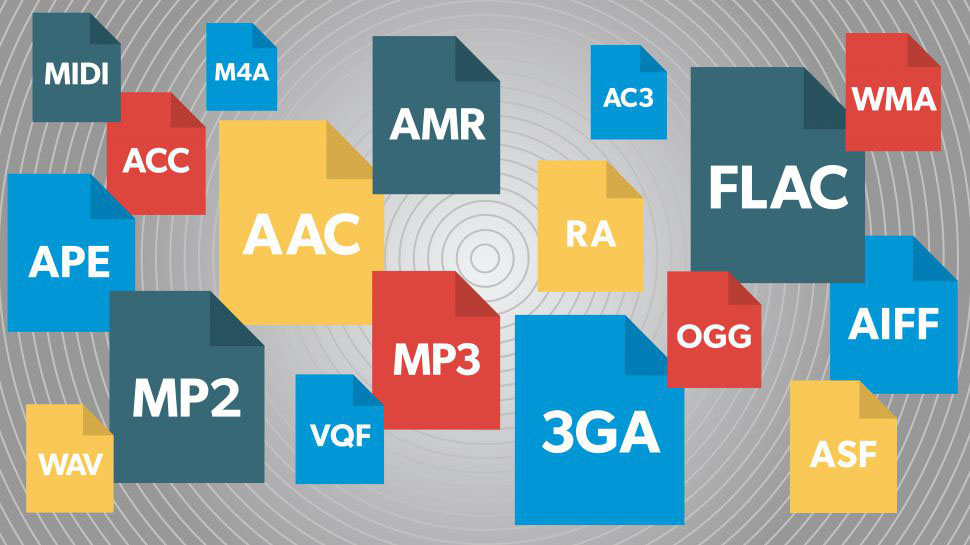
MP3 converter format guide
Here is the plain-English version of the format zoo.
WAV to MP3
WAV files are usually uncompressed. They sound great, but they are huge. Convert WAV when you need a smaller file for everyday listening, email, web upload, or phone storage.
Use 256 kbps or 320 kbps if the source is music. Use 128 kbps or 192 kbps for voice recordings if file size matters more.
M4A or AAC to MP3
M4A usually contains AAC audio, which already works well on Apple devices. You do not always need to convert M4A for iPhone playback.
Convert M4A when you need wider compatibility with older players, car stereos, upload forms, or non-Apple devices. If your whole workflow stays inside Apple Music and modern iOS apps, AAC/M4A is often fine.
FLAC or ALAC to MP3
FLAC and ALAC are lossless formats. They preserve more source audio data than compressed formats. Converting them makes files smaller, but you lose some audio data in the process.
Keep the original FLAC or ALAC files as your archive. Create smaller copies for portable listening, car playback, or quick sharing.
WMA, OGG, AIFF, and APE to MP3
These formats often cause playback or transfer problems on Apple devices. A common output format fixes compatibility for most everyday use.
If you are converting a big folder, test 1 file first. Check the output name, artwork, artist, album, and playback before you convert the whole library.
Video files to MP3
Some tools can extract audio from MP4, MOV, MKV, AVI, and other video files. Use this only for videos you own or have permission to process.
For copyrighted videos, streaming services, and DRM-protected media, do not use conversion software to bypass rights controls. That is the fast lane to a dumb problem.
How to convert audio to MP3
Most audio apps follow the same basic process. The buttons change, but the logic stays the same.
For one-off files, an online tool is fine if the audio is not private. Upload the file, choose the output, download the result, and check it.
For private audio or batch conversion, use a local desktop app. Apple Music on Mac can convert supported songs in your library, and Windows users can use a trusted local converter or a media app that supports MP3 export.
Do not delete the source file right away. Compression is one-way for quality. You can make another export from the original, but you cannot rebuild the original quality from a compressed copy.
- Open your audio tool.
- Add your audio file.
- Choose the compressed output format.
- Pick a bitrate.
- Convert the file.
- Play the result before deleting the original.
How to use WALTR PRO after an MP3 converter
WALTR PRO is not trying to replace every upload box on the internet. Its job is better and narrower: get audio onto your iPhone or iPad without iTunes, Finder sync, or Apple Music library chaos.
If you already converted a file, WALTR PRO can move it to your Apple device and place it where it belongs. If your source file is a supported audio format, WALTR PRO can also handle Apple-friendly conversion during transfer.
That matters because many guides stop at "download your file." Helpful, except your audio is still sitting on your Mac or PC while your iPhone pretends not to know it exists.
Step 1: Download and install WALTR PRO
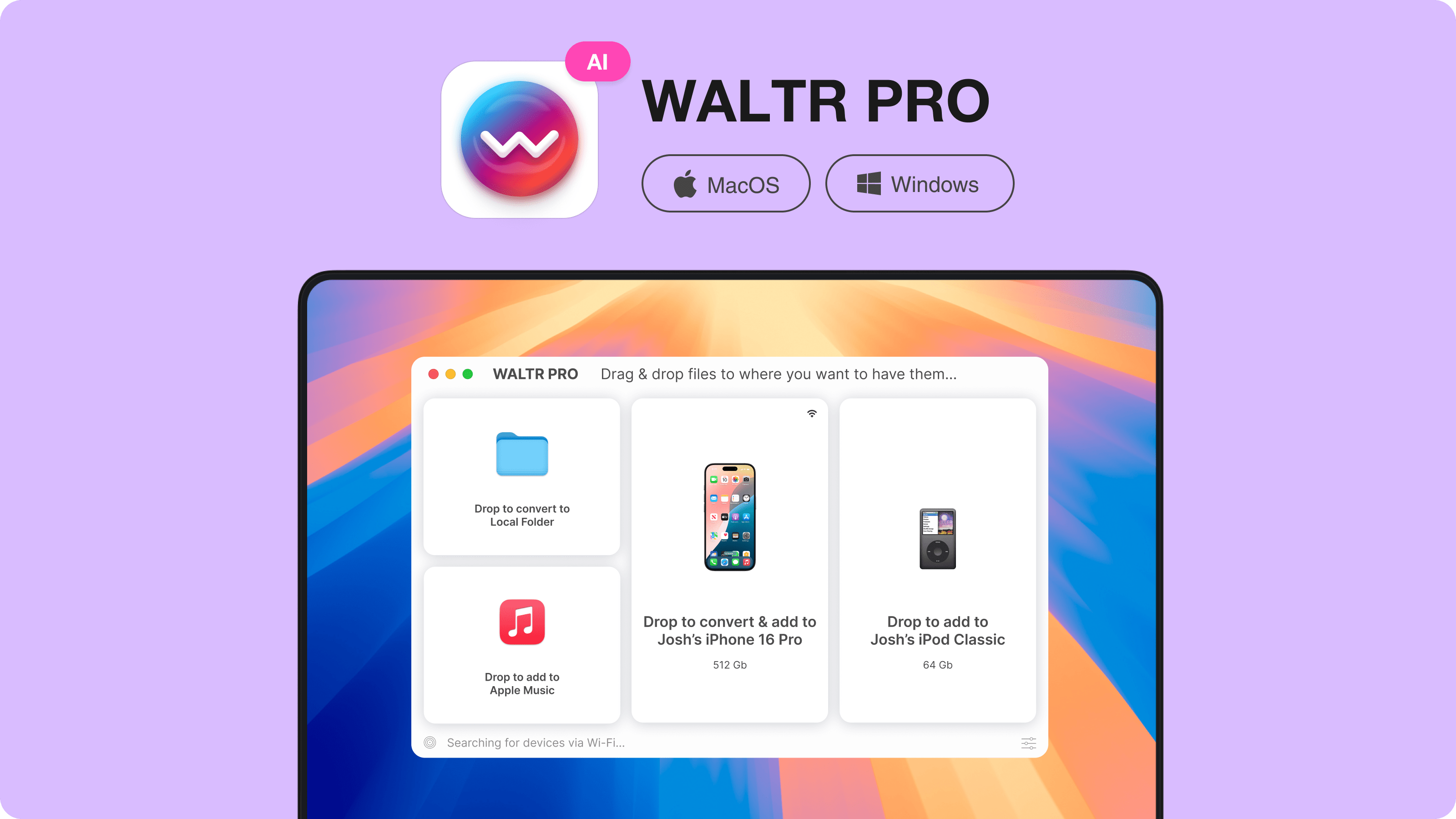
Install WALTR PRO on Mac or Windows. Connect your iPhone or iPad with USB, or use Wi-Fi transfer after setup.
WALTR PRO supports common audio formats including MP3, FLAC, AAC, AIFF, WAV, WMA, OGG, M4R, and more. It also handles videos, PDFs, ringtones, and other files, but this article stays focused on audio.
Step 2: Drag the audio file into WALTR PRO
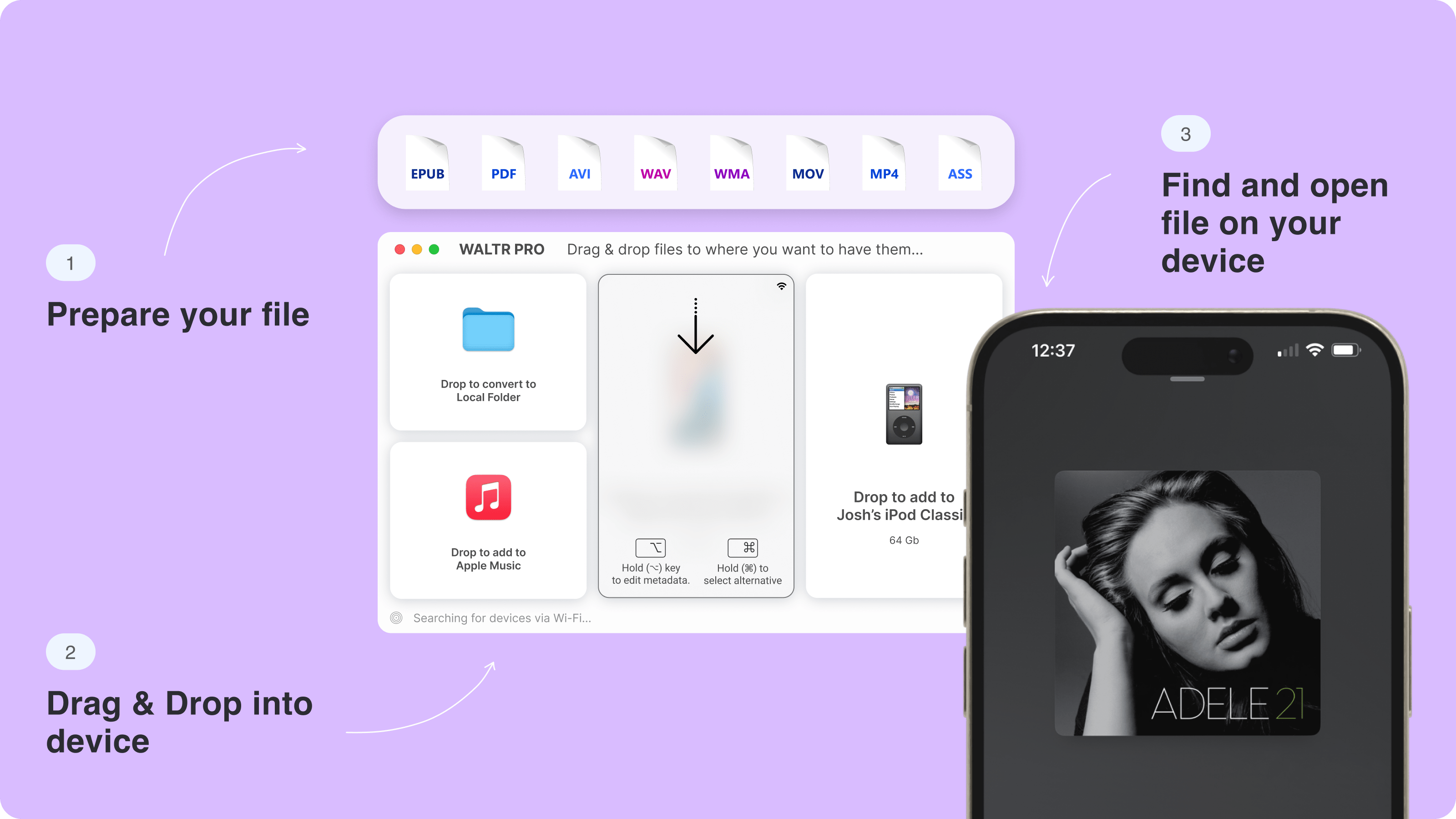
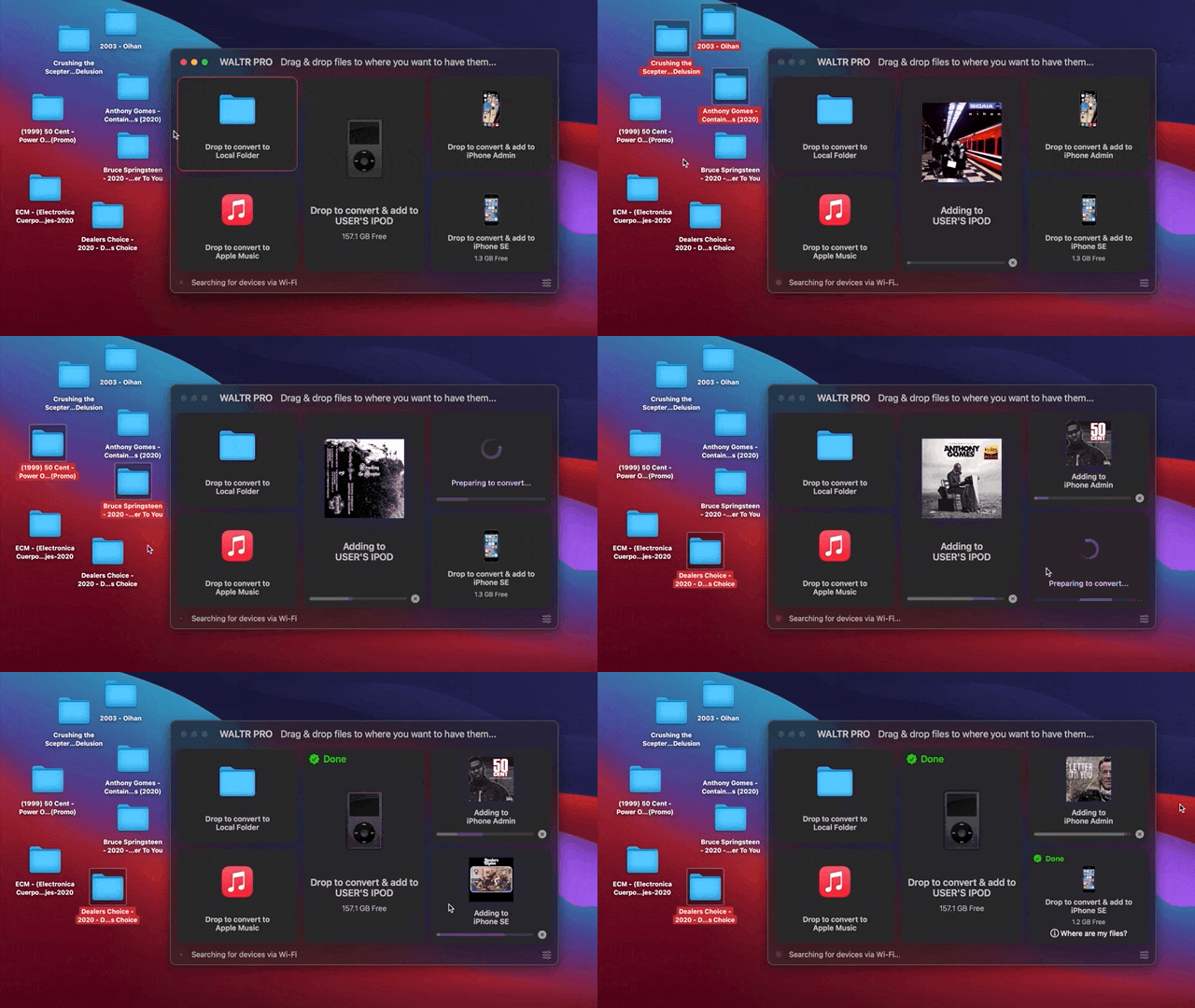
Drop your supported audio file into the WALTR PRO window. WALTR PRO prepares the file for Apple devices and sends it over without the old iTunes sync ritual.
You do not need to rebuild your whole Music library. You do not need to erase existing songs. You do not need to guess which hidden Apple folder accepts the file this week.
Step 3: Play the audio on your Apple device
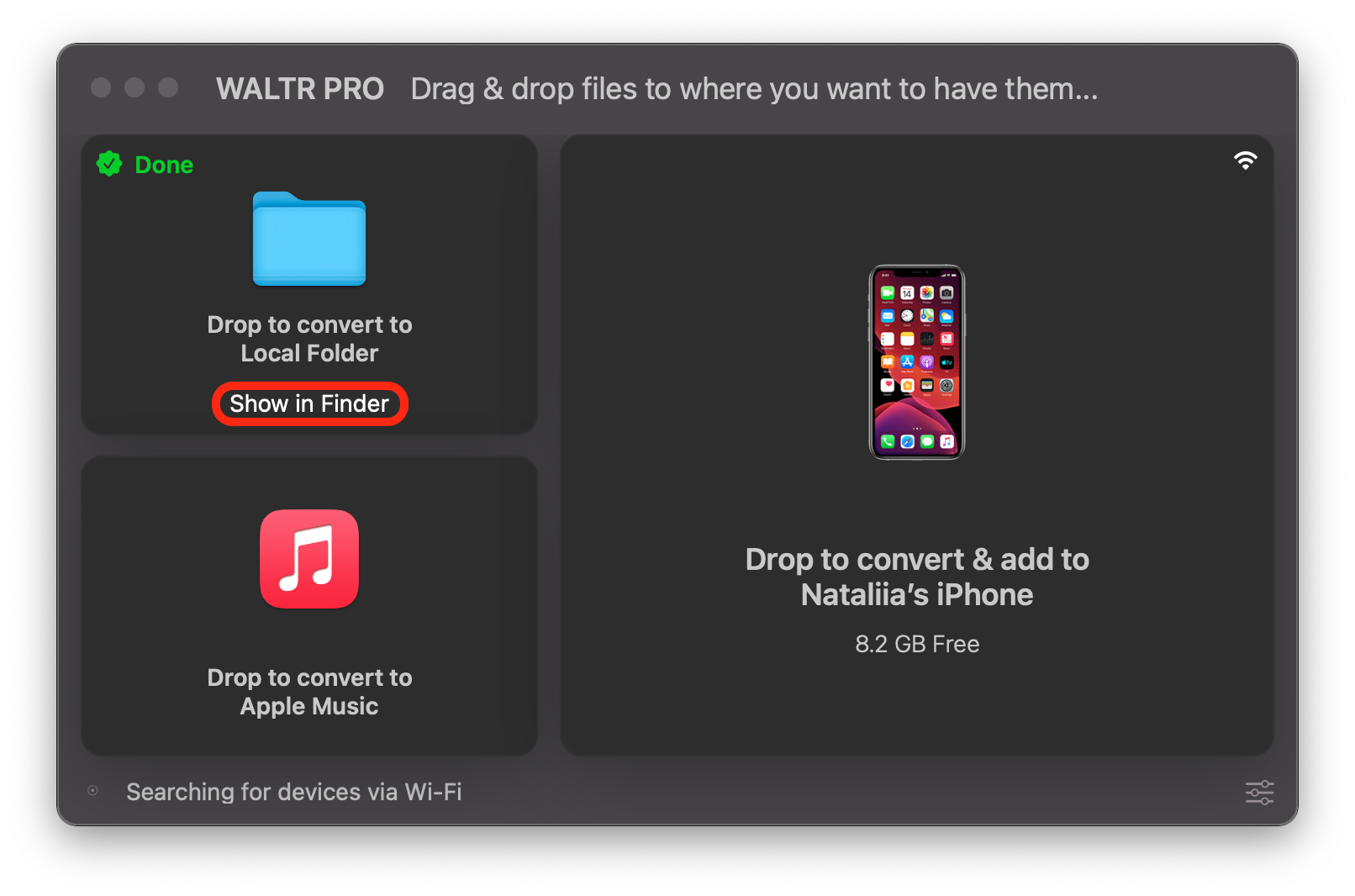
After transfer, check the Music app or the target native app on your iPhone or iPad. Play the file and confirm the title, artist, album, and artwork look right.
WALTR PRO can help with media metadata and artwork. That is useful when you are moving albums, podcasts, lectures, or old files with ugly names like track_07_final_final.mp3.
If you move files between Mac, Windows, and iPhone often, transfer music to iPhone without iTunes is the workflow you want to remember.
MP3 converter settings that matter
Most people only need 3 settings: bitrate, sample rate, and stereo or mono.
Setting | Safe choice | Use it when |
|---|---|---|
128 kbps | Small voice files | Lectures, notes, calls, low-stakes audio |
192 kbps | Balanced voice and casual music | Podcasts, audiobooks, quick sharing |
256 kbps | Good music quality | Everyday listening on phone or computer |
320 kbps | Larger, better file | Music where quality matters but you still need broad compatibility |
44.1 kHz sample rate | Standard music setting | Most songs and albums |
Stereo | Default for music | Songs, live recordings, wide audio |
Mono | Smaller voice files | Interviews, lectures, spoken notes |
Do not upscale bad audio and expect magic. A 64 kbps source file will not become studio-grade because you export it at 320 kbps. You will only get a larger file with the same flaws.
For music, 256 kbps or 320 kbps works well. For voice, 128 kbps or 192 kbps is usually enough.
Online MP3 converter vs desktop MP3 converter
An online tool is best when speed matters more than control. It works well for small files you do not mind uploading.
A desktop tool is better when privacy, batch conversion, large files, or metadata matter. You keep the file local. You also avoid upload limits, ads, failed downloads, and suspicious buttons pretending to be the real download button.
Use this rule:
If you work with older Windows audio files, see Softorino's guide to WMA conversion. If you have Apple AIFF files, the AIFF conversion guide covers that format in more detail.
- Use online conversion for throwaway, non-private files.
- Use desktop conversion for private files, albums, work files, and anything large.
- Use WALTR PRO when the file needs to land on iPhone or iPad without iTunes.
How to keep audio quality after MP3 conversion
Audio conversion always depends on the source file and settings. You cannot make a low-quality source sound better by choosing a higher bitrate.
Use these rules:
Metadata also matters. A good audio file should show the right title, artist, album, track number, and artwork. Without that, your Music app turns into a junk drawer.
- Keep the original file if it is lossless or important.
- Use 256 kbps or 320 kbps for music.
- Use 128 kbps or 192 kbps for voice.
- Do not recompress the same file again unless you have no choice.
- Test one file before converting a full folder.
Troubleshooting MP3 converter problems
The file will not convert
The file may be corrupted, DRM-protected, or unsupported by your app. Try opening it in a media player first. If it will not play there, conversion may not be the problem.
The MP3 has no sound
Check whether the source file has multiple audio tracks or a silent track selected by default. Video files can cause this. Use a desktop app that lets you choose the audio stream.
The MP3 sounds worse than expected
Check the source quality and bitrate. If the source is already compressed, another export can make artifacts easier to hear.
The MP3 is too large
Lower the bitrate. For spoken audio, mono at 128 kbps often cuts file size without ruining the listening experience.
The MP3 plays on Mac but not iPhone
The file may be fine. The transfer workflow may be the issue. Try sending it with WALTR PRO instead of syncing through iTunes, Finder, or Apple Music library import.
If you need to create an MP3 without installing another app, use Softorino's free online MP3 converter. It processes supported audio and video files locally in your browser.
FAQ
What is the best MP3 converter for iPhone?
The best MP3 converter for iPhone depends on the file. Use an online tool for small non-private files, a desktop app for private or batch files, and WALTR PRO when you need to transfer audio to iPhone without iTunes.
Can I convert any audio file to MP3?
You can convert most common audio files, including WAV, M4A, FLAC, WMA, OGG, AIFF, and many video files with audio tracks. DRM-protected, corrupted, or unusual files may fail.
Is MP3 better than M4A for Apple devices?
Not always. M4A/AAC works well on Apple devices and can sound better at the same file size. The older format is better when you need maximum compatibility across Apple, Windows, car stereos, web apps, and older players.
Does converting to MP3 reduce quality?
Yes. This format is lossy. Quality depends on the source file, encoder, and bitrate. Use 256 kbps or 320 kbps for music if you want a good balance between sound and file size.
Should I use an online MP3 converter?
Use an online tool for small files that are not private. Use a desktop app for personal recordings, client files, unreleased music, large videos, or full albums.
How do I transfer converted MP3 files to iPhone without iTunes?
Use WALTR PRO. Connect your iPhone or iPad, drag in the audio file, and WALTR PRO sends it to the Apple-device workflow without forcing a full iTunes or Finder sync.
The simple answer
Use an MP3 converter when compatibility matters. Use a desktop app when privacy or batch conversion matters. Use WALTR PRO when the audio needs to end up on your iPhone or iPad without iTunes turning a simple transfer into a side quest.
If your goal is Apple-device playback, start with the right file and finish with the right transfer tool. Try WALTR PRO and move your audio to iPhone without the sync drama.

WALTR PRO
Convert & Push Any File into Any Apple Device
