How to Convert WMA to MP3 in 2026

Need to convert WMA to MP3? Use an online converter for a small, non-private file. Use VLC or a desktop audio converter if the file is private, large, or part of an old music library. And if your real problem is getting WMA music onto an iPhone or iPad, use WALTR PRO instead of fighting iTunes.
That is the short version.
WMA is a Microsoft audio format. It still shows up in old Windows Media Player libraries, CD rips, backups, and dusty folders named “Music 2009.” MP3 plays in more places, including phones, car stereos, media players, browsers, and most music apps.
This guide covers the cleanest ways to convert WMA to MP3 in 2026, what settings to use, when not to upload your files, and where WALTR PRO fits if Apple-device playback is the real goal.
Quick answer: best WMA to MP3 method by situation
If you want the fastest answer, start here.
Your situation | Best method | Why it works | Watch out for |
|---|---|---|---|
One small WMA file, nothing private | Online WMA to MP3 converter | No install, fast browser workflow | Upload privacy, file-size limits, account prompts |
Private audio, work files, voice notes, client files | VLC | Free, local, no file upload | Interface is not built for batch conversion |
Hundreds of old WMA songs | fre:ac or another desktop batch converter | Better for libraries and metadata | Takes setup time |
You need music on iPhone/iPad/Apple Music | WALTR PRO | Transfers WMA/music files to Apple devices without iTunes | Not a generic WMA-to-MP3 export tool |
Protected old WMA files | Original license/player, then re-rip if legal | DRM may block conversion | Modern converters may fail |
The best WMA to MP3 converter depends on the job. A browser converter is fine for a quick public file. It is a bad choice for a private recording, a client file, or 1,000 old songs.
Before we begin
Download WALTR PRO on Mac or Windows to transfer the finished MP3 file to an iPhone, iPad, or iPod without iTunes. Keep the original WMA until the MP3 plays correctly and its metadata looks right.
WMA vs MP3: what changes when you convert?
WMA stands for Windows Media Audio. Microsoft Support describes .wma files as ASF files containing audio compressed with the Windows Media Audio codec. In plain English: WMA belongs to the Windows Media world.
MP3 is older, messier, and still more useful. It became the common audio format because almost everything can play it. Phones, Macs, Windows PCs, car stereos, smart speakers, DJ apps, and cheap MP3 players usually handle MP3 without drama.
That is why people convert WMA to MP3. They are not chasing a magical quality upgrade. They want the file to open.
What conversion can and cannot fix
Converting WMA to MP3 can fix compatibility. It can help old tracks play on modern devices. It can make a Windows-only audio library easier to move around.
Conversion fixes compatibility. It does not upgrade the original recording. It cannot make a bad recording sound new. It cannot recover audio detail already lost in the source file. And it may not work on DRM-protected WMA files from old music stores.
Both WMA and MP3 are compressed formats. If you convert one compressed format into another, some quality change can happen. For normal listening, good bitrate settings usually make the result sound fine. For archiving, keep the original WMA files too.
Method 1: Convert WMA to MP3 online
Online converters dominate the WMA to MP3 search results because they solve the obvious problem fast. Open a page, upload a WMA file, choose MP3, download the result.
This is the easiest method for one or two small files.
When an online converter makes sense
Use an online WMA to MP3 converter when:
CloudConvert, FreeConvert, Convertio, Zamzar, and similar tools all target this job. Some include bitrate and file-size options. Some support batch uploads. Some add file-size limits or ask for an account when you hit their free limits.
The file is small.
The audio is not private.
You do not want to install software.
You only need a quick MP3 copy.
You are converting from a computer with a stable internet connection.
How to convert WMA to MP3 online
- Open a reputable WMA to MP3 converter.
- Upload your .wma file.
- Choose MP3 as the output format.
- Pick a bitrate if the tool gives you settings.
- Start the conversion.
- Download the MP3 file and play it before deleting anything.
Use 256 kbps MP3 as a safe default. Use 192 kbps if file size matters more than sound. Use 320 kbps if you want the highest common MP3 setting and do not care about a larger file.
Tip
Online converter privacy warning
Uploading audio means handing the file to someone else’s server. That may be fine for an old ringtone. It is not fine for private voice notes, unreleased music, client recordings, legal audio, medical files, or anything you would not email to a stranger.
Warning
Online tools also come with practical friction:
For private or large libraries, use a local converter instead.
- Upload and download time.
- Free file-size limits.
- Batch limits.
- Account prompts.
- Ads or upsells.
- Unclear file-retention policies.
Method 2: Convert WMA to MP3 with VLC
VLC is the best free local option for many people. VideoLAN says VLC supports ASF/WMV/WMA input, WMA audio, MP3, and many other formats. It also says VLC has no spyware, ads, or user tracking.
That makes VLC a good fit when you want to convert WMA to MP3 without uploading files.
How to convert WMA to MP3 in VLC
VLC works well for one-off conversion. It is not the nicest tool for a huge library. The menus feel like they were designed by someone who thinks “muxing” is normal dinner conversation.
Still, VLC is free, local, and trusted. That matters.
- Install VLC from VideoLAN.
- Open VLC.
- Choose Media > Convert / Save on Windows, or File > Convert / Stream on Mac.
- Add your WMA file.
- Choose an MP3 audio profile.
- Pick a destination file name ending in .mp3.
- Start the conversion.
- Open the MP3 file and check the audio before deleting the WMA original.
Method 3: Use a desktop batch converter for old music libraries
If you have hundreds of WMA songs, do not use a browser converter. Uploading a full music library is slow, annoying, and unnecessary.
Use a desktop converter built for batch work. fre:ac is a common free option. Other paid audio converters can also do the job. The point is not the brand. The point is local batch conversion with control over bitrate, file names, and metadata.
Batch conversion checklist
Before converting a whole WMA library, do this:
For most music libraries, 256 kbps MP3 is the sane default. It keeps file sizes reasonable and sounds good enough for normal listening. If the source WMA files are low bitrate, 320 kbps MP3 will not magically improve them. It will mostly make bigger files.
Copy the WMA folder first. Never test on the only copy.
Convert 5 sample songs before running the full library.
Check artist, album, track number, and cover art metadata.
Pick a bitrate once and use it consistently.
Keep the original WMA files until you trust the MP3 library.
Method 4: Move WMA music to iPhone or iPad with WALTR PRO
Sometimes “convert WMA to MP3” is not the real job.
The real job is: “I have old WMA music, and I want it on my iPhone without iTunes ruining my afternoon.”
That is where WALTR PRO fits. WALTR PRO supports WMA music files and can transfer music to Apple Music on iPhone or iPad. It works on macOS and Windows, uses drag and drop, and avoids iTunes syncing.
Do not treat WALTR PRO as a generic WMA-to-MP3 export tool. Use it when your goal is Apple-device playback and transfer. If you need a standalone MP3 file for another player, use one of the MP3 conversion methods above.
Warning
Step 1: Download WALTR PRO
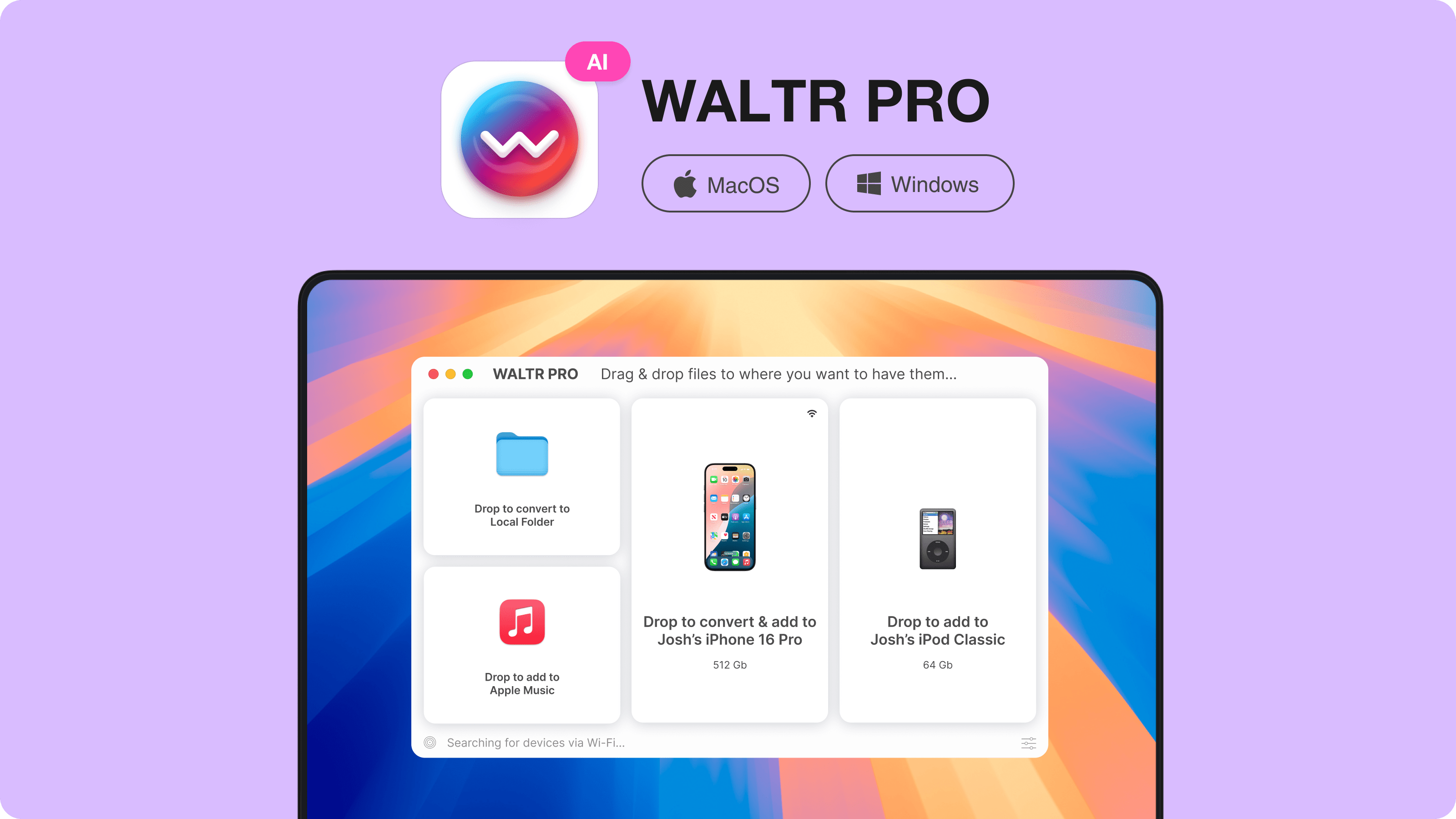
Download WALTR PRO for Mac or Windows from Softorino and install it. Use the free trial if you want to test the workflow before buying.
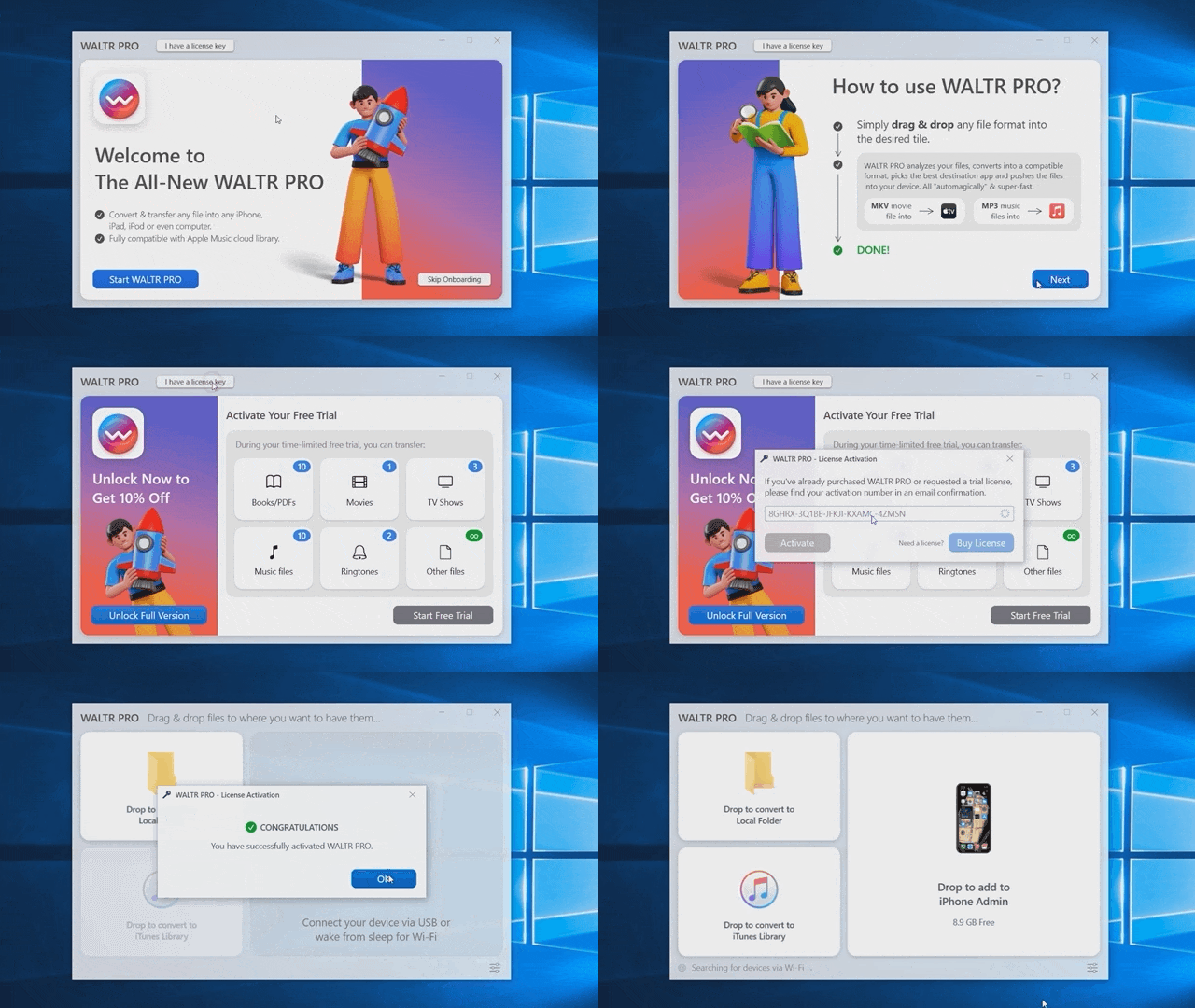
Step 2: Connect your iPhone or iPad
Open WALTR PRO and connect your device by cable or Wi-Fi. Cable is the safer choice for a first transfer, especially with older music files.
If WALTR PRO asks where to send the file, choose the destination that matches your goal. For music, send it to Apple Music when available.
Step 3: Drop in the WMA files
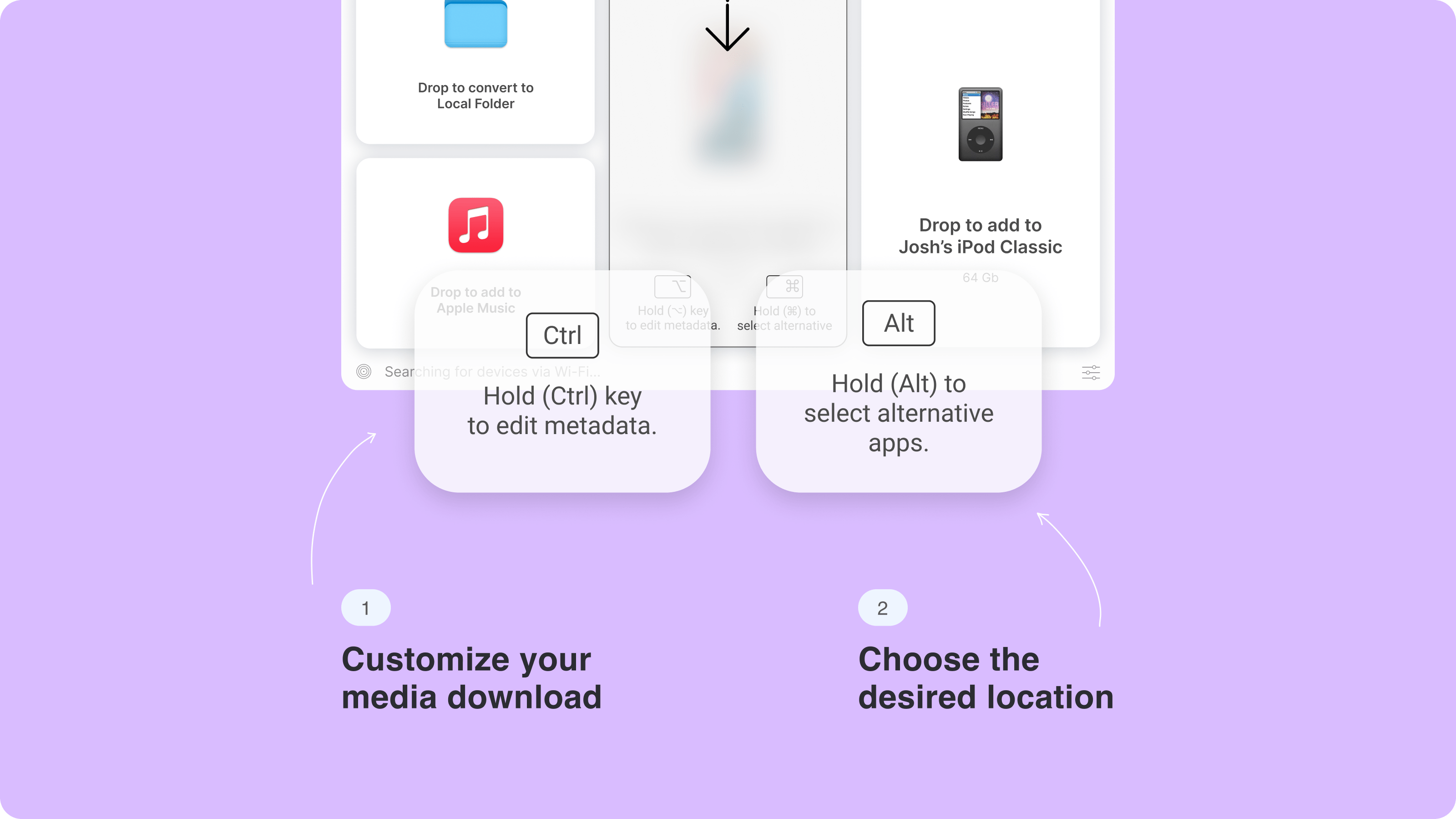
Drag your WMA files into WALTR PRO. The app handles the Apple-device transfer workflow and puts the music where you can play it.
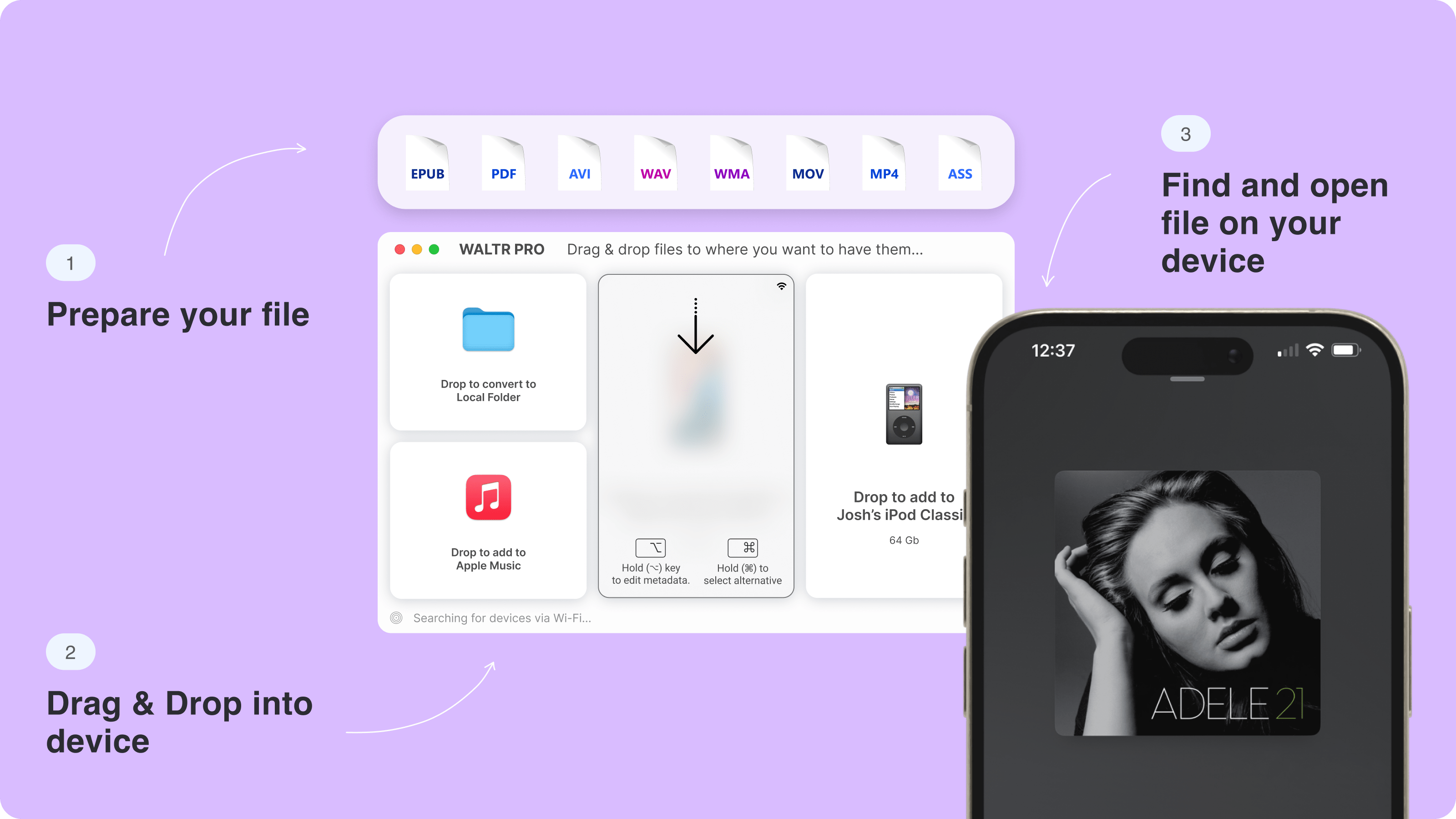
Use this path when you care less about owning a separate MP3 file and more about getting old music onto your iPhone or iPad without iTunes.
Recommended MP3 settings for WMA conversion
Use these defaults unless you have a specific reason not to.
Setting | Best choice | Use it when |
|---|---|---|
192 kbps MP3 | Smaller files | Podcasts, voice notes, casual listening |
256 kbps MP3 | Balanced default | Most music libraries |
320 kbps MP3 | Larger, higher setting | Music where file size does not matter |
VBR | Efficient quality | Your converter supports it and you know what it means |
CBR | Predictable compatibility | You want simple playback across older devices |
Avoid “lossless WMA to MP3” claims. MP3 is a lossy format. WMA often is too. If you need archival quality, keep the original files or convert from the original CD/source into a lossless format like FLAC.
Warning
Why WMA to MP3 conversion fails
WMA files can be annoying because they come from different Windows eras, codecs, and apps. If conversion fails, the converter may not be the only problem.
Common causes:
Try playing the WMA file first. If it will not play anywhere, conversion may fail too. If it plays in VLC, try converting with VLC or another local tool. If it came from an old protected music store, you may need the original authorized player or a legal re-rip from the source CD.
- The WMA file is damaged.
- The file uses DRM protection.
- The converter does not support that WMA variant.
- The file extension is wrong.
- The audio has unusual metadata or embedded album art.
- The app lacks the codec it needs.
Which method should you use?
Use an online WMA to MP3 converter for one small file. It is fast and good enough.
Use VLC when the file is private or you do not want to upload it. VLC is not pretty, but it does the job locally.
Use a batch desktop converter for an old music library. You will save time, keep more control, and avoid uploading hundreds of tracks.
Use WALTR PRO when your real goal is iPhone or iPad playback. It handles the Apple-device transfer problem without iTunes, which is usually the part people hate. If you also need a broader iPhone music walkthrough, Softorino’s guide on how to transfer music from PC to iPhone covers the iTunes-free path in more detail.
For a quick no-install option, use Softorino's free WMA to MP3 converter. The audio is processed locally in your browser rather than uploaded.
FAQ
Can I convert WMA to MP3 for free?
Yes. You can convert WMA to MP3 for free with online converters or local tools like VLC. Use online converters for small non-private files. Use VLC or a desktop converter when privacy, batch conversion, or large files matter.
Is an online WMA to MP3 converter safe?
It depends on the file and the converter. A browser converter can be fine for a harmless audio clip. Do not upload private recordings, client files, unreleased music, or large personal libraries unless you trust the service and understand its file-retention policy.
Can VLC convert WMA to MP3?
Yes, VLC can convert WMA to MP3 in many cases. VideoLAN lists ASF/WMV/WMA input support, WMA audio support, and MP3 support. Use VLC when you want a free local option without uploading your audio.
Can iPhone play WMA files?
Apple devices may reject older or specialized audio formats depending on the app, OS, and file. Apple Support says older or specialized media formats may need a different app or updated software. If the WMA file will not play on iPhone, convert it to MP3/M4A or use WALTR PRO to transfer it into an Apple-friendly workflow.
Does WALTR PRO convert WMA to MP3?
WALTR PRO supports WMA music files and helps transfer them to iPhone, iPad, and Apple Music without iTunes. Do not use it as a generic WMA-to-MP3 export tool. If you need a separate MP3 file, use an online converter, VLC, or a desktop batch converter.
Is WMA better than MP3?
WMA can sound good at small file sizes, especially in older Windows libraries. MP3 wins on compatibility. If you want files that play almost anywhere, MP3 is usually the better practical choice.
Will converting WMA to MP3 reduce quality?
It can. WMA and MP3 are usually lossy formats, so converting between them can change audio quality. Pick 256 kbps MP3 as a balanced default, keep the original WMA files, and do a small test before converting a full library.
What bitrate should I use for WMA to MP3?
Use 256 kbps for most music. Use 192 kbps for speech or smaller files. Use 320 kbps when you want the highest common MP3 setting and file size does not bother you.
Final take
Converting WMA to MP3 is mostly about compatibility. If you need a real MP3 file, use a browser converter for quick public files or VLC/desktop software for private and batch work.
If you are trying to get old WMA music onto an iPhone or iPad, skip the iTunes maze. WALTR PRO is built for that job: drag in the music, send it to your Apple device, and move on with your life.
Try WALTR PRO free if Apple-device transfer is the part you need fixed. Or use the Softorino Universal License if you want WALTR PRO plus the rest of the Softorino toolkit in one subscription.

WALTR PRO
Convert & Push Any File into Any Apple Device
