How to Convert OGA to MP3 or M4A in 2026

Need to convert an OGA to MP3 because your player, phone, car stereo, or editing app refuses the file? Start with the real target. If you need an actual .mp3 file, use a direct converter, VLC, or FFmpeg. If you just want the audio to play on iPhone or iPad, use WALTR PRO and send the Apple-friendly version straight to the device.
That distinction matters. The old version of this article blurred MP3 and M4A. That is how users lose trust. MP3 is the universal answer. M4A is often the better Apple-device answer. This guide shows both paths so you can pick the right one without guessing.
Best OGA to MP3 method: quick answer
Use the method that matches the job. An online converter is fastest for a throwaway file. VLC is safer for a private file. FFmpeg is best for batch work. WALTR PRO is best when the real goal is getting OGA or OGG audio onto an iPhone or iPad without iTunes.
Method | Best for | Output | Privacy | Batch fit | Difficulty |
|---|---|---|---|---|---|
Online converter | Small, non-private files | MP3 | File gets uploaded | Usually limited | Easy |
VLC | Free local conversion on Mac or Windows | MP3 or other formats | Stays on your computer | Weak | Medium |
FFmpeg | Exact MP3 control and batch conversion | MP3 | Stays on your computer | Strong | Hard |
WALTR PRO | Playing OGA/OGG on iPhone or iPad | Apple-friendly transfer, often M4A/AAC | Stays local | Good for device workflows | Easy |
If your search intent is strict MP3 output, choose a method that clearly exports .mp3. If your real problem is “I have this OGA file and I need it on my iPhone,” M4A can be the smarter finish.
Tip
Before we begin
Download WALTR PRO on Mac or Windows to transfer the finished MP3 or M4A file to an iPhone, iPad, or iPod without iTunes. Keep the original OGA or OGG file until you confirm the converted audio plays correctly.
What is an OGA file?
An OGA file is an audio file in the Ogg container family. It often contains Vorbis audio, though Ogg can carry other codecs too. The file is not bad or broken. It is just less common in everyday Apple and Windows workflows.
Xiph describes Ogg Vorbis as an open, non-proprietary, patent-and-royalty-free compressed audio format. That is useful for open-source software, games, Linux apps, and web audio. It is less useful when your iPhone, car stereo, or basic media player expects MP3, AAC, or M4A.
That is why people convert OGA audio. They usually want compatibility, not a fancy audio lesson.
OGA vs OGG vs MP3 vs M4A
OGA and OGG are closely related. In normal search behavior, people use them almost interchangeably. Technically, OGG is the broader container label. OGA usually points to audio-only Ogg content.
Format | What it is | Compatibility | Best use |
|---|---|---|---|
OGA | Audio-only Ogg file | Mixed | Open-source apps, game audio, niche tools |
OGG | Ogg container, often Vorbis audio | Mixed | Web, Linux, open audio workflows |
MP3 | Lossy audio format | Very high | Cars, phones, old players, sharing |
M4A | Usually AAC or ALAC audio in an Apple-friendly container | Very high on Apple devices | iPhone, iPad, Apple Music, modern players |
MP3 wins when you need the file to play almost anywhere. M4A wins when you are staying inside Apple’s world. Apple uses AAC and ALAC in Apple Music, and Apple’s own support docs say lossless files use more storage and data. In plain English: better audio can cost space.
Convert OGA to M4A for iPhone with WALTR PRO
Use WALTR PRO when the goal is not “I need a .mp3 file on my desktop.” Use it when the goal is “I need this OGA or OGG audio on my iPhone or iPad and I do not want to fight iTunes.”
WALTR PRO is a Mac and Windows app from Softorino. It supports OGA, OGG, MP3, FLAC, AAC, AIFF, WAV, WMA, and other music formats. You drag the file in, pick the destination, and WALTR handles the Apple-device path. Music files can land in Apple-friendly destinations like the Music app when the format and workflow fit.
WALTR PRO is the best choice here for Apple-device playback and transfer. Do not present it as the strict MP3 exporter unless you verify that exact output inside the app. For this article, treat it as the easy OGA-to-Apple workflow.
Warning
Step 1: Download and install WALTR PRO
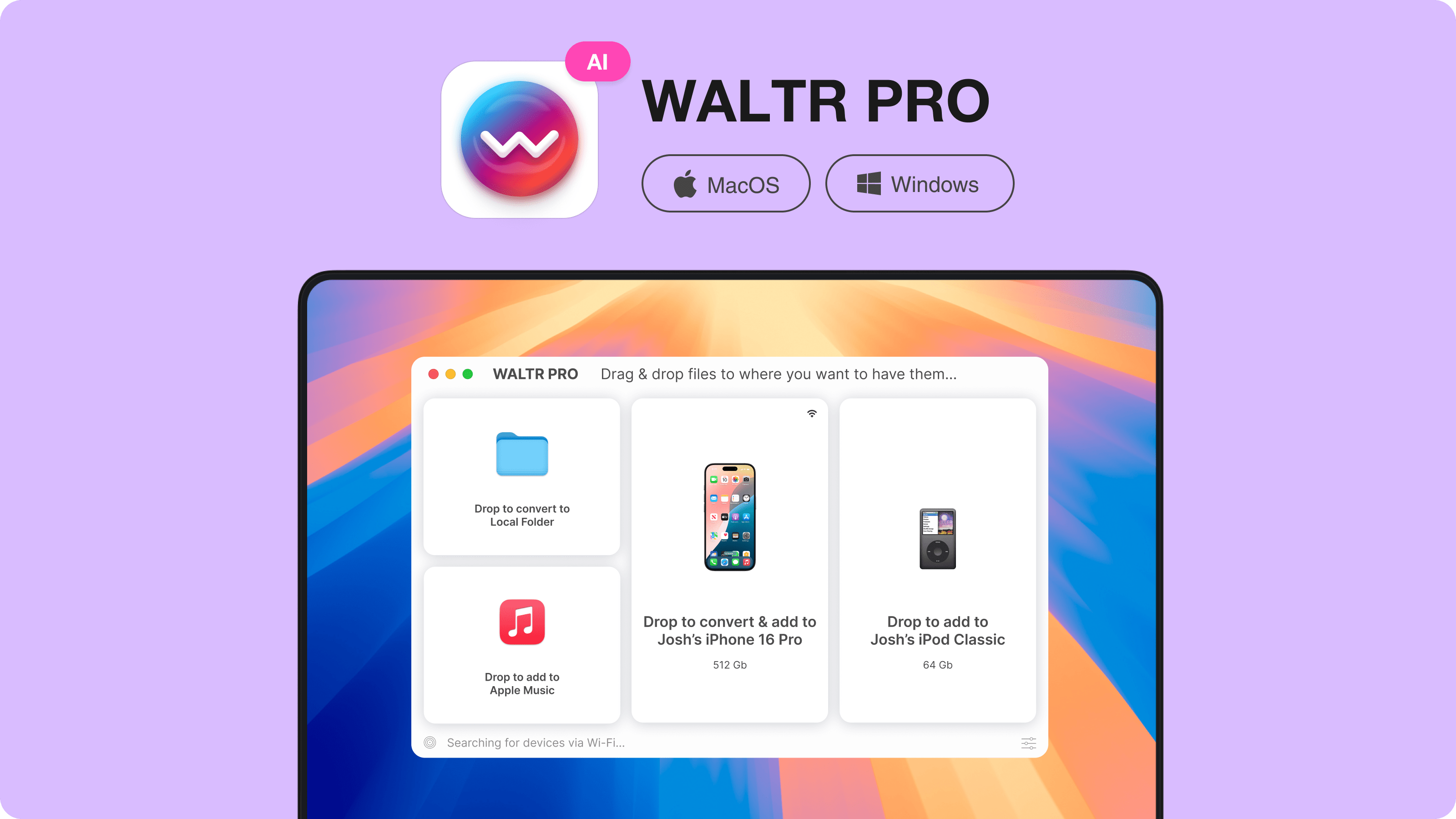
Download WALTR PRO on your Mac or Windows PC. Use the free trial if you want to test one file first. That is the right move before buying any converter.
Open the app and connect your iPhone or iPad with a cable. Wi-Fi transfer can work too, but cable is better for larger audio libraries. Nobody wants a music transfer to feel like a dial-up flashback.
Step 2: Drop your OGA file into WALTR PRO
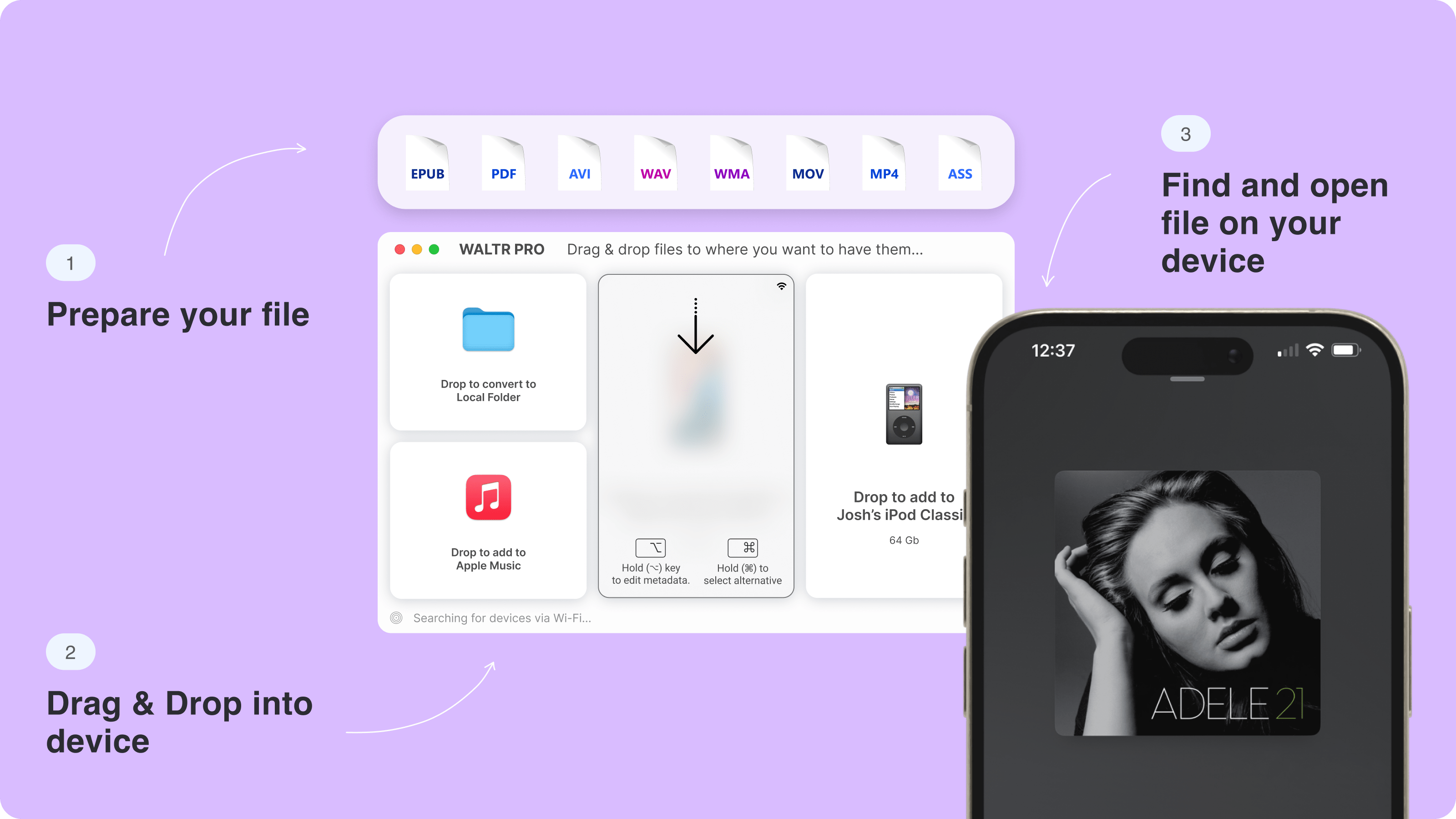
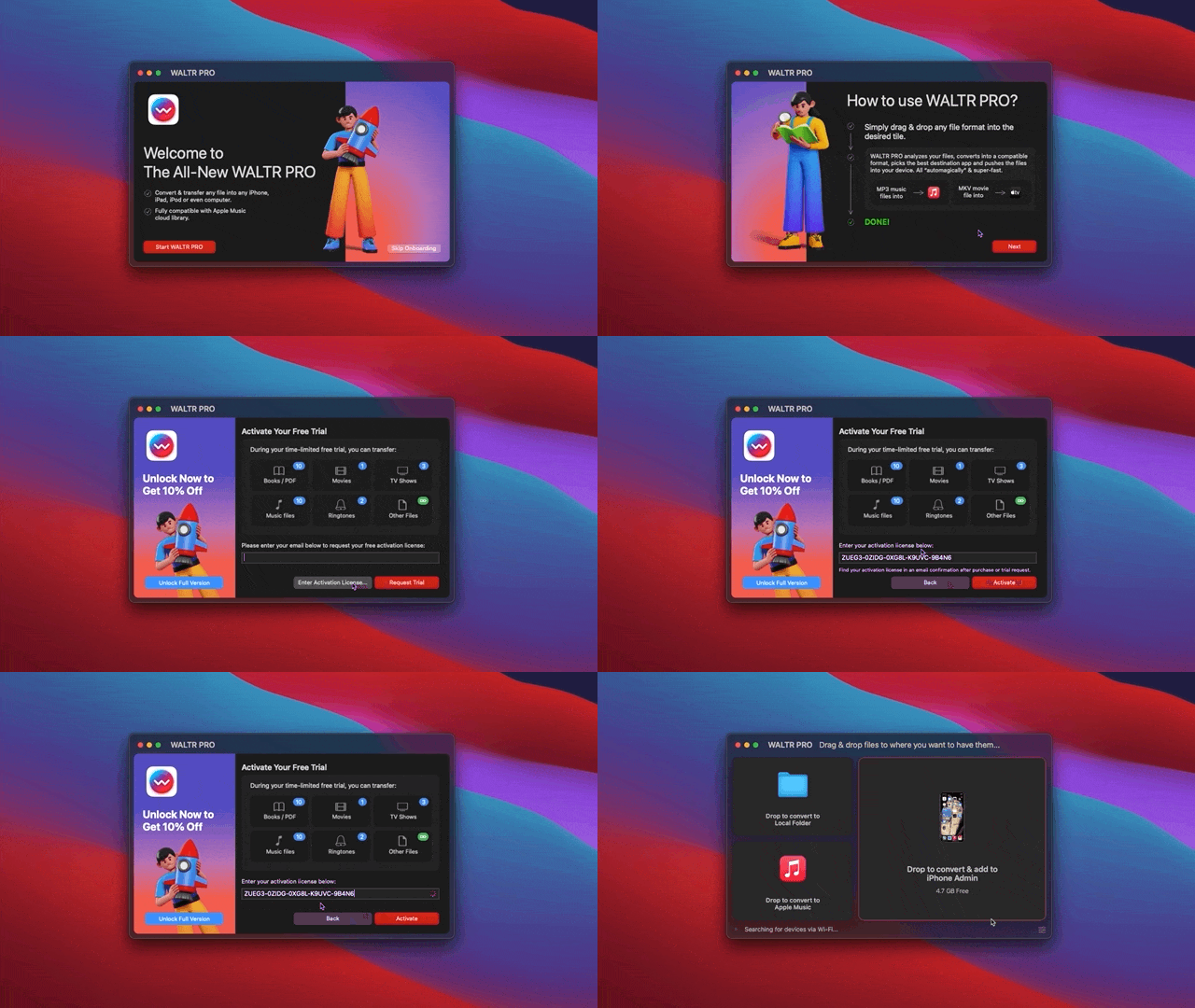
Drag your OGA file into WALTR PRO. If you want it on your iPhone or iPad, choose the device as the destination. If you want a local Apple-friendly file, use the local-folder path when available in your app version.
For Apple playback, M4A/AAC is usually a better target than MP3. It works well with iPhone, iPad, and the Music app. It also avoids the “converted file exists but will not show up where I need it” mess that happens with generic converters.
Keep the original OGA file until you confirm the converted or transferred audio plays correctly. This is boring advice. It is also the advice that saves you from re-downloading old files later.
Step 3: Check the file on your device or computer
After the transfer finishes, open the destination app and play the audio. Check the track title, artwork, and playback. WALTR PRO can handle metadata/artwork workflows, but you should still check important files before deleting the source.
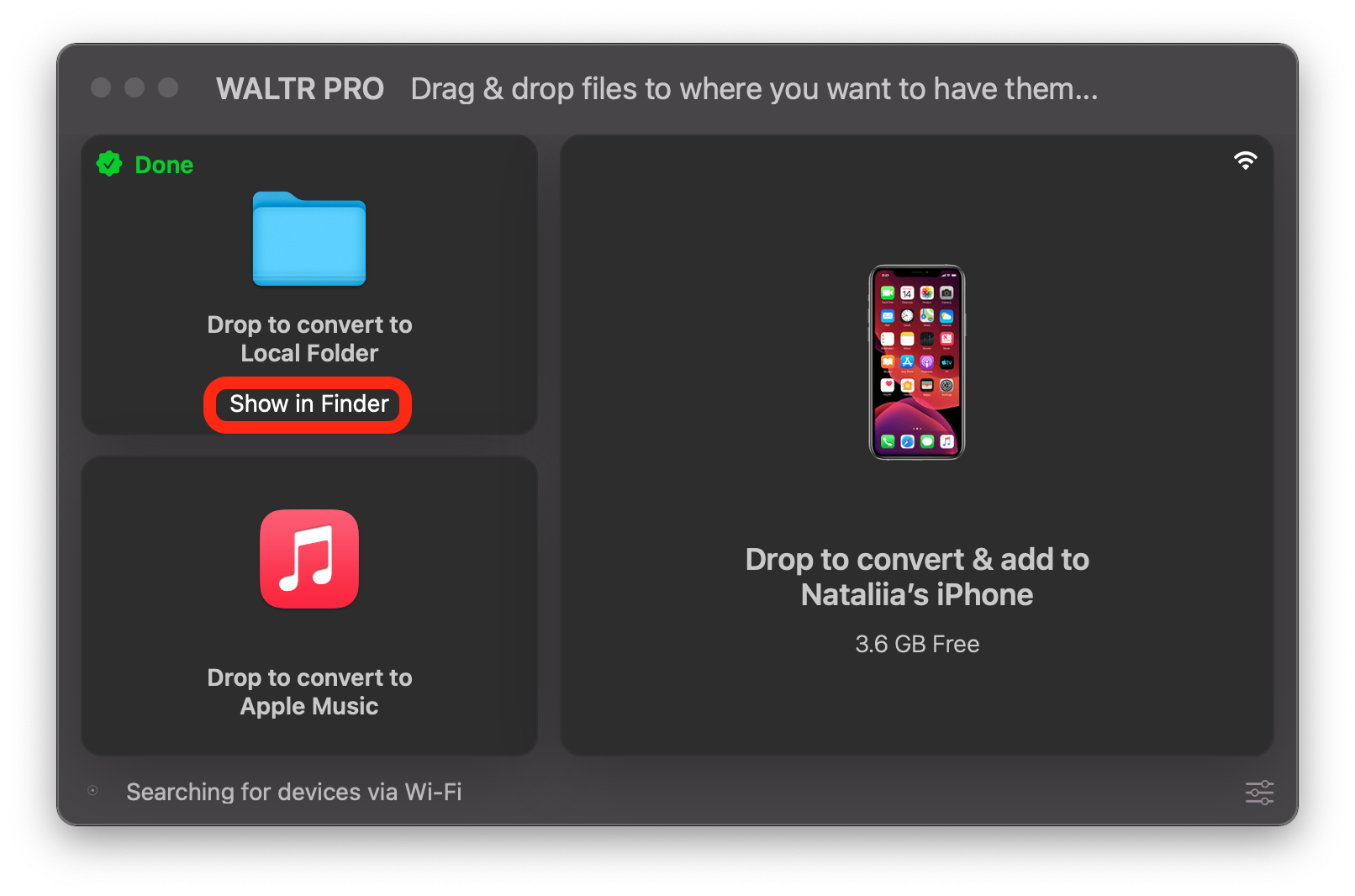
If the file lands correctly, you are done. If you specifically need an MP3 file for a car stereo, old speaker, web upload, or non-Apple device, use one of the strict MP3 methods below.
Convert OGA to MP3 online
Online converters rank everywhere because they solve the job fast. Upload the OGA file, choose MP3, download the converted file. For small files you do not care about, that is fine.
Use an online converter when:
The file is small.
The audio is not private.
You only need one file.
You do not need exact bitrate control.
You can tolerate whatever compression the tool applies.
Do not upload private recordings, unreleased music, client audio, legal files, medical files, or anything you would not email to a stranger. Some converter pages mention SSL or auto-deletion. Fine. You still uploaded the file to someone else’s server.
Warning
For private audio, use VLC or FFmpeg instead. Local conversion is slower to set up, but the file stays on your computer.
Convert OGA to MP3 with VLC
VLC is best known as a media player, but it can also convert audio. VideoLAN says VLC plays files and supports OGG, MP3, AAC, FLAC, ALAC, and many other audio formats. It also says VLC has no spyware, ads, or user tracking.
Use VLC when you want a free local tool and do not want to touch Terminal.
VLC steps for OGA audio
VLC is solid, but its conversion screen is not exactly friendly. If the output sounds wrong or the file does not appear where expected, check the selected profile and filename. For one file, VLC is fine. For 50 files, use FFmpeg.
- Open VLC on Mac or Windows.
- Use the Convert/Save option.
- Add your OGA or OGG file.
- Choose an MP3 audio profile.
- Pick a save location and name the file with .mp3 at the end.
- Start the conversion.
- Play the finished MP3 before deleting the original OGA file.
Convert OGA to MP3 with FFmpeg
FFmpeg is the cleanest answer for power users. It is also the least friendly answer for normal people. That is the tradeoff.
FFmpeg supports broad audio and video conversion workflows, and its docs list LAME/libmp3lame as the standard MP3 encoder path. A common command is: ffmpeg -i input.oga -codec:a libmp3lame -qscale:a 2 output.mp3.
Use FFmpeg when:
If that sentence made your eyes glaze over, use VLC or WALTR PRO. No shame. Terminal is great until it eats your afternoon.
You need exact MP3 output.
You have many OGA or OGG files.
You want repeatable settings.
You are comfortable with Terminal.
You need to control bitrate, quality, sample rate, or filenames.
Will audio conversion reduce quality?
It can. OGA/OGG Vorbis and MP3 are usually lossy formats. When you convert from one lossy format to another, the audio may lose quality. The drop may be tiny. It may also be obvious if the source file was already low bitrate.
Use these rules:
Keep the original OGA or OGG file.
Use a reasonable MP3 quality setting, such as a high variable bitrate.
Avoid converting the same file again and again.
Use M4A/AAC for Apple playback when MP3 is not required.
Test the finished file on the device that actually matters.
The best converter is not the one with the loudest “high quality” promise. It is the one that gives you the format you need without mangling the file.
Tip
When should you choose MP3 vs M4A?
Choose MP3 when compatibility matters most. MP3 is still the safest format for older players, car stereos, websites, Android phones, Windows apps, and random devices you cannot predict.
Choose M4A when you are staying inside Apple devices. M4A with AAC is Apple-friendly, sounds good at practical bitrates, and plays nicely with iPhone, iPad, Mac, and the Music app. If you use Apple Lossless, remember that higher-quality files take more space.
So the decision is simple:
For a related Apple-device workflow, see Softorino’s guide on how to transfer music from computer to iPhone. If you are working with other audio formats, the FLAC to MP3 and WMA to MP3 guides cover similar conversion decisions.
- Need a real .mp3 file? Convert the OGA file with an online tool, VLC, or FFmpeg.
- Need the audio on iPhone or iPad? Use WALTR PRO and let the Apple workflow be the priority.
- Need both? Convert to MP3 first, then transfer the MP3 with WALTR PRO.
FAQ
Is OGA the same as OGG?
Not exactly. OGG is the broader container family. OGA usually means an audio-only Ogg file. In real searches, people often use OGA and OGG together because both can contain Vorbis audio and both can create compatibility problems.
Can iPhone play OGA files?
Native iPhone apps are not the safest place for OGA files. Convert the audio to MP3 or M4A, transfer it with WALTR PRO, or use a third-party player that supports Ogg/Vorbis files.
What is the best converter for OGA audio?
For a small non-private file, an online converter is fastest. For a private file, VLC is the easiest local option. For batch conversion and exact settings, FFmpeg is the best tool. For iPhone or iPad playback, WALTR PRO is the better Softorino workflow.
Can VLC convert OGA files?
Yes. VLC can open OGG/OGA audio and convert it through its Convert/Save workflow. Pick an MP3 audio profile, save the file with an .mp3 extension, and test the output.
What FFmpeg command creates an MP3 from OGA?
Use this command pattern: ffmpeg -i input.oga -codec:a libmp3lame -qscale:a 2 output.mp3. Change the input and output filenames to match your files.
Is an online converter safe?
It depends on the audio. Online tools are fine for small throwaway files. Avoid them for private recordings, client files, unreleased music, or anything sensitive because you have to upload the audio.
Should I choose MP3 or M4A?
Choose MP3 for broad compatibility. Choose M4A for Apple devices when you do not strictly need MP3. If you only want the file on iPhone or iPad, M4A through WALTR PRO is often the cleaner route.
Will conversion lose quality?
It can. OGA/OGG and MP3 are often lossy, so re-encoding can reduce quality. Keep the original, use a decent quality setting, and test the finished file before deleting anything.
Can WALTR PRO make an MP3 from OGA?
Do not treat WALTR PRO as the strict OGA-to-MP3 exporter for this workflow. Use WALTR PRO when you want to move OGA or OGG audio to iPhone or iPad in an Apple-friendly format without iTunes. Use VLC, FFmpeg, or a direct converter when you need an actual .mp3 file.
Final recommendation
If you need a real MP3 file, use VLC for a free local GUI option or FFmpeg for batch conversion. Use an online converter only for small, non-private audio.
If the real problem is Apple playback, do not overthink the MP3 label. Use WALTR PRO, drag in the OGA or OGG file, and send it to your iPhone or iPad without iTunes. Start with the free trial and test it on your own file. If you use more than one Softorino app, the Universal License covers the broader toolkit for about $3/month.

WALTR PRO
Convert & Push Any File into Any Apple Device
