How to Transfer MP4 to iPad Without iTunes in 2026


TL;DR: Need to transfer MP4 to iPad without iTunes? The catch is destination.
Need to transfer MP4 to iPad without iTunes? The fastest path is WALTR PRO if the video is on your Mac or Windows PC and you want it moved to the iPad without sync drama. Free methods work too: AirDrop for quick Mac transfers, Apple Devices or Finder for official file transfer, iCloud Drive for small files, and VLC if you only need playback inside VLC.
The catch is destination. An MP4 can land in Files, VLC, Photos, or an Apple video app depending on the method you choose. Pick the route based on where you want the video to appear and how large the file is.
Quick takeaways
Need to transfer MP4 to iPad without iTunes?
Here is the short version before we get into steps.
Use WALTR PRO when the MP4 is on your computer and you do not want iTunes, Finder sync, or cloud upload loops.
Covered in this guide: Best Ways to Transfer MP4 to iPad.
Before we begin
Download WALTR PRO on Mac or Windows to transfer local MP4 videos to an iPad without iTunes or a cloud upload. Use a cable for the first connection and test one video before moving a large batch.
Best Ways to Transfer MP4 to iPad
Here is the short version before we get into steps.
Method | Best for | Works from | Where the MP4 goes | Main downside |
|---|---|---|---|---|
WALTR PRO | Fast no-iTunes transfer to iPad | Mac or Windows | Native Apple video destination where supported | Paid desktop app |
Apple Devices / Finder | Official Apple transfer | Windows or Mac | App file sharing, synced media, or selected app destination | Still feels like device management |
AirDrop | One quick file from Mac, iPhone, or iPad | Apple devices | Files, Photos, or a compatible app | Not for Windows or big batches |
iCloud Drive / Dropbox / Google Drive | Small files and casual wireless transfer | Any device | Files or the cloud app | Uploads and downloads the same large file |
VLC | Playback-first users | Mac, Windows, network, or cloud | VLC library | Video stays inside VLC |
USB-C drive or adapter | External storage access | USB-C iPads and compatible drives | Files or Photos import flow | Not a native movie library |
If you want the least fiddling, use WALTR PRO. If you want the free Apple route, use Apple Devices on Windows or Finder on Mac. If you only care about playing the file once, AirDrop or VLC may be enough.
Transfer MP4 to iPad with WALTR PRO
Use WALTR PRO when the MP4 is on your computer and you do not want iTunes, Finder sync, or cloud upload loops. It runs on Mac and Windows, connects to your iPad, and moves the video through a drag-and-drop workflow.
This is the strongest fit when you transfer movies often, handle large files, or want WALTR PRO to deal with common media compatibility during transfer. MP4 is a container, so not every file with an .mp4 extension uses iPad-friendly video and audio inside.
WALTR PRO is a desktop app. That is the point: it keeps the transfer local instead of sending personal movie files through a browser converter or cloud storage account.
Step 1: Install WALTR PRO on Mac or Windows
Download WALTR PRO, install it, and open the app. Connect your iPad with a USB cable the first time so the computer and iPad can trust each other.
If iTunes, Finder, or another iOS manager opens in the background, close it before transferring. Two device managers fighting over the same iPad is how boring problems are born.
Step 2: Connect Your iPad
Unlock the iPad and tap Trust This Computer if iPadOS asks. WALTR PRO should detect the device after the trust prompt.
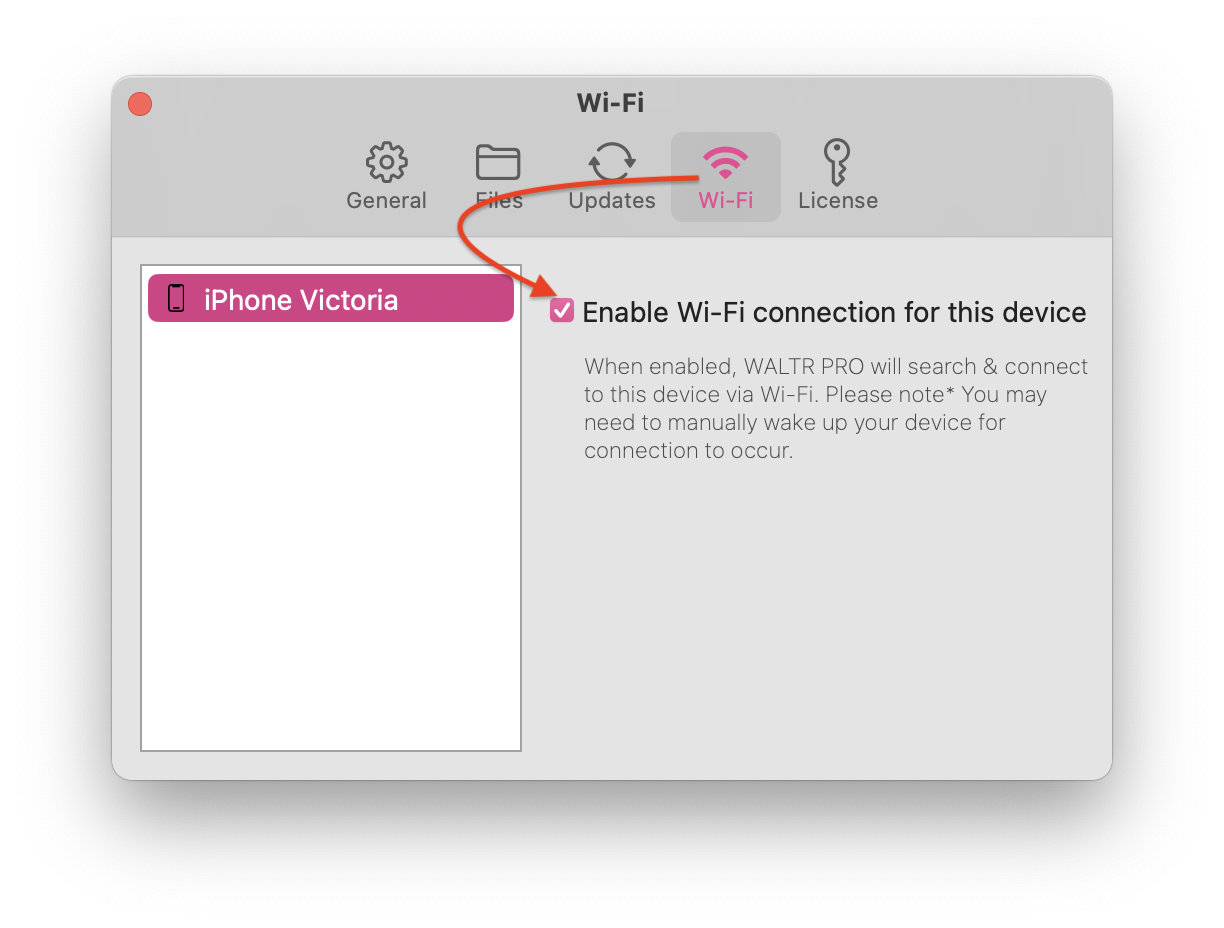
Once the iPad is recognized, you can use USB for large movies. If your setup supports Wi-Fi transfer in WALTR PRO, set it up after the first trusted cable connection. For giant MP4 files, USB is still the calmer choice.
Step 3: Drag the MP4 File into WALTR PRO
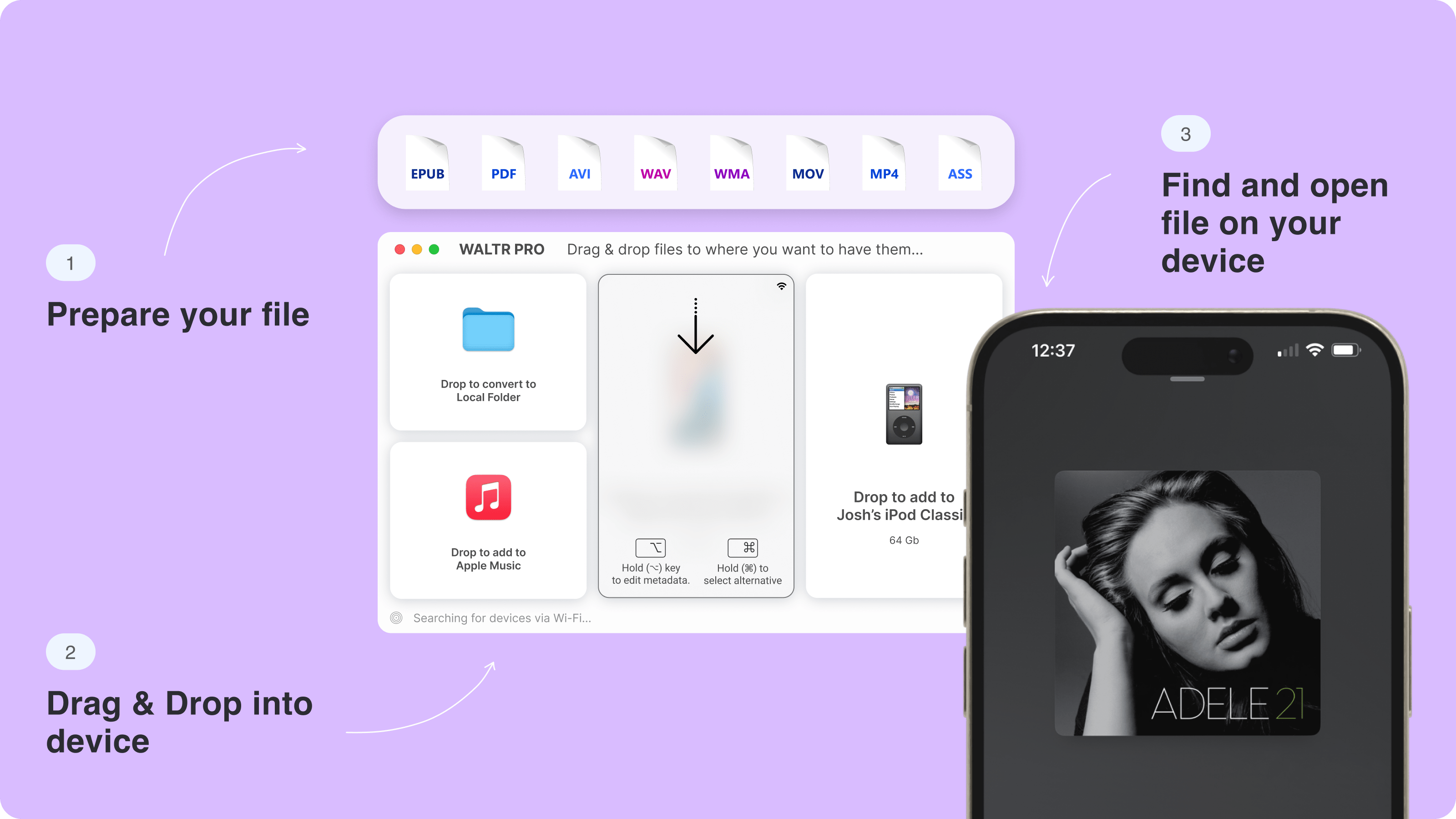
Drag the MP4 from Finder or File Explorer into the WALTR PRO window. You can add more than one file if you are moving a batch.
WALTR PRO handles three jobs in one flow:
Detects the iPad
Transfers the MP4 from Mac or Windows
Handles common media compatibility issues during transfer
Large movies take longer than short clips. Let the transfer finish before you unplug the iPad or quit the app.
Step 4: Open the Video on Your iPad
After transfer, check the iPad's video destination used by the app. On supported setups, WALTR PRO is built for the native Apple media flow rather than a separate third-party player library.
If the file does not appear where you expect, search the iPad's TV/Videos app first, then Files. The exact label can vary by iPadOS version and destination rules, but the goal is the same: you get the video on the iPad without syncing the whole library.
Official Apple Methods: Apple Devices, Finder, and iTunes
Apple's own transfer tools work, but they are not the cleanest answer for everyone. They are best when you want the official route and do not mind app-specific file sharing or sync settings.
Apple now points Windows users toward the Apple Devices app for iPhone and iPad management. Apple says Apple Devices can transfer files between Windows and iPhone, iPad, or iPod touch through supported apps. That matters because the file often lands inside the chosen app, not in one universal video library.
On Windows: Use the Apple Devices App
- Install Apple Devices from Microsoft Store.
- Connect the iPad with a USB cable and trust the computer.
- Open Apple Devices and select your iPad.
- Use the Files section or supported app transfer area.
- Add the MP4 to an app that can store or play it.
- Open that app on the iPad and test playback.
This is free, but it still feels like iTunes with a new coat of paint. You manage the device, pick an app, and hope the destination is the one you wanted.
On Mac: Use Finder or AirDrop
On modern macOS, Finder replaced iTunes for device management. Connect the iPad, select it in Finder, and use the available sync or file-sharing options for apps that accept files.
Finder is fine for people who already understand Apple's sync model. If you searched for how to transfer MP4 to iPad without iTunes, Finder may still feel too close to the thing you were trying to avoid.
Transfer MP4 to iPad Wirelessly with AirDrop
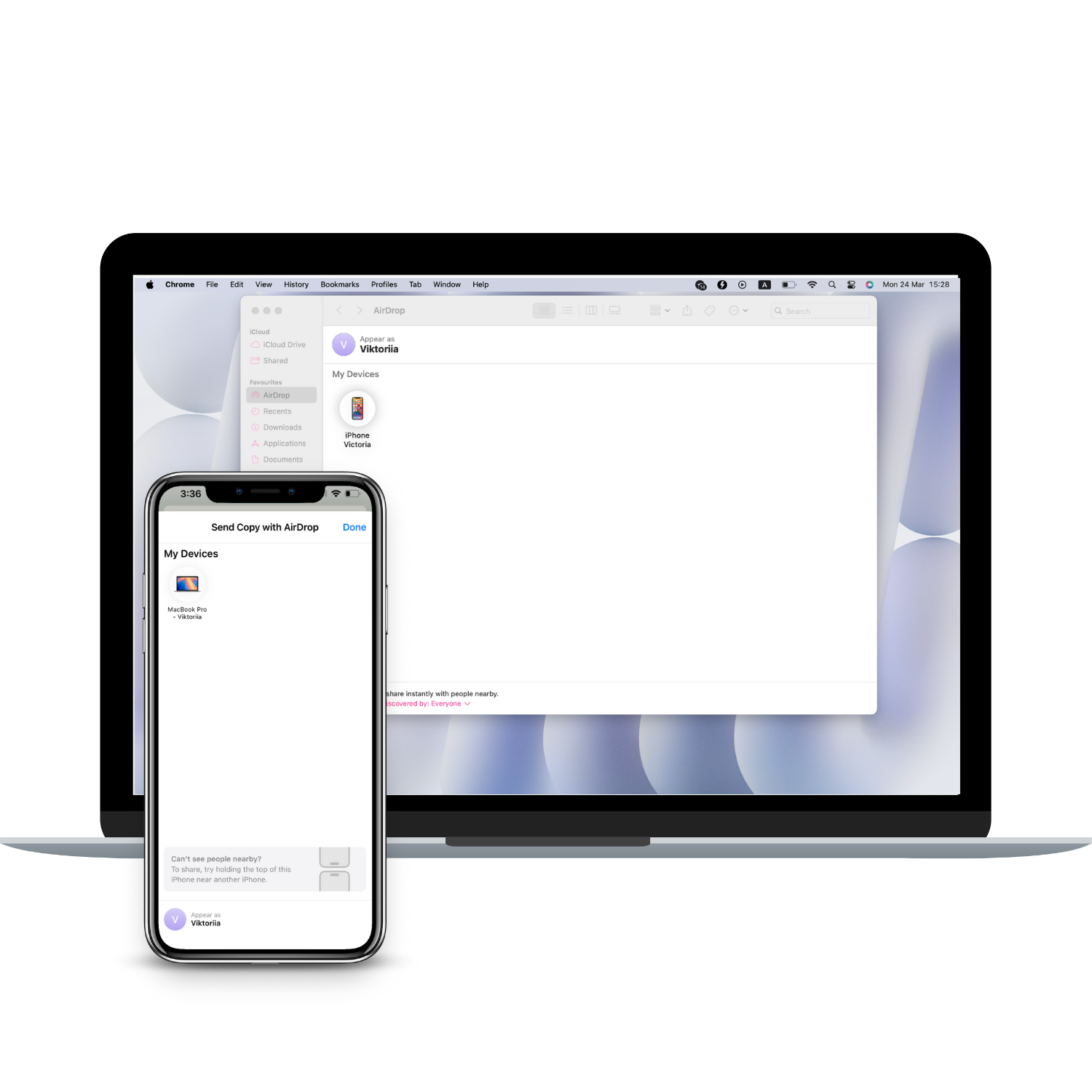
AirDrop is the best free method for one MP4 from Mac to iPad. It avoids cables and cloud storage, and it is built into Apple devices. Apple also documents AirDrop sharing from Mac if you want the official steps.
- Turn on Wi-Fi and Bluetooth on both devices.
- Open Finder on Mac and right-click the MP4 file.
- Choose Share, then AirDrop.
- Pick the iPad.
- Accept the file on the iPad.
- Choose where to open or save it if iPadOS asks.
AirDrop is great for a short clip. It is less fun for a 12 GB movie, a Windows PC, or a whole folder of videos. It also may save the file to Files or another compatible app instead of a native movie library.
Transfer MP4 to iPad with iCloud Drive or Cloud Storage
Cloud storage works when the file is small enough and you already use iCloud Drive, Dropbox, Google Drive, or OneDrive. Upload the MP4 from your computer, then download or make it available offline on the iPad.
- Upload the MP4 to your cloud storage folder.
- Open the same cloud app or Files on iPad.
- Find the MP4.
- Download it for offline playback.
- Open it in Files, Photos, VLC, or another compatible app.
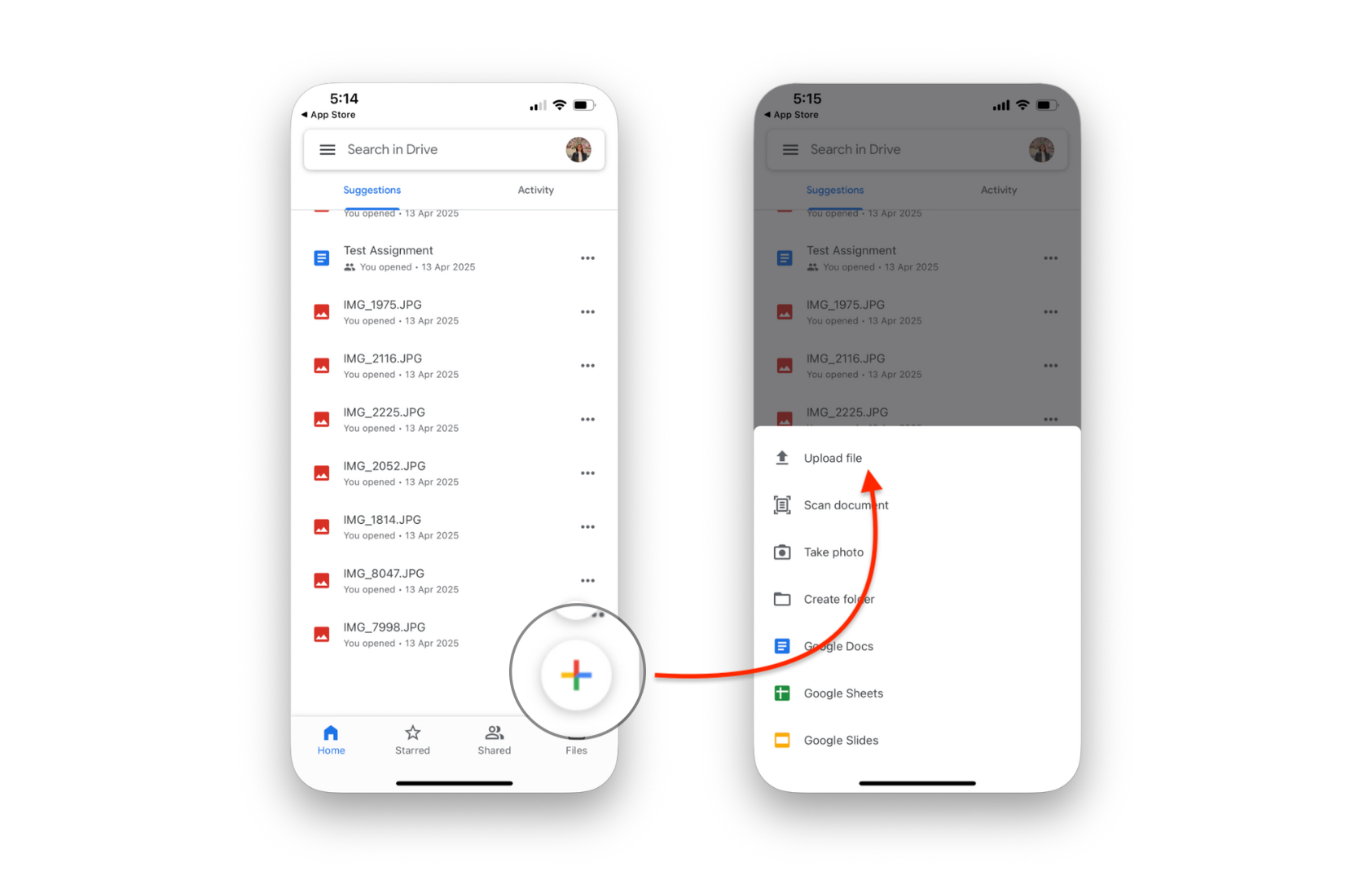
Cloud storage moves the same big movie twice: once up, once down. That is fine for a small clip. It is wasteful for a large movie collection or private files you would rather keep local.
Transfer and Play MP4 on iPad with VLC
VLC is useful when playback matters more than the Apple media library. VLC for iOS can play many video files directly inside the VLC app, including MP4 files that use codecs the native iPad player may dislike.
- Install VLC for Mobile on the iPad.
- Open VLC and use its network, cloud, or Wi-Fi sharing option.
- On your computer, open the upload address shown by VLC if you use Wi-Fi sharing.
- Drag the MP4 into the browser window.
- Wait for the upload to finish.
- Open the video inside VLC on the iPad.
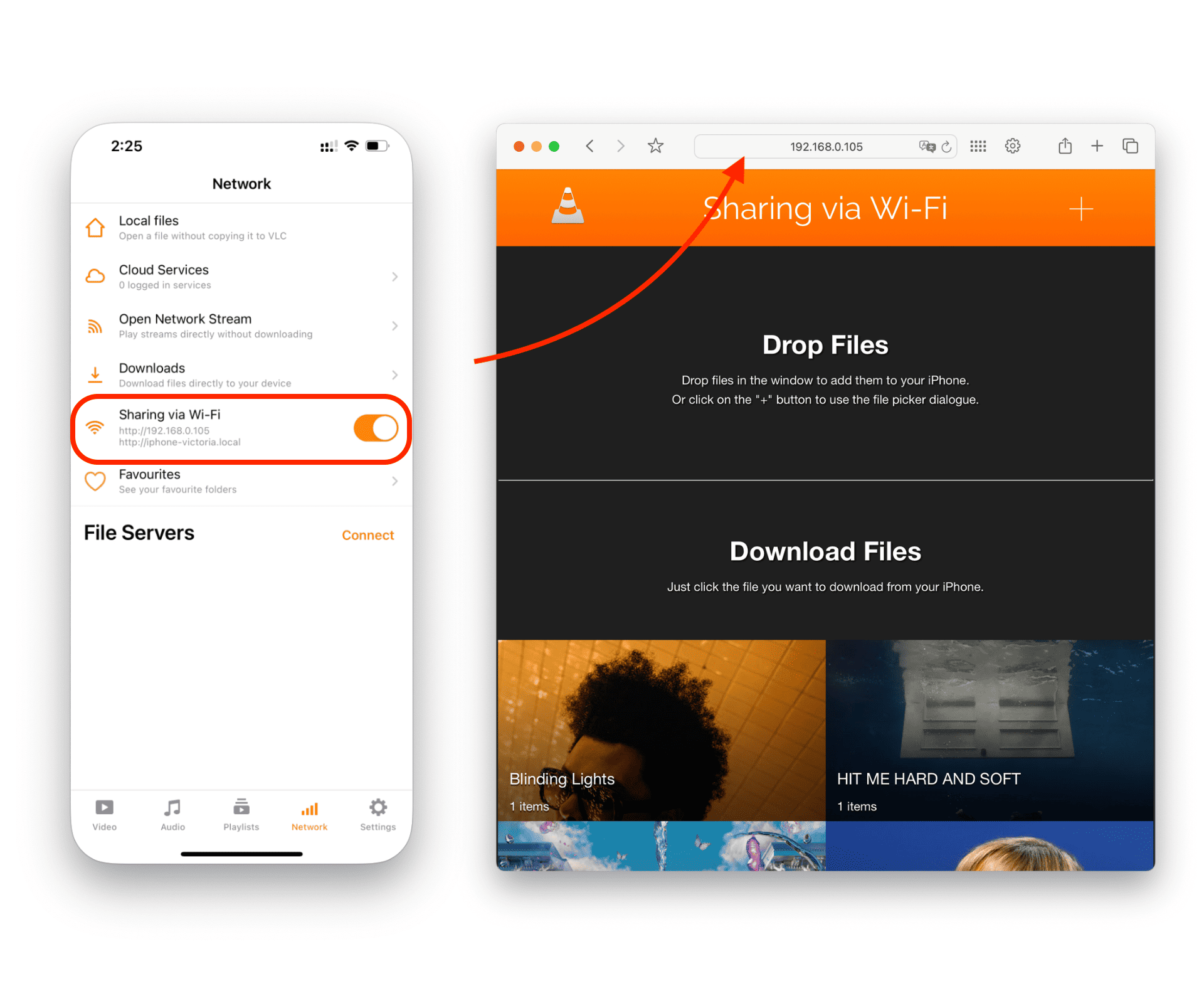
VLC is the practical free answer for odd video files. The tradeoff is simple: the file lives in VLC's library, not in Apple's native video flow.
Use External Storage or a USB-C Drive
If your iPad supports USB-C or you have the right adapter, you can use an external drive for MP4 files. This is useful for travel, cameras, and large files you do not want to copy over Wi-Fi.
Connect the drive, open Files, and browse the video. Some workflows let you import photos and videos from external devices, but this path is closer to file access than library management.
Use this method when you want to carry videos on a drive. Use WALTR PRO or Apple transfer tools when you want the MP4 copied onto the iPad itself.
Why an MP4 Won't Play on iPad After Transfer
An MP4 file is not a promise. MP4 is a container. The video codec, audio codec, file size, DRM status, and destination app decide whether your iPad plays it.
Common reasons MP4 playback fails:
- The video codec inside the MP4 is not iPad-friendly.
- The audio track uses a format the chosen app cannot decode.
- The file is incomplete, corrupted, or still downloading from cloud storage.
- The file is DRM-protected.
- The video landed in Files, but you expected it in a video player app.
- The iPad is low on free storage.
If the MP4 refuses to play, try VLC first to confirm the file itself works. If you want the video in the native Apple flow, transfer it with WALTR PRO from Mac or Windows so the compatibility step happens during transfer.
For other file types, see our guide on how to play MKV on iPhone. The format logic is similar: containers and codecs matter more than the filename.
Which Method Should You Use?
Choose WALTR PRO if you want the cleanest no-iTunes workflow from Mac or Windows. It is the right fit for large MP4 files, repeat transfers, and anyone tired of Apple's sync screens.
Choose AirDrop if you use a Mac and need to send one file quickly. Choose Apple Devices or Finder if you want the official free route and can live with app-specific destinations. Choose iCloud or Dropbox if the file is small and already in cloud storage. Choose VLC if you only care about watching the video inside VLC.
For regular video transfer, download WALTR PRO and move the MP4 directly from your computer to iPad. No iTunes library. No cloud upload. No online converter touching your personal video files.
FAQ
Can you transfer MP4 to iPad?
Yes. You can transfer MP4 to iPad with WALTR PRO, Apple Devices on Windows, Finder on Mac, AirDrop, iCloud Drive, cloud storage apps, VLC, or external storage. The best method depends on the source device and where you want the video to appear.
Does iPad support MP4 files?
iPad supports many MP4 files, but not every MP4. The MP4 extension is only the container. If the video or audio codec inside the file is not supported by the app you use, playback can fail.
Can I transfer MP4 to iPad without iTunes?
Yes. Use WALTR PRO for a drag-and-drop desktop transfer, AirDrop for quick Apple-to-Apple sharing, Finder on modern Mac, Apple Devices on Windows, cloud storage, VLC, or a USB-C drive. iTunes is no longer the only path.
How do I transfer videos from PC to iPad?
For Windows, use WALTR PRO if you want a simple no-sync transfer, or use Apple's Devices app if you want the official free route. Connect the iPad, trust the computer, add the video, then open it in the destination app on iPad.
Why won't my MP4 play on iPad?
The file may use an unsupported video or audio codec, may be incomplete, may be DRM-protected, or may have landed in an app that cannot play it. Try VLC to test playback, or transfer the file with WALTR PRO if you want a local transfer with compatibility handling.
Where do transferred MP4 files go on iPad?
It depends on the method. AirDrop and cloud storage often place files in Files or a compatible app. VLC stores videos inside VLC. Apple Devices and Finder use supported app destinations. WALTR PRO is designed for the native Apple media transfer flow where supported.

WALTR PRO
Convert & Push Any File into Any Apple Device
