OGG to M4A: Convert Audio for iPhone and Apple Music

Need to convert OGG to M4A because Apple Music will not take your file nicely? You have 2 jobs. First, change the OGG file into an Apple-friendly M4A file. Then move it to your iPhone, iPad, or Apple Music library without fighting sync menus.
This guide gives you the quick answer first. You will also see when to use an online OGG to M4A converter, when to use a desktop app, what AAC and ALAC mean, and how WALTR PRO helps when the end goal is an Apple device.
Quick answer: how to convert OGG to M4A
The fastest way to convert OGG to M4A is simple:
That solves the format problem. It does not always solve the Apple-device problem.
If you only need one non-private audio file, an online converter is fine. If the audio is private, large, or part of a full music library, use a local converter. If your real goal is to get music onto an iPhone or iPad, use WALTR PRO after conversion, or let WALTR PRO handle supported audio-transfer workflows without iTunes.
- Open an OGG to M4A converter.
- Add your .ogg file.
- Choose M4A as the output, usually with AAC for everyday Apple playback.
- Convert the file and download the new .m4a version.
- Transfer the M4A file to Apple Music, iPhone, or iPad.
Situation | Best method | Why it works | Watch out for |
|---|---|---|---|
One small, non-private file | Online OGG to M4A converter | Fast and no install | You upload the file to another server |
Private recording or client audio | Local desktop converter | File stays on your computer | Takes a few minutes to set up |
Full album or music library | Desktop batch converter | Handles many files at once | Check metadata before converting everything |
iPhone or iPad transfer | WALTR PRO | Sends music to Apple devices without iTunes sync | Use AAC/M4A for normal playback, not "fake lossless" |
Apple Music library cleanup | Convert to M4A, then transfer | Apple tools work better with AAC/M4A/ALAC | OGG may need conversion first |
If the file contains a voice memo, client call, lecture, unreleased song, or anything private, skip the upload-box converters. Use a local app instead.
Before we begin
Download WALTR PRO on Mac or Windows to convert OGG for Apple playback and transfer it to an iPhone or iPad without iTunes. Test one track first and keep the source file until playback is confirmed.
What OGG and M4A actually mean
OGG is an open audio container commonly used with Vorbis audio. You see it in open-source software, games, web audio, podcasts, and some music libraries. It works in many players, but Apple Music and iTunes-style library workflows do not treat OGG as a first-class format.
M4A is an MPEG-4 audio container. In normal use, an M4A file usually contains AAC audio. AAC is lossy, compact, and friendly to Apple devices. M4A can also contain ALAC, Apple's lossless codec.
That codec detail matters. Converting OGG to M4A does not magically improve the original recording. If the OGG file already used lossy Vorbis compression, the missing audio data is gone. A good conversion can keep the file sounding close to the original, but it cannot restore quality the source no longer has.
AAC inside M4A is the safer default for Apple's own apps. Apple lists AAC and Apple Lossless among the audio formats supported across modern iPhone models in its technical specifications.
OGG vs M4A for Apple devices
Feature | OGG | M4A |
|---|---|---|
Common codec | Vorbis | AAC or ALAC |
Apple Music library fit | Poor without conversion | Strong |
iPhone playback | Works mostly through third-party apps | Works in native Apple workflows |
File size | Usually compact | AAC is compact, ALAC is larger |
Quality | Depends on source bitrate | AAC is lossy, ALAC is lossless |
Metadata and artwork | Can be inconsistent in Apple tools | Better fit for Apple libraries |
The short version: convert OGG to M4A when you care about Apple Music, iPhone transfer, CarPlay, metadata, or a cleaner library. Keep the original OGG file if it is your only source copy.
Convert OGG to M4A with WALTR PRO
WALTR PRO is the Softorino tool for the Apple-device part of this workflow. It runs on Mac and Windows, supports OGG and many other audio formats, and sends music to iPhone or iPad without iTunes.
It is not trying to be another generic upload box. Its job is cleaner: drag in audio, let WALTR PRO handle the Apple-friendly transfer workflow, and avoid the usual Finder/iTunes sync mess.
Use WALTR PRO when you want the converted music to end up on an iPhone or iPad, not stranded in your Downloads folder. It can also help with metadata and artwork, which matters when you move a full music library.
Step 1: Download and install WALTR PRO
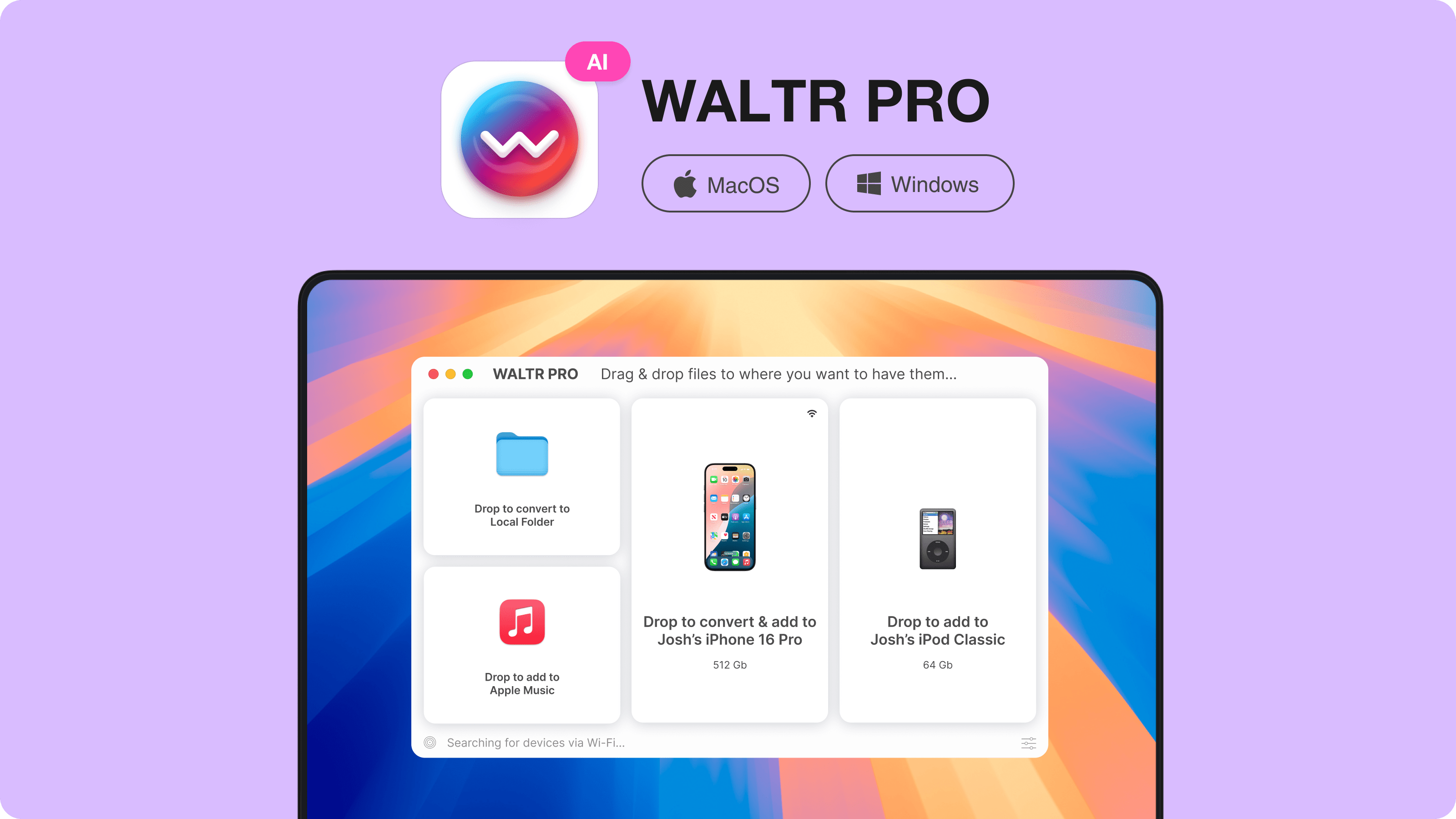
Install WALTR PRO on Mac or Windows. Start with the free trial if you only want to test the OGG to M4A workflow before buying anything.
Open the app and finish the short setup. If you plan to transfer music to an iPhone or iPad, keep your device nearby.
Step 2: Connect your iPhone or iPad
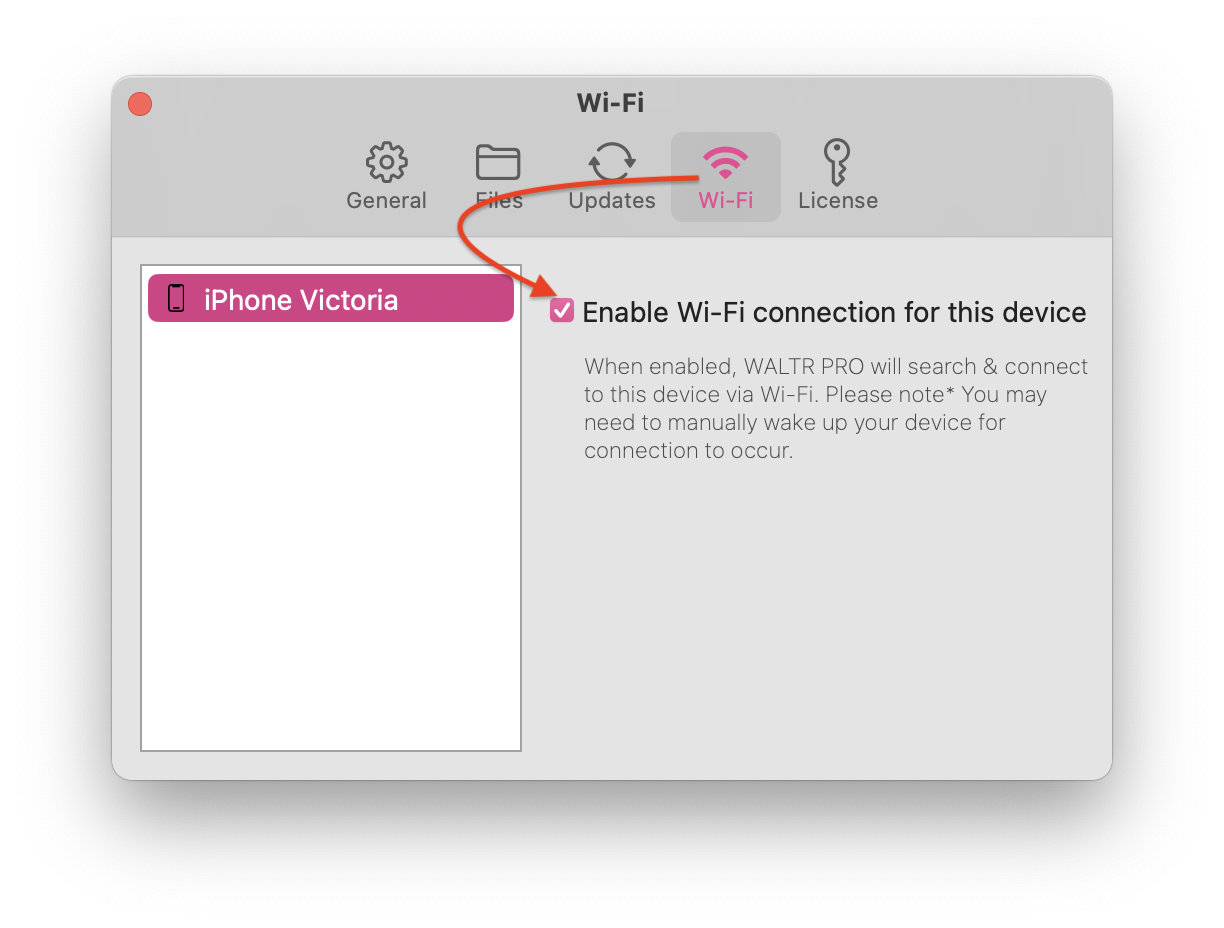
Connect the device with USB for the first setup. After that, WALTR PRO can transfer over Wi-Fi when both devices are on the same network.
- Unlock your iPhone or iPad.
- Connect it to your Mac or Windows PC.
- Trust the computer if iOS asks.
- Open WALTR PRO and wait for the device to appear.
- Enable Wi-Fi transfer if you want to sync iPhone over Wi-Fi later.
Step 3: Add the OGG or M4A file
Drag the audio file into WALTR PRO. If your workflow uses a separate converter first, drag the finished M4A file. If WALTR PRO supports the source file in your setup, you can use it as part of the transfer flow.
- Click Select Files or drag the file into the WALTR PRO window.
- Let WALTR PRO read the file.
- Check the track name, artist, album, and artwork when available.
- Send the audio to your connected Apple device.
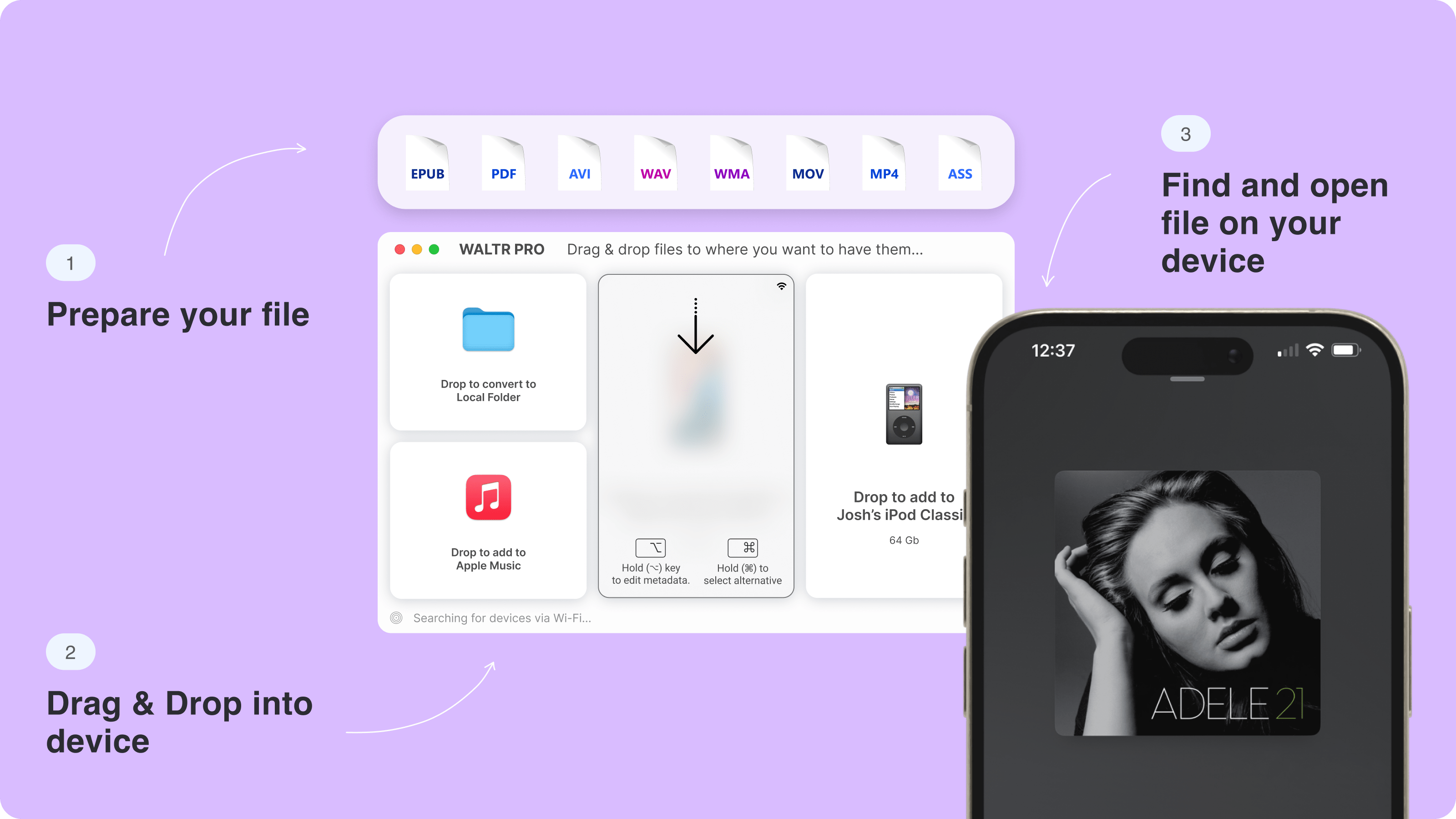
The payoff is the transfer. You do not need to open iTunes, build a sync library, or wonder why one track disappeared after the next sync.
When an online OGG to M4A converter is enough
Online converters win on speed. You open the page, upload an OGG file, choose M4A, and download the result. For one harmless file, that is hard to beat.
Use an online converter when:
Do not use an online converter when the file is private, huge, copyrighted in a way you do not control, or part of a large library. Many online tools have file-size limits, slower queues, upload rules, and deletion windows. Some are clean. Some are ad soup. Read the page before sending anything personal.
A desktop converter is better for batches. A transfer tool like WALTR PRO is better when your next step is iPhone or iPad playback.
- The file is small.
- The audio is not private.
- You only need one or 2 conversions.
- You do not care about library metadata.
- You want the quickest possible OGG to M4A result.
Best OGG to M4A settings
For most Apple-device use, choose M4A with AAC. It gives you a practical balance: small file size, broad Apple support, and good perceived audio quality.
Use these settings as a sane starting point:
Setting | Recommended choice | Why |
|---|---|---|
Output format | M4A | Apple-friendly container |
Codec | AAC | Best everyday choice for iPhone and Apple Music |
Bitrate | 256 kbps | Strong quality without huge files |
Sample rate | Keep original, often 44.1 kHz | Avoids needless resampling |
Channels | Keep original | Preserves stereo or mono layout |
Metadata | Keep or edit before transfer | Helps Apple Music sort tracks correctly |
Use ALAC only when you have a reason. If your OGG file came from a lossy source, converting it to ALAC creates a bigger file, not a better recording. ALAC preserves what remains, but it cannot bring back data removed during the original encode.
Can Apple Music or iTunes convert OGG to M4A?
Apple's Music app can convert supported files to AAC, MP3, AIFF, WAV, or Apple Lossless. The problem is OGG. Apple Music and older iTunes workflows usually do not import OGG directly in a way that feels native.
So the built-in Apple route often looks like this:
- Convert OGG to a supported format first.
- Add the converted file to Music or iTunes.
- Use Music or iTunes conversion settings if you need a second format.
- Sync or transfer the result to your device.
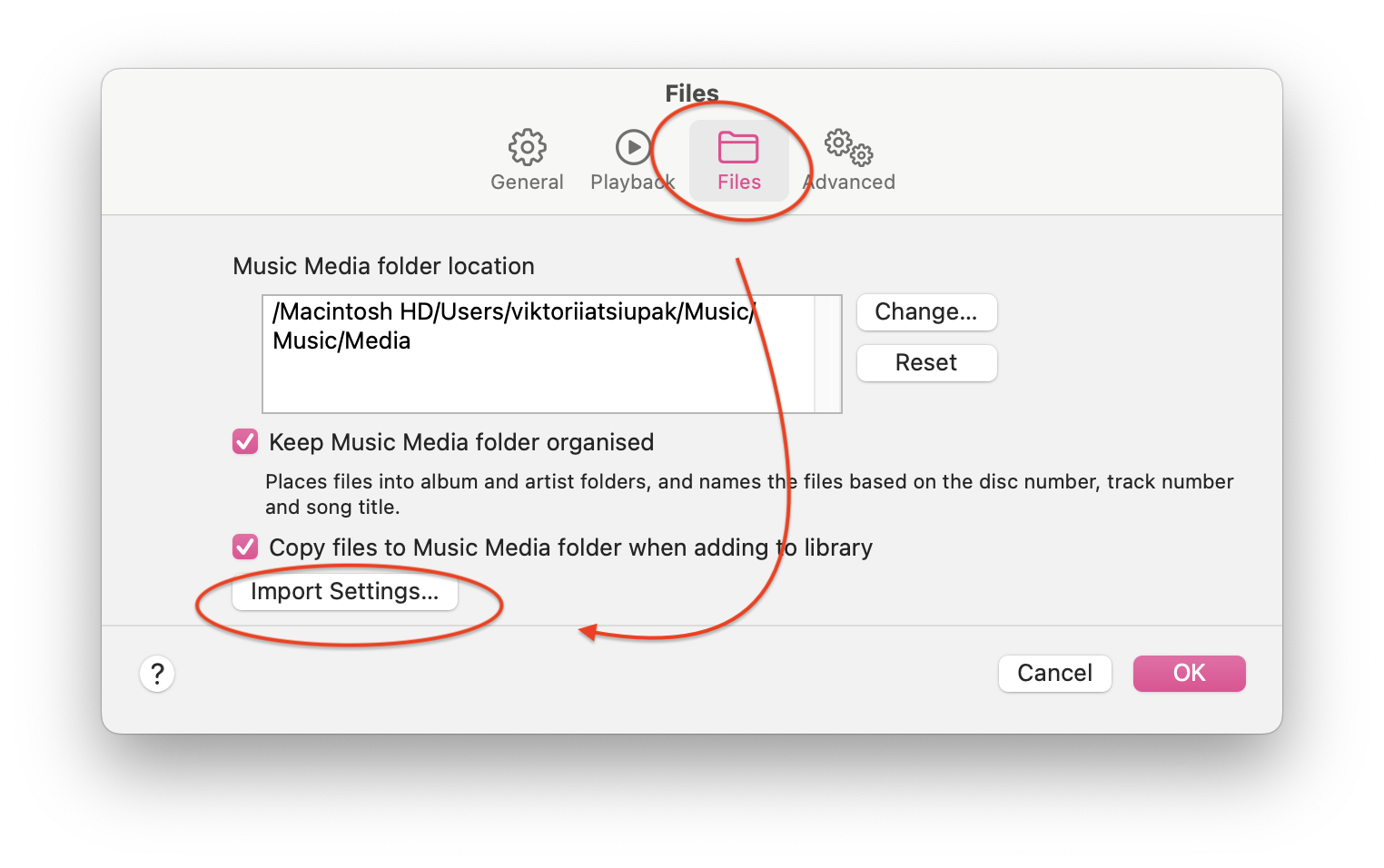
That works, but it is clunky. If you already have the M4A file, WALTR PRO is usually the cleaner way to move it to iPhone or iPad.
Can Finder convert OGG to M4A on Mac?
Finder has an Encode Selected Audio Files action on some macOS setups. It is useful for supported source formats like AIFF or WAV. It is not a reliable answer for OGG files.
- Right-click a supported audio file in Finder.
- Choose Encode Selected Audio Files if the option appears.
- Pick a quality setting.
- Save the new file.
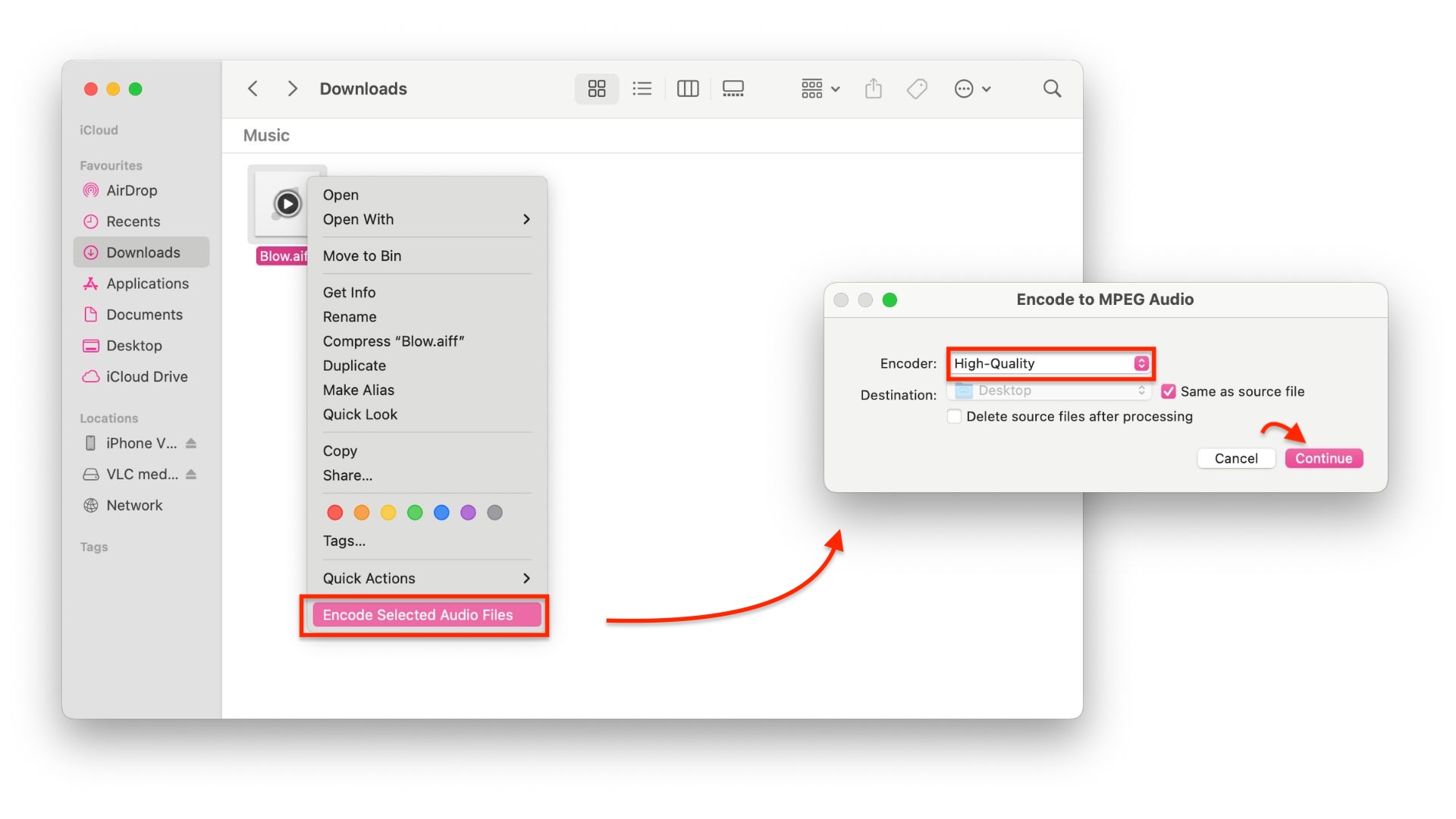
If you do not see the encode option, or macOS refuses the OGG file, use a desktop converter first. Then use WALTR PRO if the destination is your iPhone or iPad.
What about iTunes on Windows?
iTunes on Windows can convert files it already supports. It is not a clean OGG to M4A converter. Windows users usually need to convert the OGG file first, then bring the converted file into iTunes.
- Open iTunes on Windows.
- Go to Edit > Preferences > General > Import Settings.
- Choose AAC Encoder.
- Add a supported audio file to the library.
- Select the file, then choose File > Convert > Create AAC Version.
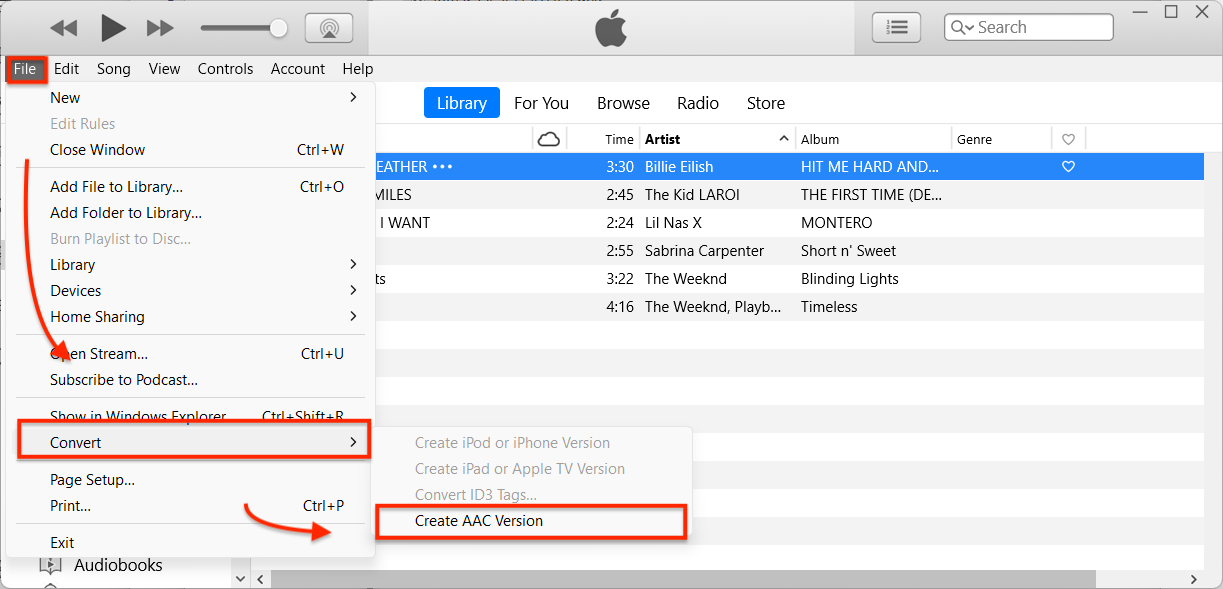
That is a lot of ceremony for one song. If you mainly want music on an iPhone, WALTR PRO avoids the iTunes library detour.
Troubleshooting OGG to M4A conversion
The M4A file will not play on iPhone
Check the codec. M4A is the container, not the codec. Use AAC for normal iPhone playback. If the converter created a strange codec inside an M4A wrapper, Apple apps may reject it.
The converted file sounds worse
Do not re-encode more than needed. OGG/Vorbis is usually already lossy. Converting it to AAC adds another lossy step. Use a higher AAC bitrate, such as 256 kbps, and keep the original OGG as backup.
The file is huge after conversion
You may have chosen ALAC. ALAC is lossless, so files are larger. For normal listening, AAC inside M4A is usually the better choice.
The song appears with missing artwork or wrong metadata
Edit metadata before transfer. WALTR PRO can help fill or improve artwork and track data during the Apple-device workflow. That is useful for albums and older music folders.
The online converter fails
Try a local converter. Online tools can fail because of file size limits, upload timeouts, browser issues, or unsupported OGG variants. If the source file is corrupt, no converter will fix it reliably.
Best way to play OGG on iPhone
You have 2 practical choices.
The first choice is a third-party iPhone player that supports OGG. That can work if you only need playback inside that app. It is less useful if you want the track in Apple Music, playlists, CarPlay, or your normal music library.
The second choice is to convert OGG to M4A/AAC and transfer the result. That is the cleaner Apple ecosystem route. It also keeps your music where you expect it to be.
If you already manage audio on iPhone, read Softorino's guide on how to add music to iPhone. If you have FLAC files too, the FLAC to M4A guide covers the lossless side in more detail.
Final take
Convert OGG to M4A when you want Apple-friendly playback, cleaner metadata, and fewer weird library problems. Use AAC inside M4A for everyday listening. Use ALAC only when the source and storage tradeoff make sense.
Online OGG to M4A converters are fine for quick, non-private files. Local converters are safer for batches and private audio. WALTR PRO is the better fit when the job ends with music on your iPhone or iPad.
Try WALTR PRO if you want to move audio to Apple devices without iTunes. If you use more than one Softorino app, the Universal License covers the core toolkit for about $3/month.
FAQ
Is OGG compatible with iPhone?
OGG can play on iPhone through some third-party apps, but it is not a clean Apple Music or iTunes library format. Convert OGG to M4A/AAC if you want the file in a normal Apple music workflow.
Is M4A better than OGG?
M4A is better for Apple compatibility. OGG can be fine for open-source players and web workflows. If you use iPhone, iPad, Apple Music, or CarPlay, M4A usually creates fewer problems.
Should I convert OGG to AAC or ALAC?
Choose AAC for everyday listening and smaller files. Choose ALAC only when you need a lossless Apple format and your source quality justifies the larger file. Converting lossy OGG to ALAC does not restore lost detail.
Are online OGG to M4A converters safe?
They can be safe for small, non-private files, but you are still uploading audio to someone else's server. Use a desktop converter for private recordings, client audio, unreleased music, or large batches.
Can WALTR PRO convert OGG to M4A?
WALTR PRO is best framed as an Apple-device transfer and conversion workflow tool. It supports OGG and many other audio formats, then helps send music to iPhone or iPad without iTunes sync. Use a dedicated converter first if you need a specific M4A/AAC export file.
How do I transfer M4A to iPhone without iTunes?
Install WALTR PRO, connect your iPhone, drag in the M4A file, and send it to the device. WALTR PRO avoids the iTunes library and sync workflow, which is usually the painful part.

WALTR PRO
Convert & Push Any File into Any Apple Device
